
The Portrait of a Lady Summary
The Portrait of a Lady was first published in 1956 as part of Khushwant Singh’s debut short story collection The Mark of Vishnu and Other Stories, brought out by Saturn Press, London. This marked Singh’s entry into fiction and helped establish him as a keen observer of Indian traditions, family relationships, and cultural change. The story gained enduring popularity and was later reprinted in several of his anthologies, most notably The Collected Short Stories of Khushwant Singh (1989).
In 2009, Penguin India published The Portrait of a Lady: Collected Stories, a compilation named after this piece, which included many of Singh’s best-known short stories. The story has also been widely read in India through its inclusion in the NCERT English textbook Hornbill, which introduced it to generations of students.
‘The Portrait of a Lady’ by Khushwant Singh is a touching story about the narrator’s relationship with his grandmother and how it changes over time. The narrator describes his grandmother as old, wrinkled, and deeply religious, always dressed in white, praying, and counting her rosary beads. He finds it hard to believe she was ever young or pretty, but he sees her as beautiful in her calm, serene way, like a peaceful winter landscape.
As a child in a village, the narrator is very close to his grandmother. She wakes him up, prepares him for school, and goes with him to a temple-school, where she reads scriptures while he learns. They walk back together, feeding stray dogs with stale chapatis. When his parents move to the city, they call him and his grandmother to join them, and their bond starts to weaken. The narrator attends an English school by bus, and the grandmother disapproves of its lessons, which focus on Western ideas like science and music instead of God and scriptures. She becomes quieter and more distant.
When the narrator goes to university, he gets his own room, and their friendship fades further. The grandmother spends her days praying, spinning on her wheel, and feeding sparrows in the courtyard, which becomes her happiest time. When the narrator decides to study abroad for five years, he expects her to be upset, but she stays calm, praying silently as she sees him off at the railway station.
After five years, he returns, and she seems unchanged, still praying and feeding sparrows. That evening, she celebrates his return by singing and playing a drum with neighbors, skipping her prayers for the first time. The next day, she falls ill with a mild fever but believes her end is near. She focuses on praying, ignoring everyone, and soon passes away peacefully. When her body is taken for cremation, thousands of sparrows gather silently around her, ignoring bread crumbs offered to them, and fly away quietly after she is gone.
The story shows the love between the narrator and his grandmother, how life’s changes pull them apart, and the quiet beauty of her faith and connection to the sparrows, even in death.
The Portrait of a Lady
My grandmother, like everybody’s grandmother, was an old woman. She had been old and wrinkled for the twenty years that I had known her. People said that she had once been young and pretty and had even had a husband, but that was hard to believe. My grandfather’s portrait hung above the mantelpiece in the drawing room. He wore a big turban and loose-fitting clothes. His long white beard covered the best part of his chest and he looked at least a hundred years old. He did not look the sort of person who would have a wife or children. He looked as if he could only have lots and lots of grandchildren. As for my grandmother being young and pretty, the thought was almost revolting. She often told us of the games she used to play as a child. That seemed quite absurd and undignified on her part and we treated them like the fables of the prophets she used to tell us.
She had always been short and fat and slightly bent. Her face was a criss-cross of wrinkles running from everywhere to everywhere. No, we were certain she had always been as we had known her. Old, so terribly old that she could not have grown older, and had stayed at the same age for twenty years. She could never have been pretty; but she was always beautiful. She hobbled about the house in spotless white, with one hand resting on her waist to balance her stoop and the other telling the beads of her rosary. Her silver locks were scattered untidily over her pale, puckered face, and her lips constantly moved in inaudible prayer. Yes, she was beautiful. She was like the winter landscape in the mountains, an expanse of pure white serenity breathing peace and contentment.
My grandmother and I were good friends. My parents left me with her when they went to live in the city and we were constantly together. She used to wake me up in the morning and get me ready for school. She said her morning prayer in a monotonous sing-song while she bathed and dressed me in the hope that I would listen and get to know it by heart. I listened because I loved her voice but never bothered to learn it. Then she would fetch my wooden slate which she had already washed and plastered with yellow chalk, a tiny earthen ink pot and a reed pen, tie them all in a bundle and hand it to me. After a breakfast of a thick, stale chapati with a little butter and sugar spread on it, we went to school. She carried several stale chapatis with her for the village dogs.
My grandmother always went to school with me because the school was attached to the temple. The priest taught us the alphabet and the morning prayer. While the children sat in rows on either side of the verandah singing the alphabet or the prayer in a chorus, my grandmother sat inside reading the scriptures. When we had both finished, we would walk back together. This time the village dogs would meet us at the temple door. They followed us to our home growling and fighting each other for the chapatis we threw to them.
When my parents were comfortably settled in the city, they sent for us. That was a turning point in our friendship. Although we shared the same room, my grandmother no longer came to school with me. I used to go to an English school in a motor bus. There were no dogs in the streets and she took to feeding sparrows in the courtyard of our city house.
As the years rolled by we saw less of each other. For some time she continued to wake me up and get me ready for school. When I came back she would ask me what the teacher had taught me. I would tell her English words and little things of Western science and learning, the law of gravity, Archimedes’ principle, the world being round, etc. This made her unhappy. She could not help me with my lessons. She did not believe in the things they taught at the English school and was distressed that there was no teaching about God and the scriptures. One day I announced that we were being given music lessons. She was very disturbed. To her music had lewd associations. It was the monopoly of harlots and beggars and not meant for gentlefolk. She rarely talked to me after that.
When I went up to university, I was given a room of my own. The common link of friendship was snapped. My grandmother accepted her seclusion with resignation. She rarely left her spinning wheel to talk to anyone. From sunrise to sunset she sat by her wheel, spinning and reciting prayers. Only in the afternoon she relaxed for a while to feed the sparrows. While she sat in the verandah breaking the bread into little bits, hundreds of little birds collected round her, creating a veritable bedlam of chirrupings. Some came and perched on her legs, others on her shoulders. Some even sat on her head. She smiled but never shooed them away. It used to be the happiest half-hour of the day for her.
When I decided to go abroad for further studies, I was sure my grandmother would be upset. I would be away for five years, and at her age one could never tell. But my grandmother could. She was not even sentimental. She came to leave me at the railway station but did not talk or show any emotion. Her lips moved in prayer, her mind was lost in prayer. Her fingers were busy telling the beads of her rosary. Silently she kissed my forehead, and when I left I cherished the moist imprint as perhaps the last sign of physical contact between us.
But that was not so. After five years I came back home and was met by her at the station. She did not look a day older. She still had no time for words, and while she clasped me in her arms I could hear her reciting her prayer. Even on the first day of my arrival, her happiest moments were with her sparrows, whom she fed longer and with frivolous rebukes.
In the evening a change came over her. She did not pray. She collected the women of the neighbourhood, got an old drum and started to sing. For several hours she thumped the sagging skins of the dilapidated drum and sang of the homecoming of warriors. We had to persuade her to stop to avoid overstraining. That was the first time since I had known her that she did not pray.
The next morning she was taken ill. It was a mild fever and the doctor told us that it would go. But my grandmother thought differently. She told us that her end was near. She said that, since only a few hours before the close of the last chapter of her life she had omitted to pray, she was not going to waste any more time talking to us.
We protested. But she ignored our protests. She lay peacefully in bed, praying and telling her beads. Even before we could suspect, her lips stopped moving and the rosary fell from her lifeless fingers. A peaceful pallor spread on her face and we knew that she was dead.
We lifted her off the bed and, as is customary, laid her on the ground and covered her with a red shroud. After a few hours of mourning we left her alone to make arrangements for her funeral.
In the evening we went to her room with a crude stretcher to take her to be cremated. The sun was setting and had lit her room and verandah with a blaze of golden light. We stopped halfway in the courtyard. All over the verandah and in her room right up to where she lay dead and stiff, wrapped in the red shroud, thousands of sparrows sat scattered on the floor. There was no chirping. We felt sorry for the birds and my mother fetched some bread for them. She broke it into little crumbs, the way my grandmother used to, and threw it to them. The sparrows took no notice of the bread. When we carried my grandmother’s corpse off, they flew away quietly. Next morning the sweeper swept the bread crumbs into the dustbin.
Word Meaning
| Word | English Meaning | Hindi Meaning |
| Wrinkled | Having many small lines or folds (skin/clothes) | झुर्रियों वाला |
| Portrait | Painting, drawing, or photo of a person | चित्र / प्रतिमा |
| Mantelpiece | Shelf above a fireplace | अंगीठी के ऊपर की शेल्फ |
| Revolting | Disgusting, unpleasant | घृणित / अरुचिकर |
| Absurd | Ridiculous, not making sense | बेतुका / मूर्खतापूर्ण |
| Undignified | Not proper, without respect | अनुचित / असम्मानजनक |
| Fables | Old moral stories | दंतकथाएँ / कहानियाँ |
| Prophets | Religious messengers of God | पैग़म्बर / नबी |
| Criss-cross | Lines crossing each other | जालीनुमा / तिरछी रेखाएँ |
| Hobbled | Walked with difficulty | लंगड़ाकर चलना |
| Spotless | Completely clean | निर्मल / एकदम साफ |
| Stoop | Bent position of the back | झुकाव / कमर झुकना |
| Beads | Small round objects (for rosary/jewelry) | मोती / दाने |
| Rosary | Beads used for prayer | जपमाला |
| Locks | Hair | बाल / केश |
| Untidily | In a messy way | अव्यवस्थित रूप से |
| Puckered | Wrinkled or folded | सिकुड़ा हुआ |
| Inaudible | Cannot be heard | अश्रव्य |
| Serenity | Calmness, peace | शांति / धैर्य |
| Contentment | Satisfaction, happiness | संतोष |
| Expanse | Wide area | विस्तार / फैलाव |
| Monotonous | Boring due to sameness | एकरस / नीरस |
| Sing-song | Rhythmic but dull tone | गुनगुनाने जैसा सुर |
| Fetch | Go and bring | लाना |
| Wooden slate | Flat wooden writing board | लकड़ी की तख्ती |
| Plastered | Covered with a layer | लेपित / पुता हुआ |
| Earthen | Made of clay | मिट्टी का |
| Reed pen | Traditional pen made from reed | सरकंडे की कलम |
| Stale | Not fresh | बासी |
| Verandah | Roofed open space in front/side of house | बरामदा |
| Scriptures | Religious holy writings | धार्मिक ग्रंथ |
| Growling | Low angry sound (dogs) | गुर्राना |
| Chapati | Indian flat bread | रोटी |
| Turning point | Important change | मोड़ / निर्णायक क्षण |
| Distressed | Worried, upset | व्यथित / चिंतित |
| Lewd | Vulgar, indecent | अश्लील |
| Associations | Connection, link | संबंध |
| Monopoly | Exclusive control | एकाधिकार |
| Harlots | Prostitutes | वेश्याएँ |
| Gentlefolk | Polite/respected people | सभ्य लोग |
| Snapped | Broken suddenly | अचानक टूट जाना |
| Seclusion | The state of being alone | एकांत |
| Resignation | Acceptance without complaint | समर्पण / स्वीकृति |
| Spinning wheel | Device to spin thread | चरखा |
| Reciting | Saying aloud from memory | पाठ करना / दोहराना |
| Bits | Small pieces | टुकड़े |
| Veritable | Real, true | सच्चा / वास्तविक |
| Bedlam | Loud noise and confusion | कोलाहल / हंगामा |
| Chirrupings | High-pitched sounds of small birds | चहचहाना / चिरप करना |
| Perched | Sat on a high/narrow place | किनारे / डाली पर बैठना |
| Shooed | Drove away | भगाना / हटाना |
| Sentimental | Showing emotions | भावुक |
| Cherished | Loved and valued deeply | संजोना / बहुत प्यार करना |
| Moist | Slightly wet | गीला / नम |
| Clasped | Held tightly in the hands | कसकर पकड़ा |
| Frivolous | Silly, not serious | तुच्छ / हल्का |
| Rebukes | Scoldings | डांट / फटकार |
| Thumped | Hit heavily | धप्प से मारना |
| Sagging | Hanging down loosely | झुका हुआ / ढीला |
| Dilapidated | Broken down, in bad condition | जर्जर / जीर्ण-शीर्ण |
| Persuade | Convince someone to do something | मनाना / राज़ी करना |
| Omitted | Left out, not included | छोड़ दिया / रह गया |
| Pallor | Pale, unhealthy look | पीला पड़ जाना / मलीनता |
| Shroud | Cloth to cover a dead body | कफन |
| Mourning | Showing grief for someone’s death | शोक / मातम |
| Crude | Simple, rough | साधारण / असभ्य |
| Cremated | Burnt a dead body (as per custom) | दाह संस्कार करना |
| Stretcher | Frame to carry a sick/dead person | शववाहक / स्ट्रेचर |
| Blaze | Strong bright light | तेज रोशनी / चमक |
| Scattered | Spread out over an area | बिखरा हुआ |
| Chirping | Short, high sounds made by birds | चहचहाना |
| Crumbs | Small pieces of bread | टुकड़े / कण |
| Corpse | A dead body | शव |
Characters
Khushwant Singh’s short story ‘The Portrait of a Lady’ features a limited cast of characters, with the focus primarily on the narrator and his grandmother. The other figures, such as the grandfather and the parents, are more peripheral but contribute to the narrative’s themes of family, tradition, and change. Below is a detailed analysis of each major character, exploring their traits, motivations, relationships, and symbolic significance based on the story’s events and descriptions.
The grandmother is the story’s central figure and the “lady” of the title, portrayed as a symbol of enduring tradition, spirituality, and quiet resilience. She is depicted through the narrator’s eyes as an unchanging, almost timeless presence, which underscores her role as a pillar of stability in a changing world.
Physical Appearance and Demeanor: From the narrator’s childhood perspective, she has always been “old and wrinkled,” short, fat, and slightly bent, with a face crisscrossed by wrinkles and silver locks scattered untidily. She dresses in spotless white, hobbles around with one hand on her waist for balance, and constantly moves her lips in inaudible prayer while telling her rosary beads. This image evokes purity and serenity; the narrator compares her to a “winter landscape in the mountains—an expanse of pure white serenity breathing peace and contentment.” Her beauty is not conventional or youthful but spiritual and eternal, contrasting with the narrator’s initial revulsion at the idea of her being young or pretty.
Personality Traits: She is deeply religious, stoic, and nurturing. Her life revolves around prayer, scriptures, and simple acts of kindness, such as feeding village dogs or sparrows. She embodies traditional Indian values, showing distress over the narrator’s Western education, which lacks teachings about God and includes music (which she associates with “harlots and beggars”). Despite her conservative views, she is not judgmental or imposing; instead, she accepts changes with resignation, retreating into solitude rather than confronting them. Her rare display of joy—singing and drumming upon the narrator’s return from abroad—reveals a hidden layer of emotional depth and capacity for celebration, making her final illness more poignant.
Motivations and Development: Her primary motivation is faith and duty. She lives a life of devotion, using prayer as a coping mechanism for loneliness and loss. Over the story, she doesn’t change much externally—she remains “old” even after five years—but internally, she adapts quietly to isolation, finding solace in her spinning wheel, prayers, and sparrows. Her acceptance of death, viewing it as the “close of the last chapter of her life,” highlights her wisdom and spiritual readiness. She evolves from an active caregiver in the village to a reclusive figure in the city, symbolizing the erosion of traditional roles in modern life.
Relationships: Her bond with the narrator is the story’s core, starting as a close friendship in childhood (waking him, preparing him for school) and fading as he grows and modernizes. She treats him with unconditional love, never showing overt emotion even at partings, but her actions—like kissing his forehead or celebrating his return—speak volumes. With others, she is detached; she ignores protests during her final moments, prioritizing prayer over human interaction.
Symbolic Significance: The grandmother represents timeless Indian traditions, spirituality, and the elder generation’s quiet endurance amid societal shifts. Her connection to nature (dogs, sparrows) symbolizes harmony with the world, and the sparrows’ silent mourning at her death elevates her to a near-mythic status, emphasizing her nurturing essence.
The narrator, who is also the protagonist, is an unnamed young man reflecting on his life and relationship with his grandmother. His first-person perspective provides an intimate, nostalgic view, revealing his own growth and the story’s themes of change and regret.
Physical Appearance and Demeanor: As a child, he is dependent and affectionate, enjoying the routines with his grandmother. As he matures—moving to the city, university, and abroad—he becomes more independent and worldly, attending an English school and learning Western concepts. His demeanor shifts from playful innocence to detached maturity, mirroring his physical separation from his grandmother.
Personality Traits: He is observant, reflective, and somewhat self-centered in youth, treating his grandmother’s childhood stories as “absurd” and not bothering to learn her prayers despite loving her voice. He shows empathy in his descriptions, acknowledging her beauty and serenity, but also reveals a generational gap through his embrace of modernity. As an adult, he exhibits nostalgia and subtle guilt for the distance that grew between them, cherishing small moments like the “moist imprint” of her kiss.
Motivations and Development: Motivated by education and opportunity, he pursues city life, university, and foreign studies, which pull him away from his roots. His development is the story’s arc: from a village boy bonded to his grandmother, to a city student disillusioning her with Western ideas, to a returning adult witnessing her final days. This progression highlights his internal conflict between tradition and progress—he announces music lessons knowing it will disturb her, yet he persuades her to stop drumming to avoid strain, showing lingering care.
Relationships: His relationship with his grandmother evolves from deep friendship to emotional distance, snapped by physical separations like separate rooms and travel. He assumes she will be upset about his abroad trip but learns her stoicism. With his parents, he is obedient, moving to the city at their call. The story implies a sense of loss in these bonds, as he reflects on the “turning point” in their friendship.
Symbolic Significance: The narrator symbolizes the younger generation’s shift toward modernity and Westernization in post-independence India. His journey represents inevitable change and the bittersweet cost of progress, including the erosion of familial ties. Through his eyes, the story critiques how education and urbanization can alienate individuals from their cultural heritage.
The grandfather is a minor, deceased character mentioned only through his portrait, serving as a foil to the grandmother and a symbol of the family’s patriarchal past.
Physical Appearance and Demeanor: Described via his portrait, he wears a big turban, loose-fitting clothes, and a long white beard covering his chest, looking “at least a hundred years old.” He appears stern and ancient, not like someone who would have a wife or children, but rather “lots and lots of grandchildren.”
Personality Traits: Inferred as authoritative and traditional, based on his imposing image. The narrator finds it hard to imagine him as young or familial, suggesting a distant, patriarchal figure.
Motivations and Development: No direct actions or development, as he is long dead. His presence is static, hanging above the mantelpiece as a reminder of the family’s history.
Relationships: He is the grandmother’s husband, though their marriage is hard for the narrator to envision. This highlights the grandmother’s own obscured youth and the generational disconnect.
Symbolic Significance: The grandfather represents the unchangeable past and patriarchal traditions. His portrait contrasts with the grandmother’s living presence, emphasizing how elders are often reduced to memories or images in modern times.
The narrator’s parents are peripheral characters who facilitate key plot shifts but lack individual depth, functioning more as catalysts for change.
Physical Appearance and Demeanor: Not described in detail; they are urban dwellers who settle “comfortably” in the city, implying a practical, modern lifestyle.
Personality Traits: Practical and ambitious, they prioritize city life and education for their son. They show care by sending for the narrator and grandmother but are detached from village traditions.
Motivations and Development: Motivated by better opportunities, they move to the city and later summon their family. No personal growth is shown; they remain in the background.
Relationships: They leave the narrator with his grandmother initially, suggesting reliance on her for childcare. Their call to the city marks the “turning point,” straining the grandmother-narrator bond.
Symbolic Significance: The parents embody the pull of urbanization and modernity, representing the societal forces that disrupt traditional family structures in mid-20th-century India.
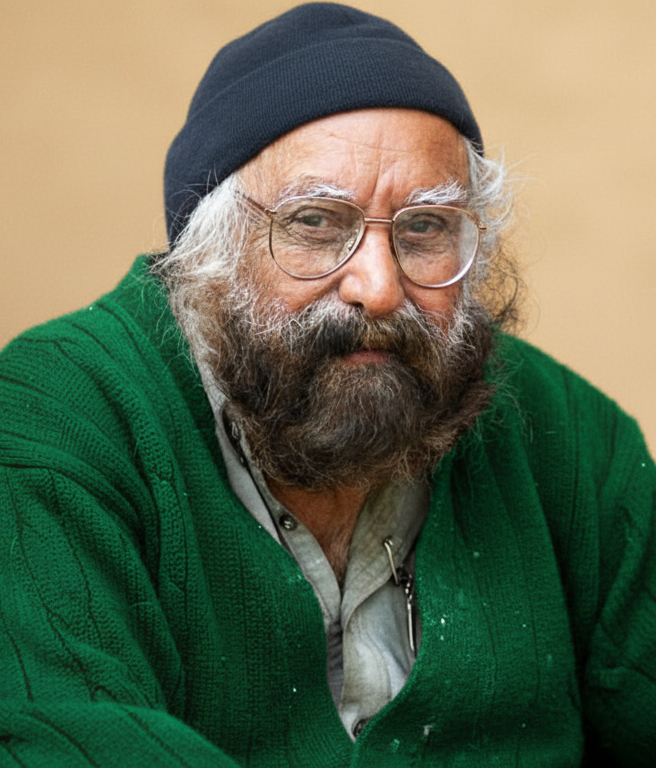
Khushwant Singh
Introduction
Khushwant Singh (born Khushal Singh; 2 February 1915 – 20 March 2014) remains one of India’s most celebrated and widely read writers, known for his sharp wit, humor, and fearless social commentary. Over the course of nearly a century, he wore many hats—author, lawyer, diplomat, journalist, historian, and politician. His writings often explored the Partition of India, religion, identity, and the complexities of human nature, always with a distinctive blend of realism and biting satire.
Early Life and Education
Khushwant Singh was born in Hadali, a village in Punjab’s Khushab district, now in Pakistan. His father, Sir Sobha Singh, was a wealthy contractor who played a significant role in the construction of Lutyens’ Delhi, including landmark buildings like Connaught Place and India Gate. Sir Sobha Singh was later remembered for testifying against Bhagat Singh, which left a controversial mark on the family’s reputation. His mother, Veeran Bai (Lady Varyam Kaur), was a deeply religious woman who nurtured the family’s Sikh traditions.
The circumstances of Khushwant’s birth reflect the quirks of the times: official records were unreliable, and his father arbitrarily entered 2 February 1915 as his birthdate for school admission. However, his grandmother claimed he was actually born in August. Later in life, Khushwant Singh humorously adopted 15 August (India’s Independence Day) as his birthday. Originally named Khushal Singh (“Prosperous Lion”), he was nicknamed Shalee. Teased at school, he eventually changed his name to Khushwant Singh to rhyme with his brother Bhagwant’s name.
Education
Singh’s early schooling was at Modern School, Delhi, the city’s first co-educational institution. He then attended Government College, Lahore, where he developed his love for literature and history. Later, he moved to England, enrolling at King’s College, Cambridge, to study history, and subsequently trained as a barrister at the Inner Temple, London, in 1938. His education in Britain exposed him to Western thought, debates, and literary traditions, which would later influence his writing style — clear, witty, and unpretentious.
Early Career: Law and Diplomacy
Khushwant Singh began his professional career as a lawyer at the Lahore High Court in 1939, working under the guidance of Manzur Qadir and Ijaz Husain Batalvi. He practiced law for eight years, until the traumatic events of the Partition of India in 1947 changed the course of his life. His family had to move from Lahore to Delhi, and he personally witnessed the violence, dislocation, and tragedy of Partition. This experience became the cornerstone of his writing, particularly in his most famous novel, Train to Pakistan (1956).
After independence, Singh briefly served in the Indian Foreign Service, working as a diplomat in Ottawa, Canada, and later with the Ministry of External Affairs in New Delhi. However, he eventually left diplomacy to pursue writing and journalism, where his true calling lay.
Career in Journalism
From the early 1950s, Khushwant Singh entered the world of journalism and publishing. He worked with All India Radio and started the government magazine Yojana (1951–53). His editorial career spanned decades, and he became one of India’s most influential editors.
He served as Editor of The Illustrated Weekly of India (1969–1978), transforming it into one of the most widely read English magazines in the country.
He later edited Hindustan Times (1980–83) and National Herald, where his bold views often sparked public debate.
He also wrote the famous newspaper column “With Malice Towards One and All”, which became a staple of Indian journalism, admired for its humor and sharp commentary on politics and society.
Singh’s editorial style was frank, witty, and fearless, often critical of both government and society. Under his leadership, circulation numbers of The Illustrated Weekly soared, but his dismissal in 1978, allegedly due to political pressure, became a widely discussed controversy.
Political Career
Khushwant Singh’s stature as a public intellectual led to his nomination to the Rajya Sabha (Upper House of Parliament), where he served from 1980 to 1986. He used his position to advocate for secularism, communal harmony, and minority rights. He remained a strong critic of religious extremism, including Sikh militancy during the 1980s, even though he remained deeply attached to Sikh identity and heritage.
Literary Career
Khushwant Singh’s literary output was vast, covering novels, short stories, historical studies, translations, biographies, essays, and autobiographies.
Fiction
His debut novel, Train to Pakistan (1956), set during Partition, remains a classic of Indian English literature. It portrays human tragedy with compassion and realism. The book won international recognition and was later adapted into a film (1998).
Other novels include I Shall Not Hear the Nightingale (1959), set during the Quit India Movement, and Delhi: A Novel (1990), which blends satire, erotica, and historical narrative.
His short story collections, such as The Mark of Vishnu and Other Stories (1956) and The Portrait of a Lady: Collected Stories (2009), showcase his gift for storytelling rooted in everyday Indian life.
Non-fiction
His magnum opus as a historian is the two-volume A History of the Sikhs (1963–66), still regarded as authoritative.
He also wrote biographies of figures like Ranjit Singh and translations of works like the Guru Granth Sahib.
His autobiography, Truth, Love and a Little Malice (2002), offers a candid account of his personal and professional life, controversies, and relationships.
His writing style was marked by simplicity, clarity, and humor. He avoided ornamentation, choosing instead to write directly and honestly, making his works accessible to all readers.
Personal Life
In 1939, Khushwant Singh married Kawal Malik, a childhood friend, and they had two children — Rahul Singh, a journalist, and Mala Singh. Singh was widely known for his liberal views on life, his love of whisky, and his frank discussions of sex and politics, which often shocked conservative society.
Although a practicing Sikh, Singh was a staunch secularist. He criticized religious orthodoxy and fundamentalism, arguing for tolerance and rationalism. Despite his modern outlook, he retained deep pride in his Punjabi roots and often returned to Hadali in memory, calling it his “womb-town.”
Awards and Recognition
Khushwant Singh received numerous honors:
Padma Bhushan (1974) – returned in 1984 in protest against Operation Blue Star.
Padma Vibhushan (2007) – India’s second-highest civilian award.
Sahitya Akademi Fellowship (2010) – India’s highest literary recognition.
Honored with the Order of Arts and Letters (France).
Entered the Limca Book of Records (2016) posthumously for his editorial influence.
Death and Legacy
Khushwant Singh passed away on 20 March 2014 at his home in New Delhi at the age of 99. In keeping with his secular beliefs, he requested no religious rituals for his funeral.
Singh’s legacy is extraordinary. He is remembered as one of the finest chroniclers of modern India — a writer who captured both the tragedy of Partition and the humor of everyday life. His works, translated into multiple languages, continue to be studied across the world. With his fearless journalism, biting satire, and compassionate storytelling, Khushwant Singh left behind not just books, but a vision of India that embraced both tradition and modernity, humor and pathos, faith and rationalism.
Themes
The Bond between Grandparent and Grandchild
One of the strongest themes of the story is the deep affection between Khushwant Singh and his grandmother. In his childhood, the grandmother is his closest companion and caretaker. She wakes him up, bathes him, dresses him, prepares his slate and inkpot, and gives him food. She even goes with him to school, which is attached to the temple. Their bond is one of warmth, love, and friendship.
However, as the narrator grows older, the closeness begins to fade. In the city, the grandmother cannot accompany him to school, nor can she help him with modern subjects like English and science. Despite this growing distance, the grandmother’s love does not diminish. She accepts the changes silently and continues to bless him. Even when he goes abroad, she does not show outward grief but prays for him. Their bond is not broken by time, distance, or change; it remains spiritual and eternal. This theme reflects the unique and unconditional love that grandparents often share with their grandchildren.
Tradition versus Modernity
The story highlights the contrast between old traditions and new modern values. The grandmother represents the traditional world: she believes in scriptures, prayers, moral education, and religious values. She disapproves of the narrator’s English education because it teaches Western science, the law of gravity, and Archimedes’ principle, but nothing about God or scriptures. She is also deeply upset when he is given music lessons, as she associates music with harlots and beggars, not with respectable families.
On the other hand, the narrator represents the modern generation, educated in English, science, and technology. His world is moving away from religion, rituals, and traditional practices. This clash of values creates a distance between him and his grandmother. Through this theme, the story reflects the broader tension in Indian society between the old traditional culture and the influence of Western modernity after independence.
Religion and Spirituality
Religion forms the core of the grandmother’s existence. From morning till night, her lips move in prayer and her fingers tell the beads of the rosary. She reads the scriptures, prays for her grandson, and devotes herself to a life of faith. Even when the world around her changes, she does not leave her devotion to God.
Her spirituality is not limited to rituals alone. It is reflected in her compassion—feeding stray dogs in the village and sparrows in the city. She lives a life of selfless service, embodying purity and dignity. At the end of her life, when she feels death approaching, she refuses to waste time talking and spends her final hours in prayer. Her peaceful death becomes an extension of her spiritual life. The mourning of the sparrows, who sit silently around her house, elevates her spiritual aura, almost making her a saint-like figure.
Love and Sacrifice
The grandmother’s love is unconditional and full of sacrifice. She gives her time, energy, and care to the narrator without expecting anything in return. In his childhood, she sacrifices her own comfort to take care of his daily routine, feed him, and accompany him to school. Even when she feels alienated in the city, she does not complain. She accepts her loneliness with dignity, spinning the wheel, praying, and feeding sparrows.
Her silence after the narrator is given music lessons is another example of sacrifice. She withdraws from talking to him but never withdraws her love. When he goes abroad, she does not weep or create drama. Instead, she kisses his forehead silently and prays for him, giving him her blessings as a protective shield. Her life itself is a symbol of sacrifice—living for others rather than for herself.
Life and Death as Natural Cycles
The story treats life and death as natural, inevitable processes. The grandmother is described as “so terribly old” that she seemed to have remained the same age for twenty years. This description gives her an eternal quality, as though she belongs more to timelessness than to the changing world.
When death finally comes, she accepts it calmly and without fear. She stops talking, chooses to spend her last hours in prayer, and dies peacefully, with the rosary slipping from her fingers. There is no drama, only serenity. Even nature responds to her death—the sparrows gather in silence, mourning her loss. Her life and death together show that a person who lives in purity, sacrifice, and devotion can face death with dignity and peace. This theme emphasizes that death is not an end but a natural conclusion to a meaningful life.
Style
Khushwant Singh’s The Portrait of a Lady is often admired not so much for its plot—which is simple and straightforward—but for its distinctive style. Singh takes an ordinary personal memory, the recollection of his grandmother, and transforms it into a universal meditation on family love, cultural change, spirituality, and mortality. His hallmark qualities—clarity, realism, vivid imagery, restrained emotion, and gentle humor—combine to make the narrative accessible, emotionally powerful, and enduring.
Simple and Clear Language
One of the most striking features of Singh’s style is his use of plain, everyday English. He avoids complicated vocabulary and long-winded sentences, preferring short, conversational phrasing that makes the story feel like a personal recollection rather than a formal literary exercise. For instance, the opening line—“My grandmother, like everybody’s grandmother, was an old woman”—is simple yet effective. It immediately connects with readers by presenting the grandmother not as an extraordinary figure, but as someone familiar and universal. This clarity of language ensures that the focus stays on emotions and human relationships.
First-Person Narrative
The story is told in the first person, from the perspective of the grandson (the author himself). This gives the narrative intimacy and authenticity, as if the reader is being personally confided in. Everything we know about the grandmother is filtered through the narrator’s eyes: his childhood innocence, his youthful biases, his adult nostalgia. His remark—“As for my grandmother being young and pretty, the thought was almost revolting”—reveals his limited imagination as a child, while also creating irony, since the reader knows she must have once been young. The first-person voice makes the story emotionally engaging while maintaining a tone of reflective honesty.
Autobiographical and Personal Touch
The story has an autobiographical basis, drawn from Singh’s own childhood memories of his grandmother. This personal foundation lends the story warmth, nostalgia, and credibility. It is not fiction created from imagination but lived experience, retold with simplicity. The emotional authenticity comes from the fact that Singh is writing about his own past—the bond with his grandmother in the village, the changes after moving to the city, the growing distance caused by modern education, and finally her death. The personal touch transforms the narrative into a moving memoir that resonates universally.
Imagery and Simile
Vivid imagery is one of Singh’s strengths. He describes his grandmother with striking details: her “silver locks,” “criss-cross of wrinkles,” “spotless white” clothes, and her constant prayer with a rosary in hand. These details make her almost visible to the reader. The use of simile heightens the effect: “She was like the winter landscape in the mountains, an expanse of pure white serenity breathing peace and contentment.” This image does more than describe her physical appearance; it captures her spiritual calm, purity, and timelessness. Through such imagery, Singh elevates her from an ordinary grandmother to a universal symbol of serenity and devotion.
Humour and Irony
Though the story deals with serious themes of tradition, change, and death, it is not devoid of humor. Singh’s characteristic wit appears in gentle observations. The narrator humorously remarks that his grandfather, as seen in the portrait, looked so old that “he could only have grandchildren.” Similarly, he finds it “revolting” to imagine that his grandmother was ever young. These touches of humor make the narrative lively, prevent it from becoming overly sentimental, and underline the innocence of childhood perception. The humor is affectionate rather than mocking, reflecting both love and irony.
Blend of Realism and Symbolism
The story is deeply rooted in realism. Singh gives detailed descriptions of everyday life: stale chapatis with butter and sugar for breakfast, chapatis carried for stray dogs, lessons in the temple-school, sparrows filling the courtyard, or the grandmother spinning her wheel and praying all day. These realistic details anchor the narrative in the rhythm of Indian rural and urban life. Yet, Singh does not stop at realism; he layers it with symbolism. The grandmother stands for Indian tradition and spirituality, the sparrows symbolize nature’s bond with her and their silence at her death represents cosmic mourning, and the rosary represents her unwavering faith. Even the drum she beats before her death becomes symbolic—a ritualistic farewell to life. This blend of realism and symbolism gives the story both authenticity and depth.
Emotional but Restrained Tone
Although the story deals with emotional subjects like separation, aging, and death, Singh maintains a restrained tone. He does not indulge in melodrama or exaggeration. For instance, the grandmother’s death is narrated with calm dignity: “Even before we could suspect, her lips stopped moving and the rosary fell from her lifeless fingers.” The restraint of tone makes the moment far more powerful than if it had been described with dramatic language. Similarly, the sparrows’ silent mourning is presented without explanation, allowing the reader to feel the emotion directly. Singh’s tone throughout is affectionate, reverent, and nostalgic.
Seamless Chronological Structure
The story is carefully structured in a smooth, chronological manner. It unfolds in natural stages: the narrator’s childhood bond with his grandmother in the village; the move to the city and the resulting changes; the growing distance when he goes to university and abroad; and finally, her last days and peaceful death. This progression mirrors the flow of memory, making the narrative coherent and authentic. The lack of digressions or interruptions adds to the simplicity and elegance of the style.
Symbolism
In Khushwant Singh’s The Portrait of a Lady, symbolism is a central device that enriches the narrative. Through simple yet powerful symbols, Singh conveys not only the character of his grandmother but also broader themes of tradition, spirituality, change, and mortality. These symbols elevate a personal memoir into a timeless meditation on human experience.
The Grandmother’s Rosary and Prayers
The grandmother is almost always seen with her rosary beads, her lips moving silently in prayer. This image recurs throughout the story—from her morning routine, to the railway station where she sees off her grandson, and finally to her deathbed, where “her lips stopped moving and the rosary fell from her lifeless fingers.”
The rosary is a symbol of her unwavering faith, serenity, and inner strength. It anchors her life in spirituality, offering her solace amid the changes that distance her from her grandson. The falling of the rosary at her death marks the completion of her spiritual journey. This symbol ties directly to the theme of spirituality as a sustaining force and highlights the contrast between her religious devotion and the narrator’s secular modernity.
The Sparrows
In the city, the grandmother turns to sparrows for companionship, feeding them daily in the courtyard. “Some perched on her shoulders, some even sat on her head. She smiled but never shooed them away.” After her death, thousands of sparrows sit silently around her body, refusing to eat.
The sparrows symbolize her compassion, her harmony with nature, and the spiritual bond between human beings and the natural world. Their unusual silence at her death elevates her to a near-sacred figure, as if nature itself is mourning her passing. The contrast between their normal “bedlam of chirrupings” and their silence underscores the depth of her loss.
The Village Dogs and Chapatis
In the village, the grandmother carries stale chapatis to feed stray dogs after temple-school. The dogs growl and fight for the food, and this daily act becomes a ritual for both her and her grandson.
The dogs symbolize her nurturing nature and her deep-rooted connection to rural life. Feeding them reflects her compassion for all living beings and her role as a caregiver. Their lively, noisy presence contrasts with the silent sparrows at her death, highlighting the shift from vibrant village life to the more isolated existence of the city. The chapatis, a staple of Indian life, emphasize simplicity, tradition, and sustenance.
The Spinning Wheel
In the city, when her companionship with her grandson diminishes, the grandmother spends her days spinning and praying: “From sunrise to sunset she sat by her wheel, spinning and reciting prayers.”
The spinning wheel is a symbol of her retreat into solitude and tradition. It reflects her self-sufficiency and her adherence to pre-modern ways of life, in contrast to the Western education and urban influences shaping her grandson. The wheel also represents resilience: though isolated, she remains purposeful, combining physical work with spiritual devotion.
The Drum
On the evening after her grandson’s return from abroad, the grandmother surprises everyone by singing and beating an old drum with neighborhood women. “She thumped the sagging skins of the dilapidated drum and sang of the homecoming of warriors.”
The drum symbolizes celebration, vitality, and a rare break from her prayerful routine. Its dilapidated condition suggests nostalgia and fading traditions, while her use of it just before her death foreshadows her final departure. This moment reveals her joy in her grandson’s return and marks her last assertion of life before withdrawing permanently into prayer.
The Red Shroud
After her death, the grandmother is covered with a red shroud, as per custom: “We lifted her off the bed and, as is customary, laid her on the ground and covered her with a red shroud.”
The shroud symbolizes the dignity of death and the rituals that honor it. In Indian culture, red often signifies life and marriage, but here it marks the solemnity of her final journey. It blends human custom with the natural mourning of the sparrows, uniting cultural tradition and nature’s response in a shared act of reverence.
Very Short Answer Questions
Who is the central character in the story?
The grandmother.
Who is the author of The Portrait of a Lady?
Khushwant Singh.
Where did the author’s grandfather’s portrait hang?
Above the mantelpiece in the drawing room.
How is the grandmother described in appearance?
Old, wrinkled, short, and slightly bent, always dressed in white.
What did the grandmother always carry in her hand?
A rosary (japmala).
What did the grandmother feed the village dogs with?
Stale chapatis.
Why did the grandmother accompany the narrator to school in the village?
Because the school was attached to the temple.
What did the grandmother read while the narrator studied at school?
The scriptures.
What did the grandmother do in the city instead of feeding dogs?
She fed sparrows in the courtyard.
Why was grandmother unhappy with the narrator’s education in the city?
Because it did not teach about God or scriptures.
What was the grandmother’s view about music?
She thought it was vulgar and meant for harlots and beggars.
What was the turning point in the friendship of the narrator and grandmother?
Moving from village to city.
What activity kept the grandmother busy during the narrator’s university days?
Spinning the wheel and praying.
Which daily activity gave the grandmother the most happiness in the city?
Feeding sparrows.
How did the grandmother react when the narrator went abroad?
She remained calm, prayed, and kissed his forehead silently.
What unusual change occurred in the grandmother the evening before her death?
She stopped praying and sang songs with women of the neighbourhood.
What did the grandmother do when she felt her end was near?
She lay in bed, prayed silently, and stopped talking.
How did the grandmother die?
Peacefully while praying, with the rosary slipping from her hand.
How did the sparrows behave at the grandmother’s death?
They sat silently in and around the house, without chirping or eating.
What happened to the food offered to the sparrows after her death?
They did not eat it, and the crumbs were swept away the next morning.
Short Answer Questions
Describe the appearance of the grandmother.
The grandmother was old, short, fat, and slightly bent. Her face was full of wrinkles, and her silver hair lay untidily on her puckered face. She always wore spotless white clothes and carried a rosary in her hands. Though not conventionally pretty, she looked beautiful because of her calmness and serenity. The narrator compares her beauty to a winter landscape.
What kind of relationship did the narrator share with his grandmother in childhood?
In childhood, the narrator was very close to his grandmother. She woke him up, bathed and dressed him, and gave him breakfast. She accompanied him to school, which was attached to a temple, and while he studied, she read scriptures. On the way back, she fed chapatis to village dogs. Their bond was of love, care, and friendship.
How did the grandmother help the narrator in his early schooling?
The grandmother used to get the narrator ready for school every morning. She carried his wooden slate, earthen inkpot, and reed pen, tied together in a bundle. She went with him to school, which was near the temple. While he studied the alphabet and prayers, she read the holy scriptures. This shows her involvement in his education and life.
How did the grandmother’s life change in the city?
In the city, the grandmother no longer accompanied the narrator to school. He went by motor bus to an English school, and there were no dogs in the streets. She now spent her time feeding sparrows in the courtyard. She felt unhappy because she could not help him with modern subjects like English and science and was distressed that there was no teaching of God or scriptures.
Why did the grandmother disapprove of the English school?
The grandmother disliked the English school because it taught science, English, and Western ideas but did not teach about God and scriptures. She was troubled by concepts like the law of gravity and Archimedes’ principle, which she did not understand. She was especially disturbed when the narrator was given music lessons, as she considered music vulgar and linked to harlots and beggars.
How did the grandmother spend her time when the narrator went to university?
When the narrator went to university, the grandmother accepted her seclusion quietly. She rarely spoke to anyone and spent most of her time spinning the wheel and praying. She sat from morning to evening with her rosary. Only in the afternoons did she relax to feed the sparrows. Hundreds of birds sat on her head, shoulders, and legs, and she enjoyed their company.
Describe the grandmother’s reaction when the narrator went abroad.
The narrator expected his grandmother to be upset when he went abroad for five years. However, she did not show any emotion. She accompanied him to the railway station, kept praying silently, and kissed his forehead. Her calmness showed her faith and inner strength. The narrator thought it was their last physical contact, but she lived to see him return.
How did the grandmother behave on the evening before her death?
On the evening before her death, the grandmother behaved unusually. She stopped praying, collected the women of the neighbourhood, and started to sing songs with an old drum. She sang of the homecoming of warriors and thumped the drum for several hours. This was the first time the narrator saw her abandon prayers, which indicated her readiness for her final journey.
How did the grandmother face her death?
The grandmother felt her end was near when she got a mild fever. She refused to waste time talking and devoted herself completely to prayer. Lying peacefully in bed, she kept moving the beads of her rosary. Quietly and without suffering, her lips stopped moving, the rosary fell from her hand, and she passed away. Her death was serene and dignified.
Describe the mourning of the sparrows at the grandmother’s death.
At the grandmother’s death, thousands of sparrows sat silently in and around the house. They neither chirped nor moved, creating an atmosphere of mourning. Even when food was offered to them, they did not eat. They seemed to grieve the loss of a pure soul. The next morning, they flew away quietly, leaving the crumbs to be swept away.
Critical Analysis
Introduction
The Portrait of a Lady is a touching autobiographical sketch written by Khushwant Singh, one of India’s most famous writers, journalists, and historians. In this story, Singh gives us a memorable portrait of his grandmother, who appears as a symbol of timeless spirituality, dignity, and unconditional love. Though the piece is simple in language, it has depth and universality. Singh blends personal memory with symbolic meaning, showing how his grandmother, an ordinary woman, represented the values of an entire generation.
Central Idea
The central idea of the story is the affectionate relationship between the narrator and his grandmother, which undergoes change as he grows older. While the grandmother represents Indian tradition, spirituality, and simplicity, the narrator represents modern education, science, and Western values. The narrative explores how modernization creates distance between the two, yet love and blessings remain constant. The grandmother’s peaceful death and the sparrows’ silent mourning emphasize the dignity of a life lived in prayer and sacrifice.
Plot Summary
The story begins with the narrator’s description of his grandmother, who was always old and wrinkled, dressed in spotless white. As a child in the village, he was very close to her. She woke him, got him ready for school, and fed him chapatis. She accompanied him daily to school, which was attached to the temple. While he studied alphabets and prayers, she read the scriptures. On their way back, she fed chapatis to the village dogs.
When the family shifted to the city, their bond weakened. The narrator now went to an English school by bus, and the grandmother stayed at home, feeding sparrows. She was distressed that he was taught science and English but not God or scriptures, and she strongly disapproved of his music lessons.
As he grew older and went to university, the distance increased. He was given a room of his own, and the grandmother withdrew into seclusion, spending most of her time spinning the wheel, praying, and feeding sparrows. When he went abroad, she did not show emotion but blessed him silently. After five years, when he returned, she looked unchanged and welcomed him in the same way.
Soon after, she fell ill. She sensed her end and stopped speaking, devoting herself only to prayer. She died peacefully, the rosary slipping from her fingers. At her death, thousands of sparrows sat silently in and around the house, without chirping or eating, as though mourning her loss.
Themes
Bond between Grandparent and Grandchild – The story highlights the deep affection between the narrator and his grandmother, especially in childhood. Though distance grows with modernization, their emotional bond remains intact.
Tradition versus Modernity – The grandmother symbolizes old traditions and religious values, while the narrator’s education represents modern Western learning. The conflict between the two reflects India’s cultural changes.
Religion and Spirituality – Prayer, scriptures, and devotion form the foundation of the grandmother’s life. Even in her death, she remains deeply spiritual.
Love and Sacrifice – The grandmother devotes her life to caring for her grandson and serving others, without complaint or expectation. Her love is selfless and unconditional.
Life and Death as Natural Cycles – Her serene acceptance of death, along with the sparrows’ mourning, shows death as a natural, dignified part of life.
Characters
The Grandmother – Central figure of the story, always old in appearance, yet radiantly beautiful in her serenity. She is deeply religious, compassionate, and selfless. Her life revolves around prayer, feeding animals, and serving her family. Her death is peaceful, almost saint-like.
The Narrator – Represents the younger generation. He is close to his grandmother in childhood but grows distant due to modern education. Despite this, he cherishes her love and is deeply affected by her death.
The Grandfather – Seen only in a portrait, symbolizing dignity, ancestry, and the past generation.
The Parents – Minor characters who represent practical, urban modern life.
Structure and Style
The story is structured chronologically, moving through different phases of the narrator’s life—childhood, schooling in the city, university life, his stay abroad, and finally the grandmother’s death. This smooth progression gives the story a natural flow.
The style is simple, direct, and conversational. Khushwant Singh uses first-person narration, making it intimate and personal. Vivid imagery and similes enhance the description, such as the grandmother being compared to a “winter landscape in the mountains.” Gentle humour and irony are also present—for instance, the idea that the grandfather looked old enough to have only grandchildren. The restrained emotional tone adds dignity to the grandmother’s portrayal and prevents the story from becoming overly sentimental.
Historical Context
The story reflects post-independence India, when traditional rural life and modern urban education were in tension. The grandmother represents the older generation rooted in religion and morality, while the narrator represents the youth embracing science, English, and modern values. Many families at that time experienced similar cultural transitions, making the story relatable to a wide audience. The sparrows mourning her death may also symbolize the end of an era—the fading of traditional lifestyles and the arrival of modernity.
Critical Commentary
Khushwant Singh succeeds in transforming a personal memory into a universal portrait. The grandmother is not presented as an extraordinary woman, but her ordinary life is elevated through love, devotion, and spirituality. The story raises subtle questions about the loss of traditional values in the modern world. The sparrows’ mourning gives the ending a symbolic, almost mythical quality, highlighting the purity of her soul. The piece demonstrates Singh’s skill in combining realism with symbolism, simplicity with depth, and humour with reverence.
Conclusion
The Portrait of a Lady is both a personal tribute and a universal reflection on tradition, love, and mortality. It captures the grandmother’s life as one of faith, selflessness, and dignity, and her death as peaceful and natural. Through simple narration and vivid imagery, Khushwant Singh shows how an ordinary grandmother can symbolize eternal values. The story stands as a reminder that true beauty lies not in youth or physical charm but in serenity, devotion, and unconditional love.