
The Mother of a Traitor
The Mother of a Traitor was first published in Russia in 1906. The story was later translated into English and appeared in the collection of Gorky’s short stories titled Tales of Two Countries (1914), where it was published under the name The Traitor’s Mother.
The story takes place in a city under siege, surrounded by enemies. Hunger, despair, and death haunt the people. Among them wanders a woman dressed in black, Monna Marianna—the mother of the enemy leader who is attacking the city. The citizens avoid her, whispering that she is the mother of a traitor.
Marianna suffers a terrible conflict. Her son is the commander of the besieging army, yet she loves her native city deeply. Her heart is torn between her duty as a mother and her duty as a citizen.
Finally, she leaves the city and goes to her son. He greets her with love but also with arrogant pride, boasting that he will soon destroy the city for the sake of glory. He values conquest and destruction, believing that destroyers are remembered like heroes. Marianna tries to remind him that true greatness lies in creating and protecting life, but he does not listen.
That night, as he rests with his head on her lap, she realizes he has become a danger not only to the city but to humanity itself. Quietly, she kills him with a knife, striking at his heart. Then she declares that she has fulfilled her duty as a citizen by saving her country, and as a mother by staying with her son. Finally, she kills herself as well.
One can talk endlessly about Mothers. For several weeks enemy hosts had surrounded the city in a tight ring of steel; by night fires were lit and the flames peered through the inky blackness at the walls of the city like a myriad red eyes—they blazed malevolently, and their menacing glare evoked gloomy thoughts within the beleaguered city.
From the walls they saw the enemy noose draw tighter; saw the dark shadows hovering about the fires, and heard the neighing of well-fed horses, the clanging of weapons, the loud laughter and singing of man confident of victory—and what can be more jarring to the ear than the songs and laughter of the enemy?
The enemy had thrown corpses into all the streams that fed water to the city, they had burned down the vineyards around the walls, trampled the fields, cut down the orchards—the city was now exposed on all sides, and nearly every day the cannon and muskets of the enemy showered it with lead and iron.
Detachments of war-weary, half-starved soldiers trooped sullenly through the narrow streets of the city; from the windows of houses issued the groans of the wounded, the cries of the delirious, the prayers of women and the wailing of children. People spoke in whispers, breaking off in the middle of a sentence, tensely alert; was not that the enemy advancing?
Worst of all were the nights; in the nocturnal stillness the groans and cries were more distinctly audible; black shadows crept stealthily from the gorges of the distant mountains towards the half-demolished walls, hiding the enemy camp from view, and over the black ridges of the mountains rose the moon like a lost shield dented by sword blows.
And the people in the city, despairing of succour, worn out by toil and hunger, their hope of salvation waning from day to day, the people in the city stared in horror at that moon, at the sharp-toothed ridges of the mountains, the black mass of the gorges and the noisy camp of the enemy. Everything spoke to them of death, and not a star was there in the sky to give them consolation.
They were afraid to light the lamps in the houses, and a heavy darkness enveloped the streets, and in this darkness, like a fish stirring in the depths of a river, a woman draped from head to foot in a black cloak moved soundlessly.
When they saw her, people whispered to one another:
“Is it she?”
“It is she!”
And they withdrew into the niches under archways, or hurried past her with lowered heads. The patrol chiefs warned her sternly:
“Abroad again, Monna Marianna? Take care, you may be killed and nobody will bother to search for the culprit…”
She drew herself up and stood waiting, but the patrols passed by, either not daring or else scorning to raise their hand against her; the armed men avoided her like a corpse and, left alone in the darkness, she continued her solitary wanderings from street to street, soundless and black like the incarnation of the city’s misfortune, while all about her, as though pursuing her, melancholy sounds issued from the night; the groans, cries, prayers and the sullen murmur of soldiers who had lost all hope of victory.
A citizen and a mother, she thought of her son and her country; for at the head of the men who were destroying her town was her son, her gay, handsome, heartless son. Yet, not so long ago she had looked upon him with pride regarding him as her precious gift to her country, a beneficent force she had brought forth to aid the people of the city where she herself had been born and reared. Her heart was bound by hundreds of invisible threads to these ancient stones with which her forefathers had built their homes and raised the walls of the city; to the soil wherein lay buried the bones of her kinsfolk, to the legends, the songs and the hopes of the people. And now this heart had lost a loved one and it wept. She weighed in her heart as on scales her love for her son and her love for her native city, and she could not tell which weighed the more.
And so she wandered thus by night through the streets and many, failing to recognise her, drew back in fear mistaking her black figure for the incarnation of Death that was so near to all of them, and when they did recognise her, they turned silently away from the mother of a traitor.
But one day in a remote corner by the city walls she saw another woman, kneeling beside a corpse, so still that she seemed part of the earth. The woman was praying, her grief-stricken face upturned to the stars. And on the wall overhead the sentries spoke in low tones their weapons grating against the stone.
The traitor’s mother asked:
“Your husband?”
“No.”
“Your brother?”
“My son. My husband was killed thirteen days ago, my son today.”
And rising from her knees, the mother of the slain man said humbly:
“The Madonna sees all and knows all, and I am grateful to her!”
“For what?” asked the first, and the other replied:
“Now that he has died honourably fighting for his country I can say that I feared for him: he was light-hearted, too fond of revelry and I feared that he might betray his city, as did the son of Marianna, the enemy of God and Man, the leader of our foes, may he be so cursed and the womb that bore him!”
Marianna covered her face and went on her way. The next morning she appeared before the city’s defenders and said:
“My son has come to be your enemy. Either kill me or open the gates that I may go to him…”
They replied:
“You are a human being, and your country must be precious to you; your son is as much an enemy to you as to each one of us.”
“I am his mother. I love him and feel that I am to blame for what he has become!”
Then they took counsel with one another and decided.
“It would not be honourable to kill you for the sins of your son. We know that you could not have led him to commit this terrible sin, and we can understand your distress. But the city does not need you even as a hostage; your son cares nought for you, we believe that he has forgotten you, fiend that he is, and there is your punishment if you think you have deserved it! We believe that is more terrible than death itself!”
“Yes,” she said. “It is indeed more terrible.”
And so they opened the gates and suffered her to leave the city and watched long from the battlements as she departed from her native soil, now drenched with the blood her son had spilt. She walked slowly, for her feet were reluctant to tear themselves away from this soil, and she bowed to the corpses of the city’s defenders, kicking aside a broken weapon in disgust, for all weapons are abhorrent to mothers save those that protect life.
She walked as though she carried a precious phial of water beneath her cloak and feared to spill a drop and as her figure grew smaller and smaller to those who watched from the city wall, it seemed to them that with her went their dejection and hopelessness.
They saw her pause halfway and throwing back the hood of her cloak turn back and gaze long at the city. And over in the enemy’s camp they saw her alone. They approached and inquired who she was and whence she had come.
“Your leader is my son,” she said, and not one of the soldiers doubted it. They fell in beside her, singing his praises, saying how clever and brave he was, and she listened to them with head proudly raised, showing no surprise, for her son could not be otherwise.
And now, at last, she stood before him whom she had known nine months before his birth, him whom she had never felt apart from her own heart. In silk and velvet he stood before her, his weapons studded with precious stones. All was as it should be, thus had she seen him so many times in her dreams rich, famous and admired.
“Mother!” he said, kissing her hands. “Thou hast come to me, thou art with me, and tomorrow I shall capture that accursed city!”
Intoxicated with his prowess, crazed with the thirst for more glory, he answered her with the arrogant heat of youth:
“I was born into the world and for the world, and I mean to make the world quake with wonder of me! I have spared this city for thy sake, it has been like a thorn in my flesh and has retarded my swift rise to fame. But now tomorrow I shall smash that nest of obstinate fools!”
“Where every stone knows and remembers them as a child,” she said.
“Stones are dumb unless man makes them speak. Let the mountains speak of me, that is what I wish!”
“And what of men?” she asked.
“Ah yes, I have not forgotten them, Mother. I need them too, for only in men’s memory are heroes immortal!”
She said: “A hero is he who creates life in defiance of death, who conquers death…”
“No!” he objected. “The destroyer is as glorious as the builder of a city. See, we do not know who it was that built Rome—Aeneas or Romulus—yet we know well the name of Alaric and the other heroes who destroyed the city…”
“Which outlived all names.” the mother reminded him.
Thus they conversed until the sun sank to rest; less and less frequently did she interrupt his wild speech, lower sank her proud head.
A Mother creates, she protects, and to speak to her of destruction means to speak against her; but he did not know this, he did not know that he was negating her reason for existence.
A Mother is always opposed to death; the hand that brings death into the house of men is hateful and abhorrent to Mothers. But the son did not perceive this, for he was blinded by the cold glitter of glory that deadens the heart.
Nor did he know that a Mother can be as clever and ruthless as she is fearless, when the life she creates and cherishes is in question.
She sat with bowed head, and through the opening in the leader’s richly appointed tent she saw the city where first she had felt the sweet tremor of life within her and the anguished convulsions of the birth of this child who now thirsted for destruction.
The crimson rays of the sun dyed the walls and towers of the city blood-red, cast a baleful glare on the windowpanes so that the whole city seemed to be a mass of wounds with the crimson sap of life flowing from each gash. Presently the city turned black as a corpse and the stars shone above it like funeral candles.
She saw the dark houses where people feared to light candles so as not to attract the attention of the enemy, saw the streets steeped in gloom and rank with the stench of corpses, heard the muffled whispers of people awaiting death—she saw it all, all that was near and dear to her stood before her, dumbly awaiting her decision, and she felt herself the mother of all those people in her city.
Clouds descended from the black peaks into the valley and swooped down like winged steeds upon the doomed city.
“We may attack tonight,” said her son, “if the night is dark enough! It is hard to kill when the sun shines in your eyes and the glitter of the weapons blinds you, many a blow goes awry,” he remarked, examining his sword.
The mother said to him: “Come, my son, lay thy head on my breast and rest, remember how gay and kind thou wert as a child, and how everyone loved thee…”
He obeyed her, laid his head in her lap and closed his eyes, saying:
“I love only glory and I love thee for having made me as I am.”
“And dost thou not desire children?” she asked finally.
“What for? That they might be killed? Someone like me will kill them; that will give me pain and I shall be too old and feeble to avenge them.”
“Thou art handsome, but as barren as a streak of lightning,” she said with a sigh.
“Yes, like lightning…” he replied, smiling.
And he dozed there on his mother’s breast like a child.
Then, covering him with her black cloak, she plunged a knife into his heart, and with a shudder he died, for who knew better than she where her son’s heart beat. And, throwing his corpse at the feet of the astonished sentries, she said addressing the city:
“As a Citizen, I have done for my country all I could: as a Mother I remain with my son! It is too late for me to bear another; my life is of no use to anyone.” And the knife, still warm with his blood, her blood, she plunged with a firm hand into her own breast, and again she struck true, for an aching heart is not hard to find.
Word Meaning
| Word | English Meaning | Hindi Meaning |
| Traitor | A person who betrays their country, friends, or cause | गद्दार, विश्वासघाती |
| Ring of steel | A tight military blockade or encirclement | लोहे की घेराबंदी |
| Peered | Looked closely or with difficulty | घूरकर देखा, ध्यान से देखा |
| Myriad | Countless or very great in number | असंख्य, अनगिनत |
| Blazed | Shone or burned brightly | तेज़ी से चमका, दहका |
| Betray | To be disloyal or reveal something secretly | धोखा देना, विश्वासघात करना |
| Malevolently | With evil intent; in a harmful way | दुष्टतापूर्वक, बुरी नीयत से |
| Menacing | Threatening harm or danger | डरावना, धमकी भरा |
| Evoked | Brought to mind; called forth | उत्पन्न किया, याद दिलाया |
| Gloomy | Dark or sad; depressing | उदास, अंधकारमय |
| Beleaguered | Surrounded; under attack | घेराबंदी किया हुआ |
| Noose | A loop with a running knot, used for hanging | फंदा |
| Hovering | Staying in the air in one place | मंडराना |
| Neighing | The sound made by a horse | घोड़े की हिनहिनाहट |
| Clanging | Loud metallic ringing sound | खड़खड़ाहट |
| Jarring | Shocking or unpleasantly disturbing | झटकेदार, अप्रिय |
| Corpses | Dead bodies | लाशें |
| Trampled | Walked or stepped heavily, crushing | रौंदना, कुचलना |
| Orchards | Fruit gardens | बगीचे, बाग |
| Cannon | Large heavy gun | तोप |
| Muskets | Old-style long guns | बंदूकें |
| Detachments | Small military units sent out | टुकड़ियाँ |
| War-weary | Tired from prolonged fighting | युद्ध से थका हुआ |
| Half-starved | Very hungry, almost starving | आधा भूखा |
| Trooped | Moved together as a group | झुंड में चलना |
| Sullenly | In a bad-tempered or gloomy way | रूठकर, चुपचाप |
| Groans | Low sounds of pain or suffering | कराहें |
| Delirious | Wild, confused, often due to illness | उन्मादी, बकवास करने वाला |
| Wailing | Loud crying in grief or pain | विलाप करना |
| Whispers | Very soft, quiet speech | फुसफुसाहट |
| Crept | Moved slowly and quietly | रेंगना, दबे पांव चलना |
| Stealthily | Secretly and quietly | चोरी-छिपे |
| Gorges | Narrow valleys with steep sides | खाइयाँ, दर्रे |
| Despairing | Hopeless, without hope | निराशाजनक |
| Succour | Help in times of difficulty | सहायता, राहत |
| Toil | Hard and tiring work | कठिन परिश्रम |
| Salvation | Being saved from harm | मुक्ति, उद्धार |
| Consolation | Comfort in sorrow | सांत्वना |
| Stirring | Moving, exciting | प्रेरणादायक |
| Cloak | A long loose outer garment | चोगा |
| Withdrew | Moved back or away | पीछे हटना |
| Niches | Hollow spaces in walls | दीवार की कोटरियाँ |
| Archways | Arched entrances | मेहराबदार द्वार |
| Hurried | Moved quickly | जल्दी किया |
| Patrol chiefs | Leaders of patrol guards | गश्ती प्रमुख |
| Sternly | Strictly, seriously | सख्ती से |
| Abroad | In or to another country | विदेश में |
| Drew up | Stopped or prepared a document | रोकना / तैयार करना |
| Scorning | Showing strong dislike or contempt | तिरस्कार करना |
| Corpse | Dead body | शव |
| Incarnation | Embodiment in human form | अवतार |
| Pursuing | Chasing, following | पीछा करना |
| Melancholy | Deep sadness | विषाद, गहरी उदासी |
| Sullen murmur | Low gloomy sound | उदास बड़बड़ाहट |
| Gay | Cheerful, happy | प्रसन्न |
| Beneficent | Doing good, kind | परोपकारी |
| Brought forth | Produced, gave rise to | उत्पन्न किया |
| Reared | Brought up, raised | पाला-पोसा |
| Lay | To be placed or situated | रखा हुआ |
| Kinsfolk | Relatives | संबंधी |
| Legends | Traditional stories | किंवदंतियाँ |
| Weighed | Measured in weight; considered seriously | तौला, सोचा-समझा |
| Kneeling | Sitting on knees | घुटनों के बल बैठना |
| Grief-stricken face | Full of sorrow | शोकग्रस्त चेहरा |
| Sentries | Guards on duty | पहरेदार |
| Grating | Harsh, unpleasant sound | कर्कश आवाज़ |
| Slain man | Killed man | मारा गया व्यक्ति |
| Madonna | Representation of Mary (Mother of Christ) | मदर मैरी |
| Revelry | Noisy festivity, celebration | उन्मुक्त उत्सव |
| Foes | Enemies | शत्रु |
| Bore | Carried, endured | उठाया, सहा |
| Defenders | Protectors | रक्षक |
| Counsel | Advice | परामर्श |
| Distress | Extreme pain or sorrow | कष्ट, दुख |
| Hostage | Captive used for demands | बंधक |
| Nought | Nothing | शून्य |
| Fiend | Evil spirit, devil | दैत्य |
| Battlements | Defensive walls of a castle | किले की प्राचीर |
| Departed | Left, died | प्रस्थान किया, मृत |
| Drenched | Completely wet | भीगा हुआ |
| Reluctant to tear | Unwilling to part or separate | अलग करने में अनिच्छुक |
| Bowed | Bent down | झुका |
| Disgust | Strong dislike | घृणा |
| Abhorrent | Hateful, repulsive | घृणित |
| Phial | Small glass bottle | शीशी |
| Dejection | Sadness, low spirits | निराशा |
| Hood | Cover for head | हुड, सिर ढकने वाला |
| Whence | From where | कहाँ से |
| Studded | Decorated with small objects | जड़ा हुआ |
| Thou | You (archaic) | तू/तुम |
| Hast | Have (archaic) | है |
| Art | Are (archaic) | है |
| Accursed | Hated, detestable | अभिशप्त |
| Intoxicated | Drunk or filled with strong emotion | मदहोश |
| Prowess | Great skill or bravery | वीरता |
| Crazed | Mad, insane | पागल |
| Thirst | Strong desire, need for drink | प्यास |
| Quake | Shake, tremble | कांपना |
| Thy | Your (archaic) | तेरा |
| Thorn | Sharp point of a plant | कांटा |
| Flesh | Human/animal body tissue | मांस |
| Retarded | Delayed | विलंबित |
| Swift | Quick, fast | तेज़ |
| Smash | Break violently | चकनाचूर करना |
| Obstinate | Stubborn | हठी |
| Defiance | Open resistance | अवज्ञा, विद्रोह |
| Conquer | Defeat and take control | जीतना |
| Glorious | Splendid, magnificent | शानदार |
| Aeneas | Trojan hero in Roman mythology | ऐनियस (रोमी पौराणिक नायक) |
| Romulus | Legendary founder of Rome | रोमुलस |
| Alaric | King of the Visigoths who sacked Rome | आलारिक |
| Outlived | Lived longer than | अधिक समय तक जीवित रहा |
| Sank | Went down below surface | डूब गया |
| Negating | Denying, making ineffective | नकारना |
| Existence | State of being alive | अस्तित्व |
| Perceive | To notice, become aware | अनुभव करना |
| Cold glitter of glory | Harsh, lifeless fame | ठंडी चमकती महिमा |
| Deadens | Makes dull, numb | सुन्न करना |
| Ruthless | Cruel, without pity | निर्दयी |
| Cherishes | Holds dear, values | सहेजना |
| Tremor | Slight shaking | कंपन |
| Anguished | Full of pain and suffering | पीड़ित |
| Convulsions | Violent shaking movements | ऐंठन |
| Thirsted | Desired strongly | प्यासा रहा |
| Crimson rays | Red-colored rays | लाल किरणें |
| Baleful | Threatening harm | घातक |
| Glare | Strong, dazzling light | चमक |
| Windowpanes | Sheets of glass in windows | खिड़की के शीशे |
| Crimson sap | Red liquid like blood | लाल रस |
| Gash | Deep cut or wound | गहरी चोट |
| Shone | Gave light, sparkled | चमका |
| Steeped | Soaked in | डूबा हुआ |
| Gloom | Darkness, sadness | अंधकार, उदासी |
| Rank with | Full of, filled with | से भरा हुआ |
| Stench | Strong bad smell | बदबू |
| Muffled whispers | Low, unclear whispers | धीमी फुसफुसाहट |
| Dumbly | Without speaking | चुपचाप |
| Descended | Came down | नीचे उतरा |
| Swooped down | Attacked suddenly from above | झपट्टा मारा |
| Winged steeds | Flying horses (mythical) | पंख वाले घोड़े |
| Doomed | Destined for failure or death | अभिशप्त |
| Awry | Out of place, wrong | तिरछा, बिगड़ा हुआ |
| Wert | Were (archaic) | था |
| Glory | High honor, fame | महिमा |
| Thee | You (archaic) | तू/तुम |
| Dost | Do (archaic) | करता है |
| Feeble | Weak | कमजोर |
| Avenge | Take revenge | बदला लेना |
| Barren | Lifeless, infertile | बंजर |
| Streak | A thin line or mark | लकीर |
| Sigh | A long deep breath of sadness | आह भरना |
| Dozed | Slept lightly | ऊंघा |
| Plunged | Fell suddenly into | डूबा |
| Shudder | Shake with fear or cold | कांपना |
| Astonished | Greatly surprised | चकित |
| Struck | Hit, attacked | मारा |
| Aching | Continuous pain | दर्दनाक |
Central Figure:
She is the heart of the story. Everything revolves around her love, her struggle, and her final choice.
Personality Traits:
Loving: She deeply loves her son. She raised him, cared for him, and naturally wants to protect him.
Patriotic: She loves her land and people with equal passion, even more than her personal family bond.
Courageous: She does not break down under pressure. She is willing to face the greatest pain for a higher truth.
Moral Strength: Her decision proves she has the ability to put justice above emotions.
Inner Conflict:
Her son comes to her as a traitor. He has betrayed their people. She feels torn between:
A mother’s heart → which wants to protect her child at any cost.
A patriot’s duty → which demands she hand him over to justice.
Actions in the Story:
At first, she listens to her son, who pleads for her help.
She remains calm but feels the weight of decision.
Finally, she rejects her son and chooses her motherland.
Symbolism:
She is the voice of moral courage.
She shows that a true mother is not only a mother to her child but also to her country.
She stands for sacrifice, honor, and loyalty.
Why Important:
Without her strong character, the story would lose its meaning. She is the true hero.
Role in the Story:
He is the reason the conflict exists. His weakness and betrayal create the central problem.
Personality Traits:
Cowardly: Instead of facing the punishment for his actions, he runs to his mother for shelter.
Selfish: He thinks only about saving his own life, not about the pain or shame he brings to his family.
Dishonest: He betrays his people, showing that he lacks principles and loyalty.
Fearful: He is afraid of punishment, and instead of showing bravery, he hides behind his mother’s love.
Actions in the Story:
He betrays his people (exact betrayal is not described, but it is understood as serious and shameful).
He begs his mother to save him, thinking she will protect him blindly.
He shows no true repentance, only fear.
Symbolism:
He represents weakness of character.
He is the contrast to his mother: while she chooses honor, he chooses selfishness.
He symbolizes the kind of people who put personal safety above collective duty.
Why Important:
His betrayal allows the mother’s greatness to shine. Without his weakness, her strength would not be tested.
Role in the Story:
They act as a moral court of society. They do not have names or detailed roles, but they stand as a powerful group presence.
Personality Traits:
Collective Conscience: They represent justice, morality, and community honor.
Unforgiving: They cannot tolerate betrayal.
Respectful: When the mother chooses her land over her son, they respect her even more.
Actions in the Story:
They demand punishment for the traitor.
They watch the mother’s decision closely.
They accept her judgment and honor her strength.
Symbolism:
They represent the voice of the nation.
They show how society must remain united and firm in times of betrayal.
Why Important:
They are the background against which the mother’s heroic choice gains meaning.
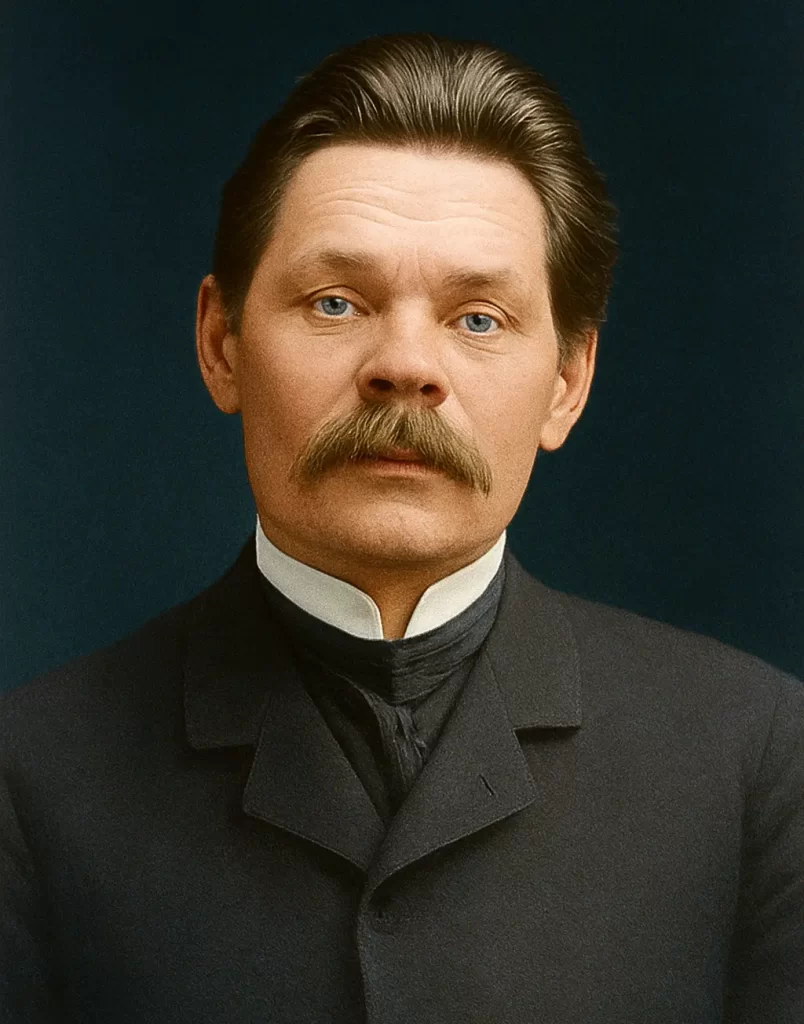
Maxim Gorky
Maxim Gorky (born Alexei Maximovich Peshkov, March 28, 1868 – June 18, 1936) was a Russian and Soviet writer, playwright, and political activist. Often called the father of Soviet literature and a founder of socialist realism, his works reflect the struggles of the poor, the resilience of the human spirit, and the moral dilemmas of a rapidly changing Russia.
Early Life
Birth and Childhood: Born in Nizhny Novgorod, Russia, Gorky lost his father at the age of five. After his mother remarried, he was raised mainly by his grandmother, whose folk tales deeply influenced him. His childhood was filled with poverty, abuse, and hardship, shaping his lifelong sympathy for the oppressed.
Education: He had little formal schooling and was largely self-taught. From a young age, he worked as a shoemaker’s apprentice, baker’s assistant, and dockworker.
Wanderings: In his teens, Gorky became a wanderer, traveling across Russia and taking odd jobs. These travels exposed him to peasants, workers, and outcasts—people who later became central to his stories.
Literary Career
Pseudonym: He adopted the name Maxim Gorky, meaning “Maxim the Bitter”, reflecting his harsh view of society’s injustices.
Early Success: In the 1890s, Gorky gained fame with short stories such as “Chelkash” (1895) and “Twenty-Six Men and a Girl” (1899), noted for their realism, compassion, and romantic spirit.
Major Works:
Novel: The Mother (1906) – considered the first great novel of socialist realism, showing the political awakening of a working-class woman.
Plays: The Lower Depths (1902) – portrays society’s outcasts with themes of despair and fleeting hope.
Autobiographical Trilogy: Childhood (1913), In the World (1916), My Universities (1923) – blending personal experiences with social commentary.
Short Stories: Works like The Mother of a Traitor (1906) highlight deep moral struggles and sacrifice.
Style and Themes: Gorky combined romanticism and realism, focusing on human dignity, social injustice, and the resilience of ordinary people.
Political Activism
Revolutionary Role: Gorky was deeply involved in politics, especially during the 1905 Revolution, supporting the Bolsheviks and using his writing to promote social change. He was frequently arrested and exiled.
Exile and Return: He spent years abroad, especially in Capri, Italy, due to ill health and political tensions.
Soviet Period: Though critical of Bolshevik violence early on, Gorky later reconciled with the Soviet regime. Returning to the USSR in 1928, he became a literary and cultural leader, promoting socialist realism and presiding over the First Congress of Soviet Writers (1934).
Later Life and Death
In his final years, Gorky was celebrated in the Soviet Union but remained under Stalin’s close watch.
He died in Moscow on June 18, 1936. The official cause was natural illness, but some historians suggest he may have been poisoned on Stalin’s orders due to political disagreements. His death remains a matter of debate.
Personal Life
Gorky married Yekaterina Volzhina in 1896 and had two children, Maxim and Yekaterina.
He later lived with Maria Andreyeva, an actress and revolutionary, and had a complicated private life.
Lifelong health struggles, including tuberculosis, influenced his periods of exile in warmer climates.
Legacy
Literary Impact: Gorky bridged 19th-century Russian realism (like Tolstoy and Chekhov) with 20th-century Soviet literature, influencing countless writers worldwide.
Cultural Role: He promoted education, publishing, and young authors in Soviet Russia.
Commemoration: Cities (including Nizhny Novgorod, renamed “Gorky” from 1932–1990), theaters, and institutions were named after him.
Humanism: Despite political ties, his works focus on universal human values—struggle, suffering, and hope.
Context of The Mother of a Traitor
Published in 1906, The Mother of a Traitor reflects Gorky’s interest in moral choices during social and political crises. Written during the aftermath of the 1905 Revolution, it mirrors Gorky’s preoccupation with loyalty, betrayal, sacrifice, and the tension between personal love and social duty.
Themes
1. Mother’s Love vs. Duty to the Nation
The central conflict in the story is between a mother’s natural love for her child and her moral duty to her homeland.
In most situations, a mother’s instinct is to protect her son at any cost. But in this story, Gorky presents an extraordinary test of motherhood.
When the mother realizes that her son is ready to betray his own people out of cowardice, she feels torn between saving him and doing what is right.
Finally, she chooses her duty to the nation, proving that true love is not blind protection, but the courage to stop someone—even her own son—from doing wrong.
This theme highlights that personal relationships must sometimes be sacrificed for greater moral responsibility.
2. Betrayal and Cowardice
The son in the story symbolizes the weakness and selfishness of betrayal.
He is afraid of danger and thinks of saving his own life rather than standing with his people in times of crisis.
Gorky shows betrayal not as a small mistake, but as a serious crime against society and humanity.
The son’s cowardice is in direct contrast to his mother’s bravery.
This theme makes it clear that cowardice leads to shame and dishonor, while loyalty demands courage.
3. Sacrifice and Moral Strength
The mother’s decision to hand over her son is the ultimate sacrifice.
Sacrifice here does not mean just giving up comfort or wealth, but giving up her own flesh and blood for the sake of truth.
Her strength comes from a deep understanding of right and wrong. She knows that by saving her son, she would be allowing injustice.
Gorky presents the mother as a symbol of moral strength, proving that even ordinary people have the power to act heroically.
This theme underlines that true strength lies in standing for what is right, not in protecting what is dear at any cost.
4. Patriotism and Loyalty
The story celebrates patriotism—the idea that loyalty to one’s country and people is greater than loyalty to family.
The mother becomes the embodiment of patriotism, as she refuses to let her son’s selfishness ruin the honor of their community.
Patriotism here is not shown in grand speeches, but in quiet, painful sacrifice.
The son, on the other hand, represents the opposite—someone ready to sell his own people for his safety.
Through this contrast, Gorky highlights the importance of loyalty, courage, and national pride.
5. Justice and Collective Conscience
Another powerful theme is the idea of justice. The villagers represent the collective voice of society, demanding fairness and punishment for betrayal.
The mother’s decision to give up her son shows that justice must be impartial—it cannot be bent even for one’s own child.
Gorky uses this theme to show that a society survives only when people respect justice above personal feelings.
The “collective conscience” of the people makes betrayal unforgivable, and the mother becomes the instrument of that justice.
This theme teaches that the law of society is higher than individual emotion.
Style
1. Realistic and Simple Language
Gorky uses plain, direct, and realistic language.
His words are not ornamental but powerful because of their simplicity and emotional force.
The story avoids long philosophical debates; instead, it uses short, clear dialogues and descriptions that strike directly at the reader’s heart.
This style reflects Gorky’s belief that literature should speak for the common people, in their voice, not in an artificial or elite language.
2. Dramatic Contrast
The story is built around contrasts:
Mother vs. Son
Courage vs. Cowardice
Loyalty vs. Betrayal
Gorky sharpens these contrasts through strong dialogue and actions, making the moral conflict clear.
This dramatic style makes the story almost like a tragic play, where the climax is the mother’s final decision.
3. Emotional Intensity
Gorky’s style is full of deep emotional intensity.
The pain of the mother, the fear of the son, and the heavy weight of decision are described in a way that the reader feels the tension.
The emotions are not exaggerated but controlled and dignified, which makes them even more powerful.
This gives the story a tragic and heroic tone at the same time.
4. Symbolic and Universal Tone
Though the story is about one mother and one son, Gorky uses them as symbols:
The mother = symbol of justice, courage, and the nation’s moral conscience
The son = symbol of betrayal, weakness, and selfishness.
This symbolic style makes the story universal—it is not just about Russia, but about any society where loyalty and justice are tested.
Thus, the story rises above the personal to the universal human struggle between love and duty.
5. Oral/Narrative Quality
The story has the feel of an old folktale or legend told by word of mouth.
Short, rhythmic sentences and repetition give it a kind of oral storytelling quality.
This style makes the story memorable, almost like a parable, carrying a moral lesson for all.
6. Conciseness and Economy of Words
Gorky does not waste words.
The story is short, tightly constructed, and without unnecessary descriptions.
Every sentence serves the purpose of moving towards the final moral decision.
This economy of expression gives the story sharpness and clarity, leaving a lasting impact.
Symbolism
1. The Mother
She is not just an ordinary village woman.
She symbolizes conscience, justice, and the moral strength of a nation.
Her character reflects the unshakable spirit of Mother Russia, who would rather sacrifice her own child than allow the nation to be betrayed.
Symbolically, she represents selfless duty over personal love.
2. The Son
The son is a symbol of betrayal, cowardice, and selfishness.
He puts his own safety above loyalty to his people.
As a symbol, he represents all those who sell out their country or community for personal gain.
His weakness highlights the moral corruption that Gorky wanted society to reject.
3. The Mother–Son Conflict
This is not just a family quarrel.
It symbolizes the eternal conflict between love and duty, blood ties and moral responsibility.
On a larger level, it represents the struggle of a nation when some people betray while others stay loyal.
The mother choosing justice over blood symbolizes the idea that individuals are less important than the survival of the community.
4. The Village / People
The “people” mentioned in the story stand for the nation, community, and collective spirit.
They symbolize the idea of solidarity—that individuals must live and act in loyalty to the larger society.
To betray them is to betray the very life-force of a country.
5. The Act of Sacrifice
When the mother decides to hand over her son, it symbolizes ultimate moral courage.
It shows that justice and truth are higher than blood relations.
This act is symbolic of the idea that a corrupt individual must be sacrificed for the survival of the community.
The sacrifice also gives the story a tragic, almost mythic quality, like ancient legends of heroes and martyrs.
6. The Title: “The Mother of a Traitor”
Even the title is symbolic.
It defines the mother not by her own name, but through her son’s betrayal.
This symbolizes how one person’s betrayal can bring shame and identity crisis to an entire family or nation.
But it also shows the mother’s strength—though branded as “the mother of a traitor,” she proves herself greater than the betrayal.
Very Short Answer Questions
Who is the author of “The Mother of a Traitor”?
Maxim Gorky.
What is the central relationship in the story?
Mother and son.
What crime does the son commit?
He betrays his people.
What does the mother value more—love or duty?
Duty.
Who does the son betray?
His village/nation/people.
What does the mother decide to do with her son?
Hand him over to justice.
What does the mother symbolize?
Conscience and loyalty to the nation.
What does the son symbolize?
Betrayal and cowardice.
What is the main theme of the story?
Loyalty to community over personal ties.
What does the story highlight—the individual or the collective?
The collective (society/nation).
What is the mother’s greatest sacrifice?
Giving up her own son for justice.
What does the conflict between mother and son represent?
Love vs. duty.
What does the title “The Mother of a Traitor” suggest?
The shame and burden of having a disloyal son.
What kind of ending does the story have?
Tragic but morally strong.
What is the tone of the story?
Serious and moralistic.
Which quality of the mother is most emphasized?
Moral courage.
What lesson does the story teach?
Justice and loyalty are higher than personal love.
What larger idea does the story reflect?
Duty towards one’s nation and people.
Which side does Gorky clearly support—traitor or mother?
The mother.
In one word, what does the son represent?
Treachery.
Short Answer Questions
Why is the story titled The Mother of a Traitor?
The title shows the pain of a mother whose son betrays his people. Instead of being remembered as a proud mother, she is forced to carry the shame of her son’s treachery. Gorky highlights that a traitor not only disgraces himself but also brings dishonor to his family. The mother becomes a symbol of sacrifice, choosing her duty to society over her love for her son.
How does Gorky present the conflict between love and duty?
The mother loves her son deeply, but when he betrays his people, she faces a painful choice. She decides that loyalty to society is greater than personal love. By handing him over, she shows that justice and truth are more important than emotions. This conflict gives the story its tragic power and moral lesson.
Describe the character of the mother in the story.
The mother is strong, courageous, and morally upright. She loves her son but refuses to support his betrayal. She represents the voice of conscience and sacrifice. Gorky presents her as an ideal figure who places duty above personal emotions, making her a timeless symbol of justice.
Why does the son become a traitor?
The son betrays his people for selfish reasons—either for fear, money, or personal gain. He lacks courage and loyalty. Gorky does not glorify him; instead, he shows how weakness leads to betrayal. Through him, the story warns against selfishness and disloyalty to one’s nation.
What moral lesson does the story teach?
The story teaches that justice, truth, and loyalty to society are higher than personal ties. Love for family cannot be above love for the nation. By punishing her son, the mother shows moral courage. The lesson is clear: a traitor must face consequences, even if he is one’s own child.
How does the story reflect Russian society of Gorky’s time?
In early 20th-century Russia, loyalty, betrayal, and social responsibility were major issues. The story reflects the idea that individuals must stand with their community in difficult times. Gorky uses the mother’s sacrifice to show the importance of collective duty, which echoed the revolutionary spirit of that period.
What is the symbolic role of the mother?
The mother symbolizes moral strength, sacrifice, and justice. She also represents the nation that punishes traitors. Her decision shows that society must be protected, even at the cost of personal suffering. In this way, she is both a mother and a guardian of collective honor.
Explain the tone and style of the story.
The tone is serious, tragic, and moralistic. Gorky writes in a simple but powerful style, focusing on the emotions of the mother and the shame of betrayal. His language is direct and symbolic, which makes the story effective as both literature and moral teaching.
What is the central conflict in the story?
The main conflict is between the mother’s love for her son and her sense of duty to society. While the son chooses betrayal, the mother chooses loyalty. This personal conflict represents a larger moral battle—between selfishness and responsibility. It gives the story its depth and universal appeal.
Why is the story considered timeless?
Though written in 1906, the story deals with universal values—love, betrayal, justice, and sacrifice. Every society faces traitors, and every generation respects those who put duty above self. The mother’s moral courage makes the story relevant across times and cultures, which is why it remains powerful even today.
Critical Analysis
Introduction
Maxim Gorky, one of the greatest Russian writers of the early 20th century, is known for his deep concern with social justice, human struggle, and moral responsibility. The Mother of a Traitor is a short story that powerfully portrays the conflict between maternal love and duty toward society. Written in the revolutionary period of Russia, the story is both a personal tragedy and a universal lesson on loyalty and justice.
Central Idea
The central idea of the story is that loyalty to society and justice is higher than personal love. A mother, though bound by deep affection for her son, cannot forgive his betrayal of the people. She sacrifices her maternal feelings for the greater good, showing that traitors bring shame not only to themselves but also to their families.
Plot Summary
The story is set in a city besieged by enemies. Hunger, despair, and death haunt the citizens. Amidst this suffering, people whisper about a woman—Monna Marianna, the mother of the enemy commander who is leading the attack against his own birthplace.
She wanders silently through the streets at night, shunned by others as the mother of a traitor. Inwardly, she suffers the deepest conflict: her son is her beloved child, yet he is also destroying the very soil, walls, and people she loves.
When she finally meets him in the enemy camp, she sees him in rich clothes, intoxicated with dreams of glory. He boasts of conquering the city and justifies destruction as equally heroic as creation. The mother listens, realizing that her son has lost the very essence of humanity—compassion, continuity, life.
In the climax, she lulls him into resting on her breast, and while he sleeps, she kills him with her own hands. Then she kills herself too, declaring that she has fulfilled her duty both as a citizen (saving her city) and as a mother (remaining with her son in death).
Themes
Love vs. Duty – The mother’s conflict between maternal love and social responsibility forms the core of the story.
Betrayal – The son’s treachery highlights the destructive power of selfishness and cowardice.
Sacrifice – The mother’s decision represents selfless sacrifice for the greater good.
Justice and Morality – The story upholds justice as an eternal value above personal ties.
Social Responsibility – Loyalty to one’s people is shown as the highest duty.
Characters
The Mother – Central character, representing courage, morality, and sacrifice. She is both deeply human (in her pain) and symbolic (as a guardian of justice).
The Son – Weak and selfish, he betrays his people for personal gain. He symbolizes treachery, dishonor, and moral weakness.
Society (implied) – The silent background force that demands justice and stands as the larger community to which the mother feels responsible.
Structure and Style
The story is short, compact, and focused on a single moral dilemma.
Structure – It follows a straightforward narrative: discovery of betrayal → mother’s inner conflict → resolution through sacrifice.
Style – Gorky’s style is clear, symbolic, and emotionally powerful. He avoids unnecessary detail, relying on simplicity and directness. The tone is tragic yet moralistic, giving the story the quality of a parable.
Historical Context
Gorky wrote during a time of political unrest in Russia, just before and after the 1905 Revolution. Betrayal, loyalty, and sacrifice were common themes in revolutionary literature. The story reflects the revolutionary spirit—emphasizing duty to the people over personal emotions. It also reflects Russian folk traditions, where traitors were condemned and loyalty to the community was praised.
Critical Commentary
Critics often view The Mother of a Traitor as a moral parable rather than a traditional short story. It is less concerned with psychological depth and more with symbolic value. Some see it as propaganda supporting revolutionary ideals, while others appreciate its universal moral lesson. The mother emerges as one of Gorky’s most memorable figures—embodying strength, sacrifice, and justice.
Conclusion
The Mother of a Traitor is a timeless story that combines personal tragedy with universal values. Through the character of the mother, Gorky teaches that betrayal must never be tolerated, even at the cost of one’s deepest love. The story’s simplicity, symbolism, and moral weight make it both a powerful piece of literature and a lasting moral lesson.