Halfway House
The original Hindi play, Aadhe-adhure, was written in 1968. Bindu Batra’s English translation of the work, titled Halfway House, was originally published in Enact 53 in 1971. The second edition of the translation is published by Worldview in 1999, which is an imprint of Book Land Publishing Co.
The play begins with a narrator called “The Man in a Black Suit.” He stands in a messy, broken-down living room and tells the audience that he is “undefined,” just like the story they are about to see. A special feature of this play is that this same actor plays all the male roles—the husband, the boss, the friend, and the lover. This suggests that for the main female character, Savitri, all men are eventually the same: disappointing and incomplete. The story is set in a middle-class home that is full of tension. Savitri is the only one who works and earns money, while her husband, Mahendranath, has been unemployed for years after losing his fortune. This role reversal makes Savitri angry and bitter, while Mahendranath feels useless and humiliated.
The parents’ constant fighting has deeply affected their three children. The eldest daughter, Binni, returns home unexpectedly because her own marriage is failing. She admits that she feels a “poison” in her parents’ house that she has carried into her own life, making it impossible for her to be happy with her husband. The son, Ashok, is a rebellious young man who refuses to work. He spends his time sleeping or cutting pictures out of magazines to escape reality. The youngest daughter, Kinni, is a rude and bratty teenager who acts out because she feels neglected by her parents, who are too busy fighting to care for her.
In the first act, Savitri tries to fix their financial problems by inviting her boss, Mr. Singhania, to the house. She hopes he will give Ashok a job. However, the meeting is a disaster. Singhania is arrogant and talks only about himself. Ashok hates Singhania’s fake behavior and mocks him by drawing a cartoon of him as a “monster.” After the guest leaves, a huge argument breaks out. Mahendranath feels insulted by Savitri’s constant reminders that he is a “parasite.” Hurt and angry, he packs his things and storms out of the house, swearing he will never come back.
In the second act, Savitri decides she has had enough. She tries to find a way out of her miserable life by turning to an old friend named Jagmohan, who is rich and successful. She dresses up and goes out with him, hoping he will take her away from her family so she can start a new, happy life. She even tells her daughter Binni that she might not return. However, her hope is crushed when Jagmohan refuses to help her. He makes excuses about his job and social status, leaving Savitri with nowhere to go.
While Savitri is out, Mahendranath’s close friend, Juneja, comes to the house. When Savitri returns defeated, Juneja confronts her with the harsh truth. He tells her that she is the reason her husband is broken. He explains that Savitri is looking for a “perfect man” who has everything—money, power, and intelligence. Juneja argues that since no single man can be perfect, Savitri would have been unhappy with anyone she married. He tells her that her emptiness comes from inside her, not from the men in her life.
The play ends in hopelessness. Despite Mahendranath’s dramatic promise to leave forever, he returns to the house. He walks in looking sick, weak, and defeated, leaning heavily on his son Ashok for support. Savitri sits frozen in a chair, realizing that her escape has failed. The family is trapped together once again. The title Halfway House refers to the fact that all the characters are “halfway” people—incomplete, unsatisfied, and unable to fix their broken lives, yet unable to leave each other.
Plot
Prologue:
The play opens in a living room that looks very messy and crowded. It belongs to a middle-class family that used to be well-off but is now struggling. The room is filled with broken furniture—like a sofa, dining table, and cupboard—that is no longer used properly because there isn’t enough space . This disorderly setting immediately shows the audience that the family living here is going through a hard time.
A man dressed in a black suit is sitting on the sofa, smoking a cigar. He stands up and speaks directly to the audience . He admits that he is a strange character because he doesn’t have a clear job like a normal actor, director, or stage manager. He calls himself “undefined” and says the play is exactly like him—without a clear shape or definition .
The Man explains that he represents the ordinary person you might bump into on the street. Even though you might ignore him in real life, he claims there is a strong connection between him and the audience. He says that there is a little bit of him inside everyone . This suggests that the problems shown in the play are common problems that many people face.
He explains that he is the one who defines the story. He makes an important point about the relationship between men and women in this family. He says that if the woman of the house were replaced, or if she took on the man’s role and the man took on hers, the misery would remain the same . The struggle is not about specific people, but about their circumstances and interactions.
Finally, he admits that the play might seem incomplete. He invites the audience to judge the play, change the characters, or even rewrite the ending in their heads if they want to give it a definite form . Before the lights fade out, he gives the audience a hint: they will meet him again many times during the play. This foreshadows that this same actor will return to play different roles (the husband, the boss, the friend, etc.).
Analysis
Setting the Mood: The Messy Room
The play begins by showing a living room that looks very messy and crowded. It is filled with furniture like a sofa, dining table, and cupboard that are broken and no longer work properly. Because the house is small and the family has nowhere else to put these things, the room feels stuffed and uncomfortable. This setting immediately tells the audience that this is a middle-class family that is going through a very hard time. The disorder suggests that they used to be doing well but have now lost their money and status.
This messy room is also a symbol of the family’s unhappy life. Just like the furniture is broken and falling apart, the relationships between the family members are also damaged. The “over-crowded” feeling of the room mirrors how the characters feel inside the house—suffocated and trapped by each other. It sets a sad mood right from the start, showing that the chaos in their physical surroundings matches the chaos in their minds and hearts.
The “Undefined” Narrator
The play opens with a character called “The Man in a Black Suit” who stands on stage smoking a cigar. He is very different from normal characters because he tells the audience right away that he is “undefined.” He explains that he does not have a clear job like an actor, director, or stage manager. Instead, he says he is formless, just like the play itself. By refusing to take a specific label, he suggests that the story we are about to see is also going to be messy and not follow a standard, happy pattern.
He also explains that he represents the ordinary person you might pass on the street without noticing. Even though he seems like a stranger, he claims that he is actually very similar to everyone watching the play. He says that there is a little bit of him inside every person. This means that he is an “Everyman” figure, and his presence suggests that the problems shown in the play are not unique to this one family, but are common problems that many people in society face.
The Idea of “The Same Story Everywhere”
One of the most important things the narrator says is that the specific details of the family do not really matter. He argues that if this family were different, or if the circumstances changed, the basic misery would still be the same. He even says that if the woman (Savitri) and the man (Mahendranath) swapped places, the conflict would not change. This is a very strong statement that suggests people are often trapped by their situations, no matter who they are.
This idea creates a somewhat hopeless feeling for the story. It implies that the unhappiness in the play is not just because Mahendranath is weak or Savitri is angry, but because life itself has forced them into these painful roles. The narrator is telling the audience that human beings are often helpless against their circumstances. He believes that the struggle for happiness in this kind of environment is doomed to fail, regardless of which individual person is in charge.
A Warning to the Audience
Before he leaves the stage, the Man gives the audience a mysterious hint. He tells them, “You will meet this undefined character many times.” On a simple level, he is explaining how the play is cast: the same actor who plays the narrator will also return to play four other characters—the husband, the boss, the friend, and the lover. He is warning the audience to pay attention to this specific actor as he changes costumes and roles throughout the show.
On a deeper level, this warning has a serious meaning about the main character, Savitri. By having one man play all these different roles, the playwright is showing that for Savitri, all men are eventually the same. She looks for a “complete” man who can make her happy, but every man she meets is just a different version of the same disappointing reality. The narrator is foreshadowing the fact that no matter where Savitri turns for help, she will find the same incompleteness in every man she meets.
Breaking the Fourth Wall
The Prologue uses a special technique where the character talks directly to the audience instead of pretending they aren’t there. This is called “breaking the fourth wall.” The narrator invites the people watching to judge the play, and he even tells them they can try to “re-write” the story in their heads if they don’t like it. He admits the play is “undefined” and leaves it open for the audience to decide what it really means.
The purpose of doing this is to make the audience think rather than just watch. The narrator doesn’t want the viewers to just sit back and be entertained; he wants them to actively engage with the problems being shown. By telling them that the play is incomplete, he challenges them to think about their own lives and the “incomplete” nature of human happiness. It makes the play feel more real and urgent, as if it is a question being asked to the audience rather than just a story being told.
Act 1:
Part 1
The play begins by showing us a living room that looks very messy and unorganized. It is not just a little untidy; it looks like a place where too many things are kept in too small a space. You can see old furniture like a sofa, a dining table, and a cupboard, but they are all broken or damaged in some way. They are arranged badly because there isn’t enough room for them. This creates a feeling of suffocation right from the start.
Besides the big furniture, there are many small items scattered all over the room. A school bag is lying open on a small table, with books spilling out of it onto the floor. On the sofa, there are old magazines, a pair of scissors, and some paper cuttings, showing that someone has been cutting out pictures. A pair of men’s pyjamas is hanging carelessly over the back of a chair, which makes the room look even more untidy.
The first person to enter the room is “The Woman,” whose name is Savitri. She walks in carrying several heavy parcels in her hands. She is dressed simply in a sari, but she still looks very attractive and younger than her actual age. However, her face shows that she is very tired and irritable. It seems like she has had a long, hard day at work and is not happy to be back home.
She immediately starts complaining as soon as she enters the room. She looks around and sees the mess, muttering that no one is ever at home to help her. She sees the torn books and gets angry at her daughter, Kinni. Then she looks at the magazine cuttings on the sofa and gets annoyed with her son, Ashok, for wasting his time on film stars like Elizabeth Taylor instead of doing something useful.
Her anger increases when she spots the pyjamas hanging on the chair. She picks them up with a look of disgust on her face. She calls her husband “The Bara Sahib” (The Big Boss) in a mocking tone. She complains that he stays idle at home all day but cannot even pick up his own clothes or clear the table. She feels that every single household chore is left for her to do, even though she is the one working outside.
Just then, her husband, “The First Man” (Mahendranath), enters the room from the courtyard. He is wearing simple cotton clothes. He notices that Savitri is back and remarks that she must have caught an earlier bus than usual. He sounds a little guilty, as if he knows he should have cleaned the room before she arrived.
Savitri does not greet him kindly. Instead, she snaps at him, asking him where he was. She points out that the house is always a mess whenever she returns. Mahendranath tries to make an excuse, saying he was just outside in the market. He tries to take the pyjamas from her hand to put them away, but she refuses to give them to him.
She angrily opens the cupboard and shoves the pyjamas inside herself. She asks him who was there for tea, noticing the tray on the table. Mahendranath admits that he made tea for himself. Savitri mocks him for making a whole pot of tea just for one person. She then asks if he gave their daughter Kinni her milk, and he admits he hasn’t even seen her.
Mahendranath tries to rock in his chair to relax, but Savitri’s constant cleaning and complaining make him nervous. She demands to know how long he was out. She is worried because she is expecting a guest. She tells him that her boss, Mr. Singhania, is coming to visit them today. This makes Mahendranath stop rocking his chair immediately.
He asks if she invited Singhania. Savitri says yes, because he is her boss. Mahendranath seems jealous and suspicious. He makes a snide comment about how convenient it is that the boss just “happens” to pass by their house. Savitri gets defensive and says that people envy her because her boss treats her well. She mentions that this is the third time he is visiting.
Mahendranath implies that there is something wrong with the boss coming to their house so often. He says that people must know he visits. Savitri gets very angry and asks him what he is trying to imply. She challenges him to say it clearly if he thinks she is doing something wrong. Mahendranath backs down and says he shouldn’t say anything, but his silence speaks volumes.
Savitri attacks him back, saying he always remains silent when he should speak. She reminds him that he was never at home during the boss’s previous visits either. Mahendranath makes excuses, saying he had work to do. Savitri laughs at this, knowing that he doesn’t really have any work. She knows he just finds reasons to leave the house to avoid meeting her guests.
They start arguing about Mahendranath’s friend, Juneja. Mahendranath says he was thinking of going to see Juneja. Savitri hates Juneja. She believes he is a bad influence on her husband. When Mahendranath says he wants to go to Juneja’s house, Savitri mocks him, telling him to go and “show his face” there since he owes Juneja money.
Mahendranath tries to defend his friend. He says Juneja has always helped him. Savitri snaps back that they would have been better off without his help. She believes Juneja is responsible for their financial ruin. She starts dusting the furniture aggressively, making Mahendranath stand up and sit down repeatedly, treating him like a piece of furniture himself.
This leads to a bitter argument about their past. Savitri reminds him that both he and Juneja invested the same amount of money in a factory. However, Juneja became successful and rich, while Mahendranath lost everything. She asks him why fate favored Juneja and not him. This is a very sore point for Mahendranath, and he struggles to swallow his anger.
He tries to blame their spending habits. He says they spent too much money on house rent, taxis, and school fees. Savitri interrupts him and adds “alcohol and parties” to the list. She reminds him that he was the one who enjoyed those things. She refuses to take the blame for their poverty, insisting that he was the one who mismanaged everything.
Mahendranath, feeling defeated, tries to change the topic. He says he won’t go to Juneja’s house if it makes her this angry. But Savitri pushes him further. She tells him to go ahead and provoke a quarrel so he has an excuse to leave. She accuses him of running away every time a guest comes, making it look like she sends him away on purpose.
She tells him that in the future, she will make her guests take an appointment with him since he acts like such a “busy man.” This is pure sarcasm because everyone knows he has no job and nothing to do. Mahendranath feels humiliated by her words. He gathers some strength and asks her if she ever wonders why he stays away from home.
Savitri retorts that only he and his son know why they disappear. She compares him to their son, Ashok, saying both of them run away for days at a time. Mahendranath gets offended that she is comparing him to his own son. He feels he is different, but Savitri says they are exactly the same—both are ruining their lives.
Then Mahendranath brings up their daughter, Binni. He asks who Binni learned to run away from. This shocks Savitri. Just as the argument is about to get worse, they hear Binni’s voice from the street calling out “Mama!” Savitri turns pale, realizing her daughter has come back unexpectedly.
Mahendranath gets up, sensing trouble. He says, “Must be the same thing again,” implying that Binni has left her husband’s house once more. Savitri tells him to go and see what she wants. Binni calls out from the street asking for change to pay the rickshaw driver. This is a bad sign because it means she came without any money.
Savitri asks Mahendranath to pay the rickshaw. She reminds him that she gave him money to buy milk earlier. Mahendranath admits he spent some of it on a newspaper for himself but goes out to pay. This small detail shows how tight their money situation is; even a few coins for a newspaper are counted.
Binni enters the room followed by her father. Her sari is crumpled, and she looks messy and distracted. There is an awkward silence. No one hugs her or welcomes her warmly. Mahendranath just tells her to sit down. Binni asks where her mother is, and just then Savitri enters with tea, trying to act normal.
Mahendranath makes hand gestures to Savitri, pointing out that Binni has arrived without any luggage. This confirms their fear that she has run away from her husband, Manoj. Savitri offers Binni tea, but Binni refuses, saying she wants to wash her face first. Savitri notices Binni’s eyes look strange, but Binni dismisses it as imagination and leaves the room.
Once she is gone, Mahendranath and Savitri start whispering. Mahendranath points out that she didn’t even bring a suitcase and had only one rupee in her pocket. He blames Savitri for the marriage. He reminds her that she was the one who praised Manoj and encouraged him to visit the house. He says if she hadn’t done that, Binni would not be in this mess today.
Part 2
The second part begins with Savitri and Mahendranath continuing their tense discussion about their daughter. Mahendranath wants to ask Binni straight questions about why she has returned. He thinks they need to know the truth. Savitri refuses, saying she cannot ask. They blame each other for the situation, with Mahendranath saying that if people listened to him, things would be different.
Binni comes back into the room, looking a little more relaxed after washing her face. She senses the tension immediately. She asks her mother why she is looking at her like that. She realizes her parents have been talking about her. Mahendranath tries to pretend he was talking about something else, but it is obvious he is lying.
Eventually, the parents confront her. Savitri asks Binni directly, “Are you happy?” This is a very heavy question. Binni tries to dodge it by saying “Yes, very,” but her voice and face show that she is lying. Mahendranath looks away, knowing it is not the truth. He tells her she doesn’t look happy. Binni gets defensive and asks if she looks like she has a disease like leprosy or cancer.
Mahendranath, feeling uncomfortable with the emotional conversation, sits down and hides behind his newspaper. He even holds it upside down at first because he is so nervous. He starts reading out loud headlines about terrible news—like human sacrifice and terror in villages—just to avoid talking about the family’s problems. Savitri yells at him to be quiet.
Savitri gently leads Binni to a desk and asks her to tell the truth. Binni finally breaks down and admits that while nothing specific is wrong, everything is wrong. Savitri tries to guess the problem. She asks if Manoj is unfaithful, bad-tempered, poor, or sick. Binni says “No” to all of these things. This confuses Savitri because she thinks these are the only reasons a marriage fails.
Binni tries to explain her feelings using a metaphor. She says it is about “the air” they breathe. Mahendranath mocks this, calling it a stupid reason. But Binni explains that when two people live together, sometimes they become strangers. She feels a strange “poison” inside her that ruins everything she touches. She says she feels helpless and fearful, as if a destructive fate is controlling her.
Then Binni reveals the most painful truth. She says that her husband, Manoj, blames her parents’ house. He tells her that she has brought something from this house—a bad influence or a way of thinking—that prevents her from being natural and happy. This hits Savitri hard, as if she has been slapped. It means the unhappiness of the parents has infected the daughter.
Mahendranath gets very offended. He asks if Manoj is talking about his house. Savitri snaps at him, sarcastically asking if he really considers it his house. This leads to another fight about ownership and responsibility. Mahendranath feels hurt that his role in the house is constantly questioned.
The heavy conversation is interrupted by the youngest daughter, Kinni. She runs in from the street wearing her school uniform. She is angry because no one was at home when she returned. She demands hot milk immediately. When Savitri says she will heat it, Kinni complains that she is hungry and has no money to buy food at school.
Kinni is very rude and disrespectful. She tells her mother that she won’t go to school anymore if she doesn’t get new skeins of thread for her needlework class. She mentions that her teacher humiliated her in front of the whole class. She also complains about having to wear torn socks and needing new uniforms. Her complaints show that the family is struggling financially and she is being neglected.
Kinni also attacks her elder brother, Ashok. She says she could “loaf around all day” like him instead of going to school. Binni scolds her for being disrespectful to her elder brother, but Kinni doesn’t care. She says Ashok is useless. This shows that the children have no respect for each other or their parents because of the environment in the house.
Just then, Ashok enters the room. He looks messy, hasn’t shaved for days, and is wearing old, worn-out clothes. He enters from the inner room where he was sleeping. Kinni immediately accuses him of pulling her hair. Ashok denies it jokingly, saying he is thinking of growing a “goatee” beard. He acts very casually, ignoring the tension in the room.
Ashok and Kinni start fighting. Ashok teases her about her age. He treats her like a child, but Kinni sticks her tongue out at him. The fight escalates when Ashok reveals he has taken a book from Kinni. He hides it under his shirt. When Mahendranath asks to see it, it is revealed to be the “Memoirs of Casanova,” a book inappropriate for a child. This adds to the chaos.
Mahendranath tries to take control of the situation, but no one listens to him. The children answer him back rudely. This pushes Mahendranath over the edge. He starts shouting, asking, “What is my age?” and “What is my status in this house?” He is heartbroken that after years of looking after the family, he receives only insults and disrespect.
He delivers a very sad speech. He says he is treated like a “stamp of respectability” to be used only when needed. He calls himself an “idler” and a “parasite.” He says he is like “dry rot” in the house, eating away at its foundations. He admits he has ruined all their lives—Ashok’s, Binni’s, and Savitri’s—by sticking around.
Savitri asks him who he is saying all this for, implying he is just being dramatic. But Mahendranath is genuinely hurt. He shouts that he is no longer hungry and will never be hungry again. He storms out of the street door, leaving the family in stunned silence. The children look at their mother, wondering if he will come back.
Savitri, however, is not moved. She coldly tells Binni that he will be back before nightfall. She says this happens every other day. This shows how broken their relationship is; she doesn’t even take his threat to leave seriously anymore. The scene ends with the family sitting in silence, eating dry toast, and waiting for the next disaster.
Part 3
After Mahendranath leaves, the atmosphere in the house is still tense. Kinni takes a bite of the toast and spits it out, complaining that it tastes like charcoal. She throws a tantrum and runs out of the house. Ashok tries to go after her, but Savitri stops him. She tells him he cannot go out because her boss, Mr. Singhania, is coming soon.
Ashok hates Singhania. He calls him “that fellow” and says he doesn’t want a job from him. He mocks Singhania, saying the man doesn’t know how to sit or talk properly. He describes how Singhania scratches himself in public and asks stupid questions. Ashok thinks Singhania is a “pompous ass” and refuses to respect him just because he is rich.
Savitri defends Singhania. She reminds Ashok that he has a salary of five thousand rupees (which was a lot of money back then) and manages a whole office. She is desperate for Ashok to get a job so they can have some money. Ashok mocks the way Singhania speaks English, using phrases like “rising generation.” He is very cynical and refuses to play the game of pleasing the boss.
Suddenly, there is a knock on the door. Mr. Singhania enters. He is dressed in a Nehru jacket and trousers. Savitri welcomes him warmly, trying to hide the family’s stress. She introduces him to Binni. Singhania mistakenly asks if Binni is the daughter who had an operation, showing he doesn’t really remember details about Savitri’s life.
Singhania sits down and starts talking, but he doesn’t talk about the job for Ashok. Instead, he talks about himself. When offered tea, he refuses, citing an article in Reader’s Digest about how tea is bad for health. He then starts a long, boring story about his travels to Italy and how wonderful the climate is there. He completely ignores the fact that the family is poor and desperate.
Ashok sits in the corner, silent but active. He pulls out a notepad and starts sketching. Singhania notices but thinks Ashok is just writing notes. Singhania continues to ramble about “national values,” the “Cold War,” and how great Italian food is. He is completely self-absorbed. The contrast between his comfortable life and the family’s misery is very sharp.
Savitri tries to steer the conversation back to Ashok. She asks Singhania to help him. Singhania asks Ashok what division he got in his B.Sc. exam. Ashok, instead of answering politely, draws a big “Zero” in the air with his finger. This is a direct insult, but Singhania is too dense or polite to acknowledge it fully. He just says “Oh!” and checks his watch, saying he has to leave.
Before leaving, Singhania invites Savitri to his house to see his child, “Baby.” He says he will discuss the “Union problem” with her then. This suggests he treats Savitri more like a listener for his office problems than a person he wants to help. As he stands up to leave, he suddenly starts jumping around. He thinks an insect has crawled up his trousers.
This scene is both funny and pathetic. The “great” man is reduced to hopping around trying to squash a bug. Ashok watches this with amusement. Singhania complains about the variety of insects in India. Finally, he leaves, giving a parting speech about a “Maharishi” and horoscopes, showing how shallow he is.
Once he is gone, Ashok bursts out laughing. He asks Binni if she liked his “act.” He reveals that he was making a fool of Singhania the whole time. He shows Binni the sketch he was drawing. It is a caricature of Singhania, but drawn as a monster with ears on top of his head.
Savitri comes back in and sees the sketch. She is furious. She asks Ashok what he has drawn. Ashok spells it out: “M.O.N.S.T.E.R.” He points out the hanging tongue and scary eyes. Savitri screams at him to stop playing the fool. She tells him she will not stand for his pranks anymore.
Ashok fights back. He asks her why she invites people who make them feel “small.” He says that whenever these rich people come to their house, he feels humiliated because of their poverty. He accuses Savitri of only liking people for their labels—”Salary of five thousand,” “Commissioner,” etc. He says she doesn’t care about the person, only their status.
Savitri is deeply hurt by this accusation. She tries to explain her side. She says she invites these people not for herself, but for them—for Ashok, Binni, and the family. She explains that the burden of running the house alone is crushing her. Her husband is useless, and her son refuses to work. She feels she is drowning and just wants someone to share the load.
Ashok is not convinced. He asks her why she really does it. He hints that she does it for her own satisfaction, to feel important. The argument gets very heated. Ashok cruelly points out that she has failed everyone: Binni ran away, Kinni is spoilt, and Mahendranath is a wreck. He asks, “For whom do you do it?” implying she is actually selfish.
Savitri finally snaps. She realizes that her children and husband do not appreciate her struggle. She feels completely alone. She makes a final, desperate decision. She tells them, “From now on I’ll only bother about myself… You look after your own lives.” She says she doesn’t have many years left and refuses to waste them on ungrateful people.
The act ends with a very powerful image. The lights dim slowly. Soft, haunting music plays. Ashok stands in the semi-darkness, holding his magazine pictures. He starts cutting them into tiny pieces with his scissors, letting them fall to the floor. The sound of the scissors—snip, snip, snip—continues even after the stage goes dark. This sound symbolizes the family being cut apart, their connections severed, and the total destruction of their hope.
Analysis
The Setting as a Symbol
The play begins not with dialogue, but with a powerful visual description of the living room. The room is messy, cluttered, and filled with broken furniture that has lost its original polish and function. This physical disorder is not accidental; it serves as a mirror for the internal lives of the family members. Just as the sofa and tables are damaged and crowded together without enough space, the relationships within the family are fractured and suffocating. The lack of physical space in the room reflects the lack of emotional space the characters have for one another, creating an atmosphere of tension before a single word is spoken.
Furthermore, the specific items scattered around—like the torn books, the old magazines, and the swinging pyjamas—highlight the neglect and lack of care in the household. It suggests a home where people have stopped trying to maintain order or beauty because they are too exhausted by their misery. The “disorderly” room tells the audience immediately that this is a family in decline, struggling to hold onto their middle-class status while everything around them, and inside them, is falling apart.
The Reversal of Traditional Roles
A central theme in Act One is the complete reversal of traditional gender roles, which creates deep resentment between the husband and wife. In the context of 1960s India, the man was expected to be the provider and the head of the household. However, here we see Savitri as the sole breadwinner who goes out to work and deals with the harsh realities of the world. This burden makes her bitter and aggressive, as she feels she has to carry the weight of the entire family while her husband sits idly at home. Her fatigue is not just physical but emotional, born from the anger of having to perform a role she never wanted.
On the other hand, Mahendranath’s situation represents a loss of manhood and dignity. By staying at home and being financially dependent on his wife, he has lost his status and his voice in the family. He tries to hide his shame behind a newspaper or by making feeble excuses, but he is constantly reminded of his “uselessness.” This role reversal is toxic because neither partner is happy with their position; Savitri feels used and overburdened, while Mahendranath feels humiliated and emasculated, leading to a constant, grinding conflict between them.
The Wall of Silence
One of the most tragic aspects of this family is their inability to talk about the things that truly matter. When their eldest daughter, Binni, arrives unexpectedly without luggage or money, both parents know immediately that she has run away from her husband. However, instead of addressing this serious crisis, they dance around the subject. Mahendranath wants to ask direct questions to find out the truth, but Savitri silences him. They are terrified of facing the reality of her failed marriage because it mirrors their own failure.
Instead of honest communication, the family engages in petty arguments about trivial things. They fight over a cup of tea, a pair of pyjamas, or a glass of milk, using these small issues to vent their deep-seated anger. This creates a “wall of silence” where the real problems—unhappiness, lack of love, and fear of the future—are never discussed openly. They talk at each other with sarcasm and insults, but they never talk to each other with understanding or empathy, deepening their isolation.
The Poison of the House
Binni’s character introduces a psychological depth to the play when she admits why her marriage is failing. She reveals that her husband is not abusive or unfaithful, but that she feels unable to be happy because of the “air” she breathed in her parents’ home. She describes a strange “poison” that she has carried from this house into her own life, which makes her feel like a stranger to her husband. She realizes that growing up in an atmosphere of constant conflict has warped her ability to live a natural, normal life.
This admission is devastating because it suggests that the misery of the parents is contagious and hereditary. It implies that the children are victims who have been permanently damaged by their upbringing. Even though Binni physically left the house to get married, she could not escape the emotional scars. This idea creates a sense of hopelessness, showing that the dysfunction of the family is not just a temporary problem, but a deep-rooted curse that destroys the future of the next generation as well.
Ashok and the “Monster”
The son, Ashok, represents the cynical and rebellious younger generation who refuses to participate in what he sees as a fake society. He is unemployed and unkempt, but he is also sharp and observant. When Savitri brings her boss, Mr. Singhania, to the house in hopes of getting Ashok a job, Ashok refuses to play along. He sees through Singhania’s pompous behavior and superficial talk. Instead of trying to impress the boss, Ashok mocks him by drawing a caricature of him as a “monster” with a hanging tongue and scary eyes.
This sketch is more than just a prank; it is a powerful symbol of Ashok’s rejection of his mother’s values. Savitri worships success, money, and status, but Ashok sees these successful men as monstrous and hollow. He feels humiliated when his mother brings them home because it highlights their own poverty and desperation. His rebellion is his way of protecting his dignity, even if it means remaining unemployed. The “monster” represents the ugly truth behind the polite, successful facade that Savitri tries so hard to chase.
The Futility of Mahendranath’s Exit
The act culminates in a dramatic explosion of emotion from Mahendranath, who finally breaks under the pressure of constant insults. He delivers a painful speech asking, “What is my status in this house?” acknowledging that he is treated like a parasite or “dry rot.” For a brief moment, he tries to reclaim his dignity by storming out of the house, swearing that he is no longer hungry and will never return. It is a desperate attempt to prove that he is still a man with free will.
However, the tragedy of this exit lies in its futility. Savitri does not chase after him or panic; she coldly remarks that he will be back before nightfall because this happens all the time. This reaction undermines his dramatic gesture, turning it into something pathetic rather than heroic. It reinforces the central theme of the play: the characters are trapped in a “halfway” existence. They are unhappy enough to want to leave, but too weak and dependent to actually stay away, condemning them to repeat the same cycle of misery over and over again.
Act 2
Part 1
Act Two begins with a spotlight on two of the children, Binni (The Older Girl) and Ashok (The Boy), while the rest of the stage is dark. They are in the living room, which is still very messy from the events of the previous act. There are stray teacups and clothes scattered everywhere, showing that no one has bothered to clean up. Binni is standing by the writing desk trying to make sandwiches, while Ashok sits on the sofa playing a card game called Patience.
Binni is struggling to open a tin of cheese because the tin-cutter is broken or dull. She asks Ashok for help, but he refuses rudely, saying “No.” This simple interaction immediately shows the tension between the siblings. They are not working together; they are isolated in their own little worlds of misery. Binni gets annoyed and asks him why he bought the tin if they couldn’t open it.
Ashok replies that he bought what he could on credit, just as she had told him to. This reveals that the family is running out of money and relying on loans from shopkeepers. He also mentions that he made a phone call on credit. Binni gets suspicious and asks him who he called. Ashok reveals that he called “Uncle Juneja,” the man their mother hates.
Binni is worried and asks if he spoke to their father, Mahendranath. Ashok says no, he only spoke to Juneja. Binni asks if Juneja said anything about when their father would be back. Ashok delivers the bad news: Juneja said that Mahendranath is “not coming back.” This news hangs heavily in the air, suggesting that the father has finally carried out his threat to leave the family for good.
Binni is upset that Ashok didn’t tell her this earlier. She asks what the point is of making cheese sandwiches if her father isn’t coming home. Ashok says he thought she was making them for herself. He adds that he thought their father might return by the time their mother, Savitri, came back from work, because both of them like cheese sandwiches.
Binni suggests that Uncle Juneja also likes cheese sandwiches, so they could offer them to him. Ashok asks if Juneja is coming to the house. Binni confirms that yes, Juneja is coming specifically to talk to their mother. This makes Ashok nervous because he knows their mother is already in a bad mood and hates Juneja.
Ashok describes how withdrawn and upset their mother has been since the previous night. He says he has never seen her like this before. Binni says she tried to keep out of her way. They discuss Savitri’s behavior, noting that she wore a “festive sari” to work today, which is unusual. This detail suggests that Savitri has plans other than just going to the office.
Binni says she asked her mother where she was going, but Savitri didn’t give a clear answer. She only said she would be back as usual. Binni feels that her mother has taken a big decision. Ashok agrees and says it would be better if something happened. He feels that it is “high time the situation changed” and that the uncertainty needs to end one way or the other.
Ashok’s words frighten Binni. She says, “You frighten me!” because she is afraid of what might happen if the family breaks apart. Ashok challenges her, asking if she thinks he is wrong. Binni admits she doesn’t know, but she also doesn’t think he is right. She tries to change the subject back to the tin of cheese which she still can’t open.
Binni complains that she feels like a “stranger” in this house now. This is a very important moment because it echoes what she said in Act One about feeling disconnected. Ashok tells her that she didn’t even realize she felt this way until she left the house. He says he started feeling the same way from the day she left.
Ashok explains that he became aware of the “poison” in the house through her. He says that even if one manages to deceive others, one cannot deceive oneself. Binni tries to stop him from talking about it because it is too painful. She tells him to go and get the tin opened. Ashok notices she is trembling, which shows how deeply affected she is by the truth.
Ashok takes the tin and goes out to the street to find a sharper instrument to open it. Binni is left alone. She tries to continue buttering the bread, but her hands are shaking so much that she cannot do it. She gives up and stands lost in thought. She worries about her younger sister, Kinni, who threw a tantrum that morning and hasn’t been seen since.
Suddenly, Ashok returns, dragging Kinni into the room. Kinni tries to escape, but Ashok holds her tight. He is very angry. Binni asks what is going on. Ashok hands the opened tin to Binni and then turns his attention back to Kinni, raising his hand as if to slap her. Binni stops him, asking if he has gone mad.
Ashok is furious. He tells Binni to ask Kinni what she was doing. Kinni starts sobbing and doesn’t answer. Ashok reveals that Kinni was “saying something” to her friend Surekha. He says she was talking about “how men and women…” imply she was discussing adult topics or her parents’ problems with an outsider.
Kinni claims she wasn’t telling Surekha anything, but that Surekha was telling her. They argue back and forth about who said what. Ashok says that when Kinni saw him listening, she ran away and started shouting to the neighbors that Ashok was hitting her. This shows how manipulative Kinni has become to protect herself.
Kinni defends herself by saying Surekha started the topic by talking about her own parents. Ashok mocks her, saying she must have been very eager to hear it. Binni tries to calm them down, but Kinni complains that Ashok beats her up every day. She says he beats her because she won’t give him her things to give to his girlfriend.
This is a new revelation. Kinni accuses Ashok of having a girlfriend named “Varna” who works at the Udyog Centre. She says Ashok takes her bangles and pens to give to Varna. Ashok gets extremely angry and denies it, calling it lies. But Kinni persists, asking isn’t her fountain pen with Varna?
Ashok loses his temper completely and threatens to “choke the life” out of Kinni. He chases her around the room. Kinni taunts him by chanting “Varna… Udyog Centre…” and runs out of the house. Ashok chases after her but stops suddenly when their mother, Savitri, enters the room.
Savitri enters wearing a dressy sari, looking detached and cold. She ignores the chaos and puts her parcels on a chair. Ashok looks awkward and tries to find something to do. Binni tries to act normal and offers to make tea. Savitri refuses, saying she doesn’t want any.
Binni says she is making tea for everyone and has put the kettle on. Savitri coldly tells her to make it for herself. Binni tries to please her mother by saying she has made cheese sandwiches. Savitri rejects them too, saying she is going out for tea. This shocks Binni, who asks who she is going out with.
Savitri reveals that Jagmohan is coming to fetch her. Jagmohan is the man Savitri was once in love with and who she turned to for help in Act One. Binni is surprised he is coming to the house. She warns her mother that Uncle Juneja is also coming to talk to her.
Savitri says she doesn’t want to talk to Juneja. She tells Binni to tell him she is out. Binni asks what to do if he waits. Savitri says “Let him.” She starts looking through her handbags to find one that matches her sari. This shows she is focused entirely on her appearance for Jagmohan and doesn’t care about Juneja or her husband.
Binni asks when she will be back. Savitri says she doesn’t know and might be late. She tells Binni to lie if anyone asks, or to tell the truth that Jagmohan came. She looks around the room and comments on how “filthy” everything looks. Binni offers to clean it up, but Savitri doesn’t seem to care much anymore.
Binni warns her that “Daddy doesn’t like” Jagmohan. Savitri snaps back, “Does your father like anyone?” This shows her complete disregard for her husband’s feelings. She says she has something important to discuss with Jagmohan and that he is not an idler like Mahendranath whom she can summon and dismiss at will.
Ashok decides to leave. He tells Binni he is going out. Binni asks if he will be back when Uncle Juneja comes. Ashok says “Perhaps,” but then corrects himself and says “No… I will be back.” He leaves, leaving Binni alone with her mother.
Savitri tells Binni she has something brief to say. She drops a bombshell: “When you come next time I may not be here.” She explains that she telephoned Jagmohan today for this reason. She has decided to leave the house and her family to live with Jagmohan. She tells Binni, “Whatever happens, will happen.”
Part 2
Savitri tells Binni that she has made her decision and dismisses her, telling her to go to the inner room. Binni is shocked and pleads with her mother to “Think it over again.” She leaves the room slowly. Left alone, Savitri becomes agitated. She mutters to herself, repeating Binni’s words “Think it over again!” with anger and frustration.
She plays with her necklace absent-mindedly and accidentally breaks it. This upsets her even more. She goes to the cupboard to get another necklace. She starts talking to herself, listing her grievances: “Year in and year out… do this for him, do that for her!” She is tired of earning the money and running the home while everyone else takes from her.
She looks at herself in the mirror, trying to hide her grey hairs and the dark circles under her eyes. She asks herself how long she should keep thinking it over. She feels she has wasted her youth and beauty on this ungrateful family. Just then, The Third Man (Jagmohan) enters.
Jagmohan is dressed in a sports shirt and trousers. He carries a cigarette tin and smokes throughout the scene. He watches Savitri talking to herself for a moment before saying “Hello, Cuckoo.” “Cuckoo” is evidently his pet name for her, showing their past intimacy. Savitri is startled and stumbles when she sees him.
Savitri asks if he came straight from work. Jagmohan makes an excuse, saying he stopped “for two minutes” at a place called the Pole Star to give a design. Savitri catches him in the lie, saying “You call that straight?” She is annoyed that he is late and didn’t follow her instructions to come immediately.
Jagmohan tries to charm her, saying he didn’t want to ruin the evening by wearing his working clothes. He calls her “my dear” and says she hasn’t changed at all—meaning she is still bossy and suspicious. Savitri is impatient and says his excuses are not new to her.
Savitri is very tense. She tells him she has reached the stage she always dreaded. She mentions that Binni is in the house. Jagmohan is surprised and says he heard she had married. Savitri confirms that Binni married of her own choice and “this is the result,” implying Binni is unhappy.
Savitri suggests they talk right there in the house. Jagmohan refuses, saying he won’t be able to talk freely there. He wants to go out. Savitri agrees to go wherever he wants. She tries to suggest places they used to go, like the Ginza or York’s, but Jagmohan is evasive. He seems uncomfortable about revisiting their past romantic spots.
Before they leave, Savitri stops him. She tells him she took a decision yesterday. She says, “This time I really have taken the decision.” She says it has become impossible for her to continue living in this house. She looks at him expectantly, waiting for him to support her and take her away.
Jagmohan listens but acts distracted. He walks to the bookshelf and picks up a book, pretending to look at it. This body language shows he is avoiding the conversation. Savitri notices and asks if he believes her. He says he is listening.
Savitri apologizes to him. She says she has always felt sorry that he had to put up with so much for her sake in the past. Jagmohan brushes it off, saying he doesn’t think about that anymore. He quotes something he used to say: “If thinking led anywhere it would be worth thinking.” This shows he is a practical, perhaps slightly cynical man.
Just as they are talking, Binni enters the room again. She sees Jagmohan and says “Hello, Uncle!” Jagmohan acts surprised and delighted to see her. He exclaims how much she has grown. He reminds Savitri of how Binni used to bite his hand when she was a baby.
They make small talk about Binni. Jagmohan says she looks “quite sensible.” Savitri sarcastically replies, “So very sensible at this young age!” She is impatient to leave. She grabs her handbag and prepares to go.
Savitri tells Jagmohan that she expects Juneja to visit. She refers to Juneja as “The man on whose account… you already know everything.” This suggests Jagmohan knows the history of how Juneja influenced Mahendranath against Savitri. Savitri is worried that if Juneja comes while she is there, it will be difficult.
Savitri urges Jagmohan to leave quickly. She says, “I have something very important to say to you. Today. Now.” She is desperate to finalize her plan to leave her husband. Jagmohan asks if she is sure she wants to leave the house when no one else (like Ashok or Mahendranath) is there. Savitri says someone is bound to be back soon.
They leave through the street door. The stage is empty for a moment. Then, we hear Kinni sobbing outside. She enters the empty room and lies face down on the sofa, crying. She looks around at the emptiness, feeling abandoned, and then runs into the inner room. This brief scene highlights the neglect the youngest child faces while the adults are busy with their own affairs.
Binni returns to the room carrying a tea tray, thinking her mother is still there. She realizes they have left. She puts the tray down and feels dizzy (“How my head reels!”). She starts nervously tidying the dressing table, saying that at the slightest lapse, there is chaos in the house.
Kinni comes back in, crying loudly. She complains that when no one is wanted, everyone is there, but when someone is needed, no one is to be seen. She tells Binni that she needs to take their mother to her friend Surekha’s house immediately.
Binni asks why. Kinni explains that Surekha’s mother gave Surekha a beating because of what the girls were talking about. Surekha’s mother blamed Kinni for “ruining her daughter” and said horrid things about their whole family—about Ashok, Binni, Daddy, and Mama. This shows that the family’s bad reputation is known to the neighbors.
Kinni demands to know where Mama is. Binni tells her she has gone out. Kinni is furious and scared. She insists Binni come with her instead. Binni refuses, saying “I can’t.” Kinni pushes her and mocks her. They fight, and Binni threatens to beat Kinni.
Suddenly, there is a knock on the back door. Binni goes to check and returns with The Fourth Man (Juneja). Juneja is an older man, dressed in an old-fashioned coat. He looks aged beyond his years. He asks about Kinni, who is still crying. He tries to comfort her, but Kinni runs away, saying she won’t come back until Mama is here.
Juneja asks if Savitri has gone out. Binni confirms. Juneja says he saw Jagmohan’s car outside, so he went for a stroll to avoid them. He asks if Mahendranath is back. Binni says she doesn’t know. Juneja reveals that Mahendranath spent the night at his place and “never slept a wink.”
Juneja tells Binni that her father is “not at all well” and that Mahendranath himself is responsible for his condition. Binni offers him tea, but he refuses. She asks him where he has been, and he confirms he was abroad. The conversation is polite but tense.
Binni finally speaks her mind. She tells Juneja that she had many things she wanted to say to him, but now it seems useless. She talks about her father’s “rages” and how he used to beat her mother. She describes fearful scenes of violence—Mahendranath tearing Savitri’s clothes and dragging her by the hair. She asks Juneja how he can defend Mahendranath after knowing this.
Juneja remains calm. He says he knows all about it because Mahendranath told him. But he insists that “He loves this woman.” Binni finds this hard to believe. Juneja argues that Mahendranath is so obsessed with Savitri that he is destroying himself. He says Mahendranath was begging him all morning to find a way to talk to Savitri.
Juneja says he came to try and fix things one last time, but seeing Jagmohan’s car made him feel hopeless. He decides to leave. As he turns to go, Binni stops him. She asks if he thinks “nothing can be done.” Juneja replies that maybe something can be done for a day, but “for ever? Nothing!”
Just then, they hear Savitri’s voice from the street shouting “Let go of my hand!” Savitri enters, looking furious, with Kinni trying to drag her. Savitri pushes Kinni away and slaps her. Kinni screams that they are all “lumps of clay.” Savitri locks Kinni in the inner room. Then she turns to face Juneja, ready for a fight.
Part 3
Savitri confronts Juneja. She is in a combative mood. She tells him she is “very much in the mood” to talk. Juneja starts by asking her a provocative question: “Can’t you free that poor man somehow?” Savitri is shocked and asks what he means. Juneja accuses her of having Mahendranath in a “trap.”
Savitri laughs at the idea. She says Juneja always prides himself on knowing everything. Juneja argues that Mahendranath has become incapable of doing anything for himself because of her. Savitri counters by asking when Mahendranath was ever capable of doing anything. She implies he was always weak.
Juneja tries to defend his friend, but Savitri interrupts him. She launches into a brutal analysis of her husband. She asks Juneja, “What is it that makes a man really a man?” She says Mahendranath has no personality or strength of character. She accuses him of always leaning on someone—mostly on Juneja.
Savitri says Mahendranath cannot even breathe without asking Juneja. She says the result is that he has no confidence. She delivers a crushing line: “He’s not even half a man!” This connects directly to the play’s title. She says Mahendranath only exists to fill gaps in other people’s lives.
Savitri explains that she married to fulfill an inner void, to be complete. But Mahendranath was never the man to do that. She says he was only good for doing “dirty work” or solving complicated problems for others, but never for building a life of his own. She points to the second-rate furniture in the room as proof of his failure.
She describes Mahendranath’s frustration. She says he bullies the children and beats his wife because he is frustrated with himself. She says he wants to change her to fit his friends’ expectations. She screams that she hates it and wants a “man,” not a “hanger-on.” She admits she tried to turn him into a man, but his friends (like Juneja) interfered, saying she was leading him by the nose.
Juneja listens to her outburst and then speaks calmly. He tells her that what she is saying is not new. He reminds her that twenty years ago, she came to his house and said the exact same things. She cried on his shoulder and called Mahendranath a wimp then too.
Juneja points out a key difference: twenty years ago, she blamed Mahendranath’s parents. Now she blames him (Juneja). He asks why she didn’t blame him back then. Savitri admits she “respected” him then. Juneja reveals the uncomfortable truth: she respected him only because he was not Mahendranath.
Juneja deconstructs Savitri’s entire history with men. He says that every few years, she tries to free herself by finding a new man. First, it was Juneja himself. Then it was a man named Shivjeet. Then it was Jagmohan. He argues that she was interested in them only because they were different from her husband.
But, Juneja points out, she eventually found faults with all of them too. She found Shivjeet to be a double-talker. She found Jagmohan to be too passive. Juneja delivers his main verdict: “If any of these men had been a part of your life instead of Mahendra, you would still have felt that you had married the wrong man.”
Juneja tells her that the problem is inside her. He says she wants to have everything—money, status, love, intelligence—all at once. Since no single man can give her everything, she will always feel empty and restless, no matter who she marries. This is the central message of the play: her search for perfection is futile.
Savitri laughs hysterically, admitting there might be truth in what he says. Juneja continues, saying he has watched her destroy her own happiness. He mentions her “last futile attempt” to attract Manoj, her daughter’s husband. This is a shocking revelation that explains why Binni is so messed up—her mother tried to flirt with or seduce her husband.
Binni, who has been listening, jumps up and hides her face. Juneja confirms that Binni knows this, which is why she can’t stand her husband anymore. Savitri is furious and tells Juneja to stop. She tells him to go away.
Juneja then predicts exactly what happened with Jagmohan today. He guesses that Jagmohan refused to take her in. He says Jagmohan likely made excuses about his job, his position, and the children. He says Jagmohan probably offered her money but refused to commit to her. Savitri’s silence confirms he is right.
Savitri explodes, shouting that all men are alike. “Different masks, but the face…? The same wretched face… every single one of you!” She realizes she has nowhere to go. Juneja asks her again to “release” Mahendranath, meaning she should let him go if she doesn’t want him.
Savitri yells at him to take Mahendranath away forever. She says she has no need for this “pawn.” Juneja agrees to try and open Mahendranath’s eyes to the world so he won’t come back. He says he will tell Mahendranath that he has other options.
Just as Juneja says this, Ashok enters, looking “ashen-faced.” He rushes past Juneja and tells Binni to get the walking stick. He says, “Daddy has to get off the scooter-rickshaw… He’s not well.”
This moment destroys all the talk of leaving and freedom. Mahendranath has come back. Juneja’s shoulders sag in sadness; he knows he has failed to “free” his friend. Savitri stands frozen, holding onto a chair. She realizes her escape is impossible.
Binni rushes to get the stick. We hear the sound of someone slipping outside. Ashok and Binni run out to help. They bring Mahendranath in. He is weak, sick, and broken. He leans heavily on his son.
The play ends with a dark, mournful visual. The lights dim, leaving only the women illuminated for a moment before fading. Mahendranath enters almost in darkness, supported by Ashok. The “complete” separation never happened. The family is reunited in their misery, trapped in their “halfway house,” destined to continue their incomplete and unhappy existence. The music swells as the lights fade out completely.
Analysis
The Disintegration of the Family
Act Two begins with a powerful visual scene that shows how broken the family has become. The stage lighting focuses on Binni and Ashok in two separate pools of light, while the rest of the room is dark. This is a very important symbol because it shows that although the brother and sister are physically in the same room, they are emotionally isolated from each other. They are not working together as a family; instead, each person is trapped in their own world of worry and misery. The room itself is still messy with stray teacups and clothes, reflecting that the chaos from the first act has not been cleaned up, just as their personal problems have not been solved.
The situation is made worse by the family’s terrible financial state. We learn that Ashok had to buy a simple tin of cheese on credit because there was no cash in the house. This desperation adds to the tension, making everyone irritable and selfish. The arguments between the siblings—Ashok refusing to help Binni, and later his violent fight with the youngest sister, Kinni—show that the family unit has completely collapsed. There is no love or patience left, only anger and a feeling of being trapped in a house that feels more like a cage than a home.
The Return of the Past: Jagmohan
The character of Jagmohan appears in this act as a symbol of Savitri’s desperate hope for a better life. Savitri sees Jagmohan as her savior because he is rich, successful, and confident—everything her husband Mahendranath is not. She dresses up in a festive sari and tries to look her best, believing that she can finally leave her miserable family and start a new, happy life with him. For Savitri, Jagmohan represents the “perfect man” she has always wanted, and she convinces herself that he is the solution to all her problems.
However, the reality is very different from her fantasy. When Jagmohan actually arrives, he is evasive and unwilling to take on the burden of Savitri’s real life. He enjoys her attention but makes excuses about his job and social position when she asks him to take her away. His refusal to help her shatters Savitri’s illusion. It proves that her dream of escaping was just a fantasy and that Jagmohan is not the hero she imagined him to be. This rejection forces Savitri to realize that no man from her past can save her from her present reality.
Juneja: The Voice of Reality
Juneja serves as the most critical character in Act Two because he forces Savitri to face the harsh truth about herself. Unlike the other characters who are emotional and angry, Juneja is calm and logical. He acts as a mirror for Savitri, telling her that her unhappiness does not come from her husband, but from inside herself. He explains that she is constantly looking for a “perfect man” who has everything—money, power, and love—all at once. Since no human being can be perfect, Juneja argues that Savitri would have been unhappy with any man she married, whether it was Mahendranath, Jagmohan, or anyone else.
Juneja also defends Mahendranath in a way no one else has. He argues that Mahendranath was not born weak, but was made weak by Savitri’s constant criticism and dominance. He reveals Savitri’s pattern of finding men, admiring them for being different from her husband, and then eventually finding faults in them too. By exposing her history with other men, including her inappropriate attempt to get close to her own son-in-law, Manoj, Juneja strips away Savitri’s victimhood. He shows the audience that she is just as responsible for the family’s tragedy as her husband is.
The Tragic Ending: The Circle Closes
The play ends with a crushing sense of defeat. Throughout the story, the characters made big threats about changing their lives: Mahendranath swore he would never return, and Savitri swore she would leave forever. However, the ending shows that neither of them has the strength to escape. Mahendranath returns to the house, but he is not a changed man; he comes back sick, broken, and physically leaning on his son for support. This visual image symbolizes that he is still the same dependent “parasite” he was at the start.
Savitri, on the other hand, stands frozen as she watches him return. She realizes that her escape plan has failed and she is trapped once again. The title Halfway House (or Aadhe-adhure) truly comes to life in this final moment. It implies that the characters are destined to remain “incomplete” people living incomplete lives. They are stuck in a cycle of misery where they cannot live together happily, but they also cannot live apart. The play does not offer a solution; instead, it leaves the audience with the heavy realization that the family’s suffering will continue endlessly.
Characters
Introduction: Savitri is the central character of the play and the head of the household. She is a middle-aged woman who works to support her entire family. In a time when men were usually the breadwinners, Savitri is the one who goes out to earn money, while her husband stays at home. This reversal of roles defines her character. She is attractive, dresses well (wearing a festive sari in Act Two), and tries to maintain a social image, but inside, she is deeply unhappy, bitter, and frustrated.
Her Struggle and Bitterness: Savitri’s main problem is that she feels trapped. She hates her husband, Mahendranath, because he has lost all his money and status. She views him as a “parasite” who lives off her earnings. Because she has to carry the financial burden alone, she feels she has been cheated by life. She is constantly angry and irritable. When she comes home from work, instead of finding peace, she finds a messy house and a lazy husband, which makes her snap at everyone. She feels that she deserves a better life, a better husband, and more happiness than she currently has.
The Search for a “Perfect Man”: Savitri is a woman who is looking for “completeness.” She wants a man who has everything: money, intelligence, social status, and power. Because her husband lacks these things, she tries to find them in other men. She admires Mr. Singhania for his high salary, Jagmohan for his success, and Juneja for his strength. However, as Juneja points out in the end, Savitri is never satisfied. Even when she meets these men, she finds faults in them too. Her tragedy is that she is looking for a perfect man who does not exist. She wants one man to be everything, and because that is impossible, she remains eternally dissatisfied.
Relationship with Her Family: Savitri’s relationship with her family is broken. She dominates her husband and constantly humiliates him, making him feel small. She tries to control her children but fails. She pushes her son, Ashok, to get a job, not just for his sake, but because she needs help with the bills. She tries to help her daughter, Binni, but ends up realizing that Binni is unhappy because of her. She completely neglects her youngest daughter, Kinni, who acts out because she craves her mother’s attention. Savitri is not a “bad” mother, but she is an exhausted one. She is so focused on her own unhappiness that she cannot see how much she is hurting her children.
Conclusion: In the end, Savitri is a tragic figure. She tries to escape her miserable life by leaving with Jagmohan, but she is rejected. She is forced to stay in the same house with the husband she despises. She realizes that she has no choice but to accept her “halfway” existence—a life that is neither fully happy nor fully sad, but just stuck in between.
Introduction: Mahendranath is Savitri’s husband and the tragic “anti-hero” of the play. He is an unemployed man who stays at home while his wife works. Years ago, he invested his money in a factory and lost everything. Since then, he has been idle. Because he does not earn money, he has lost his respect and position in the house. He is often seen hiding behind a newspaper or making tea, trying to make himself invisible to avoid his wife’s anger.
Loss of Dignity: The most defining trait of Mahendranath is his loss of self-respect. In the play, he asks a very painful question: “What is my status in this house?” He knows the answer is nothing. He is treated like a piece of broken furniture—useless and unwanted. Savitri constantly insults him, calling him a “hanger-on” and “dry rot.” This constant humiliation has made him weak. He has lost the confidence to make decisions or stand up for himself. He feels like “half a man” because he cannot fulfill the traditional role of a father and provider.
Dependence and Weakness: Although Mahendranath hates how Savitri treats him, he is emotionally dependent on her. He is described as a man who clings to people. He relies heavily on his friend Juneja for advice and support. Savitri accuses him of not being able to breathe without asking Juneja first. This dependency makes him look pathetic. Even when he tries to be strong by storming out of the house in Act One, claiming he will never return, he fails. He is too weak to survive on his own.
Relationship with Family: Mahendranath loves his family, but he doesn’t know how to connect with them. He tries to discipline his son, Ashok, and his daughter, Kinni, but they answer him back rudely. They do not respect him because they see how their mother treats him. He is worried about his eldest daughter, Binni, but he cannot help her because he cannot even help himself. He is a loving father who has been stripped of his authority.
Conclusion: At the end of the play, Mahendranath returns home sick and broken, leaning on his son for support. This visual image sums up his character perfectly. He is a man who tries to escape his humiliation but always comes back to it because he has nowhere else to go. He represents the “stuck” nature of the family—he is unhappy in the house, but he is too broken to live outside of it.
Introduction: Ashok is the 21-year-old son of Savitri and Mahendranath. He is a college dropout who refuses to work. He is cynical, rude, and rebellious. He dresses in worn-out clothes and hasn’t shaved for days. Ashok represents the angry and disillusioned younger generation. He sees the world as a fake and hypocritical place, and he refuses to participate in it.
Rebellion Against Society: Ashok is unemployed not because he is stupid, but because he refuses to play the “game.” He hates the successful men his mother brings home, like Mr. Singhania. He sees them as pompous and fake. When Singhania comes to interview him for a job, Ashok mocks him by drawing a picture of him as a “monster.” This act shows that Ashok values his own integrity and truth more than money or a job. He refuses to bow down to people he does not respect, even if it makes his mother angry.
Relationship with His Mother: Ashok has a very complex relationship with Savitri. He sees through her completely. He tells her to her face that she only invites people home to satisfy her own ego and to feel important. He accuses her of feeling “small” because of their poverty. While he hurts her with his words, he is also the only one who understands her true nature. He cuts pictures out of magazines as a hobby, which symbolizes how he wants to cut himself off from the reality around him.
Conflict with Siblings: Ashok is not a kind brother. He bullies his younger sister, Kinni, pulling her hair and taking her things. This shows his frustration; he takes out his anger on someone weaker than him. However, he has a softer side for his elder sister, Binni. He is the one who tells her the truth about their father leaving. He shares a bond of shared misery with her, as they are both victims of their parents’ unhappy marriage.
Conclusion: Ashok is a character of wasted potential. He is intelligent and artistic (as seen by his sketching), but he has no direction. He is stuck in a house he hates, with no motivation to leave. At the end of the play, he is the one who brings his broken father back into the house. This suggests that Ashok is trapped in the role of the “crutch” for his parents, destined to carry the burden of their failure.
Introduction: Binni is the eldest daughter who has married and left the house, but she returns in Act One. She is a crucial character because she shows the long-term effects of the family’s dysfunction. She arrives looking disheveled and distracted, without any luggage or money. Her return signals that something is deeply wrong in her own life.
The “Poison” of the Past: Binni is the character who explains the psychological theme of the play. When her mother asks why she is unhappy, Binni admits that her husband is a good man. The problem is her. She says she has carried a “poison” from her parents’ house into her marriage. Having grown up watching her parents fight and humiliate each other, she has lost the ability to be natural or happy. She feels that the “air” of her parents’ home has infected her, making her a stranger to her husband. This is a tragic realization: she has escaped the house physically, but she is still emotionally trapped by it.
The Mediator: Binni tries to be the peacemaker. She is the one who talks to her mother, tries to make tea, and attempts to calm down the fighting siblings. She is softer and more sensitive than the others. However, she is also helpless. She watches the chaos unfold—her father leaving, her mother trying to run away—and she can do nothing to stop it. She is a silent witness to the destruction of her family.
Conclusion: Binni represents the hopelessness of the future. She proves that the children cannot simply “move on” from a broken home. Her failed marriage serves as a warning that the misery of Savitri and Mahendranath will continue into the next generation. She is a victim who understands her pain but cannot cure it.
Introduction: Kinni is the youngest child, a teenage schoolgirl. She is bratty, rude, and disrespectful. She enters the play complaining, shouting, and throwing tantrums. While she may seem like a villain at first, she is actually a victim of severe neglect.
The Neglected Child: Kinni acts out because no one pays attention to her. Her father is too weak to discipline her, and her mother is too busy with her job and her own emotional problems to care for her. Kinni has to scream to be heard. She complains about torn socks and missing hair clips because these are the only things she can control. Her bad behavior is a cry for help. She exposes the family’s secrets to the neighbors (talking to her friend Surekha) because she is looking for a connection outside her broken home.
Precocious and Bitter: Kinni knows too much for her age. She understands the tension between her parents and talks about “men and women” in a way that shocks her siblings. She calls her family “lumps of clay,” showing that she has lost all respect for them. She has learned to be manipulative and cruel to survive in a house where there is no love.
Conclusion: Kinni is the saddest character in a way. She is growing up without any guidance or love. Her rudeness is a defense mechanism. She represents the total breakdown of the family’s values. If Binni is the one who tries to escape, and Ashok is the one who rebels, Kinni is the one who is drowning in the mess, becoming bitter and hard just to survive.
Introduction: Mr. Singhania is Savitri’s boss. He appears in Act One when Savitri invites him to the house for tea. She hopes that because he is a powerful and successful man, he will give her unemployed son, Ashok, a job. He is dressed in a Nehru jacket and trousers, trying to look like an important intellectual or politician.
Personality: Shallow and Pompous: Singhania is a satire of the “successful” man in society. He is wealthy (earning a salary of five thousand rupees, a huge sum at the time) and holds a high position, but as a person, he is shallow and boring. When he comes to the house, he completely ignores the family’s desperation. Instead of discussing the job for Ashok, he rambles on about trivial things. He talks about the climate in Italy, the variety of insects in India, and why he doesn’t drink tea. He loves the sound of his own voice and assumes everyone is interested in his boring stories.
Insensitivity: He shows zero empathy for the family. He sees that they are living in a cramped, messy house, but he talks about his luxurious travels to Europe. When he asks Ashok about his education, Ashok rudely draws a “zero” in the air, but Singhania is too self-absorbed to even realize he is being mocked. He treats Savitri not as a valued colleague, but as someone to listen to his office complaints (like the Union problems).
Symbolism: To Savitri, Singhania represents the financial security and status she craves. She admires him because he has what her husband lacks. However, to Ashok, Singhania represents everything wrong with society—he is fake, artificial, and monstrous. Ashok’s sketch of him as a “monster” reveals the ugly truth beneath Singhania’s polite, successful exterior.
Introduction: Jagmohan appears in Act Two. He is an old friend of Savitri, and it is implied that they were once in love or had a close relationship before she married Mahendranath. He is described as a “smooth” character—dressed in a sports shirt, smoking cigarettes, and speaking in a charming way. He is the man Savitri turns to when she finally decides to leave her husband.
The False Hope: Jagmohan represents the “road not taken.” Savitri believes that if she had married him instead of Mahendranath, her life would have been perfect. He is rich, well-connected, and successful. When he enters the house, he uses pet names for Savitri (calling her “Cuckoo”), which shows their past intimacy. He gives Savitri the hope that escape is possible.
Evasiveness and Rejection: However, underneath his charm, Jagmohan is selfish. He enjoys Savitri’s attention, but he does not want the burden of her real life. When Savitri tells him she is ready to leave her husband right now and come with him, Jagmohan gets scared. He stops being charming and starts making excuses. He talks about his job, his social status, and the difficulties of the situation.
The Betrayal: His refusal to help her is the turning point of the play. It destroys Savitri’s fantasy. He proves that he is just a “fair-weather friend.” He is happy to take her out for tea or gossip, but he will not risk his comfortable life to save her.
Conclusion: Jagmohan serves to shatter Savitri’s illusion. He proves Juneja’s theory correct: that even the “ideal” men Savitri admires are flawed. Jagmohan is emotionally unavailable and cowardly when it really counts, leaving Savitri with no choice but to return to her broken home.
Introduction: Juneja is Mahendranath’s oldest friend. He appears only in the second act, but he is a very powerful character. He is an older man, calm, logical, and composed. Unlike the emotional family members, Juneja speaks with cold, hard facts. Savitri hates him because she thinks he controls her husband, but Mahendranath relies on him completely.
The Voice of Truth: Juneja serves as a mirror for Savitri. He is the only person who can stand up to her. In their final confrontation, he brutally deconstructs her character. He tells her the truth that she doesn’t want to hear: that she is the problem, not her husband. He points out that she is looking for a perfect life that doesn’t exist. He exposes her history of failed relationships with other men, proving that she would be unhappy with anyone.
Loyalty and Realism: Juneja is a loyal friend to Mahendranath. He has watched Mahendranath suffer for years and blames Savitri for breaking his friend’s spirit. He tries to help Mahendranath by keeping him at his house, but he is also a realist. He knows that Mahendranath is too weak to stay away forever. When Mahendranath returns at the end, Juneja accepts defeat with sadness. He represents the outside world’s view of the family—rational, judgmental, but ultimately unable to save them.
Introduction: The Man in a Black Suit is the first character the audience meets. He appears in the Prologue, smoking a cigar and standing in the messy living room. He is a very unique character because he admits right away that he is “undefined.” He does not have a specific name or a traditional role like a father or a son. Instead, he serves as a commentator or a narrator who sets the mood for the entire play.
The “Everyman” Figure: He describes himself as “amorphous,” which means he has no clear shape or form. He tells the audience that he is the man you might bump into on the street without noticing. This is important because it suggests that he represents ordinary people—he could be anyone. He claims that there is a piece of him in everyone watching the play. By doing this, he establishes that the story is not just about one specific unhappy family, but about universal human problems that anyone could face.
The Symbol of “Sameness”: The most clever part of this character is how he connects to the other men in the play. In the script, the playwright (Mohan Rakesh) specifies that the same actor who plays this Narrator must also play the roles of Mahendranath (the husband), Singhania (the boss), Jagmohan (the lover), and Juneja (the friend). The Narrator hints at this in the Prologue when he says, “You will meet this undefined character many times.”
Meaning: This artistic choice symbolizes Savitri’s tragedy. To her, all men are eventually the same. Whether they are rich, poor, angry, or calm, they all fail to complete her. The Narrator is the blank canvas upon which all these other incomplete men are painted.
Philosophy: His philosophy is cynical. He believes that circumstances define people more than their own personalities. He argues that if the family in the play were different, or if the husband and wife swapped roles, the misery would still be the same. He presents a view of life where people are trapped by their situations, and no matter what they do, the outcome is “undefined” and incomplete.
Significance of the Title
Meaning of “Aadhe-adhure” vs. “Halfway House”
The original Hindi title, Aadhe-adhure, literally translates to “Half and Incomplete” or “Fragmented.” This title perfectly captures the soul of the play. It suggests that every character in the story is fractured, lacking something essential to make them a “whole” or happy person.
The English title, Halfway House, adds a different layer of meaning. A “halfway house” is usually a place where people stay temporarily while recovering or transitioning, like a stopover between prison and society, or a hospital and home. It implies a place where people are stuck in the middle—they are neither here nor there. In the context of the play, the house is a place of stagnation. The characters want to leave (to find a “real” home or happiness), but they are trapped in this “halfway” state, unable to move forward or backward.
Mahendranath: The “Half” Man
The title most directly applies to the husband, Mahendranath. Throughout the play, he is stripped of his dignity and identity. Because he is unemployed and financially dependent on his wife, he has lost his traditional status as the head of the family.
In Act Two, Savitri explicitly insults him by saying he is “not even half a man.” She describes him as a person without a backbone, someone who cannot breathe without asking his friend Juneja. Mahendranath himself feels this incompleteness; he calls himself a “parasite” and “dry rot.” He is a man who exists physically but has ceased to exist socially and emotionally as a complete person.
Savitri: The Search for Completeness
Savitri, the protagonist, drives the theme of the title. Her tragedy is that she is desperately searching for a “complete” man. She finds Mahendranath too weak, so she looks for other men to fill the void. She admires Singhania for his money, Jagmohan for his success, and Juneja for his strength.
However, the play uses a clever theatrical device to show her error: the same actor plays all the men. This symbolizes that every man is essentially the same—they are all “half” men. Juneja points out to Savitri that she wants a single man to be everything (provider, lover, intellectual, father), but such a perfect “whole” does not exist. Savitri is “incomplete” herself because she is torn between her duty to her family and her desire for personal freedom. She wants a full life, but she is stuck living a “half” life.
The Children: Products of a Broken Home
The title also describes the children, who are growing up emotionally stunted or “incomplete.”
Binni: She admits she has carried the “poison” of her parents’ house into her marriage. She feels unable to be a complete wife or a happy person because she is damaged by her upbringing.
Ashok: He is a young man with potential, but he has no will to work or succeed. He is stuck in a state of suspended animation—neither a student nor a worker—cutting pictures out of magazines to escape reality.
Kinni: She is a child who knows too much about adult misery but receives too little love. She is forced to grow up too fast, leaving her childhood incomplete.
The “Halfway” Ending
Finally, the ending of the play reinforces the title perfectly. In a traditional story, there is usually a clear resolution—either a happy ending (they solve their problems) or a tragic ending (someone dies or leaves forever). Halfway House has neither.
Mahendranath vows to leave forever, but he returns. Savitri vows to run away with Jagmohan, but she stays. They do not separate, but they do not reconcile either. They are simply stuck together in their misery. They are trapped in a “halfway” state of existence—unable to live together with love, but too weak to live apart. The play ends in the middle, just like the lives of the characters, with no solution and no escape.
Mohan Rakesh
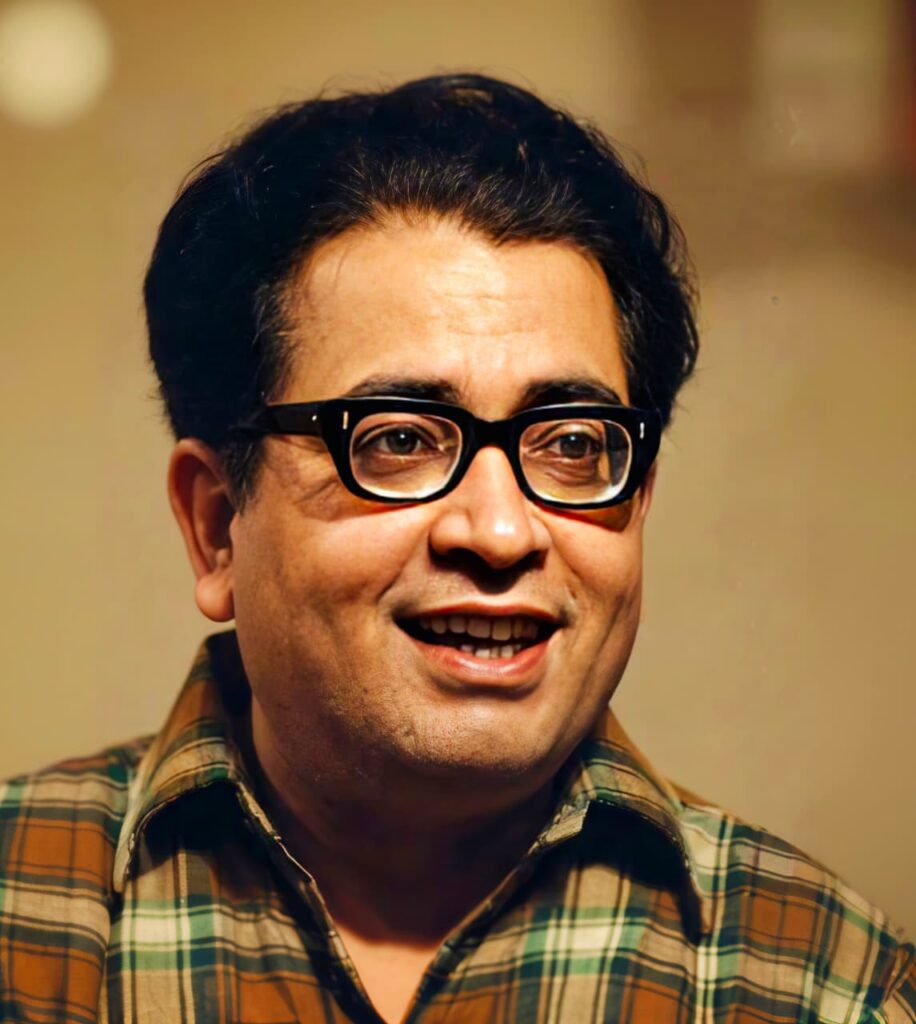
Introduction
Mohan Rakesh is considered one of the most important writers in the history of Hindi literature. Before him, Hindi plays and stories often dealt with historical heroes, mythological figures, or village life in India. Mohan Rakesh changed this completely. He brought literature into the living rooms of the modern, urban middle class. He wrote about the silence between husbands and wives, the frustration of young people, and the loneliness of living in crowded cities. He is best known for starting the “Nai Kahani” (New Story) movement and for his masterpiece play, Aadhe Adhure (Halfway House). He was the first playwright to show that modern human beings are often “incomplete” and unhappy, no matter how successful they seem.
Early Life and Family Background
Mohan Rakesh was born on January 8, 1925, in Amritsar, Punjab. His birth name was Madan Mohan Guglani. He came from a moderately well-off family. His father, Karam Chand Guglani, was a lawyer by profession but was also deeply interested in literature and culture. He frequently invited writers and artists to their home, which created a literary atmosphere for young Mohan. However, this comfortable life did not last long.
When Mohan was just sixteen years old, his father passed away suddenly. This was a devastating blow to the family. The financial responsibility fell on his young shoulders, forcing him to mature very quickly. This early experience with loss and struggle likely influenced the dark and serious themes in his later writing. Despite these hardships, he was a determined student. He pursued higher education and earned a Master’s degree in English from Punjab University and later a Master’s degree in Hindi from Oriental College in Jalandhar.
Career: From Teacher to Freelancer
Mohan Rakesh was a man who valued his freedom above everything else. After completing his education, he tried to fit into the traditional role of a job-holder. He worked as a teacher at Elphinstone College in Bombay (Mumbai) and later at colleges in Jalandhar and Delhi. However, he felt suffocated by the routine of a 9-to-5 job. He often felt that the structured life of a teacher was killing his creativity.
In a bold move that was very rare for that time, he resigned from his teaching job to become a freelance writer. Living solely on income from writing was extremely difficult, but Rakesh was determined to do it. For a short period in the 1960s, he took up the prestigious post of Editor for the famous Hindi literary magazine, Sarika. Under his guidance, the magazine became a powerful platform for new writers. However, his restless nature took over again, and he resigned from Sarika to return to his independent writing life in Delhi.
Personal Life
It is often said that an artist’s work reflects their own life, and this was very true for Mohan Rakesh. His personal life was marked by emotional turbulence and instability. He struggled to find lasting happiness in his relationships. He married three times. His first two marriages ended in failure and separation, causing him great emotional pain.
These personal experiences with broken relationships, misunderstandings, and the inability to connect with a partner became the central themes of his plays. When we read Halfway House (Aadhe Adhure), we can see echoes of Rakesh’s own struggles. He understood the pain of a crumbling marriage not just as an observer, but as someone who had lived through it. It was only in his third marriage to Anita Rakesh that he found some stability, but sadly, he did not live long enough to enjoy it fully.
The “Nai Kahani” (New Story) Movement
In the 1950s, Hindi literature was going through a change. Along with his friends Rajendra Yadav and Kamleshwar, Mohan Rakesh launched the “Nai Kahani” movement. This was a revolutionary step. They argued that stories should no longer be about plot twists or moral lessons. Instead, stories should focus on human psychology and the reality of modern life.
Rakesh’s stories focused on the urban middle class. He wrote about the “new” Indian—someone who had left the village and moved to the city but felt lost and lonely there. His characters were often unable to communicate their true feelings. His short story collection Ek Aur Zindagi (One More Life) and stories like Malbe Ka Malik (The Owner of the Rubble) are classic examples of this style, showing the pain of Partition and the hollowness of modern relationships.
Revolutionizing Hindi Theatre
Mohan Rakesh’s greatest contribution was to Hindi theatre. Before him, Hindi plays were often overly poetic or dramatic (like Parsi theatre). Rakesh introduced realism. He wrote dialogue that sounded like real people talking—full of pauses, incomplete sentences, and hidden meanings.
Ashadh Ka Ek Din (1958): This was his first major play. It reimagined the life of the great poet Kalidas. Instead of showing him just as a legend, Rakesh showed him as a flawed man who leaves his true love, Mallika, to pursue fame at the royal court. It won the Sangeet Natak Akademi Award.
Leharon Ke Rajhans (1963): This play explored the conflict between worldly pleasure and spiritual renunciation through the story of Nand (Lord Buddha’s half-brother) and his wife Sundari.
Aadhe Adhure (1969): His final completed play, which you have just studied. It is considered a landmark in Indian theatre because it brutally exposed the ugliness of a dysfunctional family without offering any moral solution.
Novels and Travelogues
While he is famous for plays, his novels were equally powerful.
Andhere Band Kamre (Dark Closed Rooms): This novel depicts the suffocating atmosphere of married life in Delhi’s elite society.
Na Aane Wala Kal (The Tomorrow That Never Comes): This novel is about a man working in a boarding school in a hill station, dealing with the loneliness and meaninglessness of his existence.
Aakhiri Chattan Tak (Until the Last Rock): This is a famous travelogue describing his journey to Kanyakumari (the southern tip of India). It is not just a travel guide but a philosophical journey where he reflects on the vastness of the ocean and the smallness of human life.
Premature Death and Legacy
Mohan Rakesh lived a life of high intensity. He was constantly writing, thinking, and struggling with his own emotions. Unfortunately, this took a toll on his health. He died of a sudden heart attack on January 3, 1972, in New Delhi. He was only 47 years old.
His death was a huge loss to Indian literature. He left behind an unfinished novel, Antaral, and several unfinished plays. However, his legacy is massive. He changed the Hindi language from a flowery, poetic language into a sharp, modern tool for expressing complex emotions. Directors like Om Shivpuri, Ebrahim Alkazi, and Shyamanand Jalan loved directing his plays because they challenged actors to show deep psychological pain. Today, Mohan Rakesh is remembered as the writer who held a mirror to the modern Indian soul and showed us our own incompleteness.
Themes
The Sense of Incompleteness
The most significant theme of the play is captured in its original Hindi title, Aadhe-adhure, which translates to “Half and Incomplete.” This concept suggests that every individual in the story feels internally fractured and dissatisfied with their existence. No character feels “whole” or fully realized; Savitri feels incomplete because her husband lacks strength, and Mahendranath feels incomplete because he has lost his dignity and purpose. The play argues that the search for total fulfillment is a human illusion because modern life forces everyone to remain in a permanent state of being halfway and unfinished.
Family Breakdown
The play presents a stark and painful picture of the collapse of the modern urban family unit. Instead of being a source of comfort and love, the home has become a place of suffocation and constant conflict where family members attack rather than support one another. Communication has completely collapsed in this house; the characters talk at each other with sarcasm and bitterness rather than to each other with understanding. The children, feeling neglected and resentful, lose all respect for their parents, turning the home into a psychological trap from which even marriage offers no real escape.
Gender Role Reversal
Mohan Rakesh explores the intense friction caused by the reversal of traditional gender roles in a conservative society. In this family, Savitri takes on the traditionally male role of the primary provider, earning the money and dealing with the outside world, which leaves her feeling overburdened and resentful. Conversely, Mahendranath is stripped of his traditional status as the head of the household because he is unemployed and financially dependent on his wife. This shift leads to a deep crisis of masculinity where Mahendranath feels emasculated and useless, raising complex questions about whether a man’s identity is defined by his character or simply by his ability to earn a salary.
The Search for Perfection
A central psychological theme is the futile search for a perfect partner or a perfect life that simply does not exist. Savitri spends the entire play chasing the illusion that she would be happy if only she had a man who combined wealth, intellect, and success all in one person. The playwright exposes this as a fantasy by having the same actor play all the different men Savitri admires, symbolizing that beneath their different masks, they are all equally flawed and “halfway” people. This underscores the idea that looking for completeness in others is a hopeless journey because no single human being can satisfy every emotional and material need.
Middle-Class Frustration
The play acts as a mirror to the specific frustrations and anxieties of the urban middle class in modern India. The family is trapped in a cycle of financial struggle, living on credit and constantly worrying about maintaining their social status despite their poverty. This economic pressure is compounded by a deep sense of urban alienation, where individuals live in crowded cities and crowded homes yet feel completely isolated and lonely inside. The play highlights how the stress of maintaining a middle-class lifestyle can erode human relationships and strip life of its joy and spontaneity.
Style
Realistic and Naturalistic Setting
The most defining style of Mohan Rakesh in this play is his commitment to realism, often referred to as “Naturalism.” Unlike traditional Indian theatre which often featured mythological heroes, poetic language, or grand palaces, Rakesh presents a “slice of life” from a gritty, urban environment. The stage setting is deliberately designed to look messy, claustrophobic, and decaying, with broken furniture and scattered clothes mirroring the broken lives of the characters. This style forces the audience to look at the ugly, uncomfortable truth of middle-class life without any glamour or decoration, making the experience feel intense and almost suffocatingly real.
Fragmented and Colloquial Dialogue
The language used in Halfway House is a major departure from the flowery or dramatic speeches found in older Hindi plays. Rakesh uses “Hindustani,” a blend of Hindi and Urdu that sounds exactly like everyday speech in North Indian cities. The dialogue is often fragmented, meaning the characters speak in short, broken sentences, interrupt each other frequently, or trail off into silence. This broken style of speaking perfectly reflects the broken communication between the family members; they are unable to express their true feelings, so their sentences remain as incomplete as their lives.
Experimental Characterization
A unique stylistic choice that makes this play a landmark in Indian theatre is the use of a single actor to play multiple roles. The playwright specifies that the same actor who plays the “Man in a Black Suit” (the Narrator) must also play the husband (Mahendranath), the boss (Singhania), the lover (Jagmohan), and the friend (Juneja). This is not just a cost-saving measure but a deep stylistic symbol intended to show the protagonist’s perspective. It visually reinforces the idea that for Savitri, all men are interchangeable and fundamentally the same; no matter where she turns, she encounters the same male inadequacy under a different mask.
Symbolism and Visual Metaphors
While the play is realistic, Rakesh uses powerful visual symbols to convey deeper psychological meanings without using words. The messy living room acts as a constant metaphor for the family’s internal chaos, while the act of Ashok cutting pictures out of magazines symbolizes his desire to cut himself off from the reality he hates. Even the costumes are symbolic; Savitri dressing in a “festive sari” to meet Jagmohan represents her desperate attempt to cover up her sadness and reclaim her lost youth. These visual cues add a layer of poetic meaning to the otherwise harsh and dry reality of the play.
Cyclical and Open-Ended Structure
The structure of the play is cyclical rather than linear, meaning it ends almost exactly where it began. In a traditional story, there is a clear beginning, middle, and a resolved end, but Rakesh deliberately avoids a clear resolution. Mahendranath leaves the house in a rage only to return broken and defeated, bringing the family back to the same state of misery they started in. This “open-ended” style leaves the audience with a sense of entrapment, effectively forcing them to feel the same frustration as the characters who are stuck in a loop of unhappiness with no exit.
Symbolism
The Disorderly Living Room
The most prominent symbol in the play is the setting itself: a cramped, messy living room filled with broken furniture. This physical disorder serves as a direct mirror to the psychological state of the family living within it. Just as the sofa is torn and the table is damaged, the relationships between the husband, wife, and children are fractured and falling apart. The fact that the furniture is “old” and “lingering” suggests that the family is holding onto a past status that no longer exists, unable to clear out the “junk” of their history to make room for a new life.
Furthermore, the “over-crowded” nature of the room symbolizes the suffocating atmosphere of the home. There is no open space for the characters to breathe or move freely, which reflects how they feel emotionally trapped by one another. The clutter represents the unresolved issues and petty arguments that fill their daily lives. Every time a character trips over an object or struggles to find a place to sit, it visually reinforces the idea that they are stuck in a situation that is uncomfortable, restrictive, and slowly decaying.
The Single Actor Technique
A unique and powerful symbol in the play is the use of a single actor to play five different male roles: the Prologue Narrator, the husband (Mahendranath), the boss (Singhania), the lover (Jagmohan), and the friend (Juneja). This is not done to save money on actors, but to convey a deep psychological truth about Savitri’s worldview. By having the same face behind every mask, the playwright symbolizes that for Savitri, all men are fundamentally the same. She searches for a “perfect man” who is different from her husband, but every man she meets eventually reveals himself to be just another version of the same inadequate male figure.
This technique also symbolizes the fragmentation of the male identity in modern society. Each character represents a different “slice” of a man—one has money, one has emotional history, one has intellect—but none of them is a “whole” person. By swapping roles, the actor physically demonstrates that the “complete man” Savitri desires is an illusion. It forces the audience to realize that replacing one man with another will not solve Savitri’s problems because the root of the incompleteness lies within the human condition itself, not just in specific individuals.
Ashok’s Magazine Cutting
The character of Ashok is frequently seen cutting pictures out of magazines with a pair of scissors, a simple action that carries heavy symbolic weight. On one level, this activity represents his desire for escapism. By focusing on glossy images of film stars and foreign places, he tries to block out the ugly, depressing reality of his own home. It is a childish and unproductive hobby for a grown man, symbolizing his refusal to grow up and take responsibility in a world he despises.
On a deeper level, the act of “cutting” symbolizes fragmentation and destruction. Ashok is literally cutting things into pieces, just as his family is being torn apart. The scissors in his hand represent a tool of separation; he wants to sever his ties with his family and society, but he can only do it symbolically through paper. At the end of Act One, when the lights go out, the sound of his scissors snipping away in the dark becomes a haunting auditory symbol of the family’s disintegration, as if he is slowly cutting away the last threads holding them together.
Savitri’s Festive Sari
In Act Two, Savitri wears a “festive” or dressy sari to go out with Jagmohan, which stands in sharp contrast to the gloominess of the rest of the play. This garment is a symbol of her desperate hope and her attempt to reclaim her lost youth. It represents a “mask” she puts on to convince herself and the world that she is still attractive, vibrant, and capable of starting a new life. The bright sari is an attempt to cover up the grey, miserable reality of her daily existence.
However, the sari also symbolizes the superficial nature of her escape. Just as clothes can be changed but the body underneath remains the same, Savitri can change her appearance and her partners, but her internal emptiness remains unchanged. When she returns home defeated, still wearing the dressy sari in the messy room, the contrast becomes tragic. It highlights the failure of her fantasy and serves as a visual reminder that she cannot dress up her broken life to make it look like a success.
The Recurring Exit and Return
The repeated action of characters leaving the house only to return is a major structural symbol of the play. Mahendranath storms out in Act One, swearing he will never come back, only to return broken and sick in Act Two. Similarly, Savitri leaves with Jagmohan, intending to abandon her family, but is forced to return when he rejects her. These movements symbolize the “trap” of the Halfway House. The door is physically open, but emotionally and socially, it is locked tight.
This cycle symbolizes the “halfway” nature of their existence—they are neither fully in the marriage nor fully out of it. The return of Mahendranath, leaning heavily on his son for support, transforms him into a visual symbol of burden and dependency. It confirms that the characters are destined to move in circles, unable to break free from their orbit of misery. The play suggests that their hell is not a place they can walk out of; it is a condition they carry with them, making true escape impossible.
Very Short Answer Questions
Who is the author of the play Halfway House?
Mohan Rakesh.
What is the original Hindi title of the play?
Aadhe-adhure.
Who is the sole breadwinner of the family?
Savitri.
What unique theatrical technique is used for the male characters?
A single actor plays the roles of the narrator, husband, boss, lover, and friend.
Why is Mahendranath unemployed?
He lost his entire fortune in a factory investment years ago.
Who is the “Man in a Black Suit”?
The narrator (and the actor who plays the other men).
What is Ashok’s primary hobby?
Cutting pictures out of magazines.
Why does the eldest daughter, Binni, return home?
Because her own marriage is failing and she is unhappy.
Who is Mr. Singhania?
Savitri’s wealthy and pompous boss.
What does Ashok draw a caricature of Mr. Singhania as?
A monster with a hanging tongue.
Who is Jagmohan?
Savitri’s old friend and former lover.
Why does Savitri invite Mr. Singhania to her house?
To try and get a job for her son, Ashok.
Who is the youngest child in the family?
Kinni.
What does Savitri call Mahendranath to insult him?
A parasite or “dry rot.”
Who is Mahendranath’s close friend and advisor?
Juneja.
Why does Mahendranath storm out of the house in Act One?
He feels humiliated by Savitri’s constant insults.
What does the messy living room symbolize?
The disintegration and chaos of the family’s life.
What does Binni say she carried from her parents’ house into her marriage?
The “poison” of their unhappiness.
Why does Jagmohan refuse to take Savitri away with him?
He is afraid of damaging his social status and reputation.
Who confronts Savitri about her impossible expectations?
Juneja.
What does Juneja say Savitri is looking for?
A “perfect man” who combines the best traits of all men.
How does Mahendranath return at the end of the play?
Sick, defeated, and leaning on his son for support.
What literary movement is Mohan Rakesh associated with?
The Nai Kahani (New Story) movement.
How old is Ashok?
21 years old.
What does Kinni constantly complain about?
Being neglected by her parents.
What does the title Aadhe-adhure translate to?
Half and Incomplete.
Does Savitri successfully escape her family?
No, her attempt to leave fails.
Who is the “Fourth Man” in the play?
Juneja.
What does Savitri wear to try and impress Jagmohan?
A festive/dressy sari.
What is the final realization of the characters at the end?
That they are trapped and must continue living in their misery together.
Short Answer Questions
Explain the significance of the title “Halfway House” (Aadhe-adhure).
The title Aadhe-adhure, which translates to “Halfway” or “Incomplete,” signifies that every character in the play is emotionally fractured and unsatisfied. No one is “whole”; Savitri lacks peace, Mahendranath lacks dignity, and the children lack direction. The title also refers to their home, which is not a sanctuary but a trap—a “halfway” place where they are unable to live together with love, yet are too weak and dependent to separate, leaving their lives permanently unfinished.
Why does the playwright use a single actor to play five different male roles?
Mohan Rakesh uses one actor to play the Narrator, Mahendranath, Singhania, Jagmohan, and Juneja to symbolize Savitri’s perspective. It visually demonstrates that for her, all men are fundamentally the same—flawed and incomplete. It proves that her search for a “perfect” man is futile because every man she turns to is just a variation of the same inadequacy. This technique emphasizes that replacing one man with another will not solve the core problem of human incompleteness.
Why is Savitri deeply unhappy despite being the head of the household?
Savitri is unhappy because she feels overburdened by the role of the sole breadwinner and trapped in a marriage with an unemployed husband. She feels cheated by life and constantly searches for a “complete” man who combines wealth, power, and intellect, but she fails to find one. Her tragedy lies in her inability to accept human flaws, making her eternally dissatisfied with everyone, including herself, and leading to constant bitterness.
How does Mahendranath’s unemployment affect his status in the family?
Mahendranath’s unemployment strips him of his dignity and traditional status as the head of the household in a patriarchal society. Because he is financially dependent on his wife, he is constantly humiliated by Savitri, who calls him a “parasite” and treats him like “broken furniture.” This loss of economic power destroys his confidence, leaving him weak, indecisive, and unable to command any respect from his own children.
What does Binni mean when she says she carried the “poison” of the house?
Binni reveals that she has carried the “poison” of her parents’ dysfunctional relationship into her own marriage. Growing up in an atmosphere of constant conflict and silence, she has lost the ability to be natural or happy with her husband. Her character proves that the children of a broken home often inherit the emotional scars of their parents, making it impossible for them to escape the cycle of misery even after they leave the house.
Why does Ashok refuse to work and mock Mr. Singhania?
Ashok refuses to work because he is disillusioned with society, viewing the adult world as hypocritical, fake, and corrupt. He mocks successful men like Singhania by drawing him as a “monster” because he values integrity over money and status. His rebellion is a defense mechanism to protect himself from a system he despises, but it also leaves him stagnant and wasted, cutting pictures from magazines to escape reality.
What role does Juneja play in the second act of the play?
Juneja acts as the voice of harsh reality and a mirror for Savitri, forcing her to confront the truth about her own nature. He argues that Savitri is looking for a “perfect man” who does not exist and that she would have been unhappy with anyone she married. By exposing her history of impossible expectations, he strips away her victimhood and reveals that her misery is largely self-inflicted, not just the fault of her husband.
Why is the youngest daughter, Kinni, so rude and rebellious?
Kinni’s rude and bratty behavior is a direct result of severe emotional neglect from her parents. With her mother busy working and her father too weak to discipline her, she acts out aggressively just to get attention. She has lost all respect for her family, calling them “lumps of clay,” and has been forced to grow up too fast, losing her childhood innocence to the constant warfare in her home.
Why does Jagmohan refuse to take Savitri away with him?
Jagmohan represents Savitri’s last hope for escape, but he shatters her illusion by refusing to take her away when she finally asks. Although he enjoys her company and their past romance, he is too cowardly to risk his social status or comfort for her sake. His rejection forces Savitri to realize that her dream of a “better life” was just a fantasy and that no “knight in shining armor” is coming to save her.
Explain the significance of the play’s tragic ending.
The play ends with Mahendranath returning home despite his vow to leave, entering the room sick and leaning heavily on his son. This cyclical ending signifies that there is no escape for the family; they are doomed to repeat their misery. It visually reinforces the concept of the “Halfway House,” showing that the characters are trapped in a limbo where they can neither resolve their issues nor leave each other, remaining stuck in their unhappiness forever.
Long Answer Questions
Discuss the significance of the title “Halfway House” (Aadhe-adhure) and how it reflects the central theme of the play.
The title of the play, originally Aadhe-adhure in Hindi, translates literally to “Half and Incomplete.” This title is the key to understanding the entire story because it describes the internal state of every single character. The play does not focus on a specific hero or villain, but rather on the feeling of emptiness that plagues modern human beings. The English title, Halfway House, adds another layer of meaning, suggesting a place where people are stuck in transit—neither fully settled nor able to leave. The house in the play acts exactly like this; it is a trap where the family members are stuck in a “halfway” existence, unable to live together with love but too weak to live apart.
The theme of incompleteness is most visible in the two main characters, Savitri and Mahendranath. Mahendranath is incomplete because he has lost his job, his money, and his self-respect. In a society that values men for their ability to provide, he feels like “half a man” or a “parasite” who has no identity of his own. On the other hand, Savitri is incomplete because she is eternally dissatisfied. She tries to find fulfillment by looking for a “perfect” man who has the wealth of Singhania, the intellect of Shivjeet, and the charm of Jagmohan. The play shows that her search is futile because no human being is complete; everyone is “half” in some way.
This sense of incompleteness is also inherited by the children, proving that the trauma of the parents infects the next generation. The eldest daughter, Binni, admits that she feels incomplete in her own marriage because she carries the “poison” of her parents’ unhappy home. The son, Ashok, is a young man with potential, but he remains unfinished and directionless, refusing to work or grow up. The youngest child, Kinni, is forced to grow up too fast without love, leaving her childhood incomplete and broken.
The play ends without a resolution, which perfectly reinforces the title. In a traditional story, characters usually solve their problems or face a tragic end. In this play, however, Mahendranath returns home after vowing to leave, and Savitri stays despite wanting to escape. They return to the same messy living room, to the same arguments, and to the same misery. The ending confirms that they are destined to remain “halfway” people, stuck in a cycle of dissatisfaction that has no beginning and no end.
Analyze the character of Savitri. Is she a victim of her circumstances or the architect of her own misery?
Savitri is one of the most complex female characters in Indian theatre. On the surface, she appears to be a victim of a harsh patriarchal society and a lazy husband. As the sole breadwinner of the family, she bears a heavy burden. She has to work all day to put food on the table while her husband, Mahendranath, stays at home. This role reversal makes her bitter and frustrated. She feels cheated by life because she is stuck in a house that is falling apart, with a husband who has lost his dignity. Her anger often feels justified because she is the one holding the family together financially.
However, as the play progresses, it becomes clear that Savitri is not just an innocent victim. She is also deeply manipulative and cruel. She constantly humiliates Mahendranath, calling him names like “parasite” and “dry rot” in front of their children. She dominates him completely, stripping him of any confidence he might have left. Furthermore, her dissatisfaction does not come solely from her husband’s unemployment, but from her own impossible standards. She is looking for a “superman” who possesses every good quality—money, power, intellect, and love. As Juneja points out in the final act, Savitri would have been unhappy with any man because she is chasing a fantasy of perfection that does not exist.
Savitri’s failure is also evident in her role as a mother. While she works hard to feed her children, she fails to nurture them emotionally. She tries to force her son Ashok into a job he hates just to maintain her social status. She neglects her youngest daughter, Kinni, who acts out aggressively just to get her mother’s attention. Savitri is so focused on her own unhappiness and her search for a new man that she does not see how her behavior is poisoning her children’s lives.
Ultimately, Savitri is a tragic figure who is both a victim and a villain. She is a victim of a society that limits women, but she is the architect of her own misery because she refuses to accept reality. Her attempt to escape with Jagmohan fails because she is looking for an external solution to an internal problem. By the end of the play, when she sits frozen and defeated, the audience realizes that her prison is not just the house or her husband, but her own endless, unsatisfied greed for “more.”
Discuss the dramatic technique of using one actor to play five different male roles. What is the symbolic significance of this choice?
One of the most unique and praised aspects of Halfway House is Mohan Rakesh’s direction that a single actor must play five distinct roles: The Man in a Black Suit (Narrator), Mahendranath (The Husband), Singhania (The Boss), Jagmohan (The Lover), and Juneja (The Friend). This is not done simply to save money on casting; it is a powerful psychological symbol. It forces the audience to see the world through Savitri’s eyes. To Savitri, all men are eventually the same. She searches for variety and perfection, but in reality, she encounters the same male inadequacy over and over again.
Each of these men represents a different “slice” or fragment of a man, but none of them is a “whole” person. Mahendranath has emotions but no money or spine. Singhania has money and status but is shallow and pompous. Jagmohan has charm and success but is a coward who refuses to take responsibility. Juneja has logic and strength but lacks empathy. By having the same face behind all these masks, the playwright visually demonstrates that the “complete man” Savitri desires is an illusion.
This technique also highlights the theme of the “Everyman.” The Narrator introduces himself as “undefined” and “amorphous” in the Prologue, suggesting that he could be anyone. By morphing into the husband, the boss, and the lover, the actor shows that human identity is fluid. A man might act like a boss in his office and a coward in his personal life, but he is the same person underneath. It deconstructs the idea of the hero. There are no heroes in this play, only flawed, ordinary men wearing different costumes.
Finally, this device serves to trap Savitri. She believes that if she leaves Mahendranath for Jagmohan, her life will change. However, the audience sees that Jagmohan is played by the same actor as Mahendranath. This visual cue foreshadows the tragedy: even if she manages to escape, she will simply be trading one incomplete man for another. It reinforces the play’s central message that happiness cannot be found by simply changing partners, as the root of the problem lies in the incompleteness of the human condition itself.
“The family in Halfway House is a broken unit.” Discuss this statement with reference to the relationships between the parents and the children.
The family in Halfway House is a perfect example of the disintegration of the modern urban household. Traditionally, the Indian family is seen as a unit of support, love, and unity. In this play, however, the house is a battlefield. The primary fracture is between the parents, Savitri and Mahendranath. Their relationship is toxic; they do not communicate, they only attack. Savitri despises Mahendranath for his financial dependence, and Mahendranath resents Savitri for her dominance. This constant warfare creates a suffocating atmosphere that poisons everyone living under the roof.
The impact of this broken marriage is most visible in the eldest daughter, Binni. She has physically left the house to get married, but she returns because her own marriage is failing. In a heartbreaking confession, she admits that she has carried the “poison” of her parents’ home into her new life. She has never seen a healthy relationship, so she does not know how to be happy. This suggests that the breakdown of the family is hereditary—the parents pass their trauma down to their children, destroying the future generation.
The son, Ashok, reacts to the family breakdown with rebellion and cynicism. He sees his parents’ life as a sham, so he refuses to participate in society. He mocks his mother’s attempts to be social and draws “monsters” instead of looking for a job. His unemployment is a form of protest. He bullies his younger sister because he has no other outlet for his frustration. He is stuck in the house, cutting pictures from magazines, which symbolizes his desire to cut himself off from the ugly reality of his family.
The youngest child, Kinni, is perhaps the biggest victim of this broken unit. She is a neglected child who has learned to be rude and manipulative just to survive. Because her parents are too busy fighting their own wars, she is left to raise herself. She exposes the family’s dirty secrets to neighbors and talks about adult topics prematurely. Her bratty behavior is a cry for help. The total lack of love and guidance for Kinni proves that the family has failed in its most basic duty: to nurture and protect its children.
Analyze the crisis of masculinity in Halfway House. How does the play challenge traditional male roles?
Halfway House was written in the 1960s, a time of great social change in India, and it deeply explores the crisis of the modern Indian male. The central conflict arises from the reversal of traditional gender roles. In a traditional patriarchal setup, the man’s dignity and authority come from his role as the provider. Mahendranath loses this power when he loses his money. The play asks a difficult question: What is a man without money? Mahendranath is reduced to a domestic figure, making tea and hiding behind newspapers, while his wife deals with the outside world. This strips him of his confidence, making him feel like “broken furniture” in his own home.
The play critiques the idea that masculinity is tied solely to economic success. Mahendranath is not a bad person; he is a loving father who worries about his children. However, because he cannot earn, he is treated as useless by his wife and ignored by his children. His crisis is internal as well as external; he has internalized the idea that he is a failure. He tries to reclaim his manhood by storming out of the house, but his dependency on his wife and his friend Juneja forces him to return. This portrays the modern man as emotionally weak and unable to stand alone.
The other male characters also reflect different aspects of this crisis. Mr. Singhania represents the “successful” male, but the play exposes him as hollow and ridiculous. He has money, which Mahendranath lacks, but he has no depth or integrity. Ashok, the son, rejects the traditional definition of masculinity entirely. He refuses to join the “rat race” or become a provider like his mother wants. His rebellion is a rejection of the pressure placed on men to be breadwinners.
Ultimately, the play suggests that the traditional definition of masculinity is a trap. By judging men only by their paychecks, society creates “incomplete” men. Mahendranath is destroyed because he cannot meet the standard, Singhania becomes a caricature because he meets it too well, and Ashok gives up before he even starts. The play exposes the fragility of the male ego in a changing world where women are becoming more powerful and traditional structures are crumbling.
Critical Analysis
Introduction
Halfway House, originally titled Aadhe-adhure, is considered one of the most significant plays in modern Indian history. Written by Mohan Rakesh in 1969, it marked a major shift in Hindi theatre. Before this play, Indian drama often focused on historical legends, mythology, or poetic romance. Rakesh broke these traditions by dragging the audience into a messy, realistic middle-class living room. He presented a brutal and honest picture of a modern family falling apart. The play is celebrated for its psychological depth, its innovative use of a single actor for multiple roles, and its refusal to provide a happy ending. It is not just a story about a family; it is a mirror reflecting the confusion and dissatisfaction of modern urban life.
Central Idea
The central idea of the play is the concept of “incompleteness.” The title itself suggests that human beings in the modern world are fractured and unsatisfied. The play argues that the search for a “perfect” partner or a “complete” life is futile because everyone is flawed. It explores the existential crisis of the urban middle class, where individuals feel trapped by their circumstances. The central message is that people are often stuck in a “halfway” state—they are unable to live together with love, but they are also too weak and dependent to live apart. It challenges the traditional Indian belief that the home is a sacred, happy place, showing it instead as a cage of suffocation.
Plot Summary
The play begins with a narrator called “The Man in a Black Suit” who introduces the story as “undefined.” The setting is a messy, middle-class living room that reflects the chaos of the family living there. The mother, Savitri, is the only one who earns money, while her husband, Mahendranath, has been unemployed for years. This role reversal makes Savitri bitter and controlling, while Mahendranath feels humiliated and useless, leading to constant fighting between them.
The parents’ unhappiness has deeply damaged their three children. The eldest daughter, Binni, returns home because her own marriage is failing; she feels she has carried the “poison” of her parents’ house into her new life. The son, Ashok, is a rebellious young man who refuses to work because he hates society’s hypocrisy. The youngest daughter, Kinni, is rude and acts out because she feels completely neglected by her fighting parents.
In the first act, Savitri tries to fix their financial problems by inviting her rich boss, Mr. Singhania, to the house to get Ashok a job. The meeting is a disaster because Ashok mocks Singhania’s arrogant behavior. After the guest leaves, a terrible argument breaks out. Mahendranath, unable to take any more insults about being a parasite, packs his bags and storms out of the house, swearing he will never come back.
In the second act, Savitri attempts to escape her miserable life by turning to her old friend, Jagmohan. She dresses up and plans to leave her family to be with him, believing he offers the perfect life she always wanted. However, her hopes are shattered when Jagmohan refuses to take responsibility for her. He makes excuses about his social status and leaves her alone, proving that her dream of escape was just an illusion.
While Savitri is dealing with this rejection, Mahendranath’s friend Juneja confronts her with the harsh truth. He tells her that her unhappiness comes from inside her, not from her husband. He explains that she is chasing a “perfect man” who does not exist, and that she would have been dissatisfied with anyone she married. He strips away her victimhood and forces her to see her own flaws.
The play ends with a sense of total defeat. Despite his promise to leave, Mahendranath walks back into the house, looking sick and broken, leaning on his son for support. Savitri sits frozen, realizing she is trapped. The title Halfway House comes to life as the family remains stuck in the middle—unable to live together with love, but too weak and dependent to ever truly leave each other.
Themes
The Sense of Incompleteness
This is the central idea of the play, reflected in the title Aadhe-adhure. It means that no one is ever fully happy or satisfied. Every character feels like they are missing something—whether it is dignity, love, or success—showing that human beings are destined to remain “half” and unfinished.
Family Breakdown
The play shows a home that has turned into a battlefield. Instead of love and support, the family members only offer each other anger and sarcasm. The parents constantly fight, and the children are rude and rebellious, proving that the modern urban family unit has completely collapsed into chaos.
Gender Role Reversal
The play explores the conflict that arises when traditional roles are swapped. Savitri is the breadwinner, which makes her bitter and controlling, while Mahendranath is the house-husband, which makes him feel weak and useless. This reversal destroys the balance of their relationship and hurts Mahendranath’s self-esteem.
The Search for Perfection
Savitri spends her life looking for a “perfect man” who is rich, smart, and successful all at once. The play shows that this is an impossible dream. By using one actor to play all the men, the writer proves that every man has flaws, and looking for total completeness in another person is a waste of time.
Middle-Class Frustration
The story mirrors the stress of middle-class life in a city. The family is trapped by money problems, debts, and the pressure to maintain a false social status. Even though they live in a crowded house in a busy city, they are all lonely and isolated, showing the dark side of modern urban living.
Characters
Savitri: The middle-aged breadwinner of the family, Savitri is bitter and frustrated by her unemployed husband and feels trapped in her life. She spends her life searching for a “perfect man” with money and power, only to realize such a person does not exist. Ultimately, she is a tragic figure who fails to escape her misery and must accept a “halfway” existence.
Mahendranath: The unemployed “anti-hero” of the play, Mahendranath has lost his dignity and status in the house, often hiding to avoid his wife’s anger. He is defined by his weakness and emotional dependence on others, particularly his friend Juneja. He ends the play broken and dependent, proving he is too weak to survive on his own outside the unhappy home.
Ashok: Savitri’s 21-year-old son is a cynical and rebellious dropout who refuses to work because he views society as fake. He sees through his mother’s ego and bullies his younger sister, yet shares a bond of misery with his older sister. He represents wasted potential, destined to carry the burden of his parents’ failure.
Binni: The eldest daughter returns to her parents’ home, realizing she has carried the “poison” of their dysfunctional marriage into her own unhappy life. She tries to be a mediator but is a helpless witness to the family’s destruction. Binni represents the hopelessness of the future and the lasting scars of a broken upbringing.
Kinni: The youngest child is a neglected teenager who acts out with bratty and rude behavior to get attention. She is precocious and bitter, having lost all respect for her parents. Kinni symbolizes the total breakdown of family values, becoming hard just to survive the lack of love.
Mr. Singhania: Savitri’s boss is a wealthy but shallow and pompous man who ignores the family’s desperation to talk about trivialities. While Savitri values his financial status, Ashok sees him as a “monster” who represents the artificial nature of society.
Jagmohan: An old friend and former flame of Savitri, Jagmohan represents a “false hope” for a better life. Although charming, he proves to be cowardly and evasive when Savitri actually tries to leave with him, shattering her illusion of escape.
Juneja: Mahendranath’s pragmatic friend serves as the “voice of truth,” confronting Savitri with the reality that her unhappiness comes from her own impossible search for perfection. He is loyal to Mahendranath but realizes his friend is too weak to stay away from the toxic household.
The Man in a Black Suit: This “undefined” narrator represents the “everyman” and suggests the story deals with universal human problems. The same actor plays this role and all other male suitors, symbolizing Savitri’s view that all men are eventually the same and incomplete.
Structure and Style
Naturalism/Realism: The play is written in a highly realistic style. The set is messy, the clothes are ordinary, and the dialogue sounds like real conversation—full of interruptions and pauses. It avoids melodrama in favor of gritty reality.
The Single Actor Technique: The most unique structural element is the use of one actor to play five male roles. This is a brilliant theatrical device that visually reinforces the theme that Savitri’s search for a “different” man is useless because she keeps encountering the same male inadequacy in different forms.
Cyclical Structure: The play has a circular structure. It begins with a messy room and an unhappy family, and despite all the shouting and attempts to leave, it ends in the exact same place. This structure emphasizes the feeling of entrapment and the impossibility of escape.
Historical Context
Post-Independence Disillusionment: Written in 1969, the play reflects the mood of India twenty years after Independence. The initial hope and idealism of the Nehru era had faded. The country was facing economic crisis, unemployment, and inflation.
The Rise of the Middle Class: The play captures the specific anxieties of the emerging urban middle class. People were moving to cities, families were shrinking from joint to nuclear, and traditional values were clashing with modern economic pressures. The character of Ashok, an unemployed graduate, represents the frustration of the youth during this era.
Changing Status of Women: The 1960s saw more women entering the workforce. Savitri represents this new woman who is economically independent but socially and emotionally restricted by patriarchal expectations.
Critical Commentary
Critics often view Halfway House as an existentialist drama. It does not have a clear “hero” or “villain.” Early audiences were sometimes shocked by Savitri’s character because she openly hated her husband and sought other men, which was taboo for a terrifyingly realistic portrayal of an Indian woman. However, modern critics see the play as a balanced critique. It exposes Mahendranath’s weakness but also critiques Savitri’s endless greed for “more.” It is a play that refuses to take sides, forcing the audience to judge the messy reality for themselves. It is praised for stripping away the hypocrisy of the “happy Indian family” and showing the rot underneath.
Conclusion
Halfway House is a masterpiece of Indian literature because it tells a universal truth: we are all flawed. It removes the masks people wear to look happy and successful, revealing the loneliness underneath. By ending without a resolution, Mohan Rakesh forces the audience to carry the heavy silence of the play home with them. It remains relevant today because the struggle to find balance between personal desires, family duty, and economic survival is a struggle that every generation faces. It is a timeless study of the “incomplete” human condition.
Famous Quotes
From the Prologue
1. “I am… amorphous. I am undefined.”
Speaker: The Man in a Black Suit (The Narrator)
Context: These are the opening lines of the play. The Narrator addresses the audience directly, smoking a cigar and standing in the chaotic living room.
Detailed Analysis: This quote sets the existential tone of the entire play. By calling himself “amorphous” (shapeless) and “undefined,” the Narrator is telling the audience that he represents the confusion of modern identity. He is not a specific hero with a clear purpose; he is a symbol of the ordinary man who is lost in the complexities of life. This line also prepares the audience for the play’s unique theatrical device: this single “undefined” actor will morph into four other male characters. It suggests that human identity is not solid; we change masks depending on who we are with, yet deep down, we remain incomplete.
2. “The man you see now… is the same man you will see later in different roles.”
Speaker: The Man in a Black Suit
Context: The Narrator explains the structure of the play to the audience before the action begins.
Detailed Analysis: This is the most crucial stylistic element of the play. It is not just a practical choice to save money on actors; it is a psychological statement. For Savitri, the female protagonist, every man she meets—whether it is her husband, her boss, her lover, or her husband’s friend—is essentially the same. They are all “half” men. By using one face for all of them, the playwright visually proves that Savitri’s search for a “different” or “better” man is futile. No matter where she looks, she will only find the same male inadequacy wearing a different set of clothes.
Act One: The Broken Home
3. “This house… it feels like a cage. The air is stale.”
Speaker: Savitri
Context: Savitri enters the living room after work and immediately complains about the atmosphere.
Detailed Analysis: This quote establishes the setting as a character in itself. The house is not a sanctuary or a place of rest; it is a prison. The word “stale” implies that nothing new or fresh ever happens here; the family is breathing in the same old toxicity day after day. It reflects the emotional stagnation of the characters. They are stuck in a loop of misery, unable to grow or move forward. The physical suffocation Savitri feels mirrors her emotional suffocation in her marriage.
4. “What is my status in this house? Am I anything more than a piece of broken furniture?”
Speaker: Mahendranath
Context: Mahendranath explodes in anger after being ignored and insulted by Savitri.
Detailed Analysis: This is a tragic cry for dignity. In a capitalist and patriarchal society, a man’s worth is often measured by his utility—his ability to earn money. Since Mahendranath is unemployed, he feels he has been reduced to an object. Comparing himself to “broken furniture” suggests he is seen as something that takes up space but has no function. He feels discarded, dusty, and unwanted, yet he cannot be thrown out completely, just like the old furniture in the room that the family is too lazy to replace.
5. “I feel I have brought the poison of this house with me into my marriage.”
Speaker: Binni (The Eldest Daughter)
Context: Binni confesses to her mother why she is unhappy with her husband, Manoj.
Detailed Analysis: This quote introduces the theme of hereditary trauma. Binni admits that she is “infected” by her parents’ dysfunction. Even though she physically escaped the house to get married, she carried the emotional “poison” in her blood. She has learned only one way to interact—through conflict and silence—so she unknowingly repeats these patterns in her own marriage. It is a devastating realization that the parents’ sins have destroyed the children’s future chances at happiness.
6. “I don’t want to be part of this rat race. I am happy cutting my pictures.”
Speaker: Ashok (The Son)
Context: Ashok argues with his mother about finding a job. He prefers staying home and cutting images from magazines.
Detailed Analysis: Ashok represents the disillusionment of the youth. He sees the adult world (“the rat race”) as fake, hypocritical, and corrupt. He refuses to participate in a system he despises. However, his hobby of cutting pictures is also a symbol of impotence. He is not actually rebelling by creating something new; he is simply taking pieces of other people’s lives (from magazines) and rearranging them. It shows he is stuck in a state of suspended adolescence, using escapism to avoid facing reality.
7. “He is a monster… with a hanging tongue and greedy eyes.”
Speaker: Ashok
Context: Ashok sketches a caricature of Mr. Singhania (Savitri’s boss) after the disastrous interview.
Detailed Analysis: While Savitri sees Singhania as a “Golden Goose” who can save the family with money, Ashok sees the ugly truth. He views Singhania as a “monster” because Singhania is arrogant, self-absorbed, and feeds on the desperation of poor people like them. This quote highlights the clash of values: Savitri values financial security and status, while Ashok values authenticity and hates the fake politeness required to get ahead in society.
8. “Why can’t you be like him? He earns five thousand rupees a month!”
Speaker: Savitri
Context: Savitri shouts at Mahendranath, comparing him to Singhania.
Detailed Analysis: This is one of the most hurtful things Savitri says. She strips Mahendranath of his individuality and judges him solely on a number: his salary. In the 1960s, 5,000 rupees was a fortune. By setting this impossible standard, she ensures Mahendranath will always feel like a failure. It reveals Savitri’s deep insecurity; she wants a husband who is a “trophy” she can show off to society, not the man she actually married.
9. “You have sucked the life out of me. You made me this way.”
Speaker: Mahendranath
Context: Mahendranath defends himself against Savitri’s accusations of being lazy.
Detailed Analysis: Here, Mahendranath portrays himself as the victim. He claims he wasn’t born a failure, but was created by Savitri. He argues that her dominant personality and constant criticism crushed his confidence, leaving him a shell of a man. This quote opens a debate for the audience: Is Mahendranath weak because Savitri is strong? Or did Savitri have to become strong because Mahendranath was weak? The play suggests it is a vicious cycle where both destroy each other.
10. “I am going. And this time, I am not coming back. I will starve, but I won’t stay here.”
Speaker: Mahendranath
Context: The climax of Act One, where Mahendranath packs his bag and leaves.
Detailed Analysis: This is Mahendranath’s attempt to rewrite his story. He wants to be the hero who walks away to preserve his honor. However, the tragedy lies in the fact that he has no plan. He speaks of “starving,” which admits he cannot support himself. It is a childish tantrum rather than a mature decision. He leaves physically, but emotionally he is still tethered to the house because he is too dependent to survive in the real world.
11. “Let him go. He will be back before the tea gets cold.”
Speaker: Savitri
Context: Savitri remains calm and sarcastic while her husband storms out.
Detailed Analysis: This line is chilling because it shows Savitri’s total lack of respect for her husband’s willpower. She treats his dramatic exit as a joke. It reveals the repetitive nature of their misery—this has likely happened a dozen times before. It undermines the tension of the scene, telling the audience that escape is impossible. Savitri knows she holds the leash, and Mahendranath will always come crawling back.
Act Two: The Failed Escape
12. “I always thought… if I had chosen you, my life would have been complete.”
Speaker: Savitri
Context: Savitri is speaking to Jagmohan, her former lover, hoping to rekindle their romance.
Detailed Analysis: This quote captures the core theme of “Aadhe-adhure” (incompleteness). Savitri lives in the “what if.” She idealizes Jagmohan because he is everything her husband is not—rich, suave, and successful. She believes her unhappiness is caused by the wrong choice of partner. She fails to see that happiness is an internal state. She is looking for an external solution (a new man) to an internal problem (her own dissatisfaction).
13. “Savitri, try to understand. My position… society… it’s not that simple.”
Speaker: Jagmohan
Context: Jagmohan backs away when Savitri actually asks to leave with him.
Detailed Analysis: This is the moment Savitri’s fantasy shatters. Jagmohan is happy to be a “fair-weather friend,” enjoying tea and flirtation. But when asked to make a sacrifice or take a risk, he hides behind social rules. It exposes the hypocrisy of the upper class. He represents the “Third Man”—socially successful but emotionally cowardly. He proves that even the “ideal” man is incomplete when it comes to courage and commitment.
14. “The problem is not Mahendranath. The problem is you, Savitri.”
Speaker: Juneja
Context: Juneja confronts Savitri in the final act.
Detailed Analysis: Juneja serves as the playwright’s voice of truth. For the entire play, we have seen things mostly from Savitri’s perspective—that she is the victim of a lazy husband. Juneja flips the script. He diagnoses Savitri as the toxic one. He forces her to face the fact that her misery is self-inflicted because she refuses to accept people as they are. This quote is the turning point where Savitri loses her moral high ground.
15. “You look for a man who is a father, a lover, a provider, and an intellectual all in one.”
Speaker: Juneja
Context: Juneja deconstructs Savitri’s desires.
Detailed Analysis: This quote explains the impossibility of Savitri’s quest. She wants a “Super-Man” who embodies every positive male trait. She wants Mahendranath’s loyalty, Jagmohan’s money, Singhania’s status, and Shivjeet’s intellect. Juneja points out that human beings are limited. By expecting perfection, Savitri ensures she will be miserable with anyone. It is a critique of modern greed—the desire to “have it all.”
16. “Since no man can be all these things, you would have been unhappy with anyone.”
Speaker: Juneja
Context: The conclusion of Juneja’s argument.
Detailed Analysis: This is the philosophical conclusion of the play. It suggests that incompleteness is the universal human condition. Even if Savitri had married Jagmohan, she would have eventually found flaws in him (perhaps his cowardice) and been unhappy. The quote implies that contentment comes from accepting “halfway” people, not from searching for a “whole” that doesn’t exist.
17. “He is not a man… he is a parasite. A hanger-on.”
Speaker: Savitri
Context: Savitri lashes out at Juneja, describing her husband.
Detailed Analysis: The use of biological terms like “parasite” and “dry rot” shows how deep Savitri’s contempt goes. A parasite feeds off a host to survive. She feels Mahendranath is sucking the life and money out of her. It dehumanizes him completely. It also shows her resentment at the gender role reversal—she hates being the “host” who has to support the family alone.
18. “Why is there always shouting in this house? Why can’t we ever be normal?”
Speaker: Kinni (The Youngest Daughter)
Context: Kinni screams in frustration as her parents fight yet again.
Detailed Analysis: Kinni is the voice of the collateral damage. She represents the loss of childhood innocence. Her question is tragic because she doesn’t even know what “normal” looks like anymore. For her, love is shouting and family is war. It highlights that the parents’ inability to resolve their issues is actively destroying the mental health of the next generation.
19. “You don’t want a solution. You enjoy being the victim.”
Speaker: Ashok
Context: Ashok accuses his mother during an argument.
Detailed Analysis: This is a sharp psychological insight from the son. Ashok suggests that Savitri subconsciously likes her situation. Being the “long-suffering wife” gives her a sense of moral superiority. It allows her to be the martyr and the hero of the story. If she actually solved her problems, she would lose her identity as the “sacrificial mother.” It suggests that some people cling to their misery because it gives them a purpose.
20. [Visual Quote] “Mahendranath enters… his clothes dirty… leaning heavily on Ashok.”
Speaker: Stage Directions (The Final Moment)
Context: The very end of the play. Mahendranath returns after vowing to leave.
Detailed Analysis: Visuals in theatre are often more powerful than words. This final image sums up the entire play. Mahendranath promised to leave, but he failed. He returns “leaning” on his son, visually confirming he is still a cripple, dependent and weak. Savitri sits frozen, confirming she is still trapped. The circle is closed. The visual of the “half-dead” husband and the “defeated” wife in the messy room is the ultimate definition of a “Halfway House”—a place where you are neither fully alive nor fully dead, just stuck.