The Tiger and the Deer
(Sri Aurobindo)
Brilliant, crouching, slouching, what crept through the green heart of the forest,
Gleaming eyes and mighty chest and soft soundless paws of grandeur and murder?
The wind slipped through the leaves as if afraid lest its voice and the noise of its steps perturb the pitiless Splendour,
Hardly daring to breathe. But the great beast crouched and crept, and crept and crouched a last time, noiseless, fatal,
Till suddenly death leaped on the beautiful wild deer as it drank
Unsuspecting at the great pool in the forest’s coolness and shadow,
And it fell and, torn, died remembering its mate left sole in the deep woodland,—
Destroyed, the mild harmless beauty by the strong cruel beauty in Nature.
But a day may yet come when the tiger crouches and leaps no more in the dangerous heart of the forest,
As the mammoth shakes no more the plains of Asia;
Still then shall the beautiful wild deer drink from the coolness of great pools in the leaves’ shadow.
The mighty perish in their might;
The slain survive the slayer.
The Tiger and the Deer Summary
“The Tiger and the Deer” was composed by Sri Aurobindo around 1930 during his later years in Pondicherry, though it was revised later for its first major publication in 1942 within the volume Collected Poems and Plays (SABCL Vol. 5 and CWSA Vol. 2).
It appeared specifically in a section titled “On Quantitative Metre”. Sri Aurobindo included it there to demonstrate his “free quantitative verse,” a metrical system based on the length of vowels (quantity) rather than just stress or accent, similar to classical Sanskrit or Greek poetry.
The poem begins in a dense, green forest where a tiger is hunting. Sri Aurobindo describes the tiger as a creature of “pitiless splendour”—it is beautiful but terrifying. The beast has glowing eyes, a mighty chest, and moves silently on soft paws. The atmosphere is so tense and scary that even the wind seems afraid to make a sound, fearing it might disturb the dangerous animal.
In contrast to this hidden danger, a beautiful wild deer comes to a cool pool of water to drink. The deer is innocent, gentle, and completely unaware that it is being watched. Suddenly, the tiger attacks. The deer is killed instantly. The poet adds a very sad detail: as the deer dies, it thinks of its mate left alone in the forest, showing that the deer has deep feelings and innocence.
The poet uses this scene to show two different types of beauty found in nature. There is the “strong cruel beauty” of the tiger and the “mild harmless beauty” of the deer. At this moment in the poem, it looks like the cruel beauty is the winner because it has the power to destroy the gentle one.
However, the poem changes direction at the end and offers a prediction for the future. The poet says that a time will come when the tiger will no longer crouch in the forest. He compares the tiger to the Mammoth (a giant ancient elephant) which was once powerful but is now extinct. The poet suggests that brute force and violence are things of the past and will eventually disappear.
Finally, the poem concludes with a powerful lesson: “The mighty perish in their might; The slain survive the slayer.” This means that violent creatures eventually destroy themselves with their own aggression. In the long run, the gentle deer will survive and continue to drink from the cool pools, proving that peace and gentleness are stronger than physical power.
The Tiger and the Deer Analysis
Brilliant, crouching, slouching, what crept through the green heart of the forest,
Gleaming eyes and mighty chest and soft soundless paws of grandeur and murder?
Reference to Context:
Reference: These lines are the opening verse of the poem “The Tiger and the Deer,” written by the Indian poet and philosopher Sri Aurobindo.
Context: Sri Aurobindo uses this poem to explore the duality of nature—specifically the contrast between aggressive power (the Tiger) and innocent beauty (the Deer). These opening lines set the scene in the deep jungle, introducing the Tiger not as a villain, but as a magnificent, terrifying force of nature. The poet builds suspense and awe before describing the tragic killing of the deer that follows.
Explanation:
“Brilliant, crouching, slouching, what crept through the green heart of the forest,”
The poem begins with a dramatic question that builds mystery. Sri Aurobindo does not name the animal immediately; instead, he describes its movements. The word “Brilliant” refers to the bright, glowing golden coat of the tiger, which shines even in the dark forest. The words “crouching” and “slouching” describe the predator’s posture—keeping its body low to the ground to remain hidden while it hunts.
The phrase “green heart of the forest” indicates that this is happening deep in the jungle, the core of nature where life and death exist side by side. The word “crept” emphasizes stealth; the tiger is moving slowly and carefully, not wanting to be seen. The poet uses these words to create a tense atmosphere, making the reader feel that something dangerous is about to happen.
“Gleaming eyes and mighty chest and soft soundless paws of grandeur and murder?”
In this line, the poet focuses on the specific physical features of the beast. “Gleaming eyes” suggests an intense, burning focus as the tiger locks onto its prey. “Mighty chest” highlights its immense physical strength and power. However, this strength is paired with “soft soundless paws,” showing that despite its heavy weight, the tiger moves with total silence, making it a perfect killing machine.
The final phrase, “grandeur and murder,” is a powerful contrast. “Grandeur” means majesty or magnificence—the tiger is like a king, beautiful and royal. But “murder” reveals its true nature—it is a killer. By combining these two words, Sri Aurobindo suggests that the tiger represents a “terrible beauty.” It is a creature that is both magnificent to look at and terrifying to encounter.
Poetic devices:
Visual Imagery
Examples: “Gleaming eyes”, “Mighty chest”, “Green heart”.
Explanation: The poet uses vivid adjectives to create a clear mental picture. We can see the bright golden coat of the tiger contrasting against the dark green forest, and the terrifying glow of its eyes.
Internal Rhyme & Assonance
Examples: “Crouching, slouching”.
Explanation: The rhyming of these two words within the same line creates a rhythmic, repetitive motion. It mimics the slow, deliberate movement of the tiger’s shoulders as it stalks its prey.
Metaphor
Example: “Green heart of the forest”.
Explanation: The poet compares the deep, central part of the jungle to a “heart.” This suggests it is the core of life, pulsating and vital, where the most intense events (life and death) take place.
Alliteration
Examples: “Crouching… crept”, “Soft soundless paws”.
Explanation: The repetition of the hard ‘c’ sound adds a sense of sharpness and tension to the movement.
Juxtaposition (Contrast)
Example: “Grandeur and murder”.
Explanation: This is the most powerful device in these lines. The poet places two opposing ideas side by side.
“Grandeur” implies something majestic, royal, and beautiful.
“Murder” implies something violent, criminal, and ugly.
By combining them, Sri Aurobindo captures the duality of the tiger: it is a magnificent creature, but its purpose is death.
Rhetorical Question
Explanation: The entire two lines are written as a question (“…what crept…?”). The poet does not name the tiger immediately. Instead, he asks “what” this creature is, creating suspense and mystery for the reader.
The wind slipped through the leaves as if afraid lest its voice and the noise of its steps perturb the pitiless Splendour,
Hardly daring to breathe. But the great beast crouched and crept, and crept and crouched a last time, noiseless, fatal,
Till suddenly death leaped on the beautiful wild deer as it drank
Unsuspecting at the great pool in the forest’s coolness and shadow,
And it fell and, torn, died remembering its mate left sole in the deep woodland,—
Destroyed, the mild harmless beauty by the strong cruel beauty in Nature.
Reference to Context:
Reference: These lines are taken from the middle section of the poem “The Tiger and the Deer” by Sri Aurobindo.
Context: Having introduced the “brilliant” and terrifying tiger in the opening lines, the poet now describes the climax of the hunt. The atmosphere is filled with fear—even the wind is terrified. These lines depict the sudden, violent attack on the innocent deer and conclude the first part of the poem, which highlights the brutal reality of nature where the strong destroy the weak.
Explanation:
“The wind slipped through the leaves as if afraid lest its voice and the noise of its steps perturb the pitiless Splendour,”
Here, Sri Aurobindo uses personification, giving the wind human qualities. The wind is usually noisy, but in the presence of the tiger, it moves silently (“slipped”) through the leaves. It acts as if it is terrified of disturbing the tiger. The poet suggests that nature itself holds its breath in fear of this predator.
The tiger is referred to here as the “pitiless Splendour.” This is a key phrase. “Splendour” acknowledges the tiger’s majestic and royal appearance, while “pitiless” reminds us that it has no mercy or compassion. The wind is afraid that even a small sound—the “noise of its steps”—might anger this magnificent but cruel king of the forest.
“Hardly daring to breathe. But the great beast crouched and crept, and crept and crouched a last time, noiseless, fatal,”
The tension reaches its peak in this line. The wind is so scared it is “hardly daring to breathe.” The focus then shifts back to the tiger. The poet repeats the words “crouched and crept, and crept and crouched” to mimic the repetitive, rhythmic motion of the animal lowering its body and moving forward inch by inch.
The movement stops with the phrase “a last time.” This signals that the stalking is over and the attack is about to happen. The words “noiseless, fatal” describe the tiger’s final state—it makes absolutely no sound, but it brings certain death. It is a silent, deadly force ready to strike.
“Till suddenly death leaped on the beautiful wild deer as it drank”
The suspense is broken by sudden action. Instead of saying “the tiger leaped,” the poet says “death leaped.” The tiger has become the physical embodiment of death itself. The attack is instant and overwhelming, leaving no chance for escape.
The victim is described as the “beautiful wild deer.” By emphasizing its beauty and wild nature immediately after mentioning “death,” the poet creates a sharp contrast. We see the collision of two opposing forces: the ugly reality of death crashing into the innocent beauty of life.
“Unsuspecting at the great pool in the forest’s coolness and shadow,”
This line highlights the innocence of the victim. The word “unsuspecting” tells us the deer had no idea danger was near; it was completely vulnerable. It was doing something natural and peaceful—drinking water—when its life was cut short.
The setting is described as “the forest’s coolness and shadow.” This peaceful, calm, and refreshing atmosphere contrasts sharply with the hot, violent bloodshed that has just occurred. The forest provided shade and water to the deer, but it also provided cover for the killer, showing how nature can be both nurturing and dangerous.
“And it fell and, torn, died remembering its mate left sole in the deep woodland,—”
The physical death of the deer is described with brutal simplicity: it “fell” and was “torn.” However, Sri Aurobindo moves beyond the physical to the emotional. As the deer dies, its last thought is not of pain, but of love and concern for its partner.
The deer remembers its mate who is now left “sole” (which means solitary or alone) in the vast forest. This gives the deer a spiritual superiority. While the tiger is just a killing machine, the deer is a creature capable of love and memory. It dies physically, but its emotional depth makes it tragic and noble.
“Destroyed, the mild harmless beauty by the strong cruel beauty in Nature.”
This line summarizes the main theme of the first half of the poem. The poet reflects on what has just happened: one type of beauty has destroyed another. The deer represents “mild harmless beauty”—gentle and non-violent.
The tiger represents “strong cruel beauty”—powerful and aggressive. Sri Aurobindo is pointing out a harsh truth about the current state of the world: in nature (and often in human life), strength and cruelty often defeat gentleness and innocence. The “strong” destroys the “mild.” This sets the stage for the second half of the poem, where he predicts this will eventually change.
Poetic devices:
Personification
Examples: “The wind slipped… as if afraid”, “lest its voice”, “noise of its steps”, “Hardly daring to breathe”.
Explanation: The poet gives human qualities to the wind. The wind “slips” (sneaks), has a “voice,” takes “steps,” and feels “fear.” This emphasizes the terrifying aura of the tiger—even the elements of nature are scared of it.
Metaphor
Example: “Pitiless Splendour”.
Explanation: This is a metaphor for the Tiger.
Splendour: Refers to its glowing, majestic beauty.
Pitiless: Refers to its cruel, unfeeling nature.
The poet transforms the animal into an abstract concept of “magnificent cruelty.”
Repetition (Chiasmus)
Example: “Crouched and crept, and crept and crouched”.
Explanation: The repetition of the words in reverse order mirrors the repetitive, rhythmic motion of the tiger stalking. It creates a hypnotic effect, slowing down the pace of the poem right before the fast attack.
Metonymy / Symbolism
Example: “Till suddenly death leaped”.
Explanation: The poet replaces the word “Tiger” with “Death.” The tiger is no longer just an animal; it has become the physical embodiment of death itself.
Antithesis (Contrast)
Example 1: “Mild harmless beauty” vs “Strong cruel beauty”.
Explanation: The poet places two opposing types of beauty side by side to show the central conflict of the poem (Innocence vs. Violence).
Example 2: “Forest’s coolness and shadow” vs the heat/violence of the attack.
Explanation: The peaceful setting contrasts sharply with the violent action.
Pathos (Emotional Appeal)
Example: “Died remembering its mate left sole”.
Explanation: This device is used to evoke pity and sadness in the reader. By mentioning that the deer died thinking of its partner, the poet gives the animal deep emotions, making its death feel like a tragedy rather than just a natural event.
But a day may yet come when the tiger crouches and leaps no more in the dangerous heart of the forest,
As the mammoth shakes no more the plains of Asia;
Reference to Context:
Reference: These lines are from the second half of the poem “The Tiger and the Deer” by Sri Aurobindo.
Context: After describing the brutal death of the innocent deer by the cruel tiger, the poet shifts his focus from the present moment to the distant future. The tone changes from tragic to prophetic (predicting the future). Sri Aurobindo uses these lines to explain his theory of evolution: that physical strength and violence are not permanent. He compares the tiger to extinct creatures to show that brute force eventually disappears.
Explanation:
“But a day may yet come when the tiger crouches and leaps no more in the dangerous heart of the forest,”
The word “But” signals a major turning point in the poem. The poet moves away from the sad reality of the deer’s death to offer hope. He predicts that a time will come in the future when the tiger will no longer hunt.
The phrase “crouches and leaps no more” means the end of violent attacks. The tiger represents the aggressive, destructive forces in the world. Sri Aurobindo is suggesting that violence is a temporary phase in the earth’s history. Just as the forest is currently a “dangerous heart” because of the predator, the future might see this danger vanish. The “tiger” (symbolizing cruelty and brute force) will eventually cease to exist.
“As the mammoth shakes no more the plains of Asia;”
To prove his point, the poet uses a historical comparison (a simile). He mentions the Mammoth, a giant, hairy ancestor of the elephant that lived thousands of years ago.
The Mammoth was incredibly huge and powerful; when it walked, its heavy steps would literally “shake” the ground (“the plains of Asia”). However, despite all its massive size and strength, the Mammoth went extinct. It no longer exists.
By comparing the tiger to the mammoth, Sri Aurobindo is saying:
Strength does not guarantee survival. The Mammoth was mighty, but it died out.
Evolution moves forward. Just as the giant Mammoth disappeared to make room for other life, the fierce tiger will also become obsolete (outdated). The poet argues that the future does not belong to the violent “monsters” of the past, but to something else.
Poetic devices:
Simile
Example: “As the mammoth shakes no more…”
Explanation: The poet compares the future fate of the tiger to the past fate of the mammoth. Just as the mammoth went extinct and disappeared, the tiger (and the violence it represents) will also disappear. The word “As” makes this a direct comparison.
Allusion
Example: “The mammoth… the plains of Asia”
Explanation: The poet makes a historical reference to the Woolly Mammoth, a giant prehistoric creature that is now extinct. By referencing a real biological fact, Sri Aurobindo grounds his philosophical prophecy in scientific reality—showing that “might” has failed to survive in the past.
Symbolism
Example: “Tiger” and “Mammoth”.
Explanation: Neither animal is just an animal here.
The Tiger symbolizes current brute force and cruelty.
The Mammoth symbolizes ancient brute force that failed.
Together, they represent the idea that physical power is not enough to guarantee survival.
Metaphor
Example: “Dangerous heart of the forest”.
Explanation: “Heart” implies the center or the core. The forest is currently defined by danger because the tiger lives there. The “heart” of nature is currently violent, but the poet suggests this will change.
Still then shall the beautiful wild deer drink from the coolness of great pools in the leaves’ shadow.
The mighty perish in their might;
The slain survive the slayer.
Reference to Context:
Reference: These are the concluding lines of the poem “The Tiger and the Deer” by Sri Aurobindo.
Context: The poet has just predicted that the fierce tiger will eventually become extinct, just like the giant Mammoth did in the past. In these final lines, he presents the result of this evolution. He concludes the poem with a powerful philosophical message: while violent strength eventually destroys itself, gentleness and peace survive forever.
Explanation:
“Still then shall the beautiful wild deer drink from the coolness of great pools in the leaves’ shadow.”
The phrase “Still then” refers to that future time when the tiger is gone. The poet paints a picture of continuity. Even after the powerful “destroyers” of the world have vanished, the “beautiful wild deer” will still be there. This suggests that the deer possesses a different kind of strength—the strength of endurance and survival.
The imagery of the deer drinking from the “coolness of great pools” is repeated from earlier in the poem, but the meaning has changed. In the beginning, the pool was a trap where the deer died. Now, in the future, the pool is a safe place of peace. This signifies that the world will eventually become a safe haven for the gentle and the innocent, no longer threatened by violence.
“The mighty perish in their might;”
This is a profound statement about the nature of power. The word “mighty” refers to creatures like the Tiger and the Mammoth who rely entirely on physical strength and aggression. The poet says they perish (die out) “in their might.” This means their own strength is the cause of their downfall.
Sri Aurobindo suggests that relying only on brute force is an evolutionary dead end. Being too large, too aggressive, or too violent makes a species unable to adapt. Their power consumes them. They do not die despite being strong; they die because they are only strong and nothing else.
“The slain survive the slayer.”
This final line sums up the entire moral of the poem. “The slain” refers to the victim (the deer), and “the slayer” refers to the killer (the tiger). Logically, it seems the killer wins because the victim dies. However, the poet argues the opposite: the victim’s spirit and species survive longer than the killer.
In the grand scheme of evolution, the qualities represented by the deer—love, gentleness, and beauty—are eternal. The qualities represented by the tiger—cruelty and death—are temporary. Therefore, even though the individual deer died in the forest that day, the “Deer” (as a symbol of peace) will inherit the earth, while the “Tiger” (as a symbol of violence) will disappear. Gentleness conquers violence in the end.
Poetic devices:
Epigram (Aphorism)
Example: “The mighty perish in their might; / The slain survive the slayer.”
Explanation: An epigram is a short, clever statement that expresses a general truth. These last two lines serve as the moral lesson of the poem. They are written like proverbs—short, memorable, and full of deep philosophical meaning about power and survival.
Paradox
Example: “The slain survive the slayer.”
Explanation: A paradox is a statement that looks contradictory (impossible) but is actually true.
The Contradiction: How can someone who is killed (“slain”) survive the killer?
The Truth: The poet means that while the individual deer died, the species and the qualities it represents (gentleness, love) will continue to exist forever. The tiger (the slayer) will go extinct. So, in the long run, the victim outlives the killer.
Irony
Example: “The mighty perish in their might”
Explanation: It is ironic that the very thing that makes the tiger strong (its “might” and aggression) is the cause of its destruction. Usually, we think strength saves us, but here, strength destroys the owner because it cannot adapt to a peaceful world.
Polyptoton (Repetition of Root Words)
Example: “Mighty… might” and “Slain… slayer”.
Explanation: The poet uses different forms of the same word in the same sentence.
Using “slain” (victim) and “slayer” (killer) close together highlights the deep connection and reversal of roles between them.
Alliteration
Example: “The slain survive the slayer.”
Explanation: The repetition of the ‘s’ sound ties the three key words together. It gives the final line a smooth, musical quality, making it easy to remember (like a chant or a mantra).
Visual Imagery
Example: “Drink from the coolness of great pools”
Explanation: The poet deliberately repeats the image of the pool from earlier in the poem.
Before: The pool was a place of death (where the deer was killed).
Now: The pool is a place of peace and eternal life.
This shows that nature has healed; the setting remains, but the fear is gone.
Symbolism
Example: “Beautiful wild deer”
Explanation: In these final lines, the deer is no longer just an animal. It symbolizes the soul, spirituality, and the “gentle” forces of life that are destined to inherit the earth.
Structure, Form, Rhyme Scheme, and Meter
Structure
The poem is a short lyric consisting of 13 lines. It is divided into two distinct parts based on the theme and time:
Part 1 (Lines 1–8): The Violent Present. This section describes the scene in the forest, the tiger’s stealth, and the tragic killing of the deer. It focuses on the harsh reality of nature where the strong destroy the weak.
Part 2 (Lines 9–13): The Prophetic Future. The tone shifts from descriptive to philosophical. It predicts the extinction of the tiger and the survival of the deer, offering a moral lesson about the future of evolution.
Form
Free Verse (with a twist): The poem does not follow a fixed stanza pattern (like a sonnet or ballad). It looks like free verse because the lines are of unequal length and there is no strict syllable count.
Philosophical Lyric: It is a lyric poem because it expresses intense personal emotion and meditation on a specific subject.
Rhyme Scheme
No End Rhyme: The poem does not have a traditional rhyme scheme (like AABB or ABAB).
Internal Rhyme & Assonance: Instead of rhyming at the end of lines, Sri Aurobindo uses rhymes inside the lines to create rhythm.
Example: “Crouching, slouching” (Line 1).
Example: “Mighty… might” (repetition of sounds).
Meter
This is the most unique aspect of the poem. Sri Aurobindo wrote this poem specifically to demonstrate a theory called “Quantitative Meter.”
Standard English Meter: Usually relies on Stress (the beat or loud accent on a syllable).
Quantitative Meter (Used here): Relies on Quantity (the length or weight of the vowel sound—how long it takes to say). This is similar to Classical Sanskrit or Greek poetry.
How it works in the poem: The rhythm changes to match the animal being described.
The Tiger’s Rhythm: The lines describing the tiger use heavy, long vowel sounds and stressed consonants to mimic the heavy, muscular movement of the beast.
Line: “Brill-iant, crouch-ing, slouch-ing…” (The rhythm is heavy and slow).
The Deer’s Rhythm: The lines describing the deer use light, short vowel sounds to mimic the gentle, tripping movement of the deer.
Line: “…mild harmless beauty…” (The rhythm is soft and flowing).
Summary for Exams: If asked about the meter, write: “The poem is written in free quantitative verse, where the rhythm is determined by the length of the vowels rather than just the stress.”
Key Points
Author
Sri Aurobindo (1872–1950).
An Indian nationalist, philosopher, yogi, guru, and poet. He is a central figure in the Indian Renaissance and the founder of “Integral Yoga.”
Sri Aurobindo was not just writing about animals; he was writing about Evolution. His philosophy argues that the world is evolving from matter (physical) to life (vital) to mind (mental) and finally to spirit (supramental).
Context: “The Tiger and the Deer” reflects his belief that the “vital” stage of evolution—characterized by aggression, strength, and the survival of the fittest (the Tiger)—is primitive and will eventually be replaced by a higher spiritual existence (represented by the peace of the Deer).
Structure
The poem is a lyric consisting of 13 lines that follow a specific logical progression. It functions almost like a “Sonnet” in its division of thought, though not in its rhyme.
Section 1: The Vision of the Present (Lines 1–8):
This section is descriptive and dramatic. It focuses on the immediate reality of the jungle: the stalking tiger, the fearful wind, the innocent deer, and the brutal kill. It ends with a reflection on the cruelty of nature.
Section 2: The Vision of the Future (Lines 9–11):
The poem pivots with the word “But.” It moves from the specific incident to a broad historical timeline. It introduces the comparison to the Mammoth to prove that strength is fleeting.
Section 3: The Moral/Philosophical Conclusion (Lines 12–13):
The final two lines act as a “couplet” or a sutra. They distill the entire narrative into a timeless truth about power and survival.
Form (Rhyme Scheme and Meter)
Form: Free Verse (specifically Quantitative Verse).
The poem has no fixed stanza length or syllable count. This “freedom” allows the poet to mirror the unpredictable and organic movements of nature.
Rhyme Scheme: No End Rhyme.
There is no AABB or ABAB pattern. Sri Aurobindo avoids end-rhymes because they often create a “jingle” effect that would undermine the serious, dark, and prophetic tone of this poem.
Meter (Quantitative Meter):
This is the poem’s technical masterpiece. Sri Aurobindo uses the length of the vowel sounds to control the speed of the poem.
Tiger Lines (Heavy/Slow): “Brilliant, crouching, slouching…” These words have long vowels and heavy consonants, forcing the reader to slow down, mimicking the heavy, deliberate steps of the tiger.
Deer Lines (Light/Fast): “The wind slipped through the leaves…” These lines use short vowels and lighter consonants, mimicking the light, fleeting movement of the wind and the deer.
Speaker
The Identity: The speaker is an Omniscient Seer (Rishi).
The Perspective:
Detached Observer: In the beginning, the speaker does not interfere. He watches the tiger and the deer with equal attention. He sees the beauty in the tiger (“Brilliant”) just as clearly as the beauty in the deer.
Prophet: In the second half, the speaker transcends time. He is no longer looking at the forest; he is looking at the history of the earth (the Mammoth) and the future destiny of life. He speaks with authority (“A day may yet come…”).
Setting
Physical Setting: The “Green heart of the forest.”
It is a primal landscape—dense, dark, and ancient.
The Pool: A central location. It represents a place of life (water) but becomes a place of death (the ambush). It creates an irony: the deer goes there to sustain life (drink) but loses it instead.
Atmospheric Setting:
Suspenseful: The environment itself is terrified. The wind is “afraid,” the leaves are silent. The entire jungle holds its breath in the presence of the predator.
Chiaroscuro (Light and Dark): The poem plays with visual contrast—the “gleaming eyes” of the tiger in the “shadow” of the leaves; the “brilliant” coat against the “coolness” of the pool.
Theme
The Duality of Beauty in Nature: Nature contains two contrasting types of beauty: the “strong cruel beauty” of the tiger (majestic but deadly) and the “mild harmless beauty” of the deer (gentle and innocent). Both exist side by side in the forest.
The Futility of Brute Force: Physical strength does not guarantee survival. Using the Mammoth as an example, the poet argues that relying only on size and aggression leads to extinction. As the poem states, “The mighty perish in their might.”
The Evolutionary Future: Sri Aurobindo predicts that the world is evolving from a state of primitive violence to one of spiritual peace. The “dangerous heart” of the forest will eventually change, and aggressive creatures like the tiger will no longer exist.
The Triumph of the Spirit: While the tiger wins the physical fight, the deer wins the spiritual victory. The line “The slain survive the slayer” means that qualities like peace and gentleness are eternal and will outlast violence in the long run.
Innocence and Love: The deer is spiritually superior because it is capable of love. Even while dying, it remembers its “mate left sole,” showing deep emotion. The tiger, despite its power, is a solitary killing machine with no emotional depth.
Plot
The Stalking: A golden, terrifying tiger creeps through the dense jungle. Its movements are slow and hypnotic.
The Fear: The surrounding nature (wind and leaves) falls silent, terrified of alerting the beast.
The Victim: A wild deer approaches a pool to drink water. It is innocent, unaware, and vulnerable.
The Attack: The tiger leaps. The deer falls and dies violently.
The Tragedy: As it dies, the deer thinks of its mate left alone. The “cruel beauty” destroys the “harmless beauty.”
The Shift: The narrator pauses to reflect. He compares the tiger to the extinct Mammoth.
The Prophecy: He predicts the tiger will eventually vanish from the earth, just as the Mammoth did.
The Resolution: In that future, the deer will still exist, drinking peacefully. The violence will end, but the gentle life force will remain.
Tone
The tone shifts dramatically throughout the poem:
Lines 1–2: Awe-struck and Majestic. (Admiring the tiger’s “grandeur”).
Lines 3–4: Tense and Ominous. (The fear of the wind).
Lines 5–8: Tragic and Melancholic. (The sorrowful death of the deer).
Lines 9–13: Prophetic and Biblical. (The tone becomes solemn, like a religious scripture delivering a verdict: “The mighty perish…”).
Style
Visual Imagery: The poem is painting a picture. Words like “Brilliant,” “Gleaming,” “Green,” and “Shadow” create a high-contrast visual scene.
Sound Imagery (Auditory): The poem is equally about sound and silence. “Soundless paws,” “Voice of the wind,” “Noiseless,” “Shakes the plains.”
Personification: The wind is given human emotions (fear) to heighten the dramatic tension.
Symbolism:
Tiger: Death, Ego, Darkness, Physical Power.
Deer: Soul, Innocence, Light, Spiritual Endurance.
Mammoth: The obsolescence (outdatedness) of brute strength.
Message
The poem delivers a profound spiritual and evolutionary message: Violence is self-defeating.
Sri Aurobindo warns that those who rely solely on physical strength (“The mighty”) sow the seeds of their own destruction. They cannot adapt to a higher, more spiritual world. In contrast, those who embody peace, love, and gentleness (“The slain”) possess the true strength of survival. The future belongs not to the conquerors, but to the peaceful.
Sri Aurobindo
noindex
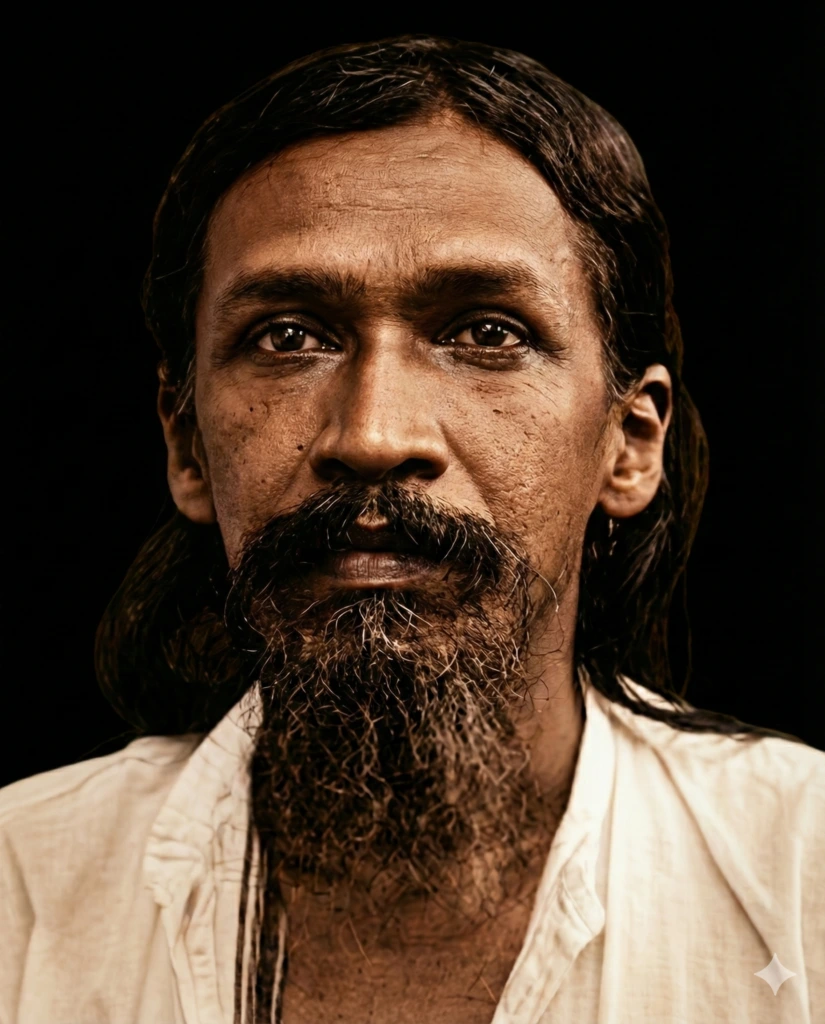
Birth and Early Childhood (1872–1879)
Birth: Sri Aurobindo was born as Aurobindo Ghose on August 15, 1872, in Calcutta (Kolkata), Bengal.
Significance of Date: His birthday would later become India’s Independence Day (August 15, 1947), a coincidence he described as a “divine sanction.”
Father: Dr. Krishna Dhan Ghose was a brilliant civil surgeon. He was a confirmed Anglophile who believed British culture was superior to Indian culture. He wanted his children raised as English gentlemen, completely insulated from Indian influence.
Mother: Swarnalata Devi, the daughter of the famous social reformer Rajnarayan Bose.
Early Education: At the age of five, Aurobindo was sent to the Loreto Convent School in Darjeeling, a school almost exclusively for British children.
The English Phase: Complete Westernization (1879–1893)
In 1879, Dr. Ghose took his three sons to England. He left them with a clergyman in Manchester with strict instructions: they were not to be allowed to make friends with Indians or learn about Indian religion.
Manchester (1879–1884): Aurobindo was educated at home. He learned Latin and French at a very young age and became a voracious reader, absorbing Shakespeare, Shelley, and Keats.
St. Paul’s School, London (1884–1890): The headmaster was impressed by Aurobindo’s brilliance and taught him Greek. He won the Butterworth Prize for literature and the Bedford Prize for history. During this time, he began writing poetry.
Cambridge University (1890–1892): He won a scholarship to King’s College, Cambridge. He excelled in the Classics (Greek and Latin) and passed the high-level Tripos.
The ICS Rebellion: His father wanted him to join the Indian Civil Service (ICS), the administrative steel frame of the British Empire.
Aurobindo passed the difficult written exams with a high rank.
However, he had no desire to serve the British. He deliberately disqualified himself by refusing to attend the mandatory horse-riding test. This was his first act of passive resistance.
The Baroda Period: Re-Indianization (1893–1906)
In 1893, at the age of 21, Aurobindo returned to India. As he stepped onto the soil at Apollo Bunder in Bombay, he experienced a “vast calm” and spiritual silence descending upon him—his first spiritual experience, though he did not label it as such at the time.
Service: He joined the state service of the Maharaja of Baroda (Sayajirao Gaekwad III). He worked in the Revenue Department and later became a Professor of English and Vice-Principal at Baroda College.
Self-Study: Realizing he was a stranger in his own land, he began an intense program of self-education.
He learned Sanskrit, Bengali, Marathi, and Gujarati.
He read the Ramayana, Mahabharata, Upanishads, and works of Kalidasa.
This period produced his early literary works, including plays like Vasavadutta and narrative poems like Urvasie.
Political Awakening: He began writing anonymous articles (titled New Lamps for Old) in the journal Indu Prakash, severely criticizing the Indian National Congress for its “mendicant policy” (begging the British for small reforms).
The Revolutionary Leader (1906–1910)
In 1905, the British Viceroy Lord Curzon partitioned Bengal, igniting a firestorm of protest. Aurobindo left his comfortable job in Baroda to jump into the freedom struggle in Calcutta.
The Leader of the Extremists: He joined the “Extremist” (Nationalist) faction of the Congress, alongside Bal Gangadhar Tilak and Bipin Chandra Pal (Lal-Bal-Pal).
Journalism: He became the editor of the English daily Bande Mataram. His editorials were fiery, intellectual, and inspiring. He was the first leader to publicly demand Purna Swaraj (Complete Independence), not just colonial self-government.
The Alipore Bomb Case (1908): The police raided his brother Barin’s revolutionary center. Although Aurobindo was not directly involved in making bombs, he was considered the “brain” behind the movement. He was arrested and charged with conspiracy to wage war against the King.
The Jail Experience: The Spiritual Turning Point (1908–1909)
Aurobindo spent one year in solitary confinement in the Alipore Jail. This year transformed him from a politician into a sage.
The Gita in Practice: He practiced the Yoga of the Bhagavad Gita intensely in his cell.
The Vision: He had a profound vision of Vasudeva (Krishna). He saw that the jail walls, the tree in the courtyard, the thief in the next cell, the guards, and even the judge were all forms of Narayana (God).
The Voice: He heard the voice of Swami Vivekananda (who had died in 1902) guiding him on higher planes of consciousness.
Acquittal: He was defended by the brilliant lawyer C.R. Das. In a famous speech, Das prophesied that Aurobindo would one day be looked upon as the “poet of patriotism, the prophet of nationalism, and the lover of humanity.” He was acquitted in May 1909 due to lack of evidence.
The Sage of Pondicherry (1910–1950)
Upon release, he briefly continued his political work (editing the Karmayogin), but the British were planning to deport him. In 1910, obeying a specific inner spiritual command (Adesh), he secretly sailed to Pondicherry, a French colony in South India, to escape British jurisdiction and focus entirely on his spiritual work.
1. The “Arya” Period (1914–1921) For the first few years, he lived in simplicity with a few young disciples. In 1914, he began publishing a philosophical monthly called Arya. Over the next seven years, he wrote almost all his major works in serial form, including:
The Life Divine: His magnum opus on metaphysics and evolution.
The Synthesis of Yoga: A guide to his “Integral Yoga.”
Essays on the Gita.
The Human Cycle (Social philosophy).
2. The Mother In 1914, Mirra Alfassa (a French woman of great spiritual depth) met Sri Aurobindo. She recognized him as the guide she had seen in her visions. She returned permanently in 1920. Sri Aurobindo acknowledged her as his spiritual equal and collaborator, referring to her as “The Mother.” She took charge of the daily life of the disciples, leading to the formation of the Sri Aurobindo Ashram.
3. The Day of Siddhi (November 24, 1926) Sri Aurobindo experienced a major realization—the descent of the “Overmind Krishna consciousness” into the physical body. Following this, he withdrew into complete seclusion to concentrate on the descent of the Supermind (a consciousness higher than the Overmind) which he believed was necessary to transform human life on earth. He communicated with disciples mostly through letters (thousands of which were later published).
4. Savitri During his seclusion, he worked on his epic poem, Savitri: A Legend and a Symbol. Spanning nearly 24,000 lines, it is the longest epic in English. It is considered a “spiritual autobiography,” describing the soul’s journey through various planes of existence to conquer death.
Philosophy: Integral Yoga
Sri Aurobindo’s philosophy is unique because it is life-affirming.
Traditional Yoga: Often seeks Moksha (liberation)—escaping the cycle of birth and death to merge into Nirvana.
Integral Yoga: Seeks Transformation. Sri Aurobindo argued that “All Life is Yoga.” The goal is not to escape the world, but to bring the Divine Consciousness down into the world to transform matter, life, and mind.
Evolution: He taught that man is a “transitional being.” Just as the ape evolved into man, man is destined to evolve into a Supramental Being (or Gnostic Being).
Final Years and Passing
World War II: Despite his opposition to the British Empire, Sri Aurobindo publicly supported the Allies during WWII. He saw Hitler and Nazism as dark, “Asuric” forces that threatened the spiritual evolution of humanity.
Independence: On August 15, 1947, India became free. In a radio message, Sri Aurobindo noted the significance of this happening on his 75th birthday, seeing it as a seal of the Divine on his work.
Mahasamadhi: Sri Aurobindo left his body on December 5, 1950. His body lay in state for four days without any signs of decomposition and emitting a golden glow. On December 9, he was interred in the Ashram courtyard.
Legacy His work was continued by The Mother, who founded Auroville (the City of Dawn) in 1968 as an international experiment in human unity. Sri Aurobindo remains a towering figure—a revolutionary who fought for India’s freedom and a Rishi who charted the future evolution of humanity.
/noindex
Themes
The Duality of Beauty in Nature
The poem explores the idea that nature is not one-dimensional; it contains two opposing types of beauty. There is the “Strong Cruel Beauty” represented by the tiger (bright, golden, majestic, but deadly) and the “Mild Harmless Beauty” represented by the deer (gentle, innocent, and soft). Sri Aurobindo acknowledges that evil and violence (the tiger) can be visually magnificent (“pitiless Splendour”), but they are morally distinct from the beauty of innocence.
The Futility of Brute Force
A central theme is that physical strength does not guarantee survival. The poet uses the example of the Mammoth—a creature of immense size and power that once “shook the plains”—to show that brute force eventually becomes a disadvantage. The tiger, despite being the “King” of the forest today, is doomed to extinction because it relies solely on violence. The poem argues that “The mighty perish in their might” because their aggression eventually consumes them or makes them obsolete.
The Evolutionary Future
Sri Aurobindo was a philosopher of evolution, and this poem reflects his belief that the world is evolving from a state of animalistic violence toward a state of spiritual peace. The “dangerous heart of the forest” represents the current, primitive stage of the world where the strong eat the weak. The prophecy that the tiger will one day “crouch no more” suggests that humanity and nature are moving toward a higher state of existence where violence is no longer necessary.
The Triumph of the Spirit (The Slain Survive the Slayer)
This is the philosophical core of the poem. While the tiger wins the physical battle by killing the deer, the deer wins the spiritual war. The deer represents qualities like love, gentleness, and endurance. The line “The slain survive the slayer” means that these gentle qualities are eternal and will outlast the temporary forces of destruction. The victim leaves a legacy of peace, while the killer leaves nothing but death and eventually disappears.
Innocence and Love amidst Cruelty
The poem highlights the moral depth of the innocent. When the deer dies, it does not die with rage or fear alone; it dies “remembering its mate left sole.” This touch of love and concern for another being elevates the deer above the tiger. The tiger is a solitary, unfeeling killing machine, whereas the deer is capable of connection and emotion. This theme suggests that the capacity to love makes the “weak” spiritually superior to the “strong.”
Word Meaning
| Tough Word | Meaning in English | Meaning in Hindi |
| Brilliant | Shining brightly; glowing; magnificent | चमकीला / तेजस्वी |
| Crouching | Bending low to the ground (often to hide) | दुबक कर बैठना / घात लगाना |
| Slouching | Moving or standing in a bent, lazy way | झुक कर चलना / ढीले ढंग से खड़ा होना |
| Crept | Moved slowly and quietly to avoid being seen | चुपके से सरकना / रेंगना |
| Gleaming | Shining softly; glowing | चमकता हुआ / दीप्तिमान |
| Mighty | Possessing great strength or power | शक्तिशाली / बलवान |
| Paws | The feet of an animal (usually with claws or pads) | पंजे |
| Grandeur | Impressiveness; majesty; great beauty | भव्यता / शान |
| Slipped | Moved quietly and smoothly | चुपके से निकलना / फिसलना |
| Lest | For fear that; to prevent something from happening | कहीं ऐसा न हो कि |
| Perturb | To disturb, upset, or make anxious | अशांत करना / व्याकुल करना |
| Pitiless | Showing no mercy; cruel | निर्दयी / बेरहम |
| Splendour | Magnificent appearance; grand beauty | वैभव / प्रताप |
| Daring | Having the courage to do something | साहस करना / हिम्मत करना |
| Beast | A large, dangerous animal | जंगली जानवर / पशु |
| Leaped | Jumped suddenly (to attack) | झपटा / कूदा |
| Torn | Ripped apart; wounded severely | क्षत-विक्षत / चीरा हुआ |
| Sole | Alone; single; solitary | अकेला / एकाकी |
| Woodland | Land covered with trees; forest | वन प्रदेश / जंगल |
| Mild | Gentle; not harsh or violent | सौम्य / कोमल |
| Cruel | Enjoying causing pain to others | क्रूर |
| Mammoth | A giant, extinct type of elephant; huge | मैमथ (प्राचीन विशालकाय हाथी) |
| Shakes | Vibrates or trembles (due to heavy weight) | हिला देना / कपाना |
| Plains | Large areas of flat land | मैदान / समतल भूमि |
| Perish | To die; to be destroyed | नष्ट होना / मर जाना |
| Might | Strength or power | शक्ति / बल |
| Slain | Those who have been killed (The victims) | मारा गया (मृतक) |
| Slayer | The one who kills (The killer) | मारने वाला / हत्यारा |
Very Short Answer Questions
Who is the poet of “The Tiger and the Deer”?
Sri Aurobindo.
What does the tiger symbolize in the poem?
The tiger symbolizes brute force, cruelty, and death.
What does the deer symbolize?
The deer symbolizes innocence, gentleness, and the soul.
How does the poet describe the tiger’s eyes?
He describes them as “gleaming eyes.”
Why does the wind slip through the leaves silently?
It is afraid of disturbing the “pitiless Splendour” (the tiger).
What metaphor is used to describe the tiger’s magnificent cruelty?
“Pitiless Splendour.”
Where was the deer when the tiger attacked?
It was drinking at the great pool in the forest’s coolness.
What was the deer’s state of mind right before the attack?
It was “unsuspecting” (unaware of the danger).
What was the deer’s last thought as it died?
It remembered its mate left alone in the deep woodland.
What two contrasting types of beauty does the poet describe?
The “mild harmless beauty” (deer) and the “strong cruel beauty” (tiger).
Which extinct animal is the tiger compared to in the second half of the poem?
The Mammoth.
Why does the poet mention the Mammoth?
To prove that immense physical strength does not prevent extinction.
What prophecy does the poet make about the tiger?
That a day will come when the tiger crouches and leaps no more (it will go extinct).
What does the phrase “The dangerous heart of the forest” refer to?
The deep jungle where violent predators like the tiger live.
What will the deer do in the future after the tiger is gone?
It will continue to drink from the pools in peace.
What is the meaning of “The mighty perish in their might”?
Those who rely only on violence eventually destroy themselves with their own aggression.
What is the meaning of “The slain survive the slayer”?
The victim (gentleness) spiritually outlives the killer (violence).
Which poetic device is used in the phrase “soft soundless paws”?
Alliteration (repetition of the ‘s’ sound).
What emotion elevates the deer above the tiger?
Love (shown by its concern for its mate).
What is the ultimate message of the poem regarding evolution?
That the future of the world belongs to peace and spirituality, not violence.
Short Answer Questions
Analyze the contrast between the Tiger and the Deer in the poem.
The poem presents a sharp study in dualities. The tiger is depicted as a “pitiless Splendour,” possessing magnificent physical beauty (“brilliant,” “gleaming eyes”) but lacking any moral conscience; it represents the raw, destructive power of nature. In contrast, the deer is described as “mild harmless beauty,” representing innocence, fragility, and emotional depth. While the tiger is a solitary killing machine, the deer is capable of love, evidenced by its final thought of its mate. This contrast highlights the central conflict of the poem: the struggle between aggressive physical power and spiritual gentleness.
Explain the significance of the “Mammoth” comparison in the second stanza.
The reference to the Mammoth is a crucial historical allusion used to support the poet’s evolutionary prophecy. The Mammoth was once a dominant biological force that “shook the plains of Asia” with its sheer size and power, yet it is now completely extinct. By comparing the tiger to this prehistoric beast, Sri Aurobindo argues that physical might is transient and self-limiting. Just as the Mammoth disappeared despite its strength, the tiger—and the era of brute force it symbolizes—will eventually become obsolete and vanish as the world evolves toward a more spiritual state.
Discuss the deeper meaning of the line: “The slain survive the slayer.”
This concluding line serves as the philosophical climax of the poem, presenting a profound paradox. On a physical level, the tiger (the slayer) defeats the deer (the slain) by killing it. However, on an evolutionary and spiritual level, the roles are reversed. The aggression of the tiger is self-destructive and destined to perish (“perish in their might”). Meanwhile, the qualities embodied by the deer—love, peace, and gentleness—are eternal elements of existence. Therefore, the “spirit” of the victim endures and inherits the future earth, while the violence of the killer eventually fades away into nothingness.
How does Sri Aurobindo use imagery to create the atmosphere in the opening lines?
Sri Aurobindo uses intense visual and auditory imagery to build a palpable atmosphere of terror and suspense. He describes the tiger with words like “brilliant,” “gleaming,” and “grandeur” to capture its terrifying majesty against the dark background of the “green heart” of the forest. Simultaneously, he uses the auditory imagery of absolute silence—”soft soundless paws”—to emphasize its deadly stealth. The personification of the wind, which is described as being “afraid” and “hardly daring to breathe,” amplifies the tension, suggesting that even the natural elements are cowering in fear before this embodiment of death.
What is the central message regarding “Evolution” in this poem?
The poem is an artistic expression of Sri Aurobindo’s belief in the spiritual evolution of the earth. He suggests that the current state of the world, characterized by the “dangerous heart” of violence and the survival of the fittest, is only a temporary and primitive phase. The poem predicts a necessary transition to a higher state of existence where brute force is no longer useful or necessary. The prophecy that the tiger will one day “crouch no more” implies that humanity and nature are moving toward a divine future where peace, represented by the deer, will triumph over the primitive instinct to kill.
Essay Type Questions
Discuss how Sri Aurobindo uses the contrast between the Tiger and the Deer to illustrate his theory of evolutionary progress.
Sri Aurobindo’s poem is not merely a description of a forest scene; it is a symbolic representation of the evolutionary struggle between two opposing forces in nature. The poet establishes a stark contrast between the Tiger, representing “strong cruel beauty,” and the Deer, representing “mild harmless beauty.” In the first half of the poem, the Tiger dominates the landscape. It is described with words like “grandeur,” “splendour,” and “might.” This represents the current, primitive stage of the world’s evolution—the “vital” plane—where physical strength, aggression, and the survival of the fittest are the ruling laws. The Tiger is the king of this “dangerous heart” of the forest, commanding fear and respect even from the elements like the wind and leaves.
In direct opposition stands the Deer, a symbol of the “psychic” or spiritual plane. The deer is vulnerable, innocent, and physically weak compared to the predator. When the two forces collide, the physical result is inevitable: the strong destroys the weak. The deer’s death is tragic, marked by a moment of deep emotion as it remembers its mate. This specific detail highlights that the deer possesses a higher level of consciousness—love and connection—which the solitary, unfeeling tiger lacks. At this point in the poem, it seems that cruelty is the ultimate winner in the harsh reality of nature.
However, Sri Aurobindo uses this contrast to pivot toward a prophetic vision of evolution. He introduces the image of the extinct Mammoth to argue that physical dominance is not permanent. The Mammoth was once the most powerful creature on earth, shaking the plains of Asia, yet it perished. By comparing the tiger to the mammoth, the poet suggests that the tiger’s aggressive strength is actually an evolutionary dead end. “Might” that relies on violence eventually consumes itself or becomes unable to adapt to a changing world.
The poem concludes that the future of evolution belongs to the qualities possessed by the deer. The prophecy that the tiger will “crouch no more” implies that the era of brute force is temporary. The deer, which continues to drink from the cool pools in the poet’s vision of the future, represents the survival of the soul. Sri Aurobindo illustrates that evolution is moving away from the destruction of the Tiger toward the peace and harmony of the Deer. The “mild” beauty is resilient and eternal, while the “cruel” beauty is self-destructive and transient.
Attempt a critical appreciation of the poem, focusing on its imagery, meter, and poetic devices.
“The Tiger and the Deer” is a masterpiece of modern Indian English poetry, renowned for its technical innovation and vivid imagery. Sri Aurobindo wrote this poem specifically to demonstrate the use of Quantitative Meter in English, a system where the rhythm is determined by the length of the vowel sounds rather than the traditional stress beats. This technique allows the sound of the poem to perfectly mirror its subject. In the opening lines, the heavy, long vowels in words like “slouching,” “crouching,” and “grandeur” create a slow, muscular rhythm that mimics the heavy, deliberate movement of the tiger. Conversely, the lines describing the deer and the wind use lighter, shorter sounds to create a sense of fragility and speed.
The poem is also rich in visual and auditory imagery. The poet paints a high-contrast picture using chiaroscuro (light and shade). The “gleaming eyes” and “brilliant” coat of the tiger stand out sharply against the “green heart” and “shadow” of the dense forest. This visual splendor is matched by the auditory atmosphere of suspense. The use of sibilance (repetition of ‘s’ sounds) in “soft soundless paws” and “slipped through the leaves” recreates the terrifying silence of the jungle. The personification of the wind—described as being afraid to breathe lest it disturb the beast—heightens the tension, making the nature setting feel alive and conscious of the impending violence.
Structurally, the poem is divided into two distinct movements that reflect its thematic shift. The first eight lines form a dramatic narrative, zooming in on a specific, violent event in the present. The use of enjambment (sentences running over lines) creates a flow that mimics the stalking and the sudden leap of death. The final five lines shift to a philosophical reflection, moving from the specific to the universal. This structural change from action to prophecy allows the reader to experience the tragedy first, making the final moral lesson feel earned and profound rather than just preached.
Finally, the poem’s closing aphorism, “The mighty perish in their might; The slain survive the slayer,” employs paradox and epigram to leave a lasting impact. It is a dense, philosophical statement packed into simple language. The critical success of the poem lies in this blend of sensory beauty and intellectual depth. Sri Aurobindo does not just tell us that violence is bad; he makes us feel the terror of violence through his imagery and then convinces us of the necessity of peace through his evolutionary logic.
“The mighty perish in their might; The slain survive the slayer.” Analyze the philosophical and spiritual significance of these closing lines.
The closing two lines of “The Tiger and the Deer” encapsulate the central philosophical message of Sri Aurobindo’s worldview. The first part, “The mighty perish in their might,” is an ironic commentary on the nature of power. Usually, we assume that might (strength) ensures survival. However, the poet argues that when power is rooted in aggression and violence, it becomes the very cause of destruction. The “Tiger” and the “Mammoth” represent a type of energy that is rigid, consuming, and unable to coexist with others. Because they rely entirely on physical dominance, they cannot evolve. Their strength is their weakness; they burn themselves out or become obsolete as the world moves toward a higher, more complex order.
The second part, “The slain survive the slayer,” presents a profound spiritual paradox. On the surface, the deer (the slain) has lost, and the tiger (the slayer) has won. But Sri Aurobindo looks beyond the death of the physical body. The “Deer” here is not just an animal, but a symbol of the Soul (the Psychic Being). In Sri Aurobindo’s philosophy, the soul is immortal, while the ego (represented by the tiger’s pride and hunger) is temporary. The qualities of the deer—innocence, gentleness, and the capacity for love (remembering its mate)—are the building blocks of the future spiritual age.
Furthermore, this statement reflects the concept of Satyagraha or the power of truth and non-violence, which was a prevalent theme in Indian thought during the time of the poem’s composition. It suggests that the victim, by maintaining their moral integrity and innocence, achieves a victory that the aggressor can never know. The aggressor conquers the body but loses the spirit; the victim loses the body but their spirit endures. The “slayer” eventually disappears from history, unmourned and extinct, while the “slain” continues to be reborn, inheriting the earth.
Ultimately, these lines serve as a cosmic law of justice (Karma). They provide hope that the current injustices of the world—where the strong crush the weak—are not permanent. It is a reassurance that the evolutionary force of the universe is driving us toward harmony. The “survival of the fittest” is being replaced by the “survival of the wisest and the gentlest.” The poem ends not in mourning for the dead deer, but in a triumphant affirmation that the spirit of peace is invincible.
Critical Analysis
Introduction
“The Tiger and the Deer” is a seminal poem by Sri Aurobindo, one of modern India’s most profound spiritual thinkers and poets. Written during his later years in Pondicherry and published in the volume Collected Poems and Plays (1942), this piece is often categorized as a “philosophical lyric.” It serves as a bridge between Aurobindo’s political past—where he fought against imperial might—and his spiritual future, where he envisioned a new stage of human evolution. The poem is not merely a nature study; it is a complex allegory about the inevitable defeat of violence by the forces of peace.
Central Idea
The core concept of the poem is the evolutionary progression from the “Vital” to the “Psychic.” In Aurobindo’s philosophy:
The Vital Plane is represented by the Tiger (instinct, aggression, ego, and death).
The Psychic Plane is represented by the Deer (soul, love, fragility, and life). The central idea is that the “Vital” force, no matter how magnificent or powerful, is a primitive stage of earth’s history. It is destined to consume itself. The future belongs to the “Psychic” force, which endures through gentleness. The poem posits that true survival is spiritual, not physical.
Summary
The poem opens in the dense, green heart of a forest where a magnificent but terrifying tiger is stalking its prey. Sri Aurobindo describes the beast as a “pitiless Splendour,” possessing a brilliant golden coat and immense physical power. The atmosphere is filled with fear and suspense; even the wind and leaves seem terrified to make a sound, lest they disturb the deadly predator.
In contrast to this hidden danger, a beautiful, innocent deer comes to a cool pool to drink, completely unaware of the threat. Suddenly, the tiger attacks, and the deer is killed instantly. As it dies, the deer remembers its mate left alone in the forest. This touching detail highlights the deer’s capacity for love and emotion, setting it apart from the cold cruelty of the tiger.
However, the poem shifts from this tragedy to a hopeful prophecy about the future. The poet compares the tiger to the extinct Mammoth, a giant creature that once shook the plains of Asia but has now vanished. He suggests that just as the Mammoth disappeared, the tiger—and the era of brute force it represents—will eventually go extinct. Physical strength alone does not guarantee survival.
Finally, the poet concludes that the future belongs to the gentle and the peaceful. He predicts that while “the mighty perish in their might,” the “slain survive the slayer.” This means that the spiritual qualities represented by the deer—innocence, love, and peace—are eternal and will inherit the earth long after the forces of violence have destroyed themselves.
Structure & Form
Structure: The poem is a lyric of 13 lines, divided into two conceptual movements.
Lines 1–8: The Violent Present (Narrative). Describes the stalking and killing.
Lines 9–13: The Prophetic Future (Philosophical). Describes the extinction of the tiger and survival of the deer.
Meter (Quantitative Verse): This is the poem’s most distinct feature. Aurobindo rejects the standard English “stress” meter (da-DUM da-DUM) in favor of Quantitative Meter, which is based on the duration of vowel sounds (long vs. short), similar to Classical Sanskrit or Greek poetry.
Effect: When describing the Tiger (“Brill-iant, crouch-ing, slouch-ing”), the long vowels create a heavy, muscular rhythm. When describing the Deer and wind (“slipped,” “leaves,” “mist”), the short vowels create a light, tripping rhythm.
Rhyme Scheme: Free Verse. There is no end-rhyme.
Themes
The Duality of Beauty in Nature: Nature is not one-dimensional; it contains two contrasting beauties: the “strong cruel beauty” of the tiger (majestic but deadly) and the “mild harmless beauty” of the deer (gentle and innocent).
The Futility of Brute Force: Physical strength is not a guarantee of survival. Using the extinct Mammoth as an example, the poet argues that relying solely on aggression leads to self-destruction (“The mighty perish in their might”).
The Evolutionary Future: The poem reflects an evolutionary prophecy where the world moves from primitive violence toward spiritual peace. The “dangerous heart” of the forest will eventually fade, and violent creatures like the tiger will cease to exist.
The Triumph of the Spirit: While the tiger wins the physical battle, the deer achieves a spiritual victory. The line “The slain survive the slayer” signifies that qualities like love and peace are eternal and ultimately outlast violence.
Innocence and Love: The deer is spiritually superior because it is capable of love and connection, demonstrated when it dies remembering its “mate left sole.” In contrast, the tiger is portrayed as a solitary, unfeeling force.
Style
Sri Aurobindo’s style in this poem is grand, visual, and rhythmic.
Visual Style: He uses a technique called chiaroscuro (contrast between light and dark). The “gleaming” tiger is set against the “shadow” of the forest; the “brilliant” coat against the “coolness” of the pool.
Auditory Style: The poem is a “soundscape.” The first half is dominated by silence and suppressed noise (sibilance), creating tension. The second half has the heavy “shaking” of the plains, followed by the quiet peace of the future.
Tone: The tone shifts from awe and terror in the beginning to solemn prophecy in the end.
Poetic Devices
Imagery
Sri Aurobindo uses vivid imagery to make the scene feel real to the reader.
Visual Imagery: He paints a picture of high contrast.
Examples: “Brilliant,” “Gleaming eyes,” “Green heart of the forest,” “Coolness and shadow.”
Effect: We see the bright gold of the tiger against the dark green jungle.
Auditory Imagery (Sound): He focuses on silence and sudden noise.
Examples: “Soft soundless paws,” “Voice [of the wind],” “Noise of its steps,” “Noiseless.”
Effect: It creates an atmosphere of suspense and terror.
Kinesthetic Imagery (Movement):
Examples: “Crouching, slouching,” “Shakes the plains.”
Effect: We can feel the heavy, muscular movement of the tiger and the mammoth.
Personification
Giving human qualities to non-human objects.
Example: “The wind slipped through the leaves as if afraid…”
Explanation: The wind is described as feeling “fear,” having a “voice,” and “hardly daring to breathe.” This emphasizes how terrifying the tiger is—even the elements of nature are scared of it.
Metaphor
A direct comparison between two things without using “like” or “as.”
Example 1: “Pitiless Splendour”
Explanation: The tiger is compared to an abstract concept of “magnificent cruelty.”
Example 2: “Green heart of the forest”
Explanation: The deep jungle is compared to a “heart,” suggesting it is the living core of nature.
Example 3: “Death leaped”
Explanation: The tiger is not just an animal; it is the physical embodiment of Death itself.
Simile
A comparison using “like” or “as.”
Example: “As the mammoth shakes no more the plains of Asia”
Explanation: The poet compares the future extinction of the tiger to the past extinction of the Mammoth. It highlights that brute strength cannot prevent destruction.
Alliteration
The repetition of consonant sounds at the start of words.
Example 1: “Soft soundless paws”
Effect: The ‘s’ sound creates a whispering, silencing effect (sibilance).
Example 2: “Mighty mammoth”
Effect: The ‘m’ sound is heavy, emphasizing the size of the beast.
Example 3: “Slain survive the slayer”
Effect: Ties the victim and the killer together in the final moral lesson.
Repetition & Chiasmus
Example: “Crouched and crept, and crept and crouched”
Explanation: The words are repeated in reverse order (Chiasmus). This mimics the repetitive, rhythmic, and hypnotic movement of the stalking tiger.
Paradox
A statement that seems contradictory but is actually true.
Example: “The slain survive the slayer.”
Explanation: How can the dead survive the killer? The poet means that the spirit and qualities of the victim (peace/love) endure forever, while the violent killer eventually goes extinct.
Epigram (Aphorism)
A short, clever, and memorable statement of truth.
Example: “The mighty perish in their might.”
Explanation: This serves as the moral lesson of the poem: Power is often the cause of its own destruction.
Antithesis (Contrast)
Placing two opposing ideas side by side.
Example: “Mild harmless beauty” vs. “Strong cruel beauty”
Explanation: This contrasts the two main forces in the poem (Innocence vs. Violence).
Critical Commentary
“The Tiger and the Deer” is often compared to William Blake’s “The Tyger,” but while Blake questions the Creator (“Did he who made the Lamb make thee?”), Aurobindo answers with Evolution. He does not see the Tiger as a permanent mystery of God, but as a passing phase of Earth’s history.
Critically, the poem is significant for its emotional hierarchy. Aurobindo grants the Tiger physical “grandeur,” but he grants the Deer moral superiority. The Tiger dies (in the future) as a brute force, presumably alone. The Deer dies (in the present) thinking of its mate. This capacity for love is what makes the Deer “fitter” for survival in Aurobindo’s spiritual evolutionary theory. The poem successfully fuses the poet’s political history (revolution against oppressive might) with his spiritual philosophy (the eventual triumph of the soul).
Message
The poem delivers a timeless message: True strength lies in gentleness, not aggression. It warns that power without compassion is doomed to fail. Nations, people, or species that rely solely on “might” will eventually perish, while those who cultivate peace and love possess the resilience to survive. It is a message of hope, suggesting that the darkness of the world is temporary and that light will ultimately prevail.
Conclusion
“The Tiger and the Deer” stands as a masterpiece of Sri Aurobindo’s literary and spiritual legacy. It is technically brilliant in its use of quantitative meter and philosophically profound in its vision. The poem takes a simple event—a kill in the jungle—and transforms it into a cosmic law. It leaves the reader with a powerful assurance that despite the violence we see around us, the destiny of the world belongs to the gentle, the innocent, and the peaceful.