
The Verger by Somerset Maugham
“The Verger” by W. Somerset Maugham was first published in 1929 in Cosmopolitan magazine. It later appeared in The Complete Short Stories of W. Somerset Maugham, Vol. II in 1951 by Heinemann London.
Albert Edward Foreman was the verger (a church worker) at St. Peter’s Church in Neville Square. He had done this job for 16 years and was proud of it. He wore his official gown proudly and took care of it well. He had served in fancy houses before and always carried himself with dignity.
One day after a christening (baby baptism), the new vicar (priest), who was more strict than the old one, asked Foreman to come into the vestry (church office). Inside, two churchwardens were also waiting. The vicar told Foreman that he had learned something surprising: Foreman could not read or write.
The vicar and the churchwardens said that it wasn’t proper for a verger at such a prestigious church to be illiterate. They gave Foreman three months to learn, or else he would lose his job.
Foreman, now older, said he had tried to learn when he was young but never could. He said he had done his duty faithfully and didn’t see the point of learning now. The vicar then told him he would have to leave.
Foreman handed in his resignation and left the church quietly. As he walked through the streets, sad and uncertain about what to do next, he noticed that on one long street, there was no shop selling cigarettes. That gave him an idea.
He rented a small shop on that street and started a tobacco and sweets business. His shop did very well. Then he opened a second shop on another street with no tobacco shop. That was a success too.
Over the years, he opened ten shops. He visited them every Monday, collected the money, and deposited it in the bank.
One day, the bank manager called him in. He told Foreman that he had over £30,000 in the bank and could earn more if he invested it. The manager said he would handle everything—Foreman just had to sign the documents.
Foreman replied that he couldn’t read or write, so he wouldn’t know what he was signing. The bank manager was shocked.
He said, “You built all this business and saved all that money—and you can’t read or write? Just imagine what you could have become if you had learned!” Foreman smiled and said, “I know exactly what I would be—I’d still be the verger at St. Peter’s Church.”
There had been a christening that afternoon at St Peter’s, Neville Square, and Albert Edward Foreman still wore his verger’s gown. He kept his new one, its folds as full and stiff as though it were made not of alpaca but of perennial bronze, for funerals and weddings (St Peter’s, Neville Square, was a church much favoured by the fashionable for these ceremonies) and now he wore only his second-best. He wore it with complacence, for it was the dignified symbol of his office, and without it (when he took it off to go home) he had the disconcerting sensation of being somewhat insufficiently clad. He took pains with it; he pressed it and ironed it himself. During the sixteen years he had been verger of this church he had had a succession of such gowns, but he had never been able to throw them away when they were worn out and the complete series, neatly wrapped up in brown paper, lay in the bottom drawers of the wardrobe in his bedroom.
The verger busied himself quietly, replacing the painted wooden cover on the marble font, taking away a chair that had been brought for an infirm old lady, and waited for the vicar to have finished in the vestry so that he could tidy up in there and go home. Presently he saw him walk across the chancel, genuflect in front of the high altar, and come down the aisle; but he still wore his cassock.
“What’s he ‘anging about for?” the verger said to himself. “Don’t ‘e know I want my tea?”
The vicar had been but recently appointed, a red-faced energetic man in the early forties, and Albert Edward still regretted his predecessor, a clergyman of the old school who preached leisurely sermons in a silvery voice and dined out a great deal with his more aristocratic parishioners. He liked things in church to be just so, but he never fussed; he was not like this new man who wanted to have his finger in every pie. But Albert Edward was tolerant. St Peter’s was in a very good neighbourhood and the parishioners were a very nice class of people. The new vicar had come from the East End and he couldn’t be expected to fall in all at once with the discreet ways of his fashionable congregation.
“All this ‘ustle,” said Albert Edward. “But give ‘im time, he’ll learn.”
When the vicar had walked down the aisle so far that he could address the verger without raising his voice more than was becoming in a place of worship he stopped.
“Foreman, will you come into the vestry for a minute. I have something to say to you.”
“Very good, sir.”
The vicar waited for him to come up and they walked up the church together.
“A very nice christening, I thought, sir. Funny ‘ow the baby stopped cryin’ the moment you took him.”
“I’ve noticed they very often do,” said the vicar, with a little smile. “After all I’ve had a good deal of practice with them.”
It was a source of subdued pride to him that he could nearly always quiet a whimpering infant by the manner in which he held it and he was not unconscious of the amused admiration with which mothers and nurses watched him settle the baby in the crook of his surpliced arm. The verger knew that it pleased him to be complimented on his talent. The vicar preceded Albert Edward into the vestry. Albert Edward was a trifle surprised to find the two churchwardens there. He had not seen them come in. They gave him pleasant nods.
“Good afternoon, my lord. Good afternoon, sir,” he said to one after the other.
They were elderly men, both of them, and they had been churchwardens almost as long as Albert Edward had been verger. They were sitting now at a handsome refectory table that the old vicar had brought many years before from Italy and the vicar sat down in the vacant chair between them. Albert Edward faced them, the table between him and them, and wondered with slight uneasiness what was the matter. He remembered still the occasion on which the organist had got into trouble and the bother they had all had to hush things up. In a church like St Peter’s, Neville Square, they couldn’t afford a scandal. On the vicar’s red face was a look of resolute benignity, but the others bore an expression that was slightly troubled.
“He’s been naggin’ them, he ‘as,” said the verger to himself. “He’s jockeyed them into doin’ something, but they don’t ‘alf like it. That’s what it is, you mark my words.”
But his thoughts did not appear on Albert Edward’s clean-cut and distinguished features. He stood in a respectful but not obsequious attitude. He had been in service before he was appointed to his ecclesiastical office, but only in very good houses, and his deportment was irreproachable. Starting as a page-boy in the household of a merchant prince, he had risen by due degrees from the position of fourth to first footman, for a year he had been single-handed butler to a widowed peeress, and, till the vacancy occurred at St Peter’s, butler with two men under him in the house of a retired ambassador. He was tall, spare, grave, and dignified. He looked, if not like a duke, at least like an actor of the old school who specialized in dukes’ parts. He had tact, firmness, and self-assurance. His character was unimpeachable.
The vicar began briskly:
“Foreman, we’ve got something rather unpleasant to say to you. You’ve been here a great many years and I think his lordship and the general agree with me that you’ve fulfilled the duties of your office to the satisfaction of everybody concerned.”
The two churchwardens nodded.
“But a most extraordinary circumstance came to my knowledge the other day and I felt it my duty to impart it to the churchwardens. I discovered to my astonishment that you could neither read nor write.”
The verger’s face betrayed no sign of embarrassment.
“The last vicar knew that, sir,” he replied. “He said it didn’t make no difference. He always said there was a great deal too much education in the world for ‘is taste.”
“It’s the most amazing thing I ever heard,” cried the general. “Do you mean to say that you’ve been verger of this church for sixteen years and never learned to read or write?”
“I went into service when I was twelve, sir. The cook in the first place tried to teach me once, but I didn’t seem to ‘ave the knack for it, and then what with one thing and another I never seemed to ‘ave the time. I’ve never really found the want of it. I think a lot of these young fellows waste a rare lot of time readin’ when they might be doin’ something useful.”
“But don’t you want to know the news?” said the other churchwarden. “Don’t you ever want to write a letter?”
“No, me lord, I seem to manage very well without. And of late years now they’ve all these pictures in the papers I get to know what’s goin’ on pretty well. Me wife’s quite a scholar and if I want to write a letter she writes it for me. It’s not as if I was a bettin’ man.”
The two churchwardens gave the vicar a troubled glance and then looked down at the table.
“Well, Foreman, I’ve talked the matter over with these gentlemen and they quite agree with me that the situation is impossible. At a church like St Peter’s, Neville Square, we cannot have a verger who can neither read nor write.”
Albert Edward’s thin, sallow face reddened and he moved uneasily on his feet, but he made no reply.
“Understand me, Foreman, I have no complaint to make against you. You do your work quite satisfactorily; I have the highest opinion both of your character and of your capacity; but we haven’t the right to take the risk of some accident that might happen owing to your lamentable ignorance. It’s a matter of prudence as well as of principle.”
“But couldn’t you learn, Foreman?” asked the general.
“No, sir, I’m afraid I couldn’t, not now. You see, I’m not as young as I was and if I couldn’t seem able to get the letters in me ‘ead when I was a nipper I don’t think there’s much chance of it now.”
“We don’t want to be harsh with you, Foreman,” said the vicar. “But the churchwardens and I have quite made up our minds. We’ll give you three months and if at the end of that time you cannot read and write I’m afraid you’ll have to go.”
Albert Edward had never liked the new vicar. He’d said from the beginning that they’d made a mistake when they gave him St Peter’s. He wasn’t the type of man they wanted with a classy congregation like that. And now he straightened himself a little. He knew his value and he wasn’t going to allow himself to be put upon.
“I’m very sorry, sir, I’m afraid it’s no good. I’m too old a dog to learn new tricks. I’ve lived a good many years without knowin’ ‘ow to read and write, and without wishin’ to praise myself, self praise is no recommendation, I don’t mind sayin’ I’ve done my duty in that state of life in which it ‘as pleased a merciful providence to place me, and if I could learn now I don’t know as I’d want to.”
“In that case, Foreman, I’m afraid you must go.”
“Yes, sir, I quite understand. I shall be ‘appy to ‘and in my resignation as soon as you’ve found somebody to take my place.”
But when Albert Edward, with his usual politeness, had closed the church door behind the vicar and the two churchwardens, he could not sustain the air of unruffled dignity with which he had borne the blow inflicted upon him, and his lips quivered. He walked slowly back to the vestry and hung up on its proper peg his verger’s gown. He sighed as he thought of all the grand funerals and smart weddings it had seen. He tidied everything up, put on his coat, and hat in hand walked down the aisle. He locked the church door behind him.
He strolled across the square, but deep in his sad thoughts he did not take the street that led him home, where a nice strong cup of tea awaited him; he took the wrong turning. He walked slowly along. His heart was heavy. He did not know what he should do with himself. He did not fancy the notion of going back to domestic service; after being his own master for so many years—for the vicar and churchwardens could say what they liked, it was he that had run St Peter’s, Neville Square—he could scarcely demean himself by accepting a situation. He had saved a tidy sum, but not enough to live on without doing something, and life seemed to cost more every year.
He had never thought to be troubled with such questions. The vergers of St Peter’s, like the popes of Rome, were there for life. He had often thought of the pleasant reference the vicar would make in his sermon at evensong the first Sunday after his death to the long and faithful service, and the exemplary character of their late verger, Albert Edward Foreman. He sighed deeply.
Albert Edward was a non-smoker and a total abstainer, but with a certain latitude; that is to say, he liked a glass of beer with his dinner and when he was tired he enjoyed a cigarette. It occurred to him now that one would comfort him and since he did not carry them, he looked about him for a shop where he could buy a packet of Gold Flake. He did not at once see one and walked on a little. It was a long street, with all sorts of shops in it, but there was not a single one where you could buy cigarettes.
“That’s strange,” said Albert Edward.
To make sure he walked right up the street again. No, there was no doubt about it. He stopped and looked reflectively up and down.
“I can’t be the only man as walks along this street and wants a fag,” he said. “I shouldn’t wonder but what a fellow might do very well with a little shop here. Tobacco and sweets, you know.”
He gave a sudden start.
“That’s an idea,” he said. “Strange ‘ow things come to you when you least expect it.”
He turned, walked home, and had his tea.
“You’re very silent this afternoon, Albert,” his wife remarked.
“I’m thinkin’,” he said.
He considered the matter from every point of view and next day he went along the street and by good luck found a little shop to let that looked as though it would exactly suit him. Twenty-four hours later he had taken it, and when a month after that he left St Peter’s, Neville Square, for ever, Albert Edward Foreman set up in business as a tobacconist and newsagent.
His wife said it was a dreadful come-down after being verger of St Peter’s, but he answered that you had to move with the times, the church wasn’t what it was, and ‘enceforward he was going to render unto Caesar what was Caesar’s.
Albert Edward did very well. He did so well that in a year or so it struck him that he might take a second shop and put a manager in. He looked for another long street that hadn’t got a tobacconist in it and when he found it, and a shop to let, took it and stocked it. This was a success too. Then it occurred to him that if he could run two, he could run half a dozen, so he began walking about London, and whenever he found a long street that had no tobacconist and a shop to let, he took it. In the course of ten years he had acquired no less than ten shops and he was making money hand over fist. He went round to all of them himself every Monday, collected the week’s takings, and took them to the bank.
One morning when he was there paying in a bundle of notes and a heavy bag of silver, the cashier told him that the manager would like to see him. He was shown into an office and the manager shook hands with him.
“Mr Foreman, I wanted to have a talk to you about the money you’ve got on deposit with us. D’you know exactly how much it is?”
“Not within a pound or two, sir; but I’ve got a pretty rough idea.”
“Apart from what you paid in this morning, it’s a little over thirty thousand pounds. That’s a very large sum to have on deposit and I should have thought you’d do better to invest it.”
“I wouldn’t want to take no risk, sir. I know it’s safe in the bank.”
“You needn’t have the least anxiety. We’ll make you out a list of absolutely gilt-edged securities. They’ll bring you in a better rate of interest than we can possibly afford to give you.”
A troubled look settled on Mr Foreman’s distinguished face.
“I’ve never ‘ad anything to do with stocks and shares and I’d ‘ave to leave it all in your ‘ands,” he said.
The manager smiled.
“We’ll do everything. All you’ll have to do next time you come in is just to sign the transfers.”
“I could do that all right,” said Albert uncertainly. “But ‘ow should I know what I was signin’?”
“I suppose you can read,” said the manager a trifle sharply.
Mr Foreman gave him a disarming smile.
“Well, sir, that’s just it. I can’t. I know it sounds funny-like, but there it is, I can’t read or write, only me name, an’ I only learnt to do that when I went into business.”
The manager was so surprised that he jumped up from his chair.
“That’s the most extraordinary thing I ever heard.”
“You see, it’s like this, sir, I never ‘ad the opportunity until it was too late and then some’ow I wouldn’t. I got obstinate-like.”
The manager stared at him as though he were a prehistoric monster.
“And do you mean to say that you’ve built up this important business and amassed a fortune of thirty thousand pounds without being able to read or write? Good God, man, what would you be now if you had been able to?”
“I can tell you that, sir,” said Mr Foreman, a little smile on his still aristocratic features. “I’d be verger of St Peter’s, Neville Square.”
| Word | English Meaning | Hindi Meaning |
| Verger | A church officer who helps in services | गिरजाघर का सेवक |
| Christening | Baptism or naming ceremony | नामकरण संस्कार / बपतिस्मा |
| Gown | A long formal robe or garment | लंबा चोगा / वस्त्र |
| Alpaca | Type of wool from a South American animal | एक प्रकार की मुलायम ऊन |
| Perennial | Lasting or existing for a long time | दीर्घकालिक / बारहमासी |
| Complacence | Quiet self-satisfaction | आत्मसंतोष |
| Disconcerting | Causing discomfort or confusion | असहज / विचलित करने वाला |
| Clad | Dressed or covered in | वस्त्र पहने हुए |
| Font | Basin used in churches for baptism | बपतिस्मा का कटोरा |
| Infirm | Weak due to age or illness | दुर्बल / अस्वस्थ |
| Vestry | Room for changing robes and storing items in church | गिरजाघर का वस्त्र कक्ष |
| Chancel | Part of church around altar | वेदी के आस-पास का क्षेत्र |
| Genuflect | Bend a knee in worship or respect | घुटने टेकना |
| Altar | Table used in Christian worship | वेदी |
| Aisle | Passage between rows of seats | गलियारा / पंक्तियों के बीच रास्ता |
| Cassock | Long robe worn by clergy | पुरोहित का लंबा चोगा |
| ‘angin’ | (Slang) Hanging | लटक रहा है (अशुद्ध उच्चारण) |
| ‘e | (Slang) He | वह (अशुद्ध उच्चारण) |
| Predecessor | One who held the position earlier | पूर्ववर्ती |
| Clergyman | Religious official, priest | पादरी / धर्मगुरु |
| Preached | Delivered a sermon | प्रवचन दिया |
| Leisurely | Unhurried, relaxed | आराम से / धीमी गति से |
| Aristocratic | Belonging to upper class | कुलीन |
| Parishioner | Member of a church congregation | गिरजाघर का सदस्य |
| Fuss | Too much concern over small things | अनावश्यक चिंता / हलचल |
| Pie (idiom: in every pie) | Involved in everything | हर काम में दखल देना (मुहावरा) |
| Discreet | Careful, tactful | समझदार / सावधान |
| Congregation | Group attending a religious service | उपासक समुदाय / मंडली |
| ‘ustle (Hustle) | Busy activity (dialect/slang spelling) | हड़बड़ाहट / भागदौड़ |
| ‘ow | (Slang) How | कैसे (अशुद्ध उच्चारण) |
| Whimpering | Making weak crying sounds | सुबकना / रोना |
| Crook (of arm) | Bent part of the arm | कुहनी का मोड़ा हुआ भाग |
| Surpliced arm | Arm dressed in a white church robe | गिरजाघर की सफेद पोशाक पहने हाथ |
| Subdued | Quiet, gentle | शांत / मद्धम |
| Preceded | Came before | पहले आया |
| Trifle | A little bit, something unimportant | तुच्छ चीज / मामूली |
| Churchwardens | Church officials who help manage affairs | चर्च व्यवस्थापक |
| Refectory | Dining room in religious buildings | धार्मिक स्थान का भोजन कक्ष |
| Naggin’ | Constant complaining | लगातार शिकायत करना |
| Obsequious | Overly obedient or flattering | चापलूस / अत्यधिक आज्ञाकारी |
| Ecclesiastical | Related to church or clergy | गिरजाघर संबंधी / पादरी से संबंधित |
| Deportment | Manner of behavior | आचरण / व्यवहार |
| Irreproachable | Blameless, beyond criticism | निर्दोष / दोषरहित |
| Page-boy | Young servant | छोटा नौकर / परिचारक |
| Footman | Servant who serves meals or opens doors | सेवक / परिचारक |
| Peeress | Noblewoman | कुलीन महिला |
| Ambassador | Diplomat, representative abroad | राजदूत |
| Tact | Skill in dealing with others politely | व्यवहारिक समझ / चतुराई |
| Self-assurance | Confidence | आत्मविश्वास |
| Unimpeachable | Without fault | शक से परे / उत्तम |
| Briskly | Quickly | तेजी से / फुर्ती से |
| Astonishment | Surprise | आश्चर्य |
| Betrayed | Showed unintentionally | अनजाने में प्रकट किया |
| Knack | Natural skill | विशेष क्षमता / हुनर |
| Troubled glance | Worried look | चिंतित दृष्टि |
| Sallow | Pale or yellowish (face) | पीला / मुरझाया हुआ |
| Lamentable | Causing sorrow | खेदजनक / दुखद |
| Prudence | Careful judgment | विवेक / सावधानी |
| Principle | Moral rule or belief | सिद्धांत |
| Nipper | Small child (informal) | बच्चा / नन्हा बच्चा |
| Merciful providence | God’s grace or blessing | ईश्वर की दया |
| Resignation | Voluntary leave of a position | इस्तीफा |
| Unruffled | Calm, not disturbed | शांत / अप्रभावित |
| Dignity | Self-respect | गरिमा / आत्म-सम्मान |
| Inflicted | Caused pain or damage | आघात पहुँचाना / थोपना |
| Quivered | Shook slightly | कांपना / थरथराना |
| Tidied | Cleaned up | व्यवस्थित किया |
| Notion | Idea or belief | विचार / धारणा |
| Scarcely | Barely | मुश्किल से / शायद ही |
| Demean | Lower in dignity | अपमानित करना |
| Exemplary | Excellent, worthy of imitation | अनुकरणीय / आदर्श |
| Abstainer | One who avoids something (e.g., alcohol) | परहेज़ करने वाला |
| Certain latitude | Some freedom | कुछ छूट / स्वतंत्रता |
| Fag (slang) | Cigarette (British slang) | सिगरेट |
| Tobacconist | One who sells tobacco | तंबाकू विक्रेता |
| Newsagent | One who sells newspapers and magazines | अख़बार/पत्रिका विक्रेता |
| Come-down | Loss of rank or respect | प्रतिष्ठा में गिरावट |
| Henceforward | From now on | अब से / भविष्य में |
| Render unto Caesar | Give worldly authority its due (Bible phrase) | राजा को उसका हिस्सा दो (बाइबिलीय संदर्भ) |
| Stocked | Supplied with goods | माल भरना |
| Hand over fist | Very rapidly (in earnings) | बहुत तेजी से (पैसा कमाना) |
| Takings | Earnings from business | आय / आमदनी |
| Securities | Investments like stocks and bonds | निवेश / प्रतिभूतियाँ |
| Gilt-edged | Safe and high-quality (investment) | सुरक्षित और उच्च गुणवत्ता वाला |
| Transfer | Move ownership | स्वामित्व परिवर्तन |
| Disarming | Removing anger or suspicion | प्रिय बन जाना / गुस्सा दूर करना |
| Obstinate | Stubborn | ज़िद्दी / हठी |
| Prehistoric | Very old | प्राचीन / आदिकालीन |
| Amass | Gather a lot | इकट्ठा करना (धन आदि) |
| Fortune | Large amount of money | धन / संपत्ति |
| Aristocratic | Belonging to nobility | कुलीन / उच्च वर्गीय |
Role in the story: He is the central character around whom the entire story revolves.
Personality Traits:
Dutiful and Responsible: Foreman has served St. Peter’s Church as a verger for 16 years with honesty and sincerity. He takes pride in his role, keeps his gowns neat, and manages church duties without fail.
Traditional and Self-Respecting: He values the dignity of his work. Though uneducated, he holds himself with pride and never begs to keep his position.
Uneducated but Intelligent: He cannot read or write, but he has excellent practical wisdom. His sharp observation and common sense lead him to set up a successful business.
Calm and Composed: When told to resign, he does not react emotionally. He calmly accepts the decision with grace and dignity.
Enterprising and Visionary: After losing his job, he starts a tobacco shop based on a simple observation. He builds a chain of shops and becomes a wealthy businessman.
Humble and Witty: At the end, when asked what he might have become had he been literate, he replies with quiet irony: “I’d be the verger of St. Peter’s, Neville Square.”
Conclusion: Foreman is a powerful example of how character, discipline, and practical thinking can be more valuable than formal education.
Role in the story: The newly appointed priest at St. Peter’s Church who dismisses Foreman.
Personality Traits:
Modern and Strict: The vicar represents a new generation of clergy who focus on rules, regulations, and formal qualifications.
Judgemental and Rigid: He judges Foreman not by his performance, but by the fact that he is illiterate.
Efficient but Lacking Understanding: Although he wants the church to be orderly, he fails to see Foreman’s real worth.
Well-meaning but Harsh: He doesn’t act out of cruelty but believes that a church officer should be educated.
Conclusion: The vicar symbolizes modern expectations that overlook human qualities and experience in favor of qualifications.
Role in the story: They are senior members of the church who assist the vicar in making decisions.
Personality Traits:
Traditional and Polite: They have worked with Foreman for many years and treat him with courtesy.
Respectful but Passive: They appreciate Foreman’s service but quietly agree with the vicar’s decision.
Conservative: They do not resist the vicar’s decision but show some discomfort while enforcing it.
Conclusion: The churchwardens represent the system that values reputation and tradition but is unable to protect someone they know is worthy.
Role in the story: A minor character, but significant in Foreman’s private life.
Personality Traits:
Supportive and Educated: She can read and write, and helps Foreman with letters and understanding newspapers.
Honest and Practical: She tells Foreman that running a shop is a step down from being a verger, but still supports his decision.
Trustworthy: She stands by her husband’s choices and plays a background role in his success.
Conclusion: Though a background figure, she highlights the importance of a steady partner in times of change.
Role in the story: He appears at the end and interacts with Foreman regarding his bank account and investments.
Personality Traits:
Professional and Surprised: He is shocked to learn that Foreman is illiterate despite being a successful businessman.
Well-Intentioned: He offers investment advice and wants Foreman to make the most of his money.
Representative of Society: His shock shows how society equates education with intelligence and success.
Conclusion: The manager helps underline the story’s central irony—that Foreman succeeded not because of formal education, but despite its absence.
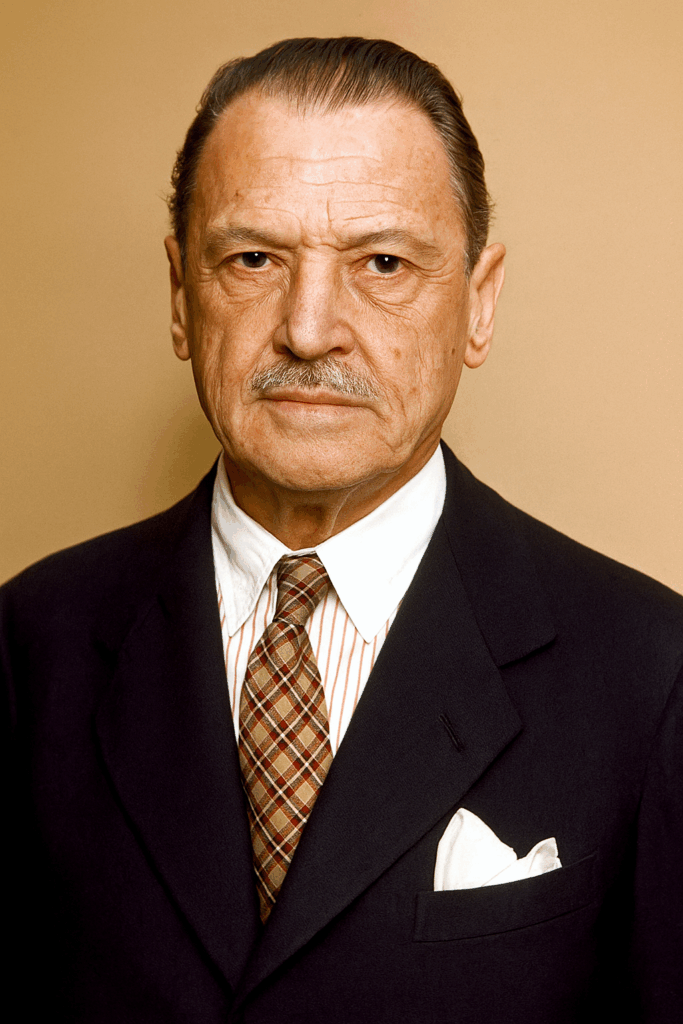
Full Name: William Somerset Maugham
Born: January 25, 1874, Paris, France
Died: December 16, 1965, Nice, France
Nationality: British
Occupation: Novelist, short story writer, playwright
Famous For: The Moon and Sixpence, Of Human Bondage, The Razor’s Edge, short stories like “The Verger”, “The Ant and the Grasshopper”, “The Luncheon”
Early Life
W. Somerset Maugham was born in the British Embassy in Paris. His father was a lawyer working in the embassy. Sadly, Maugham lost both his parents at a young age. At age 10, he was sent to live with his uncle, a strict clergyman in England. This was a difficult period for him and made him feel lonely and shy.
Education
Maugham studied in Canterbury and later went to Heidelberg, Germany. He then trained as a doctor at St. Thomas’s Hospital in London. While working as a doctor, he realized that his true passion was writing.
Literary Career
In 1897, he published his first novel, Liza of Lambeth, based on his experiences as a medical student. It was a success and encouraged him to become a full-time writer. His most famous novel is Of Human Bondage (1915), a partly autobiographical story about a young man’s struggle to find meaning in life. Other famous works include The Moon and Sixpence, based on the life of artist Paul Gauguin, and The Razor’s Edge, a spiritual novel about a man’s search for truth.
Master of the Short Story
Maugham is best known for his short stories. He had a sharp eye for human behavior and often wrote about ordinary people in realistic situations. Stories like “The Verger”, “The Ant and the Grasshopper”, and “The Luncheon” are admired for their simple style, clever twist endings, and moral messages. Many of his stories are set in British colonies in Asia, based on his travels.
As a Playwright
He also wrote many plays and was one of the most successful playwrights in London in the early 20th century. His plays often dealt with social issues and human weaknesses.
Travels and Intelligence Work
During World War I, Maugham worked as a spy for British Intelligence. He traveled to Russia and Asia and later wrote stories inspired by his experiences. He was also a world traveler and spent much of his life in the South of France.
Later Life and Death
In his later years, Maugham lived in a villa in the French Riviera. He was one of the richest and most widely read writers of his time. He died at the age of 91 in Nice, France, in 1965.
Legacy
Maugham’s writing is known for its clear style, wit, realism, and understanding of human nature. Though critics sometimes called his work old-fashioned, his stories remain popular and are still read around the world today. His life and writings continue to inspire readers, especially those interested in storytelling that reflects life’s truths.
Education vs. Practical Wisdom
This is the most important theme in the story. The main character, Albert Edward Foreman, cannot read or write, yet he performs his job faithfully for sixteen years. When he loses his post because of his illiteracy, he starts a business and becomes very successful. This shows that real-life intelligence is not always found in books or formal education. Foreman uses observation, common sense, and practical judgment to succeed—qualities that are just as valuable, if not more, than academic knowledge. Maugham shows us that people who are uneducated can still be smart, capable, and wise.
Dignity of Labour and Self-Respect
The story presents work—any work—as something to be proud of. When Foreman is asked to resign, he doesn’t beg or feel insulted. He accepts the decision with quiet pride and calmly walks away. Later, when he becomes a shopkeeper, he doesn’t consider it a step down. He treats his new role with the same responsibility and care he once gave his church job. This theme reminds us that all honest work has dignity, and we should respect people for how they work—not just where they work.
Change and Opportunity
Foreman’s life takes a sudden turn when he is forced to leave the church. At first, he is lost and doesn’t know what to do. But instead of giving up, he notices a need (no tobacco shop on a busy street), takes action, and creates a new path for himself. What seems like a failure turns out to be a blessing. This theme encourages us to be open to change, because sometimes life’s biggest opportunities come when we least expect them—especially after rejection or loss.
Success and Social Irony
The story ends with a brilliant twist of irony. When the bank manager learns that Foreman has earned over £30,000 without being able to read or write, he exclaims: “Good God, man, what would you be now if you had been able to?” Foreman calmly replies, “I’d be verger of St. Peter’s, Neville Square.” This shows the irony of life: sometimes, not having what others think is essential (like education) may actually push a person toward a different and even better direction. The man who was dismissed for being unqualified ends up richer and more successful than his educated employers.
Judgment Based on Appearances
Foreman is removed from his job not because of poor performance but because he doesn’t meet a formal requirement—he is illiterate. The vicar and churchwardens fail to see his real value: his loyalty, his understanding of his duties, and his years of faithful service. This theme highlights how society often judges people based on paper qualifications and not on their true character, skills, or experience. Maugham gently criticizes this shallow way of thinking.
Simple and Clear Language
Maugham uses everyday, straightforward language that is easy to understand. He avoids complicated words or long, decorative sentences. This makes the story accessible to all kinds of readers, including those who are not familiar with literary language.
Example: “The last vicar knew that, sir,” he replied. “He said it didn’t make no difference.”
Realistic Dialogue
The conversations in the story sound natural and true to life. Maugham uses informal speech, contractions, and even grammar mistakes to reflect how people actually talk—especially characters like Foreman, who are not highly educated. This realism helps readers feel closer to the characters.
Example: “‘E’s been naggin’ them, ‘e ‘as,” said the verger to himself.
Understated Humor and Irony
The story is filled with gentle humor, especially in the contrast between what characters expect and what actually happens. The final line—“I’d be verger of St. Peter’s, Neville Square”—is a quiet but powerful example of irony. Maugham doesn’t need loud jokes; his wit lies in life’s little surprises.
Third-Person Objective Narration
The story is told by an outside narrator (not any of the characters), who observes events and describes them without too much judgment. This keeps the tone neutral and lets the reader form their own opinions. It also allows for light commentary without sounding preachy.
Focus on Character, Not Description
Instead of describing places or things in great detail, Maugham spends more time showing what people do and say. He believes that actions reveal character. So, the reader learns about Foreman not through long descriptions, but through his behavior, speech, and decisions.
Moral without Preaching
Though the story teaches valuable lessons—like the value of self-respect, practical intelligence, and the dignity of labor—it never sounds moralistic. The message is delivered through the story itself, not through the narrator telling us what to believe.
Balanced Structure and Smooth Flow
The story has a clear structure: beginning (Foreman’s role as verger), middle (his dismissal), and end (his success). The events move at a steady pace and keep the reader interested without rushing.
The Verger’s Gown
Symbol of: Dignity, Tradition, Identity
Foreman’s gown is a powerful symbol of his position and pride. He takes great care of it and feels strangely underdressed without it. The fact that he keeps all his old gowns neatly wrapped shows how much he values his role.
When he hangs up the gown for the last time, it symbolizes the end of one chapter and the beginning of another in his life. Letting go of the gown also means letting go of old definitions of success.
St. Peter’s Church, Neville Square
Symbol of: Respectable Society, Rules, and Hierarchy
The church stands for a formal, rigid system that values appearances and qualifications over actual performance. It represents the traditional world that refuses to accommodate someone like Foreman because he lacks formal education—even though he has served faithfully.
His dismissal from the church symbolizes how society often fails to recognize true ability unless it fits into expected norms.
The Locked Church Door
Symbol of: Closure and Finality
When Foreman locks the church door after being dismissed, it symbolizes the final end of his time there. That action marks a turning point. The door is not just physically locked; it is also a symbol of the system closing its doors on him.
The Tobacco Shop
Symbol of: New Beginnings and Self-Made Success
The small tobacco shop that Foreman opens is a symbol of opportunity, independence, and practicality. It represents the modern, changing world where a man can succeed through initiative rather than formal training.
The shop becomes a place of rebirth—where Foreman proves his worth in a way that society’s institutions never allowed him to.
The £30,000 in the Bank
Symbol of: Irony and Unrecognized Potential
The money Foreman earns through his business symbolizes the success that can come from practical intelligence. It also represents the irony that the man once considered “unfit” by the church is now wealthier and more successful than those who dismissed him.
This amount, when revealed to the shocked bank manager, becomes a symbol of the story’s central irony.
Illiteracy
Symbol of: Society’s Narrow Definition of Intelligence
Foreman’s inability to read or write symbolizes how some people are unfairly judged or excluded based on what they lack, rather than what they can do.
His success challenges the idea that education is the only path to intelligence or respect.
British Society between the World Wars
“The Verger” was published in 1929, during the period between World War I (1914–1918) and World War II (1939–1945). This was a time of great social change in Britain. The old class system—based on birth and family name—was slowly being replaced by a more modern society where people could rise by merit, money, and effort.
Albert Foreman, a working-class man without formal education, becomes successful through his own intelligence and observation. His rise reflects the shifting values of society, where practical skills and entrepreneurship were beginning to gain respect, sometimes even more than background or education.
Education and Class Divides
In early 20th-century Britain, formal education was still considered a mark of class and status. Illiteracy was looked down upon, especially in roles that were connected to the church or the upper class. Foreman’s removal from his post simply because he cannot read or write reflects this prejudice. However, his success in business without education criticizes the idea that literacy alone defines a person’s worth.
Maugham, through this story, highlights how society often unfairly judges people by formal qualifications, ignoring qualities like loyalty, discipline, and common sense.
Role of the Church in Society
Churches played a major role in community life in the early 1900s. A position like the verger of a prominent church (like St. Peter’s, Neville Square) would have held great respect. However, the appointment of a new, modern vicar who values rules over relationships shows the increasing influence of bureaucracy and modern thinking over tradition.
This clash—between the old vicar (who overlooked Foreman’s illiteracy) and the new one (who dismissed him)—reflects the changing mindset in British institutions.
Rise of Small Businesses and the Self-Made Man
The early 20th century saw a rise in small business opportunities, especially in cities like London. Many working-class people became shopkeepers, tradesmen, or started small enterprises to support their families. Foreman’s successful tobacco business is an example of how people could become financially independent without formal qualifications.
This economic change allowed people to break out of the class they were born into and climb the social ladder, which is exactly what Foreman does.
Maugham’s View of Society
Somerset Maugham lived through the Victorian era, the Edwardian age, and both World Wars. He saw how society changed and how people were judged by class, education, and manners. In his stories, he often showed sympathy for ordinary people who quietly challenged the system. “The Verger” reflects Maugham’s belief that personal dignity and common sense are often more valuable than social status or education.
Very Short Answer Questions
Who is the central character in the story?
Albert Edward Foreman is the central character.
What was Foreman’s job?
He was the verger of St. Peter’s Church, Neville Square.
How long had Foreman served as a verger?
He had served for sixteen years.
Why was Foreman asked to resign?
Because he could neither read nor write.
Who discovered Foreman’s illiteracy?
The newly appointed vicar discovered it.
How did Foreman respond to being dismissed?
He accepted it calmly and respectfully.
What business did Foreman start after leaving the church?
He opened a tobacco and sweets shop.
What inspired Foreman to start his shop?
He noticed a long street without a tobacco shop.
How did Foreman expand his business?
He opened more shops in other streets with no tobacconist.
How many shops did Foreman eventually own?
He owned ten shops.
How often did Foreman collect the shop earnings?
Every Monday.
How much money did Foreman have in the bank?
Over thirty thousand pounds.
What did the bank manager suggest to Foreman?
To invest his money in gilt-edged securities.
What shocked the bank manager?
That Foreman was illiterate.
What was Foreman’s witty reply to the manager’s question?
“I’d be verger of St. Peter’s, Neville Square.”
Who helped Foreman write letters when needed?
His wife helped him.
What attitude did the new vicar have toward church rules?
He was strict and modern in his thinking.
How did Foreman view reading and writing?
He thought they weren’t necessary for useful work.
What did the church symbolize in the story?
It symbolized tradition and rigid expectations.
What is the main theme of the story?
Practical intelligence can lead to success without formal education.
Short Answer Questions
Describe the character of Albert Edward Foreman.
Albert Edward Foreman is a dignified, loyal, and hardworking man who served as the verger of St. Peter’s Church for sixteen years. He is uneducated but practical, respectful, and self-respecting. Though he cannot read or write, he performs his duties sincerely. After being dismissed, he calmly starts a business and becomes a successful tobacconist. His character reflects inner strength, simplicity, and quiet wisdom.
Why was Foreman asked to leave his position as verger?
The newly appointed vicar discovered that Foreman was illiterate—he could neither read nor write. Despite Foreman’s excellent service for sixteen years, the vicar and churchwardens felt that it was inappropriate for a verger of such a prestigious church to be uneducated. They gave him three months to learn, but Foreman politely refused. As a result, he had to resign.
How did Foreman react to losing his job?
Foreman did not protest or beg for sympathy. He accepted the decision with grace and maintained his self-respect. Though he felt sad, he did not become bitter or depressed. Instead, he quietly closed the church doors, walked away, and began thinking of what to do next. His calm and mature reaction shows his strength of character.
How did Foreman become successful after leaving the church?
After being dismissed, Foreman noticed a busy street without a tobacco shop. He took it as a business opportunity and opened his first shop there. It became successful, and he gradually opened more shops in similar areas. Over the years, he built a chain of ten shops and earned over thirty thousand pounds, becoming a wealthy and respected businessman.
What does the story suggest about the value of education?
The story questions the belief that education is the only path to success. Though Foreman is illiterate, he uses his observation, judgment, and hard work to succeed in business. Maugham suggests that practical intelligence and life experience can be just as valuable—if not more—than formal education. The story promotes a broader view of human potential.
What role does irony play in the story?
The story ends with a clever irony. When the bank manager learns that Foreman became rich without being able to read or write, he asks what Foreman would be if he were educated. Foreman replies, “I’d be verger of St. Peter’s.” This ironic twist highlights how the very flaw for which he was dismissed led to greater success. It adds depth and humor to the story’s message.
How does Maugham present society’s attitude toward education and success?
Maugham presents a society that often judges people by their educational qualifications rather than their abilities. The church authorities fail to appreciate Foreman’s practical qualities just because he is illiterate. However, society also allows men like Foreman to rise through business and hard work. The story contrasts rigid institutions with the flexible, real-world value of practical intelligence.
What message does “The Verger” convey to the reader?
The story teaches that failure can lead to opportunity, and one should not lose hope after setbacks. It encourages self-belief, resilience, and the dignity of honest work. It also challenges the narrow view that only educated people can succeed. Maugham conveys that character, observation, and hard work matter just as much—if not more—than formal education.
Compare the new vicar with the old one.
The old vicar was gentle and tolerant. He knew that Foreman couldn’t read or write but never saw it as a problem. The new vicar is modern, strict, and rule-oriented. He believes a verger must be literate and insists on removing Foreman. The difference between the two shows the changing values in society—from human understanding to mechanical rules.
How does Foreman’s story reflect social mobility?
Foreman starts as a servant and later becomes a verger—a respected church role. After being dismissed, he moves into business and becomes financially independent and successful. His journey from a lowly background to wealthy entrepreneur reflects how ordinary people could rise in status through effort, observation, and smart choices. This reflects the changing British society of Maugham’s time.
Introduction
“The Verger” is a short story written by W. Somerset Maugham, first published in 1929 in Cosmopolitan magazine. It later appeared in The Complete Short Stories of W. Somerset Maugham, Vol. II in 1951 by Heinemann London. The story is known for its simplicity, irony, and deep insight into human nature and society. It follows the journey of Albert Edward Foreman, a humble church verger, who, despite being illiterate, achieves financial success through observation, hard work, and practicality. Maugham, a master storyteller, uses this simple narrative to challenge conventional views on education, success, and human dignity.
Central Idea
The central idea of the story is that formal education is not the only path to success. Practical intelligence, common sense, and self-respect can be equally powerful. The story suggests that people should not be judged merely by qualifications or certificates. Through the journey of Foreman, the story highlights how determination, resilience, and the ability to adapt can lead to great achievements—even in the face of rejection or humiliation.
Plot Summary
Albert Edward Foreman is the verger of St. Peter’s Church, Neville Square. He has served faithfully for sixteen years, though he cannot read or write. When a new vicar is appointed, he insists that the verger must be literate. Foreman is given three months to learn, but he politely refuses and is asked to resign. Disappointed but calm, Foreman starts a tobacco shop after noticing a street without one. The shop flourishes. He opens more branches and, within ten years, owns ten shops and has over £30,000 in the bank. When the bank manager learns that Foreman is illiterate, he is shocked. The story ends with a brilliant twist: Foreman says, “If I had been able to read and write, I’d be verger of St. Peter’s.”
Themes
Education vs. Practical Intelligence: The story challenges the idea that only educated people are capable of success.
Dignity of Labour: All honest work is worthy, whether in the church or in a shop.
Change and Opportunity: Setbacks can lead to unexpected opportunities and new beginnings.
Irony of Success: Foreman’s dismissal due to illiteracy ironically leads to greater wealth and freedom.
Society’s Judgement: The story critiques how society values certificates more than true ability.
Characters
Albert Edward Foreman: A humble, loyal, and observant man. Though illiterate, he is dignified and self-respecting. His journey from verger to successful businessman is inspiring.
The New Vicar: A modern, rule-driven man who values formal education over character. He represents changing social attitudes.
The Churchwardens: Traditional and elderly, they support the vicar but feel uneasy about dismissing Foreman.
The Bank Manager: A symbol of the educated class, surprised by Foreman’s success despite his illiteracy.
Foreman’s Wife: A supportive figure who helps with reading and writing when needed.
Structure and Style
Maugham follows a linear narrative with a clear beginning, middle, and end. His style is simple, elegant, and direct. He avoids flowery language and focuses on character development and subtle irony. The story is told in third-person objective narration, allowing the events to speak for themselves. Dialogues are realistic and reflect the class and background of each character. The final line delivers a masterstroke of irony and wisdom, typical of Maugham’s storytelling style.
Historical Context
The story is set in early 20th-century Britain, a time when class divisions were strong, and education was becoming increasingly important. Many working-class people remained uneducated due to poverty or lack of access. However, the period also saw the rise of small businesses and self-made individuals. The story reflects a society in transition—from valuing tradition and status to recognizing merit, effort, and practicality. It also subtly critiques institutions like the church that still held rigid expectations.
Critical Commentary
Maugham uses gentle humor and irony to question how society defines intelligence and success. The story does not preach but presents a powerful example of how character, self-respect, and observation can lead to greatness. It also reflects Maugham’s belief that people should not be judged by appearances or certificates but by their abilities and choices. Foreman’s calm dignity throughout the story wins the reader’s respect. The final twist reinforces the idea that what is seen as a weakness may turn out to be a hidden strength.
Conclusion
“The Verger” is a timeless story that continues to inspire readers with its message of self-belief, dignity, and quiet strength. Through Albert Foreman’s journey, Maugham reminds us that real intelligence is not always found in books and that life often rewards those who observe, act, and adapt. The story is a brilliant blend of wit, irony, and human insight—told in Maugham’s uniquely graceful and thoughtful style.