The Postmaster by Rabindranath Tagore
(Summary)
The Postmaster by Rabindranath Tagore was first published in 1891 in the Bengali magazine Hitabadi. It was later included in Tagore’s collection of short stories, Galpaguchchha (Bunch of Stories), published in 1912. The story was written during Tagore’s stay in Shahjadpur, a rural village in Bengal, where he was inspired by the local postmaster and the rural setting.
“The Postmaster” is a heartfelt story by Rabindranath Tagore about loneliness, connection, and unspoken emotions. A young man from Calcutta, the postmaster, is sent to work in the tiny village of Ulapur. Far from the busy city, he feels like an outsider, bored and lonely. The village is quiet, with just an indigo factory nearby, and the workers there aren’t people he can talk to or relate with. His small office is in a dark, thatched shed near a slimy pond, which makes him miss home even more.
The only person who brings some light to his life is Ratan, a young orphaned girl from the village. Ratan does small chores for him, like cleaning or fetching water, and calls him “Dada” (elder brother), a term of affection. To pass his long, empty evenings, the postmaster starts chatting with Ratan. They talk about their families—he shares stories of his mother and sister, while Ratan recalls her late father and a little brother she used to play with. He even teaches her to read the alphabet, and they share simple meals together. For Ratan, these moments are precious, and she grows deeply attached to him, seeing him as her family.
When the postmaster falls ill during the rainy season, Ratan steps up like a caring mother. She nurses him day and night, giving him medicine, cooking for him, and staying by his side. This makes her feel even closer to him, but the postmaster doesn’t see how much she loves and depends on him. Once he recovers, he decides he can’t stay in Ulapur anymore. He tries to get a transfer to another place, but when that’s rejected, he quits his job to go back to Calcutta.
When he tells Ratan he’s leaving for good, her world falls apart. In a desperate moment, she asks if she can go with him, but he laughs at the idea, not realizing how serious she is. He tries to be kind by offering her money and telling his replacement to look after her, but Ratan is too hurt. She refuses his help, bursts into tears, and runs away, feeling rejected. As the postmaster boards a boat to leave, the sight of the rainy river and Ratan’s sad face makes him feel a brief moment of guilt. But he quickly pushes it away, thinking about life’s bigger ideas to comfort himself.
Ratan, however, has no such comfort. She wanders around the post office, crying and holding onto a small hope that her “Dada” might return. The story shows the pain of Ratan’s unspoken love and how the postmaster, caught up in his own world, fails to understand her feelings, leaving her alone with a broken heart.
Story
The postmaster took up his duties first in the village of Ulapur. Though the village was small, there was an indigo factory near it, and the proprietor, an Englishman, had managed to get a post office established.
Our postmaster belonged to Calcutta. He felt like a fish out of water in this remote village. His office and living-room were in a dark thatched shed, not far from a green, slimy pond, surrounded on all sides by a dense growth.
The men employed in the indigo factory had no leisure; moreover, they were hardly desirable companions for decent folk. Nor is a Calcutta boy an adept in the art of associating with others. Among strangers he appears either Proud or ill at ease. At any rate, the postmaster had but little company; nor had he much work to do.
At times he tried his hand at writing verse. That the movement of the leaves and the clouds of the sky were enough to fill life with joy—such were the sentiments to which he sought to give expression. But God knows that the poor fellow would have felt it as the gift of a new life, if some genie of the Arabian Nights had in one night swept away the trees, leaves and all, and substituted for them a macadamised road, and had hidden the clouds from view with rows of tall houses.
The postmaster’s salary was small. He had to cook his own meals, which he used to share with Ratan, an orphan girl of the village, who did odd jobs for him.
When in the evening, the smoke began to curl upwards from the village cow-sheds, and the cicadas chirped in every bush; when the mendicants of the Baul sect sang their shrill songs in their daily meeting place; when any poet, who had attempted to watch the movement of the leaves in the dense bamboo thickets, would have felt a ghostly shiver run down his back, the postmaster would light his little lamp, and call out “Ratan.”
Ratan would sit outside waiting for his call, and instead of coming in at once, would reply, “Did you call me Sir?”
“What are you doing?” the postmaster would ask.
“I must go and light the kitchen fire,” she would reply.
And the postmaster would say: “Oh let the kitchen fire wait for a while; light me my pipe first.”
At last Ratan would enter, with puffed-out cheeks, vigorously blowing into a flame a live coal to light the tobacco. This would give the postmaster an opportunity of chatting with her. “Well, Ratan,” perhaps he would begin, “do you remember anything of your mother?” That was a fertile subject. Ratan partly remembered, and partly forgot. Her father had been fonder of her than her mother: him she recollected more vividly. He used to come home in the evening after his work, and one or two evenings stood out more clearly than others, like pictures in her memory.
Ratan would sit on the floor near the postmaster’s feet as memories crowded in upon her. She called to mind a little brother that she had—and how on some bygone cloudy day she had played at fishing with him on the edge of the pond, with a twig for a fishing-rod. Such little incidents would drive out greater events from her mind.
Thus, as they talked, it would often get very late, and the postmaster would feel too lazy to do any cooking at all. Ratan would then hastily light the fire, and toast some unleavened bread, which with the cold remnants of the morning meal, was enough for their supper.
On some evenings, seated at his desk in the corner of the big empty shed, the postmaster too would call up memories of his own home, of his mother and his sister, of those for whom in his exile his heart was sad—memories which were always haunting him, but which he could not reveal to the men of the factory, though he found himself naturally recalling them aloud in the presence of the simple little girl. And so it came about that the girl would allude to his people as mother, brother, and sister, as if she had known them all her life. Indeed, she had a complete picture of each one of them painted in her heart.
One day, at noon, during a break in the rains, there was a cool soft breeze blowing; the smell of the damp grass and leaves in the hot sun felt like the warm breathing on one’s body of the tired earth. A persistent bird repeated all the afternoon the burden of its one complaint in Nature’s audience chamber.
The postmaster had nothing to do. The shimmer of freshly washed leaves, and the banked-up remnants of the retreating rain-clouds were sights to see; and the postmaster was watching them and thinking to himself: “Oh, if only some kindred soul were near—just one loving human being whom I could hold near my heart!” This was exactly, he went on to think, what that bird was trying to say, and it was the same feeling which the murmuring leaves were striving to express. But no one knows, or would believe, that such an idea might also take possession of an ill-paid village postmaster in the deep, silent midday interval in his work.
The postmaster sighed, and called out “Ratan.” Ratan was then stretched at full length beneath the guava-tree, busily engaged in eating unripe guavas. At the voice of her master, she ran up breathlessly, saying: “Did you call me, Dada?” “I was thinking of teaching you to read,” said the postmaster. And then for the rest of the afternoon he taught her the alphabet.
Thus, in a very short time, Ratan had got as far as the double consonants.
It seemed as though the rains would never end. Canals, ditches, and hollows were all flooded with water. Day and night the patter of rain was heard, and the croaking of frogs. The village roads became impassable, and marketing had to be done in punts.
One heavily clouded morning, the postmaster’s little pupil had been waiting long outside the door to be called, but as the usual summons did not come, she took up her dog-eared book, and slowly entered the room. She found her master lying on his bed, and thinking he was resting, she was about to retire on tiptoe, when she suddenly heard her name—“Ratan!” She turned at once and asked: “Were you asleep, Dada?” The postmaster in a weak voice replied: “I am not well. Feel my head; is it very hot?”
In the loneliness of his exile, and in the gloom of the rains, he needed a little tender nursing. He longed to call to mind the touch on his forehead of soft hands with tinkling bracelets, to imagine the presence of loving womanhood, the nearness of mother and sister. And the exile was not disappointed. Ratan ceased to be a little girl. She at once stepped into the post of mother, called in the village doctor, gave the patient his pills at the proper intervals, sat up all night by his pillow, cooked his gruel for him, and every now and then asked: “Are you feeling a little better, Dada?”
It was some time before the postmaster, though still weak, was able to leave his sickbed. “No more of this,” said he with decision. “I must apply for a transfer from this place.” He wrote off at once to Calcutta an application for a transfer, on the ground of the unhealthiness of the spot.
Relieved from her duties as nurse, Ratan again took up her former place outside the door. But she no longer heard the same old call. She would sometimes furtively peep inside to find the postmaster sitting on his chair, or stretched on his bed, and gazing absently into the air. While Ratan was awaiting her call, the postmaster was awaiting a reply to his application. The girl read her old lessons over and over again—her great fear was lest, when the call came, she might be found wanting in the double consonants.
After a week’s waiting, one evening her summons came. With an overflowing heart Ratan rushed into the room and cried, as she used to cry: “Did you call me, Dada?”
The postmaster said: “I am going away tomorrow, Ratan.”
“Where are you going, Dada?”
“I am going home.”
“When will you come back?”
“I am not coming back.”
Ratan asked no more. The postmaster, of his own accord, went on to tell her that his application for a transfer had been rejected, so he had resigned his post and was going home.
For a long time neither of them spoke. The lamp burned dimly, and from a leak in one corner of the thatch water dripped steadily into an earthen vessel on the floor beneath.
After a while Ratan rose, and went off to the kitchen to prepare the meal; but she was not so quick about it as before. Many new things to think of had entered her little brain. When the postmaster had finished his supper, the girl suddenly asked him: “Dada, will you take me home with you?”
The postmaster laughed. “What an idea!” said he. But he did not think it necessary to explain to the girl wherein lay the absurdity of such a course.
That whole night, awake and asleep, the postmaster’s laughing reply haunted her—“What an idea!”
When he woke up in the morning, the postmaster found his bath ready. He had continued his Calcutta habit of bathing in water drawn and kept in pitchers, instead of taking a plunge in the river as was the custom of the village.
For some reason or other, the girl could not ask him the time of his departure, she had therefore fetched the water from the river long before sunrise, so that it should be ready as soon as he might want it. After the bath came a call for Ratan. She entered without a sound, and looked silently into her master’s face for orders. The master said: “You need not be anxious about my going away, Ratan: I shall tell my successor to look after you.” These words were kindly meant, no doubt. But inscrutable are the ways of a woman’s heart!
Ratan had borne many a scolding from her master without complaint, but these kind words she could not bear. She burst out weeping, and said: “No, no, you need not tell anybody anything at all about me; I don’t want to stay here any longer.”
The postmaster was dumbfounded. He had never seen Ratan like this before.
The new man duly arrived, and the postmaster gave over charge, and prepared to depart. Just before starting he called Ratan and said: “Here is something for you: I hope it will keep you for some little time.” He brought out from his pocket the whole of his month’s salary, retaining only a trifle for the journey. Then Ratan fell at his feet and cried: “O Dada, pray don’t give me anything, don’t in any way trouble about me,” and then she ran away out of sight.
The postmaster heaved a sigh, took up his bag, put his umbrella over his shoulder, and accompanied by a man carrying his many-coloured tin trunk, slowly made for the boat.
When he got in and the boat was under way, and the rain-swollen river, like a stream of tears welling up from the earth, swirled and sobbed at her bows, then he felt grieved at heart; the sorrow-stricken face of a village girl seemed to represent for him the great unspoken pervading grief of Mother Earth herself. At one moment he felt an impulse to go back and bring away with him that lonely waif, forsaken of the world. But the wind had just filled the sails, the boat had got well into the middle of the turbulent current, and already the village was left behind, and its outlying burning-ground had come into sight.
So the traveller, borne on the breast of the swift-flowing river, consoled himself with philosophical reflections on the world, and on death, the great parting, from which there is no return.
But Ratan had no philosophy. She was wandering about the post office with the tears streaming from her eyes. It may be that she had still a hope lurking in some corner of her heart that her Dada would return, and perhaps that is why she could not tear herself away. Alas, for our foolish human nature! Its fond mistakes are persistent. The dictates of reason take a long time to assert their sway.
The surest proofs meanwhile are disbelieved. One clings desperately to some vain hope, till a day comes when it has sucked the heart dry and then it breaks through its bonds and departs. After that comes the misery of awakening, and then once again the longing to get back into the maze of the same mistakes.
Word Meaning
| Word | English Meaning | Hindi Meaning |
| Indigo | A deep blue dye or plant used to produce this dye; refers to the factory in the story. | नील – एक गहरा नीला रंग या पौधा जिससे यह रंग बनता है। |
| Proprietor | The owner of a business or property. | मालिक – किसी व्यवसाय या संपत्ति का स्वामी। |
| Thatched | Covered with straw or reeds, as a roof. | छप्पर – पुआल या नरकट से ढका हुआ। |
| Slime | Wet, slippery mud or muck, often unpleasant. | कीचड़ – गीला, फिसलन भरा मिट्टी या गंदगी। |
| Dense | Thick or closely packed together, as in vegetation. | घना – मोटा या पास-पास उगा हुआ। |
| Adept | Highly skilled or proficient at something. | निपुण – किसी काम में बहुत कुशल। |
| Ill at ease | Uncomfortable or awkward in a situation. | असहज – किसी स्थिति में असुविधाजनक या अटपटा। |
| Sentiments | Feelings or emotions expressed in words. | भावनाएँ – शब्दों में व्यक्त भाव या अनुभूति। |
| Macadamised | Referring to a road surfaced with compacted layers of small stones. | पक्की सड़क – छोटे पत्थरों से बनी मजबूत सड़क। |
| Genie | A magical spirit, often from Arabian folklore, capable of granting wishes. | जिन्न – जादुई आत्मा जो इच्छाएँ पूरी कर सकती है। |
| Mendicants | Beggars or religious ascetics who live on alms. | भिक्षु – भिक्षा पर जीने वाले साधु या गरीब। |
| Baul | A sect of mystic minstrels from Bengal, known for their spiritual songs. | बाउल – बंगाल के रहस्यवादी गायक जो आध्यात्मिक गीत गाते हैं। |
| Shrill | A high-pitched and piercing sound. | तीखा – तेज और कर्कश ध्वनि। |
| Cicadas | Insects known for their loud, buzzing calls, often heard in summer. | झींगुर – तेज भनभनाने वाले कीड़े। |
| Vigorously | Done with energy, force, or enthusiasm. | जोरदार – ऊर्जा या उत्साह के साथ किया गया। |
| Puffed-out | Swollen or inflated, as with air or effort (e.g., cheeks while blowing). | फूला हुआ – हवा या प्रयास से फुला हुआ। |
| Recollected | Remembered or recalled from memory. | याद किया – स्मृति से याद करना। |
| Fertile | Productive or capable of producing results; here, a rich topic for conversation. | उपजाऊ – परिणाम देने वाला; यहाँ, बातचीत का अच्छा विषय। |
| Bygone | Belonging to an earlier time; past. | बीता हुआ – पुराने समय का। |
| Unleavened | Bread made without yeast or rising agents, flat and simple. | बिना खमीर का – बिना खमीर की सादी रोटी। |
| Exile | Being away from one’s home or country, often unwillingly. | निर्वासन – अपने घर या देश से दूर रहना। |
| Haunting | Persistently lingering in the mind, often with sadness. | सताने वाला – मन में बार-बार आने वाला, अक्सर उदासी के साथ। |
| Allude | To refer to something indirectly or casually. | संकेत करना – किसी बात का अप्रत्यक्ष उल्लेख करना। |
| Shimmer | A soft, wavering light or shine. | चमक – हल्की, लहराती चमक। |
| Banked-up | Piled or accumulated, as clouds or debris. | ढेर – जमा हुआ, जैसे बादल या मलबा। |
| Kindred | Related or similar in kind; here, a soul with shared feelings. | समान – समान भावनाओं वाला व्यक्ति। |
| Persistent | Continuing firmly or obstinately, despite obstacles. | लगातार – रुकावटों के बावजूद जारी रहने वाला। |
| Furtively | Done secretly or stealthily, to avoid notice. | चुपके से – गुप्त रूप से, ध्यान से बचकर। |
| Gruel | A thin, watery porridge or soup, often given to the sick. | दलिया – पतला, पानी जैसा भोजन, अक्सर बीमारों के लिए। |
| Tinkling | A light, clear, ringing sound, like small bells. | झनझनाहट – हल्की, स्पष्ट, घंटी जैसी आवाज। |
| Inscrutable | Difficult to understand or interpret. | रहस्यमय – समझने में कठिन। |
| Dumbfounded | Shocked or astonished, unable to speak. | हक्का-बक्का – आश्चर्य से बोलने में असमर्थ। |
| Waif | A homeless or abandoned person, often a child. | बेसहारा – बेघर या परित्यक्त व्यक्ति, अक्सर बच्चा। |
| Pervading | Spreading throughout or present everywhere. | व्याप्त – हर जगह फैला हुआ। |
| Turbulent | Wildly disturbed or agitated, as water or emotions. | अशांत – उग्र या अस्थिर, जैसे पानी या भावनाएँ। |
| Philosophical | Relating to deep thought about life, existence, or meaning. | दार्शनिक – जीवन या अर्थ के बारे में गहन विचार। |
| Consoling | Comforting or soothing in times of distress. | सांत्वना देना – दुख के समय में सुकून देना। |
| Lurking | Hidden or lingering secretly, often with intent. | छिपा हुआ – गुप्त रूप से मौजूद। |
| Indigo | A deep blue dye or plant used to produce this dye; refers to the factory in the story. | नील – एक गहरा नीला रंग या पौधा जिससे यह रंग बनता है। |
| Proprietor | The owner of a business or property. | मालिक – किसी व्यवसाय या संपत्ति का स्वामी। |
| Thatched | Covered with straw or reeds, as a roof. | छप्पर – पुआल या नरकट से ढका हुआ। |
| Slime | Wet, slippery mud or muck, often unpleasant. | कीचड़ – गीला, फिसलन भरा मिट्टी या गंदगी। |
| Dense | Thick or closely packed together, as in vegetation. | घना – मोटा या पास-पास उगा हुआ। |
| Adept | Highly skilled or proficient at something. | निपुण – किसी काम में बहुत कुशल। |
| Ill at ease | Uncomfortable or awkward in a situation. | असहज – किसी स्थिति में असुविधाजनक या अटपटा। |
| Sentiments | Feelings or emotions expressed in words. | भावनाएँ – शब्दों में व्यक्त भाव या अनुभूति। |
| Macadamised | Referring to a road surfaced with compacted layers of small stones. | पक्की सड़क – छोटे पत्थरों से बनी मजबूत सड़क। |
| Genie | A magical spirit, often from Arabian folklore, capable of granting wishes. | जिन्न – जादुई आत्मा जो इच्छाएँ पूरी कर सकती है। |
| Mendicants | Beggars or religious ascetics who live on alms. | भिक्षु – भिक्षा पर जीने वाले साधु या गरीब। |
| Baul | A sect of mystic minstrels from Bengal, known for their spiritual songs. | बाउल – बंगाल के रहस्यवादी गायक जो आध्यात्मिक गीत गाते हैं। |
| Shrill | A high-pitched and piercing sound. | तीखा – तेज और कर्कश ध्वनि। |
| Cicadas | Insects known for their loud, buzzing calls, often heard in summer. | झींगुर – तेज भनभनाने वाले कीड़े। |
| Vigorously | Done with energy, force, or enthusiasm. | जोरदार – ऊर्जा या उत्साह के साथ किया गया। |
Characters
The Postmaster
Background and Personality
The Postmaster is a young, educated man from Calcutta (now Kolkata), accustomed to the urban bustle and intellectual life of the city. His assignment to the remote village of Ulapur, with its small post office near an indigo factory, places him in an unfamiliar and isolating environment. He is depicted as sensitive, introspective, and somewhat self-absorbed, with a tendency to romanticize his feelings through poetry and philosophical musings. However, his urban upbringing makes him feel superior to the rural villagers, rendering him socially awkward and “ill at ease” among strangers, as the narrative notes.
Motivations and Emotional State
The Postmaster’s primary motivation is to escape the loneliness and boredom of Ulapur. He feels like a “fish out of water,” disconnected from the indigo factory workers, whom he deems “hardly desirable companions for decent folk.” His attempts to find joy in nature—watching the “movement of the leaves and the clouds”—are fleeting and unfulfilling, as he secretly longs for the familiarity of Calcutta’s paved roads and tall buildings. This sense of exile fuels his interactions with Ratan, whom he engages not out of genuine affection but to alleviate his solitude. His decision to teach her to read and share stories of his family reflects a need for connection, but his emotional investment remains superficial.
When illness strikes, his vulnerability surfaces, and he craves the “tender nursing” of a mother or sister, revealing a deeper homesickness. However, once recovered, his resolve to leave Ulapur strengthens, culminating in his resignation when his transfer request is denied. His final act of offering Ratan money and instructing his successor to care for her shows a sense of duty, but it lacks empathy, as he fails to recognize her emotional turmoil.
Emotional Arc and Development
The Postmaster’s arc is one of fleeting empathy overshadowed by detachment. Initially, he is a lonely figure seeking distraction through Ratan’s company. His conversations with her and efforts to teach her suggest a potential for growth in understanding rural life and human connection. However, his inability to reciprocate Ratan’s affection—or even acknowledge it—reveals his emotional limitations. When Ratan asks to go with him, his dismissive laughter (“What an idea!”) exposes his insensitivity, rooted in his urban privilege and inability to see her as an equal.
On the boat departing Ulapur, he experiences a brief moment of guilt, stirred by the “sorrow-stricken face of a village girl” and the turbulent river, which symbolizes the emotional weight he leaves behind. Yet, he quickly consoles himself with “philosophical reflections” on life and death, indicating a return to self-absorption. This lack of significant change underscores his static nature, as he prioritizes his own comfort over Ratan’s pain.
Role in the Narrative
The Postmaster serves as the catalyst for the story’s emotional conflict, representing urban alienation and emotional detachment. His interactions with Ratan highlight the class and cultural divide between urban and rural India, as well as the transient nature of relationships in a colonial context. His philosophical musings contrast sharply with Ratan’s raw grief, emphasizing the story’s theme of unrequited attachment and the failure to recognize others’ emotional depth. Tagore uses him to critique the insensitivity of the privileged, who may form connections but leave lasting wounds through their indifference.
Key Traits
Introspective but Self-Absorbed: His poetic attempts and philosophical thoughts focus on his own feelings, not others’.
Alienated: His urban background isolates him in Ulapur, shaping his interactions.
Insensitive: His failure to understand Ratan’s emotions reflects emotional and cultural blindness.
Transient: His departure symbolizes the impermanence of his presence in Ratan’s life.
Ratan
Background and Personality
Ratan is a young, orphaned village girl in Ulapur, likely an adolescent, who works for the Postmaster doing odd jobs like fetching water or cleaning. As an orphan, she is marginalized and lacks family or social status, making her vulnerable yet resilient. She is depicted as simple, earnest, and deeply emotional, with a capacity for love and loyalty that transcends her circumstances. Her affectionate use of “Dada” (elder brother) for the Postmaster reflects her longing for familial connection, and her quick responsiveness to his calls shows her devotion and eagerness to please.
Motivations and Emotional State
Ratan’s primary motivation is to find belonging and purpose, which she discovers through her relationship with the Postmaster. Her life before him is sparsely detailed, but her fragmented memories of her father and brother suggest a void that the Postmaster fills. His attention—through conversations, shared meals, and literacy lessons—gives her a sense of value and connection. Teaching her to read, in particular, empowers her and deepens her attachment, as she diligently practices to meet his expectations.
When the Postmaster falls ill, Ratan’s caregiving role transforms her into a maternal figure, as she nurses him with dedication, sitting up all night and administering medicine. This act solidifies her emotional bond, as she invests her heart in his well-being. However, her dependence on him makes his departure devastating, shattering her sense of security and leaving her to grapple with rejection and abandonment.
Emotional Arc and Development
Ratan’s arc is one of growth, attachment, and heartbreak. She begins as a lonely but hopeful girl, finding joy in the Postmaster’s company. Her willingness to share memories and learn from him shows her openness and trust, marking her emotional growth from a marginalized orphan to someone with a sense of purpose. Her caregiving during his illness elevates her to a nurturing role, revealing her capacity for selfless love.
The Postmaster’s announcement of his departure marks the turning point, plunging her into despair. Her bold question—”Dada, will you take me home with you?”—is a courageous expression of her attachment, but his laughter crushes her vulnerability. Her refusal of his money and plea to be left alone (“I don’t want to stay here any longer”) demonstrate a shift from dependence to dignified defiance, as she rejects pity to preserve her self-respect. The story’s end, with Ratan wandering the post office in tears, clinging to a “vain hope” of his return, captures her enduring pain and the persistence of her emotional wound.
Role in the Narrative
Ratan is the emotional heart of the story, embodying the themes of unrequited love and the human need for connection. Her attachment to the Postmaster highlights the power of small acts of kindness to transform lives, as well as the devastation caused by their withdrawal. Tagore uses her to evoke empathy, subtly portraying her psychology through actions and silences rather than explicit narration. Her contrast with the Postmaster underscores the story’s critique of emotional insensitivity and societal hierarchies, as her marginalized status amplifies the tragedy of her unrecognized feelings. Ratan represents the universal pain of those left behind, her “aching heart” a poignant symbol of Mother Earth’s unspoken grief.
Key Traits
Emotional and Loyal: Her deep attachment to the Postmaster reflects her longing for family and love.
Resilient yet Vulnerable: Despite her orphanhood, she finds purpose in serving the Postmaster, but his departure exposes her fragility.
Dignified: Her rejection of his money shows her pride and refusal to be pitied.
Hopeful but Heartbroken: Her lingering hope for his return captures the persistence of human longing amid despair.
Rabindranath Tagore
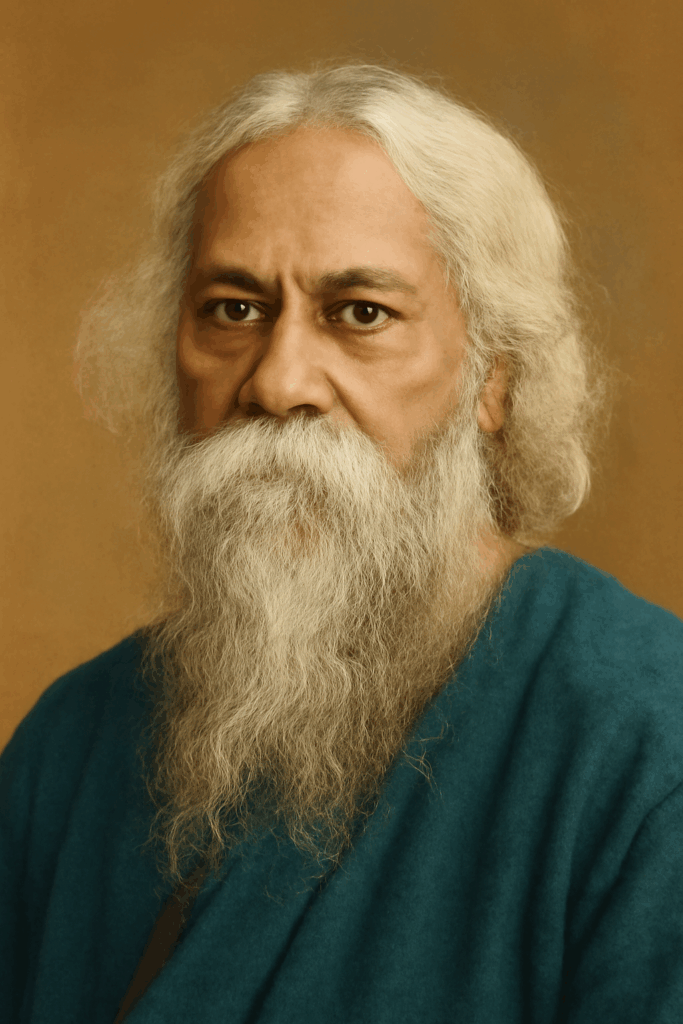
Rabindranath Tagore (1861–1941) was a Bengali poet, writer, philosopher, musician, artist, and one of India’s most celebrated cultural figures.
Known as the “Bard of Bengal,” he was the first non-European to win the Nobel Prize for Literature in 1913, recognized for his profound poetry, stories, and songs.
His work, including “The Postmaster,” reflects deep empathy for human emotions, nature, and social issues, making him a global cultural icon.
Early Life and Background
Rabindranath Tagore was born on May 7, 1861, into a wealthy and influential family in Calcutta (now Kolkata), Bengal, during British colonial rule.
His father, Debendranath Tagore, was a philosopher and leader of the Brahmo Samaj, a reformist Hindu movement.
Growing up in a cultured household, Rabindranath was surrounded by music, literature, and art.
He didn’t like formal schooling, so he was mostly tutored at home, which allowed his creativity to flourish.
At age seven, he wrote his first poem, showing early signs of his poetic talent.
By 1874, his poem Abhilasha (Desire) was published, initially under a pseudonym, marking the start of his literary journey.
Literary Career and “The Postmaster”
Tagore wrote poetry, short stories, novels, plays, essays, and songs, blending simplicity with deep emotional and philosophical insights.
“The Postmaster,” written in 1891 while he was managing his family’s estates in Shahjadpur, a rural village in Bengal, reflects his observations of village life.
Inspired by a real postmaster whose stories he enjoyed, Tagore crafted the tale of loneliness and unrequited love, published in the Bengali magazine Hitabadi and later included in his 1912 collection Galpaguchchha (Bunch of Stories).
Major Achievements
Nobel Prize (1913): Tagore won the Nobel Prize for Literature for his poetry collection Gitanjali (Song Offerings), which he began writing in 1909. Translated into English, it captivated the world with its spiritual and lyrical beauty, making him the first Asian to receive this honor.
National Anthem: In 1911, Tagore composed Jana Gana Mana, which became India’s national anthem after independence in 1947. He also wrote Amar Shonar Bangla, later adopted as Bangladesh’s national anthem.
Visva-Bharati University: In 1921, Tagore founded Visva-Bharati University in Shantiniketan, West Bengal, to promote education that blended Indian and Western traditions. He donated his Nobel Prize money and book royalties to support it, reflecting his commitment to learning and cultural exchange.
Patriotic Contributions: Tagore was involved in India’s freedom struggle, writing patriotic songs and protesting the 1905 partition of Bengal, which divided the region along religious lines. However, he later distanced himself from extreme nationalism, advocating for universal humanity.
Other Contributions
Beyond writing, Tagore was a versatile genius:
Music: He composed over 2,000 songs, known as Rabindra Sangeet, which remain popular in Bengal for their emotional and melodic richness.
Art: In his later years, he took up painting, creating unique, expressive artworks.
Social Reform: Tagore championed education, women’s rights, and rural development, criticizing social inequalities like caste and gender discrimination. His stories, including “The Postmaster,” often highlight the struggles of the poor and marginalized, like Ratan, an orphaned village girl.
Role in “The Postmaster”
Written during Tagore’s time in Shahjadpur, “The Postmaster” reflects his deep connection to rural Bengal and his empathy for ordinary people.
Living among villagers, he observed their joys and struggles, which inspired the story’s vivid setting and characters.
The Postmaster’s alienation mirrors the urban-rural divide Tagore saw, while Ratan’s heartbreak critiques social insensitivity, a theme he explored as a reformer.
His 1891 letter about enjoying the real postmaster’s tales shows how he drew from real life, blending it with his poetic imagination to create a simple yet profound story.
Global Impact and Legacy
Tagore traveled widely, delivering lectures in Europe, America, and Asia, spreading ideas of universal humanity and cultural harmony.
His works were translated into many languages, making him a global literary figure.
He influenced writers, thinkers, and artists worldwide, and his ideas on education and social reform remain relevant.
Tagore died on August 7, 1941, but his legacy lives on through his writings, music, and institutions like Visva-Bharati. In India, he is revered as Gurudev (Great Teacher), and his stories like “The Postmaster” continue to touch hearts for their timeless exploration of human emotions.
Historical Context of His Work
Tagore lived during a time of British colonial rule, the Bengali Renaissance (a cultural awakening in Bengal), and growing Indian nationalism.
The 1891 setting of “The Postmaster” reflects colonial structures, like the post office and indigo factory, which shaped rural life.
Tagore’s involvement in the Bengali Renaissance, promoting literature and social reform, influenced his focus on human stories and societal issues.
His empathy for characters like Ratan reflects his critique of class and gender inequalities, common in colonial Bengal.
Themes
Loneliness and Isolation
The story shows how lonely people can feel when they’re in a place where they don’t belong. The Postmaster, a city man from Calcutta, feels like a stranger in the quiet village of Ulapur. He misses his home and can’t connect with the village workers, so he spends his days bored and alone. Ratan, an orphaned girl, is also lonely because she has no family. Both characters want someone to talk to, but their loneliness keeps them apart in different ways—the Postmaster wants to escape, while Ratan wants to hold on to their bond. This theme shows how being far from home or loved ones can make life feel empty.
Unrequited Love and Emotional Attachment
Ratan grows to love the Postmaster like family, calling him “Dada” (big brother) and caring for him when he’s sick. She hopes he’ll stay or take her with him, but he doesn’t feel the same way. When she asks to go with him, he laughs, not understanding how much she cares. This one-sided love breaks Ratan’s heart, leaving her crying while the Postmaster moves on. The story explores how deeply someone can love another person, even if that love isn’t returned, and how painful it is when feelings are ignored.
Class and Cultural Divide
The Postmaster and Ratan come from very different worlds. He’s educated, from the city, and sees himself as better than the village people. Ratan is a poor, uneducated orphan who lives a simple life. This difference makes it hard for the Postmaster to see Ratan as an equal or understand her feelings. He talks to her to pass the time, but he never really values her the way she values him. The story shows how people from different backgrounds—like city vs. village or rich vs. poor—can struggle to connect, often hurting each other without meaning to.
Transience vs. Permanence
The Postmaster’s time in Ulapur is short—he comes, stays briefly, and leaves when he can’t stand it anymore. His life is about moving on, and he thinks about big ideas like life and death to feel better about leaving Ratan behind. But for Ratan, the Postmaster is a permanent part of her heart. She can’t just forget him, and her pain stays with her as she wanders the post office, hoping he’ll return. This theme contrasts how some people can walk away from relationships while others carry the weight of those connections forever.
Empathy and Emotional Insensitivity
The story asks us to feel for Ratan, whose love and pain are ignored by the Postmaster. He’s kind to her at first, teaching her to read and talking about his family, but he doesn’t see how much she depends on him. When he leaves, he tries to help by giving her money, but he doesn’t understand that she needs his care, not his pity. Tagore shows how people can be kind without truly understanding others’ feelings, especially when they’re focused on their own problems. This theme makes us think about the importance of really listening to and caring for others.
Style
The narrative style of “The Postmaster” by Rabindranath Tagore is simple, evocative, and deeply empathetic, crafted to convey profound emotional and social themes in an accessible yet poetic manner.
Simple and Clear Language
Tagore uses straightforward words and short sentences, making the story easy to read and understand. The language feels like a conversation, with a natural flow that suits the rural setting of Ulapur and the characters’ emotions. For example, when Ratan asks, “Did you call me, Dada?” the words are simple but carry her affection and eagerness. Even when describing deeper feelings, like the Postmaster’s loneliness or Ratan’s heartbreak, Tagore avoids complicated words, letting the emotions shine through clearly. This simplicity makes the story relatable, especially for readers who connect with the characters’ struggles.
Poetic and Emotional Tone
The tone of the story is gentle, sad, and full of feeling, like a quiet song. Tagore writes with warmth for Ratan and a touch of pity for the Postmaster, making readers care about both characters. The story feels tender when Ratan nurses the Postmaster or shares memories of her family, but it turns heavy and sorrowful when he leaves her behind. Lines like “the sorrow-stricken face of a village girl seemed to represent… the great unspoken pervading grief of Mother Earth herself” show a poetic sadness that ties Ratan’s pain to something bigger, like the world’s sorrow. This emotional tone pulls readers into the characters’ hearts.
Straightforward Structure with Subtle Depth
The story follows a simple, linear plot: the Postmaster arrives in Ulapur, bonds with Ratan, falls ill, decides to leave, and departs, leaving Ratan heartbroken. There are no big twists or complicated events, which keeps the focus on the characters’ feelings. However, Tagore adds depth by hinting at their inner thoughts without saying them outright. For example, Ratan’s pain is shown through her actions—like crying or wandering the post office—rather than long explanations. This “read between the lines” approach, as noted in the outline, makes the story feel rich and invites readers to think about what’s unsaid.
Vivid and Symbolic Imagery
Tagore paints clear pictures of Ulapur’s rural setting to set the mood and reflect the characters’ emotions. The “dark thatched shed” and “green, slimy pond” make the Postmaster’s loneliness feel heavy and gloomy. The rainy season, with its “patter of rain” and “croaking of frogs,” adds a sense of sadness and being stuck, matching Ratan’s growing attachment and eventual heartbreak. The river at the end, described as “rain-swollen” and “like a stream of tears,” is a powerful symbol of Ratan’s grief and the Postmaster’s departure. These images are simple but meaningful, making the story feel alive and connected to the characters’ inner worlds.
Third-Person Narrative with Empathy
The story is told by a narrator who watches both characters from the outside (third-person perspective) but feels close to their thoughts and emotions. The narrator doesn’t pick sides but shows the Postmaster’s loneliness and Ratan’s love with equal care, letting readers understand both. For example, we hear the Postmaster’s longing for Calcutta and his brief guilt, but we also feel Ratan’s quiet pain when she refuses his money. Tagore’s narrator sometimes steps back to share bigger thoughts, like comparing Ratan’s sorrow to the Earth’s grief, which adds a wise, almost philosophical touch. This perspective makes the story feel personal yet universal.
Symbolism
In “The Postmaster” by Rabindranath Tagore, symbolism is used to deepen the story’s emotional and thematic impact, reflecting the characters’ inner lives and the broader human condition. Symbols are objects, settings, or actions that carry deeper meanings, often tied to the themes of loneliness, unrequited love, class divide, and transience.
The Rain and Rainy Season
The story often mentions rain, especially during the Postmaster’s illness and departure, with descriptions like “the patter of rain,” “flooded canals,” and the “rain-swollen river.”
The rain symbolizes sadness, emotional turmoil, and things that can’t be controlled. It creates a gloomy, heavy mood that mirrors Ratan’s growing attachment and eventual heartbreak. When the Postmaster is sick, the endless rain reflects his vulnerability and Ratan’s deep care for him. At the end, the “rain-swollen river” flowing like “a stream of tears” represents Ratan’s overwhelming grief as the Postmaster leaves, and it connects her personal pain to the larger sorrow of the world, like “Mother Earth herself.”
Connection to the Story: The rain shows how Ratan’s emotions are tied to nature’s cycles, while the Postmaster, who wants to escape the village, seems unaffected by it, highlighting their emotional disconnect.
The River
The river appears at the end when the Postmaster sails away from Ulapur, described as “turbulent” and full of “sobs” and “tears.”
The river symbolizes separation and the unstoppable flow of time and life. It carries the Postmaster away from Ratan, making their parting final and showing how easily he moves on. Its wild, tear-like movement reflects Ratan’s heartbreak and the deep, unspoken pain she feels, as if the river cries for her. It also stands for the divide between the Postmaster’s urban world and Ratan’s rural life, as he crosses it to leave her behind.
Connection to the Story: The river emphasizes the theme of transience—how the Postmaster’s presence in Ratan’s life is temporary—and underscores Ratan’s inability to follow him, both physically and emotionally.
The Post Office
The small, thatched post office in Ulapur is where the Postmaster works and where he and Ratan spend most of their time together.
The post office symbolizes connection and hope, but also impermanence. It’s a place where letters link people across distances, much like the Postmaster and Ratan’s talks briefly connect their lonely lives. For Ratan, it becomes a home where she feels valued and loved. But it’s also temporary, as the Postmaster leaves, and Ratan wanders it in tears, hoping he’ll return. In the colonial setting, the post office also hints at the fleeting presence of urban systems in rural areas, which don’t truly belong.
Connection to the Story: The post office reflects the brief bond between the characters and the pain of its loss, tying to themes of unrequited love and the class divide, as it’s a space where their worlds meet but don’t merge.
The Slime-Covered Pond and Dense Growth
The Postmaster’s shed is near a “green, slimy pond” surrounded by “dense growth” of plants, described early in the story.
The pond and thick plants symbolize the Postmaster’s feelings of being trapped and out of place in Ulapur. The slimy, unclean pond reflects his disgust and discomfort with rural life, which he finds messy and unfamiliar compared to Calcutta’s paved roads. The dense growth adds to the sense of being closed in, showing his isolation and inability to connect with the village. For Ratan, who’s used to this setting, it’s just home, highlighting their different perspectives.
Connection to the Story: This symbol ties to the theme of class and cultural divide, showing how the Postmaster’s urban background makes him reject the rural world that Ratan accepts, preventing a deeper bond.
The Persistent Bird’s Song
During a quiet moment, a “persistent bird” is described as repeating “the burden of its one complaint” all afternoon.
The bird’s song symbolizes unspoken longing and loneliness that can’t be expressed fully. Its repetitive, sad call mirrors the Postmaster’s inner wish for “some kindred soul” to share his heart with, and it also echoes Ratan’s quiet hope for love and belonging. The bird’s voice, ignored by the world, is like Ratan’s feelings, which the Postmaster doesn’t notice. It connects their shared but unvoiced desire for connection, tying to nature’s role in reflecting human emotions.
Connection to the Story: The bird underscores the theme of emotional insensitivity, as both characters’ longings go unheard, and it adds a poetic touch to their isolation.
Historical Context
Colonial Bengal in the Late 19th Century
The Postmaster is set in Bengal (now West Bengal, India, and Bangladesh) during British colonial rule, which lasted from 1757 to 1947. By 1891, British authorities controlled much of India’s economy, administration, and infrastructure—including the postal system that the Postmaster works for. The rural post office in Ulapur, established by an Englishman overseeing an indigo factory, symbolizes colonial efforts to connect villages for trade and governance. However, this colonial infrastructure often felt alien and detached from local rural life, creating a cultural and social divide.
The Postmaster himself, an educated Bengali from Calcutta, personifies the urban Indian elite who operated within the colonial system yet experienced alienation and discomfort in rural settings, revealing tensions between modernity and tradition.
Indigo Plantations and Economic Exploitation
The presence of the indigo factory near Ulapur is significant, highlighting the exploitative colonial economy. British planters coerced farmers into growing indigo for export, frequently undermining food crops and causing widespread poverty. The Indigo Revolt of 1859–60 was a famous resistance movement against this system.
In the story, the factory workers, whom the Postmaster disparages as “hardly desirable companions,” likely include these oppressed laborers. This backdrop emphasizes the economic disparities between the rural poor, like Ratan, and the colonial and urban authorities, aligning with the story’s themes of class conflict.
Rural vs. Urban Divide
In 1891, Calcutta was a thriving colonial capital, home to educated Bengalis exposed to Western thought and culture. In contrast, rural villages like Ulapur were isolated, with limited education and infrastructure.
This rural-urban gap manifests in the Postmaster’s alienation—he feels like a “fish out of water” amid the muddy, rain-soaked village. Meanwhile, Ratan symbolizes the simplicity and hardship of rural life, reliant on manual labor and tight-knit community bonds. The story critiques how colonial modernization deepened these social divides, complicating genuine connection.
Gender and Social Marginalization
Ratan’s orphan status and position as a village girl underscore the marginalization faced by women and the poor in 19th-century Bengal. With few rights and little opportunity, rural girls like Ratan were vulnerable and often relegated to servitude. Her lack of family and education reflects broader social inequities.
The Postmaster’s dismissal of Ratan’s emotional plea highlights societal indifference to women’s feelings and lower-class struggles. Tagore, a social reformer who founded Visva-Bharati University to promote education and equality, uses Ratan’s character to critique these injustices, portraying her dignity despite hardship.
Tagore’s Life and Perspective in 1891
Tagore wrote The Postmaster while managing family estates in Shahjadpur, a rural region similar to Ulapur. Immersed in village life, he drew inspiration from real individuals such as the local postmaster referenced in his letters from 1891.
This story marks an early stage in Tagore’s literary career, reflecting his evolving focus on human relationships and social themes. His empathy for rural life contrasts with the Postmaster’s urban detachment, mirroring Tagore’s vision to bridge cultural divides.
Published in the Bengali magazine Hitabadi in 1891, The Postmaster is also a product of the Bengali Renaissance—a cultural movement promoting literature, education, and reform.
The Postmaster by Rabindranath Tagore Questions and Answers
Very Short Answer Questions
Where is “The Postmaster” set?
In the village of Ulapur, Bengal.
Who is the main character besides Ratan?
The Postmaster.
What is the Postmaster’s job?
He runs the village post office.
Why does the Postmaster feel lonely?
He’s from Calcutta and feels out of place in Ulapur.
What does Ratan call the Postmaster?
Dada (big brother).
What does Ratan do for the Postmaster?
She does small chores like cleaning and fetching water.
What does the Postmaster teach Ratan?
He teaches her to read the alphabet.
What happens when the Postmaster gets sick?
Ratan nurses him back to health.
Why does the Postmaster decide to leave Ulapur?
He’s unhappy and quits after his transfer is denied.
What does Ratan ask the Postmaster before he leaves?
She asks to go with him to Calcutta.
How does the Postmaster react to Ratan’s request?
He laughs and calls it a silly idea.
What does the Postmaster offer Ratan before leaving?
He offers her money and asks his successor to care for her.
How does Ratan react to the Postmaster’s offer?
She refuses it and runs away crying.
What does the Postmaster think about on the boat?
He thinks about life and death to feel better.
What does Ratan do after the Postmaster leaves?
She wanders the post office, crying and hoping he’ll return.
What does the rain symbolize in the story?
It symbolizes sadness and Ratan’s heartbreak.
What does the post office represent?
It represents hope, connection, and impermanence.
What is a key theme of the story?
Unrequited love and emotional attachment.
When was “The Postmaster” written?
In 1891.
Where was Tagore when he wrote the story?
In Shahjadpur, a rural village in Bengal.
Short Answer Questions
Why and with whose efforts was the post office established in Ulapur?
The post office in Ulapur was established to serve the needs of an indigo factory nearby, which was run by an Englishman. The factory needed a way to send and receive letters for business, so the Englishman, the factory’s proprietor, used his influence to set up the post office. This was common in colonial Bengal, where British-run businesses pushed for infrastructure like post offices in rural areas. The post office was small but important for the factory’s operations. Tagore shows how colonial systems brought changes to villages, often for the benefit of the British rather than the locals.
Describe the office and the residence of the Postmaster, and his relations with the indigo factory workers. Why could he not be friendly with them?
The Postmaster’s office and living room were in a dark, thatched shed near a green, slimy pond, surrounded by thick plants, making it gloomy and uncomfortable. He felt out of place in this rural setting, far from Calcutta’s modern comforts. The indigo factory workers were busy laborers, likely poor and uneducated, working long hours. The Postmaster, an educated city man, saw them as “hardly desirable companions” and felt superior, which made him awkward and unable to connect. His urban background and pride kept him from forming friendships, leaving him lonely.
Who did odd jobs for the Postmaster and what was the nature of her work?
Ratan, a young orphaned girl from Ulapur, did odd jobs for the Postmaster. Her work included simple tasks like fetching water, cleaning, and helping with small chores around his shed. She also lit the kitchen fire and sometimes cooked basic meals, like toasting unleavened bread. Her role was informal, typical of a village helper, and she worked in exchange for food and kindness. Ratan’s tasks were essential to the Postmaster’s daily life, and their shared moments built her attachment to him.
How does Ratan remember her family?
Ratan’s memories of her family are patchy but emotional, shaped by her life as an orphan. She partly remembers and partly forgets her parents, but her father stands out more because he loved her deeply. She recalls him coming home in the evenings and specific moments, like playing with her little brother by a pond, using a twig as a fishing rod. These memories are vivid, like “pictures” in her mind, and surface during talks with the Postmaster. Her recollections show her longing for family, which makes her bond with the Postmaster so special.
Describe the illness of the Postmaster and his emotional condition.
The Postmaster falls ill during the rainy season, lying weak on his bed with a fever, feeling hot and unwell. His illness makes him feel vulnerable and lonely, far from his family in Calcutta. He longs for the comforting touch of his mother or sister, craving “tender nursing” and the presence of loved ones. The gloomy rain and isolation of Ulapur worsen his emotional state, making him sad and homesick. His sickness pushes him to rely on Ratan, but it also strengthens his desire to leave the village for good.
Describe Ratan’s role as a nurse during the Postmaster’s illness.
When the Postmaster falls ill, Ratan takes on the role of a caring nurse, acting like a mother despite her young age. She calls the village doctor, gives him medicine on time, and cooks gruel (a thin porridge) for him. She stays up all night by his bedside, watching over him and checking if he’s feeling better. Her care is gentle and selfless, showing her deep affection. Ratan’s nursing strengthens her emotional bond with the Postmaster, making his later departure even more painful for her.
What were the various methods adopted by the Postmaster to pass his time?
The Postmaster, bored and lonely in Ulapur, tries several ways to pass his time. He writes poetry about nature, like the movement of leaves and clouds, though it doesn’t fully satisfy him. He talks with Ratan in the evenings, asking about her family and sharing stories of his own, which helps fill the silence. He teaches Ratan to read the alphabet, giving him a sense of purpose. He also watches the village scenery, like rain or shimmering leaves, but finds it lacking compared to Calcutta, reflecting his struggle to adapt.
What were the Postmaster’s thoughts when he started his journey homeward?
As the Postmaster sails away on the boat, he feels a brief pang of guilt seeing Ratan’s sad face in his mind. The turbulent, rain-swollen river, like “a stream of tears,” makes him think of her pain as part of the world’s greater sorrow, linked to “Mother Earth.” For a moment, he considers going back to take Ratan with him, showing a flicker of empathy. But the boat moves forward, and he comforts himself with philosophical thoughts about life, death, and the inevitability of parting, pushing away his guilt to focus on his own future.
Why did Ratan reject the Postmaster’s offer of money as well as his offer to get her employed with the new Postmaster?
Ratan rejects the Postmaster’s money and his offer to have the new Postmaster care for her because she feels hurt and betrayed by his departure. His laughter at her request to go with him wounds her deeply, making his kindness feel like pity, which she doesn’t want. Her pride and emotional attachment make her refuse to be treated as a charity case. She wants his love and presence, not money or a job, so she runs away, choosing to protect her dignity. This shows her strength despite her heartbreak.
Why did Tagore write “The Postmaster”?
Tagore wrote “The Postmaster” in 1891 while living in Shahjadpur, inspired by a real postmaster whose stories he enjoyed, as noted in his letters. He wanted to capture the emotions of rural life and the struggles of ordinary people, like Ratan, an orphaned girl. The story reflects his observations of the urban-rural divide and social inequalities in colonial Bengal. Tagore aimed to explore themes like loneliness, unrequited love, and empathy, using simple yet poignant storytelling. His goal was to evoke compassion and highlight the human cost of emotional insensitivity.
Long answer questions
Describe the typical evening scene in the village with reference to the Postmaster’s feelings.
The typical evening in Ulapur is a lively yet serene blend of rural sights and sounds, painting a vivid picture of village life that contrasts sharply with the Postmaster’s inner turmoil. As the sun sets, smoke curls upward from cow-sheds, signaling villagers preparing for the night, while the chirping of cicadas fills the bushes with a constant hum. The Baul singers, a mystic sect, chant their shrill, spiritual songs in their daily gatherings, adding a haunting melody to the air.
Dense bamboo thickets cast shadows, and Tagore notes a poet might feel a “ghostly shiver” in this eerie, natural setting. The Postmaster, sitting in his dark, thatched shed near a slimy pond, lights a small lamp to ward off the gloom, but the village’s charm feels alien to him. His urban roots in Calcutta make him long for paved roads and tall buildings, not the rustic beauty of leaves or clouds.
The Postmaster’s feelings during these evenings are marked by deep loneliness and boredom, as he has little work and no one to connect with. The indigo factory workers, busy and socially distant, offer no companionship, and he finds their company beneath him, highlighting his sense of superiority. To pass the time, he calls Ratan, the orphaned girl who does his chores, to chat about her family or light his pipe, seeking temporary relief from isolation.
He tries writing poetry about nature’s joy, but his heart isn’t in it, as he admits he’d rather see a city road than trees. The vibrant evening scene, full of life, only deepens his sense of being a “fish out of water,” as Tagore describes. This disconnect underscores the theme of urban-rural divide, showing how the Postmaster remains an outsider, unable to embrace Ulapur’s rhythm despite its poetic beauty.
Give a pen-picture of (i) Ratan’s family and her childhood memories (ii) the Postmaster’s family and Ratan’s identification with them.
Ratan’s Family and Childhood Memories: Ratan, a young orphaned girl in Ulapur, carries fragmented but emotional memories of her family, shaped by love and loss. Her recollections of her parents are hazy, but her father stands out as the kinder one, whose affection she remembers more clearly than her mother’s. She vividly recalls specific moments, like evenings when her father came home from work, and playing with her little brother by a pond, using a twig as a fishing rod.
These memories, described as “pictures” in her mind, surface during her talks with the Postmaster, revealing her deep longing for the family she no longer has. As an orphan, Ratan’s childhood was likely simple, marked by rural poverty and moments of joy with her brother, but now she survives alone, working for the Postmaster. Her sharing of these memories shows her vulnerability and her need for connection, making her bond with the Postmaster a way to fill the void left by her family’s absence.
The Postmaster’s Family and Ratan’s Identification: The Postmaster often speaks warmly of his mother and sister in Calcutta, sharing stories that reveal his homesickness and love for them. Ratan listens with rapt attention, forming a “complete picture” of them in her heart, as if they were her own family. She calls them “mother” and “sister,” adopting them emotionally and imagining their lives with affection, which shows her desperate need for belonging.
These conversations, held in the dim light of the Postmaster’s shed, allow Ratan to weave his family into her empty world, creating a sense of closeness that she craves. Her identification with them is a poignant reflection of her loneliness, as she clings to the idea of a family she’ll never meet. Tagore uses this to highlight the theme of unrequited attachment, as Ratan’s love for the Postmaster’s family, like her love for him, remains one-sided, deepening her heartbreak when he leaves her behind.
Give a brief account of the rainy season in the village and the various sights and sounds of nature that moved the Postmaster. Could he write verses being so motivated? What were his thoughts on rain-soaked evenings?
The rainy season in Ulapur transforms the village into a wet, vibrant, yet melancholic world, with nature’s sights and sounds creating a backdrop for the Postmaster’s emotions. Flooded canals, ditches, and hollows turn the village into a waterlogged maze, and muddy roads become impassable, forcing villagers to use boats for daily tasks like marketing. The constant “patter of rain” blends with the croaking of frogs, filling the air with a rhythmic hum, while a “cool soft breeze” carries the “smell of damp grass and leaves,” described as the earth’s warm breath.
The Postmaster notices the “shimmer of freshly washed leaves” and “banked-up” rain-clouds, their beauty stirring his senses. A persistent bird’s repetitive song, called a “complaint,” echoes through the afternoon, resonating with his own unspoken longing. These natural elements, vivid and alive, create a poetic atmosphere that briefly captivates him, reflecting Tagore’s love for Bengal’s landscapes.
Despite this inspiration, the Postmaster struggles to write meaningful poetry, as his urban heart can’t fully embrace Ulapur’s beauty. He tries to pen verses about the joy of leaves and clouds, but they feel empty, as he admits he’d trade the village’s trees for a city road. On rain-soaked evenings, his loneliness peaks, and he thinks, “Oh, if only some kindred soul were near,” craving a loving companion to share his heart.
The bird’s song and murmuring leaves seem to express this same longing, but he feels no one would believe a village postmaster could have such deep thoughts. His inability to connect with nature’s rhythm, unlike Ratan who belongs to this world, underscores his alienation and the theme of urban-rural divide. The rainy season, while moving him briefly, only deepens his desire to escape, pushing him to seek a transfer and ultimately leave Ulapur.
“Ratan ceased to be a little girl.” Explain this line with reference to Ratan’s role as a nurse and the changes in her adolescent psyche.
The line “Ratan ceased to be a little girl” marks a profound shift in Ratan’s character, as she transforms from a naive, dependent child into a nurturing, emotionally mature figure during the Postmaster’s illness. When he falls sick, Ratan steps up with remarkable responsibility, taking on the role of a nurse despite her young age. She calls the village doctor, administers medicine on time, cooks gruel, and stays up all night by his bedside, gently asking, “Are you feeling a little better, Dada?”
Her actions show a maternal instinct, as Tagore notes she assumes the “post of mother,” caring for him with selflessness and devotion. This role elevates her beyond her usual tasks of fetching water or cleaning, revealing a strength and maturity that transcend her status as an orphaned village girl. Her caregiving is driven by deep affection, as the Postmaster’s vulnerability strengthens her bond with him, making her feel needed and purposeful.
The changes in Ratan’s adolescent psyche are equally significant, as her nursing role awakens a complex mix of love, duty, and emotional depth. Caring for the Postmaster, whom she calls “Dada,” blends her childlike admiration with a grown-up sense of responsibility, marking her coming-of-age. Her heart grows more attached, seeing him as family, which intensifies her emotional investment and sets the stage for heartbreak.
This shift reflects Tagore’s insight into the adolescent psyche, where acts of care can spark profound growth but also vulnerability. Ratan’s maturity is bittersweet, as her love remains one-sided, unnoticed by the Postmaster. The line captures her transition from innocence to a painful awareness of love and loss, tying to the theme of unrequited attachment and highlighting her inner strength amidst her marginalized status.
What was Ratan’s reaction to the Postmaster’s decision to leave the village? What was her state of mind later?
When the Postmaster announces he’s leaving Ulapur for good, Ratan is struck with shock and devastation, her heart “overflowing” with emotion as her world crumbles. In a moment of desperate courage, she asks, “Dada, will you take me home with you?” hoping to stay with the man she sees as family. His dismissive laughter—“What an idea!”—cuts her deeply, silencing her as she realizes her love is unreturned.
She doesn’t ask more, retreating into quiet pain, and prepares his meal slowly, her mind wrestling with “new things to think of,” like betrayal and abandonment. The rejection shatters her sense of belonging, as the Postmaster’s departure threatens to leave her alone again, amplifying her vulnerability as an orphan. Her initial reaction blends hope, fear, and heartbreak, showing her emotional depth and the intensity of her attachment.
Later, Ratan’s state of mind is one of profound grief mixed with a stubborn, fading hope, as she grapples with the Postmaster’s absence. She rejects his offer of money and his suggestion that the new Postmaster care for her, refusing to be pitied and choosing dignity over charity. That night, she lies awake, haunted by his mocking “What an idea!” which echoes her pain. She wanders the post office in tears, clinging to a “vain hope” that he might return, unable to accept his permanent departure.
Her aimless wandering and sleeplessness reflect a broken heart, tied to the theme of unrequited love, as she mourns the loss of her surrogate family. Tagore’s portrayal of her silent suffering evokes pathos, showing how her lack of “philosophy” leaves her raw emotions exposed, contrasting with the Postmaster’s detached musings and underscoring her enduring pain.
Draw a pen-picture of (i) Ratan (ii) the Postmaster.
Ratan: Ratan is a young, orphaned girl, likely a teenager, whose simple appearance reflects her life as a poor villager in Ulapur. She wears plain, worn clothes suited for her chores, and her small frame moves quickly when answering the Postmaster’s calls, her eyes bright with eagerness. Her “puffed-out cheeks” while blowing coal to light his pipe show her earnest effort, and her gentle voice calling “Dada” carries warmth and affection.
Emotionally, Ratan is kind, loyal, and deeply loving, finding joy in the Postmaster’s talks and teaching, which fill her lonely heart. Her resilience shines as she survives without family, but her tearful wandering after his departure reveals a fragile spirit, broken by rejection. Her vivid memories of playing with her brother and her dignified refusal of the Postmaster’s money show her depth and pride. Ratan embodies the quiet strength and heartbreak of the marginalized, her silent pain making her the story’s emotional core.
The Postmaster: The Postmaster is a young, educated man from Calcutta, likely neatly dressed in city clothes that seem out of place in Ulapur’s muddy, thatched shed. His thoughtful face, often lost in poetry or gazing at rain, suggests a sensitive, introspective nature, but his awkwardness around villagers hints at pride or shyness. He’s restless, pacing his small office or sitting by his lamp, his heart yearning for Calcutta’s comforts over Ulapur’s greenery.
His kindness to Ratan—teaching her to read, sharing family stories—is genuine but shallow, as he fails to see her growing love. His brief guilt on the boat, quickly soothed by philosophical thoughts about life and death, reveals a self-absorbed streak, prioritizing his own escape over Ratan’s pain. The Postmaster represents urban alienation, caught between duty and disconnection, unable to bridge the cultural gap with Ratan’s rural world, embodying the theme of emotional insensitivity.
“But Ratan had no philosophy…” Compare and contrast Ratan’s emotional state with the Postmaster’s philosophical broodings.
The line “But Ratan had no philosophy” captures the profound difference between Ratan’s raw, unfiltered grief and the Postmaster’s intellectual detachment, highlighting their unequal emotional worlds. Ratan, a young orphan, is consumed by heartbreak when the Postmaster leaves, her love for him as “Dada” shattered by his dismissive laughter at her plea to go with him.
She wanders the post office in tears, sleepless and haunted by his words, clinging to a “vain hope” he might return, her emotions pure and overwhelming. As an uneducated village girl, she has no way to rationalize her pain, making her suffering immediate and enduring, tied to her longing for family and belonging. Her rejection of his money shows her pride, but her aimless wandering reveals a heart unable to escape its wound, embodying the story’s pathos.
In contrast, the Postmaster uses “philosophical reflections” to distance himself from guilt, thinking about life, death, and the inevitability of parting as he sails away. His educated, urban mind seeks abstract comfort, seeing Ratan’s sorrow as part of a universal grief, like “Mother Earth’s,” rather than a personal responsibility. This brooding, while briefly stirred by her sad face, allows him to move on, unlike Ratan, who remains trapped in pain.
His philosophy reveals emotional insensitivity, as he prioritizes his own escape to Calcutta over her feelings, reflecting the class divide. Tagore contrasts Ratan’s authentic, grounded emotions with the Postmaster’s detached musings to critique privileged indifference, showing how her lack of philosophy makes her suffering more human and relatable. This contrast underscores the theme of empathy, as Ratan’s raw heart clashes with his intellectual shield, highlighting the story’s emotional core.
What is pathos? Bring out the pathos of the story The Postmaster.
Pathos is the quality in a story that stirs sadness, pity, or compassion, making readers feel deeply for the characters’ struggles. In “The Postmaster,” pathos is woven into Ratan’s journey, as her unrequited love and heartbreak evoke a powerful emotional response. As an orphaned village girl, Ratan’s loneliness is palpable, and her joy in the Postmaster’s kindness—calling him “Dada,” learning to read, nursing him—makes her hope for family all the more touching.
Her desperate plea to go with him, met with his mocking laughter, is a heart-wrenching moment, as her love is dismissed without understanding. Her tearful wandering in the post office, clinging to a “vain hope” he’ll return, amplifies the sadness, as she faces abandonment with no one to turn to. Tagore’s subtle style, requiring readers to “read between the lines,” deepens this pathos, as Ratan’s silent pain speaks louder than words.
The pathos is heightened by the contrast with the Postmaster, whose brief guilt on the boat is quickly soothed by philosophical thoughts, leaving Ratan to bear the story’s emotional weight. The rainy river, described as a “stream of tears,” mirrors her grief and links it to a universal sorrow, like “Mother Earth’s,” making her pain feel cosmic yet personal.
Her dignified refusal of his money, despite her poverty, adds a layer of tragic pride, as she rejects pity to protect her heart. The colonial Bengal setting, with its class and gender inequalities, intensifies the pathos, as Ratan’s marginalization makes her suffering more acute. Tagore crafts her as the story’s emotional center, evoking compassion for the overlooked, whose quiet wounds resonate long after the Postmaster sails away.
Who do you think is the real sufferer in the story and why?
Ratan is the real sufferer in “The Postmaster,” as her emotional pain is deeper, more enduring, and rooted in her vulnerable position as an orphaned village girl. She finds a sense of family in the Postmaster, calling him “Dada” and pouring her heart into their talks, lessons, and her nursing during his illness. His departure, after laughing at her plea to go with him, shatters her world, leaving her with no one to fill the void of her lost family.
Her tearful wandering in the post office, haunted by a “vain hope” he’ll return, shows a grief she can’t escape, as she lacks the Postmaster’s resources or philosophy to cope. Her rejection of his money and offer of care reflects her pride but also her isolation, as she faces her pain alone. The pathos of her silent suffering, amplified by Tagore’s subtle portrayal, makes her the story’s true victim.
The Postmaster, while lonely in Ulapur, suffers far less, as his pain is temporary and self-focused. His boredom and homesickness are real, but he has the privilege of returning to his family in Calcutta, a choice Ratan doesn’t have. His brief guilt on the boat, seeing Ratan’s sad face, is quickly dismissed with philosophical thoughts about life and death, showing his ability to move on. His urban education and status shield him from the lasting impact Ratan endures, highlighting the class divide. Tagore’s focus on Ratan’s raw emotions, contrasted with the Postmaster’s detachment, underscores her as the real sufferer, whose marginalized status and unrequited love make her pain profound and unrelenting, embodying the story’s emotional and thematic core.
“The entire focus of the story The Postmaster is on the Postmaster—his daily routine, his boredom and departure—but in reality it is the story of Ratan’s growing up.” Do you agree with this statement? Discuss with reference to the events of the story.
I agree that while the story appears to focus on the Postmaster, Ratan’s emotional growth is its true heart, as her coming-of-age drives the narrative’s emotional and thematic depth. The Postmaster’s perspective dominates the plot—his arrival in Ulapur, his boredom in the thatched shed, his attempts at poetry, his talks with Ratan, his illness, and his decision to quit and leave after a failed transfer request.
These events highlight his urban alienation and transience, as he struggles with loneliness and longs for Calcutta. His daily routine, like calling Ratan to chat or watching rain, frames the story, and his philosophical musings on the boat tie to his detachment. Tagore uses him to show the urban-rural divide, but his arc is static, as he leaves unchanged, his guilt fleeting. The narrative’s structure seems to center on him, making the statement’s first part accurate.
However, Ratan’s growth from a lonely orphan to a mature, heartbroken girl steals the story’s emotional focus, making it her coming-of-age tale. Her joy in learning to read from the Postmaster gives her purpose, and her nursing during his illness, when she “ceased to be a little girl,” awakens a maternal strength, marking her shift to emotional maturity. Her courageous plea to go with him, despite his laughter, shows newfound boldness, and her rejection of his money reflects a dignified resilience, even in pain.
Her tearful wandering, clinging to hope, evokes the story’s pathos, as her heartbreak overshadows the Postmaster’s exit. Tagore’s subtle portrayal, requiring readers to “read between the lines,” centers on Ratan’s evolving psyche, tying to themes of unrequited love and empathy. In 1891 Bengal, her marginalized status amplifies her growth’s significance, making her the story’s soul, as her journey from innocence to painful awareness resonates more than the Postmaster’s routine.
Critical Analysis
Introduction
Written in 1891, The Postmaster is a poignant short story capturing the emotional complexities of human connection and isolation in rural Bengal. First published in the Bengali magazine Hitabadi and later included in Galpaguchchha (1912), it reflects Tagore’s deep empathy for ordinary, marginalized lives. Set in the village of Ulapur, the narrative explores the fleeting bond between a lonely urban Postmaster and Ratan, an orphaned village girl, whose unrequited attachment forms the story’s emotional core. Through simple prose and subtle symbolism, Tagore critiques loneliness, class divides, and emotional insensitivity in colonial India.
Plot Summary
The Postmaster tells the story of a young, educated man from Calcutta who is posted to a small post office in Ulapur, a remote village near an indigo factory. Feeling like a “fish out of water,” he struggles with boredom and loneliness, unable to connect with the factory workers or appreciate rural life. He befriends Ratan, a young orphaned girl who does chores for him and affectionately calls him “Dada” (big brother). To pass the time, they talk about their families, he teaches her to read, and they share meals, forming a bond that is far more meaningful to Ratan than to him.
During the rainy season, the Postmaster falls ill, and Ratan cares for him with maternal devotion, which deepens her emotional attachment. Unhappy in the village, the Postmaster applies for a transfer, but when it is denied, he resigns and prepares to return to Calcutta. Devastated, Ratan asks to accompany him, but he dismisses her plea with laughter, offering money and instructions for his successor to care for her—both of which she rejects.
As he departs by boat, the Postmaster feels a fleeting guilt but quickly consoles himself with philosophical reflections. Meanwhile, Ratan wanders the post office in tears, clinging to the hope of his return. Her heartbreak powerfully captures the emotional core and pathos of the story.
Themes
Loneliness and Isolation: Both protagonists experience profound solitude—urban alienation for the Postmaster and orphaned vulnerability for Ratan.
Unrequited Love and Emotional Attachment: Ratan’s deep love remains unnoticed, creating emotional imbalance.
Class and Cultural Divide: The story contrasts the privileged, educated Postmaster with the marginalized rural girl.
Transience vs. Permanence: The Postmaster’s temporary presence juxtaposes Ratan’s lasting pain.
Empathy and Emotional Insensitivity: Tagore critiques emotional blindness, urging recognition of marginalized feelings.
Characters
The Postmaster: A young man from Calcutta, is introspective but self-absorbed, feeling out of place in Ulapur’s rural setting. His loneliness leads him to engage Ratan, teaching her to read and sharing stories, but his urban privilege blinds him to her growing attachment. His brief guilt on leaving is quickly rationalized with philosophy, showing his emotional detachment and static nature.
Ratan: An orphaned teenage girl, is kind, resilient, and emotionally rich, finding purpose in her bond with the Postmaster. Her transformation from a naive child to a nurturing figure during his illness marks her coming-of-age, but her unrequited love leaves her heartbroken yet dignified, as she rejects his pity. Tagore crafts them as contrasts—urban vs. rural, detached vs. devoted—highlighting class divides and human vulnerability.
Minor figures, like the indigo workers and the Englishman, serve as background, emphasizing the Postmaster’s isolation and colonial context.
Structure and Style
The story’s structure is linear and straightforward, tracing the Postmaster’s arrival, life in Ulapur, bond with Ratan, illness, and departure, with a focus on their emotional arcs. Its simplicity belies a subtle depth, as Tagore requires readers to “read between the lines” to grasp Ratan’s unspoken pain, creating a layered narrative.
The style is lyrical yet accessible, using simple language to convey profound emotions, such as Ratan’s grief or the Postmaster’s alienation. Vivid imagery, like the “rain-swollen river” as a “stream of tears,” imbues the rural setting with symbolic weight, reflecting the characters’ inner lives.
The third-person narrative offers an empathetic lens, balancing the Postmaster’s thoughts with Ratan’s silent suffering, while occasional philosophical asides, like the Earth’s grief, add universal resonance. Tagore’s use of nature—rain, birds, ponds—enhances the poetic tone, aligning with his Bengali Renaissance aesthetic, making the style both intimate and expansive.
Historical Context
Written in 1891 during British colonial rule, “The Postmaster” reflects the socio-economic realities of Bengal, where rural life was shaped by colonial infrastructure like post offices and indigo factories.
The post office in Ulapur, established by an Englishman, symbolizes British efforts to connect rural areas for trade, yet it feels alien to villagers, mirroring the Postmaster’s detachment.
Indigo plantations, tied to economic exploitation, highlight rural poverty, as seen in the laborers’ marginal role and Ratan’s orphanhood.
The urban-rural divide, evident in the Postmaster’s longing for Calcutta, reflects the growing gap between colonial cities and villages during the Bengali Renaissance, a period of cultural and literary awakening.
Ratan’s status as a poor, orphaned girl underscores gender and class inequalities, common in 19th-century India. Tagore, managing his family’s estates in Shahjadpur, drew from real-life observations, including a local postmaster’s tales, to craft a story that critiques colonial and social divides while celebrating rural humanity.
Critical Commentary
Praised for emotional depth and economical storytelling, The Postmaster evokes strong empathy for the marginalized, especially through Ratan’s inner life. The Postmaster’s detachment critiques urban privilege and cultural divides. Some view the story’s simplicity as a deliberate amplification of universal themes. Symbolism and psychoanalytic readings explore love, loss, and emotional alienation. Its global impact, tied to Tagore’s Nobel legacy, secures its status as a humanist and postcolonial classic.
Conclusion
“The Postmaster” is a timeless story that uses simple words to express deep emotions. Tagore shows us Ratan’s quiet, unreturned love and the Postmaster’s loneliness, capturing the universal feeling of wanting connection but facing pain. Its themes—loneliness, social differences, and temporary relationships—are not just about 19th-century Bengal but speak to people everywhere, at any time.
Through gentle, poetic language, Tagore helps us feel Ratan’s silent sorrow and invites us to think about unfairness in society. Though set during colonial times, the story encourages kindness and understanding—a message Tagore carried throughout his life.
Loved by readers around the world, “The Postmaster” turns a simple story into a powerful lesson about empathy. Above all, it reminds us to notice those whose voices are often unheard—like Ratan—whose sadness lingers long after the Postmaster’s departure.”