
The Scholar Gipsy
Go, for they call you, shepherd, from the hill;
Go, shepherd, and untie the wattled cotes!
No longer leave thy wistful flock unfed,
Nor let thy bawling fellows rack their throats,
Nor the cropp’d herbage shoot another head.
But when the fields are still,
And the tired men and dogs all gone to rest,
And only the white sheep are sometimes seen
Cross and recross the strips of moon-blanch’d green,
Come, shepherd, and again begin the quest!
Here, where the reaper was at work of late—
In this high field’s dark corner, where he leaves
His coat, his basket, and his earthen cruse,
And in the sun all morning binds the sheaves,
Then here, at noon, comes back his stores to use—
Here will I sit and wait,
While to my ear from uplands far away
The bleating of the folded flocks is borne,
With distant cries of reapers in the corn—
All the live murmur of a summer’s day.
Screen’d is this nook o’er the high, half-reap’d field,
And here till sun-down, shepherd! will I be.
Through the thick corn the scarlet poppies peep,
And round green roots and yellowing stalks I see
Pale pink convolvulus in tendrils creep;
And air-swept lindens yield
Their scent, and rustle down their perfumed showers
Of bloom on the bent grass where I am laid,
And bower me from the August sun with shade;
And the eye travels down to Oxford’s towers.
And near me on the grass lies Glanvil’s book—
Come, let me read the oft-read tale again!
The story of the Oxford scholar poor,
Of pregnant parts and quick inventive brain,
Who, tired of knocking at preferment’s door,
One summer-morn forsook
His friends, and went to learn the gipsy-lore,
And roam’d the world with that wild brotherhood,
And came, as most men deem’d, to little good,
But came to Oxford and his friends no more.
But once, years after, in the country-lanes,
Two scholars, whom at college erst he knew,
Met him, and of his way of life enquired;
Whereat he answer’d, that the gipsy-crew,
His mates, had arts to rule as they desired
The workings of men’s brains,
And they can bind them to what thoughts they will.
“And I,” he said, “the secret of their art,
When fully learn’d, will to the world impart;
But it needs heaven-sent moments for this skill.”
This said, he left them, and return’d no more.—
But rumours hung about the country-side,
That the lost Scholar long was seen to stray,
Seen by rare glimpses, pensive and tongue-tied,
In hat of antique shape, and cloak of grey,
The same the gipsies wore.
Shepherds had met him on the Hurst in spring;
At some lone alehouse in the Berkshire moors,
On the warm ingle-bench, the smock-frock’d boors
Had found him seated at their entering,
But, ‘mid their drink and clatter, he would fly.
And I myself seem half to know thy looks,
And put the shepherds, wanderer! on thy trace;
And boys who in lone wheatfields scare the rooks
I ask if thou hast pass’d their quiet place;
Or in my boat I lie
Moor’d to the cool bank in the summer-heats,
‘Mid wide grass meadows which the sunshine fills,
And watch the warm, green-muffled Cumner hills,
And wonder if thou haunt’st their shy retreats.
For most, I know, thou lov’st retired ground!
Thee at the ferry Oxford riders blithe,
Returning home on summer-nights, have met
Crossing the stripling Thames at Bab-lock-hithe,
Trailing in the cool stream thy fingers wet,
As the punt’s rope chops round;
And leaning backward in a pensive dream,
And fostering in thy lap a heap of flowers
Pluck’d in shy fields and distant Wychwood bowers,
And thine eyes resting on the moonlit stream.
And then they land, and thou art seen no more!—
Maidens, who from the distant hamlets come
To dance around the Fyfield elm in May,
Oft through the darkening fields have seen thee roam,
Or cross a stile into the public way.
Oft thou hast given them store
Of flowers—the frail-leaf’d, white anemony,
Dark bluebells drench’d with dews of summer eves,
And purple orchises with spotted leaves—
But none hath words she can report of thee.
And, above Godstow Bridge, when hay-time’s here
In June, and many a scythe in sunshine flames,
Men who through those wide fields of breezy grass
Where black-wing’d swallows haunt the glittering Thames,
To bathe in the abandon’d lasher pass,
Have often pass’d thee near
Sitting upon the river bank o’ergrown;
Mark’d thine outlandish garb, thy figure spare,
Thy dark vague eyes, and soft abstracted air—
But, when they came from bathing, thou wast gone!
At some lone homestead in the Cumner hills,
Where at her open door the housewife darns,
Thou hast been seen, or hanging on a gate
To watch the threshers in the mossy barns.
Children, who early range these slopes and late
For cresses from the rills,
Have known thee eyeing, all an April-day,
The springing pasture and the feeding kine;
And mark’d thee, when the stars come out and shine,
Through the long dewy grass move slow away.
In autumn, on the skirts of Bagley Wood—
Where most the gipsies by the turf-edged way
Pitch their smoked tents, and every bush you see
With scarlet patches tagg’d and shreds of grey,
Above the forest-ground called Thessaly—
The blackbird, picking food,
Sees thee, nor stops his meal, nor fears at all;
So often has he known thee past him stray,
Rapt, twirling in thy hand a wither’d spray,
And waiting for the spark from heaven to fall.
And once, in winter, on the causeway chill
Where home through flooded fields foot-travellers go,
Have I not pass’d thee on the wooden bridge,
Wrapt in thy cloak and battling with the snow,
Thy face tow’rd Hinksey and its wintry ridge?
And thou has climb’d the hill,
And gain’d the white brow of the Cumner range;
Turn’d once to watch, while thick the snowflakes fall,
The line of festal light in Christ-Church hall—
Then sought thy straw in some sequester’d grange.
But what—I dream! Two hundred years are flown
Since first thy story ran through Oxford halls,
And the grave Glanvil did the tale inscribe
That thou wert wander’d from the studious walls
To learn strange arts, and join a gipsy-tribe;
And thou from earth art gone
Long since, and in some quiet churchyard laid—
Some country-nook, where o’er thy unknown grave
Tall grasses and white flowering nettles wave,
Under a dark, red-fruited yew-tree’s shade.
—No, no, thou hast not felt the lapse of hours!
For what wears out the life of mortal men?
‘Tis that from change to change their being rolls;
‘Tis that repeated shocks, again, again,
Exhaust the energy of strongest souls
And numb the elastic powers.
Till having used our nerves with bliss and teen,
And tired upon a thousand schemes our wit,
To the just-pausing Genius we remit
Our worn-out life, and are—what we have been.
Thou hast not lived, why should’st thou perish, so?
Thou hadst one aim, one business, one desire;
Else wert thou long since number’d with the dead!
Else hadst thou spent, like other men, thy fire!
The generations of thy peers are fled,
And we ourselves shall go;
But thou possessest an immortal lot,
And we imagine thee exempt from age
And living as thou liv’st on Glanvil’s page,
Because thou hadst—what we, alas! have not.
For early didst thou leave the world, with powers
Fresh, undiverted to the world without,
Firm to their mark, not spent on other things;
Free from the sick fatigue, the languid doubt,
Which much to have tried, in much been baffled, brings.
O life unlike to ours!
Who fluctuate idly without term or scope,
Of whom each strives, nor knows for what he strives,
And each half lives a hundred different lives;
Who wait like thee, but not, like thee, in hope.
Thou waitest for the spark from heaven! and we,
Light half-believers of our casual creeds,
Who never deeply felt, nor clearly will’d,
Whose insight never has borne fruit in deeds,
Whose vague resolves never have been fulfill’d;
For whom each year we see
Breeds new beginnings, disappointments new;
Who hesitate and falter life away,
And lose to-morrow the ground won to-day—
Ah! do not we, wanderer! await it too?
Yes, we await it!—but it still delays,
And then we suffer! and amongst us one,
Who most has suffer’d, takes dejectedly
His seat upon the intellectual throne;
And all his store of sad experience he
Lays bare of wretched days;
Tells us his misery’s birth and growth and signs,
And how the dying spark of hope was fed,
And how the breast was soothed, and how the head,
And all his hourly varied anodynes.
This for our wisest! and we others pine,
And wish the long unhappy dream would end,
And waive all claim to bliss, and try to bear;
With close-lipp’d patience for our only friend,
Sad patience, too near neighbour to despair—
But none has hope like thine!
Thou through the fields and through the woods dost stray,
Roaming the country-side, a truant boy,
Nursing thy project in unclouded joy,
And every doubt long blown by time away.
O born in days when wits were fresh and clear,
And life ran gaily as the sparkling Thames;
Before this strange disease of modern life,
With its sick hurry, its divided aims,
Its heads o’ertax’d, its palsied hearts, was rife—
Fly hence, our contact fear!
Still fly, plunge deeper in the bowering wood!
Averse, as Dido did with gesture stern
From her false friend’s approach in Hades turn,
Wave us away, and keep thy solitude!
Still nursing the unconquerable hope,
Still clutching the inviolable shade,
With a free, onward impulse brushing through,
By night, the silver’d branches of the glade—
Far on the forest-skirts, where none pursue,
On some mild pastoral slope
Emerge, and resting on the moonlit pales
Freshen thy flowers as in former years
With dew, or listen with enchanted ears,
From the dark tingles, to the nightingales!
But fly our paths, our feverish contact fly!
For strong the infection of our mental strife,
Which, though it gives no bliss, yet spoils for rest;
And we should win thee from thy own fair life,
Like us distracted, and like us unblest.
Soon, soon thy cheer would die,
Thy hopes grow timorous, and unfix’d thy powers,
And thy clear aims be cross and shifting made;
And then thy glad perennial youth would fade,
Fade and grow old at last, and die like ours.
Then fly our greetings, fly our speech and smiles!
—As some grave Tyrian trader, from the sea,
Descried at sunrise an emerging prow
Lifting the cool-hair’d creepers stealthily,
The fringes of a southward-facing brow
Among the Ægæan Isles;
And saw the merry Grecian coaster come,
Freighted with amber grapes, and Chian wine,
Green, bursting figs, and tunnies steep’d in brine—
And knew the intruders on his ancient home,
The young light-hearted masters of the waves—
And snatch’d his rudder, and shook out more sail;
And day and night held on indignantly
O’er the blue Midland waters with the gale,
Betwixt the Syrtes and soft Sicily,
To where the Atlantic raves
Outside the western straits; and unbent sails
There, where down cloudy cliffs, through sheets of foam,
Shy traffickers, the dark Iberians come;
And on the beach undid his corded bales.
The Scholar Gipsy Summary
Matthew Arnold’s “The Scholar-Gipsy” was first published in 1853 in his poetry collection titled Poems: A New Edition. The poem’s story comes from Joseph Glanvill’s book The Vanity of Dogmatizing (1661). In that book, Glanvill tells the anecdote of an Oxford student who gave up his studies at the University of Oxford and joined a group of gypsies (nomadic people) to learn their mysterious arts — supposedly a kind of secret knowledge that could influence people’s minds. Was later seen wandering around the countryside, still in scholar-like dress but living apart from society, searching for some higher truth.
The poet tells a shepherd to stop his daily work and feed his sheep before nightfall. When the fields are quiet and everyone has gone home, the poet will begin his search for the mysterious Scholar-Gipsy. He sits in a corner of a field where reapers had worked earlier in the day. From far away, he hears the sounds of sheep and reapers. The summer day is full of gentle life, and the poet waits there peacefully.
He describes the beauty of the countryside. Red poppies and pink flowers bloom among the corn, the air smells sweet with lime trees, and there is cool shade from the August sun. From this peaceful place, the poet can see the distant towers of Oxford, the city of learning and memory. Near him lies a book by Glanvill, which tells the story of a poor Oxford scholar, intelligent and creative, who left the university and his friends to live among the gypsies. He went away to learn their secret arts and never returned to Oxford again.
Years later, two scholars who once knew him met him by chance. They asked about his life, and he told them that the gypsies could control people’s minds with special powers, and he was learning this art. When he had fully mastered it, he said, he would reveal the secret to the world. Then he disappeared again and was never seen by them. But rumours spread that the lost scholar still wandered through the countryside, wearing an old grey cloak and hat like the gypsies, quiet and thoughtful, appearing in lonely places and vanishing suddenly.
The poet says that he too has looked for him and often asks shepherds and boys in the fields if they have seen such a man. While resting in his boat by the meadows near Oxford, he imagines the Scholar-Gipsy moving through the green hills and hidden spots. He believes the scholar loves lonely and peaceful places. Some riders returning home at night have seen him crossing the Thames at Bab-lock-hithe, trailing his fingers in the cool water, lost in thought and holding flowers gathered from distant woods.
Maidens who come to dance in May have seen him walking through the fields at twilight. He gives them wildflowers but never speaks. They remember his gentle and silent presence. During haymaking time in June, men bathing in the river have seen him sitting quietly on the bank in his strange clothes, watching dreamily, but when they return, he is gone. Housewives in cottages near the Cumner hills have seen him watching threshers at work, or standing by a gate. Children playing and gathering water plants have seen him too, gazing all day over the fields and then slowly walking away as stars appear.
In autumn, near Bagley Wood where gypsies camp, even the birds are not afraid of him. They are used to his presence as he passes by, lost in thought, waiting for the divine spark to come to him. Once, in winter, the poet himself saw him on a snowy road, wrapped in his cloak and walking toward Hinksey Hill. The Scholar-Gipsy paused to look back at the shining lights of Christ Church Hall before finding shelter in a quiet barn.
Then the poet remembers that this story is two hundred years old. The real Scholar-Gipsy must have died long ago and lies buried in some quiet village churchyard under the grass and nettles and the shade of a yew tree. But the poet suddenly denies this. He says the Scholar-Gipsy has not died because he had only one pure purpose in life. People die inwardly because they waste their strength and hope in many restless changes and desires. But the Scholar-Gipsy had a single goal and so remains eternal in spirit.
Because he was devoted to one aim, he never grew weary or divided within himself. He lives forever in imagination, while ordinary people, with their doubts and distractions, quickly lose their energy and joy. The poet admires his simple and steady life. Unlike modern people who tire themselves with endless efforts and failures, the Scholar-Gipsy was firm and full of hope. He waited for a spark from heaven, a divine moment of inspiration. Modern people also wait, but weakly — they believe half-heartedly, they hesitate, and their plans die before they act. Yet, in truth, they too long for that same heavenly spark.
We also wait for that inspiration, but it never arrives. Instead, we suffer. Our wisest men sit sadly, describing their sorrows and disappointments, how hope was born and how it died. The rest of us endure life with patience, trying to bear pain quietly, though our patience is close to despair. None of us have the pure and joyful hope of the Scholar-Gipsy, who roams the countryside dreaming of his purpose in peace.
The poet calls the Scholar-Gipsy one who was born when minds were fresh and life was simple, before the “disease of modern life” — the restless hurry and divided aims — had spread. He urges him to keep away from modern people and to stay in the quiet woods. He tells him to continue living freely under the moonlight, listening to nightingales and refreshing his flowers with dew, as he did long ago. The poet warns him not to come near the modern world, for its sickness is infectious. If he mingled with us, he would lose his purity and peace, becoming restless and weary like us. His eternal youth would fade, and he would die inwardly as we do.
The poem ends with a picture. The poet compares the Scholar-Gipsy to an ancient Tyrian sailor who sees a new Greek ship approaching his land and, afraid of losing his ancient purity, sails away across the sea to distant lands. In the same way, the poet asks the Scholar-Gipsy to flee from modern men and keep his life untouched and ideal forever.
The Scholar-Gipsy Analysis
1
Go, for they call you, shepherd, from the hill;
Go, shepherd, and untie the wattled cotes!
No longer leave thy wistful flock unfed,
Nor let thy bawling fellows rack their throats,
Nor the cropp’d herbage shoot another head.
But when the fields are still,
And the tired men and dogs all gone to rest,
And only the white sheep are sometimes seen
Cross and recross the strips of moon-blanch’d green,
Come, shepherd, and again begin the quest!
Reference to Context:
These lines are taken from the opening stanza of Matthew Arnold’s poem “The Scholar-Gipsy” (1853).
In this beginning, the poet addresses a shepherd who is working on the Oxfordshire hills. The poet uses this pastoral scene to set the tone of the poem — calm, rural, and timeless.
The poem tells the story of a poor Oxford scholar who left the university to live with gypsies in search of higher, mysterious knowledge. These lines introduce the tranquil countryside where the poet sits waiting to meditate upon the tale of the Scholar-Gipsy.
Explanation:
“Go, for they call you, shepherd, from the hill;
Go, shepherd, and untie the wattled cotes!”
The poet begins by speaking to a shepherd who is still on the hill. He tells him that others are calling him home after a day’s work. The shepherd must go and open the wattled cotes — the small enclosures or pens made of woven twigs — to free or feed his sheep. The tone is gentle and calm, typical of an evening in the countryside.
“No longer leave thy wistful flock unfed,
Nor let thy bawling fellows rack their throats,
Nor the cropp’d herbage shoot another head.”
The poet advises the shepherd not to neglect his sheep any longer — they are wistful (sad and waiting).
He also tells him not to let his fellow shepherds shout and call in vain (bawling fellows rack their throats).
The line “nor the cropp’d herbage shoot another head” means that the grass eaten by sheep should not be allowed to grow again before the animals are fed — it’s time to return and do his duty.
These lines portray a typical rural evening — simple, rhythmic, and peaceful. The tone is pastoral, evoking the traditional life of shepherds in harmony with nature.
“But when the fields are still,
And the tired men and dogs all gone to rest,
And only the white sheep are sometimes seen
Cross and recross the strips of moon-blanch’d green,
Come, shepherd, and again begin the quest!”
The poet now tells the shepherd that once his day’s work is done — when the fields are quiet, men and dogs are asleep, and only white sheep wander under the moonlight — he should return and join the poet in a spiritual search or quest.
The quest here refers to the poet’s search for the Scholar-Gipsy, the legendary figure who symbolizes eternal hope and unbroken purpose.
Arnold imagines beginning this search in the stillness of night, when all worldly noise has ceased and only nature remains awake. The calm landscape mirrors the mood of quiet reflection.
Poetic devices:
Imagery
Visual Imagery: Arnold paints a vivid picture of the pastoral landscape, particularly in the lines describing the sheep: “And only the white sheep are sometimes seen / Cross and recross the strips of moon-blanch’d green.” The phrase “moon-blanch’d green” creates a striking image of moonlight illuminating the fields, giving them a pale, ethereal glow. This visual detail enhances the serene, almost mystical atmosphere of the scene.
Auditory Imagery: The phrase “Nor let thy bawling fellows rack their throats” evokes the sound of sheep bleating loudly, adding a sense of urgency and liveliness to the pastoral setting. This auditory element contrasts with the later stillness of the fields, emphasizing the transition from day to night.
Apostrophe
The stanza opens with a direct address to the shepherd: “Go, for they call you, shepherd, from the hill; / Go, shepherd, and untie the wattled cotes!” This use of apostrophe creates an intimate, commanding tone, as if the speaker is urgently calling out to the shepherd. It establishes a personal connection and sets the shepherd (and by extension, the scholar-gipsy) as the focal point of the poem’s narrative.
Personification
The sheep are described as “bawling fellows” who “rack their throats,” attributing human-like qualities to them. This personification makes the flock more vivid and relatable, emphasizing their dependence on the shepherd and the urgency of his task.
Metaphor
The “quest” mentioned in the final line (“Come, shepherd, and again begin the quest!”) serves as a metaphor for the scholar-gipsy’s pursuit of knowledge and purpose, which is the central theme of the poem. The shepherd’s nighttime journey parallels the scholar’s elusive, lifelong search for transcendent insight, setting up the symbolic connection between the two figures.
Caesura
Arnold uses caesurae, or pauses within lines, to create a rhythmic ebb and flow that mirrors the shift from activity to stillness. For example, “But when the fields are still,” (line 6) features a pause after “still,” emphasizing the quiet that descends on the landscape. This pause enhances the contrast between the earlier urgency and the calm, reflective mood of the night.
Symbolism
The “moon-blanch’d green” and the nighttime setting symbolize a liminal, almost mystical space where the scholar-gipsy’s quest can unfold. The moonlight suggests clarity and inspiration, aligning with the scholar’s pursuit of a “heaven-sent” spark of knowledge.
The “wattled cotes” and “wistful flock” symbolize the responsibilities and constraints of conventional life, which the shepherd (and the scholar-gipsy) temporarily abandons to pursue a higher calling.
2
Here, where the reaper was at work of late—
In this high field’s dark corner, where he leaves
His coat, his basket, and his earthen cruse,
And in the sun all morning binds the sheaves,
Then here, at noon, comes back his stores to use—
Here will I sit and wait,
While to my ear from uplands far away
The bleating of the folded flocks is borne,
With distant cries of reapers in the corn—
All the live murmur of a summer’s day.
Reference to Context:
These lines form the second stanza of Matthew Arnold’s “The Scholar-Gipsy.”
After inviting the shepherd in the first stanza to complete his work and join him in a spiritual quest, the poet now describes the peaceful spot where he himself will sit and wait for the appearance of the Scholar-Gipsy.
The scene is set in the rural Oxfordshire countryside, filled with images of nature, quiet labour, and the simple life of peasants. Arnold uses this calm landscape to prepare the reader’s mind for meditation on the central figure of the poem — the Scholar-Gipsy, who represents purity of purpose and escape from the restless modern world.
Explanation:
“Here, where the reaper was at work of late—”
The poet begins by pointing to a place in the field where a reaper (a man who cuts and gathers corn) was working recently. The presence of the reaper suggests human labour and the simple rhythm of rural life. The dash at the end of the line creates a pause, as if the poet is showing the scene to the reader before continuing to describe it in detail.
“In this high field’s dark corner, where he leaves
His coat, his basket, and his earthen cruse,”
The poet describes the corner of the field where the reaper has left his coat, basket, and earthen cruse (a small clay vessel used for carrying water or drink). These small, everyday objects make the scene vivid and real. The poet observes them closely, as though he is part of this quiet countryside. The description gives a strong feeling of presence — it is afternoon, and the worker has paused for rest.
“And in the sun all morning binds the sheaves,
Then here, at noon, comes back his stores to use—”
All morning, the reaper has been binding sheaves (bundles of harvested corn) under the hot sun. At noon, he returns to this shaded corner to eat his meal and rest. Arnold’s language here is simple and concrete, evoking the rhythm of country work: the cycle of labour and rest, toil and refreshment.
This moment of pause — between morning work and afternoon labour — represents harmony between man and nature, between activity and repose. It is in such stillness that the poet prepares himself to meditate on something higher.
“Here will I sit and wait,”
Having described the reaper’s place of rest, the poet now chooses it for himself. He will sit in this quiet spot, waiting for a vision of the Scholar-Gipsy. The act of waiting is symbolic — it reflects not just physical patience, but spiritual readiness. The poet is waiting for an encounter with the eternal spirit of faith and purpose represented by the Scholar-Gipsy.
“While to my ear from uplands far away
The bleating of the folded flocks is borne,
With distant cries of reapers in the corn—”
As he sits, the poet listens to the faint sounds that float to him from far-off hills: the bleating of folded flocks (sheep penned up in enclosures) and the cries of reapers working in the cornfields. The sounds are distant, soft, and mingled — they seem to blend with the quiet hum of nature, creating what Arnold calls “all the live murmur of a summer’s day.”
These lines show Arnold’s mastery of sound imagery. The calm, musical rhythm of the verse echoes the stillness of the countryside. Nothing disturbs the peace — everything breathes life and calmness at once.
The poet’s listening attitude also suggests contemplation and harmony with nature. He is not part of the noise and hurry of the city; instead, he is in tune with the timeless cycle of rural life.
“All the live murmur of a summer’s day.”
This beautiful closing line gathers all the previous details into a single impression. The phrase “live murmur” suggests both movement and quietness — life that is active yet serene. The day is full of sound and motion, but they blend into a soft, continuous harmony.
This line perfectly captures the poem’s pastoral mood: tranquil, observant, filled with the music of nature. The countryside, with its subtle sounds and stillness, becomes the stage upon which the poet’s imagination can freely move in search of the Scholar-Gipsy.
Poetic Device:
Imagery
Visual Imagery: Arnold vividly describes the reaper’s belongings—“His coat, his basket, and his earthen cruse”—left in the “high field’s dark corner.” These concrete details paint a picture of a rustic, working landscape, grounding the scene in everyday rural life. The image of the reaper binding sheaves “in the sun all morning” evokes warmth and labor, while the “dark corner” suggests a secluded, almost hidden space where the speaker can quietly observe.
Auditory Imagery: The stanza is rich with sound, capturing “the bleating of the folded flocks” and “distant cries of reapers in the corn.” These sounds, described as “the live murmur of a summer’s day,” create a layered auditory landscape that conveys the vitality and harmony of the countryside. The word “murmur” suggests a soft, continuous hum, reinforcing the peaceful mood.
Tactile and Temporal Imagery: The phrase “in the sun all morning” and the reaper’s return “at noon” evoke the warmth of the sun and the passage of time, anchoring the scene in the rhythm of a summer day.
Alliteration
“Bleating of the folded flocks” (line 8) repeats the “f” sound, creating a soft, flowing effect that mirrors the gentle bleating of the sheep.
Personification
The phrase “the live murmur of a summer’s day” personifies the sounds of the countryside, giving the summer day a living, breathing quality. This personification underscores the vitality of the natural world, contrasting with the speaker’s passive act of sitting and waiting, and by extension, the scholar-gipsy’s purposeful detachment.
Caesura
Arnold employs caesurae to create pauses that enhance the stanza’s reflective tone. For instance, “Then here, at noon, comes back his stores to use—”. This pause mirrors the stillness of the scene and the speaker’s contemplative mood.
Symbolism
The Reaper’s Belongings: The “coat,” “basket,” and “earthen cruse” symbolize the simplicity and groundedness of rural life, contrasting with the scholar-gipsy’s elusive, intellectual quest. These objects anchor the scene in the tangible, everyday world, while the speaker’s act of waiting suggests a longing for something beyond the mundane.
The High Field’s Dark Corner: This secluded spot symbolizes a liminal space where the speaker can reflect and connect with the scholar-gipsy’s myth. It represents a retreat from the busyness of modern life, aligning with the poem’s broader theme of seeking purity and purpose.
The Live Murmur: The collective sounds of the countryside symbolize the vitality and timelessness of nature, contrasting with the fragmented, purposeless existence of modern society later explored in the poem.
3
Screen’d is this nook o’er the high, half-reap’d field,
And here till sun-down, shepherd! will I be.
Through the thick corn the scarlet poppies peep,
And round green roots and yellowing stalks I see
Pale pink convolvulus in tendrils creep;
And air-swept lindens yield
Their scent, and rustle down their perfumed showers
Of bloom on the bent grass where I am laid,
And bower me from the August sun with shade;
And the eye travels down to Oxford’s towers.
Reference to Context:
These lines form the third stanza of Matthew Arnold’s “The Scholar-Gipsy.”
The poet has now settled himself in the peaceful countryside near Oxford, where he intends to wait and meditate upon the legend of the Scholar-Gipsy.
After describing in the previous stanza the quiet reaper’s field filled with the sounds of summer, Arnold now paints a vivid picture of the place where he lies — a secluded nook (corner) hidden and shaded by trees and crops.
Through this beautiful description of nature, Arnold establishes not only the physical setting of the poem but also its spiritual tone — calm, reflective, and detached from worldly chaos.
Explanation:
“Screen’d is this nook o’er the high, half-reap’d field,”
The poet says that the nook (the small hidden spot) where he lies is screened or sheltered — it is a quiet, shaded corner at the edge of a field where the reaping is only half done.
This line evokes a sense of gentle seclusion. “Half-reap’d” means the cornfield is midway through harvest, suggesting the fullness of late summer. The poet has found a peaceful hiding place, shielded from the open world.
The word “screen’d” is important: it shows both physical protection from the sun and symbolic protection from the disturbances of modern life. The poet withdraws into this shaded space as a retreat from the restless outer world.
“And here till sun-down, shepherd! will I be.”
The poet tells the shepherd that he will remain in this quiet spot until evening.
The phrase “till sun-down” conveys a long, unhurried period of rest and reflection — an entire afternoon of stillness and thought.
The poet is not in a hurry; he is content to wait, surrounded by nature, until the day ends. This sense of patience and still waiting echoes the theme of the poem: the spiritual quest cannot be hurried; it requires calm and quietness of soul.
“Through the thick corn the scarlet poppies peep,”
The poet observes the small, vivid details around him. Bright red poppies appear between the thick stalks of the corn.
Arnold’s description here is rich and visual — the deep red of the poppies against the golden corn creates a striking image. The word “peep” adds tenderness; it gives the flowers a human-like, shy quality, as if they are modestly looking out from among the taller crops.
The scene combines colour and movement, life and calmness — typical of Arnold’s pastoral style.
“And round green roots and yellowing stalks I see
Pale pink convolvulus in tendrils creep;”
Near the roots of the corn, the poet notices convolvulus (a kind of wild creeper with soft pink flowers). Its tendrils creep around the stalks, gently winding themselves up.
These lines add a delicate touch — the poet’s eye moves from the bright red of poppies to the faint pink of the creepers. The mixture of colours — scarlet, green, yellow, and pale pink — creates a harmony of tones that perfectly captures the warmth and quiet energy of late summer.
This careful attention to detail also shows the poet’s complete absorption in nature; his mind is free from worldly thoughts and open to the spiritual calm that nature provides.
“And air-swept lindens yield
Their scent, and rustle down their perfumed showers
Of bloom on the bent grass where I am laid,”
Now the poet turns from flowers in the field to the linden trees (lime trees) that shade him. Their branches are air-swept — gently moved by the wind. They release their sweet fragrance into the air and drop showers of tiny blossoms upon the grass.
The phrase “perfumed showers of bloom” is beautifully sensuous — you can almost smell the scent and feel the soft blossoms falling. The grass on which the poet lies is bent because of the weight of the fallen flowers and perhaps also by his body lying there.
This is one of Arnold’s most tender natural images: the poet resting quietly, while the trees above him shed fragrant petals like blessings.
Nature here becomes nurturing — it shelters and comforts the poet, enclosing him in a living, breathing bower of calm.
“And bower me from the August sun with shade;”
The linden trees form a bower — a shaded, leafy shelter. They protect the poet from the heat of the August sun.
The phrase “bower me” suggests that nature is actively caring for him, like a mother sheltering her child.
This is not just physical comfort — it symbolizes spiritual protection. The poet finds in nature a refuge from the oppressive brightness of worldly life, from the “sick hurry” of the modern world which he will later condemn in the poem.
The mention of August also fixes the time of the scene — late summer, a season rich and mature, yet calm and near decline. It mirrors the tone of peaceful meditation before the thought of decay or rest.
“And the eye travels down to Oxford’s towers.”
At last, the poet’s gaze moves from the near and small — flowers, grass, trees — to the distant and grand: the towers of Oxford.
This line is deeply significant. The poet is lying in the countryside outside Oxford, and from his resting place he can see the university city in the distance.
Oxford stands for learning, culture, and the intellectual life, while the fields around him represent nature, simplicity, and timeless calm.
This gentle transition of the poet’s gaze — from the close details of nature to the distant human world — brings together two worlds: the pastoral and the intellectual, the natural and the scholarly.
It also connects directly with the subject of the poem, for the Scholar-Gipsy himself was an Oxford student who left that world behind to seek a purer, more inspired existence.
Poetic Device:
Imagery
Visual Imagery: The stanza is replete with vivid visual descriptions that bring the pastoral scene to life. Phrases like “scarlet poppies peep” (line 3), “pale pink convolvulus in tendrils creep” (line 5), and “yellowing stalks” (line 4) create a colorful, detailed picture of the field, with vibrant reds, pinks, and yellows contrasting against the green roots and corn. The image of “Oxford’s towers” (line 10) in the distance adds a historical and cultural anchor, connecting the rural scene to the intellectual world of the scholar-gipsy.
Olfactory Imagery: The “air-swept lindens yield / Their scent” (lines 6–7) evokes the fragrance of linden trees, enhancing the sensory richness of the scene and creating a sense of calm and immersion in nature.
Tactile Imagery: The “perfumed showers / Of bloom on the bent grass where I am laid” (lines 7–8) and the “shade” from the “August sun” (line 9) suggest tactile sensations of soft petals falling and cool shade, emphasizing the speaker’s physical comfort and connection to the natural environment.
Spatial Imagery: The phrase “the eye travels down to Oxford’s towers” (line 10) creates a sense of spatial depth, guiding the reader’s gaze from the intimate nook to the distant, iconic skyline of Oxford, bridging the personal and the universal.
Alliteration
“Scarlet poppies peep” (line 3) uses the “p” sound to draw attention to the vivid flowers, making their appearance more striking.
“Pale pink convolvulus” (line 5) repeats the “p” sound again, reinforcing the delicate, creeping nature of the flowers.
Apostrophe
The direct address to the shepherd—“And here till sun-down, shepherd! will I be” (line 2)—continues the intimate, commanding tone established in the first stanza. This apostrophe reinforces the speaker’s engagement with the pastoral figure, who symbolically connects to the scholar-gipsy, emphasizing the speaker’s commitment to waiting in this secluded space.
Personification
The “scarlet poppies peep” (line 3) and “pale pink convolvulus in tendrils creep” (line 5) personify the flowers, attributing to them human-like actions of peeping and creeping. This personification imbues the natural world with a sense of liveliness and agency, suggesting that nature is an active participant in the scene.
The “air-swept lindens yield / Their scent” (lines 6–7) personifies the linden trees, portraying them as willingly offering their fragrance, which enhances the sense of harmony and generosity in the natural setting.
Caesura
A caesura appears in “And here till sun-down, shepherd! will I be” (line 2), where the exclamation and address to the shepherd create a pause, emphasizing the speaker’s deliberate choice to remain in the nook. This pause underscores the contemplative mood and the speaker’s commitment to waiting, aligning with the scholar-gipsy’s patient quest.
Symbolism
The Nook: The “screen’d” nook in the “high, half-reap’d field” symbolizes a secluded, contemplative space where the speaker can escape the distractions of modern life and connect with the scholar-gipsy’s idealized quest. Its partial harvest suggests a liminal state, neither fully cultivated nor wild, mirroring the scholar’s position between society and freedom.
Scarlet Poppies and Convolvulus: These flowers symbolize the beauty and vitality of the natural world, contrasting with the intellectual and societal fragmentation later critiqued in the poem. Their vivid colors and delicate movements evoke a sense of purity and spontaneity.
Oxford’s Towers: The distant view of Oxford’s towers symbolizes the academic world the scholar-gipsy abandoned, serving as a reminder of the tension between intellectual ambition and the pursuit of a higher, transcendent purpose.
Linden Trees and Shade: The “air-swept lindens” and their “shade” symbolize nature’s nurturing and protective qualities, offering the speaker a refuge from the harsh “August sun” and, by extension, the pressures of modern life.
4
And near me on the grass lies Glanvil’s book—
Come, let me read the oft-read tale again!
The story of the Oxford scholar poor,
Of pregnant parts and quick inventive brain,
Who, tired of knocking at preferment’s door,
One summer-morn forsook
His friends, and went to learn the gipsy-lore,
And roam’d the world with that wild brotherhood,
And came, as most men deem’d, to little good,
But came to Oxford and his friends no more.
Reference to Context:
These lines are taken from the fourth stanza of “The Scholar-Gipsy.”
After describing the peaceful Oxfordshire landscape in the previous stanzas, the poet now introduces the central story that inspires his meditation.
He refers to Joseph Glanvill’s book The Vanity of Dogmatizing (1661), in which the anecdote of the Scholar-Gipsy first appeared.
Arnold transforms that brief, curious tale into a profound symbol of idealism and spiritual constancy.
In this stanza, the poet recalls Glanvill’s story — about a gifted but poor Oxford student who left the university to live among gypsies in search of a deeper, mysterious knowledge.
This marks the shift from a purely descriptive pastoral setting to the mystical and philosophical heart of the poem.
Explanation:
“And near me on the grass lies Glanvil’s book—”
The poet tells us that he has with him a book by Joseph Glanvill, a seventeenth-century writer and philosopher.
The book lies open on the grass beside him as he rests in his quiet nook. This simple image connects the poet’s meditative present moment with the intellectual past of Oxford.
Glanvill’s work, The Vanity of Dogmatizing, questioned blind reliance on rigid logic and encouraged open-minded pursuit of truth — a perfect introduction to the figure of the Scholar-Gipsy, who leaves academic rules behind to follow intuition and wonder.
The physical presence of the book on the grass has symbolic meaning. It represents the union of scholarship and nature, intellect and simplicity — both of which are central to Arnold’s vision in the poem.
“Come, let me read the oft-read tale again!”
The poet invites himself (and us) to read once more the familiar story recorded by Glanvill.
The phrase “oft-read tale” shows that Arnold knows the story by heart and never tires of it. Each reading seems to awaken in him fresh reflection and admiration.
It also implies that the story is timeless and eternal — every age may read it anew and find meaning in it.
The act of rereading also mirrors the poet’s own search: revisiting the past, renewing the imagination, and rediscovering hope.
“The story of the Oxford scholar poor,”
Here begins the summary of Glanvill’s tale. The Scholar-Gipsy was a poor Oxford student, struggling financially but rich in intellect. The word “poor” also suggests humility and purity — he was not corrupted by wealth or ambition.
Arnold’s sympathy with such a character is clear; as an Oxford man himself, he understands the mixture of brilliance and frustration that can accompany the pursuit of knowledge within narrow academic or social limits.
“Of pregnant parts and quick inventive brain,”
This line means that the scholar possessed a fertile intellect (“pregnant parts” means rich and full of potential) and a quick, creative mind.
He was intelligent, imaginative, and capable of great insight — the kind of man who could have achieved distinction had society given him the opportunity.
Arnold admires this natural genius. The use of “pregnant” here is metaphorical — his mind was capable of giving birth to new ideas. The description establishes him as a spirit destined for something more than ordinary success.
“Who, tired of knocking at preferment’s door,”
The Scholar-Gipsy, though gifted, became tired of seeking worldly advancement (“preferment” means promotion, reward, or recognition, especially in church or academic life).
He knocked at the doors of power and favour but found them closed to him.
This line expresses a quiet protest against the materialism and corruption of worldly institutions.
Arnold uses this moment to highlight one of his deepest themes: the failure of society to recognise true genius.
The Scholar-Gipsy’s withdrawal is not cowardice but disillusionment — he turns away from shallow ambition to seek a purer knowledge.
“One summer-morn forsook
His friends, and went to learn the gipsy-lore,”
On a summer morning — a symbol of hope, freshness, and renewal — the Scholar-Gipsy leaves Oxford and his friends behind.
He goes to live among the gypsies to learn their “lore,” their secret knowledge and arts.
The gypsies were believed to possess mysterious powers of controlling thoughts, divination, and deep understanding of nature.
This act of departure is both literal and symbolic. Literally, it means he left the university. Symbolically, it means he renounced the world of convention to follow the call of truth and intuition.
Arnold presents this as a noble act of faith — a kind of spiritual exile in search of higher wisdom.
“And roam’d the world with that wild brotherhood,”
The Scholar-Gipsy then wandered the countryside with the gypsies — the “wild brotherhood.”
The phrase conveys both admiration and a hint of mystery.
They live freely, outside social rules, close to nature and its secrets.
By joining them, the Scholar-Gipsy crosses the boundary between civilisation and wilderness, intellect and instinct — a movement from formal knowledge to living wisdom.
Arnold’s tone here is not mocking but romantic and reverent; he admires the courage to abandon comfort for the sake of spiritual discovery.
“And came, as most men deem’d, to little good,”
Most people believed that the Scholar-Gipsy’s choice brought him nothing but failure.
To the ordinary world, his act looked foolish and wasteful — he gave up a promising future for a dream.
Arnold subtly criticises this worldly judgement. The phrase “as most men deem’d” reveals the difference between common opinion and deeper truth.
What the world calls “little good” may in fact be the highest form of goodness — devotion to an ideal unspoiled by selfish motives.
“But came to Oxford and his friends no more.”
The story ends with quiet finality. The Scholar-Gipsy never returned to Oxford or to his friends.
He disappeared from their lives entirely, continuing his mysterious wandering and learning.
This line marks both an end and a beginning: his disappearance from ordinary life is the start of his immortality in legend.
To the poet, this act of departure and non-return transforms the Scholar-Gipsy into a symbolic figure — a spirit beyond time, untouched by the decay and doubt that destroy ordinary men.
He has escaped the “disease of modern life” that Arnold will later describe.
Poetic Device:
Imagery
Visual Imagery: The stanza begins with a concrete image: “And near me on the grass lies Glanvil’s book” (line 1). This vivid picture of the book resting on the grass ties the speaker’s pastoral setting to the intellectual narrative, grounding the scholar’s story in a tangible object. The image of the scholar who “one summer-morn forsook / His friends” (lines 6–7) evokes a bright, decisive moment of departure, emphasizing the scholar’s bold choice.
Alliteration
“Pregnant parts” (line 4) uses the “p” sound to highlight the scholar’s intellectual potential, making it stand out as a defining trait.
Apostrophe
The line “Come, let me read the oft-read tale again!” (line 2) addresses an unspecified audience, possibly the shepherd from earlier stanzas or the speaker himself, creating an intimate, invitational tone. This apostrophe draws the reader into the act of storytelling, emphasizing the tale’s familiarity and enduring appeal.
Personification
The phrase “tired of knocking at preferment’s door” (line 5) personifies “preferment” (career advancement or recognition) as a door that refuses to open, vividly capturing the scholar’s frustration with the rigid academic hierarchy. This personification makes the scholar’s struggle relatable and underscores his rejection of societal constraints.
Caesura
A caesura appears in “Come, let me read the oft-read tale again!” (line 2), where the exclamation creates a pause, emphasizing the speaker’s eagerness to revisit the story. Another example is “And came, as most men deem’d, to little good,” (line 9), where the comma after “deem’d” introduces a pause that underscores society’s dismissive judgment of the scholar’s choice.
Symbolism
Glanvil’s Book: The book symbolizes the source of the scholar-gipsy’s myth, bridging the speaker’s present with the historical and intellectual past. It represents a connection to knowledge and storytelling, grounding the scholar’s story in a tangible artifact.
Preferment’s Door: This symbolizes the barriers of institutional ambition and societal expectations, which the scholar rejects in favor of a freer, more meaningful pursuit.
Summer-Morn: The “summer-morn” symbolizes a moment of clarity and possibility, reflecting the scholar’s optimistic decision to abandon conventional life for a higher purpose.
Wild Brotherhood: The gipsies symbolize freedom, nonconformity, and a connection to mystical knowledge, contrasting with the rigid structures of Oxford’s academic world.
Metaphor
The phrase “knocking at preferment’s door” (line 5) is a metaphor for the scholar’s futile attempts to gain recognition or advancement within the academic system, highlighting the frustration that drives his departure.
The “wild brotherhood” (line 8) metaphorically represents the gipsies as a community unbound by societal norms, embodying the freedom and mystery the scholar seeks.
Irony
There is subtle irony in “And came, as most men deem’d, to little good” (line 9), where society’s judgment of the scholar’s choice as fruitless contrasts with the poem’s later idealization of his purposeful, untainted life. This irony sets up the tension between societal values and the scholar’s transcendent quest.
5
But once, years after, in the country-lanes,
Two scholars, whom at college erst he knew,
Met him, and of his way of life enquired;
Whereat he answer’d, that the gipsy-crew,
His mates, had arts to rule as they desired
The workings of men’s brains,
And they can bind them to what thoughts they will.
“And I,” he said, “the secret of their art,
When fully learn’d, will to the world impart;
But it needs heaven-sent moments for this skill.”
Reference to Context:
These lines come from the fifth stanza of Matthew Arnold’s “The Scholar-Gipsy.”
After narrating in the previous stanza the story of the young Oxford scholar who abandoned the world to live with gypsies, Arnold now continues the legend recorded by Joseph Glanvill.
According to Glanvill’s tale, years after his disappearance, the Scholar-Gipsy was seen by two of his old Oxford friends in the countryside. They asked him about his life, and he told them that he was learning from the gypsies a rare and mysterious art — one that could influence the thoughts of others.
Arnold quotes and elaborates upon this meeting to deepen the mystical aura surrounding the figure, transforming him from a mere wanderer into a seeker of hidden, spiritual knowledge.
Explanation:
“But once, years after, in the country-lanes,”
The poet begins this stanza with a soft narrative transition — “But once, years after…”
It suggests that a long time has passed since the Scholar-Gipsy left Oxford. The word “country-lanes” (narrow rural roads) gives a vivid pastoral image and locates the event in the peaceful, natural surroundings that the scholar has now made his home.
The atmosphere is quiet and distant, as though the story already belongs to the realm of legend rather than fact.
“Two scholars, whom at college erst he knew,”
The word “erst” means formerly or once upon a time.
Two scholars who had been his fellow students at Oxford happen to meet him unexpectedly on one of these country roads.
This encounter links the past (his academic life) with the present (his wandering life among the gypsies). It also shows that he has not entirely vanished — glimpses of him still appear to the curious and the faithful.
The meeting of the three scholars — two who stayed within society and one who left it — symbolizes the contrast between worldly learning and spiritual wisdom.
The two represent ordinary human pursuit of knowledge; the Scholar-Gipsy represents divine insight that transcends human limitations.
“Met him, and of his way of life enquired;”
They meet him and naturally ask how he now lives — what kind of existence he leads, what he has found in his strange experiment of leaving Oxford to live among gypsies.
Their curiosity is the world’s curiosity — the questioning of one who has broken away from convention.
This simple act of asking becomes a symbol of humanity’s eternal questioning of the visionary or the mystic.
“Whereat he answer’d, that the gipsy-crew,
His mates, had arts to rule as they desired
The workings of men’s brains,”
The Scholar-Gipsy replies that the gypsies, with whom he now lives, possess secret powers — arts that allow them to control or influence the thoughts of others.
In seventeenth-century folklore, gypsies were believed to practise occult sciences such as divination, fortune-telling, and mind influence. Arnold adopts this belief but treats it symbolically.
Here, “arts to rule the workings of men’s brains” does not simply mean magic; it represents deep psychological or spiritual understanding — the power to move human thought, to inspire, to awaken faith or imagination.
In Arnold’s interpretation, this mystical “art” becomes a metaphor for the power of true inspiration, something beyond logic or science — a spark from heaven that can transform human minds.
“And they can bind them to what thoughts they will.”
The gypsies, he says, can make people think or feel whatever they wish — they can “bind” others’ minds to their chosen thoughts.
Again, Arnold is not speaking of literal hypnosis or enchantment.
He uses this imagery to express the poet’s belief in the spiritual influence of inspired minds — the ability of visionaries or prophets to guide humanity toward truth.
This line suggests that the Scholar-Gipsy has entered into a realm of wisdom or intuition where he understands the hidden movements of the human soul.
He seeks to master this art completely so that he can use it for the good of mankind.
“‘And I,’ he said, ‘the secret of their art,
When fully learn’d, will to the world impart;’”
The Scholar-Gipsy continues that once he has completely learned the secret of this art, he will reveal it to the world.
His goal is not selfish power but universal enlightenment.
He wants to share the truth, to bring the divine knowledge he is learning back to humanity.
This is crucial to Arnold’s interpretation: the Scholar-Gipsy is not a magician seeking personal gain; he is a spiritual idealist, a seeker after a truth that can heal the diseased modern mind.
He has renounced ambition not because he despises knowledge, but because he wants a purer, higher form of it.
“‘But it needs heaven-sent moments for this skill.’”
The Scholar-Gipsy concludes that such wisdom cannot be forced or taught through ordinary study; it requires “heaven-sent moments.”
These are moments of divine inspiration — rare, pure flashes of spiritual illumination given only to those who are patient, faithful, and receptive.
This statement perfectly sums up the poem’s central philosophy: true understanding and fulfillment are not achieved by restless striving but by waiting in harmony with the divine rhythm of life.
The Scholar-Gipsy waits for those rare moments of inspiration — unlike the modern man, who rushes from one aim to another, exhausting his spirit in divided efforts.
Poetic Device:
Imagery
Visual Imagery: The setting of the “country-lanes” (line 1) evokes a rustic, secluded environment, reinforcing the scholar-gipsy’s detachment from urban or academic life. The image of “two scholars, whom at college erst he knew” (line 2) meeting him creates a vivid scene of a chance encounter, connecting the scholar’s past academic life with his present gipsy existence.
Personification
The phrase “arts to rule as they desired / The workings of men’s brains” (lines 5–6) personifies the “workings of men’s brains,” suggesting that human thoughts are malleable entities subject to the gipsies’ control. This personification enhances the mystical allure of the gipsy-lore, portraying it as a powerful, almost magical force.
Symbolism
Country-Lanes: These symbolize the scholar-gipsy’s marginal existence, far from the structured world of Oxford, and the liminal space where past and present intersect during his encounter with the scholars.
Gipsy-Crew: The gipsies symbolize freedom, nonconformity, and mystical knowledge, contrasting with the rigid academic world the scholar abandoned. Their “arts” represent a higher, almost supernatural wisdom that transcends conventional learning.
Heaven-Sent Moments: This phrase symbolizes divine inspiration or rare moments of clarity, suggesting that the scholar’s quest requires patience and a transcendent spark, aligning with the poem’s theme of idealized purpose.
Metaphor
The phrase “rule as they desired / The workings of men’s brains” (lines 5–6) uses the metaphor of ruling to describe the gipsies’ ability to control thoughts, portraying their knowledge as a form of sovereignty over the mind. This metaphor elevates their art to a powerful, almost magical status.
The “secret of their art” (line 8) is a metaphor for elusive, transformative knowledge, emphasizing the scholar’s ambitious quest to master and share it.
6
This said, he left them, and return’d no more.—
But rumours hung about the country-side,
That the lost Scholar long was seen to stray,
Seen by rare glimpses, pensive and tongue-tied,
In hat of antique shape, and cloak of grey,
The same the gipsies wore.
Shepherds had met him on the Hurst in spring;
At some lone alehouse in the Berkshire moors,
On the warm ingle-bench, the smock-frock’d boors
Had found him seated at their entering,
Reference to Context:
These lines are from the sixth stanza of “The Scholar-Gipsy.”
In the previous stanza, the Scholar-Gipsy had spoken to two former Oxford friends, telling them that he was learning the secret wisdom of the gypsies — a knowledge that could influence human minds — and that he would one day reveal it to the world when heaven granted him inspiration.
Here, the poet tells us that after that brief conversation, the Scholar-Gipsy disappeared again and was never seen by them.
However, rumours and sightings continued to circulate in the Oxfordshire countryside, suggesting that the Scholar-Gipsy still wanders the fields, unchanged by time.
This stanza marks the moment when the historical figure turns into a mystical, immortal presence — a symbol of eternal faith, solitude, and unbroken pursuit of an ideal.
Explanation:
“This said, he left them, and return’d no more.—”
After speaking those few mysterious words about the gypsies’ art and divine inspiration, the Scholar-Gipsy left his two old companions and was never seen by them again.
The dash at the end of the line creates a sense of quiet finality — as if the door to the visible world has closed behind him.
The phrase “return’d no more” has a tone of solemn mystery. It implies not just physical disappearance but spiritual withdrawal — he has passed beyond the reach of ordinary men and their limited understanding.
From this moment, he belongs not to history but to legend.
“But rumours hung about the country-side,”
Although he vanished, stories about him continued to circulate — rumours hung about the countryside.
The word “hung” suggests that these tales lingered like mist over the fields — uncertain, yet ever-present.
The Scholar-Gipsy’s figure becomes part of local folklore, something half believed and half imagined by shepherds, farmers, and wanderers.
Arnold deliberately uses this image to show how an ideal lives on not through proof but through imagination — through the faith and wonder of simple people.
“That the lost Scholar long was seen to stray,”
The “lost Scholar” — a phrase both tender and haunting — was said to have been seen wandering (“to stray”) through the countryside for many years.
The word “long” suggests an unnatural duration — he seems to live on without aging, as though time has no power over him.
This introduces the supernatural element in the poem: the Scholar-Gipsy is no longer an ordinary man but a symbolic spirit, a timeless embodiment of unbroken purpose.
By calling him “lost,” Arnold also evokes both physical disappearance and spiritual distance — he is lost to society, but not lost to truth.
“Seen by rare glimpses, pensive and tongue-tied,”
People who claim to have seen him describe only “rare glimpses” — brief, fleeting visions.
He is “pensive” (thoughtful, absorbed in meditation) and “tongue-tied” (silent, withdrawn).
These two adjectives perfectly capture his spiritual state: he is not a talker or preacher but a silent thinker, wholly absorbed in his inner quest.
The Scholar-Gipsy’s silence becomes a sign of his purity and isolation — he no longer needs the language of the world, for he listens only to the voice of the spirit.
“In hat of antique shape, and cloak of grey,
The same the gipsies wore.”
He is always seen dressed in the same simple, old-fashioned clothes: a grey cloak and a broad-brimmed hat — the traditional garb of the gypsies.
The “antique shape” of his hat suggests that his appearance belongs to another age, which strengthens the sense of timelessness.
Arnold is careful here: his clothing links him both to his past as a scholar (the cloak suggests the academic gown) and to his present as a wanderer (the gypsy colour and cut).
Thus, his attire itself becomes symbolic — he stands between two worlds: civilised learning and wild freedom, embodying the harmony of both.
“Shepherds had met him on the Hurst in spring;”
The poet tells us that shepherds have met him on the Hurst — an upland area near Oxford — during springtime.
Spring, the season of renewal and life, adds to the idea that the Scholar-Gipsy is ever-living, reborn with nature each year.
The shepherds’ encounters also keep the setting pastoral, grounding this mystical figure in the real rural landscape that Arnold knows so well.
These country sightings are important because they show that the Scholar-Gipsy has become a part of nature itself — appearing not in cities or among scholars, but in open fields, among simple, natural people.
“At some lone alehouse in the Berkshire moors,
On the warm ingle-bench, the smock-frock’d boors
Had found him seated at their entering,”
Sometimes, the poet says, labourers (“smock-frock’d boors”) entering a lonely alehouse in the Berkshire moors have found him sitting quietly by the fire (“the warm ingle-bench”).
The description is precise and vivid:
“lone alehouse” — an isolated rural inn, suggesting solitude and peace.
“Berkshire moors” — open countryside, remote and desolate.
“warm ingle-bench” — the bench by the fireside (ingle = fireplace), a place of warmth and rest.
The image is both homely and ghostly. The Scholar-Gipsy sits there, silent, calm, perhaps slightly apart from the noise of the peasants who come in.
The contrast between him and the rough countrymen — their talk and laughter against his quiet thoughtfulness — intensifies his strangeness.
He is among them, yet not of them; visible, yet otherworldly.
Poetic Device:
Imagery
Visual Imagery: The stanza is rich with evocative images that enhance the scholar-gipsy’s enigmatic presence. The description of him “in hat of antique shape, and cloak of grey, / The same the gipsies wore” (lines 5–6) paints a vivid picture of his distinctive, old-fashioned attire, aligning him with the gipsies and setting him apart from modern society. The “Hurst in spring” (line 7) and “lone alehouse in the Berkshire moors” (line 8) create specific, picturesque rural settings that evoke a timeless, pastoral world.
Caesura
A caesura appears in “This said, he left them, and return’d no more.—” (line 1), where the dash creates a dramatic pause, emphasizing the finality of the scholar’s departure.
Symbolism
Country-Lanes and Berkshire Moors: These settings symbolize the scholar-gipsy’s marginal, liminal existence, far from the structured academic world of Oxford. They represent a space of freedom and mystery where he can pursue his quest.
Hat of Antique Shape and Cloak of Grey: The scholar’s gipsy attire symbolizes his complete adoption of the gipsy lifestyle and rejection of conventional society. The “antique” and “grey” qualities suggest a timeless, understated presence, aligning with his mythical status.
Rumours: The rumors symbolize the scholar’s enduring legend, which persists despite his absence, reinforcing his status as a figure of fascination and inspiration.
Warm Ingle-Bench: The fireside bench symbolizes the warmth and community of rural life, which the scholar briefly enters but does not belong to, highlighting his detachment.
Metaphor
The phrase “rumours hung about the country-side” (line 2) uses the metaphor of rumors “hanging” like mist or fog, suggesting their pervasive yet intangible nature. This metaphor conveys the scholar’s elusive, almost ghostly presence in the collective imagination.
The “lost Scholar” (line 3) is a metaphor for the scholar-gipsy’s complete severance from his former life, portraying him as both missing and deliberately adrift in pursuit of his goal.
Allusion
The reference to “the Hurst in spring” (line 7) and “Berkshire moors” (line 8) alludes to specific locations around Oxford, grounding the scholar’s wanderings in a real, recognizable landscape. These place names evoke a sense of local history and nostalgia, enhancing the poem’s pastoral and cultural context.
7
But, ‘mid their drink and clatter, he would fly.
And I myself seem half to know thy looks,
And put the shepherds, wanderer! on thy trace;
And boys who in lone wheatfields scare the rooks
I ask if thou hast pass’d their quiet place;
Or in my boat I lie
Moor’d to the cool bank in the summer-heats,
‘Mid wide grass meadows which the sunshine fills,
And watch the warm, green-muffled Cumner hills,
And wonder if thou haunt’st their shy retreats.
Reference to Context:
These lines form the seventh stanza of “The Scholar-Gipsy.”
In the previous stanza, Arnold described how rumours of the lost Scholar-Gipsy still drifted through the countryside — shepherds had seen him in the fields, and labourers had found him sitting silently by the fire of a lonely alehouse.
In this stanza, the poet tells us that whenever ordinary people try to approach him, he quietly disappears. Then the poet himself begins to search for him — not physically, but imaginatively, with deep sympathy and longing.
He feels so close to the Scholar-Gipsy’s spirit that he almost believes he knows his face.
This passage marks the moment when Arnold’s personal imagination merges with the legend — the poet becomes part of the eternal quest.
Explanation:
“But, ’mid their drink and clatter, he would fly.”
When the noisy labourers (the “smock-frock’d boors” mentioned earlier) start to drink, talk, and make noise in the alehouse, the Scholar-Gipsy quickly leaves.
The phrase “he would fly” doesn’t mean literal flight — it means he would quietly slip away, vanishing into the open fields before anyone could question or disturb him.
This act reveals his aversion to noise, company, and distraction. He cannot stay among those whose minds are clouded by earthly pleasures or dull routine.
Arnold contrasts the “drink and clatter” of the common people with the stillness and concentration of the Scholar-Gipsy’s life.
He belongs to the silence of nature, not to the chatter of taverns.
His flight also symbolises the elusiveness of the ideal — as soon as one tries to grasp it through the senses, it vanishes.
“And I myself seem half to know thy looks,”
The poet now shifts from third-person narration to direct address — he speaks to the Scholar-Gipsy himself.
He says that he seems “half to know” his appearance, as if he has seen him in dreams or visions.
This half-knowledge gives a mystical tone — the poet has never met him, yet feels an intimate familiarity, as though they share the same spiritual temperament.
This moment is significant: Arnold, the poet of the modern age, begins to identify himself with the Scholar-Gipsy — the eternal seeker who has escaped time.
He feels drawn toward him by sympathy and imagination; he too yearns for purity and unity of purpose.
“And put the shepherds, wanderer! on thy trace;”
The poet tells the “wanderer” (the Scholar-Gipsy) that he often questions shepherds, asking if they have seen any sign or trace of him.
He imagines himself like a pilgrim on a sacred search.
This line beautifully combines the language of pursuit with tenderness: he is not hunting the Scholar-Gipsy like prey, but following faint footprints of a vision.
By calling him “wanderer,” Arnold acknowledges his endless, timeless movement — the Scholar-Gipsy is never fixed or settled; he is always seeking, always learning.
The poet’s act of “putting shepherds on his trace” also recalls old folk traditions, where travellers ask locals for news of a mysterious figure — enhancing the ballad-like, legendary tone of the poem.
“And boys who in lone wheatfields scare the rooks
I ask if thou hast pass’d their quiet place;”
Arnold continues this gentle search.
He asks the boys who guard the wheatfields from birds (rooks are black crows) whether they have seen the Scholar-Gipsy pass by their silent fields.
The image of boys scaring rooks in lonely fields adds to the pastoral simplicity of the scene — quiet, unspoiled by the world, yet alive with soft human presence.
The repetition of these rustic figures — shepherds, peasants, boys — keeps the atmosphere humble and grounded.
The poet is not searching through cities or libraries, but through fields and meadows — the realm of nature, where the Scholar-Gipsy’s spirit lives.
“Or in my boat I lie
Moor’d to the cool bank in the summer-heats,”
Now the poet turns inward, describing his own solitary moments by the river Thames near Oxford.
In the heat of summer, he lies in his boat, tied to (moored to) the cool, grassy bank, letting the calm of nature envelop him.
This image conveys both stillness and waiting.
He is not actively moving — he is resting, receptive, allowing thoughts and visions to come naturally, just as the Scholar-Gipsy waits for his “heaven-sent moments.”
Arnold’s quiet lying in his boat mirrors the Scholar-Gipsy’s meditative waiting for inspiration. Both embody the same spirit of patient contemplation, far from the rush of modern life.
“’Mid wide grass meadows which the sunshine fills,
And watch the warm, green-muffled Cumner hills,”
Around him stretch the broad meadows glowing in the summer sunlight. The Cumner hills (or Cumnor Hills) near Oxford are covered with green foliage — “green-muffled” means softly clothed or wrapped in greenery.
The imagery is warm, tender, and deeply visual: wide meadows, sunshine, hills covered in summer leaves.
The poet’s eyes rest lovingly on this landscape, which is both real (the Oxfordshire countryside) and symbolic — the land where nature and learning coexist peacefully.
The repeated mention of these actual local names — Cumner, Bab-lock-hithe, Godstow — roots the legend in geography, giving the supernatural story a strong sense of English reality.
“And wonder if thou haunt’st their shy retreats.”
The stanza ends with the poet’s wondering thought: does the Scholar-Gipsy still wander among those quiet hills and hidden groves (“shy retreats”)?
The word “haunt’st” is beautifully ambiguous. It suggests both frequent visiting and ghostly presence.
Arnold does not decide whether the Scholar-Gipsy is alive or a spirit — he exists in a timeless, dreamlike way, moving through the countryside unseen, half-real and half-ideal.
The adjective “shy” gives the hills a delicate, almost human quality — they are modest, retiring, secretive — like the Scholar-Gipsy himself.
This line closes the stanza in a mood of wistful reverence and quiet yearning: the poet does not expect to find him; he only delights in the thought that he may still live and move somewhere nearby.
Poetic Device:
Imagery
Visual Imagery: The stanza is rich with vivid images of the rural landscape, such as “lone wheatfields” (line 4), “wide grass meadows which the sunshine fills” (line 8), and “warm, green-muffled Cumner hills” (line 9). These descriptions paint a vibrant, sunlit pastoral scene, with the golden wheatfields and green hills evoking a timeless, idyllic countryside. The scholar’s fleeting presence is implied through the speaker’s speculative gaze, as in “And wonder if thou haunt’st their shy retreats” (line 10).
Tactile and Thermal Imagery: The phrase “cool bank in the summer-heats” (line 7) contrasts the refreshing coolness of the riverbank with the oppressive warmth of summer, creating a tactile sensation that grounds the speaker’s reflective moment. Similarly, “warm, green-muffled Cumner hills” (line 9) evokes a sense of warmth and softness, enhancing the inviting quality of the landscape.
Apostrophe
The direct address to the scholar-gipsy—“wanderer!” (line 3)—creates an intimate, almost pleading tone, as the speaker imagines seeking him out. This apostrophe personalizes the scholar’s legend, positioning him as a figure the speaker feels connected to, despite his elusiveness.
Personification
The phrase “green-muffled Cumner hills” (line 9) personifies the hills as being “muffled” in green, suggesting they are cloaked or wrapped in vegetation, which enhances their soft, protective quality. This personification aligns the hills with the scholar’s shy, elusive nature, as they are described as having “shy retreats” (line 10).
The rooks in “boys who in lone wheatfields scare the rooks” (line 4) are implicitly personified as entities that can be scared, adding liveliness to the rural scene and emphasizing its quiet, undisturbed nature.
Symbolism
Cumner Hills and Shy Retreats: The “green-muffled Cumner hills” and their “shy retreats” symbolize secluded, natural spaces where the scholar-gipsy might linger, reflecting his preference for solitude and his elusive nature. They represent a refuge from the modern world’s chaos, aligning with the poem’s theme of idealized purpose.
Wheatfields and Rooks: The “lone wheatfields” and the boys scaring rooks symbolize the simplicity and labor of rural life, contrasting with the scholar’s intellectual and mystical quest. The rooks, as birds often associated with omens, may subtly hint at the scholar’s enigmatic, almost otherworldly presence.
Boat on the Cool Bank: The speaker’s position in the boat, “moor’d to the cool bank,” symbolizes a moment of stillness and contemplation, paralleling the scholar’s patient pursuit of transcendent knowledge.
Metaphor
The phrase “green-muffled Cumner hills” (line 9) uses the metaphor of “muffled” to describe the hills as cloaked or wrapped in greenery, suggesting a protective, almost secretive quality that aligns with the scholar’s elusive nature.
The scholar as a “wanderer” (line 3) is a metaphor for his rootless, purposeful journey, emphasizing his detachment from societal norms and his pursuit of a higher ideal.
Allusion
The reference to “Cumner hills” (line 9) alludes to a specific location near Oxford, grounding the poem in a real, recognizable landscape. This allusion enhances the pastoral and nostalgic tone, connecting the scholar’s wanderings to a familiar, historically rich setting.
8
For most, I know, thou lov’st retired ground!
Thee at the ferry Oxford riders blithe,
Returning home on summer-nights, have met
Crossing the stripling Thames at Bab-lock-hithe,
Trailing in the cool stream thy fingers wet,
As the punt’s rope chops round;
And leaning backward in a pensive dream,
And fostering in thy lap a heap of flowers
Pluck’d in shy fields and distant Wychwood bowers,
And thine eyes resting on the moonlit stream.
Reference to Context:
These lines form the eighth stanza of Matthew Arnold’s “The Scholar-Gipsy.”
In the previous stanza, the poet imagined himself searching for the mysterious Scholar-Gipsy through the quiet meadows and sunny hills around Oxford. He felt so close to him that he began to speak to him directly.
Now, the poet continues this personal address. He describes how the Scholar-Gipsy is often seen wandering alone through lonely countryside, far from towns and people.
Arnold draws upon real local geography — the Thames, Bab-lock-hithe ferry, Wychwood Forest — to ground his dream in authentic Oxfordshire landscape.
At the same time, the imagery of water, moonlight, and flowers gives the stanza an almost sacred tranquility, making the Scholar-Gipsy seem like a spirit of nature and eternal contemplation.
Explanation:
“For most, I know, thou lov’st retired ground!”
The poet begins with a statement of understanding and affection. He tells the Scholar-Gipsy that he knows well how much he loves “retired ground” — that is, quiet, lonely places, away from crowds and worldly bustle.
The phrase “retired ground” suggests both physical seclusion and spiritual detachment.
It reflects Arnold’s belief that the purest souls — like the Scholar-Gipsy — find their strength in solitude, not in public activity.
The exclamation mark conveys the poet’s deep sympathy — he shares that same love of calm and distance from modern chaos.
“Thee at the ferry Oxford riders blithe,
Returning home on summer-nights, have met”
Arnold paints a vivid, pastoral picture. The Scholar-Gipsy, he says, has sometimes been seen by cheerful riders from Oxford as they return home in the pleasant summer evenings.
The word “blithe” means happy, carefree, joyous — their mood is full of youthful vitality.
The contrast is striking: the riders, living in the normal human world of pleasure and movement, catch sight of the still, meditative figure of the Scholar-Gipsy.
The setting — evening, near Oxford — brings together the world of modern youth and the quiet, timeless presence of the ancient wanderer. It is as if, for a moment, two centuries meet under the same twilight sky.
“Crossing the stripling Thames at Bab-lock-hithe,”
The Scholar-Gipsy is seen crossing the young river Thames (“stripling” means youthful).
Bab-lock-hithe is an actual ferry crossing near Oxford, between Cumnor and North Hinksey — a familiar and beloved spot in the local countryside.
Arnold’s use of the precise place-name gives authenticity to the legend, making the mystical story feel real and local.
The image of the “stripling Thames” is also symbolic: the youthful river mirrors the Scholar-Gipsy’s own eternal youth and freshness of spirit.
By calling it a “stripling,” Arnold personifies the river as young, pure, and alive — like the wandering scholar himself.
“Trailing in the cool stream thy fingers wet,
As the punt’s rope chops round;”
The poet describes the scene with delicate sensual detail.
The Scholar-Gipsy, sitting in the small ferry-boat or punt, trails his fingers lazily in the cool water of the Thames, feeling its gentle motion.
The phrase “the punt’s rope chops round” describes the sound made by the rope as it strikes the water and the boat turns slightly in the current.
This tiny, vivid detail makes the image wonderfully real — we can almost hear the soft splash and feel the peace of the slow-moving river at night.
The gesture of trailing his fingers is tender and meditative: it shows the Scholar-Gipsy’s deep communion with nature, his quiet delight in simple sensations untouched by haste or ambition.
“And leaning backward in a pensive dream,”
He sits leaning back, lost in thought — “pensive dream” here suggests a mood of gentle meditation, neither sad nor joyful, but deeply absorbed.
This is one of the most characteristic images of the Scholar-Gipsy: calm, reflective, living more in spirit than in body.
His posture expresses complete harmony with the world around him; his mind is not troubled by change or doubt.
Arnold, by portraying him in this attitude, subtly contrasts him with modern man — who is restless, hurried, and anxious. The Scholar-Gipsy is the opposite: still, patient, and peaceful.
“And fostering in thy lap a heap of flowers
Pluck’d in shy fields and distant Wychwood bowers,”
In his lap, the Scholar-Gipsy holds a heap of wildflowers that he has picked from “shy fields” and “distant Wychwood bowers.”
The word “fostering” means gently holding or cherishing — as if he is nurturing the flowers with love.
Wychwood is another real place — a great forest near Oxford, once full of ancient trees and hidden glades.
The adjective “shy” used for fields personifies them — they are modest and secret, far from roads and noise.
The flowers he gathers are symbolic: they represent the beauty and innocence of nature, unspoiled by the world — the kind of beauty that his own life preserves.
Holding them tenderly in his lap also suggests that he cherishes natural simplicity as his only treasure.
“And thine eyes resting on the moonlit stream.”
Finally, Arnold completes the picture: the Scholar-Gipsy’s eyes rest softly on the river, shining in the moonlight.
The calm moonlight and flowing water create an atmosphere of dreamlike serenity and timelessness.
His gaze, fixed on the stream, suggests deep contemplation — perhaps of the eternal flow of life, untouched by change.
The image unites all the elements of the stanza — water, moonlight, flowers, solitude — into a single symbol of peaceful, unchanging purity.
Poetic Device:
Imagery
Visual Imagery: The stanza is rich with evocative images, such as “Crossing the stripling Thames at Bab-lock-hithe” (line 4), which paints a delicate picture of the young, narrow river and the scholar’s gentle movement across it. The image of the scholar “leaning backward in a pensive dream” (line 7) with “a heap of flowers” in his lap (line 8) and “eyes resting on the moonlit stream” (line 10) creates a romantic, almost otherworldly tableau, emphasizing his introspective and serene demeanor. The “moonlit stream” adds a luminous, ethereal quality to the scene.
Tactile Imagery: The phrase “Trailing in the cool stream thy fingers wet” (line 5) evokes the sensation of cool water against the scholar’s fingers, grounding the scene in a tactile experience that contrasts with the warmth of the “summer-nights” (line 3).
Apostrophe
The direct address to the scholar-gipsy—“For most, I know, thou lov’st retired ground!” (line 1) and “Thee” (line 2)—creates an intimate, personal tone, as if the speaker is speaking directly to the scholar. This apostrophe reinforces the speaker’s fascination with the scholar and his imagined connection to him, drawing the reader into the scholar’s myth.
Personification
The “stripling Thames” (line 4) personifies the river as a youthful entity, emphasizing its small, delicate nature at Bab-lock-hithe and adding a sense of liveliness to the scene. This personification aligns the river with the scholar’s own youthful, untamed spirit.
Symbolism
Retired Ground: The “retired ground” (line 1) symbolizes the scholar-gipsy’s preference for solitude and isolation, reflecting his rejection of societal ambition and his pursuit of a higher, transcendent purpose.
Stripling Thames: The young, narrow river symbolizes purity and simplicity, aligning with the scholar’s untainted, idealistic nature.
Heap of Flowers: The “heap of flowers / Pluck’d in shy fields and distant Wychwood bowers” (lines 8–9) symbolizes the scholar’s connection to nature’s beauty and his gentle, contemplative spirit. The flowers also evoke fragility and transience, contrasting with the scholar’s enduring quest.
Moonlit Stream: The “moonlit stream” (line 10) symbolizes clarity, inspiration, and the ethereal quality of the scholar’s presence, suggesting a connection to the divine or transcendent “spark” he seeks.
Metaphor
The phrase “pensive dream” (line 7) is a metaphor for the scholar’s introspective, almost trance-like state, emphasizing his detachment from the world and his focus on his inner quest.
The “stripling Thames” (line 4) is a metaphor that portrays the river as a youthful, delicate entity, reflecting the scholar’s own youthful idealism and freedom.
Allusion
The references to “Bab-lock-hithe” (line 4) and “Wychwood bowers” (line 9) allude to specific locations near Oxford, grounding the poem in a real, recognizable landscape. These place names evoke a sense of local history and nostalgia, enhancing the pastoral and cultural context of the scholar’s wanderings.
9
And then they land, and thou art seen no more!—
Maidens, who from the distant hamlets come
To dance around the Fyfield elm in May,
Oft through the darkening fields have seen thee roam,
Or cross a stile into the public way.
Oft thou hast given them store
Of flowers—the frail-leaf’d, white anemony,
Dark bluebells drench’d with dews of summer eves,
And purple orchises with spotted leaves—
But none hath words she can report of thee.
Reference to Context:
These lines form the ninth stanza of Matthew Arnold’s “The Scholar-Gipsy.”
In the previous stanza, Arnold had described a serene image of the Scholar-Gipsy sitting in a ferryboat at Bab-lock-hithe, lost in a pensive dream, holding wildflowers and gazing at the moonlit Thames.
Now the poet continues that vision, but the tone shifts from quiet admiration to gentle sorrow: though many people occasionally see the Scholar-Gipsy wandering through the countryside, no one truly knows him or can speak with him.
This stanza reinforces the mystical elusiveness of the Scholar-Gipsy — he is seen everywhere, yet belongs nowhere; visible to the eye, but unreachable to the heart.
Arnold here deepens the poem’s central idea: the Gipsy-Scholar’s life, pure and undivided, separates him forever from the restless and talkative world of ordinary human beings.
Explanation:
“And then they land, and thou art seen no more!—”
The stanza opens with a direct continuation of the previous scene.
After the cheerful Oxford riders cross the Thames at Bab-lock-hithe, they reach the other side of the river — and at that moment, the Scholar-Gipsy vanishes.
The exclamation mark conveys both wonder and sadness.
He appears only fleetingly, like a vision or spirit that cannot endure the touch of the ordinary world.
Arnold’s phrasing — “thou art seen no more” — echoes biblical or ghostly language, giving the line a sacred resonance.
The poet seems to accept that this mysterious being can never be fully grasped: he belongs to another realm, untouched by time.
“Maidens, who from the distant hamlets come
To dance around the Fyfield elm in May,”
Arnold moves from the riders to another group — the maidens (young village girls) who come each spring to dance around the great elm tree at Fyfield, a real village near Oxford.
The May dance was an old English custom celebrating the joy of nature and renewal.
This setting adds a pastoral and folkloric beauty to the poem — the Scholar-Gipsy now becomes a figure of English legend, like a spirit who moves unseen among the innocent celebrations of rural life.
The mention of “May” suggests youth, freshness, and rebirth — themes that perfectly match the eternal youth of the Scholar-Gipsy.
“Oft through the darkening fields have seen thee roam,
Or cross a stile into the public way.”
Arnold imagines these maidens catching sight of the Scholar-Gipsy in the evening (“through the darkening fields”), moving quietly from one meadow to another.
Sometimes, they see him “cross a stile” — a small wooden step or gate between fields — into a path or “public way.”
The details are simple and realistic, yet the mood is ethereal: the time is twilight, the light dim and uncertain, the figure of the Scholar-Gipsy gliding silently through the fields.
He seems almost a spirit of dusk — moving gently between day and night, between the visible and invisible.
This calm image strengthens his mystery: he does not hide, but neither does he linger. He belongs to the spaces “in-between” — between worlds, between moments, between life and legend.
“Oft thou hast given them store
Of flowers—the frail-leaf’d, white anemony,
Dark bluebells drench’d with dews of summer eves,
And purple orchises with spotted leaves—”
The poet adds that the Scholar-Gipsy has sometimes given these maidens bunches (“store”) of wildflowers — soft, delicate blossoms from the meadows and woods.
Arnold names three specific flowers, each with its own symbolic significance:
White anemone — fragile, pure, and short-lived; it represents innocence and fleeting beauty.
Dark bluebells — moist with dew, they evoke the cool, quiet evenings of summer and the sadness of transient joy.
Purple orchises (orchids) — exotic wildflowers with spotted leaves, suggesting mystery, rarity, and the hidden richness of nature.
The imagery here is exquisite. Arnold paints with colours — white, blue, purple — all cool, spiritual shades that match the twilight mood.
The Scholar-Gipsy’s act of giving flowers symbolizes his silent communication with humanity — he gives beauty, not speech; inspiration, not instruction.
These wildflowers also represent natural purity and divine simplicity, qualities that he has preserved while the modern world has lost them.
“But none hath words she can report of thee.”
The stanza closes with a poignant statement: although these maidens have seen him and received flowers from him, none of them can describe what he said — because he never speaks.
This silence is not emptiness but perfection.
The Scholar-Gipsy lives in a state of inward peace that needs no words.
He communicates through presence and gesture, not through conversation.
Arnold uses this silence as a symbol of spiritual detachment and mystery — he is beyond the chatter and restlessness of modern existence.
The fact that “none hath words” also suggests that he belongs to a different order of being: his life is so pure and otherworldly that ordinary language cannot express it.
Poetic Device:
Imagery
Visual Imagery: The stanza is rich with vivid images, such as “Maidens, who from the distant hamlets come / To dance around the Fyfield elm in May” (lines 2–3), which paints a lively picture of young women gathering for a traditional spring ritual. The scholar is seen “through the darkening fields” (line 4) or “cross[ing] a stile into the public way” (line 5), evoking his fleeting, almost ghostly presence in the twilight. The flowers he gives—“frail-leaf’d, white anemony, / Dark bluebells drench’d with dews of summer eves, / And purple orchises with spotted leaves” (lines 7–9)—create a colorful, delicate tableau, emphasizing his connection to nature’s beauty.
Tactile Imagery: The description of “bluebells drench’d with dews of summer eves” (line 8) evokes the cool, moist sensation of dew-soaked flowers, enhancing the sensory richness of the scene.
Apostrophe
The stanza indirectly addresses the scholar-gipsy through phrases like “thou art seen no more” (line 1) and “Oft thou hast given them store” (line 6), maintaining the intimate tone established in earlier stanzas. This apostrophe reinforces the speaker’s fascination with the scholar and his elusive presence, drawing the reader into the myth.
Caesura
A caesura appears in “And then they land, and thou art seen no more!—” (line 1), where the dash creates a dramatic pause, emphasizing the scholar’s sudden disappearance. Another example is “Oft thou hast given them store / Of flowers” (line 6), where the pause after “store” highlights the scholar’s generosity before detailing the specific flowers.
Symbolism
Fyfield Elm: The “Fyfield elm” (line 3) symbolizes a traditional, communal gathering place, rooted in rural customs, which contrasts with the scholar’s solitary, transient presence. It grounds the scene in a specific, culturally significant location.
Flowers (Anemony, Bluebells, Orchises): The “frail-leaf’d, white anemony,” “dark bluebells,” and “purple orchises with spotted leaves” (lines 7–9) symbolize the scholar’s gentle, generous spirit and his deep connection to nature’s beauty. Their fragility and vividness reflect his own delicate, yet striking presence.
Darkening Fields and Public Way: The “darkening fields” and “public way” (lines 4–5) symbolize liminal spaces where the scholar appears briefly before retreating, reinforcing his elusive, marginal existence.
Silence (“none hath words she can report of thee”): The maidens’ inability to report the scholar’s words (line 10) symbolizes his enigmatic, incommunicable nature, aligning with his pursuit of a transcendent, almost divine knowledge that defies ordinary expression.
Metaphor
The scholar’s act of crossing “a stile into the public way” (line 5) is a metaphor for his brief, tentative re-entry into the social world, only to vanish again, emphasizing his detachment from conventional life.
The “store / Of flowers” (lines 6–7) is a metaphor for the scholar’s quiet generosity and his offering of nature’s beauty, reflecting his pure, untainted spirit.
Allusion
The reference to “Fyfield elm” (line 3) alludes to a real location near Oxford, known for its association with rural traditions and May dances. This allusion grounds the poem in a specific, nostalgic landscape, enhancing the pastoral and cultural context of the scholar’s appearances.
10
And, above Godstow Bridge, when hay-time’s here
In June, and many a scythe in sunshine flames,
Men who through those wide fields of breezy grass
Where black-wing’d swallows haunt the glittering Thames,
To bathe in the abandon’d lasher pass,
Have often pass’d thee near
Sitting upon the river bank o’ergrown;
Mark’d thine outlandish garb, thy figure spare,
Thy dark vague eyes, and soft abstracted air—
But, when they came from bathing, thou wast gone!
Reference to Context:
These lines form the tenth stanza of “The Scholar-Gipsy.”
In the previous stanza, Arnold told how the Scholar-Gipsy appeared to village maidens dancing around the Fyfield elm, giving them wildflowers but never speaking.
In this stanza, he continues to build the mythic story by describing another group — countrymen and students — who see the Scholar-Gipsy near Godstow Bridge, a real place near Oxford, during early summer.
This stanza serves to strengthen the central image of the ever-wandering, ever-vanishing figure, and it offers some of the poem’s most radiant natural descriptions.
Arnold’s pastoral vision here fuses the beauty of English countryside with a gentle sense of mystery, portraying the Scholar-Gipsy as a ghostly but benevolent presence, untouched by time.
Explanation:
“And, above Godstow Bridge, when hay-time’s here
In June, and many a scythe in sunshine flames,”
The poet begins by setting the scene precisely: it is June, the time of haymaking, when the fields are full of mowers cutting the tall grass with their scythes.
The “scythe in sunshine flames” — a beautiful image — refers to the bright flash of sunlight reflected from the moving blades as they swing through the grass.
Godstow Bridge lies a few miles above Oxford on the Thames, near the meadows of Binsey and Wolvercote — places deeply familiar to Arnold.
The opening lines thus root the stanza firmly in local, vivid reality, yet they already shimmer with poetic brilliance: the bright scythes, the warm light, the movement of men at work.
This natural energy contrasts with the stillness of the mysterious figure who soon appears.
“Men who through those wide fields of breezy grass
Where black-wing’d swallows haunt the glittering Thames,”
Arnold describes young men (perhaps local villagers or Oxford students) crossing through the wide, open meadows near the Thames.
The air is breezy, the grass is long, and black-winged swallows dart and glide above the glittering river, which shines in the sunlight.
The line is filled with gentle movement — grass waving, birds circling, water sparkling — creating an image of vibrant, joyful summer life.
Arnold’s pastoral precision here gives an almost cinematic sense of space and motion; we can feel the warmth of June and the freedom of open nature.
But the description also serves a deeper purpose: it reminds us that all around, life flows, changes, and moves — while the Scholar-Gipsy remains constant and still, the quiet centre of a living world.
“To bathe in the abandon’d lasher pass,”
The young men are on their way to bathe in an abandon’d lasher — a shallow pool or channel of the river, formed by an old weir or dam.
Such spots were common places for swimming near Oxford in the 19th century.
Arnold’s use of the word “abandon’d” gives the place a slightly nostalgic, secluded feeling — it is a forgotten corner of the river, peaceful and unfrequented, matching the lonely haunts of the Scholar-Gipsy.
The natural activity of bathing, full of life and movement, again contrasts with the silent figure they are about to glimpse.
“Have often pass’d thee near
Sitting upon the river bank o’ergrown;”
The poet tells us that many of these bathers, on their way to the lasher, have passed close to the Scholar-Gipsy, sitting quietly on an overgrown riverbank.
The phrase “river bank o’ergrown” suggests wild, untended nature — grass and weeds growing thick and high, untouched by man.
It is exactly the kind of place where this reclusive spirit would be found: hidden, natural, removed from human interference.
The verb “sitting” emphasizes his stillness.
While the world around him moves — men cutting hay, birds flying, water flowing — he remains calm and motionless, absorbed in thought.
He seems to be part of the landscape itself.
“Mark’d thine outlandish garb, thy figure spare,”
Those who see him notice his strange clothing (“outlandish garb”), which looks foreign or old-fashioned.
His “figure spare” — lean, perhaps slightly gaunt — adds to the impression of ascetic simplicity.
The Scholar-Gipsy’s appearance thus matches his spiritual state: humble, unworldly, and detached.
Arnold subtly implies that true seekers after wisdom live simply and appear strange to worldly eyes — their difference is outward proof of their inner purity.
“Thy dark vague eyes, and soft abstracted air—”
Observers also notice his dark, vague eyes — eyes that seem deep, distant, and unfocused, as if they see beyond the visible world.
His soft abstracted air means a gentle, withdrawn expression — he is clearly lost in meditation, detached from everything around him.
These lines are among Arnold’s most delicate character sketches: in just a few words, he conveys the essence of the Scholar-Gipsy —
spiritual, mysterious, quiet, yet kind.
He is not a ghost of horror but of peace — a being who has transcended time and the restless passions of men.
The word “abstracted” perfectly captures his nature: literally, it means “drawn away” — his thoughts are abstracted from the world, fixed on a higher reality.
“But, when they came from bathing, thou wast gone!”
As in earlier stanzas, the vision ends with disappearance.
When the bathers return from the river, they find that the Scholar-Gipsy has vanished — “thou wast gone.”
This pattern of appearance and vanishing has now become a recurring motif, reinforcing his unearthly character.
He can be seen only for a moment, and never twice by the same eyes.
He moves through the countryside like a dream — always near, yet beyond possession.
This final line closes the stanza with a tone of wistful wonder.
Arnold’s rhythm — calm and slightly lingering — suggests the fading of a vision as the real world reasserts itself.
Poetic Device:
Imagery
Visual Imagery: The stanza is rich with vivid images, such as “many a scythe in sunshine flames” (line 2), which paints a striking picture of scythes glinting in the sunlight, evoking the energy and brightness of hay-time. The “wide fields of breezy grass” (line 3) and “black-wing’d swallows haunt[ing] the glittering Thames” (line 4) create a dynamic, vibrant landscape filled with movement and light. The scholar is described “sitting upon the river bank o’ergrown” (line 7) with “outlandish garb,” a “figure spare,” “dark vague eyes,” and a “soft abstracted air” (lines 8–9), crafting an ethereal, almost ghostly image of his presence.
Tactile and Thermal Imagery: The “sunshine” (line 2) and “breezy grass” (line 3) evoke warmth and the gentle touch of a breeze, while “to bathe in the abandon’d lasher” (line 5) suggests the cool, refreshing sensation of water, grounding the scene in sensory contrasts.
Personification
The phrase “black-wing’d swallows haunt the glittering Thames” (line 4) personifies the swallows as haunting the river, suggesting a ghostly or persistent presence that parallels the scholar’s own elusive appearances. The “glittering Thames” is also personified, its sparkling surface given a lively, almost magical quality that complements the scholar’s ethereal presence.
Symbolism
Godstow Bridge and the Thames: These locations symbolize the scholar’s connection to the Oxford landscape, grounding his mythical presence in a real, culturally significant setting. The “glittering Thames” represents clarity and inspiration, aligning with the scholar’s pursuit of transcendent knowledge.
Hay-Time and Scythes: The “hay-time” and “scythe in sunshine flames” (lines 1–2) symbolize the vibrancy and labor of rural life, contrasting with the scholar’s quiet, solitary existence.
Black-Wing’d Swallows: The swallows symbolize freedom and transience, paralleling the scholar’s fleeting appearances and his unbound, wandering nature.
Outlandish Garb and Spare Figure: The scholar’s “outlandish garb” and “figure spare” (line 8) symbolize his complete adoption of the gipsy lifestyle and his ascetic, purposeful existence, contrasting with the robust activity of the rural workers.
Dark Vague Eyes and Soft Abstracted Air: These traits symbolize the scholar’s introspective, almost otherworldly focus on his quest, reinforcing his detachment from the material world.
Metaphor
The phrase “scythe in sunshine flames” (line 2) is a metaphor that portrays the scythes as blazing with light, evoking the intensity and vitality of the harvest season, which contrasts with the scholar’s quiet presence.
The “dark vague eyes” and “soft abstracted air” (line 9) are metaphors for the scholar’s mysterious, contemplative nature, suggesting a mind absorbed in a higher, incommunicable purpose.
Allusion
The reference to “Godstow Bridge” (line 1) alludes to a specific location near Oxford, known for its historical and cultural significance. This allusion grounds the poem in a recognizable landscape, enhancing the nostalgic and pastoral tone.
11
At some lone homestead in the Cumner hills,
Where at her open door the housewife darns,
Thou hast been seen, or hanging on a gate
To watch the threshers in the mossy barns.
Children, who early range these slopes and late
For cresses from the rills,
Have known thee eyeing, all an April-day,
The springing pasture and the feeding kine;
And mark’d thee, when the stars come out and shine,
Through the long dewy grass move slow away.
Reference to Context:
These lines form the eleventh stanza of “The Scholar-Gipsy.”
In the earlier stanzas, Arnold has described several sightings of the mysterious figure — by shepherds, peasants, maidens, riders, and bathers — all in the countryside around Oxford.
In this stanza, the poet continues the same pattern, but the scene becomes quieter, more domestic, and more deeply woven into the rhythms of rural life.
The poet describes how the Scholar-Gipsy has been seen in the Cumner Hills, near solitary homesteads and barns, or observed by children gathering watercress near small streams.
These scenes are not only realistic but symbolically rich: they show how the Scholar-Gipsy, though unseen by the world of scholars and cities, is alive and ever-present among the simplest forms of nature and life.
Explanation:
“At some lone homestead in the Cumner hills,”
The poet begins by locating the scene precisely — “some lone homestead” in the Cumner hills (or Cumnor Hills), a range of low, green hills west of Oxford.
The adjective “lone” immediately sets the tone of isolation and calm. The homestead is far from towns or roads, surrounded by fields and silence — exactly the kind of place the Scholar-Gipsy loves.
By mentioning real geography once again, Arnold maintains the authentic pastoral setting of the Oxford countryside, blending legend with lived landscape.
“Where at her open door the housewife darns,”
At this lonely farmhouse, the poet imagines a housewife sitting by her open door, sewing or mending clothes (“darns” means to repair holes in fabric).
This detail captures the homely peace of country life — quiet domestic work at the threshold of evening.
The open door lets in light, air, and the soft sounds of nature, suggesting that this humble woman lives in harmony with her surroundings.
Arnold’s choice of detail here is gentle and real; it humanizes the rural world in which the Scholar-Gipsy moves unseen.
“Thou hast been seen, or hanging on a gate
To watch the threshers in the mossy barns.”
Sometimes, people have seen the Scholar-Gipsy leaning on a gate, silently watching the threshers — men who separate grain from straw — working in old, moss-covered barns.
The image is quiet and contemplative. He does not take part in the work; he only observes.
His posture — “hanging on a gate” — shows both rest and still attention, as though he is deeply absorbed in the rhythm of rural labour.
Arnold’s description of the “mossy barns” adds a sense of age and natural beauty — everything here belongs to the old, enduring life of the countryside.
Once again, the Scholar-Gipsy is seen on the edges of activity — watching but never joining, always near but never belonging.
This detachment is symbolic: he is a witness to life, not a participant. His spirit is one of observation and reflection, not action or change.
“Children, who early range these slopes and late
For cresses from the rills,”
The poet now describes children — innocent and close to nature — who wander over these hills from morning till evening, gathering cresses (a kind of edible water plant) from the rills (small streams).
Arnold’s focus on children is tender and meaningful: among all people, children are the purest, least corrupted by the world. They, too, live simply and naturally, like the Scholar-Gipsy himself.
By placing the Gipsy in the company of children, Arnold hints that true purity and wisdom are found only in innocence and harmony with nature.
“Have known thee eyeing, all an April-day,
The springing pasture and the feeding kine;”
These children, the poet says, have seen him watching all day long — “all an April-day” — the meadows where young grass grows (“springing pasture”) and the kine (old word for cows) feeding quietly.
April, the month of spring, renewal, and youth, perfectly suits the eternal freshness of the Scholar-Gipsy’s existence.
He spends the whole day simply watching — not idly, but in thoughtful communion with nature.
His calm gaze on the fields and cattle reflects his contemplative nature — the still patience of one who lives not by action but by spiritual awareness.
“And mark’d thee, when the stars come out and shine,
Through the long dewy grass move slow away.”
At nightfall, when the stars appear and dew gathers on the grass, the children see him rise and move slowly away through the meadows.
The motion is unhurried, silent, dreamlike. The phrase “move slow away” beautifully conveys the quiet transition from day to night, from presence to mystery.
The imagery of stars and dew adds a delicate spiritual glow to the scene: the Scholar-Gipsy is a figure who belongs to both earth and heaven — walking through the natural world, yet guided by the light of eternity.
The scene also evokes a sense of ritual: each day he appears, contemplates, and withdraws again into the night — as though he follows a timeless rhythm of watchfulness and solitude.
Poetic Device:
Imagery
Visual Imagery: The stanza is rich with vivid images, such as “At some lone homestead in the Cumner hills” (line 1), which paints a picture of an isolated, rustic dwelling, grounding the scholar’s presence in a specific, secluded setting. The housewife “at her open door” darning (line 2), the scholar “hanging on a gate” to watch “threshers in the mossy barns” (lines 3–4), and children seeing him “eyeing, all an April-day, / The springing pasture and the feeding kine” (lines 7–8) create detailed, pastoral scenes that evoke rural life. The final image of the scholar moving “through the long dewy grass” under starlight (line 10) adds a luminous, almost ethereal quality to his presence.
Personification
The “springing pasture” (line 8) is personified as actively growing or leaping, suggesting a lively, vibrant landscape that mirrors the scholar’s quiet vitality. Similarly, the “stars come out and shine” (line 9) personifies the stars as emerging with purpose, adding a sense of agency to the night sky and aligning with the scholar’s contemplative presence.
Symbolism
Cumner Hills and Lone Homestead: These symbolize the scholar-gipsy’s preference for secluded, marginal spaces, reflecting his rejection of conventional society and his pursuit of a higher purpose. The “lone homestead” suggests isolation and simplicity, aligning with his ascetic lifestyle.
Mossy Barns and Threshers: The barns and threshers symbolize the labor and rhythm of rural life, contrasting with the scholar’s contemplative, non-productive presence as he watches from a distance.
Springing Pasture and Feeding Kine: These symbolize renewal and vitality, reflecting the scholar’s enduring, youthful spirit and his connection to nature’s cycles.
Stars and Dewy Grass: The “stars” and “long dewy grass” symbolize inspiration and purity, evoking the scholar’s pursuit of a “heaven-sent” spark and his untainted existence, untouched by modern life’s chaos.
Metaphor
The scholar “hanging on a gate” (line 3) is a metaphor for his liminal position, poised between observation and detachment, neither fully participating in nor entirely separate from the rural world.
The “springing pasture” (line 8) is a metaphor for growth and vitality, suggesting a landscape that mirrors the scholar’s own enduring, hopeful spirit.
Allusion
The reference to “Cumner hills” (line 1) alludes to a specific location near Oxford, grounding the poem in a recognizable, nostalgic landscape. This allusion enhances the pastoral and cultural context, connecting the scholar’s wanderings to a historically rich setting.
12
In autumn, on the skirts of Bagley Wood—
Where most the gipsies by the turf-edged way
Pitch their smoked tents, and every bush you see
With scarlet patches tagg’d and shreds of grey,
Above the forest-ground called Thessaly—
The blackbird, picking food,
Sees thee, nor stops his meal, nor fears at all;
So often has he known thee past him stray,
Rapt, twirling in thy hand a wither’d spray,
And waiting for the spark from heaven to fall.
Reference to Context:
These lines are from the twelfth stanza of “The Scholar-Gipsy.”
In the preceding stanza, Arnold described the Scholar-Gipsy as seen near the Cumner Hills — among homesteads, threshers, and children — during springtime.
Now, the season has changed to autumn, and the poet pictures him wandering near Bagley Wood, another real place close to Oxford.
This shift of season and scene shows the eternal continuity of the Scholar-Gipsy’s presence. He moves silently through nature’s changing moods — spring, summer, autumn — unchanged and undying.
Through this autumnal setting, Arnold beautifully combines natural description with spiritual symbolism: the outer world shows decay and completion, while the Scholar-Gipsy still waits faithfully for divine illumination.
Explanation:
“In autumn, on the skirts of Bagley Wood—”
The poet begins by locating the scene precisely: it is autumn, and the Scholar-Gipsy is seen near the edges (“skirts”) of Bagley Wood, a real forest lying just south-west of Oxford.
Arnold often walked here himself, so his description is based on first-hand experience.
The season of autumn, rich and reflective, suits the mood of the poem: it is a time of quietness after harvest, when the air is full of colour, fragrance, and stillness — a symbol of maturity and waiting.
Just as the year ripens and pauses, so the Scholar-Gipsy waits, patient and unchanged.
“Where most the gipsies by the turf-edged way
Pitch their smoked tents, and every bush you see
With scarlet patches tagg’d and shreds of grey,”
The poet now describes the gypsies’ encampment near the roadside (“turf-edged way”).
Their smoked tents — dark and weather-stained — are pitched among the bushes, and the surroundings are coloured with scarlet patches (perhaps rags of clothing or dyed fabric) and shreds of grey (old tent material, cloth, or smoke-stained blankets).
Arnold’s imagery here is vivid and sensory — he paints the gypsies’ world with warmth and respect.
The scarlet and grey colours reflect the hues of autumn itself: red leaves, fading earth, and smoky air.
At the same time, the scene reminds us of the Scholar-Gipsy’s past — he once lived among these people to learn their mysterious “lore.”
Thus, this stanza takes us back to the roots of his legend, to the world of the wandering gypsies, who live outside society’s boundaries but close to nature’s heart.
“Above the forest-ground call’d Thessaly—”
Arnold calls this part of Bagley Wood “Thessaly” — a poetic nickname.
In Greek mythology, Thessaly was a region famous for its witches and magicians. By using this name, Arnold connects the Oxfordshire forest to an ancient world of mystery and enchantment.
This subtle classical allusion enriches the legend: it suggests that the Scholar-Gipsy’s search for secret knowledge is not just English or local, but universal — part of the old, eternal human quest for the hidden powers of nature and spirit.
The blending of Oxfordshire geography and Greek myth is a perfect example of Arnold’s art: he makes the local landscape carry symbolic meaning that stretches beyond time and place.
“The blackbird, picking food,
Sees thee, nor stops his meal, nor fears at all;”
Even the blackbird, feeding on the forest floor, is unafraid when it sees the Scholar-Gipsy pass by.
This detail may seem small, but it is profoundly significant.
In poetry, animals usually fear the presence of human beings. Here, however, the bird continues to eat quietly, showing that the Scholar-Gipsy’s presence disturbs nothing.
He is so much in harmony with nature that even wild creatures accept him as one of their own.
He has lost all trace of human violence or restlessness; his life has become one with the calm rhythm of nature.
“So often has he known thee past him stray,”
The blackbird is familiar with him — he has seen the Scholar-Gipsy many times walking quietly through the forest.
This simple statement suggests the timelessness of the Scholar-Gipsy’s existence.
He does not appear as a rare ghost but as a constant, gentle presence — a spirit who belongs permanently to these woods and meadows.
The repetition of his sightings across generations, seasons, and species (humans, birds, children) reinforces his immortality. He moves eternally, unchanged, through nature’s cycle.
“Rapt, twirling in thy hand a wither’d spray,”
The poet imagines him walking lost in thought (“rapt” means deeply absorbed, transported beyond ordinary awareness), slowly twirling a small “wither’d spray” — a dry twig or branch — in his hand.
This gesture is simple yet deeply symbolic:
The withered spray represents the fading of nature (autumn), the transience of the world.
The act of twirling it represents the mind’s quiet movement — meditation, contemplation.
The Scholar-Gipsy’s absorption shows his complete detachment from the world around him. He lives not in external events but in inner vision, always waiting for divine inspiration.
Arnold’s use of the word “rapt” gives a faint religious tone — it recalls the spiritual ecstasy of saints or mystics who live absorbed in communion with higher truth.
“And waiting for the spark from heaven to fall.”
This is one of the most beautiful and significant lines in the entire poem.
The Scholar-Gipsy, says the poet, is still waiting for the spark from heaven — the divine moment of illumination, the heavenly inspiration that will reveal to him the full secret of the gypsies’ art and the truth he seeks.
This “spark” is the same as the “heaven-sent moments” mentioned earlier in stanza five. It symbolizes divine insight, perfect understanding, or spiritual revelation.
The phrase connects the outer world (the quiet autumn woods) with the inner world (the soul’s yearning for divine light).
While nature changes and seasons pass, the Scholar-Gipsy’s purpose remains constant: he waits, faithful and patient, for truth to descend.
Arnold presents this waiting as the opposite of modern hurry.
The modern mind rushes from idea to idea, burning itself out. The Scholar-Gipsy, by contrast, has the patience of eternity — and this patience is the secret of his immortality.
Poetic Device:
Imagery
Visual Imagery: The stanza is rich with vivid images, such as “on the skirts of Bagley Wood” (line 1), which evokes the peripheral, wild edges of a forest. The gipsies’ “smoked tents” and “every bush you see / With scarlet patches tagg’d and shreds of grey” (lines 3–4) paint a colorful, textured picture of the gipsy encampment, with vibrant scarlet and muted grey contrasting against the natural backdrop. The “forest-ground called Thessaly” (line 5) adds a mythical, almost classical dimension to the scene. The scholar is seen “twirling in thy hand a wither’d spray” (line 9), a subtle image that underscores his contemplative, transient presence.
Apostrophe
The direct address to the scholar-gipsy—“Sees thee” (line 7) and “twirling in thy hand” (line 9)—creates an intimate, personal tone, as if the speaker is directly observing or imagining the scholar. This apostrophe reinforces the speaker’s fascination with the scholar and draws the reader into his myth.
Symbolism
Bagley Wood and Thessaly: The “skirts of Bagley Wood” (line 1) and the “forest-ground called Thessaly” (line 5) symbolize the scholar’s marginal, almost mythical existence, with “Thessaly” evoking classical connotations of enchantment and pastoral beauty. These locations align with his gipsy lifestyle and pursuit of transcendent knowledge.
Smoked Tents and Scarlet Patches: The gipsies’ “smoked tents” and “scarlet patches tagg’d and shreds of grey” (lines 3–4) symbolize their nomadic, weathered existence, reflecting the scholar’s adoption of their free, unconventional life.
Blackbird: The blackbird, unafraid of the scholar, symbolizes nature’s acceptance of him, highlighting his harmonious integration with the natural world and his non-threatening presence.
Wither’d Spray: The “wither’d spray” (line 9) symbolizes the transience and decay of autumn, contrasting with the scholar’s enduring, youthful quest for the “spark from heaven.”
Spark from Heaven: This symbolizes divine inspiration or transcendent insight, reinforcing the scholar’s patient, idealistic pursuit of a higher purpose.
Metaphor
The scholar “rapt, twirling in thy hand a wither’d spray” (line 9) uses “rapt” as a metaphor for his absorbed, almost trance-like state, emphasizing his complete focus on his quest.
The “spark from heaven” (line 10) is a metaphor for divine or transcendent knowledge, encapsulating the scholar’s ultimate goal and his patient waiting for inspiration.
Allusion
The reference to “Bagley Wood” (line 1) alludes to a real location near Oxford, grounding the poem in a recognizable, nostalgic landscape. The mention of “Thessaly” (line 5) alludes to the classical Greek region, often associated with pastoral beauty and mythology, adding a layer of mythic resonance to the scholar’s presence.
13
And once, in winter, on the causeway chill
Where home through flooded fields foot-travellers go,
Have I not pass’d thee on the wooden bridge,
Wrapt in thy cloak and battling with the snow,
Thy face tow’rd Hinksey and its wintry ridge?
And thou has climb’d the hill,
And gain’d the white brow of the Cumner range;
Turn’d once to watch, while thick the snowflakes fall,
The line of festal light in Christ-Church hall—
Then sought thy straw in some sequester’d grange.
Reference to Context:
These lines form the thirteenth stanza of “The Scholar-Gipsy.”
In the earlier stanzas, Arnold described how the Scholar-Gipsy has been seen in spring, summer, and autumn in the Oxfordshire countryside — among meadows, woods, rivers, and hills.
Now the season is winter, and the poet imagines seeing him in the cold, snowy landscape near Oxford — still alive, still wandering, still devoted to his timeless quest.
The setting becomes more personal: for the first time, Arnold himself enters the story as a witness.
By placing himself in the scene (“Have I not pass’d thee…”), he turns the legend from hearsay into direct vision, blurring the line between myth and personal experience.
This stanza thus becomes a powerful fusion of reality, memory, and imagination, portraying the Scholar-Gipsy as a spirit of perseverance and constancy that endures through every hardship.
Explanation:
“And once, in winter, on the causeway chill
Where home through flooded fields foot-travellers go,”
The poet begins with a vivid image of winter.
The “causeway” (a raised road or path) is cold (“chill”) and wet, running above flooded fields, along which weary travellers return home.
The scene is desolate but familiar to Oxfordshire winters — rain-swollen rivers, bleak fields, and lonely roads.
Arnold’s description is concrete and sensory: we can feel the cold, damp air and see the long road stretching through the watery fields.
The setting mirrors human life itself — a difficult journey through hardship. But the Scholar-Gipsy, as we shall see, moves calmly through it, undisturbed.
“Have I not pass’d thee on the wooden bridge,
Wrapt in thy cloak and battling with the snow,”
Here Arnold makes the legend personal: he himself (“Have I not…”) claims to have seen the Scholar-Gipsy once in winter.
He imagines meeting him on a wooden bridge, wrapped in a cloak and walking against the falling snow.
The phrase “battling with the snow” conveys gentle struggle — not a violent fight, but a quiet endurance of the natural storm.
This description brings the immortal wanderer into the heart of a real, tangible world — not a mythical glow of summer, but the harsh truth of winter.
Yet even here, he continues his journey with dignity and perseverance.
The cloak recalls earlier descriptions (“cloak of grey, the same the gipsies wore”), emphasizing his unchanged simplicity and timelessness.
“Thy face tow’rd Hinksey and its wintry ridge?”
The poet sees him walking toward Hinksey Hill, another familiar Oxford landmark.
The hill, now covered in snow (“wintry ridge”), glimmers white in the cold light.
By naming Hinksey, Arnold keeps the entire vision anchored in the real topography of Oxfordshire — the same hills and paths he himself knew.
The image of the Scholar-Gipsy moving toward Hinksey, with his face turned against the wind and snow, becomes a symbol of unshaken purpose.
He walks steadily toward his goal, undeterred by season or suffering — a model of spiritual endurance amid the tempests of life.
“And thou hast climb’d the hill,
And gain’d the white brow of the Cumner range;”
The poet continues the vision. The Scholar-Gipsy climbs the hill and reaches the “white brow” — the snowy crest — of the Cumner (Cumnor) range.
This ascent is both literal and symbolic.
Physically, he is climbing the hill toward shelter; spiritually, it represents his upward movement toward enlightenment — his ceaseless striving toward truth.
Arnold’s phrasing — “white brow” — carries a touch of reverence: it gives the hill itself a noble, almost human dignity.
The purity of the snow mirrors the purity of the Scholar-Gipsy’s life. Even in cold hardship, he moves upward toward the light.
“Turn’d once to watch, while thick the snowflakes fall,
The line of festal light in Christ-Church hall—”
At the top of the hill, the Scholar-Gipsy turns and looks back.
Below, in Oxford, the Christ Church Hall (one of the university’s grandest dining halls) glows with warm festal light — perhaps from a Christmas feast or some student celebration.
Snow is falling thickly, muffling the world in silence.
This contrast is beautifully poignant:
Below, there is warmth, light, company, music — the human world of pleasure and learning.
Above, there is cold, solitude, and the lone wanderer’s faith.
Yet the Scholar-Gipsy does not envy that warmth; he merely looks once, quietly, then turns away.
The brief glance is symbolic — it shows that he acknowledges his human past (his Oxford life) but has transcended it.
He no longer belongs to that world of festivity and ambition; his path lies elsewhere, in higher solitude.
“Then sought thy straw in some sequester’d grange.”
Finally, the Scholar-Gipsy goes to rest — probably in a sequester’d grange, that is, an isolated farmhouse or barn.
He finds simple shelter among straw and hay, content with the most modest comfort.
This closing image of the stanza is deeply peaceful — the contrast between the festal hall and the humble grange underlines his renunciation of worldly ease.
His straw bed becomes a symbol of spiritual purity — a place of repose earned by simplicity and detachment.
While others feast and laugh below, he sleeps quietly, faithful to his dream.
Arnold’s tone here is not pitying but reverent: he sees in this simplicity a higher dignity than in the noise and splendour of society.
Poetic Device:
Imagery
Visual Imagery: The stanza is rich with vivid winter imagery, such as “on the causeway chill” (line 1), “flooded fields” (line 2), and “wooden bridge” (line 3), which paint a stark, desolate picture of the landscape. The scholar is seen “wrapt in thy cloak and battling with the snow” (line 4) with his “face tow’rd Hinksey and its wintry ridge” (line 5), creating a striking image of a solitary figure enduring the elements. The “white brow of the Cumner range” (line 7) and “thick the snowflakes fall” (line 8) enhance the cold, monochromatic scene, while “the line of festal light in Christ-Church hall” (line 9) introduces a warm, contrasting glow from Oxford’s academic world.
Apostrophe
The direct address to the scholar-gipsy—“Have I not pass’d thee” (line 3), “thy cloak” (line 4), and “thou has climb’d” (line 6)—creates an intimate, personal tone, as the speaker imagines a direct encounter. This apostrophe heightens the speaker’s emotional connection to the scholar, reinforcing his fascination with the mythical figure.
Symbolism
Winter and Snow: The “winter” setting and “snowflakes” (lines 1, 4, 8) symbolize hardship and transience, contrasting with the scholar’s enduring, purposeful quest. The harsh weather underscores his resilience and detachment from comfort.
Causeway, Wooden Bridge, and Cumner Range: These locations symbolize the scholar’s marginal, liminal existence, as he moves through isolated, transitional spaces far from societal structures. The “Cumner range” evokes a lofty, almost spiritual perspective, aligning with his pursuit of transcendent knowledge.
Festal Light in Christ-Church Hall: The “line of festal light” (line 9) symbolizes the warmth, community, and intellectual life of Oxford, which the scholar has forsaken. His brief glance toward it suggests a lingering connection to his past, yet his retreat to the “sequester’d grange” reaffirms his commitment to solitude.
Sequester’d Grange: The grange symbolizes a simple, isolated refuge, reflecting the scholar’s ascetic lifestyle and his preference for solitude over societal engagement.
Metaphor
The scholar “battling with the snow” (line 4) is a metaphor for his struggle against the challenges of his chosen path, emphasizing his resilience and determination.
The “white brow of the Cumner range” (line 7) is a metaphor that likens the snow-covered ridge to a forehead, suggesting wisdom or contemplation, aligning with the scholar’s introspective nature.
Allusion
References to “Godstow Bridge,” “Hinksey,” “Cumner range,” and “Christ-Church hall” (lines 1, 5, 7, 9) allude to specific locations around Oxford, grounding the poem in a recognizable, nostalgic landscape. “Christ-Church hall” specifically evokes Oxford’s academic tradition, contrasting with the scholar’s rejection of that world.
14
But what—I dream! Two hundred years are flown
Since first thy story ran through Oxford halls,
And the grave Glanvil did the tale inscribe
That thou wert wander’d from the studious walls
To learn strange arts, and join a gipsy-tribe;
And thou from earth art gone
Long since, and in some quiet churchyard laid—
Some country-nook, where o’er thy unknown grave
Tall grasses and white flowering nettles wave,
Under a dark, red-fruited yew-tree’s shade.
[noindex]
Reference to Context:
These lines form the fourteenth stanza of “The Scholar-Gipsy.”
Until now, Arnold has described the Scholar-Gipsy as though he were still alive — wandering through Oxfordshire fields and woods, appearing in all seasons, an immortal spirit of calm idealism.
But here the poet pauses and reminds himself that this cannot literally be true.
He breaks the spell of imagination and addresses himself directly: “But what—I dream!”
He realizes that the Scholar-Gipsy lived in the seventeenth century and must have died long ago.
This sudden awakening from dream to reality is not a rejection of the vision, but a prelude to something deeper — for Arnold will soon declare that although the man is dead, his spirit and ideal live forever.
Thus, this stanza marks the transition from pastoral description to philosophical meditation.
Explanation:
“But what—I dream! Two hundred years are flown
Since first thy story ran through Oxford halls,”
The poet interrupts himself abruptly with the exclamation “But what—I dream!”
It is as though he suddenly wakes from a long daydream and realizes that what he has been picturing — seeing the Scholar-Gipsy alive and wandering — is only a vision.
He admits that two hundred years have passed since the legend of the Scholar-Gipsy was first told among Oxford students.
The phrase “ran through Oxford halls” evokes the idea of gossip or rumour spreading through the college corridors, transforming the real story into a romantic legend.
This moment of self-awareness introduces a note of realism — but it is only momentary. Arnold’s tone remains gentle and thoughtful, not skeptical; he is not dismissing the dream, merely recognizing its distance in time.
“And the grave Glanvil did the tale inscribe
That thou wert wander’d from the studious walls
To learn strange arts, and join a gipsy-tribe;”
The poet recalls Joseph Glanvill, the seventeenth-century writer who recorded the tale in his book The Vanity of Dogmatizing (1661).
Arnold calls him “grave” (serious-minded, thoughtful), showing respect for the philosopher who preserved this curious story for posterity.
Glanvill wrote that an Oxford scholar, dissatisfied with worldly success, left the university (“the studious walls”) to join a band of gypsies and learn their mysterious arts — an act of daring and spiritual rebellion.
By restating this background, Arnold ties his poetic vision back to its historical origin, giving the dream a solid foundation in recorded tradition.
Yet, even while he recalls the facts, his tone is wistful; the story has become more than history — it is now myth, faith, and symbol.
“And thou from earth art gone
Long since, and in some quiet churchyard laid—”
Having reminded himself of the historical truth, Arnold now accepts that the real Scholar-Gipsy is dead — “gone from earth long since.”
But his death is described with tenderness, not sorrow.
The image of a “quiet churchyard” conveys peace and repose, not decay.
The Scholar-Gipsy’s rest is serene, like his life — untroubled by the noise and restlessness of the world.
Even in death, he belongs to the calm countryside, not to the clamour of cities.
Arnold’s tone here is elegiac — gentle mourning mixed with reverence.
“Some country-nook, where o’er thy unknown grave
Tall grasses and white flowering nettles wave,”
The poet imagines the Scholar-Gipsy’s grave lying in a secluded “country-nook,” unknown and unmarked, hidden among tall grasses and wild nettles.
The “white flowering nettles” add a touch of purity and innocence even to decay — nature quietly reclaims and beautifies what man has forgotten.
The anonymity of the grave (“unknown”) is symbolic.
The Scholar-Gipsy, who rejected worldly fame, now lies in peaceful obscurity — yet that very obscurity has given him immortal fame in legend.
This description of the natural grave also echoes the English Romantic tradition — Wordsworth and Gray, for example, also saw humble country graves as symbols of tranquil, eternal rest.
“Under a dark, red-fruited yew-tree’s shade.”
Arnold completes the picture with a perfect detail: the grave lies beneath a yew tree, a traditional symbol of death and immortality.
The yew, evergreen and long-lived, stands in many English churchyards. Its “dark” shade suggests solemnity, while its “red fruit” symbolizes life persisting amid death.
Thus, the closing image unites opposites — death and life, decay and endurance — just as the Scholar-Gipsy’s legend unites mortality with immortality.
Even in death, nature shelters and honours him.
Poetic Device:
Imagery
Visual Imagery: The stanza paints a vivid picture of the scholar-gipsy’s supposed resting place: “Some country-nook, where o’er thy unknown grave / Tall grasses and white flowering nettles wave, / Under a dark, red-fruited yew-tree’s shade” (lines 8–10). This image of a quiet, overgrown churchyard with tall grasses, white nettles, and a yew tree with dark, red fruit creates a serene yet melancholic scene, evoking the passage of time and the scholar’s obscurity.
Alliteration
“Grave Glanvil” (line 3) uses the “g” sound to emphasize the solemnity of Glanvill’s role in preserving the scholar’s story.
“Wander’d from the studious walls” (line 4) repeats the “w” sound, evoking the scholar’s wandering and detachment from academia.
“White flowering nettles wave” (line 9) uses the “w” sound to create a gentle, swaying effect, mirroring the movement of the plants over the grave.
Apostrophe
The direct address to the scholar-gipsy—“thy story,” “thou wert wander’d,” “thou from earth art gone” (lines 2, 4, 6)—creates an intimate, mournful tone, as the speaker addresses the scholar as if he were still present, despite acknowledging his death. This apostrophe heightens the speaker’s emotional connection to the scholar’s myth and sets up the tension between his mortality and his symbolic immortality.
Personification
The phrase “Two hundred years are flown” (line 1) personifies time as a bird or entity that has swiftly passed, emphasizing its fleeting, almost elusive nature. This personification underscores the temporal gap between the scholar’s era and the speaker’s present.
The “tall grasses and white flowering nettles wave” (line 9) personifies the plants as actively moving, suggesting a quiet, living presence over the scholar’s grave, which contrasts with his supposed death.
Caesura
A caesura appears in “But what—I dream!” (line 1), where the dash creates a dramatic pause, emphasizing the speaker’s sudden realization or doubt about the scholar’s presence. Another example is “And thou from earth art gone” (line 6), where the pause after “gone” underscores the finality of the scholar’s departure from life.
Symbolism
Two Hundred Years: The temporal gap symbolizes the vast distance between the scholar’s era and the present, emphasizing his historical and mythical status.
Oxford Halls: These symbolize the academic world the scholar abandoned, representing conventional ambition and intellectual confinement, which he rejected for a freer, more purposeful life.
Country-Nook and Unknown Grave: The “country-nook” and “unknown grave” (lines 8–9) symbolize obscurity and anonymity, reflecting the scholar’s detachment from societal recognition and his quiet integration into the natural world.
Tall Grasses, White Flowering Nettles, and Yew-Tree: These symbolize nature’s persistence and beauty over the scholar’s grave, suggesting a kind of natural immortality. The “dark, red-fruited yew-tree” (line 10) is particularly symbolic, as yew trees are often associated with death and eternity, reinforcing the scholar’s ambiguous status between mortality and timelessness.
Metaphor
The phrase “Two hundred years are flown” (line 1) is a metaphor that likens time to a bird or fleeting entity, emphasizing its rapid, uncontrollable passage.
The “studious walls” (line 4) is a metaphor for the restrictive, scholarly environment of Oxford, which the scholar escapes to pursue a freer, more mystical path.
The “white flowering nettles wave” (line 9) is a metaphor that suggests a gentle, almost ceremonial movement over the grave, evoking a sense of quiet reverence.
Allusion
The reference to “Glanvil” (line 3) alludes to Joseph Glanvill’s The Vanity of Dogmatizing (1661), the source of the scholar-gipsy’s story, grounding the poem in a historical and intellectual context.
[noindex]
15
—No, no, thou hast not felt the lapse of hours!
For what wears out the life of mortal men?
‘Tis that from change to change their being rolls;
‘Tis that repeated shocks, again, again,
Exhaust the energy of strongest souls
And numb the elastic powers.
Till having used our nerves with bliss and teen,
And tired upon a thousand schemes our wit,
To the just-pausing Genius we remit
Our worn-out life, and are—what we have been.
Reference to Context:
These lines form the fifteenth stanza of “The Scholar-Gipsy.”
In the previous stanza, Arnold had recognized that the Scholar-Gipsy lived centuries ago and must have died long since.
But in this stanza, the poet immediately corrects himself.
He declares that the Scholar-Gipsy has not felt the passage of time — because he lived differently from ordinary men.
Here, Arnold introduces one of his deepest ideas:
that mortality is not just a fact of the body but a condition of the spirit.
Ordinary men grow old and die because they waste their energies in constant change, restlessness, and contradiction.
The Scholar-Gipsy, who had a single purpose and no distractions, has escaped that decay.
This stanza therefore begins the philosophical section of the poem — a meditation on the difference between the eternal and the transitory.
Explanation:
“—No, no, thou hast not felt the lapse of hours!”
The dash and the double “No, no” show the poet’s sudden passionate rejection of his earlier thought.
He cannot believe that the Scholar-Gipsy is truly dead.
He insists that this spirit — pure, constant, and purposeful — has not felt time’s passing (“the lapse of hours”).
Arnold’s tone is firm and reverent: it is not superstition, but faith in the enduring power of an ideal.
For him, the Scholar-Gipsy represents something beyond ordinary mortality — the soul that lives for a single, unchanging vision.
“For what wears out the life of mortal men?”
The poet now poses a rhetorical question: What truly destroys human life?
He does not mean the death of the body, but the weariness of the soul — the exhaustion that comes from a restless and divided existence.
Arnold is speaking not as a storyteller but as a philosopher; he begins to diagnose the “disease of modern life” that he will fully describe later.
This line sets the tone of inquiry — he is searching for the cause of human decline, contrasting it with the Scholar-Gipsy’s immortal calm.
“’Tis that from change to change their being rolls;”
Arnold answers his own question: men wear out because their lives move “from change to change.”
They have no constancy, no fixed aim.
Their thoughts, feelings, and desires roll restlessly like waves — always shifting, never still.
This line beautifully expresses the essence of modern instability — man’s endless pursuit of novelty, his inability to rest in faith or purpose.
Arnold contrasts this with the Scholar-Gipsy’s unchanging idealism: he had one goal and never departed from it.
“’Tis that repeated shocks, again, again,
Exhaust the energy of strongest souls
And numb the elastic powers.”
Life’s repeated changes, disappointments, and excitements act like “shocks” that wear down even the strongest spirits.
Each new emotion or ambition drains some of their vitality.
Gradually, their energy, once elastic (that is, flexible and resilient), becomes numb and lifeless.
This passage shows Arnold’s psychological insight — he describes spiritual fatigue as the natural result of overstrain and restlessness.
The modern world, with its “sick hurry” and “divided aims,” subjects people to constant stimulation without renewal, until their souls grow weary and dull.
“Till having used our nerves with bliss and teen,”
Arnold now summarizes this process in one line of perfect rhythm and contrast.
Men wear out their nerves — their capacity for feeling — through both “bliss” (pleasure) and “teen” (sorrow).
The word “teen” is an old English term meaning suffering or grief.
In other words, men waste themselves equally in joy and pain.
They live too intensely and too diversely; their energies are consumed by alternating extremes of emotion, leaving them spiritually exhausted.
This line is a quiet critique of the emotional instability of modern life — too much excitement, too little calm.
“And tired upon a thousand schemes our wit,”
People also exhaust their wit — their intellect, imagination, creativity — by pursuing countless projects and ambitions.
The phrase “a thousand schemes” suggests the modern tendency to scatter one’s energy across many pursuits, none of which brings lasting fulfillment.
Arnold is describing not just physical or emotional fatigue, but intellectual fatigue — the mental weariness that comes from overactivity without purpose.
The Scholar-Gipsy, by contrast, conserved his power by focusing it on one single, sacred goal.
“To the just-pausing Genius we remit
Our worn-out life, and are—what we have been.”
At last, when all our energy and hope are exhausted, we surrender our lives to the “just-pausing Genius” — that is, to Death.
Arnold personifies Death as a fair and impartial being, who pauses our restless existence and gives us the peace we could not find in life.
The phrase “and are—what we have been” means that we simply stop; we do not change into something new or immortal.
We end as what we already were — weary, incomplete, and broken by experience.
This ending line is deeply reflective and sad.
It expresses the tragic irony of human life: in living too much, we destroy our capacity to live at all.
In contrast, the Scholar-Gipsy, who has never wasted his strength on change or excess, remains ever young, ever alive.
Poetic Device:
Apostrophe
The direct address to the scholar-gipsy—“No, no, thou hast not felt the lapse of hours!” (line 1)—creates an emphatic, intimate tone, as the speaker passionately denies the scholar’s mortality. This apostrophe reinforces the speaker’s idealization of the scholar as a figure untouched by time, drawing the reader into the philosophical argument.
Personification
Time is personified in “the lapse of hours” (line 1), suggesting it has an active, almost oppressive force that the scholar has evaded. Similarly, “the just-pausing Genius” (line 9) personifies a guiding spirit or fate that receives human lives at their end, adding a mythological dimension to the stanza’s meditation on mortality.
The “elastic powers” (line 6) are personified as a force that can be “numbed,” suggesting a living quality to human resilience that is gradually diminished by life’s trials.
Anaphora
The repetition of “’Tis that” in lines 3 and 4 (“’Tis that from change to change their being rolls; / ’Tis that repeated shocks, again, again”) creates an anaphoric structure, emphasizing the relentless causes of mortal exhaustion.
Symbolism
Lapse of Hours: This symbolizes the relentless passage of time, which wears down mortal lives but does not affect the scholar-gipsy, who is preserved by his single-minded purpose.
Change to Change: The cycle of change symbolizes the instability and fragmentation of human existence, contrasting with the scholar’s unwavering focus.
Elastic Powers: These symbolize human resilience and vitality, which are gradually “numbed” by life’s trials, unlike the scholar’s enduring energy.
Just-Pausing Genius: This symbolizes a mythological or spiritual force that oversees human mortality, receiving lives worn out by change and effort, in contrast to the scholar’s exemption from such a fate.
Metaphor
The phrase “from change to change their being rolls” (line 3) is a metaphor that likens human life to a rolling object, subject to constant, disorienting shifts, emphasizing its instability.
“Repeated shocks, again, again” (line 4) uses the metaphor of “shocks” to describe life’s challenges as physical blows, highlighting their cumulative toll.
“Numb the elastic powers” (line 6) is a metaphor for the loss of resilience, portraying human vitality as a spring-like force that becomes dulled and unresponsive.
“Used our nerves with bliss and teen” (line 7) metaphorically describes emotions as wearing out the nervous system, emphasizing the exhausting impact of emotional extremes.
Rhetorical Question
The question “For what wears out the life of mortal men?” (line 2) is rhetorical, setting up the speaker’s argument about the causes of human exhaustion. It engages the reader directly, inviting reflection on the universal condition of mortality.
16
Thou hast not lived, why should’st thou perish, so?
Thou hadst one aim, one business, one desire;
Else wert thou long since number’d with the dead!
Else hadst thou spent, like other men, thy fire!
The generations of thy peers are fled,
And we ourselves shall go;
But thou possessest an immortal lot,
And we imagine thee exempt from age
And living as thou liv’st on Glanvil’s page,
Because thou hadst—what we, alas! have not.
Reference to Context:
These lines form the sixteenth stanza of “The Scholar-Gipsy.”
In the previous stanza, Arnold had argued that ordinary men grow old and die because they live through constant change and contradiction — wasting their strength on alternating pleasure and pain.
The Scholar-Gipsy, however, has not “felt the lapse of hours,” because his life has been calm, steadfast, and undivided.
Now, in this stanza, Arnold continues that reasoning more directly: the Scholar-Gipsy cannot perish because he has never truly “lived” in the worldly sense — he has not been corrupted by the feverish activity that wears out other men.
He has one single aim, and because of that unity of purpose, he is free from decay.
Thus, the stanza presents the central thesis of the poem: constancy gives immortality.
Explanation:
“Thou hast not lived, why should’st thou perish, so?”
The poet begins with a paradox.
He tells the Scholar-Gipsy, “You have not lived — why should you die?”
By “not lived,” Arnold means not the absence of life, but the absence of worldly life — the kind of existence ordinary people lead, full of anxiety, desire, and distraction.
The Scholar-Gipsy has never been entangled in the restless currents of human ambition, love, or disappointment; therefore, he cannot suffer their decay.
This line expresses a profound spiritual idea: to live above the world’s turmoil is to be beyond death.
Those who live in eternal purpose live forever.
“Thou hadst one aim, one business, one desire;”
Arnold now defines the source of this immortality: unity of purpose.
The Scholar-Gipsy had only one aim, one business, one desire — to discover the truth through the secret wisdom of the gypsies.
This repetition of “one” three times gives the line a musical precision that reflects the calm singleness of the Scholar-Gipsy’s life.
Unlike ordinary men, whose hearts are divided among countless pursuits, he devoted himself entirely to a single spiritual goal.
Arnold here expresses his ideal of intellectual and moral unity — a mind that follows one truth and wastes no energy on contradictions.
“Else wert thou long since number’d with the dead!”
The poet continues: if the Scholar-Gipsy had lived like other men — with many aims and shifting passions — he would long ago have been “numbered with the dead.”
The phrase “numbered with the dead” recalls biblical language and adds solemnity.
Arnold implies that most people die spiritually while still alive, because they dissipate their energies and lose their purity of purpose.
The Scholar-Gipsy, by escaping this fate, remains eternally alive in spirit.
“Else hadst thou spent, like other men, thy fire!”
If he had lived as others do, he would have “spent his fire” — that is, wasted the flame of his spirit and imagination on trivial or conflicting things.
The metaphor of “fire” symbolizes inner vitality, passion, creative power — the essence of life itself.
Arnold laments that most people burn out this fire too quickly through endless change and emotional excess.
The Scholar-Gipsy’s flame, however, is steady and pure — it burns with quiet constancy, and therefore, it endures.
“The generations of thy peers are fled,
And we ourselves shall go;”
Arnold acknowledges the passage of time.
The generations of the Scholar-Gipsy’s contemporaries — his peers, the students of his own age — are long dead.
Even the poet and his own generation will soon follow.
This acknowledgment of human mortality heightens the contrast between the passing world and the timeless figure of the Scholar-Gipsy.
Men come and go, but the ideal — pure and unchanging — remains forever.
Arnold’s tone here is both humble and reflective. He accepts his own mortality but takes comfort in the endurance of the spirit represented by the Scholar-Gipsy.
“But thou possessest an immortal lot,”
The poet declares that the Scholar-Gipsy has an immortal lot — that is, a destiny or fate that is deathless.
He is no longer merely a man; he has become a symbol of eternal constancy.
This immortality is not physical — it is moral and spiritual.
Because his life was one of pure faith and devotion to truth, he now lives in legend and imagination, forever young and unchanging.
Arnold’s use of the word “lot” (meaning fate or portion) makes his immortality seem both natural and divinely appointed — as if it is his rightful inheritance.
“And we imagine thee exempt from age
And living as thou liv’st on Glanvil’s page,”
The poet admits that human imagination itself has made him immortal — “we imagine thee exempt from age.”
He lives eternally in literature, in Glanvill’s old story, and in the minds of readers and poets who continue to think of him.
The phrase “as thou liv’st on Glanvil’s page” shows that the Scholar-Gipsy has passed from history into art — from the physical world into the world of poetic truth.
For Arnold, this artistic immortality is more real and lasting than bodily life.
In literature and imagination, he remains forever young, forever wandering, forever faithful to his quest.
“Because thou hadst—what we, alas! have not.”
The stanza ends with a quiet sigh of contrast.
The poet acknowledges that the Scholar-Gipsy is immortal because he had what modern men have lost — a single, unwavering faith, a pure aim, a unified soul.
The “alas!” conveys Arnold’s deep melancholy.
He knows that his own generation, torn by doubt, materialism, and “the disease of modern life,” cannot attain such unity.
They live in confusion and exhaustion, while the Scholar-Gipsy lives in eternal peace.
This final line expresses the poet’s self-awareness and humility — he sees the ideal but cannot reach it.
Poetic Device:
Apostrophe
The direct address to the scholar-gipsy—“Thou hast not lived, why should’st thou perish, so?” (line 1), “Thou hadst” (line 2), and “thou possessest” (line 7)—creates an intimate, impassioned tone. This apostrophe reinforces the speaker’s admiration for the scholar and positions him as a figure of aspiration, directly engaging the reader with the argument for his immortality.
Repetition
The repetition of “one” in “one aim, one business, one desire” (line 2) emphasizes the scholar’s single-minded purpose, contrasting with the fragmented lives of others. This repetition creates a rhythmic intensity, underscoring the scholar’s unique strength.
Anaphora
The repetition of “else” in “Else wert thou long since number’d with the dead! / Else hadst thou spent, like other men, thy fire!” (lines 3–4) reinforces the conditional logic, highlighting that the scholar’s focus is what preserves him from mortality.
Symbolism
One Aim, One Business, One Desire: This symbolizes the scholar-gipsy’s single-minded pursuit of transcendent knowledge, which preserves him from the exhaustion of ordinary life and grants him symbolic immortality.
Fire: The “fire” (line 4) symbolizes human vitality and passion, which is “spent” in most men due to life’s fragmentation but remains unspent in the scholar due to his focus.
Glanvil’s Page: This symbolizes the literary preservation of the scholar’s story, suggesting a form of immortality through narrative, contrasting with the mortality of his peers.
Generations of Thy Peers: These symbolize the transient, mortal nature of ordinary human life, which is subject to time and change, unlike the scholar’s enduring ideal.
Metaphor
The phrase “spent, like other men, thy fire” (line 4) is a metaphor for the exhaustion of vitality, likening human energy to a flame that burns out, contrasting with the scholar’s preserved vigor.
“Living as thou liv’st on Glanvil’s page” (line 9) is a metaphor for textual immortality, portraying the scholar as eternally alive in literature, untouched by physical decay.
“Exempt from age” (line 8) is a metaphor that casts aging as a burden or affliction from which the scholar is freed due to his singular purpose.
Rhetorical Question
The question “Thou hast not lived, why should’st thou perish, so?” (line 1) is rhetorical, challenging the notion of the scholar’s mortality and setting up the argument for his immortality. It engages the reader directly, emphasizing the scholar’s exceptional status.
Allusion
The reference to “Glanvil’s page” (line 9) alludes to Joseph Glanvill’s The Vanity of Dogmatizing (1661), the source of the scholar-gipsy’s story, grounding the poem in a historical and intellectual context. This allusion reinforces the idea that the scholar’s legend endures through literature.
17
For early didst thou leave the world, with powers
Fresh, undiverted to the world without,
Firm to their mark, not spent on other things;
Free from the sick fatigue, the languid doubt,
Which much to have tried, in much been baffled, brings.
O life unlike to ours!
Who fluctuate idly without term or scope,
Of whom each strives, nor knows for what he strives,
And each half lives a hundred different lives;
Who wait like thee, but not, like thee, in hope.
Reference to Context:
These lines form the seventeenth stanza of “The Scholar-Gipsy.”
In the previous stanza, Arnold stated that the Scholar-Gipsy is immortal because he had one aim, one business, and one desire — while others, torn between many ambitions, waste their strength and perish.
Now, Arnold explains the cause and nature of that purity: the Scholar-Gipsy left the world early, while his mind and spirit were still fresh, before the diseases of doubt, fatigue, and failure could touch him.
This stanza therefore contrasts two types of existence:
The simple, purposeful, and serene life of the Scholar-Gipsy.
The complex, restless, and purposeless life of modern man.
Explanation:
“For early didst thou leave the world, with powers
Fresh, undiverted to the world without,”
Arnold begins by recalling the Scholar-Gipsy’s early withdrawal from ordinary life.
He left the “world” — meaning society, ambition, and worldly struggle — while his powers were still fresh and full of potential.
His energies were “undiverted to the world without,” that is, not turned outward to worldly success or distraction.
In other words, he kept his mental and spiritual strength pure by not wasting it on the trivialities of common life.
Arnold here expresses his belief that contact with the world — with its competition, materialism, and doubt — corrupts the freshness of the soul.
“Firm to their mark, not spent on other things;”
The Scholar-Gipsy’s powers were firm to their mark — directed steadily toward one goal — and not spent on secondary or conflicting pursuits.
He concentrated his whole being on the search for truth, as revealed through the mysterious “gipsy-lore.”
This line captures the essence of Arnold’s admiration: the Scholar-Gipsy represents focus, singleness, and purity of purpose.
While ordinary men scatter their energies in many directions, he remains fixed and unwavering — and that constancy makes him immortal in spirit.
“Free from the sick fatigue, the languid doubt,
Which much to have tried, in much been baffled, brings.”
Here, Arnold beautifully defines the condition of modern spiritual exhaustion — what he elsewhere calls “the disease of modern life.”
When men try too many things and fail repeatedly, they suffer both “sick fatigue” (physical and mental weariness) and “languid doubt” (spiritual uncertainty).
The Scholar-Gipsy, by leaving the world early, avoided this sickness of the modern soul.
He has never known failure or skepticism, because he never wasted his strength in vain experiments or conflicting desires.
This description reveals Arnold’s deep moral melancholy: he sees his own age as suffering from over-activity and over-analysis, leading to exhaustion of faith.
The Scholar-Gipsy, untouched by these conditions, remains serene and whole.
“O life unlike to ours!”
This sudden exclamation marks the poet’s admiration and envy.
He pauses to marvel at the contrast between the Scholar-Gipsy’s simple, undivided life and the modern world’s restless confusion.
The “O” expresses both wonder and yearning — a sigh of longing for the calm he knows his own age cannot achieve.
The line also acts as a turning point: from this point to the end of the stanza, Arnold compares the Gipsy’s life to that of modern humanity.
“Who fluctuate idly without term or scope,”
Arnold describes modern men as fluctuating idly — constantly moving, but without direction or purpose (“term or scope”).
They drift from one ambition to another, one belief to the next, without inner stability.
Their lives are full of motion but empty of meaning.
This is one of Arnold’s sharpest criticisms of the modern age: it mistakes activity for progress.
The word “idly” suggests futility — movement without result, effort without fulfillment.
“Of whom each strives, nor knows for what he strives,”
Every person, says the poet, struggles — but without clear understanding of why or for what.
They work endlessly, but their effort lacks faith and direction.
Arnold’s tone here is compassionate, not scornful; he sees this confusion as tragic.
This line perfectly captures the existential crisis of modern man — striving without belief, labouring without purpose, living without inner peace.
“And each half lives a hundred different lives;”
This is one of the most memorable and expressive lines in the entire poem.
Arnold says that modern people “half live” — they never live fully or wholly, because their attention and energies are scattered.
Instead of one unified life, they live “a hundred different lives” — divided among duties, pleasures, ambitions, and fears.
The phrase “half lives” suggests incompleteness and disconnection; the modern man never gives himself entirely to anything.
In contrast, the Scholar-Gipsy lived one full life of singular devotion.
This line encapsulates the modern tragedy of fragmentation — the loss of integrity and totality of being.
“Who wait like thee, but not, like thee, in hope.”
Arnold concludes the stanza with a beautiful antithesis.
Both the Scholar-Gipsy and modern men are waiting — but for different things and in different spirits.
The Scholar-Gipsy waits in hope, believing that the divine “spark from heaven” will one day reveal the truth he seeks.
Modern men also wait — for meaning, success, or peace — but without hope. Their waiting is passive, uncertain, and faithless.
This single line captures the full contrast between faith and despair, constancy and confusion, immortality and decay.
Arnold implies that hope — born of purpose — is the true mark of life, and its absence is the essence of spiritual death.
Poetic Device:
Apostrophe
The direct address to the scholar-gipsy—“For early didst thou leave” (line 1)—creates an intimate, admiring tone, positioning the scholar as a figure of aspiration. This apostrophe draws the reader into the speaker’s reflection, emphasizing the scholar’s exceptional choice to abandon conventional life.
Repetition
The repetition of “much” in “Which much to have tried, in much been baffled” (line 5) emphasizes the cumulative toll of repeated efforts and failures, reinforcing the exhaustion of modern life. This anaphoric structure intensifies the sense of futility.
Symbolism
Powers Fresh, Undiverted: These symbolize the scholar-gipsy’s untapped vitality and single-minded purpose, preserved by his early rejection of societal distractions.
Sick Fatigue and Languid Doubt: These symbolize the emotional and intellectual exhaustion of modern life, caused by aimless striving and repeated failures.
Hundred Different Lives: This symbolizes the fragmented, purposeless existence of modern individuals, who lack the scholar’s unified focus and hope.
World Without: This symbolizes the external, natural world where the scholar directs his energies, contrasting with the internal conflicts and distractions of modern society.
Metaphor
The phrase “powers / Fresh, undiverted to the world without” (lines 1–2) is a metaphor for the scholar’s untapped energy, likened to a clear, focused stream directed outward, free from societal dilution.
“Firm to their mark” (line 3) is a metaphor that compares the scholar’s purpose to an arrow aimed at a target, emphasizing his unwavering focus.
“Half lives a hundred different lives” (line 9) is a metaphor for the fragmented, incomplete existence of modern individuals, who are pulled in multiple directions without a unifying purpose.
18
Thou waitest for the spark from heaven! and we,
Light half-believers of our casual creeds,
Who never deeply felt, nor clearly will’d,
Whose insight never has borne fruit in deeds,
Whose vague resolves never have been fulfill’d;
For whom each year we see
Breeds new beginnings, disappointments new;
Who hesitate and falter life away,
And lose to-morrow the ground won to-day—
Ah! do not we, wanderer! await it too?
Reference to Context:
These lines form the eighteenth stanza of “The Scholar-Gipsy.”
In the preceding stanza, Arnold described how the Scholar-Gipsy left the world early, keeping his mind fresh and his hope unspoiled.
He contrasted that life of serene constancy with the modern man’s condition of doubt, fatigue, and aimless change.
In this stanza, he continues that contrast more directly.
He speaks to the Scholar-Gipsy in a tone of confession — acknowledging that modern people, like him, are also waiting for a divine “spark,” some revelation or certainty to give meaning to life.
But unlike him, they wait without faith and without patience.
This stanza, therefore, expresses both Arnold’s reverence for the Gipsy’s spiritual hope and his sad self-recognition of modern man’s loss of it.
Explanation:
“Thou waitest for the spark from heaven! and we,”
The poet begins by addressing the Scholar-Gipsy directly.
He reminds him of his patient, faithful waiting for “the spark from heaven” — the divine inspiration or revelation that would perfect his understanding.
This “spark” symbolizes pure truth or spiritual enlightenment — the light of certainty that modern man has lost.
Then, in a tone of humility, Arnold includes himself and his generation: “and we.”
He admits that they, too, are waiting — but not in the same way, nor with the same purity of faith.
This single phrase marks the contrast between the steadfast and the uncertain soul.
“Light half-believers of our casual creeds,”
Arnold describes his own age as “light half-believers.”
They are not firm in faith; they believe lightly, superficially, without depth or conviction.
Their “creeds” — religious, moral, or philosophical — are “casual,” meaning accidental, temporary, adopted out of convenience rather than conviction.
This is a deeply critical and sorrowful observation.
Arnold is describing the spiritual crisis of the modern world — people profess belief but without real commitment or spiritual intensity.
They neither fully believe nor fully disbelieve; they float uncertainly between faith and doubt.
The rhythm of this line — slow and weighted — mirrors the heavy weariness of indecision.
“Who never deeply felt, nor clearly will’d,”
The modern mind, says Arnold, has lost both deep feeling and firm will.
They do not feel profoundly — their emotions are shallow, passing.
They do not will clearly — their decisions are hesitant and confused.
This is the core of Arnold’s diagnosis of modern life: a loss of depth and strength of character.
Without true feeling or firm will, modern man cannot act decisively or believe sincerely.
The Scholar-Gipsy, by contrast, felt deeply and willed clearly — his inner life was one of unbroken unity.
“Whose insight never has borne fruit in deeds,”
Even when modern people have moments of intellectual clarity or spiritual vision, they cannot translate those insights into action.
Their “insight” remains barren — it “never bears fruit in deeds.”
Arnold laments that modern man’s knowledge is sterile: he knows much but accomplishes little.
This line is also a critique of intellectualism — thought without purpose or faith leads nowhere.
The Scholar-Gipsy, however, acted upon his belief: he left the world and lived his vision.
“Whose vague resolves never have been fulfill’d;”
Modern people often make “vague resolves” — uncertain decisions, good intentions — but never fulfill them.
Their lives are filled with uncompleted beginnings, abandoned projects, and broken resolutions.
This weakness of will is another mark of the “disease of modern life.”
Arnold’s tone here is deeply introspective: he is not condemning others but confessing the spiritual condition of his whole generation — including himself.
In contrast, the Scholar-Gipsy’s resolve was not vague but absolute: he made one great decision — to seek truth — and he has kept it eternally.
“For whom each year we see
Breeds new beginnings, disappointments new;”
Arnold generalizes the pattern of modern life: each year begins with new plans, hopes, and ambitions — and ends with new failures and disappointments.
The cycle repeats endlessly, producing only frustration and fatigue.
This line captures the monotony of restlessness — the modern mind’s endless movement without progress.
There is no growth, only repetition; no renewal, only exhaustion.
The Scholar-Gipsy, however, lives outside this cycle. His quest is eternal and unchanging, untouched by the weariness of time.
“Who hesitate and falter life away,”
Modern men, Arnold says, spend their whole lives hesitating — never acting decisively, never committing fully.
They “falter life away” — that is, they waste their lives through indecision and inaction.
The verb “falter” expresses weakness, spiritual paralysis, the inability to move forward.
Arnold is painting a tragic picture of humanity: people alive in body but dead in will.
The Scholar-Gipsy, by contrast, does not hesitate; he knows his goal and walks steadily toward it, no matter how long it takes.
“And lose to-morrow the ground won to-day—”
Even when modern people achieve something or make progress, they lose it the next day.
Their achievements are fleeting, because their hearts and minds are unstable.
Their energy is consumed in constant motion rather than steady advance.
This line beautifully describes the instability of modern effort — every success is temporary, every gain undone by doubt or fatigue.
The Scholar-Gipsy’s strength lies precisely in the opposite quality: his gains are never lost, because his faith never wavers.
“Ah! do not we, wanderer! await it too?”
Arnold ends the stanza with a tender, questioning tone.
He turns again to the Scholar-Gipsy and asks: “Aren’t we, too, waiting for that spark from heaven?”
It is a humble confession — he acknowledges that modern men, despite their confusion, still yearn for divine truth and hope, just as the Scholar-Gipsy does.
The difference is that the Gipsy waits in faith, while they wait in doubt.
He waits actively, hopefully, with patience; they wait passively, restlessly, without conviction.
The closing line therefore holds both sorrow and yearning — a recognition of spiritual kinship and distance at once.
Poetic Device:
Symbolism
Spark from Heaven: This symbolizes divine or transcendent inspiration, representing the scholar-gipsy’s hopeful pursuit of a higher purpose, in contrast to modern aimlessness.
Casual Creeds: These symbolize the shallow, uncommitted beliefs of modern individuals, lacking the depth and conviction of the scholar’s quest.
Vague Resolves: These symbolize the unformed, ineffective aspirations of modern life, which fail to materialize into meaningful action.
Ground Won To-Day: This symbolizes fleeting achievements that modern individuals cannot sustain, contrasting with the scholar’s enduring purpose.
Metaphor
The “spark from heaven” (line 1) is a metaphor for divine inspiration or transcendent knowledge, encapsulating the scholar’s hopeful quest.
“Light half-believers of our casual creeds” (line 2) uses “light” as a metaphor for superficiality, portraying modern beliefs as insubstantial and fleeting.
“Lose to-morrow the ground won to-day” (line 9) is a metaphor for the futility of modern efforts, likening progress to territory that is quickly lost.
Rhetorical Question
The question “Ah! do not we, wanderer! await it too?” (line 10) is rhetorical, drawing a parallel between the scholar’s hopeful waiting and modern individuals’ aimless longing. It underscores the tragedy that modern people lack the scholar’s clear purpose and hope, engaging the reader emotionally.
19
Yes, we await it!—but it still delays,
And then we suffer! and amongst us one,
Who most has suffer’d, takes dejectedly
His seat upon the intellectual throne;
And all his store of sad experience he
Lays bare of wretched days;
Tells us his misery’s birth and growth and signs,
And how the dying spark of hope was fed,
And how the breast was soothed, and how the head,
And all his hourly varied anodynes.
Reference to Context:
These lines form the nineteenth stanza of “The Scholar-Gipsy.”
In the previous stanza, Arnold acknowledged that we, like the Scholar-Gipsy, wait for a divine revelation — “the spark from heaven.”
But our waiting is weak, doubtful, and unhopeful.
Now he continues that thought: since the “spark” never comes, human beings inevitably fall into suffering and disillusionment.
Arnold contrasts the eternal, undisturbed faith of the Scholar-Gipsy with the self-conscious suffering of modern intellectuals.
When truth and inspiration fail to appear, people turn inward, brooding over their pain and analysing their despair.
This self-analysis, though intellectual, brings no peace.
Thus, the stanza expresses Arnold’s critique of the modern mind — too self-aware, too analytical, too weary to believe.
Explanation:
“Yes, we await it!—but it still delays,”
Arnold begins by affirming what he said before: yes, we do wait for the heavenly spark — for truth, enlightenment, peace.
But unlike the Scholar-Gipsy, we do not receive it, for it “still delays.”
The long delay destroys our hope and patience.
This opening line sums up the spiritual tragedy of modern life: the yearning for divine guidance remains, but revelation never comes.
Modern men are trapped between longing and disbelief.
The dash after “Yes” shows the poet’s sigh — an admission of helplessness.
“And then we suffer! and amongst us one,
Who most has suffer’d, takes dejectedly
His seat upon the intellectual throne;”
Since the divine answer never comes, we suffer.
Among us, one man — perhaps a poet or philosopher — who has suffered most deeply, becomes our leader or prophet.
But his seat is “dejected” — sad, hopeless, without true authority.
This image describes the modern intellectual — the thinker who has no revelation to share, only sorrow and analysis.
He becomes famous not for faith but for his power to express despair.
Arnold is describing the modern “sage” or “philosopher of melancholy” — one who teaches from the experience of suffering rather than from certainty.
The phrase “intellectual throne” is tinged with irony: it suggests dignity but also futility — a lonely throne built on thought, not truth.
“And all his store of sad experience he
Lays bare of wretched days;”
The wise man, says Arnold, reveals (“lays bare”) all his sad experience — he tells others of his pain, his struggles, his doubts.
He exposes the story of his suffering to the world.
The phrase “store of sad experience” emphasizes how much misery he has collected.
His wisdom is built not on knowledge or revelation but on long familiarity with sorrow.
This is the kind of modern wisdom that replaces faith — knowledge of despair.
“Tells us his misery’s birth and growth and signs,”
This intellectual or poet explains everything about his sorrow — how it began (“birth”), how it grew (“growth”), and how it shows itself (“signs”).
He analyses his own misery scientifically, like a doctor describing a disease.
Arnold is gently mocking this tendency of modern minds to overanalyze their feelings.
Instead of seeking healing, they dissect their pain.
Such self-awareness leads only to further weariness — it is intellect turned inward upon itself.
This line shows Arnold’s belief that over-analysis destroys spiritual vitality.
“And how the dying spark of hope was fed,”
The sad philosopher also tells how he tried to keep his small “dying spark of hope” alive — how he fed it with small comforts or temporary beliefs.
The image of the “dying spark” contrasts sharply with the divine spark that the Scholar-Gipsy still awaits.
Here, it symbolizes the weak and fading hope that flickers in the modern soul.
Arnold’s choice of words — “dying spark” — expresses both pity and quiet despair.
The modern mind still hopes, but faintly, artificially, and without faith.
“And how the breast was soothed, and how the head,
And all his hourly varied anodynes.”
The philosopher describes how he soothed his pain — how he calmed his heart (“breast”) and his mind (“head”) with various “anodynes” — that is, remedies or drugs that dull pain.
The word “anodynes” is important: it suggests that modern men use intellectual consolations — philosophies, distractions, or temporary pleasures — not to cure their suffering but to numb it.
Arnold says “hourly varied” — meaning that these remedies constantly change; they provide no lasting relief.
This captures the restless self-soothing of modern life — endless attempts to ease spiritual pain through art, thought, or diversion, none of which truly heal the soul.
The entire stanza paints a portrait of a civilization that has lost true hope and replaced it with analysis and self-pity.
Its prophets are poets of despair, its medicines are temporary comforts, and its only light is the dim spark of endurance.
Poetic Device:
Anaphora
The repetition of “And how” in “And how the dying spark of hope was fed, / And how the breast was soothed, and how the head” (lines 8–9) structures the figure’s recounting of his struggles, highlighting the futile efforts to sustain hope and find relief.
Caesura
A caesura appears in “Yes, we await it!—but it still delays” (line 1), where the exclamation and dash create a pause, emphasizing the frustration of unfulfilled expectation. Another example is “And then we suffer! and amongst us one” (line 2), where the exclamation and pause highlight the collective suffering and introduce the singular figure.
Symbolism
Spark from Heaven: As in previous stanzas, this symbolizes divine or transcendent inspiration, which the scholar-gipsy awaits with hope, but which modern individuals await in vain, leading to suffering.
Intellectual Throne: This symbolizes a position of intellectual authority or achievement, yet its “dejected” occupant represents the failure of intellect to overcome modern disillusionment.
Dying Spark of Hope: This symbolizes the fragile, fading aspirations of modern individuals, contrasting with the scholar’s enduring hope.
Hourly Varied Anodynes: These symbolize the futile, temporary remedies modern individuals use to alleviate their suffering, highlighting their lack of lasting purpose.
Metaphor
The “dying spark of hope” (line 8) is a metaphor for fading aspirations, likening hope to a spark that struggles to stay alight, emphasizing its fragility.
The “intellectual throne” (line 4) is a metaphor for a position of intellectual prominence, yet its “dejected” occupant suggests the futility of intellectual pursuits without purpose.
“Lays bare of wretched days” (line 6) metaphorically portrays the figure’s life as an exposed, painful narrative, emphasizing the depth of his suffering.
20
This for our wisest! and we others pine,
And wish the long unhappy dream would end,
And waive all claim to bliss, and try to bear;
With close-lipp’d patience for our only friend,
Sad patience, too near neighbour to despair—
But none has hope like thine!
Thou through the fields and through the woods dost stray,
Roaming the country-side, a truant boy,
Nursing thy project in unclouded joy,
And every doubt long blown by time away.
Reference to Context:
These lines form the twentieth stanza of “The Scholar-Gipsy.”
In the previous stanza, Arnold described how the “wisest” among modern men — the thinkers and poets — suffer from the long delay of divine inspiration.
They sit “on the intellectual throne,” revealing their pain, analysing their hopelessness, and soothing themselves with “hourly varied anodynes.”
Now Arnold turns from them to the rest of humanity — “we others.”
He describes the ordinary people who, though less intellectual, still feel the same weariness and despair.
They endure life in dull resignation, with patience that is almost despair.
Finally, he turns back to the Scholar-Gipsy, whose serene hope contrasts with this universal sadness.
This stanza therefore completes the poet’s picture of the disease of modern life and reaffirms the timeless hope embodied in the Scholar-Gipsy.
Explanation:
“This for our wisest! and we others pine,”
Arnold begins with a contrast: the previous stanza described the “wisest,” and now he speaks of “we others” — the common people.
He means that even if the intellectuals suffer in their minds, ordinary people suffer in their hearts.
“We pine” — that is, we languish, we grow weary with longing and dissatisfaction.
The tone is tender and inclusive. Arnold does not separate himself from the suffering; he shares it.
This line acknowledges that spiritual weariness is not confined to philosophers — it has become universal.
“And wish the long unhappy dream would end,”
Ordinary men, says the poet, wish that this “long unhappy dream” — meaning life itself — would end.
They are tired not of particular troubles but of existence as a whole.
The word “dream” is very meaningful: it suggests that life has become unreal, dull, mechanical, and joyless.
Arnold’s view here is not nihilistic but compassionate.
He understands the exhaustion that comes from living without faith or purpose.
When life loses meaning, even the dream of existence becomes a burden.
“And waive all claim to bliss, and try to bear;”
Such weary souls give up their right (“waive all claim”) to happiness or joy (“bliss”).
They no longer expect delight or fulfillment; they merely try to endure.
Their goal is not to live well but to bear suffering with quiet endurance.
This is a picture of resignation — a kind of stoic patience that replaces hope.
Arnold’s language is soft but tragic: human beings have abandoned the hope of happiness, contenting themselves with mere survival.
This is what happens when faith dies — life becomes endurance rather than joy.
“With close-lipp’d patience for our only friend,”
Our only companion, says Arnold, is “close-lipp’d patience” — silent endurance.
We suppress our grief, keep it unspoken, and face life quietly.
The phrase “close-lipp’d” suggests emotional repression — people no longer even speak of their sorrows; they bear them inwardly.
Patience has replaced passion, but it is not the joyful patience of faith — it is cold and voiceless.
Arnold captures here the Victorian attitude of restrained suffering — outward calm hiding inner pain.
“Sad patience, too near neighbour to despair—”
Arnold adds a moving qualification.
This patience, though noble, is dangerous — it stands too close to despair.
When patience loses hope, it becomes mere endurance, a lifeless acceptance of misery.
The phrase “too near neighbour” personifies despair as a dark presence that always threatens to enter when faith is gone.
Thus, even the virtue of patience is tainted by sadness in the modern soul.
This line encapsulates the spiritual mood of the age: resignation without hope.
“But none has hope like thine!”
After describing the sorrow of mankind, Arnold turns again to the Scholar-Gipsy — with admiration and almost worship.
He exclaims: “But none has hope like yours!”
The contrast is powerful: modern men have patience that borders on despair; the Scholar-Gipsy has hope that borders on immortality.
His hope is not fragile or uncertain; it is calm, radiant, and eternal.
Arnold uses this contrast to show that true life is not measured by years but by the quality of faith.
“Thou through the fields and through the woods dost stray,
Roaming the country-side, a truant boy,”
Arnold now paints a fresh, pastoral image of the Scholar-Gipsy wandering happily through nature.
He is compared to “a truant boy” — one who has run away from school to enjoy the freedom of the fields.
This image of innocent rebellion is symbolic: the Scholar-Gipsy left the “school” of society — its discipline, competition, and false learning — to live in harmony with nature and truth.
His freedom is not idleness but purity — the liberty of a soul unchained by worldly duties.
Arnold’s tone here is affectionate and wistful, as though envying the Gipsy’s youth and liberty.
“Nursing thy project in unclouded joy,”
The Scholar-Gipsy continues to nourish (“nurse”) his great project — the pursuit of spiritual truth — in “unclouded joy.”
His joy is unclouded because it is pure and steady; it is not disturbed by doubt or disappointment.
Arnold implies that joy and faith are inseparable: only a soul free from conflict can be truly happy.
Modern men, by contrast, have lost joy because they have lost simplicity and purpose.
This line restores the tone of serenity and light after the previous darkness of despair.
“And every doubt long blown by time away.”
The stanza ends with perfect calm.
The Scholar-Gipsy’s doubts have all been “blown away” — scattered like leaves by the gentle wind of time.
His faith has become permanent; his soul is free of all inner conflict.
This closing image captures the essence of Arnold’s ideal: a life purified of uncertainty, lived in quiet unity with divine truth.
The wind of time, which destroys other men, only clears the Gipsy’s vision.
He lives in eternal morning; his hope never fades.
Poetic Device:
Imagery
Visual Imagery: The scholar’s movement “through the fields and through the woods” (line 7) and “roaming the country-side, a truant boy” (line 8) paints a vivid, pastoral picture of a youthful, carefree figure wandering freely in nature, reinforcing his connection to a timeless, idyllic landscape.
Anaphora
The repetition of “and” in “And wish the long unhappy dream would end, / And waive all claim to bliss, and try to bear” (lines 2–3) creates an anaphoric structure, emphasizing the cumulative burdens of modern life. This repetition mirrors the relentless piling on of resignation and endurance.
Symbolism
Close-Lipp’d Patience and Sad Patience: These symbolize the resigned endurance of modern individuals, who suppress their desires and live on the edge of despair, lacking the scholar’s hope.
Long Unhappy Dream: This symbolizes modern life as an illusory, burdensome state, contrasting with the scholar’s clear, joyful purpose.
Fields and Woods: These symbolize the natural, timeless world where the scholar roams freely, reflecting his untainted existence.
Truant Boy: This symbolizes the scholar’s youthful, carefree spirit, untouched by the responsibilities and fragmentation of modern life.
Unclouded Joy: This symbolizes the scholar’s pure, unwavering hope, free from the doubts that plague modern individuals.
Metaphor
The “long unhappy dream” (line 2) is a metaphor for modern life, portraying it as an illusory, burdensome state that individuals long to escape.
“Close-lipp’d patience” (line 4) is a metaphor for stoic endurance, suggesting a suppressed, silent resignation.
“Sad patience, too near neighbour to despair” (line 5) metaphorically likens patience to a neighbor, emphasizing its dangerous proximity to hopelessness.
“Nursing thy project in unclouded joy” (line 9) is a metaphor for the scholar’s careful cultivation of his purpose, likened to nurturing a child in a state of pure happiness.
21
O born in days when wits were fresh and clear,
And life ran gaily as the sparkling Thames;
Before this strange disease of modern life,
With its sick hurry, its divided aims,
Its heads o’ertax’d, its palsied hearts, was rife—
Fly hence, our contact fear!
Still fly, plunge deeper in the bowering wood!
Averse, as Dido did with gesture stern
From her false friend’s approach in Hades turn,
Wave us away, and keep thy solitude!
Reference to Context:
These lines form the twenty-first stanza of “The Scholar-Gipsy.”
In the preceding stanzas, Arnold has shown how modern humanity — both the wise and the ordinary — lives in a state of weariness, uncertainty, and despair.
He has contrasted that sickness with the calm, untroubled hope of the Scholar-Gipsy, who remains pure, faithful, and free from doubt.
Now, in this stanza, Arnold pleads with the Scholar-Gipsy to avoid all contact with the modern world, lest it infect him with its disease.
He sees the Gipsy as a being from a purer age — “born in days when wits were fresh and clear” — and he fears that the corruption of modern life could destroy his spiritual wholeness.
This stanza, therefore, represents the climax of Arnold’s admiration and reverence for the Scholar-Gipsy — he treats him almost as a sacred spirit whose purity must not be polluted.
Explanation:
“O born in days when wits were fresh and clear,”
Arnold begins with a cry of admiration.
He calls the Scholar-Gipsy one who was “born in days when wits were fresh and clear” — in other words, in an earlier, simpler time when human minds were strong, straightforward, and sincere.
By “wits,” he means both intelligence and spirit.
In the Scholar-Gipsy’s age, men’s minds were free from the confusion, irony, and overthinking that plague the modern age.
They were fresh — unspoiled by self-doubt and excessive analysis.
Arnold’s tone is full of yearning for that lost world of clarity and joy.
“And life ran gaily as the sparkling Thames;”
He extends the comparison to life itself.
In the old days, life flowed easily, brightly, and joyfully — like the sparkling Thames, the river that runs through Oxford.
The image of the Thames unites nature and human experience:
its clear, lively current symbolizes the purity and harmony of earlier life.
People once lived naturally, not anxiously; their days flowed with simple rhythm, not rushed by restlessness.
This line creates a picture of balance and freshness — life in tune with nature and spirit.
“Before this strange disease of modern life,”
Arnold now introduces his famous phrase — “the disease of modern life.”
He calls it a “strange disease” because it is not physical but spiritual, new to humanity, born of excessive thought, competition, and discontent.
This disease, he implies, has infected the whole modern world.
It is what separates us from the serene purity of the Scholar-Gipsy.
This is one of Arnold’s most memorable and influential ideas — that modern civilization, with its overactivity and divided purpose, has sickened the human soul.
“With its sick hurry, its divided aims,”
Here Arnold defines the disease.
Modern life, he says, is full of “sick hurry” — frantic activity without rest or direction — and “divided aims” — conflicting goals and desires that pull the soul in opposite directions.
This is not healthy energy but feverish restlessness.
People rush without knowing where they are going; they pursue many things without faith in any one.
This endless division and confusion have replaced the unity and calm that gave life meaning in earlier times.
Arnold’s rhythm here is deliberate and heavy, emphasizing weariness and fragmentation.
“Its heads o’ertax’d, its palsied hearts, was rife—”
Arnold continues his diagnosis of the modern disease.
Modern people have “o’ertax’d heads” — overworked intellects — and “palsied hearts” — hearts that are paralyzed, unable to feel or love deeply.
In other words, their minds are overused and their emotions deadened.
They think too much and feel too little.
This imbalance between thought and emotion has destroyed the harmony of human nature.
The result is a generation brilliant but joyless — clever in reason, weak in soul.
The word “rife” means widespread; Arnold is saying that this disease has become universal — it fills the modern world.
“Fly hence, our contact fear!”
Now the poet turns from description to direct address.
He warns the Scholar-Gipsy: “Fly away, and fear contact with us!”
Arnold fears that if the pure, unspoiled spirit of the Scholar-Gipsy were to mingle with the modern world, he would be corrupted by its disease — its restlessness, doubt, and fatigue.
He begs him to flee and preserve his purity.
The tone here is both admiring and protective — Arnold reveres him as something sacred that must remain untouched by modern decay.
“Still fly, plunge deeper in the bowering wood!”
The poet repeats his plea, more passionately: “Still fly” — keep going, never return.
He tells the Gipsy to “plunge deeper in the bowering wood” — the sheltering, leafy forest that symbolizes nature, peace, and solitude.
This image has both literal and symbolic meaning.
Literally, the Gipsy should retreat further into the countryside.
Symbolically, he should remain in the world of faith, simplicity, and nature — far from the corruption of modern society.
The word “bowering” (forming a shady shelter) suggests protection — the forest is his refuge from the diseased modern world.
“Averse, as Dido did with gesture stern
From her false friend’s approach in Hades turn,”
Arnold uses a classical allusion to reinforce his warning.
He compares the Scholar-Gipsy’s avoidance of modern contact to Dido’s rejection of Aeneas in the underworld (Hades) in Virgil’s Aeneid.
In that story, Dido, who was betrayed by Aeneas, turns away from him in cold silence when he tries to speak to her after death.
Her gesture is one of proud refusal — she will not be deceived again.
Arnold wants the Scholar-Gipsy to show the same stern aversion — to turn away from the “false friend” of modern civilization, which pretends to offer wisdom but brings only disease and decay.
This classical image adds both dignity and sadness: even the poet knows that modern life is alluring, but he wishes the Gipsy to resist it utterly.
“Wave us away, and keep thy solitude!”
The stanza ends with a final plea.
The poet asks the Scholar-Gipsy to “wave us away” — to refuse all contact with the modern world — and to “keep thy solitude.”
Solitude, for Arnold, is the only way to preserve purity and faith.
The Gipsy’s solitude is not loneliness; it is sacred isolation — separation from all that corrupts.
Arnold is not commanding but begging: he wants this pure ideal to remain untouched, to continue as a light in a darkened world.
Poetic Device:
Imagery
Visual Imagery: The stanza opens with a vibrant image of the scholar’s era: “And life ran gaily as the sparkling Thames” (line 2), evoking a lively, luminous river that symbolizes joy and clarity. In contrast, modern life is described as a “strange disease” with “sick hurry” and “divided aims” (lines 3–4), creating an abstract image of chaos and dysfunction. The scholar is urged to “plunge deeper in the bowering wood” (line 7), conjuring a lush, protective forest that shields him from modernity.
Personification
Modern life is personified as a “strange disease” (line 3) that afflicts with “sick hurry” and “divided aims” (line 4), suggesting an active, malignant force that infects and weakens society. The “heads o’ertax’d” and “palsied hearts” (line 5) further personify intellectual and emotional faculties as overworked and paralyzed, emphasizing modern life’s debilitating impact.
Symbolism
Sparkling Thames: This symbolizes the joyful, clear vitality of the scholar’s era, contrasting with the chaos of modern life.
Strange Disease of Modern Life: This symbolizes the fragmented, exhausting condition of modernity, marked by haste and conflicting ambitions, which threatens to corrupt the scholar’s purity.
Bowering Wood: This symbolizes a natural, protective refuge where the scholar can maintain his untainted existence, away from modern influences.
Heads O’ertax’d and Palsied Hearts: These symbolize the intellectual and emotional exhaustion of modern individuals, contrasting with the scholar’s fresh, focused energy.
Metaphor
The “sparkling Thames” (line 2) is a metaphor for the joyful, untroubled flow of life in the scholar’s era, contrasting with modern chaos.
The “strange disease of modern life” (line 3) is a metaphor for the debilitating effects of modernity, portraying it as an illness that afflicts with “sick hurry” and “divided aims” (line 4).
“Heads o’ertax’d” and “palsied hearts” (line 5) are metaphors for intellectual overwork and emotional paralysis, emphasizing modern life’s toll.
Allusion
The reference to “Dido” (line 8) alludes to the character from Virgil’s Aeneid, who, in the underworld, turns away from Aeneas, her “false friend,” with a stern gesture. This allusion compares the scholar’s need to reject modern society to Dido’s resolute rejection, emphasizing his commitment to solitude and purity.
22
Still nursing the unconquerable hope,
Still clutching the inviolable shade,
With a free, onward impulse brushing through,
By night, the silver’d branches of the glade—
Far on the forest-skirts, where none pursue,
On some mild pastoral slope
Emerge, and resting on the moonlit pales
Freshen thy flowers as in former years
With dew, or listen with enchanted ears,
From the dark tingles, to the nightingales!
Reference to Context:
These lines form the twenty-second stanza of “The Scholar-Gipsy.”
In the previous stanza, Arnold urged the Scholar-Gipsy to flee from modern humanity — from its “sick hurry” and “divided aims” — and to preserve his solitude and purity.
Now, he imagines him doing exactly that: moving deeper into the peaceful woods, nurturing his eternal hope and living in harmony with nature.
The tone here is calmer, almost hymn-like.
The imagery is pastoral and spiritual at once — the Scholar-Gipsy becomes a symbol of divine perseverance, of the soul’s unbroken communion with the eternal.
This stanza forms the emotional resolution of the poem’s long contrast between the restless modern world and the serene ideal.
Explanation:
“Still nursing the unconquerable hope,”
Arnold begins by affirming the Scholar-Gipsy’s defining quality — hope.
He still “nurses” it, meaning he tenderly keeps it alive, as a mother nurses a child.
It is “unconquerable” — nothing can destroy it.
This hope refers to his lifelong faith in divine revelation — the “spark from heaven” that he has patiently awaited.
Time, doubt, and the decay of the world have not weakened it.
Arnold’s use of “still” emphasizes continuity: centuries have passed, but his hope endures unchanged.
This is the hope that gives him immortality.
“Still clutching the inviolable shade,”
Here Arnold uses a beautiful, mysterious phrase.
The “inviolable shade” may be understood in two related ways:
Literally: the sacred shadow of solitude — the quiet shelter of the woods that protects him from the world.
Spiritually: the pure, uncorrupted secret of divine truth that no worldly influence can violate.
To “clutch” it is to hold it tightly — to preserve his spiritual sanctuary.
Arnold’s word “inviolable” (meaning “untouched, sacred, unbroken”) gives the line a religious solemnity.
It conveys both purity and protection — he holds fast to that which cannot be defiled.
“With a free, onward impulse brushing through,
By night, the silver’d branches of the glade—”
Arnold now describes the Scholar-Gipsy’s movement through the forest.
He walks “with a free, onward impulse” — that is, naturally, easily, with spontaneous energy, not forced or anxious.
By night, he moves through the “silver’d branches of the glade” — moonlight shining on the leaves as he passes.
The scene is serene and magical: moonlight, motion, silence, and freedom.
Arnold’s rhythm here becomes smooth and flowing, echoing the effortless grace of the Gipsy’s movement.
Symbolically, this represents the soul’s free progress toward truth — calm, steady, guided by the inner light of faith (the moon).
“Far on the forest-skirts, where none pursue,”
The Scholar-Gipsy goes “far on the forest-skirts” — deep into the quiet edges of nature, far from human contact or noise.
“Where none pursue” emphasizes his complete detachment from mankind.
No one follows him, because no one can live as purely as he does.
This solitude is not loneliness but blessed isolation — the peace of one who lives in harmony with himself and with eternity.
Arnold here expresses his ideal of escape from the corruption of modern life into timeless spiritual freedom.
“On some mild pastoral slope
Emerge, and resting on the moonlit pales”
After wandering through the forest, the Gipsy emerges on a soft, gentle hillside — a “pastoral slope.”
The adjective “mild” conveys calm, warmth, and peace.
The “moonlit pales” are the pale wooden fences glimmering in the soft moonlight.
He rests there, taking in the beauty and stillness of the night.
Arnold’s imagery is tender and simple — rural, yet filled with sacred tranquillity.
It recalls the calm English countryside that the poet loves: meadows, fences, slopes, and moonlight — the timeless beauty of nature untouched by time.
“Freshen thy flowers as in former years
With dew,”
The Gipsy refreshes his flowers with dew, just as he did in earlier times.
This line carries a deep symbolic meaning:
Literally, he is picking and refreshing the wildflowers he loves — continuing his ancient habit.
Spiritually, it means that he renews his soul each night with divine freshness, untouched by decay.
The phrase “as in former years” shows that nothing has changed — time does not touch him.
The dew symbolizes purity, renewal, and grace — nature’s gentle blessing.
Arnold’s image is one of eternal youth and faith — the soul that is forever refreshed by truth.
“or listen with enchanted ears,
From the dark tingles, to the nightingales!”
Finally, Arnold completes this vision with the most musical image in the poem.
The Scholar-Gipsy listens, “with enchanted ears,” to the nightingales singing in the “dark tingles” (thickets).
The nightingale, traditional symbol of beauty, love, and immortality in English poetry, here represents the eternal voice of nature — the divine harmony that the Gipsy alone can hear fully.
His ears are “enchanted” because his soul is pure and receptive; he hears not just the sound but the spirit within it.
The scene is one of perfect peace: moonlight, dew, soft hills, and the music of the nightingales — a vision of spiritual and natural harmony.
Poetic Device:
Imagery
Visual Imagery: The stanza is rich with evocative images, such as “the silver’d branches of the glade” (line 4), which paints a luminous, moonlit forest scene, enhancing the scholar’s ethereal presence. The scholar “emerg[ing]” on a “mild pastoral slope” (line 6) and “resting on the moonlit pales” (line 7) creates a serene, almost dreamlike picture of his solitary wandering. The “flowers” freshened “with dew” (line 8) add a delicate, vibrant detail, connecting the scholar to nature’s beauty.
Auditory Imagery: The phrase “listen with enchanted ears, / From the dark tingles, to the nightingales” (lines 9–10) evokes the melodic song of nightingales, suggesting a mystical, captivating sound that enchants the scholar, reinforcing his connection to the natural world.
Anaphora
The repetition of “still” in “Still nursing the unconquerable hope, / Still clutching the inviolable shade” (lines 1–2) emphasizes the scholar’s persistent, unwavering commitment to his ideals, reinforcing his timelessness against the backdrop of modern decay.
Symbolism
Unconquerable Hope: This symbolizes the scholar-gipsy’s unwavering pursuit of transcendent knowledge, which remains untouched by modern disillusionment.
Inviolable Shade: The “shade” symbolizes the scholar’s protected, pure existence, possibly evoking the natural refuge of the forest or the sanctity of his ideals.
Silver’d Branches and Moonlit Pales: These symbolize the ethereal, timeless quality of the scholar’s wanderings, bathed in moonlight, suggesting inspiration and purity.
Nightingales: These symbolize poetic inspiration and beauty, aligning with the scholar’s enchanted, idealistic state as he listens to their song.
Flowers and Dew: These symbolize renewal and purity, reflecting the scholar’s ability to remain fresh and untainted, as if untouched by time.
Metaphor
“Nursing the unconquerable hope” (line 1) is a metaphor for the scholar’s careful cultivation of his aspiration, likening it to nurturing a living entity.
“Clutching the inviolable shade” (line 2) is a metaphor for holding onto a sacred, untouchable refuge, possibly nature or his ideals, which remains uncorrupted.
“Free, onward impulse” (line 3) is a metaphor for the scholar’s dynamic, unhindered pursuit, likening it to a natural force moving forward.
“Dark tingles” (line 10) is a metaphor for the subtle, mysterious vibrations of the night, suggesting an enchanted, almost mystical atmosphere.
23
But fly our paths, our feverish contact fly!
For strong the infection of our mental strife,
Which, though it gives no bliss, yet spoils for rest;
And we should win thee from thy own fair life,
Like us distracted, and like us unblest.
Soon, soon thy cheer would die,
Thy hopes grow timorous, and unfix’d thy powers,
And thy clear aims be cross and shifting made;
And then thy glad perennial youth would fade,
Fade and grow old at last, and die like ours.
Reference to Context:
These lines form the twenty-third stanza of “The Scholar-Gipsy.”
In the previous stanza, Arnold pictured the Scholar-Gipsy peacefully wandering through moonlit woods, “nursing the unconquerable hope.”
Now, he turns from that serene image to address him directly — pleading with him not to come near the modern world.
Arnold sees his own age as spiritually sick — full of “mental strife,” “sick hurry,” and “divided aims.”
He fears that if the Gipsy were to mingle with such a diseased generation, even his immortal soul would lose its purity and joy.
Thus, this stanza begins the final movement of the poem — a solemn prayer for the preservation of the ideal spirit.
Explanation:
“But fly our paths, our feverish contact fly!”
Arnold starts with a strong command — “fly,” meaning “flee.”
He urges the Scholar-Gipsy to avoid all contact with modern men and their restless world.
The phrase “feverish contact” captures the unhealthy, burning agitation of modern existence.
Human life today, he says, is like a fever — hot, restless, consuming, and contagious.
The poet’s tone is protective — he wishes to save the Gipsy from infection, as one would save a pure soul from disease.
“For strong the infection of our mental strife,”
Arnold calls modern life an infection — something that spreads sickness of the mind.
“Strife” refers to the endless conflict of ideas, opinions, and ambitions that fill the modern world.
People think too much, question everything, and believe nothing — their minds are divided and restless.
The “infection” is strong because it spreads easily — even a soul as pure as the Gipsy’s might be contaminated by it.
“Which, though it gives no bliss, yet spoils for rest;”
This is one of Arnold’s most famous and tragic lines.
He says that the mental strife of the modern world gives no happiness (“no bliss”) but also destroys the ability to rest.
In other words, people today are neither joyful nor peaceful — their minds are overworked, their hearts exhausted.
This is the essence of what Arnold called “the disease of modern life.”
It is not pain that kills, but endless, anxious activity — thought without faith, progress without purpose.
“And we should win thee from thy own fair life,
Like us distracted, and like us unblest.”
If the Gipsy were to come among us, we would “win” him away from his pure, beautiful life.
He would become “distracted” — torn by conflicting desires — and “unblest,” meaning joyless and spiritually barren, like modern men.
Arnold fears that human influence is corrupting — that our very presence would spoil the Gipsy’s unity of purpose and peace.
The “own fair life” refers to his holy quest for truth and the calm that surrounds it.
“Soon, soon thy cheer would die,”
If he came near us, his “cheer” — his happiness, lightness, and faith — would soon die away.
Arnold repeats “soon” to stress how quickly the disease of modern restlessness destroys joy.
The tone is sorrowful, as though he is foreseeing an inevitable tragedy if the Gipsy ever joined mankind again.
“Thy hopes grow timorous, and unfix’d thy powers,”
Next, the poet imagines the slow decline of the Gipsy’s spirit.
His hopes would grow timorous (fearful, uncertain), and his powers — his energy and will — would become “unfix’d,” unstable and wandering.
This is precisely the state of modern man — weak in purpose, afraid to hope, unable to stay steady.
Arnold contrasts the Gipsy’s divine steadfastness with the nervous fragility of modern people.
“And thy clear aims be cross and shifting made;”
The Gipsy’s “clear aims,” his single divine goal, would become “cross” (confused) and “shifting” (changeable).
He would lose his simplicity of purpose and fall into the divided condition of modern life — chasing one aim today and another tomorrow.
This is the greatest loss of all — the death of inner unity.
“And then thy glad perennial youth would fade,
Fade and grow old at last, and die like ours.”
Finally, Arnold gives his saddest warning.
If the Gipsy’s purity were spoiled, his “glad perennial youth” — his eternal freshness of spirit — would fade and grow old.
He would die like ordinary men, whose spirits are worn out by restlessness and doubt.
The repetition of “fade” slows the rhythm and gives the feeling of gradual decay.
It is as if the light of immortality is being slowly extinguished.
The stanza closes with this tragic possibility — that even the eternal might perish if it touched the modern world.
Poetic Device:
Repetition
The repetition of “fly” in “But fly our paths, our feverish contact fly!” (line 1) emphasizes the urgency of the scholar’s need to escape, creating a sense of insistent warning.
The repetition of “like us” in “Like us distracted, and like us unblest” (line 5) underscores the undesirable state of modern individuals, reinforcing the contrast with the scholar’s pure existence.
The repetition of “soon” in “Soon, soon thy cheer would die” (line 6) intensifies the immediacy of the threat, suggesting rapid corruption if the scholar engages with modern life.
Symbolism
Feverish Contact and Mental Strife: These symbolize the chaotic, corrosive influence of modern life, which threatens to infect and destabilize the scholar’s pure existence.
Perennial Youth: This symbolizes the scholar’s timeless, untainted vitality, which is at risk of fading if exposed to modern corruption.
Clear Aims: These symbolize the scholar’s focused, idealistic purpose, contrasted with the “cross and shifting” aims of modern life.
Infection: This symbolizes the contagious nature of modern disillusionment, which could spread to the scholar and destroy his hope.
Metaphor
The “infection of our mental strife” (line 2) is a metaphor for modern life’s chaotic influence, likening it to a contagious disease that threatens the scholar’s purity.
“Spoils for rest” (line 3) is a metaphor for the way modern life disrupts peace, portraying it as a destructive force that prevents tranquility.
“Glad perennial youth” (line 9) is a metaphor for the scholar’s enduring vitality and hope, likened to a perpetually youthful state that could “fade” under modern influence.
“Cross and shifting” aims (line 8) is a metaphor for the unstable, conflicting goals of modern individuals, contrasting with the scholar’s clarity.
24
Then fly our greetings, fly our speech and smiles!
—As some grave Tyrian trader, from the sea,
Descried at sunrise an emerging prow
Lifting the cool-hair’d creepers stealthily,
The fringes of a southward-facing brow
Among the Ægæan Isles;
And saw the merry Grecian coaster come,
Freighted with amber grapes, and Chian wine,
Green, bursting figs, and tunnies steep’d in brine—
And knew the intruders on his ancient home,
Reference to Context:
These lines form the twenty-fourth stanza of “The Scholar-Gipsy.”
They follow immediately after the poet’s heartfelt warning in the previous stanza, where Arnold begged the Scholar-Gipsy to flee all contact with modern men, lest he lose his immortal peace and joy.
Now Arnold reinforces his warning through a long, vivid, and symbolic classical simile.
He compares the Gipsy’s flight from modern humanity to a proud Tyrian merchant’s retreat from invading Greek sailors.
The Phoenicians (Tyrians) were the great seafaring traders of the ancient world.
When the younger, livelier Greek civilization rose, it displaced the older Tyrian culture.
Arnold imagines a solemn Tyrian trader seeing this change coming and sailing away forever — a metaphor for the ideal soul refusing to mingle with the modern age.
Explanation:
“Then fly our greetings, fly our speech and smiles!—”
The poet begins by repeating his plea — “fly,” meaning “flee.”
He tells the Scholar-Gipsy to avoid not only our “paths” and “contact” (as in the last stanza) but even our “greetings,” “speech,” and “smiles.”
Arnold suggests that everything about modern humanity — even our friendliness — carries the poison of restlessness and self-deception.
Our smiles are hollow; our words are false.
He wants the Gipsy to preserve his solitude completely, untouched by our influence.
The dash at the end prepares for the grand simile that follows.
“As some grave Tyrian trader, from the sea,”
Here begins the long and splendid comparison.
Arnold imagines a Tyrian trader — a merchant from the ancient Phoenician city of Tyre (famous for its seafaring and trade).
He is described as “grave” — serious, dignified, thoughtful — symbolizing the calm wisdom of an old and noble civilization.
This trader represents the ancient, ideal spirit — much like the Scholar-Gipsy — wise, self-contained, and spiritually refined.
“Descried at sunrise an emerging prow”
The Tyrian, from his ship at sea, sees (“descried”) at sunrise a prow — the front of a ship — emerging from behind one of the islands.
The “emerging prow” symbolizes the approach of a new age — something fresh, energetic, but also threatening.
Sunrise emphasizes both the dawn of a new civilization (Greece) and the moment of revelation when the old world perceives its successor.
The scene is calm but full of meaning — the meeting of two eras, one dying, one being born.
“Lifting the cool-hair’d creepers stealthily,
The fringes of a southward-facing brow
Among the Ægæan Isles;”
Arnold paints a serene, classical picture of the Greek landscape.
The Greek ship moves quietly among the islands of the Aegean Sea, brushing aside the hanging vines (“cool-hair’d creepers”) that trail over the cliffs (“southward-facing brow”).
The description is almost painterly — sunlight, green foliage, blue sea, and the gentle motion of discovery.
But “stealthily” adds an undertone of invasion — the new world is creeping in quietly, displacing the old.
Symbolically, this represents the subtle, unstoppable advance of a new civilization — or in moral terms, the intrusion of modern materialism and unrest into the serene world of faith and idealism.
“And saw the merry Grecian coaster come,”
The Tyrian then sees the Grecian coaster — a small coastal ship — sailing cheerfully toward him.
The Greeks are “merry” — lively, youthful, and carefree — full of energy and joy.
Arnold here contrasts the grave dignity of the Tyrian (old wisdom) with the bright, superficial charm of the Greeks (new vitality).
He is not condemning Greek life; rather, he uses it as a symbol of youthful worldliness replacing ancient spirituality.
“Freighted with amber grapes, and Chian wine,
Green, bursting figs, and tunnies steep’d in brine—”
The Greek ship is loaded (“freighted”) with goods — grapes, wine, figs, and tunnies (fish).
All these are symbols of earthly pleasure, sensuality, and material wealth.
The bounty of the ship represents the richness of the physical world, which charms the senses but lacks spiritual depth.
Arnold’s description is sensuous and detailed — he is not condemning beauty but contrasting it with something nobler: the moral gravity of the Tyrian, who values spirit over appetite.
This list of luxurious items mirrors the temptations of modern civilization — abundance without reverence, pleasure without purpose.
“And knew the intruders on his ancient home,”
When the Tyrian sees the Greek ship, he immediately recognizes it as a sign of invasion — the coming of a new age that will displace his old world.
He knows these cheerful newcomers are “intruders” — they bring a different spirit, one that will replace wisdom with cleverness, reverence with pleasure, depth with activity.
Arnold’s choice of the word “intruders” shows both pride and sorrow.
The Tyrian does not hate the Greeks — he simply realizes that their way of life is incompatible with his own.
Similarly, the Scholar-Gipsy must flee from the modern world not because it is evil, but because it cannot understand his purity.
Poetic Device:
Imagery
Visual Imagery: The stanza is rich with vivid images, such as the Tyrian trader who “descried at sunrise an emerging prow / Lifting the cool-hair’d creepers stealthily” (lines 3–4), painting a scene of a ship’s bow cutting through seaweed at dawn. The “southward-facing brow” (line 5) and “Ægæan Isles” (line 6) evoke a Mediterranean seascape, grounding the simile in a vivid, classical setting. The “merry Grecian coaster” with its cargo of “amber grapes, and Chian wine, / Green, bursting figs, and tunnies steep’d in brine” (lines 8–9) creates a colorful, vibrant picture of abundance and festivity, contrasting with the Tyrian’s solemnity.
Tactile Imagery: The “cool-hair’d creepers” (line 4) evoke a tactile sensation of damp, flowing seaweed, enhancing the sensory richness of the scene.
Symbolism
Tyrian Trader: The Tyrian trader symbolizes the scholar-gipsy, representing ancient tradition, solemn purpose, and resistance to modern corruption.
Merry Grecian Coaster: The Greek ship symbolizes modern society, with its carefree, pleasure-seeking nature and abundant but superficial allure, threatening the scholar’s purity.
Cool-Hair’d Creepers and Ægæan Isles: These symbolize the natural, ancient world, aligning with the scholar’s untainted, pastoral existence.
Amber Grapes, Chian Wine, Figs, Tunnies: These symbolize the seductive, materialistic pleasures of modern life, which the scholar must avoid to preserve his idealism.
Metaphor
The “cool-hair’d creepers” (line 4) is a metaphor for seaweed, likening it to flowing hair, evoking a natural, tactile image that enhances the scene’s vividness.
The “intruders on his ancient home” (line 10) is a metaphor for modern society’s encroachment on the scholar’s pure, traditional existence, portraying it as an invasive force.
Allusion
The reference to the “Tyrian trader” and “Grecian coaster” (lines 2, 7) alludes to the classical world, specifically the Phoenician (Tyrian) traders known for their serious, mercantile culture, and the Greeks, associated with festivity and exploration. This allusion enriches the comparison, aligning the scholar with the Tyrian’s solemn purpose and modern society with the Greeks’ carefree intrusion.
25
The young light-hearted masters of the waves—
And snatch’d his rudder, and shook out more sail;
And day and night held on indignantly
O’er the blue Midland waters with the gale,
Betwixt the Syrtes and soft Sicily,
To where the Atlantic raves
Outside the western straits; and unbent sails
There, where down cloudy cliffs, through sheets of foam,
Shy traffickers, the dark Iberians come;
And on the beach undid his corded bales.
Reference to Context:
These lines form the final stanza of “The Scholar-Gipsy.”
They complete the extended comparison that began in stanza 24, where Arnold likened the Scholar-Gipsy to a “grave Tyrian trader” who, upon seeing Greek ships approach, fled his homeland.
In this concluding image, the trader — symbol of ancient calm and purity — sails away forever, seeking refuge beyond the reach of the new civilization.
This parallels the Scholar-Gipsy’s own eternal withdrawal from the diseased modern world.
Thus, the poem closes not with despair but with majestic renunciation — a vision of the ideal spirit maintaining its purity by escaping into timeless solitude.
Explanation:
“The young light-hearted masters of the waves—”
The poet refers again to the Greeks, the newcomers who are about to dominate the seas and trade routes once ruled by the Tyrians.
They are “young” and “light-hearted” — full of life, ambition, and pleasure — confident conquerors of the waves.
Arnold’s tone is admiring yet sorrowful.
He recognizes their energy and joy, but he also sees that their light-heartedness contrasts sharply with the Tyrian’s grave dignity.
They represent the modern spirit — active, intelligent, self-assured, but shallow and restless.
“And snatch’d his rudder, and shook out more sail;”
When the Tyrian sees these youthful masters approaching, he takes his ship’s rudder firmly and spreads more sail — a gesture of decision and pride.
He will not stay to witness the triumph of this new world; he chooses exile rather than compromise.
The verbs “snatch’d” and “shook out” convey sudden energy and moral determination.
This act symbolizes the spiritual flight of the ideal soul — the refusal to be corrupted or diminished by contact with a lower civilization.
“And day and night held on indignantly
O’er the blue Midland waters with the gale,”
The Tyrian sails continuously, “day and night,” driven by both wind and moral passion (“indignantly”).
The “blue Midland waters” are the Mediterranean Sea — calm in color, but filled here with symbolic meaning: the arena of ancient human culture.
Arnold’s phrase “held on indignantly” reveals the tone of moral defiance — he is hurt, but he will not yield.
It is a dignified retreat, not of weakness but of purity.
The “gale” suggests both literal wind and the force of righteous emotion carrying him away from corruption.
“Betwixt the Syrtes and soft Sicily,”
The Tyrian’s ship passes between the Syrtes (two dangerous sandbanks on the African coast, famous in ancient geography) and Sicily, the beautiful island in the Mediterranean.
Arnold’s use of these classical names fills the passage with historical majesty and timeless resonance.
This voyage is not only physical but spiritual — from civilization into exile, from the known into the eternal.
The phrase “soft Sicily” contrasts with “Syrtes”: safety and beauty on one side, danger and destruction on the other — just as spiritual life navigates between faith and doubt.
“To where the Atlantic raves
Outside the western straits;”
The Tyrian sails westward until he passes through the Straits of Gibraltar (“the western straits”) into the Atlantic Ocean, where the waves roar (“rave”).
This is a magnificent image of final escape — the old world left behind, and beyond it the vast, stormy unknown.
The Atlantic symbolizes the eternal and mysterious realm beyond human corruption — the limitless sea of spirit.
The word “raves” gives the sea a voice of wild power, suggesting both freedom and danger — the grandeur of the unknown into which the soul ventures when it leaves the material world behind.
“And unbent sails
There, where down cloudy cliffs, through sheets of foam,
Shy traffickers, the dark Iberians come;”
At last, the Tyrian reaches the distant coast of Spain (“Iberia”), where he finds a quiet place to rest.
The cliffs are “cloudy” and the surf foams — a scene of grandeur and solitude.
The “shy traffickers” (timid local traders) approach cautiously; they are primitive and simple, not threatening.
This image contrasts the peaceful humility of nature’s edge with the proud energy of the civilized Mediterranean world he has left behind.
Here, far from the noise of modern trade, the Tyrian finds a quiet refuge — symbolic of the pure spirit’s final peace, far from corruption.
“And on the beach undid his corded bales.”
At last, the Tyrian opens (“undid”) his cargo (“corded bales”) on the remote beach.
The act of unpacking his wares signifies the end of flight and the beginning of rest.
He has escaped the bustling world and reached a place where he can live simply and quietly.
Symbolically, this final image represents the Scholar-Gipsy’s own fate:
he, too, withdraws to the far edge of human life, carrying with him the treasures of faith and hope, which he preserves in solitude.
The phrase “on the beach” evokes a sense of timeless stillness — a moment outside history, where the eternal soul rests untouched by the world’s fever.
Poetic Device:
Imagery
Visual Imagery: The stanza is rich with vivid maritime images, such as “the blue Midland waters” (line 4), which evokes the deep, expansive Mediterranean Sea, and “down cloudy cliffs, through sheets of foam” (line 8), painting a dramatic picture of a rugged Atlantic coastline. The Tyrian trader’s actions—“snatch’d his rudder, and shook out more sail” (line 2)—create a dynamic image of urgent, decisive movement, while “on the beach undid his corded bales” (line 10) depicts a final, purposeful act of trade in a remote setting.
Tactile Imagery: The “sheets of foam” (line 8) evoke the tactile sensation of crashing waves, enhancing the wild, untamed quality of the Atlantic coast.
Personification
The “Atlantic raves” (line 6) personifies the ocean as wild and passionate, emphasizing its untamed, distant nature as a fitting destination for the Tyrian’s escape. Similarly, the “Syrtes and soft Sicily” (line 5) personifies Sicily as “soft,” contrasting its gentle allure with the dangerous Syrtes sandbanks, highlighting the varied challenges of the Tyrian’s journey.
Symbolism
Tyrian Trader: The Tyrian symbolizes the scholar-gipsy, representing solemn purpose, ancient tradition, and resistance to modern corruption, as he flees to preserve his integrity.
Young Light-Hearted Masters of the Waves: The Greeks symbolize modern society, with their carefree, pleasure-seeking nature, threatening the scholar’s purity.
Blue Midland Waters and Atlantic: These symbolize the vast, transitional space the scholar must traverse to escape modern influence, with the Atlantic representing a distant, untainted refuge.
Shy Traffickers, the Dark Iberians: The Iberians symbolize a simpler, more serious people, akin to the scholar’s ideal of purity and authenticity, contrasting with the frivolous Greeks.
Corded Bales: These symbolize the Tyrian’s (and scholar’s) valuable, preserved purpose, carefully maintained through his journey.
Metaphor
The “young light-hearted masters of the waves” (line 1) is a metaphor for the Greeks’ carefree dominance, likening them to rulers of the sea, contrasting with the Tyrian’s solemnity.
“Held on indignantly” (line 3) is a metaphor for the Tyrian’s resolute, almost defiant determination to escape, reflecting the scholar’s rejection of modern society.
The “Atlantic raves” (line 6) is a metaphor for the wild, untamed nature of the scholar’s refuge, emphasizing its distance from corrupting influences.
Allusion
The references to “Syrtes,” “Sicily,” “Ægæan Isles” (from the previous stanza), and “Iberians” allude to the classical Mediterranean world, grounding the simile in a historical and cultural context. The Syrtes (dangerous sandbanks off North Africa) and Sicily evoke the challenges of the Tyrian’s journey, while the Iberians represent a distant, less “modern” people, aligning with the scholar’s ideal of purity.
Key Points
Author
Matthew Arnold (1822–1888) was a major Victorian poet and critic.
Known for blending classical discipline with romantic emotion, he wrote poetry that reflected the spiritual unrest and moral confusion of his age.
His works, including Dover Beach, Thyrsis, and The Scholar-Gipsy, express deep concern about the loss of faith and simplicity in modern industrial society.
Arnold believed that poetry should serve as a moral and spiritual guide — a substitute for lost religion.
The Scholar-Gipsy is considered his finest pastoral and philosophical poem, combining natural beauty with reflective thought.
Structure
The poem consists of 25 stanzas, each of 10 lines.
The structure is regular and symmetrical, giving it a calm, reflective rhythm that suits its meditative tone.
Each stanza moves from vivid natural description to philosophical reflection, showing the poet’s transition from the outer world to inner contemplation.
The consistency of form mirrors the constancy of the Scholar-Gipsy himself — steady, calm, and purposeful.
Form and Rhyme Scheme
The poem follows a fixed rhyme scheme: ABCBCADEED in each stanza.
It is written in iambic pentameter, giving the lines a smooth, flowing musical quality.
The combination of long and short phrases creates a rhythm that resembles meditation or slow thought.
The form reflects Arnold’s classical restraint and his desire for balance and harmony in both thought and sound.
Speaker
The speaker is clearly Matthew Arnold himself, or a persona closely resembling him — a reflective observer and moral thinker.
He is a wanderer and dreamer, meditating on the story of the Scholar-Gipsy as he moves through the Oxford countryside.
The speaker’s tone is both reverent and melancholic — admiring the Scholar’s purity while lamenting the corruption of modern life.
He represents the modern mind, torn between faith and doubt, seeking meaning in the example of the Scholar.
Setting
The poem is set in the rural countryside around Oxford, England.
Arnold describes real places such as Cumner Hills, Godstow Bridge, Bab-lock-hithe, Bagley Wood, and the River Thames.
The setting is pastoral and idyllic, evoking peace, simplicity, and timeless beauty.
Nature here is not merely background but a symbol of purity and permanence, contrasting with the turmoil of modern civilization.
The calm summer scenes — shepherds, reapers, meadows, and moonlit fields — reflect the eternal, unchanging spirit of the Scholar-Gipsy.
Theme
The poem explores several profound and interrelated themes:
The Pursuit of an Ideal: The Scholar’s quest for truth and knowledge represents the eternal human search for spiritual perfection.
The Disease of Modern Life: Arnold criticizes modern society’s restlessness, doubt, and materialism, calling it a spiritual sickness.
Immortality of the Spirit: The Scholar is immortal because he lives for an ideal and is untouched by worldly decay.
Nature and Purity: Nature mirrors the Scholar’s calm and constancy; it stands in contrast to modern corruption.
Constancy of Purpose: Arnold glorifies the steadfastness of one who follows a single aim in life.
Plot
The poem retells and reimagines a story found in Joseph Glanvil’s 1661 book, where an Oxford scholar leaves university to join gypsies and learn their secret wisdom.
The poet reflects on how this Scholar has become a mythical, almost supernatural presence in the Oxford countryside.
He imagines him wandering eternally through meadows, rivers, and hills — still seeking the “spark from heaven.”
The poet then contrasts the Scholar’s constancy with the restlessness of modern life, arguing that the Scholar’s purity makes him immortal, while modern man’s divided aims destroy his peace.
The poem ends with a powerful image comparing the Scholar to a Tyrian trader fleeing from corrupt Greek sailors — a symbol of preserving purity by avoiding contact with a diseased world.
Tone
The tone of the poem is reflective, elegiac, and philosophical.
Arnold’s mood alternates between admiration for the Scholar-Gipsy’s constancy and melancholy over modern man’s spiritual decay.
The overall tone is serene and meditative, filled with quiet beauty and gentle sadness.
In the closing stanzas, the tone becomes urgent and moral, as the poet pleads with the Scholar to remain untouched by the world’s corruption.
Style
Arnold’s style in this poem combines Romantic feeling with Classical restraint.
His diction is pure, musical, and slightly archaic (“thou hast,” “thy,” “perish so”), lending the poem a timeless quality.
The imagery is rich and sensuous, yet always connected to the poem’s moral and intellectual meaning.
The poem’s pace is slow and contemplative, mirroring the Scholar’s calm endurance.
Arnold’s style is deeply visual and symbolic, turning every natural image into a reflection of spiritual truth.
Message
The poem conveys Arnold’s belief that true life lies in constancy, simplicity, and faith in an ideal.
The Scholar-Gipsy symbolizes the human soul that resists corruption and remains devoted to truth.
Arnold warns that modern life — full of hurry, doubt, and divided aims — destroys peace and immortality of spirit.
His message is a call for mankind to regain unity of soul and live with steadfast purpose and spiritual integrity.
The poem ends with a timeless lesson: purity and constancy lead to eternal life; change and confusion lead to decay.
Matthew Arnold
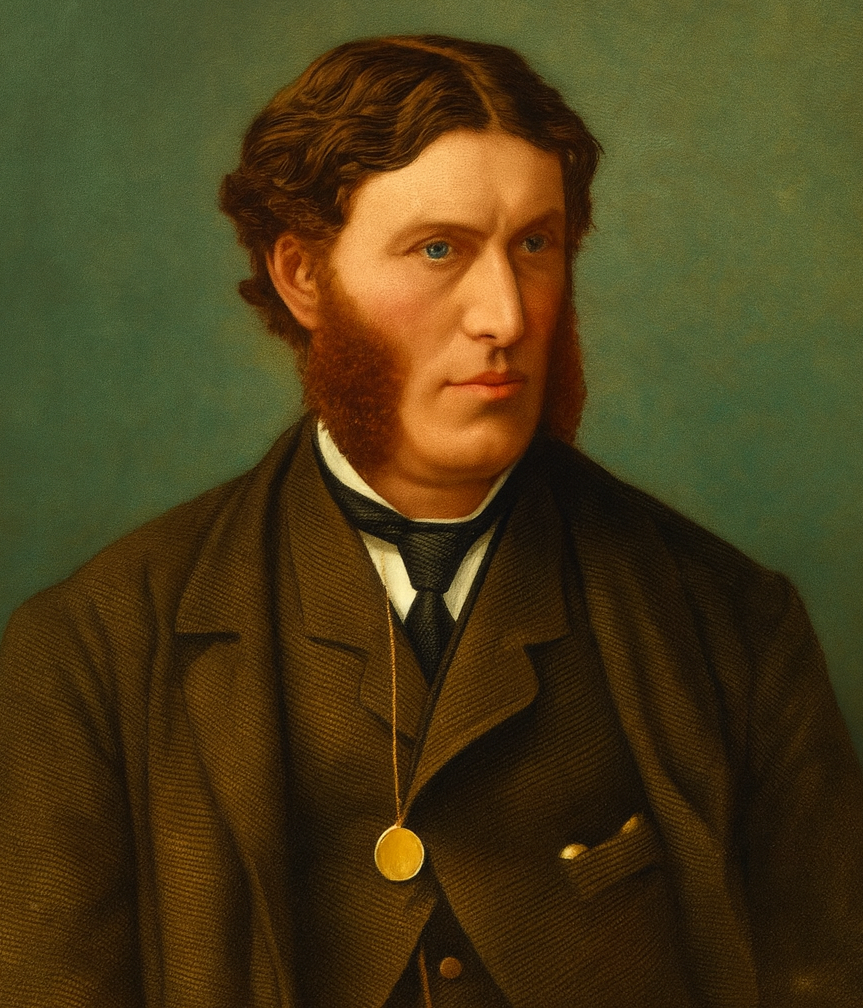
Early Life and Family Background
Matthew Arnold was born on December 24, 1822, in Laleham, a quiet village near Staines, on the banks of the River Thames in Middlesex, England.
He was the second child and eldest son of Dr. Thomas Arnold, the famous headmaster of Rugby School, and Mary Penrose Arnold.
The Arnold family valued both intellectual pursuit and moral purpose, and this dual heritage — of reason and righteousness — shaped Matthew’s entire outlook on life and art.
Education
Matthew Arnold’s early education began at Laleham, where his father ran a small private school.
In 1836, he went to Winchester College, one of England’s oldest and most rigorous public schools.
A year later, in 1837, he entered Rugby School, where his father was then headmaster.
At Rugby, Arnold grew up in an atmosphere of moral seriousness, religious faith, and intellectual discipline.
In 1841, after his father’s death, Arnold entered Balliol College, Oxford, where he came under the influence of John Henry Newman (leader of the Oxford Movement) and Arthur Hugh Clough, who later became his close friend.
At Oxford, Arnold displayed brilliance in classical studies, wit, and a polished style of writing.
He won the Newdigate Prize for Poetry in 1843 for his poem Cromwell — an early sign of his poetic gift.
He graduated from Oxford in 1844 with a second-class degree in Literae Humaniores (Classics and Philosophy).
Early Career
After graduating, Arnold briefly worked as a private secretary to Lord Lansdowne, the President of the Council.
In 1851, he was appointed Her Majesty’s Inspector of Schools, a position he held for 35 years (1851–1886).
This long career as an inspector had a profound impact on his life and thought.
It exposed him to the conditions of English education, especially among the poor, and gave him firsthand knowledge of the moral and cultural deficiencies of the industrial age.
Marriage and Family Life
In June 1851, Matthew Arnold married Frances Lucy Wightman, daughter of Sir William Wightman, a judge of the Queen’s Bench.
The couple lived happily, though modestly, and had six children, of whom two sons died young, a loss that left deep emotional scars.
Literary Career: The Poet
Arnold’s literary career can be divided into two main phases:
his poetic period (1849–1867) and his critical and prose period (1867–1888).
Early Poetry (1849–1855)
His first volume, The Strayed Reveller and Other Poems (1849), published anonymously as “A,” revealed a new reflective and classical voice.
The poems combined Greek serenity with modern melancholy — balancing beauty with moral depth.
His second volume, Empedocles on Etna, and Other Poems (1852), was withdrawn shortly after publication because Arnold felt it lacked “joy.”
Yet the central poem, Empedocles on Etna, became one of his masterpieces — a dramatic monologue of a Greek philosopher who, disillusioned with the world, throws himself into the volcano.
It expresses Arnold’s own spiritual crisis — the conflict between faith and doubt, knowledge and meaning.
In 1853, he published Poems: A New Edition, containing such masterpieces as:
Sohrab and Rustum — a heroic narrative based on Persian legend.
The Scholar-Gipsy — a pastoral elegy blending Oxford landscape with the theme of spiritual immortality.
Dover Beach — a lyrical meditation on faith’s decline in the modern world.
These poems established him as one of the greatest reflective poets of the 19th century.
Mature Poetry (1855–1867)
His later collections include:
Poems: Second Series (1855) — containing Balder Dead and Tristram and Iseult, both rooted in myth.
Merope (1858) — a verse tragedy modeled on Greek form, less emotional but classically austere.
New Poems (1867) — featuring Thyrsis (an elegy for his friend Arthur Hugh Clough), A Southern Night, and The Terrace at Berne.
After New Poems, Arnold largely ceased writing verse, turning instead to cultural and literary criticism.
The Prose and Critical Period (1857–1888)
Arnold’s reputation as a thinker and critic eventually surpassed his fame as a poet.
He became Professor of Poetry at Oxford in 1857, the first to hold the position while not being a cleric.
His lectures and essays revolutionized English criticism.
- Literary Criticism
Arnold’s most influential critical essays include:
“The Function of Criticism at the Present Time” (1864)
Argues that criticism should be disinterested — not personal or political — and should aim at “seeing the object as in itself it really is.”
He defined criticism as “a disinterested endeavour to learn and propagate the best that is known and thought in the world.”
“The Study of Poetry” (1880)
Proposes that poetry should replace religion as the moral guide of mankind.
Defines poetry as “a criticism of life under the conditions fixed for such a criticism by the laws of poetic truth and poetic beauty.”
Preface to Poems (1853)
Advocates classical restraint, clarity, and seriousness.
Opposes Romantic emotional excess.
Essays in Criticism (First Series, 1865; Second Series, 1888)
Introduces English readers to European writers like Goethe, Joubert, and Heine.
Promotes intellectual cosmopolitanism — the blending of the best ideas from all cultures.
Through these works, Arnold laid the foundation for modern literary criticism — based on objectivity, moral insight, and universal values.
- Cultural and Religious Prose
Arnold was deeply concerned about the moral crisis of Victorian society — the decline of faith, rise of materialism, and confusion of values.
His major cultural and religious works include:
Culture and Anarchy (1869)
His most famous prose work.
Defines “culture” as “a pursuit of our total perfection by means of getting to know, on all the matters which most concern us, the best which has been thought and said in the world.”
Opposes the anarchy of industrial society, class arrogance, and narrow-minded religion.
Advocates “sweetness and light” — the harmony of beauty and reason.
St. Paul and Protestantism (1870),
Literature and Dogma (1873), and God and the Bible (1875)
Reflect Arnold’s religious liberalism.
He rejected dogmatic Christianity but retained its ethical and spiritual essence.
His religion was one of moral idealism and inner faith, not ritual or creed.
Later Years and Death
Matthew Arnold retired from the Inspectorate in 1886, having served with dedication for 35 years.
He remained intellectually active, writing essays, giving lectures, and travelling widely — to the United States in 1883 and 1886, where he was warmly received.
On April 15, 1888, while running to meet his daughter returning from the United States at Liverpool, he collapsed and died suddenly of a heart attack.
He was 65 years old.
He was buried beside his wife and children in the churchyard at Laleham, where his life had begun.
Arnold’s Legacy and Influence
Matthew Arnold remains one of the most influential voices of the Victorian age — both as a poet and critic.
His poetry bridges the gap between Romantic idealism and Modern disillusionment, paving the way for later reflective poets like T. S. Eliot and W. H. Auden.
His prose, especially Culture and Anarchy, shaped the concept of liberal humanism — the belief in education, reason, and moral culture as forces for progress.
In literature, Arnold stands as a moral teacher, a poet of conscience and contemplation, who urged mankind to seek harmony between thought, feeling, and action.
His message — that “poetry is at bottom a criticism of life” — remains a cornerstone of modern literary theory.
Word Meaning
| Tough Word | Meaning in English | Meaning in Hindi |
| Stanza 1 | ||
| Go, for they call you | They are summoning you | जाओ, वे तुम्हें बुला रहे हैं |
| Shepherd | One who tends sheep | चरवाहा |
| Wattled cotes | Huts or pens made of interwoven twigs for sheep | बांस या टहनियों से बने भेड़ों के बाड़े |
| Wistful | Full of yearning or sad desire | लालायित, उदास |
| Flock | Group of sheep | झुंड |
| Unfed | Hungry, not given food | भूखा |
| Bawling fellows | Other shepherds shouting loudly | ज़ोर से चिल्लाने वाले साथी |
| Rack their throats | Strain their voices by shouting | गला फाड़ कर चिल्लाना |
| Cropp’d herbage | Grass that has been eaten or cut short | चर गई या कटी घास |
| Shoot another head | Grow again / sprout afresh | फिर से उगना |
| Fields are still | The fields become quiet and motionless | खेत शांत हो गए हैं |
| Cross and recross | Move back and forth | इधर-उधर आना-जाना |
| Strips of moon-blanch’d green | Lines of grass whitened by moonlight | चाँदनी से सफेद हरी पट्टियाँ |
| Quest | Search / spiritual pursuit | खोज, तलाश |
| Stanza 2 | ||
| Reaper | Person who cuts and collects harvest | फसल काटने वाला |
| Was at work of late | Had been working recently | हाल ही में काम किया था |
| High field’s dark corner | Elevated field’s shady spot | ऊँचे खेत का अंधेरा कोना |
| Leaves his coat | Keeps his clothes | अपना कोट रखता है |
| Earthen cruse | Small clay pot for water or food | मिट्टी का बर्तन |
| Bind the sheaves | Tie bundles of cut corn | पूलों (कटे अनाज के गट्ठरों) को बाँधना |
| Comes back his stores to use | Returns to eat or drink his supplies | अपना भोजन करने वापस आता है |
| Uplands | Higher areas of land or hills | ऊँची भूमि / पहाड़ियाँ |
| Bleating | Crying sound of sheep or goats | मिमियाने की आवाज़ |
| Folded flocks | Sheep kept in an enclosure | बाड़े में बंद भेड़ें |
| Borne | Carried by the air | हवा से लाया गया |
| Reapers | People who cut and collect harvest | फसल काटने वाले |
| Live murmur | Soft continuous sound of life | जीवन की धीमी गूंज |
| Summer’s day | Bright warm day of summer | गर्मी का दिन |
| Stanza 3 | ||
| Screen’d | Sheltered / covered from view or heat | छाया में छिपा हुआ |
| Nook | Secluded corner or small space | कोना, एकांत स्थान |
| High, half-reap’d field | Tall field partly harvested | ऊँचा, आधा कटा खेत |
| Thick corn | Dense crop of grain | घना अनाज |
| Scarlet poppies | Bright red wild flowers | लाल पोस्ता के फूल |
| Peep | Look quickly or partially | झाँकना |
| Round green roots | Around the base of plants | पौधों की जड़ों के चारों तरफ़ |
| Yellowing stalks | Stems turning yellow as they ripen | पकने से पीले होते तने |
| Pale pink convolvulus | A climbing plant with light pink flowers | हल्के गुलाबी फूलों वाली लता |
| Tendrils | Thin curly stems of climbers | बेल की पतली लटकती शाखाएँ |
| Air-swept lindens | Linden trees moved by wind | हवा से लहराते लाइम के पेड़ |
| Yield | Give forth / produce | देना, उत्पन्न करना |
| Rustle down | Make a soft sound while falling | सरसराते हुए गिरना |
| Bloom | Flower / blossom | पुष्प |
| Bent grass | Grass bent under weight or breeze | झुकी हुई घास |
| Bower | Shady shelter under trees | पेड़ों की छाँव वाला आश्रय |
| August sun | Hot sun of late summer (August) | अगस्त की तेज़ धूप |
| Shade | Protection from sunlight | छाया |
| Stanza 4 | ||
| Glanvil’s book | The Vanity of Dogmatizing by Joseph Glanvil (where the story first appears) | जोसेफ ग्लानविल की पुस्तक द वैनिटी ऑफ डॉग्मटाइजिंग |
| Oft | often | बार-बार |
| Scholar poor | Poor student | निर्धन विद्यार्थी |
| Pregnant parts | Rich mental powers, full of promise | गहरी बुद्धिमत्ता, प्रतिभाशाली मन |
| Preferment | Promotion or advancement in status | तरक्की, उन्नति |
| Summer-morn | Morning in summer | गर्मी की सुबह |
| Forsook | Abandoned / gave up | त्याग दिया |
| Gipsy-lore | mystic knowledge of the gypsies | जिप्सियों का गूढ़ ज्ञान |
| Roam’d | Wandered / travelled without settled home | भटकना, यात्रा करना |
| Wild brotherhood | Free, untamed group (the gypsies) | आवारा या स्वतंत्र समूह |
| Deem’d | Thought / believed | समझा, माना |
| Came to little good | Achieved little success | बहुत अच्छा फल न पाया |
| Stanza 5 | ||
| Once, years after | After many years | कई सालों के बाद |
| Country-lanes | Narrow rural roads | गाँव की पगडंडियाँ |
| Erst | Formerly / previously | पहले, पूर्व में |
| Gipsy-crew | Band of gypsies | जिप्सियों का दल |
| Impart | Communicate / make known | बताना, प्रकट करना |
| Heaven-sent moments | Divinely inspired times | ईश्वर द्वारा प्रेरित क्षण |
| Stanza 6 | ||
| Return’d no more | Never came back again | फिर कभी वापस न आया |
| Country-side | Rural side around Oxford | गाँव-देहात का इलाका |
| Stray | Wander aimlessly | भटकना |
| Rare glimpses | Occasional sightings | कभी-कभार की झलक |
| Pensive | Deep in thought / melancholy | विचारमग्न, उदास |
| Tongue-tied | Silent / unable to speak | मौन, कुछ कह न सकने वाला |
| Cloak | Long coat | लंबा कोट |
| Hurst | Wooded hill or high ground | पेड़ों वाला टीला |
| Alehouse | Country inn / beer house | देहाती सराय, शराबख़ाना |
| Berkshire moors | Open fields of Berkshire county | बर्कशायर के मैदान |
| Warm ingle-bench | Seat by the fireplace | आग के पास की बेंच |
| Smock-frock’d boors | Peasants wearing long loose coats | लंबे ढीले कपड़े पहनने वाले गाँव के लोग |
| Stanza 7 | ||
| ’Mid | Among / amidst | के बीच |
| Drink and clatter | Noise of drinking and talking | शराब-नोशी और खटपट का शोर |
| Thy trace | Your trail or path | तुम्हारा निशान |
| Lone wheatfields | Isolated fields of wheat | एकांत गेहूँ के खेत |
| Rooks | A kind of large black crow | कौआ जैसी बड़ी काली चिड़िया |
| Moor’d | Fastened or tied (as a boat) | नाव को बाँधा हुआ |
| Cool bank | Riverbank with shade | ठंडी, छायादार नदी का किनारा |
| Wide grass meadows | Broad fields covered with grass | चौड़े घास के मैदान |
| Sunshine fills | Full of sunlight | धूप से भरे हुए |
| Green-muffled | Covered thickly with green vegetation | हरी घास और पेड़ों से ढकी |
| Haunt’st | Visit frequently / dwell in | अक्सर रहना / घूमना |
| Shy retreats | Quiet, hidden natural places | एकांत, छिपे हुए स्थान |
| Stanza 8 | ||
| Lov’st retired ground | Love lonely, peaceful places | एकांत और शांत स्थानों को पसंद करना |
| Ferry | Boat service to cross a river | नाव से पार जाने का स्थान |
| Blithe | Joyful, carefree | प्रसन्नचित्त |
| Stripling thames | Young, narrow Thames river (near its source) | नवयुवक समान संकरी थेम्स नदी |
| Bab-lock-hithe | Ferry crossing on the Thames near Oxford | ऑक्सफोर्ड के पास थेम्स नदी का घाट |
| Trailing | Dragging lightly | खींचते हुए / लटकाते हुए |
| Punt’s rope chops round | Rope of the flat-bottomed boat swings around | नाव की रस्सी घूमती हुई |
| Pensive | Thoughtful, reflective | चिंतनशील |
| Fostering | Holding gently / nurturing | गोद में रखना / सहलाना |
| Heap of flowers | Collection of picked flowers | फूलों का ढेर |
| Pluck’d | Picked | तोड़ा हुआ |
| Shy fields | Remote fields not often visited | एकांत खेत |
| Bowers | Shady shelters formed by trees | पेड़ों की छाँव, उपवन |
| Moonlit stream | River shining in moonlight | चाँदनी में चमकती नदी |
| Stanza 9 | ||
| Land | Reach the shore | किनारे पहुँचना |
| Thou art | You are | तुम हो |
| Maidens | Young unmarried girls | युवतियाँ, कन्याएँ |
| Hamlets | Small villages | छोटे गाँव |
| Elm | Large tall tree | एल्म का पेड़ |
| Cross a stile | Step over a small wooden gate used on footpaths | लकड़ी की सीढ़ी या बाड़ पार करना |
| Thou hast given them store | You have given them plenty | तुमने उन्हें बहुत दिए हैं |
| Frail-leaf’d | Having delicate, thin leaves | नाज़ुक पत्तियों वाला |
| White anemone | White wildflower found in meadows | सफेद जंगली फूल (एनिमोन) |
| Dark bluebells | Blue flowers growing in woods | नीले फूल (ब्लूबेल) |
| Drench’d with dews | Soaked with dew drops | ओस से भीगे हुए |
| Purple orchises | Purple wild orchids | बैंगनी ऑर्किड फूल |
| Hath | Has (old form) | है (पुराना रूप) |
| Report of thee | Speak about you | तुम्हारे बारे में बताना |
| Stanza 10 | ||
| Hay-time | The season of cutting and drying grass for hay | सूखी घास (भूसा) काटने का मौसम |
| Scythe | Long curved blade used for cutting grass | घास काटने की दरांती |
| Sunshine flames | Shines brightly in sunlight | धूप में चमकती हुई |
| Black-wing’d swallows | Swallows with black wings | काले पंखों वाली अबाबील |
| Haunt | Frequent or visit often | अक्सर आना-जाना |
| Glittering thames | The River Thames shining in sunlight | चमकती हुई थेम्स नदी |
| Abandon’d lasher | Disused weir (small dam) used for bathing | पुराना बाँध, जहाँ लोग नहाने जाते हैं |
| Outlandish garb | Strange or foreign clothing | अजीब या विदेशी पोशाक |
| Figure spare | Thin, lean body | दुबला-पतला शरीर |
| Vague | Unclear, indefinite | अस्पष्ट |
| Soft abstracted air | Gentle and thoughtful expression | शांत, विचारमग्न भाव |
| Wast gone | You were gone | तुम जा चुके थे |
| Stanza 11 | ||
| Lone homestead | Isolated farmhouse | एकांत घर |
| Cumner hills | Hills near Oxford | ऑक्सफोर्ड के पास की पहाड़ियाँ |
| Darns | Repairs clothes with a needle and thread | कपड़े सिलना या रफू करना |
| Hanging on a gate | Leaning on a gate idly | गेट पर टिके रहना |
| Threshers | Labourers who separate grain from husk | अनाज झाड़ने वाले मजदूर |
| Mossy barns | Old barns covered with moss | काई जमी पुरानी कोठारें |
| Children who early range | Children who wander about from morning | बच्चे जो सुबह से घूमते रहते हैं |
| Cresses | Edible water plants | जलकुंभी (खाने योग्य जल पौधे) |
| Rills | Small streams | छोटी नदियाँ / नाले |
| Eyeing | Watching intently | ध्यान से देखना |
| Springing pasture | Freshly growing grassland | नई उगती हुई चरागाह |
| Feeding kine | Cows grazing | चरती हुई गायें |
| Stanza 12 | ||
| Skirts of Bagley Wood | Edges or borders of Bagley forest | बैगली जंगल की किनारियाँ |
| Turf-edged way | Path bordered by grass | घास से घिरी पगडंडी |
| Pitch | Set up (tents) | तंबू गाड़ना |
| Smoked tents | Tents darkened by smoke | धुएँ से काले तंबू |
| Scarlet patches | Bright red pieces of cloth | लाल कपड़े के टुकड़े |
| Tagg’d | Hung with pieces | टुकड़ों से सजी |
| Thessaly | Poetic name used for Bagley Wood (from Greek mythology) | यूनानी नाम “थेसली” (यहाँ जंगल का प्रतीकात्मक नाम) |
| Blackbird | Common bird with black feathers | काला पक्षी |
| Rapt | Lost in thought / absorbed | विचारमग्न |
| Twirling | Turning something around in fingers | उँगलियों में घुमाना |
| Wither’d spray | Dried twig or small branch | सूखी टहनी |
| Stanza 13 | ||
| Causeway | Raised road across low or wet ground | ऊँचा बना रास्ता |
| Chill | Cold / freezing | ठंडा |
| Foot-travellers | People walking on foot | पैदल यात्री |
| Wrapt (wrapped) | Covered tightly with a cloak | चादर में लिपटा हुआ |
| Wintry ridge | Snow-covered hill | बर्फ़ से ढकी पहाड़ी |
| Gain’d the white brow | Reached the top of the snow-covered hill | सफेद पहाड़ी की चोटी पर पहुँचा |
| Cumner range | The line of Cumner Hills near Oxford | कंबर की पहाड़ियों की श्रेणी |
| Festal light | Festive or bright light | उत्सव का उजाला |
| Christ-Church hall | Great dining hall of Christ Church, Oxford | ऑक्सफोर्ड का प्रसिद्ध क्राइस्ट चर्च हॉल |
| Thick the snowflakes fall | Snow falling heavily | घनी बर्फ़ गिरती हुई |
| Sought thy straw | Went to rest on straw bed | अपने पुआल पर विश्राम करने गया |
| Sequester’d grange | Isolated farmhouse | एकांत खलिहान / खेत का घर |
| Stanza 14 | ||
| Flown | Passed swiftly (like time flying) | उड़ गए (तेज़ी से बीते) |
| Grave glanvil | Serious philosopher Joseph Glanvil | गंभीर दार्शनिक ग्लानविल |
| Tale inscribe | Write down the story | कहानी लिखना |
| Studious walls | The university’s classrooms | अध्ययन की दीवारें / विश्वविद्यालय भवन |
| Earth art gone | You are dead and buried | तुम धरती से चले गए हो |
| Country-nook | Corner of the countryside | गाँव का एक कोना |
| White flowering nettles | Wild plants with white flowers | सफेद फूलों वाले जंगली पौधे |
| Wave | Move gently in the air | हवा में झूमना |
| Red-fruited yew-tree | Evergreen tree with red berries often planted in churchyards | लाल फलों वाला यू पेड़ (कब्रिस्तान का पेड़) |
| Stanza 15 | ||
| Lapse of hours | Passing of time | समय का बीतना |
| Mortal men | Ordinary human beings | नश्वर मनुष्य |
| Being rolls | Existence shifts / life passes | जीवन चलता रहता है |
| Elastic powers | Vital strength / resilience | लचकदार / जीवनी शक्ति |
| Numb | Make insensitive / deaden | सुन्न करना |
| Bliss | Great joy | आनंद |
| Teen | Sorrow, pain | दुख |
| Tired upon a thousand schemes our wit | Wasted our intelligence on many plans | अनेक योजनाओं में अपनी बुद्धि थका देना |
| Just-pausing Genius | The divine power that finally stops life | ईश्वर / मृत्यु का वह बल जो जीवन को रोक देता है |
| Remit | Surrender / give back | सौंप देना / छोड़ देना |
| Worn-out life | Life that has lost its strength | थका-मांदा जीवन |
| Stanza 16 | ||
| Thou hast not lived | You have not led an ordinary life | तुमने सामान्य जीवन नहीं जिया |
| Perish | Die / be destroyed | मरना / नष्ट होना |
| Wert thou | Were you (archaic form) | तुम थे |
| Long since number’d with the dead | Counted long ago among the dead | बहुत पहले मृतकों में गिने गए होते |
| Hadst thou spent | Had you wasted | यदि तुमने खर्च किया होता |
| Fire | Vital spirit / inner energy | जीवन शक्ति / उत्साह |
| Generations of thy peers | People of your own age who lived before | तुम्हारे समय के लोग / साथी पीढ़ी |
| Possessest | Have / own | तुम्हारे पास है |
| Immortal lot | Deathless fate / eternal life | अमर भाग्य |
| Exempt from age | Free from aging | बुढ़ापे से मुक्त |
| Glanvil’s page | In the book of Glanvil | ग्लानविल की पुस्तक में |
| Alas | Expression of sorrow | हाय / अफसोस |
| Stanza 17 | ||
| Firm to their mark | Steadfast in their purpose | अपने लक्ष्य पर दृढ़ |
| Not spent | Not exhausted | व्यर्थ नहीं गई |
| Sick fatigue | Tiredness with disgust | बीमार करने वाली थकान |
| Languid doubt | Weak uncertainty | शिथिल संदेह |
| Much been baffled | Having failed in many attempts | बहुत बार असफल होने से |
| Fluctuate idly | Move restlessly without aim | व्यर्थ भटकना |
| Without term or scope | Without definite purpose or goal | बिना किसी निश्चित लक्ष्य के |
| Strives | Struggles or makes effort | प्रयास करता है |
| Hundred different lives | Many inconsistent pursuits | सौ तरह के असंगत जीवन |
| Stanza 18 | ||
| Waitest | Wait | प्रतीक्षा करते हो |
| Spark from heaven | Divine inspiration | ईश्वर से आई ज्योति / प्रेरणा |
| Light half-believers | People who believe weakly or superficially | आधे-अधूरे आस्थावान |
| Casual creeds | Beliefs held lightly / without conviction | सतही विश्वास |
| Nor clearly will’d | Nor determined firmly | न ही दृढ़ निश्चय किया |
| Insight | Deep understanding | गहरी समझ |
| Never has borne fruit in deeds | Has not been acted upon | कर्म में परिणत नहीं हुआ |
| Vague resolves | Unclear or weak decisions | अस्पष्ट निर्णय |
| Breeds | Produces / gives rise to | उत्पन्न करता है |
| Disappointments new | Fresh failures or frustrations | नई निराशाएँ |
| Falter | Lose courage / stumble | डगमगाना, हिम्मत हारना |
| Lose to-morrow the ground won to-day | Lose the progress made today by tomorrow | आज जो पाया, कल खो देना |
| Stanza 19 | ||
| Takes dejectedly | Accepts sadly or hopelessly | निराश होकर स्वीकार करता है |
| Intellectual throne | Position of the wisest thinker or philosopher | विद्वान का सिंहासन / ज्ञान की सर्वोच्च स्थिति |
| All his store | All his collected experiences | उसका संचित अनुभव |
| Lays bare | Reveals openly | प्रकट करता है / उजागर करता है |
| Wretched days | Miserable or unhappy days | दुखद दिन |
| Misery’s birth | Origin of his suffering | उसके दुःख की शुरुआत |
| Dying spark of hope | Faint remaining hope | बुझती हुई आशा की चिनगारी |
| Fed | Kept alive / nourished | पोषित किया |
| Breast was soothed | The heart was comforted | हृदय को सांत्वना मिली |
| Head | Mind or intellect | मस्तिष्क / बुद्धि |
| Hourly varied anodynes | Ever-changing remedies that dull pain (mental consolations) | बार-बार बदलते मानसिक दर्द के उपचार / सांत्वनाएँ |
| Stanza 20 | ||
| This for our wisest | This happens even to our greatest minds | यह तो हमारे सबसे बुद्धिमान लोगों के साथ भी होता है |
| Pine | Suffer with longing or grief | तड़पना / शोक करना |
| Waive all claim to bliss | Give up all hope of happiness | सुख की आशा छोड़ देना |
| Close-lipp’d patience | Silent endurance without complaint | मौन धैर्य |
| Only friend | Sole companion or support | एकमात्र साथी |
| Sad patience | Sorrowful endurance | दुःख भरा धैर्य |
| Too near neighbour to despair | Almost turning into hopelessness | निराशा के बहुत करीब |
| Dost stray | Wander aimlessly | भटकते हो |
| Truant boy | Carefree child who runs away from school | शरारती / स्कूल से भागने वाला लड़का |
| Nursing thy project | Caring for your cherished idea | अपने प्रिय विचार को सँजोए रखना |
| Unclouded joy | Pure, undisturbed happiness | निर्मल / अविचल आनंद |
| Stanza 21 | ||
| Wits | Intellect / understanding | बुद्धि / समझ |
| Life ran gaily | Life flowed cheerfully | जीवन प्रसन्नता से बहता था |
| Sparkling thames | The bright, lively River Thames | चमकती हुई थेम्स नदी |
| Sick hurry | Unhealthy rush and restlessness | बेचैनी और भागदौड़ |
| Heads o’ertax’d | Overworked minds | अधिक काम से थके दिमाग |
| Palsied hearts | Emotionally weak hearts | सुन्न / थके हुए दिल |
| Rife | Common / widespread | व्यापक / फैला हुआ |
| Fly hence | Go away from here | यहाँ से भागो |
| Plunge deeper | Go further away / hide further | और गहराई में चले जाओ |
| Bowering wood | Shady, leafy forest | पेड़ों से घिरा हरा-भरा जंगल |
| Averse | Unwilling / turning away | विमुख / दूर रहना |
| Dido | Queen from Roman legend (who rejected Aeneas) | डिडो (रोमन कथा की रानी) |
| Gesture stern | Serious, rejecting gesture | कठोर, अस्वीकार करने वाला इशारा |
| Hades | The underworld in Greek mythology | यूनानी पाताल लोक |
| Wave us away | Motion to go away | हमें दूर जाने का संकेत देना |
| Stanza 22 | ||
| Still nursing | Still holding close or caring for | अब भी सँजोए रखना |
| Unconquerable hope | Hope that cannot be defeated | अजेय / अमर आशा |
| Clutching | Holding tightly | कसकर पकड़ना |
| Inviolable shade | Sacred, untouchable shadow or protection | अवध्य / अछूती छाया |
| Free, onward impulse | Natural, unrestrained movement forward | मुक्त, आगे बढ़ने की प्रेरणा |
| Brushing through | Moving quickly through | होकर गुजरना |
| Silver’d branches | Branches shining in moonlight | चाँदी सी चमकती डालियाँ |
| Glade | Open space in a forest | जंगल का खुला हिस्सा |
| Far on the forest-skirts | At the far edge of the forest | जंगल के किनारे दूर |
| None pursue | No one follows | कोई पीछा नहीं करता |
| Mild pastoral slope | Gentle grassy hillside | कोमल चरागाह वाली ढलान |
| Resting on the moonlit pales | Leaning on the fences shining in moonlight | चाँदनी से चमकते बाड़ों पर टिकना |
| Enchanted ears | Ears captivated by beauty | मंत्रमुग्ध कान |
| Dark tingles | Shadowy thickets / dense bushes | अंधेरी झाड़ियाँ |
| Nightingales | Birds known for beautiful singing at night | बुलबुल पक्षी |
| Stanza 23 | ||
| Feverish contact | Unhealthy or restless association | बेचैन / अस्वस्थ संपर्क |
| Strong the infection | Powerful contagion / harmful influence | बहुत तीव्र प्रभाव / संक्रमण |
| Mental strife | Inner conflict / mental struggle | मानसिक संघर्ष |
| Bliss | Great joy | आनंद |
| Spoils for rest | Destroys peace and calmness | विश्राम को नष्ट कर देता है |
| Win thee | Draw you away / attract you | तुम्हें आकर्षित करना |
| Unblest | Unhappy, lacking peace | अभागा / दुःखी |
| Hopes grow timorous | Hopes become fearful and weak | आशाएँ डरपोक हो जाएँगी |
| Unfix’d thy powers | Your strength will become uncertain | तुम्हारी शक्ति अस्थिर हो जाएगी |
| Clear aims be cross | Pure goals will turn confused | स्पष्ट उद्देश्य उलझे |
| Glad perennial youth | Happy everlasting youth | आनंदमय शाश्वत यौवन |
| Stanza 24 | ||
| Fly our greetings | Avoid our meetings or company | हमारे अभिवादन से दूर रहो |
| Grave Tyrian trader | Serious merchant from Tyre (ancient Phoenician city) | प्राचीन टायर (फोनीशिया) का गंभीर व्यापारी |
| Descried | Saw from a distance | दूर से देखा |
| Emerging prow | The front part of a ship appearing on the horizon | क्षितिज पर उभरती जहाज की नोक |
| Stealthily | Quietly, secretly | चुपचाप, गुप्त रूप से |
| Fringes | Edges, borders | किनारे, सीमाएँ |
| Southward-facing brow | Southern side of a headland or island | दक्षिण दिशा की ओर झुका हुआ तट |
| Ægæan isles | Islands of the Aegean Sea (near Greece) | एजियन सागर के द्वीप (यूनान के पास) |
| Saw the merry Grecian coaster | Saw the cheerful Greek trading ship | प्रसन्न यूनानी जहाज़ को देखा |
| Coaster | Small ship that sails along the coast | तट के किनारे चलने वाला छोटा जहाज़ |
| Freighted | Loaded with cargo | माल से भरा हुआ |
| Amber grapes | Golden-colored grapes | सुनहरे अंगूर |
| Chian wine | Famous wine from the Greek island Chios | यूनान के किओस द्वीप की प्रसिद्ध शराब |
| Green, bursting figs | Fresh figs full of juice | हरे, पके अंजीर |
| Tunnies steep’d in brine | Tuna fish preserved in salt water | नमकीन पानी में रखी ट्यूना मछलियाँ |
| Intruders | Invaders, strangers | आक्रमणकारी, अजनबी |
| Stanza 25 | ||
| Young light-hearted masters of the waves | Cheerful, youthful Greek sailors who rule the seas | समुद्र के प्रसन्न और युवा यूनानी विजेता |
| Snatch’d his rudder | Grasped the steering handle quickly | तुरंत पतवार पकड़ ली |
| Shook out | Unfurled or spread out (sails) | क्रोधपूर्वक / तिरस्कार के साथ |
| Indignantly | With anger or scorn | तेज़ हवा |
| Gale | Strong wind | बीच में |
| Betwixt | Between | बीच में |
| Syrtes | Dangerous sandbanks off the North African coast | उत्तरी अफ्रीका के तट के रेतीले क्षेत्र |
| Soft sicily | The fertile island of Sicily in Italy | इटली का उपजाऊ सिसिली द्वीप |
| Atlantic raves | The Atlantic Ocean roars with waves | अटलांटिक महासागर गरजता है |
| Western straits | Western sea passages (Straits of Gibraltar) | पश्चिमी जलडमरूमध्य (जिब्राल्टर की खाड़ी) |
| Unbent sails | Loosened the sails after reaching | पाल खोल दिए / ढीले किए |
| Down cloudy cliffs | Below fog-covered cliffs | बादलों से ढकी चट्टानों के नीचे |
| Shy traffickers | Cautious traders | सतर्क व्यापारी |
| Dark iberians | People of Spain (Iberian Peninsula) | स्पेन के लोग (आइबेरियन द्वीपसमूह के निवासी) |
| Undid his corded bales | Untied his tied-up trade bundles | बँधे हुए माल के गठ्ठर खोल दिए |
Very Short Answer Questions
Who is the poet of “The Scholar-Gipsy”?
Matthew Arnold.
When was the poem published?
In 1853.
What kind of poem is “The Scholar-Gipsy”?
It is a pastoral elegy and reflective lyric.
What inspired Arnold to write the poem?
Joseph Glanvil’s story in The Vanity of Dogmatizing (1661).
Who is the central figure in the poem?
An Oxford scholar who joined the gypsies.
What does the Scholar-Gipsy symbolize?
He symbolizes the eternal quest for truth and perfection.
Where does the poet imagine him wandering?
In the meadows and hills around Oxford.
What is meant by “Gipsy-lore”?
The secret knowledge and mystical arts of the gypsies.
Who is the shepherd in the opening stanza?
He represents the simple country life and the call to spiritual search.
What time of day is described in the beginning?
Evening, when the fields are quiet and men rest.
Who was Glanvil?
A 17th-century philosopher who recorded the Scholar’s tale.
Why is the Scholar-Gipsy called immortal?
Because he remains forever in pursuit of a single pure ideal.
What does Arnold contrast the Scholar-Gipsy with?
With the restless, divided modern man.
What does “the spark from heaven” signify?
Divine inspiration or spiritual enlightenment.
What is the “disease of modern life”?
The mental weariness and divided aims of modern society.
Which river is mentioned repeatedly in the poem?
The River Thames.
What does the poet hear from the uplands?
The bleating of folded flocks.
How do the maidens describe the Scholar-Gipsy?
As a silent wanderer who gives them wildflowers.
What season is shown in the scene near Godstow Bridge?
Summer.
What season is depicted on the “causeway chill”?
Winter.
What does the poet wish for the Scholar-Gipsy?
That he should avoid contact with the modern world.
What does the “yew-tree’s shade” symbolize?
Death and immortality.
Why is the Scholar-Gipsy said not to die?
Because he lives in spirit and idea, not in body.
What does Arnold say about modern men?
They have many aims but achieve nothing lasting.
What does “thy clear aims be cross and shifting made” mean?
It means one’s pure goals would become confused and unstable.
Which classical figure is mentioned in the poem?
Dido, the Queen from Roman legend.
Who is the “Tyrian trader” in the last stanzas?
A Phoenician merchant symbolizing the Scholar-Gipsy.
What does the “merry Grecian coaster” stand for?
The lively but corrupt modern world.
What is the tone of the poem?
Reflective, nostalgic, and meditative.
What is the main message of the poem?
True life lies in constancy of purpose and purity of spirit, not in restless change.
Short Answer Questions
What is the central theme of “The Scholar-Gipsy”?
The central theme of “The Scholar-Gipsy” is the contrast between the pure, single-minded life of the Scholar and the restless, divided existence of modern man. Arnold portrays the Scholar as a symbol of spiritual constancy and hope, untouched by time or decay. The poem mourns the “disease of modern life” — its hurry, doubt, and discontent. The Scholar-Gipsy’s eternal search for truth represents Arnold’s ideal of faith and dedication in a changing, distracted world.
How does Matthew Arnold describe the setting of the poem?
Arnold sets the poem in the serene countryside around Oxford — with its meadows, hills, and the River Thames. The natural imagery of cornfields, poppies, and moonlit fields reflects peace and timelessness. Through detailed pastoral scenes, the poet creates a world of calm beauty, contrasting it with modern chaos. The setting also mirrors the Scholar-Gipsy’s pure spirit, eternally wandering through these unspoiled landscapes.
Who was the Scholar-Gipsy according to Glanvil’s tale?
According to Joseph Glanvil’s story, the Scholar was a poor Oxford student of great intelligence who left the university to join a group of gypsies. He hoped to learn their secret power — the art of influencing human thought. He promised to return when he had mastered it but never came back. Arnold turns this story into a powerful symbol of an immortal seeker who renounces worldly ambition for higher, spiritual knowledge.
What does Arnold mean by the “disease of modern life”?
By “the disease of modern life,” Arnold refers to the restless, overworked, and divided nature of modern existence. People are burdened by too many desires and lack unity of purpose. Their hearts are “palsied” and their minds “o’ertaxed.” They live without faith, constantly shifting from one aim to another. This spiritual exhaustion contrasts sharply with the Scholar-Gipsy’s calm devotion to one great purpose.
How does the Scholar-Gipsy differ from modern men?
The Scholar-Gipsy differs from modern men in his steadfastness and purity of purpose. He has only one goal — to find spiritual truth — while modern men chase countless ambitions and achieve none. The Scholar’s life is simple, contemplative, and immortal; modern life is hurried, confused, and self-destructive. Arnold idealizes the Scholar as a symbol of constancy in contrast to the weakness and weariness of his age.
What role does nature play in “The Scholar-Gipsy”?
Nature in the poem is not merely a backdrop but a living presence that mirrors the Scholar’s eternal spirit. The peaceful Oxford meadows, quiet moonlit nights, and whispering fields reflect harmony and purity. Nature provides refuge from the noisy, polluted world of men. Through it, Arnold conveys calmness, permanence, and divine order — qualities embodied by the Scholar-Gipsy himself.
Why does the poet call the Scholar-Gipsy immortal?
Arnold calls the Scholar-Gipsy immortal because he represents an idea, not a mortal being. He has “one aim, one business, one desire” and therefore escapes the decay that comes from change and doubt. While human beings grow weary and lose purpose, the Scholar’s spirit remains fresh and untiring. His immortality lies in his faith, purity, and unbroken devotion to the pursuit of truth.
Explain the symbolic meaning of the “Tyrian trader” in the last stanzas.
In the final stanzas, Arnold compares the Scholar-Gipsy to a Tyrian trader who flees from Greek intruders. The trader symbolizes the ancient, pure soul of faith and constancy, while the Greeks represent modern corruption and restlessness. Just as the trader sails away to preserve his integrity, the Scholar-Gipsy must avoid the influence of the modern world. The image powerfully reinforces the poem’s theme of spiritual escape from decay.
What is the tone and mood of the poem?
The tone of “The Scholar-Gipsy” is reflective, elegiac, and meditative. Arnold’s mood shifts between calm admiration for the Scholar’s eternal quest and sadness at modern man’s spiritual weakness. The pastoral beauty of the landscape contrasts with the poet’s melancholy over human restlessness. Ultimately, the tone becomes reverent, as Arnold urges the Scholar to keep his solitude and remain untainted by modern life.
What message does Matthew Arnold convey through “The Scholar-Gipsy”?
Arnold’s message is that true life lies in steadfast faith, not in restless change. The Scholar-Gipsy’s single-minded pursuit of truth symbolizes purity, constancy, and spiritual strength. Arnold laments that modern man, with his divided aims and loss of faith, has become weary and purposeless. The poem calls for a return to unity of soul and devotion to higher ideals — a timeless plea for spiritual renewal.
Essay Type Questions
Describe the story of the Scholar-Gipsy and discuss its symbolic meaning.
The story of The Scholar-Gipsy originates from Joseph Glanvil’s 1661 book The Vanity of Dogmatizing. In that book, Glanvil mentions an Oxford scholar of great intelligence and creative power who, unable to find satisfaction or success through ordinary academic life, leaves the university. He joins a band of gypsies to learn their mysterious “lore,” a secret art believed to control the thoughts and emotions of human beings. The Scholar tells his old friends that once he masters the secret, he will return to share it with the world. However, he never reappears, and rumors suggest he is still seen wandering the countryside near Oxford.
Arnold takes this simple anecdote and turns it into a profound poetic allegory. The Scholar-Gipsy becomes not merely a historical figure but a symbol of eternal youth, faith, and spiritual idealism. In Arnold’s imagination, the Scholar escapes the “disease of modern life” — its hurry, doubt, and distraction — and becomes immortal because of his constancy. He stands for that part of the human spirit that remains uncorrupted by materialism and unshaken by worldly disappointment. His joining of the gypsies represents a quest for truth outside traditional systems of knowledge and rigid institutions.
Throughout the poem, Arnold uses the Scholar-Gipsy as a metaphor for the soul’s search for divine truth and perfect knowledge. The gypsy-lore, though mysterious, symbolizes higher insight and spiritual enlightenment, which cannot be attained through academic study alone. By leaving Oxford, the Scholar rejects intellectual pride and chooses a life of spiritual exploration. He thus becomes a type of philosopher-saint — a figure who seeks knowledge through experience and purity of purpose rather than through rational argument or ambition.
The story’s symbolic significance lies in its contrast between two worlds: the world of the Scholar-Gipsy, pure, natural, and unchanging, and the world of modern man, restless, anxious, and self-divided. The Scholar’s immortality is not physical but spiritual — he has transcended time because he has escaped the corruption of modern existence. For Arnold, the story expresses his deepest moral ideal: the preservation of faith, simplicity, and unity of purpose amid the turmoil of civilization.
In essence, the tale of the Scholar-Gipsy becomes a Victorian parable of spiritual endurance. Arnold uses the legend to express his longing for wholeness in an age of doubt and fragmentation. The Scholar is the poet’s dream of a soul untouched by time, who continues eternally in his holy quest for truth.
How does Matthew Arnold contrast the life of the Scholar-Gipsy with that of modern man?
One of the major concerns in The Scholar-Gipsy is the contrast between the calm, purposeful life of the Scholar and the restless, divided life of modern humanity. Arnold presents the Scholar as a figure of unity and constancy, while modern man, driven by ambition and overwork, lives in confusion and despair. This comparison forms the philosophical heart of the poem and expresses Arnold’s critique of Victorian society.
The Scholar-Gipsy has a single aim — to learn the mysterious spiritual art of the gypsies and reveal it to mankind. His life is directed toward one ideal, and therefore he remains pure and unwearied. He is a symbol of steadfast devotion, representing the human capacity to dedicate oneself wholly to one great purpose. His simplicity and isolation protect him from worldly corruption. He “waits for the spark from heaven” — a phrase symbolizing divine inspiration, patience, and faith.
In contrast, modern men “fluctuate idly without term or scope.” They suffer from what Arnold famously calls “the strange disease of modern life, / With its sick hurry, its divided aims.” They have lost faith and unity of soul, their energies are spent on countless distractions, and their constant self-doubt destroys peace. Even the wisest among them, Arnold says, sit on the “intellectual throne” only to recount their miseries and confusions. Modern civilization, with its material progress and industrial speed, has crushed the spiritual core of man.
Arnold’s contrast is not merely historical but moral and psychological. The Scholar-Gipsy represents the timeless soul, the part of man that seeks permanence and meaning. Modern man represents the restless intellect, always changing, never satisfied. The Scholar is immortal because he does not change; modern man is dying spiritually because he cannot remain constant. Thus, the poem becomes a lament for lost faith and a yearning for spiritual wholeness.
Through this comparison, Arnold expresses his personal philosophy: that true life depends not on progress or success, but on spiritual integrity and steadfast pursuit of the ideal. The Scholar-Gipsy’s purity of purpose stands as a rebuke to the divided and weary spirit of the modern age.
Discuss the poem as a pastoral elegy and a philosophical meditation.
At first sight, The Scholar-Gipsy appears to be a pastoral poem. It opens with the peaceful image of a shepherd, his flock, and the tranquil Oxfordshire countryside. Arnold describes the “moon-blanch’d green,” the “scarlet poppies,” and the “half-reap’d field,” creating a mood of calm natural beauty. The landscape of Oxford, its towers seen from a distance, its river and hills, forms a serene and timeless background. This pastoral setting serves as an escape from the “disease of modern life,” a place of stillness where the poet can meditate.
However, the poem soon deepens beyond the pastoral into a philosophical elegy. Arnold mourns not the death of an individual but the spiritual decay of mankind. The elegiac tone is evident in his lament for modern man’s loss of faith and purpose. The Scholar-Gipsy’s immortal quest becomes the poet’s dream of a purer existence beyond corruption. The poem thus belongs to a long tradition of reflective elegy, like those of Wordsworth and Gray, but with a distinctly Victorian moral seriousness.
As a meditation, the poem explores Arnold’s central philosophical ideas: the contrast between material and spiritual life, the permanence of ideals, and the transience of human desires. His tone is meditative rather than dramatic; the poem moves gently from description to reflection, from the external landscape to the inner landscape of the soul. The use of nature is not decorative but symbolic — nature mirrors the Scholar’s calm immortality.
In the end, The Scholar-Gipsy combines pastoral beauty and philosophical depth with perfect harmony. It is both a celebration of rural simplicity and a profound reflection on faith and constancy. Arnold transforms the English countryside into a spiritual landscape — a place where the eternal and the temporal meet.
How does Arnold use imagery and symbolism in “The Scholar-Gipsy”?
Arnold’s poetry is renowned for its clarity, precision, and symbolic richness, and The Scholar-Gipsy is one of his finest examples of this art. His imagery is drawn from nature, but it carries deep philosophical meaning. Each scene in the poem — from the moonlit fields to the river meadows — reflects both the outer world and the inner life of the human soul.
The pastoral imagery of the poem serves to create a mood of quiet reflection. The “white sheep,” the “half-reap’d field,” and “pale pink convolvulus” evoke timeless rural peace. These images symbolize purity and continuity — a world untouched by industrialization or decay. The calm landscapes are not mere descriptions; they mirror the Scholar-Gipsy’s soul, which remains serene and uncorrupted. Similarly, the “moon-blanch’d green” and “silver’d branches” suggest spiritual illumination and purity of thought.
Arnold also employs symbolic contrasts. The Scholar-Gipsy is a symbol of spiritual unity, while modern man stands for division and decay. The “spark from heaven” symbolizes divine truth and inspiration, and the “yew-tree’s shade” represents death and immortality. The “disease of modern life” symbolizes spiritual disintegration caused by materialism and intellectual doubt. In the final stanzas, the Tyrian trader becomes a grand classical symbol for the Scholar’s flight from corruption — just as the ancient merchant sails away from the invading Greeks, the Scholar withdraws from modern confusion to preserve his purity.
Through such vivid and suggestive imagery, Arnold turns a local legend into a universal parable of the soul. His symbolism elevates the poem from a pastoral tale to a spiritual allegory — a meditation on the eternal struggle between purity and corruption, faith and doubt, immortality and decay.
What is the main message or moral of “The Scholar-Gipsy”?
The message of The Scholar-Gipsy lies in Arnold’s belief that true spiritual life depends on constancy, faith, and unity of purpose. The poem teaches that man’s greatest enemy is not death, but the weariness and distraction caused by restless change. The Scholar-Gipsy is immortal because he remains faithful to one ideal, whereas modern man, always changing, wears himself out with doubt and endless pursuit.
Arnold’s moral vision is rooted in the Victorian crisis of faith. In an age of science, industrial progress, and social confusion, he felt that humanity had lost its center — its sense of purpose and spiritual direction. The Scholar-Gipsy offers a symbolic cure: he represents the pure soul that turns away from worldly ambition to seek divine wisdom. His life of simplicity and contemplation restores what modern civilization has destroyed — peace, wholeness, and faith.
The poet’s message is not only moral but deeply personal. Arnold himself was torn between faith and skepticism, between the calm of nature and the turmoil of modern life. Through the figure of the Scholar-Gipsy, he expresses his longing for permanence in an age of change. The poem’s tone is therefore both nostalgic and hopeful — nostalgic for the lost harmony of the past, yet hopeful that the eternal spirit can still survive.
Ultimately, the poem teaches that immortality lies in spiritual integrity, not in physical life. The man who lives for truth and purity, like the Scholar-Gipsy, transcends time. The moral is clear and timeless: to live truly, one must live with purpose, simplicity, and faith — untouched by the feverish distractions of the world.
The Pursuit of an Ideal / The Search for Truth
At the heart of “The Scholar-Gipsy” lies the theme of man’s eternal quest for truth and perfection. The Scholar-Gipsy leaves Oxford and worldly ambition to join a band of gypsies, seeking to learn their secret spiritual art — a symbol of higher, hidden wisdom. For Arnold, this search represents the soul’s longing for something beyond material success, for an ideal that gives life meaning and unity. The Scholar’s refusal to return to Oxford reflects his complete dedication to this quest.
Arnold sees the Scholar as a timeless figure — not limited by age, time, or circumstance. His journey becomes a metaphor for the human spirit’s endless pursuit of knowledge and enlightenment. This quest is not intellectual curiosity alone; it is moral and spiritual, a search for divine inspiration or the “spark from heaven.” The Scholar’s wandering through the fields and woods of Oxfordshire becomes a poetic image of man’s inner journey toward truth.
The poet contrasts this idealistic pursuit with the confusion of modern life. Unlike men of his age who lose focus amid distractions, the Scholar follows one aim steadfastly. His constancy makes him immortal — a living spirit of aspiration. Arnold implies that true fulfillment is possible only when one dedicates oneself wholly to a single noble purpose.
Thus, the theme of the pursuit of an ideal expresses Arnold’s deepest moral faith: that man’s worth lies in devotion to an eternal truth, not in material success or restless change. The Scholar-Gipsy becomes a symbol of purity of soul, inspiring mankind to rise above the shallow pursuits of modern civilization.
The Disease of Modern Life
One of the most powerful and frequently discussed themes in the poem is “the disease of modern life.” Arnold uses this phrase to describe the mental restlessness, weariness, and moral confusion that afflicted his age — and continues to afflict humanity today. He laments that people live with “sick hurry and divided aims,” forever changing their goals and exhausting their spirits. Even their achievements bring no peace, for they have lost faith in a higher order.
Arnold belonged to the Victorian age, a time of industrial growth and scientific skepticism. Yet, he saw that progress had made men materially rich but spiritually poor. The “heads o’ertax’d” and “palsied hearts” in the poem represent overworked minds and deadened emotions. The poet feels that constant change, competition, and self-doubt have destroyed inner harmony. Life has become a “long unhappy dream,” where patience is the only companion left.
In contrast, the Scholar-Gipsy stands outside this diseased world. He is untouched by time and its corruption because he remains constant to his purpose. While modern men are enslaved by distraction, he is free in his faith. Arnold wishes that the Scholar should “fly our paths, our feverish contact fly,” warning that the infection of modern strife would destroy his purity.
This theme gives the poem its moral depth and its lasting relevance. It is not merely about the 19th century but about the eternal struggle between outer progress and inner emptiness. Arnold’s warning is prophetic — a message that modern man, with all his technology and success, risks losing his soul in the process.
The Immortality of the Spirit
Arnold does not present the Scholar-Gipsy as an immortal in the physical sense but as a symbol of spiritual immortality. The Scholar has escaped the decay that affects ordinary human beings because he has not lived a life of divided aims. “Thou hast not lived, why should’st thou perish so?” asks Arnold. The meaning is profound: those who live purely for one divine goal transcend the limits of time and death.
The Scholar’s immortality is based on his freedom from change. He has withdrawn from the restless flux of life and entered a realm of timeless being. His “one aim, one business, one desire” keeps him young and undying. The poet imagines him still wandering the fields of Oxford, unseen yet alive, as an eternal spirit of aspiration. He belongs to a world of purity and constancy, beyond human corruption.
This theme reflects Arnold’s belief that ideas and ideals are eternal even when human bodies perish. The Scholar-Gipsy lives forever in Glanvil’s tale, in the poet’s imagination, and in the hearts of all who value truth. His immortality symbolizes the survival of spiritual beauty in a decaying world. It is also Arnold’s personal consolation — the belief that what is pure in man can never die.
Thus, the poem celebrates the immortality of faith, hope, and moral purpose, which outlasts the physical world. In the Scholar-Gipsy’s endless wandering, we see not death but continuity — the perpetual life of the spirit in its search for truth.
The Contrast Between Nature and Modern Civilization
Arnold uses nature not just as a background but as a moral and spiritual contrast to modern civilization. The calm Oxford countryside — with its meadows, cornfields, and moonlit hills — represents purity, simplicity, and harmony. In this setting, the poet finds escape from the turmoil of modern life. Nature becomes a sanctuary where the spirit of the Scholar-Gipsy can live eternally, untroubled by time or progress.
Nature in the poem mirrors the soul’s peace. The reapers, shepherds, and still fields symbolize the continuity of life, untouched by change. The “live murmur of a summer’s day” evokes timeless vitality, while the Scholar’s wandering through these scenes signifies his unity with the natural order. He is part of the landscape — a living symbol of nature’s permanence.
By contrast, modern civilization is noisy, hurried, and artificial. Its “mental strife” and “sick hurry” destroy peace and innocence. Arnold’s imagery of “heads o’ertax’d” and “palsied hearts” captures the exhaustion of modern existence. Against this background, nature stands as a spiritual refuge — the place where man can recover his true self.
Thus, the theme of nature versus civilization expresses Arnold’s yearning for simplicity, calmness, and faith. The poem suggests that in returning to nature — both outer and inner — man can rediscover purity and harmony. The Scholar-Gipsy’s retreat into the countryside is therefore both physical and symbolic: an escape from corruption to eternal truth.
Constancy of Purpose and Spiritual Integrity
The final and most important theme of “The Scholar-Gipsy” is constancy of purpose, which for Arnold is the highest moral virtue. The Scholar’s greatness lies in his unchanging devotion to a single ideal. Unlike modern men who waste their strength on countless distractions, he remains faithful to one goal. His constancy gives him strength, peace, and immortality.
Arnold admired firmness of will as the foundation of spiritual integrity. The Scholar’s faith is not loud or dramatic but quiet and unwavering. He “waits for the spark from heaven” — patient, steady, and serene. His calm endurance contrasts with the feverish instability of modern life. For Arnold, this steadfastness represents the essence of true religion — not blind belief, but continuous moral and spiritual effort.
Constancy of purpose is also linked with purity of soul. The Scholar’s escape from society is not cowardice but discipline; it protects his ideal from corruption. His solitude in the meadows of Oxford is symbolic of inner self-control and faithfulness to one’s calling. The poet’s repeated plea — “Fly our paths, our feverish contact fly!” — shows how deeply he values the integrity of an undivided life.
This theme reflects Arnold’s lifelong belief in the need for moral stability in a changing world. To him, the modern age suffers because it has lost spiritual direction. Through the Scholar-Gipsy, Arnold teaches that the secret of immortality lies in unity — of aim, of heart, and of soul. A life lived with such constancy becomes not only pure but eternal.
Critical Analysis
Introduction
“The Scholar-Gipsy”, written by Matthew Arnold and published in 1853, is one of the most beautiful and philosophical poems of the Victorian period. Based on a brief anecdote from Joseph Glanvil’s The Vanity of Dogmatizing (1661), the poem narrates the story of an Oxford scholar who, unable to find success or satisfaction through traditional learning, joins a band of gypsies to acquire their secret knowledge. However, Arnold transforms this simple story into a profound allegory of the human spirit’s eternal quest for truth and perfection.
The poem reflects Arnold’s deep concern with the spiritual emptiness of modern life and his longing for unity, faith, and constancy in an age of doubt and materialism. Combining pastoral beauty with philosophical reflection, “The Scholar-Gipsy” stands as a perfect expression of Arnold’s poetic genius — lyrical in tone, moral in message, and deeply meditative in spirit.
Central Idea
The central idea of “The Scholar-Gipsy” is the contrast between the eternal, ideal life of the Scholar-Gipsy and the restless, divided life of modern man.
The Scholar-Gipsy, who devotes himself entirely to the pursuit of truth, becomes a symbol of purity, constancy, and immortality of the human soul. He has withdrawn from the world’s corruption and continues his search for divine wisdom, untouched by the “disease of modern life.”
In contrast, the modern man, torn between conflicting aims and desires, wastes his energy in endless activity and doubt. Arnold conveys that spiritual peace and immortality come only through steadfast faith and unity of purpose. The Scholar-Gipsy thus represents the eternal ideal of devotion and moral purity that transcends the weariness of time.
Summary
The poem opens with the poet addressing a shepherd, asking him to rest and join him in searching for the Scholar-Gipsy. The poet imagines sitting near the Oxford fields, listening to the sounds of reapers and flocks while recalling Glanvil’s tale of the scholar who left the university to live among gypsies. The Scholar’s story fascinates the poet — he left his worldly friends to learn the gypsies’ mysterious “lore” and promised to return when he mastered it, but he was never seen again.
Over time, legends arose that the Scholar still wanders the Oxfordshire countryside — silent, thoughtful, and eternally young. Shepherds, reapers, and maidens sometimes see him crossing meadows or resting by the Thames, always lost in meditation. The poet imagines these fleeting glimpses as signs of his immortal presence.
In the later part of the poem, Arnold contrasts the Scholar’s pure and constant life with the restless and exhausted existence of modern men. He calls the modern world diseased — full of “sick hurry and divided aims.” The Scholar, by escaping this life, has attained immortality. The poem concludes with a grand comparison: Arnold likens the Scholar to a Tyrian trader sailing away from corrupt Greek sailors — symbolizing the Scholar’s retreat from the modern world to preserve his spiritual purity.
Structure and Rhyme Scheme
The poem is composed of 25 stanzas, each of 10 lines.
The rhyme scheme of each stanza is: ABCBCADEED.
Arnold’s control of rhythm and rhyme creates a musical and meditative tone, perfectly matching the calm, reflective subject of the poem. The steady pattern of rhyme mirrors the spiritual stability and constancy of the Scholar-Gipsy, while the repetition and circular structure symbolize the eternal cycle of search and contemplation.
The poem is written predominantly in iambic pentameter, with occasional variations that give it a conversational yet elevated flow. Its structure allows Arnold to move gracefully between picturesque pastoral imagery and philosophical reflection, maintaining harmony between form and thought.
Theme
The major themes of “The Scholar-Gipsy” are:
The Search for Truth and Idealism:
The Scholar’s quest symbolizes the human soul’s eternal pursuit of spiritual knowledge and perfection.
The Disease of Modern Life:
Arnold laments the restless, materialistic, and divided nature of modern civilization, where people live without faith or purpose.
Immortality through Constancy:
The Scholar is immortal because of his single-minded devotion. His unchanging faith protects him from decay and death.
Contrast Between Nature and Modern Civilization:
Nature in the poem represents peace, simplicity, and purity — a timeless refuge from the feverish activity of modern life.
Spiritual Isolation and Purity:
The Scholar lives apart from society, not in despair but in purity, waiting for the “spark from heaven.” His solitude is the mark of his strength.
Style
Arnold’s style in “The Scholar-Gipsy” reflects his classic restraint, romantic sensitivity, and philosophical depth.
His diction is simple, noble, and slightly archaic, giving the poem a timeless, elevated tone (“thou hast,” “thy flock,” “perish so”).
The language is musical but controlled, full of balance and clarity.
Arnold’s descriptive passages are remarkably vivid — the “moon-blanch’d green,” “scarlet poppies,” and “silver’d branches” create a serene pastoral landscape that mirrors the Scholar’s calm and eternal spirit.
The tone is elegiac, reflective, and moralizing. Unlike the passionate intensity of Romantic poets, Arnold’s emotion is subdued and disciplined. His style reflects his belief that poetry should combine beauty and moral truth — “a criticism of life under the laws of poetic truth and beauty.”
Poetic Devices
Arnold uses a wide range of poetic techniques to enrich meaning and emotion:
Imagery: Vivid visual and sensory images — “moon-blanch’d green,” “pale pink convolvulus,” “gleaming Thames.”
Symbolism: The Scholar-Gipsy represents the eternal seeker; “spark from heaven” symbolizes divine inspiration; the “Tyrian trader” symbolizes flight from corruption.
Alliteration: Used for musical effect, e.g., “fresh and free.”
Metaphor: The “disease of modern life” and “spark from heaven” serve as extended metaphors.
Contrast: Between the calm Scholar and restless modern man; between nature’s peace and civilization’s feverish energy.
Simile: The Tyrian trader’s flight serves as a concluding simile for the Scholar’s avoidance of the modern world.
Arnold’s craftsmanship lies in how naturally these devices blend into his moral and reflective tone — they never appear artificial or forced.
Critical Commentary
Critically, “The Scholar-Gipsy” is one of Arnold’s greatest achievements — a poem that unites romantic idealism with Victorian moral reflection.
While the subject is drawn from a 17th-century legend, Arnold transforms it into a timeless meditation on human life. The poem echoes Wordsworth’s pastoral calm, yet it differs in mood and purpose — Arnold’s vision is intellectual and moral rather than purely emotional.
The Scholar-Gipsy becomes a symbol of Arnold’s own divided soul: part scholar, part dreamer, seeking escape from the spiritual emptiness of modern civilization. The poem reflects the poet’s melancholy awareness of human weakness and his yearning for constancy in an age of doubt.
Its greatness lies in its perfect harmony of landscape and philosophy — the Oxford countryside becomes a living metaphor for peace and immortality.
In its imagery, tone, and message, “The Scholar-Gipsy” stands as one of the finest examples of Victorian reflective poetry, blending Romantic beauty with Classical order and moral seriousness.
Message
The moral message of the poem is spiritual constancy and faithfulness to one ideal.
Arnold teaches that the true secret of immortality lies in unity of purpose and purity of soul.
Modern man’s tragedy is his divided mind — his restless ambition, skepticism, and loss of faith.
The Scholar-Gipsy, by escaping this chaos, achieves eternal peace.
Arnold’s message is not escapism but a call to recover moral strength, patience, and spiritual discipline.
He reminds mankind that the way to happiness and immortality is not through progress and material success but through simplicity, faith, and steadfast pursuit of truth.
Conclusion
In conclusion, “The Scholar-Gipsy” is a masterpiece of meditative poetry, combining beauty of nature with depth of moral philosophy. It reflects Matthew Arnold’s view of poetry as “a criticism of life” — not through argument but through imaginative insight. The poem’s enduring charm lies in its serene rhythm, symbolic richness, and spiritual sincerity.
Arnold’s portrayal of the Scholar-Gipsy — pure, patient, and eternal — continues to inspire readers as a symbol of hope amid the weariness of modern existence.
Through this poem, Arnold reminds us that the true measure of life is not its speed or success but the purity and purpose with which it is lived.
Thus, “The Scholar-Gipsy” remains not only a gem of Victorian poetry but a timeless expression of humanity’s yearning for the unchanging and the divine in a world of change.