
The Bus
(Arun Kolatkar)
The tarpaulin flaps are buttoned down
on the windows of the state transport bus.
All the way up to jejuri.
A cold wind keeps whipping
and slapping a corner of tarpaulin at your elbow.
You look down to the roaring road.
You search for the signs of daybreak in what little light spills out of bus.
Your own divided face in the pair of glasses
on an oldmans nose
is all the countryside you get to see.
You seem to move continually forward.
Toward a destination
just beyond the castemark beyond his eyebrows.
Outside, the sun has risen quitely
it aims through an eyelet in the tarpaulin.
And shoots at the oldmans glasses.
A sawed off sunbeam comes to rest gently against the drivers right temple.
The bus seems to change direction.
At the end of bumpy ride with your own face on the either side
when you get off the bus.
You dont step inside the old mans head.
The Bus by Arun Kolatkar Summary
Arun Kolatkar’s poem The Bus is part of his acclaimed poetry collection Jejuri, published in 1976. This collection won the Commonwealth Poetry Prize in the same year and is considered one of the most significant works of Indian-English poetry.
The poems in Jejuri revolve around the poet’s visit to the pilgrimage town of Jejuri in Maharashtra. Through vivid imagery and simple language, Kolatkar explores themes of spirituality, modernity, tradition, and human experience. The collection captures both the physical and metaphysical aspects of the journey to Jejuri, blending humor, irony, and philosophical reflection.
The poem The Bus describes a bumpy journey on a state transport bus to Jejuri, a small pilgrimage town in India. The poet uses simple, vivid imagery to capture the experience of traveling in an ordinary bus and reflects on the deeper meanings of the journey.
The bus has tarpaulin flaps covering the windows, which block most of the view outside. A cold wind slips through a corner of the tarpaulin, brushing against the passenger’s elbow. The poet looks down at the road, trying to catch glimpses of the outside world in the dim light coming from the bus. However, instead of the scenery, all he can see is his reflection in the glasses of an old man sitting nearby.
The journey seems endless, with the passengers moving toward an unseen destination. The poet imagines this destination as being just beyond the caste mark on the old man’s forehead. The rising sun outside quietly sends a beam of light through a hole in the tarpaulin. This light reflects off the old man’s glasses and touches the driver’s temple, almost as if it is guiding the bus in a new direction.
Finally, the bus reaches its destination, and the passengers get off. The poet concludes by reflecting that even after this shared journey, he does not feel connected to the old man’s world or thoughts.
The poem combines a physical description of the bus ride with subtle themes of alienation, spirituality, and the search for meaning. The reflective tone and rich imagery make the ordinary experience of travel feel profound and symbolic, representing both the literal journey and an inner, metaphorical journey.
The Bus by Arun Kolatkar Analysis
The tarpaulin flaps are buttoned down
on the windows of the state transport bus.
All the way up to jejuri.
A cold wind keeps whipping
and slapping a corner of tarpaulin at your elbow.
Reference to Context:
These lines are taken from The Bus, a poem by Arun Kolatkar from his celebrated collection Jejuri (1976). The poem describes a journey on a state transport bus to Jejuri, a pilgrimage site in Maharashtra. This passage occurs at the beginning of the poem, setting the scene for the journey. The poet uses vivid imagery to describe the physical experience of traveling in a bus, focusing on the small details that create a sense of immediacy and realism.
Explanation:
The poet begins by describing the bus journey with tarpaulin flaps covering the windows, which are buttoned down to shield passengers from the cold. However, a small gap in the tarpaulin lets in a sharp, cold wind, which continuously brushes against the traveler’s elbow. This sensory detail conveys both the discomfort of the journey and the mundane reality of public transport.
The description of the tarpaulin flaps symbolizes limited perception, as the covered windows block the view of the outside world. This reflects a broader theme of restricted vision—both literal and metaphorical—hinting at the gap between the physical and spiritual experiences of the journey. The cold wind, persistently entering through the corner of the tarpaulin, adds an element of unpredictability to the ride, mirroring life’s interruptions and discomforts.
Poetic devices:
Imagery: The poet uses vivid sensory details, such as “tarpaulin flaps” and “cold wind whipping,” to create a tangible experience for the reader.
Personification: The cold wind is described as “whipping and slapping,” giving it human-like qualities.
Symbolism: The tarpaulin flaps symbolize limited perception or barriers, while the cold wind suggests the inevitable disruptions of life.
Alliteration: The repetition of w consonant sounds in ” wind and whipping” creates a rhythmic effect.
You look down to the roaring road.
You search for the signs of daybreak in what little light spills out of bus.
Your own divided face in the pair of glasses
on an oldmans nose
is all the countryside you get to see.
Reference to Context:
These lines are from Arun Kolatkar’s poem The Bus, part of his celebrated poetry collection Jejuri. The poem narrates a bus journey to the pilgrimage town of Jejuri, blending physical experiences with deeper symbolic reflections. This excerpt occurs early in the poem, capturing the narrator’s attempts to engage with the world outside the bus while highlighting the limitations of perception during the ride.
Explanation:
The poet describes how the passenger peers down at the “roaring road,” searching for signs of dawn in the dim light coming from the bus. However, the view outside is obscured, and instead of seeing the countryside, the narrator catches only a fragmented reflection of their own face in the old man’s glasses.
This moment is rich in symbolism. The “roaring road” evokes the bus’s movement and the restless energy of travel. The search for daybreak in the faint light symbolizes a deeper search for clarity or meaning in the journey. However, the reflection in the old man’s glasses suggests a distorted or fragmented understanding of the external world, reinforcing the theme of limited perception. The narrator’s “divided face” symbolizes self-reflection and the inner conflict between the physical and spiritual dimensions of the journey.
Poetic Device:
Imagery: The poet uses sensory details like “roaring road” and “what little light spills out of bus” to create a vivid and dynamic setting.
Symbolism:
Road: Represents the journey of life.
Light: Symbolizes hope, knowledge, or spiritual awakening.
Divided face: Reflects inner conflict and fragmented self-awareness.
Alliteration: The repeated “r” sounds in “roaring road” create a rhythmic, onomatopoeic effect, mimicking the sound of the bus.
Metaphor: The reflection in the glasses serves as a metaphor for distorted or incomplete perception of the world.
You seem to move continually forward.
toward a destination
just beyond the castemark beyond his eyebrows.
Outside, the sun has risen quitely
it aims through an eyelet in the tarpaulin.
And shoots at the oldmans glasses.
Reference to Context:
These lines are from Arun Kolatkar’s poem The Bus, part of his collection Jejuri (1976). The poem portrays a journey to the pilgrimage town of Jejuri, reflecting both the physical realities of the bus ride and the deeper, symbolic aspects of the traveler’s experience. This excerpt captures the movement of the journey, blending literal and metaphorical elements to explore themes of direction, perception, and spiritual awakening.
Explanation:
The poet describes the feeling of continual forward movement, both literally, as the bus progresses, and metaphorically, as the passengers move toward an elusive destination. The “destination just beyond the castemark beyond his eyebrows” refers to the old man’s forehead, where a caste mark is traditionally placed. This suggests that the journey involves not only a physical goal but also an exploration of cultural and spiritual dimensions. The “castemark” could symbolize societal divisions, traditions, or barriers that the traveler feels compelled to look past.
Meanwhile, outside the bus, the rising sun quietly makes its presence felt. A ray of sunlight enters the bus through a small hole in the tarpaulin and reflects off the old man’s glasses. This vivid image evokes a moment of clarity or illumination, as if the sunbeam is metaphorically “shooting” at perception, symbolized by the glasses. It reflects the interaction between the external world (nature and light) and internal reflection (perception and understanding).
Poetic Device:
Imagery: The poet uses visual imagery like “castemark beyond his eyebrows” and “the sun aims through an eyelet” to evoke vivid, detailed scenes.
Symbolism:
Castemark: Represents societal structures, traditions, or divisions that must be navigated or transcended.
Sunbeam: Symbolizes enlightenment, clarity, or spiritual awakening.
Glasses: Represent perception or perspective, hinting at distorted or mediated understanding.
Personification: The sun is given agency as it “aims” and “shoots,” adding drama and vitality to the scene.
Metaphor: The journey becomes a metaphor for life’s continual forward motion and the search for meaning or clarity.
A sawed off sunbeam comes to rest gently against the drivers right temple.
The bus seems to change direction.
At the end of bumpy ride with your own face on the either side
when you get off the bus.
You dont step inside the old mans head.
Reference to Context:
These lines are from Arun Kolatkar’s poem The Bus from the collection Jejuri (1976). The poem narrates a bus journey to the pilgrimage town of Jejuri, blending vivid physical descriptions with symbolic undertones. These concluding lines of the poem encapsulate its central themes of perception, individuality, and the limitations of connection during the shared journey.
Explanation:
The poet describes how a “sawed off sunbeam” (a narrow, concentrated ray of sunlight) enters through the tarpaulin and gently touches the driver’s temple. This image carries symbolic significance, suggesting a moment of enlightenment or influence. The bus appears to change direction, perhaps hinting at the subtle impact of external forces—both physical and metaphysical—on the course of the journey.
As the journey ends, the poet reflects on the experience of the bumpy ride. The phrase “your own face on either side” refers to the recurring imagery of the narrator’s reflection, seen earlier in the glasses of the old man. This suggests a journey of self-reflection and introspection, where the external world serves as a mirror to the internal.
Finally, the poet notes that despite the shared experience of the journey, the traveler does not “step inside the old man’s head.” This signifies the inability to fully connect with others or understand their inner world, emphasizing individuality and the boundaries of perception.
Poetic Device:
Imagery: The “sawed off sunbeam” and its gentle rest against the driver’s temple create a vivid and delicate picture, while “your own face on either side” evokes self-reflection.
Symbolism:
Sunbeam: Represents moments of insight or external influence guiding the journey.
Bumpy ride: Symbolizes life’s challenges and disruptions.
Old man’s head: Reflects the limits of empathy and understanding between individuals.
Personification: The sunbeam is personified as something that “comes to rest,” giving it an intentional, almost divine quality.
Metaphor: The bus journey is a metaphor for the broader journey of life, with its shared experiences and moments of self-discovery.
Key Points
Author
Arun Kolatkar (1932–2004) was a bilingual poet writing in Marathi and English.
The Bus is part of his collection Jejuri (1976), which won the Commonwealth Poetry Prize.
Kolatkar’s work blends the mundane with the metaphysical, using vivid imagery and a modernist style.
Structure and Form
The poem is written in free verse.
There is no set rhyme scheme or meter, giving it a conversational and natural flow.
The lack of formal structure mirrors the unpredictability and discomfort of the bus journey.
Speaker
The speaker is an unnamed traveler who observes and reflects on the journey to Jejuri.
The narrative is written in the second person, creating a sense of universality and inviting the reader to experience the journey personally.
The speaker’s reflections reveal themes of self-awareness, perception, and alienation.
Setting
The poem is set on a state transport bus traveling to Jejuri, a pilgrimage town in Maharashtra.
The setting is both physical (the bumpy bus ride) and symbolic (a spiritual or reflective journey).
The confined space of the bus with its tarpaulin-covered windows contrasts with the larger outside world that remains unseen.
Theme
Journey as a Metaphor: The physical journey on the bus represents life’s broader journey, filled with discomforts and revelations.
Perception and Reflection: The poem explores how limited perception (the tarpaulin-covered windows) influences self-reflection and understanding.
Individuality and Alienation: Despite the shared experience of the bus ride, the speaker emphasizes the inability to fully connect with others.
Modernity vs. Tradition: The poem subtly touches upon societal and cultural symbols like the caste mark, suggesting a tension between modern, personal reflection and traditional values.
Plot
The poem begins with a description of the bus ride, focusing on small, vivid details like the tarpaulin flaps and the cold wind.
The speaker reflects on their inability to see the countryside, instead seeing their reflection in the glasses of an old man.
As the journey progresses, a sunbeam enters the bus and interacts with the environment, symbolizing moments of insight or clarity.
The poem concludes with the speaker stepping off the bus, reflecting on the limits of shared understanding with fellow travelers.
Tone
The tone is reflective and contemplative, capturing the duality of mundane travel and philosophical inquiry.
There is also an undercurrent of alienation, as the speaker remains distanced from the old man and the larger spiritual or social context of the journey.
Style
Kolatkar uses minimalistic language, making the poem accessible while layered with symbolic meaning.
The use of vivid imagery (e.g., “roaring road,” “sawed off sunbeam”) creates a sensory and immersive experience.
The second-person narration brings the reader directly into the scene, making it more relatable.
There is a blend of observation and introspection, as the poet juxtaposes physical details with inner reflections.
Message
The poem suggests that journeys—both physical and metaphorical—are as much about self-discovery as they are about reaching a destination.
It highlights the limitations of perception and the inability to fully understand or connect with others despite shared experiences.
The subtle interplay between external forces (like the sunbeam) and internal reflection emphasizes how moments of clarity can shape one’s direction, even in the most mundane circumstances.
Arun Kolatkar
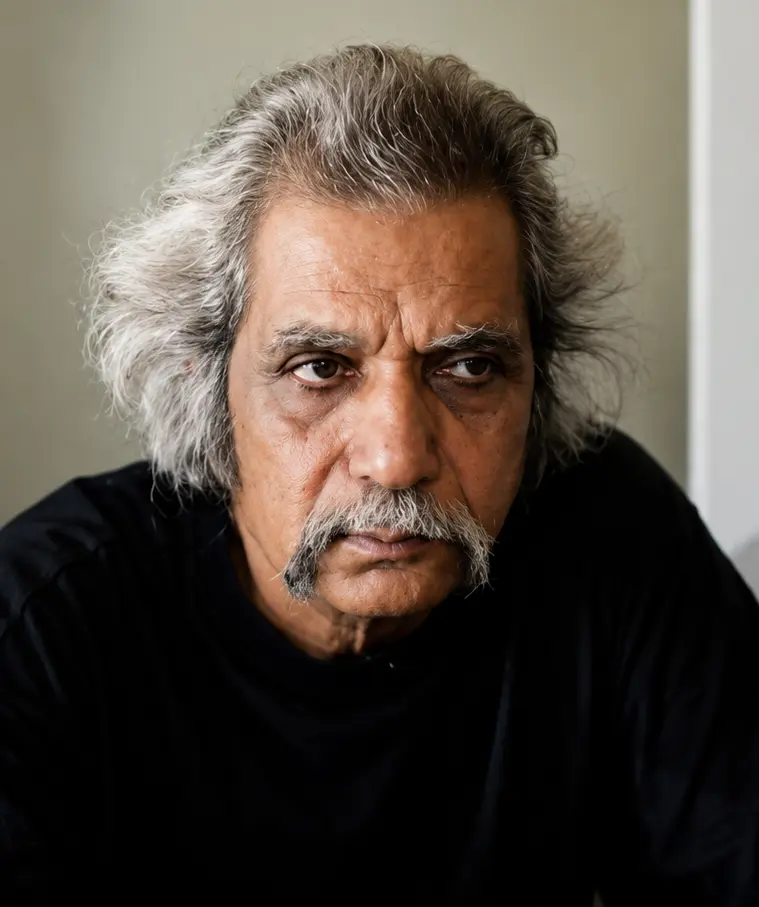
Full Name: Arun Balkrishna Kolatkar
Birth: November 1, 1932, Kolhapur, Maharashtra, India.
Death: September 25, 2004, Pune, Maharashtra, India.
Kolatkar was a bilingual Indian poet who wrote in both Marathi and English, known for his modernist style and vivid imagery.
He studied at the J.J. School of Art in Mumbai and worked as a graphic artist, a profession that influenced his poetic sensibilities, especially in visualizing scenes with precision.
Literary Contributions
English Poetry:
Jejuri (1976): A collection of poems about a pilgrimage to Jejuri, a small town in Maharashtra. This work won the Commonwealth Poetry Prize and is considered a landmark in Indian-English poetry.
Kala Ghoda Poems (2004): A collection inspired by the historic Kala Ghoda area in Mumbai.
Sarpasatra (2004): A long narrative poem based on Mahabharata myths.
Marathi Poetry:
Bhijki Vahi (The Soaked Notebook, 2003): A modernist and experimental Marathi poetry collection.
Chirimiri and Droan: Notable works in Marathi that showcase Kolatkar’s creative and innovative approach to poetry.
Style and Themes
Kolatkar’s poetry is known for its simplicity, sharp observation, and use of everyday language.
He explored themes of spirituality, tradition, alienation, modernity, and the mundane realities of life.
His unique ability to blend humor, irony, and profundity allowed him to portray ordinary moments with deep symbolic meaning.
Significance of Jejuri
Jejuri is one of his most celebrated works, capturing the poet’s reflections on a visit to the pilgrimage town of Jejuri.
The collection combines physical and spiritual journeys, often juxtaposing modern skepticism with ancient traditions.
It established Kolatkar as a major voice in Indian-English poetry, praised for its vivid imagery and minimalist style.
Legacy
Arun Kolatkar is remembered as one of India’s most significant modern poets.
His works continue to resonate for their nuanced depiction of Indian life, blending cultural commentary with a universal appeal.
Kolatkar’s ability to find profound meaning in the ordinary has cemented his place as a pioneer in Indian poetry, both in Marathi and English.
Word Meaning
| Tough Word | Meaning in English | Meaning in Hindi |
| Tarpaulin | A waterproof material used to cover things | तिरपाल (जलरोधक सामग्री) |
| Flaps | Loose pieces of material that move freely | झूलते हुए किनारे |
| Buttoned down | Fastened or secured using buttons | बटन लगाकर बंद किया हुआ |
| Whipping | Moving or hitting quickly and forcefully | तेज़ी से मारना या हिलना |
| Slapping | Striking with an open hand or something flat | थप्पड़ जैसा मारना |
| Roaring road | A road that produces a loud sound due to vehicles | गूंजती हुई सड़क |
| Daybreak | The beginning of morning; dawn | सुबह की शुरुआत (भोर) |
| Spills out | Flows out or escapes | बाहर निकलना |
| Countryside | Rural area with fields and villages | ग्रामीण इलाका |
| Castemark | A mark on the forehead symbolizing caste | जाति चिन्ह (माथे पर लगा चिह्न) |
| Eyelet | A small hole or opening | छेद या झिरी |
| Shoots | Moves suddenly or directs quickly | तेज़ी से चलना या निशाना लगाना |
| Sawed off | Cut off or shortened | काटा हुआ या छोटा किया गया |
| Temple | The side of the forehead | माथे का किनारा (कपाल) |
| Bumpy ride | A journey with many jerks or uneven movement | झटकों भरी सवारी |
| Get off | To leave or step out of a vehicle | वाहन से उतरना |
Themes
Journey as a Metaphor for Life
The bus ride in the poem is a symbol of life. Just like the bus journey is bumpy and uncomfortable, life also has ups and downs. The poem shows that life is about moving forward, even if the destination is unclear or difficult to reach. The journey teaches us about ourselves and the world.
Perception and Limited Understanding
The poem talks about how we see the world around us. The tarpaulin on the bus windows blocks the view, showing that we can’t always see or understand everything clearly. The narrator only sees a reflection of their own face in the old man’s glasses, which means we often look at things from our perspective, not fully understanding the world or others.
Individuality and Alienation
Even though the narrator is traveling with others on the bus, they feel disconnected. The line “you don’t step inside the old man’s head” shows that we can’t completely know what others think or feel. Everyone experiences life in their own unique way, which can make us feel alone sometimes.
Tradition vs. Modernity
The poem brings out the contrast between traditional beliefs and modern ways of thinking. The old man’s caste mark represents old customs and traditions, while the narrator reflects on the journey in a more personal, questioning way. This shows the tension between following traditions and finding individual meaning.
Spiritual and Mundane Interplay
The poem blends simple, everyday things (like a bus ride) with deeper thoughts about life and meaning. For example, the sunlight entering the bus is described as something special, almost spiritual. This shows that even in ordinary situations, there can be moments of insight or realization.
The Bus by Arun Kolatkar Questions and Answers
Very Short Answer Questions
Q: Who is the poet of The Bus?
A: Arun Kolatkar.
Q: Which collection does the poem The Bus belong to?
A: Jejuri.
Q: What does the tarpaulin cover in the poem?
A: The bus windows.
Q: What is the destination of the bus in the poem?
A: Jejuri.
Q: What brushes against the narrator’s elbow during the journey?
A: A cold wind slipping through the tarpaulin.
Q: What is the “roaring road” a metaphor for?
A: The journey of life.
Q: Where does the narrator see their reflection?
A: In the glasses of an old man.
Q: What symbolizes societal divisions in the poem?
A: The caste mark on the old man’s forehead.
Q: What enters the bus through a hole in the tarpaulin?
A: A sunbeam.
Q: What does the sunbeam touch in the poem?
A: The driver’s right temple.
Q: What literary device is used in “whipping and wind”?
A: Alliteration.
Q: What is the tone of the poem?
A: Reflective and contemplative.
Q: What is the primary setting of the poem?
A: Inside a state transport bus.
Q: How does the sun rise in the poem?
A: Quietly.
Q: What does the bus symbolize in the poem?
A: The journey of life.
Q: What poetic form is used in The Bus?
A: Free verse.
Q: Does the speaker feel connected to the old man?
A: No, the speaker does not step inside the old man’s head.
Q: What is the significance of the bus ride?
A: It symbolizes both a physical and metaphorical journey.
Q: What does the “sawed off sunbeam” symbolize?
A: Clarity or moments of insight.
Q: What theme does the poem explore?
A: The search for meaning and self-reflection during a journey.
Short Answer Questions
Q: Describe the setting of the poem The Bus.
A: The poem is set on a state transport bus traveling to the pilgrimage town of Jejuri. The bus has tarpaulin-covered windows, limiting the view of the outside world. The confined, bumpy environment reflects the discomforts of ordinary travel, while the dim light and cold wind evoke a sensory and reflective atmosphere.
Q: How does the poet use imagery to describe the bus ride?
A: Kolatkar uses vivid imagery to capture the physical and sensory details of the journey, such as the “tarpaulin flaps,” “cold wind whipping,” and “roaring road.” These images immerse the reader in the bus ride while symbolizing the broader themes of limited perception and life’s challenges.
Q: What does the “caste mark” symbolize in the poem?
A: The caste mark on the old man’s forehead symbolizes societal divisions and traditions. The narrator’s focus on a “destination just beyond the caste mark” suggests a desire to transcend cultural and social boundaries, seeking a deeper, universal understanding.
Q: What role does the sunbeam play in the poem?
A: The “sawed off sunbeam” symbolizes clarity or a moment of insight during the journey. As it enters the bus and rests on the driver’s temple, it appears to guide the journey, reflecting the subtle, transformative power of external forces in shaping one’s direction.
Q: What does the narrator mean by “your own divided face in the pair of glasses”?
A: The “divided face” seen in the old man’s glasses represents self-reflection and fragmented perception. The narrator cannot fully see the outside world but instead confronts a distorted version of themselves, highlighting themes of introspection and alienation.
Q: How does the poem explore the theme of individuality?
A: The poem emphasizes individuality through the narrator’s isolation despite sharing the bus ride with others. The inability to “step inside the old man’s head” reflects the limits of empathy and connection, suggesting that each journey is ultimately personal and unique.
Q: Explain the tone of the poem.
A: The tone of the poem is reflective and contemplative, with an undercurrent of alienation. The poet observes the physical discomforts of the journey while subtly exploring deeper themes of perception, identity, and spirituality, creating a balance between the mundane and the profound.
Q: What is the significance of the bus in the poem?
A: The bus symbolizes both the literal journey to Jejuri and the broader journey of life. Its bumpy ride, confined space, and tarpaulin-covered windows represent life’s challenges, limitations, and the need to search for meaning within these constraints.
Q: How does the poem blend physical and metaphorical elements?
A: The poem describes the physical discomforts of a bus ride—cold wind, bumpy roads, and limited views—while using these elements metaphorically to explore themes of self-reflection, perception, and spiritual search. The journey becomes both a literal trip and a symbolic quest for insight.
Q: What is the message of the poem The Bus?
A: The poem conveys that journey—whether physical or metaphorical—are as much about self-discovery as they are about reaching a destination. It highlights the limitations of perception, the individuality of experiences, and the subtle moments of clarity that guide us in life.
Critical Analysis
Introduction
The Bus is a poem by Arun Kolatkar from his famous poetry collection Jejuri, which won the Commonwealth Poetry Prize in 1976. It describes a bus journey to Jejuri, a pilgrimage town in Maharashtra. While the poem focuses on the physical experience of traveling in a bus, it also reflects deeper ideas about life, individuality, and perception. Kolatkar uses simple words to make readers see how even an ordinary journey can hold great meaning.
Central Idea
The poem is about a bus journey, which becomes a metaphor for life. It shows how we move forward in life despite challenges and discomforts. It also highlights how our view of the world is often limited and how shared experiences don’t always create deep connections between people. Through this simple bus ride, the poem explores the themes of self-reflection and the search for meaning.
Structure and Rhyme Scheme
The poem is written in free verse, with no fixed rhyme scheme or meter.
This lack of structure mirrors the unpredictable and bumpy nature of the bus journey.
The poem’s fragmented style complements its themes of limited perception and self-reflection, giving the reader a sense of the ongoing motion of the bus.
Themes
Life as a Journey: The bus ride symbolizes the broader journey of life, filled with challenges and insights.
Perception and Reflection: The poem explores how our understanding of the world is often fragmented or incomplete.
Alienation and Individuality: Despite sharing a journey, individuals remain disconnected, unable to fully understand each other.
Tradition vs. Modernity: The poem subtly reflects on the tension between cultural traditions (symbolized by the caste mark) and a modern, reflective outlook.
Finding Meaning in the Ordinary: Everyday moments, such as a sunbeam entering the bus, carry symbolic and spiritual significance.
Style
Kolatkar’s style is minimalist, using simple, direct language to evoke vivid imagery and profound ideas.
The tone is reflective and introspective, blending observations of the physical world with inner thoughts.
The use of the second person narrative (“you”) makes the poem immersive, allowing readers to place themselves in the scene.
Poetic Devices
Imagery: Vivid descriptions like “tarpaulin flaps” and “roaring road” create a sensory experience.
Symbolism:
The bus symbolizes life’s journey.
The caste mark represents societal divisions.
The sunbeam signifies moments of clarity or spiritual awakening.
Personification: The sunbeam “aims” and “shoots,” giving it a human-like quality.
Metaphor: The bumpy ride is a metaphor for life’s challenges.
Alliteration: Phrases like “whipping and wind” add rhythm and emphasis.
Critical Commentary
Critics admire Kolatkar for blending the everyday and the spiritual in his poetry.
Bruce King praised Jejuri for offering a modern, questioning view of tradition and pilgrimage while retaining a sense of deeper meaning.
Arvind Krishna Mehrotra highlighted Kolatkar’s talent for turning simple observations into profound reflections.
Message
The poem teaches us that life’s journey is full of challenges, but it is also a chance for self-discovery. It reminds us to find meaning in simple, everyday experiences and to reflect on how we see ourselves and the world. It also shows that while we share experiences with others, our journeys remain deeply personal.
Conclusion
The Bus by Arun Kolatkar turns a simple bus ride into a meaningful exploration of life, self-reflection, and connection. With its simple language, vivid descriptions, and profound themes, the poem makes readers see the extraordinary in the ordinary. It is a timeless reminder of the beauty and depth hidden in everyday moments.