
Teenage by Jawaharlal Nehru Summary
“Opportunity for Youth” is a speech delivered by Jawaharlal Nehru at the Second Inter-University Youth Festival. This important address was given in New Delhi on 23 October 1955, where Nehru spoke directly to the young students of India, encouraging them to think deeply, act purposefully, and prepare themselves to contribute meaningfully to the nation’s future.
Unity of Thought and Action
Nehru begins by explaining that both thinking and action must go together. Only thinking without doing anything is useless, and acting without thinking leads to foolish mistakes. Most small daily actions happen automatically, but important actions must be guided by careful thought. A person becomes truly happy when his thoughts and actions support each other and there is no inner conflict.
Happiness Comes from the Mind, Not Wealth
Nehru says that happiness is an inner condition. It does not depend on being rich or living in a perfect environment. Many rich people are unhappy, and poverty causes suffering, but real happiness comes from a balanced and coordinated personality. When one’s behaviour matches one’s thoughts, inner peace develops.
Understanding India Without Blind Pride
Nehru explains how he tried to understand India deeply. He did not want to accept blindly that India was the greatest nation simply because he was born here. People in every country believe the same about themselves. According to him, every nation has good qualities and bad phases. Similarly, every person has strengths and weaknesses. No one is perfect. It is wise to recognize both good and bad and try to develop the good.
Gandhiji’s Ability to Bring Out Good in People
Nehru praises Mahatma Gandhi for his special quality of seeing the good in every person. Even if a person had many faults, Gandhi recognized the good part and encouraged it. This made the person try to behave better. Nehru suggests that instead of focusing on faults, we should look for good qualities in others and in other countries.
Avoiding Negativity and Fault-Finding
Nehru says that many people focus too much on what is wrong in others. When we go to a foreign country, we may notice things we dislike, but we should try to learn from their good qualities. He reminds us of the biblical idea that people often see tiny faults in others but ignore their own big mistakes. He wants the youth to have a positive and generous outlook.
How Nehru’s Own Thinking Grew
Nehru talks about writing his books—Autobiography, Glimpses of World History, and The Discovery of India. These books helped him understand himself and India’s past in the larger context of world history. Although he was not a trained historian, writing made him think more clearly and develop a deeper understanding of India. He regrets not having enough time now to read and think as much as he would like.
Importance of Reading and Thinking
Nehru strongly advises young people to develop the habit of thinking. Thinking does not come automatically, and repeating someone else’s words is not real thought. To think deeply, one must read good books. Reading intelligently helps us understand other people’s thoughts and improves our own thinking. He feels sad that people in India do not read enough meaningful books, and encourages youth to read novels and works that make them think.
Need for Trained Minds and Skilled Professionals
Nehru explains that for India’s development and Five-Year Plans, the country needs engineers, scientists, technicians, doctors, and teachers. A nation cannot be built by politicians alone. Experts and trained workers are essential for progress, and their importance will never fade. Skilled people with trained minds are the builders of a modern nation.
Healthy Ambition and Pride in Youth
Nehru wants young people to have pride and ambition—not for money, but for excellence. Real pride comes from doing one’s work with dedication. He encourages young people to aim high: a scientist should aim to be like Einstein, a doctor should aim to discover cures, and an engineer should aim to invent new technologies. Even trying to achieve something great makes a person stronger and more capable. He explains that freedom fighters became great not because they were extraordinary, but because they aimed high and worked hard.
Opportunities and Challenges in India
Nehru reminds the youth that India has many problems, but it also has huge opportunities. Achieving success requires a strong mind, strong character, patience, and the courage to continue even after failures. There is no magic solution except the magic of a determined human personality. With perseverance and confidence, great achievements are possible.
Message
Nehru’s message to the youth is inspiring and clear: think deeply, read wisely, act with purpose, aim for excellence, develop skills, and work hard. If the youth prepare themselves with strong character and determination, they can achieve great things and help build a strong and prosperous India.
Analysis
You know that I once wrote a book called The Discovery of India. I was engaged in that quest long before I wrote that book. It was not mere curiosity that led me to that quest. I was engaged in many activities and I wanted a proper reconciliation between my activity and my thought. Thought without action is abortion. Action without thought is folly.
Analysis: In this passage, Jawaharlal Nehru explains how his journey of understanding India began long before he actually wrote The Discovery of India. He did not start this search out of simple curiosity; it was a deeper need. He was actively involved in India’s freedom struggle, and he wanted his actions and his thoughts to match each other. He believed that a person must bring harmony between what he thinks and what he does.
Nehru uses two strong statements: “Thought without action is abortion” and “Action without thought is folly.” By this, he means that if someone only thinks but never acts, then those thoughts have no value; they never come to life. On the other hand, if someone keeps acting without proper thinking, he will make foolish mistakes. Therefore, both thought and action are necessary, and both must work together. Nehru wants young people to understand that meaningful progress comes when thinking guides action and action gives purpose to thinking.
Of course, we sometimes act on some impulse or irrepressible urge. If suddenly you throw a brick at me and my hand goes up to protect myself, it is an automatic, instinctive action and not a result of deliberate thought. Our living is conditioned by a series of automatic actions from morning till night. Anything we do outside that common range of actions, however, has to be preceded by some measure of thinking. The more action and thought are allied and integrated, the more effective they become and the happier you grow. There will then be no inner conflict between a wish to do something and inability to act or between thinking one way and acting in another. The happiest man is he whose thinking and action are coordinated.
Analysis: In this passage, Nehru explains that not all actions come from careful thinking. Sometimes we act quickly and instinctively, like when a brick is suddenly thrown and we lift our hand to protect ourselves. Such actions happen automatically and do not require any planning. In daily life, many small actions are automatic and do not need thought.
However, Nehru says that any action that is important or outside our usual routine must be done after proper thinking. When our thoughts and actions support each other and work together, both become stronger and more effective. This also leads to greater happiness because there is no confusion or inner conflict. A person does not struggle between wanting to do something and being unable to do it, or thinking one thing and acting in a different way.
According to Nehru, the happiest person is the one whose thinking and actions are in harmony. When what we think and what we do match, we feel peaceful, confident, and satisfied.
Happiness, after all, is an inner state of mind. It is little dependent on outside environment. Happiness has very little to do, for instance, with whether you are rich or not rich. Some of the most miserable persons I have come across in my life are the rich people. It is true that poverty makes one miserable in a very acute way. But my point is that it is not wealth but co-ordination of one’s thought and action which removes inner conflicts. It is in that way that integration of personality is achieved.
Analysis: In this passage, Nehru explains the real meaning of happiness. He says that happiness does not depend much on external things like money, comfort, or environment. It mainly depends on a person’s inner state of mind. Being rich does not guarantee happiness. In fact, Nehru mentions that some of the most unhappy people he has met were extremely rich. At the same time, he admits that poverty brings suffering and can make life very painful, but still, money alone cannot create true happiness.
Nehru’s main point is that real happiness comes when a person’s thoughts and actions are in harmony. When what you think and what you do are not in conflict, your mind becomes peaceful. This inner balance removes confusion, tension, and emotional struggle. According to Nehru, this coordination of thought and action leads to the development of a strong and integrated personality. When a person is internally balanced, he feels content, confident, and complete.
We were engaged, as you know, in a very great movement in India. Because that movement was intimately concerned with the freedom of India, I was led to wonder what exactly is India. I knew, of course, the geography of India. I knew many other odd facts about India, too. I was not prepared to accept it on faith that because I was born in India, therefore India was the greatest country in the world. That is the kind of folly in which the people of every country indulge.
Analysis: In this passage, Nehru talks about his involvement in the Indian freedom movement. Because the movement was deeply linked with India’s identity, he began to question and explore what India truly was. He already knew basic things like India’s geography and some facts, but he did not want to blindly believe that India was the greatest country just because he was born here.
Nehru points out that people in almost every country make the same mistake—they assume their nation is superior without really understanding or examining it. He considers this kind of thinking foolish. Instead of accepting national pride without reason, Nehru wanted to understand India through knowledge, experience, and honest observation. His search for India’s true identity was thoughtful, sincere, and based on inquiry rather than blind belief.
There are quite enough people in India who think that India is obviously the greatest country. In the days when we were politically subject and could not take much pride in our political condition, we prided ourselves on our spiritual greatness. Having nothing else to get hold of we took refuge in spirituality.
Analysis: In this passage, Nehru explains how many Indians believed that India was the greatest country, even when the nation was under foreign rule. At that time, India had no political power and nothing to be proud of politically. Because of this, people tried to find pride in another area—spirituality. Since they had lost control over their own country, they turned to India’s spiritual traditions to feel good about themselves.
Nehru suggests that this pride was not based on a balanced understanding, but more on emotional comfort. When people have nothing else to rely on, they often cling to ideas that make them feel strong or special. In India’s case, spirituality became that refuge. He is not criticizing India’s spiritual heritage but showing how people sometimes use spirituality to escape from harsh realities.
If you go to other countries—I shall not name them as I do not wish to cause offence—you will find the people there think that their country is the chosen country, the torchbearer of civilization, the most advanced country, the most revolutionary country, the country with the biggest buildings, the country with something unique, some mission or other. It is natural for one to like one’s own country and one’s own people. It would be unnatural not to do so. It is good to be a little proud of one’s own country. But it is wrong to start imagining that we are the highest and the best in the world. The fact is that every country and every people have admirable points about them; they have great achievements to their credit, and they have also bad periods in their history. This applies not to countries only but to individuals. Nobody is perfect; he has weaknesses and failings. Nobody is thoroughly bad either. We are all mixtures of good and evil. But we should try to further the good in ourselves and in others.
Analysis: In this passage, Nehru explains that the belief that one’s own country is the greatest is not limited to India. If you travel to other countries, you will find that people there also feel their nation is special or superior. They may think they are the most civilized, the most modern, the most revolutionary, or that their country has some unique mission in the world. Nehru does not want to offend anyone, so he does not name any country, but he makes it clear that this attitude exists everywhere.
He says it is natural and normal to love your own country. It would be strange if someone did not feel attachment to their homeland. A small amount of pride in one’s country is healthy. However, the problem begins when this pride turns into the belief that one’s country is the best in every way, better than all others. According to Nehru, this is a mistaken and narrow-minded view.
Nehru points out that every country has both strengths and weaknesses. Each nation has remarkable achievements, but also difficult periods in its history. The same is true for individuals. No person is completely perfect; everyone has faults. But no one is entirely bad either. Human beings are a mixture of good and bad qualities. Nehru concludes that we should focus on developing the good in ourselves and encourage the good in others. This positive approach, rather than blind pride, leads to a healthier and more balanced attitude.
Most of you probably did not see Gandhiji at close quarters. He had amazing qualities. One of these qualities was that he managed to draw out the good in another person. The other person may have had plenty of evil in him. But he somehow spotted the good and laid emphasis on that good. The result was that that poor man had to try to be good. He could not help it. He would feel a little ashamed when he did something wrong.
Analysis: In this passage, Nehru talks about Mahatma Gandhi and his special ability to influence people positively. He says that most of the young listeners probably never got the chance to observe Gandhi closely, but Gandhi had extraordinary qualities. One of his greatest strengths was his ability to notice the good in every person, even if that person had many faults or negative traits.
Gandhi focused on whatever small goodness he could find in someone. By highlighting and encouraging that goodness, he made the person more aware of it. When someone realizes that a great and respected leader like Gandhi believes in their good qualities, they naturally feel inspired to behave better. They do not want to disappoint him. As a result, even a person with many weaknesses would feel ashamed when he did something wrong, because Gandhi’s trust made him want to improve himself.
Through this example, Nehru shows the power of positive influence. Gandhi’s method was not to criticize or condemn people but to bring out their best qualities, and in doing so, he helped them transform themselves.
People who always seek evil in others find it. This applies to nations as well as individuals. Go to a foreign country. You are likely to find many things that you do not like. Are you going to spend your time finding out the evil in other countries, or rather in finding out the good in them, and profiting yourself and others by your contact?
Analysis: In this passage, Nehru explains that people who look for bad qualities in others will always find something negative. This attitude is harmful because it prevents a person from seeing anything good. Nehru says this applies not only to individuals but to entire nations as well. If you travel to another country, you may notice many things you do not like—differences in behaviour, customs, habits, or systems.
Nehru then asks a simple but important question: when you visit a foreign country, will you focus only on the faults you find there, or will you try to discover the good things that country has to offer? If you choose to see the good, you will learn something valuable, improve your understanding, and benefit yourself as well as others. But if you spend all your time searching for faults, you will return with nothing but negativity.
His point is that a positive and open-minded attitude helps us grow. Looking for good in others and in other nations makes us wiser and more generous, while looking only for evil makes our thinking narrow and unfair.
We are all much too apt to look at the evil in other individuals and countries rather than the good. Perhaps some of you know the saying in the Bible about the person who could not see the beam in his own eye and saw the mote in the other’s eye. I am sorry if you think I am rambling. But this is, I might inform you in secret, a very clever attempt to get behind your mind. I am at least being frank with you. That is how I came to write The Discovery of India. And before that, I wrote my autobiography, which again was an attempt to fix myself in the context of the Indian struggle.
Analysis: In this passage, Nehru says that human beings have a natural tendency to notice the bad qualities in others rather than the good ones. This habit applies not only to individuals but also to nations. He reminds the audience of a teaching from the Bible: a person often fails to notice a big fault in himself (the “beam” in his own eye) but easily sees a tiny fault in someone else (the “mote” in the other’s eye). This shows how people are quick to judge others while ignoring their own shortcomings.
Nehru then humorously says that if the audience feels he is talking too much or going off-topic, he wants to reveal a “secret.” He is trying to reach into their minds and make them think more deeply. He admits this openly and says he is being completely honest with them. He then connects this idea to how he came to write his books. The Discovery of India was written because he wanted to understand India more deeply. Before that, he wrote his autobiography to understand his own life and place in India’s freedom struggle. Both books were efforts to examine himself honestly and to understand India in a thoughtful and sincere way.
Actually the book was more about the struggle in India than about myself. Of course, I was naturally a kind of central figure from my point of view as everybody is from his point of view. Then I wanted a larger canvas to think about and I wrote Glimpses of World History. I am no historian. Perhaps that was as well, because there are very few historians that I know who can talk intelligently about history. They are so full of facts and figures that they are overwhelmed by them. They are lost in a forest and do not see some obvious things because they are always crawling about in the underwood. I wrote Glimpses of World History in order that I might see my country and my age in the proper perspective of world history. It was by no means a- deep work. But it gave my thinking the framework of world history.
Analysis: In this passage, Nehru explains that although his autobiography includes his life, it was mainly about India’s freedom struggle rather than about himself. He naturally appeared as a central figure because everyone sees events from their own point of view. After writing that book, he wanted to understand India’s situation in a wider, global context. This desire led him to write Glimpses of World History.
Nehru admits that he is not a trained historian, but he believes this worked in his favour. He feels that many historians become so absorbed in facts, dates, and details that they lose sight of the bigger picture. He compares them to people lost in a thick forest who cannot see the clear path because they are crawling around in the undergrowth. They focus too much on small details and miss the obvious, larger truths.
By writing Glimpses of World History, Nehru wanted to look at India’s past and present in relation to the history of the whole world. He does not claim that the book is a very deep or scholarly work, but it helped him create a broader framework for his thinking. It gave him a global perspective and helped him understand India’s position better.
Having got the larger frame, I looked more closely at my own country and wrote The Discovery of India. In it I concentrated on my country’s past and the story of its development.
Analysis: In this short passage, Nehru explains how his study of world history helped him return to the study of India with a clearer and broader understanding. After writing Glimpses of World History, he had a wider “frame” or background in which he could place India’s story. With this global perspective in mind, he decided to focus deeply on India itself.
This is why he wrote The Discovery of India. In that book, he explored India’s long past, its culture, its achievements, and the way it developed over centuries. His aim was to understand India not in isolation but in relation to the larger world history he had studied earlier. By doing this, he could understand India’s identity, strengths, and problems more completely.
I am trying to explain to you how my thinking developed in these matters. The more I thought and the more I learnt the more I saw how little I knew and how much more there was to learn. One of my regrets today is that I have no time to pursue these studies properly by reading or thinking or writing, because writing for me is essentially an aid to thinking. In trying to write, one has to think more concisely than otherwise.
Analysis: In this passage, Nehru explains to the young audience how his way of thinking grew and developed over time. He says that the more he studied and reflected on different ideas, the more he realized how little he actually knew. This is a sign of a true learner—when someone gains knowledge, they also become aware of how much more there is still to understand. Learning never ends.
Nehru expresses a sense of regret. Because of the heavy responsibilities of his public life, he no longer has enough time to read, think, or write as deeply as he would like to. For him, writing was not just a task but a tool that helped him think more clearly. When someone writes, they must express their thoughts in a clear and organized way. Writing forces a person to think carefully and precisely. Therefore, Nehru feels that losing the time to write also means losing an important way of sharpening his thinking.
I suppose I must not complain of my present lot. What I would like you to do first of all is to think. Thinking is something which does not come automatically to a person. Gossiping with a neighbour is not thought. If you repeat something which somebody else has said, it is not thought. I do not expect all of you to become mighty thinkers, though some of you may. But I would like all of you to think and to develop the art of thinking. Nothing is more helpful to thinking than reading, that is, reading intelligently, because thereby you get other people’s thoughts, and by weighing them you can think yourself. I have often said that it is very unfortunate that people think and read so little nowadays, especially in India. I do not call newspaper-reading reading. But any reading which makes you think is useful reading, even if it is a very good novel. Great novels always make one think, because they are pictures of life painted by great minds.
Analysis: In this passage, Nehru gently says that he should not complain about his busy life, but he uses this moment to advise the young audience about the importance of thinking. He explains that real thinking does not happen on its own. It requires effort and practice. Simply talking with neighbours or repeating what someone else has said is not thinking at all. Thinking means using your own mind to understand, question, judge, and form ideas.
Nehru does not expect all young people to become great philosophers, but he wants every young person to develop the habit of thoughtful reflection. According to him, the best way to learn how to think is to read—read intelligently and thoughtfully. When you read, you receive the thoughts of other people, and by examining and understanding those thoughts, your own thinking becomes sharper and deeper.
He then expresses sadness that people, especially in India, read and think very little. He explains that reading a newspaper is not real reading because it usually does not make a person think deeply. But any book—whether it is history, science, or even a good novel—that makes you think is valuable. Great novels, written by great minds, present life in a deep and insightful way. They help readers understand the world better and encourage thoughtful reflection.
If you think about the Five-Year Plans, you will find what a vital part the engineer plays in them. We sha)l require tens of thousands of engineers and hundreds of thousands of overseers, mechanics, and other technicians for our Plans. The whole world is becoming more and more a world of trained people. They need to be trained in two ways. They must be trained in mind, and have some vision and understanding of the world picture. Then they must be trained in particular jobs which they can do well, whether it be science or engineering or medicine or education. Such are the skills which will build India.
Analysis: In this passage, Nehru talks about the importance of skilled and trained people for India’s development. He points out that if we look at the Five-Year Plans—India’s major programs for economic growth—we will see that engineers are essential for almost every project. To carry out these plans successfully, India will need thousands of engineers and hundreds of thousands of trained workers such as overseers, mechanics, and technicians.
Nehru explains that the modern world is becoming more and more dependent on trained and educated people. Anyone who wishes to contribute meaningfully must be trained in two ways. First, they must be trained in mind—they should be educated, thoughtful, and able to understand the larger picture of the world. This means they should know what is happening around them, understand global progress, and think clearly.
Second, they must be trained in specific skills. Whether it is engineering, medicine, science, teaching, or any other profession, they must be able to do their job well. According to Nehru, it is these skilled professionals—people with knowledge, vision, and technical ability—who will build the future of India. True development depends on trained minds and skilled hands working together.
Frankly, the job of the politician will not build India, although I speak as a politician. A politician is a useful person in his own way, though it is conceivable that in a perfect society the politician will fade away. But it is not conceivable that the experts will fade away. There will be always need for the engineer and the scientist. They cannot fade away even if the politician may fade away. However, I do not think the time is near when the politician will fade away.
Analysis: In this passage, Nehru speaks honestly about the role of politicians—even though he himself is one. He says that politicians alone cannot build a nation. While a politician may be useful in some ways, the real progress of a country depends on experts like engineers, scientists, doctors, and trained professionals. These experts create roads, build dams and factories, discover new medicines, and improve technology. Without them, no country can develop.
Nehru adds that in an ideal or perfect society, the role of politicians might become unnecessary and could even disappear. However, the need for scientists and engineers will never disappear. Their work is essential to human progress. Even if political leadership becomes less important in the distant future, experts will always be required to build and maintain a modern nation.
At the same time, Nehru admits that the time when politicians will fade away is not coming soon. Society is not perfect yet, so political leadership will continue to exist. But his main point remains clear: India’s growth depends far more on skilled professionals than on political figures.
You are young. I should like you to have the pride of youth and the ambition of youth to do something worthwhile and big. All of you may not be geniuses, but some of you might yet do worthwhile things in some department of human activity or other. I do not like people who have no pride and ambition and are just sloppy people.
Analysis: In this passage, Nehru directly addresses the young audience and encourages them to value their youth. He says that young people should have pride—not the pride of arrogance, but the pride that pushes them to aim high and do something meaningful in life. Youth is a time of energy, dreams, and ambition, and Nehru wants them to use this period to try for big and worthwhile achievements.
He admits that not everyone can be a genius, but that does not matter. Even ordinary people can do valuable and important work in different fields. What truly matters is having the desire to do something useful and the motivation to work sincerely.
Nehru also expresses a clear dislike for people who lack ambition, who do not care about improving themselves, and who live carelessly or lazily. He expects young people to be active, disciplined, and purposeful. For him, youth should not be wasted in laziness or aimlessness but should be used to build a strong future.
I am not using the words pride and ambition in a small personal sense. I do not mean the pride of getting money, which is the silliest of all types of pride. Pride should consist in doing your job in the best possible manner. If you are a scientist, think of becoming an Einstein, not merely a reader in your university. If you are a medical man, think of some discovery which will bring healing to the human race. If you are an engineer, aim at some new invention. The mere act of aiming at something big makes you big.
[noindex]
Analysis: In this passage, Nehru explains what he means by “pride” and “ambition.” He clarifies that he is not talking about selfish pride or the desire to earn a lot of money. He calls the pride of getting rich the “silliest” kind of pride because it does not lead to real growth or greatness.
Instead, he talks about noble pride—the pride of doing one’s work with dedication and excellence. True pride comes from doing your job as well as you possibly can. Nehru encourages young people to dream big. If someone is a scientist, they should not be satisfied with being an ordinary teacher or lecturer; they should aim to become great like Einstein. A doctor should try to discover something that can heal humanity. An engineer should try to invent something new and useful.
He ends by saying that even if a person does not achieve something extraordinary, the very act of aiming high makes them a better and bigger person. Big goals shape character, increase effort, and make a person stronger from within.
[noindex]
If my colleagues and I and others who function on the public stage today appear big leaders to you, look back on how we became so. We may have had some virtue and some ability, but essentially we became what we were because we had some ambition and pride, because we hitched our wagon to a star, because we tried to do big things and in so trying our stature increased a little.
Analysis: In this passage, Nehru explains how he and other national leaders became important figures in public life. He tells the young audience that if they see him and his colleagues as “big leaders,” they should understand that this did not happen suddenly or by luck. Nehru admits that they may have had some good qualities and abilities, but that was not the main reason for their success.
The real reason they became great, he explains, is that they had ambition and a sense of purpose. They aimed high—he uses the expression “hitched our wagon to a star,” which means they set their goals very high and tried to achieve something far bigger than themselves. Because they aimed for great things, their own character and abilities grew. Their effort to do something meaningful increased their stature and made them capable of achieving more.
Nehru’s message is that greatness comes from aiming high and working with determination, not from being born special. Anyone who is willing to dream big and work hard can rise beyond ordinary limits.
It is not what you say that matters, but what you do. Think therefore of the vast opportunities that the world offers to those who are keen of mind, strong of character and fleet of foot. Think of the opportunities that India offers. I know better than you of the difficult problems of India, the suffering and misery of numberless people. We are trying to meet those problems and solve them, not by magic but by strong will and hard work. There is no magic in this world except the occasional magic of human personality and the human mind. It takes time and perseverance to do big things. It will not do to be faint-hearted. One meets with failure occasionally, but one has yet to go on. Success does not come suddenly or without setbacks. So you have these great opportunities in India. Prepare yourself for them; grow strong in mind and body. Have that inner urge to do big things and I have no doubt that you will do big things.
Analysis: In this passage, Nehru concludes his message to the youth with strong and motivating advice. He says that words do not matter as much as actions. What truly counts is what a person does, not what they talk about. Therefore, young people should focus on the many opportunities available in the world, especially to those who are intelligent, disciplined, and quick to act.
He asks the youth to look at the opportunities India offers. Nehru himself understands India’s problems deeply—poverty, suffering, and hardship faced by millions. But he believes these problems can be solved, not through magic or shortcuts, but through strong determination and hard work. The only “magic” in the world, he says, is the power of a human mind and the influence of a strong personality.
Big achievements require time, patience, and steady effort. A person should not lose courage because setbacks and failures are a natural part of the journey. Success never comes instantly; it requires perseverance.
Nehru reminds the youth that India today is full of possibilities. To take advantage of these, young people must prepare themselves, strengthen both their minds and bodies, and cultivate a powerful inner desire to achieve great things. If they develop this inner drive and work with dedication, Nehru is confident that they will succeed and contribute significantly to the nation.
Key Points
Author
Jawaharlal Nehru, the first Prime Minister of independent India, was also a distinguished thinker, writer, and humanist. His writings—including The Discovery of India and Glimpses of World History—show his deep understanding of history, culture, and human nature. As an essayist and speaker, Nehru used simple but powerful language to inspire the youth and encourage rational, broad-minded thinking. In “Opportunity for Youth,” he speaks as a guide, philosopher, and nation-builder.
Introduction
“Opportunity for Youth” is a thoughtful and inspiring speech that Nehru delivered at the Second Inter-University Youth Festival in New Delhi on 23 October 1955. It addresses the responsibilities, challenges, and possibilities that lie before the young generation of a newly independent nation. Nehru emphasizes the importance of disciplined thinking, balanced patriotism, intellectual curiosity, and skilled labour. The speech reflects his vision of a modern India built through knowledge, rationality, and dedicated effort.
Structure
The structure of the essay is fluid and conversational. Nehru does not divide his ideas into rigid sections; instead, he moves smoothly from philosophical reflections to personal experiences, and from national concerns to motivational advice for youth. The essay begins with the harmony of thought and action, shifts to ideas of happiness and patriotism, recalls Gandhi’s moral influence, discusses Nehru’s own intellectual journey, and finally highlights the role of skills and ambition in building India. This organic structure mirrors the natural movement of reflective thought.
Setting
The setting of the essay is a public event—the Second Inter-University Youth Festival in post-Independence India. The year is 1955, a time when the nation was struggling to rebuild itself after freedom and Partition. India was implementing its early Five-Year Plans and focusing on industrial and educational development. The young audience consisted of university students from across the country. This setting explains the tone of urgency, hope, and responsibility that runs through the speech.
Themes
1. Harmony of Thought and Action
Nehru’s opening idea is that thinking and action must support each other to create meaningful life and inner happiness.
2. True Happiness
He argues that happiness is an inner state, not based on wealth but on coordination between one’s ideas and actions.
3. Balanced Patriotism
Nehru rejects blind nationalism and encourages rational love for one’s country while respecting other cultures and nations.
4. Importance of Reading and Thinking
He insists that intelligent reading and independent thinking are essential for personal growth and national progress.
5. Role of Youth in Nation-Building
Nehru emphasizes that young people must be ambitious, disciplined, skilled, and ready to contribute to India’s modernization.
6. Need for Skilled Professionals
He highlights the importance of engineers, scientists, doctors, teachers, and technicians for India’s development.
Style
Nehru’s style is clear, simple, and conversational, marked by warmth and sincerity. He uses personal anecdotes, metaphors, biblical allusions, and vivid imagery to make his ideas relatable. His sentences flow gracefully, combining philosophical depth with everyday examples. The tone is motivational, affectionate, and rational. Through this gentle and persuasive style, he draws the reader (or listener) into deep reflection.
Message
The central message of “Opportunity for Youth” is that young people hold the key to India’s future. Nehru urges them to think critically, read deeply, develop skills, and aim high. He tells them that greatness comes from ambition, discipline, and the courage to act. He also emphasizes national responsibility—India can grow only through the intelligence, hard work, and idealism of its youth. The essay inspires young minds to become thoughtful, capable, and morally strong citizens committed to building a modern, progressive nation.
Jawahar Lal Nehru
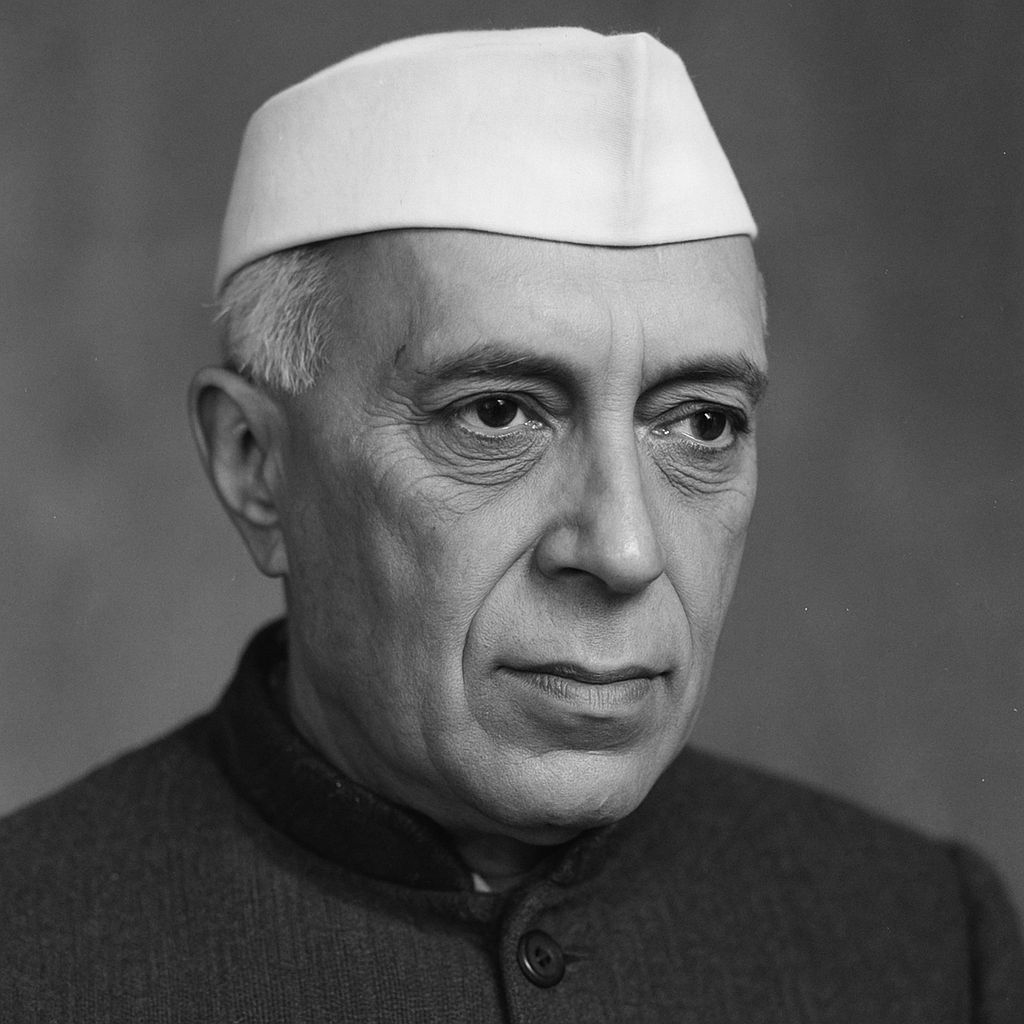
Introduction
Jawaharlal Nehru (14 November 1889 – 27 May 1964) was one of the principal makers of modern India. He was not only the first Prime Minister of independent India but also a visionary who shaped political, economic, social, scientific, and foreign policy foundations for a newly independent nation. Nehru was a philosopher-statesman, a humanist, an internationalist, and a passionate believer in democracy, secularism, and scientific progress. His influence on India’s intellectual and political life extends far beyond his time.
Early Life and Family Background
Jawaharlal Nehru was born in Allahabad (now Prayagraj) to Motilal Nehru and Swarup Rani Nehru. The Nehru family belonged to a distinguished Kashmiri Brahmin lineage and was among the most prominent families in northern India.
Motilal Nehru was a renowned lawyer who later became a leading figure of the Indian National Congress. He created a modern, westernized household where books, debates, and political discussions were common. This culturally rich environment deeply influenced young Jawaharlal.
Nehru grew up in privilege—surrounded by tutors, libraries, and intellectual conversation—but this also made him aware of inequality and injustice in Indian society, shaping his later political ideas.
Childhood Education
Nehru received private education at home from English and Indian tutors. Among them, the most influential was Ferdinand Brooks, an English tutor who introduced Nehru to science, literature, and the wonders of the natural world.
His early education formed:
a love for reading,
curiosity about history and science,
a sense of rationality, and
a habit of independent thinking.
Education in England
In 1905, at age 15, Nehru was sent to England for higher education.
Harrow School
He joined Harrow, one of England’s elite schools. Here he was exposed to British culture, discipline, and academic rigor.
Trinity College, Cambridge (1907–1910)
Nehru studied Natural Science, gaining a scientific and analytical outlook. Cambridge shaped his intellectual maturity.
Inner Temple, London (1910–1912)
He trained as a barrister, though he never developed a strong interest in legal practice.
During his years abroad, Nehru developed:
admiration for liberal and socialist thought,
sympathy for oppressed peoples,
love for world cultures, and
a wider global perspective.
Writers like H.G. Wells, Bernard Shaw, Bertrand Russell, and Marxist thinkers heavily influenced him.
Return to India (1912) and Early Political Awakening
Nehru returned to India in 1912. Although he began practicing law, he was soon drawn to politics.
The turning point came in 1916, when he met Mahatma Gandhi for the first time at the Congress session in Lucknow. Gandhi’s simplicity, moral strength, and call for national service deeply impressed him.
Nehru’s political awakening now moved rapidly.
Entry into the National Movement
Nehru joined:
the Home Rule Movement,
peasant movements in United Provinces, and
activities against British repression.
He began to realize that India’s freedom required mass participation, not just elite discussion.
Role in the Freedom Struggle
1. Non-Cooperation Movement (1920–22)
Nehru became a prominent leader among the younger generation. He travelled widely, organising student and peasant protests. He was imprisoned for the first time in 1921.
2. Rise as a National Leader
His travels across India showed him:
extreme poverty,
the impact of colonial exploitation, and
the spirit of ordinary Indians.
These experiences shaped his future socialism and belief in equality.
3. Civil Disobedience Movement (1930)
Nehru participated actively in Gandhi’s Salt March movement. He was arrested and became a hero among the youth. His popularity increased rapidly.
4. President of Indian National Congress (1929)
At the Lahore Session, Nehru, as Congress President, declared the historic Purna Swaraj Resolution—the demand for complete independence.
January 26, 1930, was celebrated for the first time as Independence Day, based on Nehru’s proclamation.
5. Opposition to Communalism
Nehru passionately opposed religious divisions and warned against communal politics long before Partition. He believed India must remain secular and inclusive for true nationhood.
6. Quit India Movement (1942)
Nehru was arrested immediately after Gandhi’s Quit India call. He spent nearly three years in jail, the longest imprisonment of his political life.
Years in Prison – Growth of a Thinker
Nehru used his prison time to read and write extensively. His major works include:
An Autobiography (1936)
A frank reflection on his life, doubts, ideas, and political journey.
Glimpses of World History (1934)
Letters written to his daughter Indira from prison, explaining the history of human civilization.
The Discovery of India (1946)
His masterpiece—an exploration of India’s culture, philosophy, history, and identity.
These books show his extraordinary mind—philosophical, literary, scientific, and deeply human.
India on the Eve of Independence
In 1947, as British rule ended, India faced:
Partition violence
Refugee influx
Economic weakness
Princely states integration
Administrative chaos
Nehru became the first Prime Minister of India on 15 August 1947.
Prime Ministership (1947–1964)
Nehru served as Prime Minister for 17 years—the longest in India’s history.
His leadership shaped India’s early institutions, policies, and global identity.
Nation-Building and Democratic Foundations
1. Democratic Institutions
Nehru believed that democracy was essential for India’s unity and progress. Under his leadership:
Parliamentary democracy took root.
A free press and independent judiciary were encouraged.
The Election Commission was empowered.
Fundamental rights became core to citizenship.
Nehru’s insistence on civil liberties ensured India did not become authoritarian.
2. Economic Vision
Nehru’s economic ideas were influenced by socialism, technological modernity, and mixed economy models.
Five-Year Plans (1951 onwards)
He introduced planned development focusing on:
industry
energy
transportation
agriculture
scientific research
Industrialisation
Large public sector units (PSUs) were built:
Bhilai, Rourkela, and Durgapur steel plants
Heavy engineering industries
Fertiliser factories
Machine tools plants
Dams and irrigation projects
He called large dams the “temples of modern India.”
3. Scientific and Educational Advancement
Nehru laid the scientific foundation of modern India:
Establishment of IITs, AIIMS, IISERs, CSIR labs
Atomic Energy programme under Homi Bhabha
Promotion of scientific temper in society
Space programme foundations (INCOSPAR, later ISRO)
He believed that scientific thinking was essential for progress.
4. Social Reforms
Nehru was committed to building an equal and just society.
He supported:
abolition of untouchability
women’s rights
Hindu Code Bills (modernising marriage, divorce, inheritance)
land reforms
expansion of education and healthcare
His vision blended modernity with social justice.
Foreign Policy – The Doctrine of Non-Alignment
Nehru’s most significant global contribution was the idea of Non-Alignment. India should not join either the American bloc or the Soviet bloc during the Cold War. Instead, India should maintain independence in foreign affairs.
With leaders like Nasser (Egypt), Tito (Yugoslavia), and Nkrumah (Ghana), Nehru helped create the Non-Aligned Movement (NAM) in 1961.
His foreign policy was guided by:
anti-colonialism
peaceful coexistence
world peace
respect for sovereignty
opposition to racial discrimination
He made India an important voice in world politics.
Challenges and Later Years
The early 1960s were difficult for Nehru.
Sino-Indian War (1962)
The war with China deeply shook him. It was a major psychological and political setback.
Declining Health
After the war, Nehru’s health deteriorated. He suffered a stroke in January 1964 and passed away on 27 May 1964.
His death was mourned across the world.
Legacy
Jawaharlal Nehru’s influence on India is vast and enduring.
He is remembered as:
the architect of modern Indian democracy
founder of India’s foreign policy
champion of scientific and industrial development
builder of educational and research institutions
protector of secularism and pluralism
leader who gave India a global voice
His birthday, 14 November, is celebrated as Children’s Day because of his affection for children, who affectionately called him “Chacha Nehru.”
Conclusion
Jawaharlal Nehru’s life is a story of intellectual brilliance, political courage, humanism, and nation-building. He combined the spirit of modern science with the depth of ancient Indian culture. He transformed a newly independent, divided, and impoverished nation into a democratic republic with institutions that still hold India together.
His legacy continues to shape India’s political culture, foreign policy, and developmental vision. Nehru was not only a leader of his time but a thinker whose ideas still influence the present and inspire the future.
Word Meaning
| Tough Word | Meaning in English | Meaning in Hindi |
| Quest | Search; long effort to find something | खोज, तलाश |
| Mere | Only; nothing more | मात्र, केवल |
| Curiosity | Desire to know something | जिज्ञासा |
| Reconciliation | Bringing thoughts and actions together in harmony | सामंजस्य |
| Abortion (figurative) | Something that never develops or succeeds | असफल आरंभ |
| Folly | Foolishness | मूर्खता |
| Impulse | Sudden urge to act | अचानक प्रेरणा |
| Irrepressible | Cannot be controlled or held back | जिसे रोका न जा सके |
| Instinctive | Natural; automatic | स्वाभाविक |
| Conditioned | Controlled or shaped by habits | अभ्यस्त, नियंत्रित |
| Preceded | Happened before | पहले होना |
| Allied | Closely connected | जुड़ा हुआ |
| Integrated | Combined to work as one | एकीकृत |
| Inner conflict | Fight between thoughts and behaviour | आंतरिक संघर्ष |
| Coordinated | Well-matched; working together | समन्वित |
| Intimately | Deeply, closely | घनिष्ठ रूप से |
| Indulge | To allow oneself freely in something | लिप्त होना |
| Refuge | Safe place; escape | शरण |
| Offence | Hurt feelings; insult | अपमान |
| Torchbearer | One who leads or guides | मार्गदर्शक |
| Mission | Special purpose or goal | मिशन, उद्देश्य |
| Unnatural | Against nature | अप्राकृतिक |
| Admirable | Worthy of praise | प्रशंसनीय |
| Failings | Weak points; defects | कमज़ोरियाँ |
| Thoroughly | Completely | पूरी तरह |
| Evil | Bad qualities | बुराई |
| Apt | Naturally inclined | प्रवृत्त |
| Beam (Biblical) | Big fault | बड़ी गलती |
| Mote (Biblical) | Tiny fault | छोटी गलती |
| Rambling | Wandering, not focused | भटकती हुई बात |
| In secret | Confidentially | गुप्त रूप से |
| Autobiography | Story of one’s own life | आत्मकथा |
| Context | Background or situation | संदर्भ |
| Canvas (figurative) | Large area for thinking | बड़ा विषय |
| Glimpses | Quick views | झलक |
| Historian | Person who studies history | इतिहासकार |
| Overwhelmed | Overloaded; unable to handle | अभिभूत |
| Underwood | Thick bush under trees | झाड़ियाँ |
| Perspective | Understanding based on a viewpoint | दृष्टिकोण |
| Framework | Supporting structure for ideas | ढांचा |
| Concentrated | Focused | केंद्रित |
| Developed | Grew over time | विकसित हुआ |
| Regret | Sorrow about something not done | अफ़सोस |
| Pursue | Continue with effort | पीछा करना |
| Concisely | Briefly and clearly | संक्षेप में |
| Gossiping | Talking idly | गपशप |
| Mighty | Powerful or great | महान |
| Intelligently | With understanding | समझदारी से |
| Weighing (ideas) | Considering carefully | विचार करना |
| Unfortunate | Sad or regrettable | दुर्भाग्यपूर्ण |
| Makes one think | Causes deep thought | सोचने पर मजबूर करना |
| Pictures of life | Realistic depictions | जीवन चित्रण |
| Overseers | Supervisors | निरीक्षक |
| Technicians | Skilled technical workers | तकनीकी विशेषज्ञ |
| Trained | Educated or skilled | प्रशिक्षित |
| Vision | Understanding of future possibilities | दूरदर्शिता |
| World picture | Global situation | विश्व परिदृश्य |
| Particular | Specific | विशेष |
| Skills | Abilities | कौशल |
| Frankly | Honestly | ईमानदारी से |
| Conceivable | Possible to imagine | कल्पनीय |
| Fade away | Disappear gradually | गायब हो जाना |
| Sloppy | Careless, lazy | लापरवाह |
| Worthwhile | Valuable, meaningful | सार्थक |
| Ambition | Strong desire to achieve | महत्वाकांक्षा |
| Silliest | Most foolish | सबसे मूर्खतापूर्ण |
| Healing | Making healthy | उपचार |
| Invention | A new creation | आविष्कार |
| Aiming | Trying to reach | लक्ष्य बनाना |
| Mere act | Simple act | केवल कार्य |
| Colleagues | Co-workers | सहकर्मी |
| Public stage | Public life | सार्वजनिक जीवन |
| Stature | Importance, respect | कद |
| Hitched our wagon to a star | Aimed very high | ऊँचा लक्ष्य रखना |
| Virtue | Good quality | गुण |
| Keen of mind | Sharp-minded | तीक्ष्ण बुद्धि वाला |
| Fleet of foot | Quick to act | तुरंत कार्य करने वाला |
| Misery | Extreme suffering | दुःख |
| Strong will | Determination | दृढ़ इच्छा |
| Perseverance | Steady effort | धैर्य |
| Faint-hearted | Weak or afraid | डरपोक |
| Setbacks | Failures or delays | बाधाएँ |
| Inner urge | Deep desire | आंतरिक इच्छा |
Themes
Thought–Action Harmony
Nehru stresses that the greatest strength of a human being lies in the ability to unite thought with action.
Thinking without doing is meaningless, and action without thought leads to foolishness.
He argues that inner happiness is possible only when a person’s ideas, decisions, and actions flow in the same direction.
A mind that thinks correctly and a life that acts accordingly create a balanced, meaningful personality.
For Nehru, this harmony is the true foundation of inner peace and personal growth.
Developing the Habit of Real Thinking
One of the central themes is the importance of intellectual discipline.
Nehru tells the youth that real thinking is rare because most people gossip, imitate, or simply repeat what others say.
To think independently, one must read widely, especially works that challenge the mind.
Great books and novels, he says, contain powerful ideas from great minds, and by engaging with them, young people learn to sharpen their own thoughts.
Nehru insists that reading is not just a hobby—it is the training ground for the mind.
Balanced National Pride
Nehru discusses patriotism in a mature way.
He warns young people against blind nationalism—the false belief that one’s own country is automatically the greatest.
True pride, he says, comes from honest understanding, not from arrogance.
Every country has good and bad qualities, and real patriotism involves recognizing both.
Nehru encourages the youth to appreciate India’s strengths while also working to overcome its weaknesses.
This balanced pride avoids fanaticism and promotes global understanding.
Youth as Builders of the Nation
A major theme is Nehru’s deep faith in young people.
He sees youth as the driving force behind India’s future.
Their energy, ambition, and courage can shape the nation positively—if they cultivate discipline and vision.
He urges them to be proud, not in a selfish way, but in a way that pushes them to aim high.
According to Nehru, youth must dream big, work hard, and refuse to settle for mediocrity.
By aiming at something great, even if they fall short, they grow into greater individuals.
Importance of Skilled Professionals
Nehru clearly states that modern India needs trained minds more than political speakers.
Engineers, scientists, technicians, doctors, teachers, and researchers are essential for nation-building.
A developing country requires not merely vision but professional skill.
He stresses two kinds of training:
training of the mind—broad knowledge, global understanding, and clarity;
and training of the hand—specific technical skills to perform useful work.
This combination, Nehru believes, will create a generation capable of building a strong, modern, self-reliant India.
Style
Simple, Direct, and Conversational
Nehru’s style in this speech is remarkably simple and conversational.
He talks to the students almost as a friend or guide, not as a distant political leader.
The sentences flow naturally, filled with everyday examples—such as the hand rising instinctively to protect from a thrown brick.
This conversational tone makes the message accessible even when the ideas are deep.
Personal and Reflective
The speech frequently turns inward, into Nehru’s own life, thoughts, and regrets.
He openly discusses how his own thinking developed, how he wrote books in prison, and how he feels sad about not having time to read and write now.
This reflective style adds sincerity to the speech, making it more than a lecture—it becomes a personal sharing of experience.
Use of Anecdotes and Illustrations
Nehru strengthens his message by using small stories, real-life examples, and striking comparisons.
He uses Gandhi’s ability to “draw out the good in others” as an illustration of moral leadership.
He also uses the Biblical example of the beam and the mote to highlight human hypocrisy.
These anecdotes make abstract ideas feel concrete and memorable.
Philosophical Yet Practical
Nehru’s style blends philosophical depth with practical wisdom.
He discusses complex ideas such as happiness, inner conflict, and national pride, but he always brings them down to everyday life.
For example, after discussing thought–action unity, he immediately tells the youth to read more, think more, and develop their minds.
His style encourages both introspection and action.
Balanced, Rational, and Liberal
His tone is rational, moderate, and rooted in scientific temper.
He avoids extreme statements and instead stresses balance—balanced thinking, balanced patriotism, balanced ambition.
He criticizes blind nationalism but supports reasonable pride in one’s country.
This balanced style reflects his overall belief in reason, modernity, and liberal values.
Inspiring and Encouraging
Much of the speech is motivational.
Nehru speaks directly to young people, calling them to rise, aim high, and build the nation.
He uses uplifting language such as “hitch your wagon to a star” and “the mere act of aiming at something big makes you big.”
His style inspires courage, ambition, and confidence in the youth.
Moral and Humanistic Tone
Nehru’s message has a strong ethical grounding.
He emphasizes goodness, character, humility, and respect for all nations and individuals.
His style reflects a humanistic worldview—one that sees people as mixtures of good and evil and encourages nurturing the good.
Gently Humorous and Self-Aware
Nehru occasionally uses gentle humour and self-awareness.
He jokingly says that his “rambling” is a “clever attempt to get behind your mind.”
This lightness softens the seriousness of the speech, making it more enjoyable and relatable.
The style of “Opportunity for Youth” is a mixture of clarity and depth, simplicity and wisdom, intimacy and inspiration.
It reflects Jawaharlal Nehru’s personality: rational, modern, reflective, and deeply committed to the intellectual and moral growth of India’s youth.
His language is elegant yet accessible, making the speech both intellectually stimulating and emotionally uplifting.
Literary Devices
Metaphor
Nehru often uses metaphors to explain abstract ideas in simple and powerful ways.
For example, he says, “Hitch your wagon to a star.”
Here, the “wagon” represents a person’s life and “star” represents a high or noble goal.
Through this metaphor, he encourages youth to aim for great achievements rather than think small.
He also calls engineers, scientists, and technicians the people who will “build India,” suggesting that nation-building is like constructing a structure.
Anecdotes
Nehru uses short personal stories to make his ideas relatable.
He narrates how Gandhi would always look for the good in people, which forced them to behave better.
He also shares how he wrote The Discovery of India and Glimpses of World History during imprisonment.
These anecdotes humanize him and strengthen his message.
Biblical Allusion
Nehru alludes to the Bible when he mentions the man who sees the mote in another’s eye but not the beam in his own.
This allusion highlights human hypocrisy and the tendency to criticize others while ignoring one’s own faults.
Such a reference deepens the moral tone of the speech.
Personification
Nehru gives human qualities to abstract ideas.
For instance, he says, “Our living is conditioned,” as if life itself can control or shape behaviour.
He also calls dams “temples of modern India,” giving them symbolic life and sacred importance.
Repetition
Several key ideas are repeated for emphasis—such as thinking, reading, ambition, and coordination of thought and action.
By repeating these concepts, Nehru ensures that his message sinks deep into the minds of the youth.
Contrast
Nehru frequently uses contrast to highlight the difference between two types of behaviour.
Examples include:
thought vs. action,
blind nationalism vs. balanced pride,
wealth vs. happiness,
politicians vs. experts.
These contrasts make his arguments sharper and more persuasive.
Imagery
Nehru’s language creates clear mental images.
When he describes a person instinctively raising their hand to stop a brick, the image immediately becomes vivid.
Similarly, when he speaks of people “crawling in the underwood” of history, the image helps us understand how some historians get lost in minor details.
Symbolism
Many of Nehru’s expressions carry symbolic meaning.
“Temples of modern India” symbolise progress, science, and national development.
“Star” symbolises high ambition.
“Beam and mote” symbolise moral faults.
Through symbols, Nehru adds depth to his message.
Didactic Style
The entire speech has a moral and instructive tone.
Nehru teaches, advises, and motivates the youth.
This style gives the speech a guiding and educational quality, essential for addressing young minds.
Conclusion
The literary devices in Nehru’s “Opportunity for Youth” enrich the speech, making it persuasive, memorable, and inspiring.
Through metaphors, anecdotes, symbolism, allusions, and imagery, Nehru turns a motivational speech into a powerful piece of literary expression that appeals to both intellect and emotion.
Very Short Answer Questions
Who delivered the speech “Opportunity for Youth”?
Jawaharlal Nehru.
Where was the speech delivered?
At the Second Inter-University Youth Festival in New Delhi.
When was the speech delivered?
On 23 October 1955.
According to Nehru, what is thought without action?
Abortion (meaning incomplete or useless).
What is action without thought?
Folly.
What kind of actions do we perform automatically?
Instinctive actions.
What brings true happiness according to Nehru?
Coordination between thought and action.
Does Nehru believe wealth brings happiness?
No, he says happiness is not dependent on wealth.
What did Nehru write while in prison?
The Discovery of India.
Who inspired Nehru’s moral outlook the most?
Mahatma Gandhi.
What quality did Gandhi have according to Nehru?
He always drew out the good in others.
What does Nehru call people who always look for faults?
People who always find evil.
Which religious book does Nehru allude to?
The Bible.
What is the main intellectual activity Nehru encourages?
Thinking.
What helps thinking the most, according to Nehru?
Reading intelligently.
Does Nehru consider reading newspapers as real reading?
No, he does not.
What type of books does he recommend for thinking?
Great novels and meaningful books.
What type of society requires trained people?
A modern, developing society.
Which professionals does Nehru say India needs?
Engineers, scientists, mechanics, technicians, and overseers.
What does Nehru say about politicians?
They cannot alone build India.
What does Nehru want youth to have?
Pride and ambition.
Whose greatness should a scientist aim for?
Einstein’s.
What should a medical student aim for?
Discoveries that can heal humanity.
What should an engineer aim for?
A new invention.
What happens when one aims at big things?
The person becomes big.
Why did Nehru and his colleagues become leaders?
Because they aimed at big goals.
What does Nehru say matters more—speech or action?
Action.
What is the only real ‘magic’ in the world according to him?
The magic of human personality and mind.
What must youth prepare?
Their minds and bodies.
What final assurance does Nehru give the youth?
If they have an inner urge, they will surely do big things.
Short Answer Questions
What does Nehru mean by “Thought without action is abortion; action without thought is folly”?
Nehru means that thinking alone is useless if it does not lead to action, and acting without proper thought leads to mistakes and foolish behaviour. He believes human life becomes meaningful when both thought and action work together. This harmony creates clarity, purpose, and happiness. Nehru wants young people to understand that ideas must be put into practice. Only then can their energy and intelligence create real change. A balanced mind and active life together build strong character.
How does Nehru explain instinctive actions?
Nehru uses the example of raising one’s hand to stop a brick thrown suddenly to show instinctive actions. Such actions come from reflex and habit, not deliberate thinking. Humans perform many such automatic activities every day. But when something important or new must be done, thought becomes necessary. Nehru stresses that meaningful actions must be guided by intelligent thinking. Only then can a person grow and act responsibly.
What is Nehru’s idea of real happiness?
Nehru believes that true happiness comes from within and depends very little on wealth or external conditions. He says even rich people can be miserable. Happiness arises when a person’s thoughts and actions are coordinated and free from inner conflict. This harmony makes life peaceful and meaningful. For Nehru, happiness is the result of a balanced mind, not material possessions.
Why does Nehru warn against blind patriotism?
Nehru explains that people in every country tend to believe their nation is the greatest, but such blind patriotism is foolish. He urges young people to admire their country without ignoring its weaknesses. Balanced pride helps individuals work honestly for improvement. Blind nationalism, however, leads to arrogance and misunderstanding. Nehru believes true patriotism means appreciating good qualities and correcting faults. It also promotes respect for other nations.
How does Nehru describe Gandhi’s unique quality?
Nehru says Gandhi had the rare ability to draw out the goodness in every person. Even if someone had many faults, Gandhi focused on the good and encouraged it. This made people feel ashamed when they behaved wrongly. Gandhi’s moral strength inspired others to improve themselves. Nehru admires this ability and sees it as an example for young people. It shows how leaders can influence others positively.
What does Nehru say about finding faults in others?
Nehru explains that people who always search for faults usually find them, whether in individuals or nations. He says it is easy to see the mote in another’s eye while ignoring the beam in one’s own—referring to a Biblical example. This tendency creates negativity and prevents personal growth. Instead, he encourages young people to look for the good in others. Appreciating good qualities improves relationships and character. Nehru believes positivity leads to better understanding.
Why does Nehru value reading so highly?
Nehru believes reading is essential for developing the habit of real thinking. He says intelligent reading exposes the mind to great ideas and helps people reflect deeply. Newspapers alone cannot train the mind; meaningful books and great novels are more effective. Reading helps youth understand life, history, and human nature. It sharpens judgment and encourages independent thought. Nehru sees reading as the path to building strong, thinking individuals.
What kind of training does Nehru say India needs?
Nehru says India needs two types of training: training of the mind and training of the hand. The mind must be trained through knowledge, wide reading, and understanding the world. The hand must be trained through technical skills needed for engineering, science, medicine, and other professions. This combination of vision and skill will build a modern nation. Nehru believes trained professionals are crucial for India’s progress. Skilled youth can help achieve the goals of the Five-Year Plans.
Why does Nehru say politicians cannot build India alone?
Nehru believes that although politicians play a role, they cannot alone build a modern, developed India. Real progress depends on engineers, scientists, technicians, doctors, and other skilled workers. These experts build industries, infrastructure, and institutions. A country grows through knowledge, skill, and hard work, not speeches. Nehru emphasises that technical ability is more important than political power. He encourages youth to develop professional expertise.
What kind of pride and ambition does Nehru expect from youth?
Nehru wants the youth to have noble pride and big ambition—not pride in money or personal gain. He wants them to take pride in doing their work in the best possible way. A scientist should aim to become an Einstein, a doctor should aim to discover cures, and an engineer should aim to invent something new. High ambition improves character and ability. Nehru believes aiming high makes a person greater. This mindset leads to worthwhile achievements.
Why does Nehru say the mere act of aiming big makes a person big?
Nehru believes that when a person sets high goals, they automatically grow mentally and morally. Ambition stretches their abilities and improves their character. Even if they do not achieve everything, the effort itself builds strength. Aiming high motivates people to work hard and overcome limitations. Nehru feels that big dreams create big personalities. He wants youth to think beyond average goals.
How did Nehru and his colleagues become leaders?
Nehru explains that he and his colleagues became leaders not just because of talent but because they aimed at big things. They “hitched their wagons to a star,” meaning they set high and noble goals. Their ambition and dedication increased their stature. Their desire to serve the nation made them grow in ability and character. Nehru wants young people to learn from this example. Greatness comes from great aims.
What does Nehru say about the challenges India faces?
Nehru acknowledges that India has many difficult problems, including poverty and suffering among millions. He says these problems cannot be solved by magic but only by strong will and hard work. India needs determined, skilled, and intelligent youth to face these challenges. He assures them that success requires patience and perseverance. With dedication, India can overcome difficulties. Nehru sees these problems as opportunities for youth to contribute.
According to Nehru, what is the real “magic” in the world?
Nehru says there is no supernatural magic in the world; the only true magic is the power of the human personality and human mind. Intelligence, creativity, and determination can achieve extraordinary things. This human magic builds nations and transforms societies. Nehru wants youth to trust their own abilities. Human potential, not miracles, brings progress. He believes youth can accomplish great things through this inner strength.
What final advice does Nehru give to the youth?
Nehru urges the youth to prepare themselves in mind and body, stay strong, and cultivate the inner urge to do great things. He reminds them that success does not come easily; it requires effort and persistence. He encourages them to take advantage of the vast opportunities in India. With courage and ambition, they can contribute effectively to nation-building. Nehru expresses complete faith in their potential. He ends with confidence that they will achieve great things.
Essay Type Questions
Discuss Nehru’s views on the relationship between thought and action in “Opportunity for Youth.”
Jawaharlal Nehru begins his speech with a striking observation: “Thought without action is abortion; action without thought is folly.” By using these sharp words, he emphasizes that human progress is possible only when thinking and doing work together. To him, action without proper thinking becomes impulsive and dangerous, while thought without action remains incomplete and meaningless. Nehru wants young people to understand that the value of thinking lies in how it guides life, behaviour, and decisions.
He illustrates the difference between instinctive action and deliberate action by giving the example of a hand automatically rising to stop a thrown brick. Such instinctive behaviour is natural and requires no reflection. But any action outside this automatic zone must be guided by intelligent thought. He warns that if one acts only on impulse, one will make mistakes and waste potential. By linking thought and action, Nehru presents a balanced path to maturity.
Nehru further explains that true happiness arises from this harmony. When a person’s thinking and behaviour contradict each other, life becomes filled with confusion and inner conflict. However, when thoughts and actions support each other, the individual gains clarity, confidence, and satisfaction. To Nehru, this coordination is not only a personal necessity but also a national responsibility, because young people with clear minds and purposeful actions can contribute meaningfully to the nation.
Finally, Nehru urges the youth to develop the habit of thoughtful action as a lifelong practice. He believes that deliberate thinking strengthens judgment and enables one to act wisely in challenging situations. By combining intelligent thinking with meaningful action, young people can build strong character and become capable contributors to India’s progress.
How does Nehru encourage the youth of India to aim high and develop ambition?
Jawaharlal Nehru addresses the youth with genuine affection and trust, urging them to cultivate noble ambition. He distinguishes between selfish ambition—such as the desire for wealth—and noble ambition, which pushes a person to perform excellent work. According to Nehru, pride should not come from money or social status but from doing one’s duty with commitment, sincerity, and excellence. In this way, ambition becomes a moral and creative force, not a selfish one.
Nehru motivates the youth by giving inspiring examples from various fields. He tells a scientist to aim to become another Einstein, a doctor to discover cures that will benefit humanity, and an engineer to invent new technologies. These examples show that Nehru believes greatness is achievable through dedication and vision. He does not expect everyone to become a genius but insists that everyone must aim for the highest standard in their chosen field.
Another powerful idea Nehru presents is that the very act of aiming for something big makes a person big. High ambition expands a person’s potential, strengthens their character, and instills courage and determination. Even if one does not fully achieve the goal, the effort itself leads to growth. Nehru believes that youth must never settle for mediocrity, because average goals create average lives.
In encouraging ambition, Nehru also warns against laziness and lack of purpose. He dislikes “sloppy people” who lack pride and do not strive for excellence. For him, ambition is not optional—it is essential for personal growth and national development. By inspiring the youth to aim high, Nehru seeks to create a generation capable of transforming India into a strong and modern nation.
Examine Nehru’s views on nationalism and universal understanding.
Nehru presents a balanced and intelligent approach to nationalism. He observes that people everywhere tend to imagine that their country is the greatest. This blind pride, according to him, is a form of national ego and leads to false superiority. Nehru warns young people not to fall into this trap. Instead, he encourages them to develop a mature sense of patriotism—one that recognizes both the strengths and weaknesses of the country.
He explains that every nation in the world has admirable qualities as well as flaws. India, like all other countries, has had great achievements and difficult periods. A nation becomes truly strong when its citizens acknowledge problems and work to solve them. Blind patriotism, on the other hand, ignores reality and prevents growth. Nehru’s nationalism is therefore rooted in truth, honesty, and responsibility.
Nehru also expands the idea of nationalism into universal understanding. He advises young people to appreciate the good in other countries and learn from their achievements. He says that people who always search for faults will always find faults. But those who look for good qualities will discover inspiration and wisdom. This mindset not only strengthens international understanding but also enriches one’s own personality.
He uses the Biblical reference of the “beam and mote” to remind individuals that they must correct their own faults before judging others. For Nehru, nationalism should never close the mind; it should open it. His vision combines national pride with global harmony. He dreams of a world where nations learn from each other, respect each other, and contribute together to the progress of humanity.
Analyze Nehru’s emphasis on the importance of reading and thinking for young people.
Nehru believes that true thinking is a rare and valuable habit. He observes that most people gossip, imitate others, or simply repeat what they hear, without engaging in original thought. According to him, genuine thinking requires effort, discipline, and the courage to question ideas. He urges the youth to cultivate this intellectual habit because it shapes strong personalities and independent minds.
Reading, for Nehru, is the most effective way to develop the power of thought. He explains that meaningful reading exposes the mind to great ideas, deep knowledge, and different perspectives. Newspapers alone cannot train the mind; they often provide quick information but not deep understanding. Instead, Nehru encourages youth to read great novels, history books, biographies, and works of philosophy, which challenge the mind and enrich the imagination.
Nehru’s advice is rooted in his own life. He speaks as someone who loves reading and regrets not having enough time for it after becoming Prime Minister. He often used his prison years for extensive study and writing. His books—The Discovery of India and Glimpses of World History—show the depth of his reading. By sharing this experience, he sets a personal example of intellectual growth.
He concludes that reading is not only a source of knowledge but also a way to understand life, humanity, and oneself. Through reading and thinking, youth can develop clarity, confidence, and a broad vision of the world. For Nehru, a thinking youth becomes a responsible citizen and an enlightened nation-builder.
Discuss Nehru’s vision of nation-building and the role of skilled professionals in modern India.
Nehru sees nation-building as a vast and serious task that requires intelligence, discipline, and specialized skills. He rejects the idea that politicians alone can build a strong country. Instead, he argues that engineers, scientists, doctors, teachers, mechanics, and trained technicians play a far more crucial role in shaping India’s future. These professionals form the backbone of industry, infrastructure, science, and public welfare.
He explains that modern India needs two kinds of training: training of the mind and training of the hand. Training the mind involves gaining knowledge, understanding global issues, and developing the ability to think clearly. Training the hand involves acquiring technical skills required in engineering, medicine, education, and various industries. Nehru believes that only a combination of these two can produce competent nation-builders.
Nehru connects this idea to the Five-Year Plans, which aimed to modernize India through large-scale industrial and technological development. He stresses that these plans will succeed only if youth prepare themselves with the necessary skills and attitudes. He encourages them to take advantage of the enormous opportunities India offers and to contribute to its growth through hard work and commitment.
He also reminds the youth that building a nation requires patience and perseverance. There are no magical solutions—only human intelligence and effort. Nehru urges young people to strengthen their minds and bodies, cultivate ambition, and work with determination. His vision is of a strong, modern India shaped by capable, confident, and skilled citizens.
Write Long note on Jawaharlal Nehru as an Essayist.
Jawaharlal Nehru is remembered primarily as a statesman, freedom fighter, and the first Prime Minister of India, but he was also one of the finest essayists of modern India. His essays reveal a rare combination of intellectual depth, literary grace, emotional warmth, and philosophical insight. Nehru did not write essays for literary fame; he wrote to understand life, history, India, and humanity. Yet his prose possesses such clarity, beauty, and reflective power that he easily stands among the great essayists of the twentieth century.
Clarity and Elegance of Style
Nehru’s essays are marked by simple, graceful, and flowing language. He avoids ornamentation and excessive rhetoric, preferring clarity and directness. His sentences are polished yet natural, carrying a quiet rhythm. Whether he writes about history, science, nationalism, or personal emotions, Nehru uses language that is accessible but never simplistic. His style reflects a mind trained in both Indian and Western literary traditions. The elegance of his prose lies in its sincerity and balance.
Reflective and Philosophical Tone
Nehru’s essays are deeply reflective. They reveal a mind constantly examining ideas, experiences, and emotions. In An Autobiography, his essays explore questions of identity, freedom, colonialism, spirituality, and human nature. In The Discovery of India, he writes about India’s past, cultural heritage, and philosophical traditions with the calm detachment of a thinker and the curiosity of a learner. His reflections often carry a philosophical depth that elevates his writing far above political commentary.
Humanism and Broad-minded Vision
One of the strongest qualities of Nehru’s essays is their humanism. He believed in the dignity of individuals, the unity of mankind, and the importance of global understanding. Whether discussing world history in Glimpses of World History or reflecting on the moral force of Gandhi, Nehru writes with compassion and an awareness of universal human values. His essays promote tolerance, rationality, equality, and the spirit of inquiry—qualities central to his worldview.
Blending Personal Experience with Public Thought
Nehru’s essays often blend personal experience with public issues. His political struggles, long periods of imprisonment, and encounters with world leaders appear naturally in his writing. Yet he uses these experiences not for self-glorification, but to draw broader lessons about India, the world, and human destiny. This fusion of the personal and the political gives his essays emotional depth and intellectual richness.
Historical Sense and Literary Imagination
Nehru possesses a remarkable sense of history. His essays reveal a vast knowledge of world civilizations, scientific discoveries, and social revolutions. But his historical writing is never dry or academic. He uses narrative flair, vivid imagery, and imaginative interpretation to bring history alive. In The Discovery of India, he transforms historical facts into a beautifully woven cultural story, filled with poetry, philosophy, and personal reflection.
Scientific Temper and Rationality
As an essayist, Nehru consistently promotes scientific temper—reason, observation, and critical inquiry. His essays discourage superstition, narrow-mindedness, and blind faith. He writes with admiration for science not merely as a body of knowledge but as a way of thinking. His rational, balanced, and analytical approach gives his essays a modern and progressive tone.
Emotional Warmth and Personal Honesty
Although Nehru writes with intellectual discipline, his essays are also filled with emotional warmth. He speaks honestly about his doubts, weaknesses, hopes, and inner struggles. This self-revelation makes his writing relatable and deeply human. His affection for India, admiration for Gandhi, and love for his daughter Indira appear in gentle, touching passages.
Conclusion
Jawaharlal Nehru ranks among India’s finest essayists because of his clarity, humanism, philosophical depth, and literary grace. His essays are more than mere political writings—they are reflections of a sensitive, cultured, and far-sighted mind. Through his prose, Nehru gives readers a vision of India rooted in rationality, compassion, and universal values. His essayistic legacy remains an important part of modern Indian literature and continues to inspire readers with its wisdom and beauty.
Critical Analysis
Introduction
“Opportunity for Youth” is one of Jawaharlal Nehru’s most inspirational speeches, delivered at the Second Inter-University Youth Festival in New Delhi on 23 October 1955. In this address, Nehru speaks directly to the young minds of the nation, encouraging them to cultivate discipline, ambition, and a habit of deep thinking. The speech blends personal reflection, philosophical insight, and practical advice. It reveals Nehru’s faith in the youth as the future builders of modern India, as well as his belief in rationality, humanism, and broad-minded patriotism.
Central Idea
The central idea of the speech is that the youth of India must harmonise thought and action, develop intellectual discipline, and use their abilities to contribute meaningfully to the nation. Nehru emphasizes that true success comes from coordinated thinking and purposeful action. He warns against blind nationalism and encourages rational pride. He urges young people to read, think, develop skills, and prepare themselves for the responsibilities of nation-building. Ultimately, his message is that India’s future lies in the intelligence, ambition, and character of its youth.
Summary
Nehru begins by stressing the importance of uniting thought with action. Thought without action is meaningless, while action without thought leads to mistakes. He explains the difference between instinctive actions and deliberate, thoughtful behaviour. He then discusses happiness, saying it depends more on inner harmony than on wealth. Nehru talks about balanced patriotism, warning against blind belief that one’s country is the greatest. He reminds the youth that every nation has strengths and weaknesses.
He fondly recalls Gandhi, praising his ability to bring out the best in people. Nehru then describes his own intellectual journey, including writing The Discovery of India and Glimpses of World History. He emphasises the importance of reading carefully and thinking clearly. He explains the need for skilled people—engineers, scientists, doctors, and technicians—to develop India. He concludes by urging the youth to cultivate ambition, aim high, and prepare themselves mentally and physically to do great things for the nation.
Themes
a) Harmony of Thought and Action
Nehru’s primary theme is the importance of uniting thought with action to achieve inner peace and effectiveness.
b) True Happiness
He argues that happiness is an inner state, not dependent on wealth, but on balanced thinking and purposeful living.
c) Balanced Nationalism
Nehru promotes rational patriotism, rejecting blind national pride and urging respect for all nations.
d) Importance of Reading and Thinking
He insists that young people must think independently and develop the habit of intelligent reading.
e) Youth and Nation-Building
Nehru believes India needs skilled professionals and ambitious young people to build a modern, progressive nation.
Structure and Style
Structure
The speech is structured as a continuous flow of ideas rather than rigid sections. It begins with philosophical insights, moves into personal reflections, expands into national issues, and ends with motivational advice for young people. The structure mirrors Nehru’s conversational and reflective approach, allowing ideas to unfold naturally.
Style
The style is simple, clear, and gracefully conversational. Nehru avoids heavy political language and speaks in a friendly, intimate tone. His sentences are polished and rhythmic, filled with reflection and personal warmth. The style blends logic with emotion, intellectual thought with personal storytelling. It is didactic but never intimidating, making the speech both accessible and inspirational.
Literary Devices
Metaphor
Nehru uses metaphors such as “hitch your wagon to a star” to inspire ambition, and “temples of modern India” for dams and industries.
Anecdote
He recalls Gandhi’s ability to bring out the good in others and speaks of his own writing in prison.
Allusion
The Biblical reference to the “beam and mote” highlights human hypocrisy.
Imagery
He creates vivid images—such as a hand rising to block a brick—to illustrate instinctive action.
Symbolism
The “star” symbolises high ideals; the “magic of the human mind” represents human potential.
Repetition
Key words like “thinking,” “action,” “ambition,” and “opportunity” reinforce central themes.
Critical Commentary
“Opportunity for Youth” is not merely a speech—it is a philosophical reflection and a call to action. Nehru speaks with a fatherly warmth and intellectual honesty. His criticism of blind nationalism is remarkably modern and relevant even today. He urges youth to think critically, avoid arrogance, and appreciate the good in others. His emphasis on reading, scientific temper, and skill-development shows his visionary understanding of national progress.
Critically, the speech stands out for its blend of personal experience, global awareness, and profound faith in human potential. Nehru does not lecture; he converses. He guides without commanding. His tone is neither political nor ideological but deeply human. The speech is both practical and inspiring, encouraging youth to build India through knowledge, character, and ambition.
Conclusion
“Opportunity for Youth” is a timeless motivational message that reflects Nehru’s ideals of rationality, humanism, and progress. It encourages young people to think, act, aim high, and contribute to the nation’s growth. Nehru speaks as a thinker, a guide, and a believer in youth power. The speech remains relevant because it addresses universal concerns—self-development, national responsibility, and the importance of education and skill. It stands as one of Nehru’s most inspiring and valuable contributions to modern India.