On Umbrella Morals
A sharp shower came on as I walked along the Strand, but I did not put up my umbrella. The truth is I couldn’t put up my umbrella. The frame would not work for one thing, and if it had worked, I would not have put the thing up, for I would no more be seen under such a travesty of an umbrella than Falstaff would be seen marching through Coventry with his regiment of ragamuffins. The fact is, the umbrella is not my umbrella at all. It is the umbrella of some person who I hope will read these lines. He has got my silk umbrella. I have got the cotton one he left in exchange. I imagine him flaunting along the Strand under my umbrella, and throwing a scornful glance at the fellow who was carrying his abomination and getting wet into the bargain. I daresay the rascal chuckled as he eyed the said abomination. “Ah,” he said gaily to himself, “I did you in that time, old boy. I know that thing. It won’t open for nuts. And it folds up like a sack. Now, this umbrella….”
But I leave him to his unrighteous communings. He is one of those people who have what I may call an umbrella conscience. You know the sort of person I mean. He would never put his hand in another’s pocket, or forge a cheque or rob a till—not even if he had the chance. But he will swop umbrellas, or forget to return a book, or take a rise out of the railway company. In fact he is a thoroughly honest man who allows his honesty the benefit of the doubt. Perhaps he takes your umbrella at random from the barber’s stand. He knows he can’t get a worse one than his own. He may get a better. He doesn’t look at it very closely until he is well on his way. Then, “Dear me! I’ve taken the wrong umbrella,” he says, with an air of surprise, for he likes really to feel that he has made a mistake. “Ah, well, it’s no use going back now. He’d be gone. And I’ve left him mine!”
It is thus that we play hide-and-seek with our own conscience. It is not enough not to be found out by others; we refuse to be found out by ourselves. Quite impeccable people, people who ordinarily seem unspotted from the world, are afflicted with umbrella morals. It was a well-known preacher who was found dead in a first-class railway carriage with a third-class ticket in his pocket.
And as for books, who has any morals where they are concerned? I remember some years ago the library of a famous divine and literary critic, who had died, being sold. It was a splendid library of rare books, chiefly concerned with seventeenth-century writers, about whom he was a distinguished authority. Multitudes of the books had the marks of libraries all over the country. He had borrowed them and never found a convenient opportunity of returning them. They clung to him like precedents to law. Yet he was a holy man and preached admirable sermons, as I can bear witness. And, if you press me on the point, I shall have to own that it is hard to part with a book you have come to love.
Indeed, the only sound rule about books is that adopted by the man who was asked by a friend to lend him a certain volume. “I’m sorry,” he said, “but I can’t.” “Haven’t you got it?” asked the other. “Yes, I’ve got it,” he said, “but I make it a rule never to lend books. You see, nobody ever returns them. I know it is so from my own experience. Here, come with me.” And he led the way to his library. “There,” said he, “four thousand volumes. Every—one—of—’em—borrowed.” No, never lend books. You can’t trust your dearest friend there. I know. Where is that Gil Blas gone? Eh? And that Silvio Pellico? And…. But why continue the list…. He knows. HE KNOWS.
And hats. There are people who will exchange hats. Now that is unpardonable. That goes outside that dim borderland of conscience where honesty and dishonesty dissemble. No one can put a strange hat on without being aware of the fact. Yet it is done. I once hung a silk hat up in the smoking-room of the House of Commons. When I wanted it, it was gone. And there was no silk hat left in its place. I had to go out bareheaded through Palace Yard and Whitehall to buy another. I have often wondered who was the gentleman who put my hat on and carried his own in his hand. Was he a Tory? Was he a Radical? It can’t have been a Labour man, for no Labour man could put a silk hat on in a moment of abstraction. The thing would scorch his brow. Fancy Will Crooks in a silk hat! One would as soon dare to play with the fancy of the Archbishop of Canterbury in a bowler—a thought which seems almost impious. It is possible, of course, that the gentleman who took my silk umbrella did really make a mistake. Perhaps if he knew the owner he would return it with his compliments. The thing has been done. Let me give an illustration. I have myself exchanged umbrellas—often. I hope I have done it honestly, but one can never be quite sure. Indeed, now I come to think of it, that silk umbrella itself was not mine. It was one of a long series of exchanges in which I had sometimes gained and sometimes lost. My most memorable exchange was at a rich man’s house where I had been invited to dine with some politicians. It was summer-time, and the weather being dry I had not occasion for some days afterwards to carry an umbrella. Then one day a sensation reigned in our household. There had been discovered in the umbrella-stand an umbrella with a gold band and a gold tassle, and the name of a certain statesman engraved upon it. There had never been such a super-umbrella in our house before. Before its golden splendours we were at once humbled and terrified—humbled by its magnificence, terrified by its presence. I felt as though I had been caught in the act of stealing the British Empire. I wrote a hasty letter to the owner, told him I admired his politics, but had never hoped to steal his umbrella; then hailed a cab, and took the umbrella and the note to the nearest dispatch office.
He was very nice about it, and in returning my own umbrella took all the blame on himself. “What,” he said, “between the noble-looking gentleman who thrust a hat on my head, and the second noble-looking gentleman who handed me a coat, and the third noble-looking gentleman who put an umbrella in my hand, and the fourth noble-looking gentleman who flung me into a carriage, I hadn’t the least idea what I was taking. I was too bewildered by all the noble flunkeys to refuse anything that was offered me.”
Be it observed, it was the name on the umbrella that saved the situation in this case. That is the way to circumvent the man with an umbrella conscience. I see him eyeing his exchange with a secret joy; then he observes the name and address and his solemn conviction that he is an honest man does the rest. After my experience to-day, I think I will engrave my name on my umbrella. But not on that baggy thing standing in the corner. I do not care who relieves me of that. It is anybody’s for the taking.
On Umbrella Morals Essay Analysis
“A sharp shower came on as I walked along the Strand, but I did not put up my umbrella.”
The writer sets the scene with a sudden rain shower while he is walking down the Strand, a famous street in London. He mentions that he does not raise his umbrella, suggesting an inconvenience or personal reluctance.
“The truth is I couldn’t put up my umbrella. The frame would not work for one thing, and if it had worked, I would not have put the thing up, for I would no more be seen under such a travesty of an umbrella than Falstaff would be seen marching through Coventry with his regiment of ragamuffins.”
The writer reveals that his umbrella is broken, and even if it had been functional, he would still not have used it because of how poor its condition is. The use of the word “travesty” emphasizes the umbrella’s disgraceful appearance. The comparison to Falstaff, a famously disreputable character from Shakespeare, marching with a ragtag group of soldiers in Coventry shows just how unacceptable and embarrassing the umbrella is. This adds humor and self-deprecation to the passage.
“The fact is, the umbrella is not my umbrella at all. It is the umbrella of some person who I hope will read these lines.”
The writer reveals that the umbrella is not his; it has been swapped. This introduces the central theme of the essay—small moral transgressions that we justify. The hope that the person who took his umbrella will read the essay is a playful touch that engages the reader.
“He has got my silk umbrella. I have got the cotton one he left in exchange.”
Here, the writer contrasts the quality of the two umbrellas. His own “silk umbrella” is clearly a desirable, higher-quality item, while the one he is stuck with is described as a lesser, “cotton” one. This adds a layer of humor to the situation as he laments the exchange.
“I imagine him flaunting along the Strand under my umbrella, and throwing a scornful glance at the fellow who was carrying his abomination and getting wet into the bargain.”
The writer imagines the person who took his umbrella, proudly walking along the Strand with it while mocking the person (himself) who is stuck with the “abomination” (his broken umbrella). The image of someone walking confidently with his good umbrella adds to the irony and humor.
“I daresay the rascal chuckled as he eyed the said abomination. ‘Ah,’ he said gaily to himself, ‘I did you in that time, old boy. I know that thing. It won’t open for nuts. And it folds up like a sack. Now, this umbrella….'”
The person who took the writer’s umbrella is imagined to be enjoying the situation, thinking to himself that he got the better deal. The phrase “won’t open for nuts” suggests that the umbrella is so poorly made that it doesn’t even function properly, and “folds up like a sack” highlights how bad the umbrella is. The imagined inner monologue of the thief humorously paints him as someone delighting in this minor misdeed.
“But I leave him to his unrighteous communings.”
The writer dismisses the imagined thief (the person who took his umbrella) and his internal justifications. The word “unrighteous communings” suggests that the person is internally rationalizing or excusing his own actions, even though they are morally wrong. The phrase adds a touch of humor and irony.
“He is one of those people who have what I may call an umbrella conscience.”
The writer introduces the concept of the “umbrella conscience,” which refers to individuals who justify minor dishonest actions without feeling guilty. They hold themselves to high moral standards in major matters (like not stealing or committing serious crimes), but when it comes to small transgressions, they allow themselves to bend the rules. This is central to the essay’s theme of how we sometimes make excuses for small acts of dishonesty.
“You know the sort of person I mean. He would never put his hand in another’s pocket, or forge a cheque or rob a till—not even if he had the chance.”
The writer is describing a person who would never engage in serious crimes such as stealing money or committing fraud, even if they had the opportunity. This is a typical “honest” person, someone who seems morally upright in major matters. The writer establishes this to later contrast it with their actions in smaller situations.
“But he will swop umbrellas, or forget to return a book, or take a rise out of the railway company.”
The writer points out the contradictions in the behavior of these seemingly honest people. While they would never commit a major crime, they do engage in smaller acts of dishonesty. “Swopping umbrellas” or “forgetting to return a book” are examples of minor acts that they justify, even though they are still morally wrong. “Take a rise out of the railway company” refers to exploiting loopholes or cheating a company (like getting away with not paying the correct fare), further illustrating the point.
“In fact he is a thoroughly honest man who allows his honesty the benefit of the doubt.”
The writer sarcastically refers to this type of person as “a thoroughly honest man,” even though they make excuses for small dishonest actions. The phrase “benefit of the doubt” means that these individuals tend to overlook their own moral failings, making allowances for themselves when they do something wrong, even if it’s minor.
“Perhaps he takes your umbrella at random from the barber’s stand. He knows he can’t get a worse one than his own.”
The writer imagines a situation where this person might take an umbrella from a public stand (like a barber’s shop), believing that whatever umbrella he takes will be an improvement over his own, which he already considers bad. This illustrates how small wrongdoings are rationalized—they don’t feel like a big deal because he assumes no harm will be done.
“He may get a better. He doesn’t look at it very closely until he is well on his way.”
The person might even end up with a better umbrella, but he does not inspect it carefully at first. This shows that the person isn’t concerned about the umbrella’s ownership or the act itself. They just act impulsively, expecting to benefit without considering the consequences.
“Then, ‘Dear me! I’ve taken the wrong umbrella,’ he says, with an air of surprise, for he likes really to feel that he has made a mistake.”
When he realizes the mix-up, the person “acts surprised,” as though he genuinely didn’t mean to take the wrong umbrella. The surprise is exaggerated, as he enjoys feeling like his actions were accidental, thus absolving himself of guilt. It’s a form of self-deception—convincing himself that it wasn’t intentional.
“‘Ah, well, it’s no use going back now. He’d be gone. And I’ve left him mine!'”
The person justifies not returning the umbrella by claiming it would be pointless to go back, as the other person has already left. He also convinces himself that it’s not such a big issue since he “left him mine,” implying that both parties have exchanged umbrellas without harm. This further demonstrates how people who have an umbrella conscience find ways to rationalize their actions, regardless of the real wrong they’ve committed.
“It is thus that we play hide-and-seek with our own conscience.”
The writer uses the metaphor of “hide-and-seek” to describe how people try to avoid facing the moral implications of their minor dishonest actions. In this case, people hide from their own conscience, not wanting to admit that they have done something wrong, even though the wrong is small.
“It is not enough not to be found out by others; we refuse to be found out by ourselves.”
The writer points out that it’s not just about avoiding being caught by others; it’s about “not being found out by ourselves”—meaning people often avoid confronting their own guilt or wrongdoing. This suggests that the real moral conflict occurs within ourselves, as we try to justify our actions even when we know they’re wrong.
“Quite impeccable people, people who ordinarily seem unspotted from the world, are afflicted with umbrella morals.”
The writer emphasizes that even “impeccable” people—those who appear morally perfect or unblemished in their actions—suffer from the same “umbrella morals” (justifying small dishonest acts). This challenges the notion that only immoral people do wrong, showing that even good, upstanding individuals can engage in these minor transgressions without guilt.
“It was a well-known preacher who was found dead in a first-class railway carriage with a third-class ticket in his pocket.”
The writer gives a concrete example of a well-known preacher, who, despite being a respected figure of morality, was found to have committed a small dishonest act—he had a third-class ticket when he was traveling in a first-class carriage. This example highlights how even those who are considered morally upstanding (like a preacher) can be guilty of small acts of dishonesty, further illustrating that “umbrella morals” affect everyone, no matter how virtuous they seem.
“And as for books, who has any morals where they are concerned?”
The writer humorously suggests that when it comes to books, people often abandon their morals. The use of “morals” in this context highlights the idea that books, unlike physical possessions, are often treated with a sense of entitlement or disregard for borrowing and returning them. The question suggests that book-related dishonesty is a common, almost excusable offense that people don’t tend to feel guilty about.
“I remember some years ago the library of a famous divine and literary critic, who had died, being sold.”
Gardiner recalls an instance where the personal library of a famous religious figure (a divine) and respected literary critic was sold after his death. The library contained rare books, which adds a sense of importance to the story. It’s significant that the library belonged to someone regarded as morally and intellectually reputable, reinforcing the theme that even the most esteemed individuals might fall victim to small moral failings.
“It was a splendid library of rare books, chiefly concerned with seventeenth-century writers, about whom he was a distinguished authority.”
The library was splendid and filled with rare books, primarily about seventeenth-century writers, an area in which the deceased man was an expert. The description emphasizes the value of the collection and the prestige of the person who owned it. This detail helps contrast the man’s intellectual authority with his moral shortcomings, making his actions (in relation to the books) more surprising.
“Multitudes of the books had the marks of libraries all over the country. He had borrowed them and never found a convenient opportunity of returning them.”
The writer points out that many of the books in the library had “marks of libraries all over the country”, meaning they had been borrowed from various libraries and were never returned. This reinforces the central idea of small moral violations—despite being a respected scholar and preacher, the man had failed to return books he borrowed. The phrase “never found a convenient opportunity” is a humorous excuse, suggesting that he was too busy or found it too difficult to return the books, further illustrating how people rationalize their wrongdoings.
“They clung to him like precedents to law.”
Gardiner uses the metaphor “clung to him like precedents to law” to compare the borrowed books to legal precedents that lawyers often rely on and don’t easily let go of. Just as precedents become ingrained in the law, the books had become attached to the man, and he could never bring himself to return them. This metaphor humorously suggests that the man had an almost legalistic attachment to the books, as though they were a part of his intellectual property.
“Yet he was a holy man and preached admirable sermons, as I can bear witness.”
Despite this moral failing, the writer acknowledges that the man was a “holy man” who preached excellent sermons. This highlights the contrast between his spiritual or moral status and the small dishonest actions he engaged in. It emphasizes that people can be morally exemplary in some areas of life while still falling short in others, especially when it comes to minor transgressions.
“And, if you press me on the point, I shall have to own that it is hard to part with a book you have come to love.”
Finally, the writer admits, somewhat humorously, that it’s hard to part with a book you love, even though it might not be morally right to keep it. This personal admission softens the critique and adds a human element to the story. The writer understands that it’s easy to rationalize keeping something you cherish, even if it belongs to someone else, which is the essence of how umbrella morals (or minor moral lapses) operate.
“Indeed, the only sound rule about books is that adopted by the man who was asked by a friend to lend him a certain volume.”
The writer introduces a “sound rule” for handling books: don’t lend them. This rule is presented as the most practical solution to the problem of lending books, suggesting that once you lend a book, it often doesn’t come back. The setup creates anticipation for the story of the man who adheres to this rule.
“I’m sorry,” he said, “but I can’t.” “Haven’t you got it?” asked the other. “Yes, I’ve got it,” he said, “but I make it a rule never to lend books. You see, nobody ever returns them.”
The man politely refuses to lend a book to his friend, giving a clear “rule” of not lending books. He explains that from his experience, no one ever returns borrowed books. This highlights a common frustration people face when lending items like books, where the borrower often forgets to return them. The dialogue also adds a humorous tone, as the man sticks firmly to his rule.
“I know it is so from my own experience. Here, come with me.” And he led the way to his library. “There,” said he, “four thousand volumes. Every—one—of—’em—borrowed.”
The man then leads his friend to his library, showing him his collection of “four thousand volumes”, all of which were “borrowed.” The emphasis on the large number of books and the drawn-out “Every—one—of—’em—borrowed” underscores the point that his collection consists solely of books that have never been returned. The phrasing adds humor, emphasizing the irony that even the owner of these books does not truly “own” them since they’ve been borrowed.
“No, never lend books. You can’t trust your dearest friend there. I know.”
The man reiterates his rule with conviction, now suggesting that even your “dearest friend” cannot be trusted to return a book. This is an exaggeration that plays on the common experience of lending something valuable to someone, only for it to never come back. It humorously portrays how even close relationships can suffer from the breach of trust that comes with lending books.
“Where is that Gil Blas gone? Eh? And that Silvio Pellico? And…. But why continue the list…. He knows. HE KNOWS.”
The man lists a few specific books, “Gil Blas” and “Silvio Pellico”, that were likely borrowed and never returned, showing that this has happened repeatedly. The “He knows. HE KNOWS” at the end adds a touch of drama and finality, suggesting that both the man and his friend understand the inevitable fate of any borrowed book. The use of capital letters and repetition adds emphasis, showing how deeply the man has internalized the disappointment of lending books.
“And hats. There are people who will exchange hats. Now that is unpardonable.”
Gardiner introduces the topic of hats, emphasizing that exchanging hats is a moral transgression that goes beyond the realm of minor dishonesty. He considers it “unpardonable”, suggesting that it is an act of dishonesty that is harder to justify compared to other minor wrongs like umbrella or book exchanges.
“That goes outside that dim borderland of conscience where honesty and dishonesty dissemble.”
Here, Gardiner suggests that exchanging hats moves beyond the “borderland” where people can hide their actions behind justifications. In the case of umbrellas or books, people may rationalize their actions, but exchanging hats is a more blatant violation of honesty. “Dissemble” means to conceal or mislead, so he is indicating that with hats, the conscience cannot hide the wrongdoing.
“No one can put a strange hat on without being aware of the fact.”
The writer argues that when someone takes a hat that is not theirs, they are fully aware of the act. Unlike umbrellas, which might be taken by mistake or confusion, wearing someone else’s hat is something that cannot be done unknowingly. This implies a greater level of moral awareness when it comes to hats.
“Yet it is done.”
Despite this awareness, the act of exchanging hats still happens. This contradiction is typical of the minor dishonesty that Gardiner is highlighting throughout the essay—people act wrongly even when they know better.
“I once hung a silk hat up in the smoking-room of the House of Commons. When I wanted it, it was gone.”
Gardiner shares a personal anecdote where he hung up his “silk hat” in a smoking-room at the House of Commons, but when he returned for it, it was gone. This adds a bit of humor and real-life context to the essay, showing how even in prestigious or public places, people engage in these small dishonest acts.
“And there was no silk hat left in its place. I had to go out bareheaded through Palace Yard and Whitehall to buy another.”
The writer humorously describes the inconvenience caused by the hat’s disappearance. “Bareheaded” through such important streets emphasizes the awkwardness and embarrassment of the situation, further exaggerating the importance of the hat in the social context of the time.
“I have often wondered who was the gentleman who put my hat on and carried his own in his hand. Was he a Tory? Was he a Radical?”
Gardiner reflects on who might have taken his hat. He humorously imagines various political affiliations for the mysterious person who took it, wondering if they were part of a political group (like a Tory or Radical). This adds another layer of humor, as it suggests that even a hat might have political implications in a place like the House of Commons.
“It can’t have been a Labour man, for no Labour man could put a silk hat on in a moment of abstraction. The thing would scorch his brow.”
He humorously excludes Labour men from the suspects because, according to the writer, they would never wear a silk hat—it would be too uncomfortable. The image of a Labour man with a silk hat humorously clashes with social expectations of class and status, providing further comic effect.
“Fancy Will Crooks in a silk hat! One would as soon dare to play with the fancy of the Archbishop of Canterbury in a bowler—a thought which seems almost impious.”
The writer exaggerates the absurdity of imagining certain figures, such as Will Crooks (a famous Labour politician), in a silk hat. He compares it to the absurdity of imagining the Archbishop of Canterbury (a highly respected religious figure) wearing a bowler hat. This humorously underscores the contrast between what is socially acceptable for different classes or individuals.
“It is possible, of course, that the gentleman who took my silk umbrella did really make a mistake. Perhaps if he knew the owner he would return it with his compliments.”
Gardiner acknowledges that it’s possible the person who took his umbrella might have made an honest mistake, just as he himself has sometimes exchanged umbrellas unknowingly. The tone here softens the critique, suggesting that such things happen in the world of minor moral failings.
“The thing has been done. Let me give an illustration. I have myself exchanged umbrellas—often. I hope I have done it honestly, but one can never be quite sure.”
Gardiner admits that he himself has exchanged umbrellas in the past and that he hopes he was honest about it. This confession adds a layer of self-awareness and humility to the essay. The uncertainty of whether he was honest adds a relatable human element to the essay, showing that even the writer himself falls into the trap of umbrella morals.
“Indeed, now I come to think of it, that silk umbrella itself was not mine. It was one of a long series of exchanges in which I had sometimes gained and sometimes lost.”
Gardiner humorously reflects that the silk umbrella he was so concerned about was actually part of a long series of exchanges, where sometimes he benefited and sometimes he lost. This adds to the theme of moral ambiguity—it’s difficult to be sure about the ethics of minor exchanges, and people often rationalize their actions based on their past experiences.
“My most memorable exchange was at a rich man’s house where I had been invited to dine with some politicians. It was summer-time, and the weather being dry I had not occasion for some days afterwards to carry an umbrella.”
Gardiner recalls a memorable exchange at a rich man’s house during a dinner with politicians. The weather was dry, so he didn’t need an umbrella for several days after the event. The story sets up a moment of social sophistication and political interaction, setting the stage for a humorous revelation.
“Then one day a sensation reigned in our household. There had been discovered in the umbrella-stand an umbrella with a gold band and a gold tassle, and the name of a certain statesman engraved upon it.”
Gardiner describes a moment of “sensation” when a particularly luxurious umbrella was found in his home, with a gold band and a gold tassel. It also had the name of a prominent statesman engraved on it. The discovery of such an umbrella creates a sense of social importance and embarrassment—this isn’t just any umbrella; it belongs to a high-status figure.
“There had never been such a super-umbrella in our house before. Before its golden splendours we were at once humbled and terrified—humbled by its magnificence, terrified by its presence.”
Gardiner humorously exaggerates his reaction to the umbrella’s discovery. The “golden splendours” of the umbrella make him feel humbled and terrified. The umbrella’s luxury and association with a powerful person create a comic sense of guilt, as if the umbrella were too grand for him to possess honestly.
“I felt as though I had been caught in the act of stealing the British Empire.”
He compares the discovery of the umbrella to being caught for a far more serious crime, stealing the British Empire. This is an exaggerated and comic way of expressing his guilt and the absurdity of the situation.
“I wrote a hasty letter to the owner, told him I admired his politics, but had never hoped to steal his umbrella; then hailed a cab, and took the umbrella and the note to the nearest dispatch office.”
Finally, Gardiner humorously describes how he quickly wrote a letter of apology to the umbrella’s owner, explaining that he never meant to steal it, and took the umbrella to be returned. This adds a final layer of humor, as the grand gesture of returning the umbrella seems disproportionate to the minor mistake.
“He was very nice about it, and in returning my own umbrella took all the blame on himself.”
The writer recounts how the man who took his umbrella was very gracious when returning it. He “took all the blame on himself”, meaning he acknowledged the mix-up and did not try to shift the responsibility onto Gardiner. This adds a tone of politeness and humor, as the thief is not only returning the umbrella but doing so in a way that makes him appear generous.
“What,” he said, “between the noble-looking gentleman who thrust a hat on my head, and the second noble-looking gentleman who handed me a coat, and the third noble-looking gentleman who put an umbrella in my hand, and the fourth noble-looking gentleman who flung me into a carriage, I hadn’t the least idea what I was taking.”
[noindex]
The man who took the umbrella provides a humorous and exaggerated explanation for his actions. He describes being “bewildered” by a series of noble-looking figures who offered him various items—a hat, a coat, an umbrella, and even a ride in a carriage. The “noble-looking gentlemen” are portrayed as “flunkeys” (servants or attendants), and the man implies that he was so overwhelmed by the attention and generosity of these figures that he didn’t even realize what he was taking. The humor comes from the absurdity of the situation: the person who took the umbrella blames his actions on the confusion caused by too many offers of luxury items.
[noindex]
“I was too bewildered by all the noble flunkeys to refuse anything that was offered me.”
The man’s final excuse is that he was too “bewildered” by the “noble flunkeys”—the attendants or servants—who kept offering him things, and he felt too polite or overwhelmed to refuse. This is a playful and exaggerated justification for his actions, suggesting that he didn’t make a conscious decision to steal the umbrella but rather accepted it absentmindedly as part of a larger sequence of events. The excuse is both humorous and absurd, highlighting the “umbrella morals” of minor dishonest acts justified by confusion or social pressures.
On Umbrella Morals Summary
The essay “On Umbrella Morals” was written by Alfred George Gardiner, who used the pen name “Alpha of the Plough.” It was first published in his collection of essays titled Pebbles on the Shore in 1916.
The author, Alfred George Gardiner, humorously describes a personal experience with umbrellas to explore the idea of “umbrella morals”—a kind of selective honesty where people justify small acts of dishonesty while still considering themselves good individuals.
Gardiner begins by explaining that he was caught in the rain but could not use his umbrella because it was broken and ugly. The reason? It wasn’t his umbrella at all! Someone had taken his good silk umbrella and left behind a cheap, useless one. He imagines the person happily walking with his umbrella, knowingly or unknowingly taking advantage of the swap.
This incident leads him to reflect on people who are generally honest but allow themselves to be dishonest in small ways. These are the kind of people who would never steal money or commit a serious crime but might take someone’s umbrella, keep a borrowed book, or try to cheat a railway company. They comfort themselves by pretending it was a mistake or by thinking that the other person did not suffer much from their actions.
Gardiner gives examples of how people justify their actions. Some take an umbrella from a barber’s shop, thinking they might have accidentally picked the wrong one. Others keep library books and never return them, even though they are respected scholars or religious figures. He recalls how a famous preacher was found dead in a first-class train compartment with a third-class ticket, proving that even seemingly moral people sometimes act dishonestly when they think no one will notice.
He also shares a personal experience with books, saying that borrowing books often means never returning them. He jokes about a man who had a collection of 4,000 books—all borrowed and never given back. Similarly, people sometimes swap hats, and Gardiner himself once lost his silk hat in the House of Commons, never to see it again.
In one amusing incident, he accidentally took a grand umbrella belonging to a well-known politician. When he realized it, he quickly returned it with a letter of apology. The politician was kind and admitted he had no idea how he ended up with Gardiner’s umbrella because he was overwhelmed by the servants handing him different items.
The author concludes that engraving one’s name on an umbrella might be the best way to prevent these “moral accidents.” But as for the broken umbrella in his corner, he is happy to let someone else take it.
Key Points
Author: Alfred George Gardiner (Alpha of the Plough)
Alfred George Gardiner (1865–1946) was a British journalist, writer, and essayist. He is best known for his thoughtful and often humorous essays, many of which explore the small absurdities of everyday life. Under his pen name “Alpha of the Plough”, Gardiner contributed a wide range of works to the British press, particularly in The Observer. His writing typically reflects his wit, moral reflections, and a deep understanding of human nature, making his essays insightful and enjoyable.
Gardiner’s essays often blend humor with profound observations about human behavior, social norms, and personal ethics. He is particularly known for his ability to address complex moral themes with lightness and charm.
Introduction
In his essay “On Umbrella Morals”, Gardiner humorously discusses the small ways people break their own moral rules. Using the example of an umbrella mix-up, Gardiner shows how people often justify these little dishonest acts, like taking someone else’s umbrella or forgetting to return a borrowed book. The essay is light-hearted, but it encourages readers to think about the small things they do in everyday life that might not be so honest.
Structure
The essay is informal and narrative in structure, with a conversational tone. It follows a loose sequence of anecdotes, each illustrating different aspects of the central idea: the concept of umbrella morals. Gardiner begins by recounting a personal experience with a broken umbrella, then expands this to consider the larger idea of small, often rationalized acts of dishonesty. Each section is focused on different objects—umbrellas, books, hats—as metaphors for various ways people compromise their morals in trivial matters.
The essay doesn’t follow a strict academic structure, instead weaving anecdotes with reflections, humor, and personal experiences. This approach makes it more relatable and accessible to the reader.
Setting
The essay is mostly set in London, with mentions of the Strand, the House of Commons, and Palace Yard. The city setting adds to the idea that small moral lapses happen in everyday life, even in busy, public places. The contrast between the busy city and the personal actions helps show how people can justify these small wrongdoings without much thought.
Theme
The central theme of the essay is moral rationalization—how people justify small acts of dishonesty or self-interest in their daily lives, often with little guilt or reflection. Gardiner uses the concept of “umbrella morals” to explore the ways in which individuals justify minor ethical lapses, such as taking someone else’s umbrella or not returning borrowed books. Other themes include:
Self-deception and Conscience: Gardiner examines how people try to avoid facing the true nature of their actions, even when they know deep down that they are acting dishonestly.
Class and Social Expectations: The essay includes references to the House of Commons, noblemen, and politicians, suggesting that even in high-status social environments, small acts of dishonesty are common.
The Absurdity of Small Moral Lapses: Through humor and exaggeration, Gardiner shows that these small moral lapses—though often dismissed or rationalized—are an integral part of human behavior.
Style
Gardiner’s style in this essay is witty, conversational, and humorous. He uses anecdotes and irony to keep the tone light, even as he explores serious moral questions. The essay is self-reflective, as Gardiner frequently includes his own experiences, such as his thoughts on engravings on umbrellas or his mix-up with the silk umbrella. The narrative is playful and uses exaggeration to underline the absurdity of rationalizing minor acts of dishonesty.
The writing is informal and accessible, with a stream-of-consciousness feel in some places. The occasional sarcastic remarks and rhetorical questions contribute to the essay’s humor and its critique of human behavior.
Message
The main message of “On Umbrella Morals” is that small, rationalized acts of dishonesty are common in daily life, but people often justify them with little moral conflict. Gardiner encourages the reader to reflect on these seemingly trivial actions and consider how easily they can slip by unnoticed, even by those who pride themselves on their integrity.
The essay also offers a subtle critique of human self-deception, showing how people can maintain a false sense of honesty by rationalizing their behavior. Ultimately, Gardiner’s message is a reflection on the complexity of conscience and the easy excuse-making that surrounds minor transgressions. Through humor, he encourages the reader to recognize these small lapses and question their own actions in similar situations.
Alfred George Gardiner
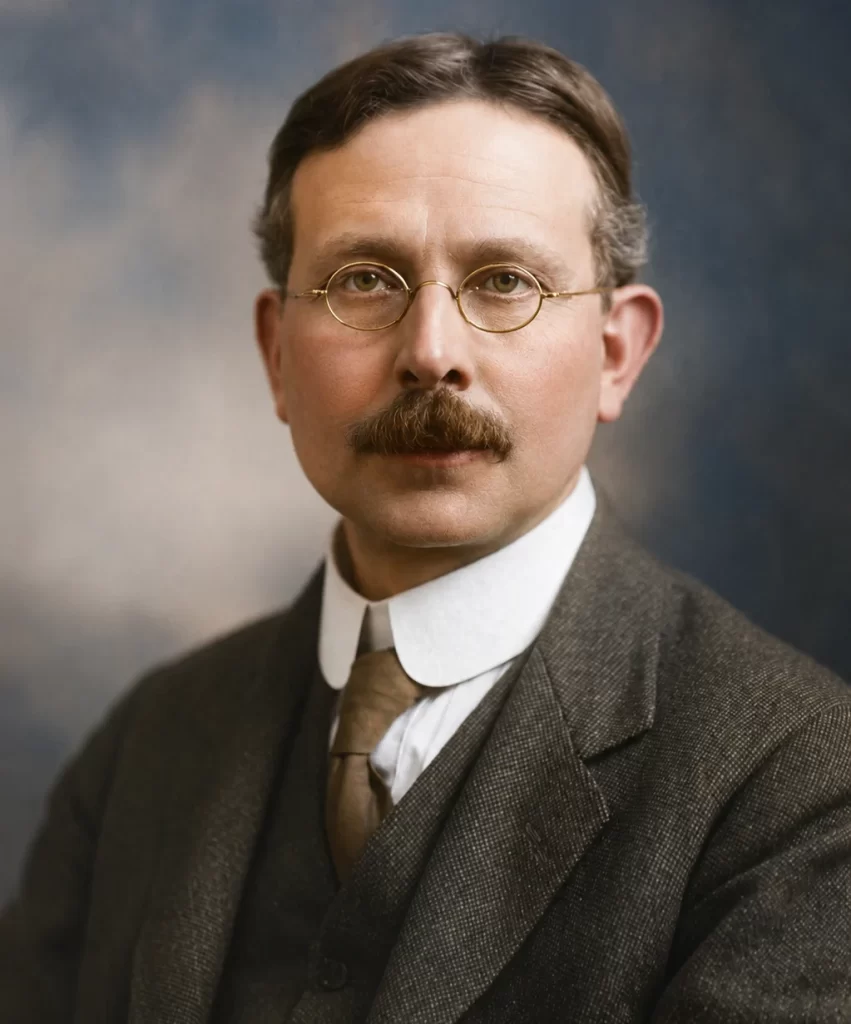
Alfred George Gardiner (1865–1946) was a prominent British journalist, essayist, and writer, best known by his pen name “Alpha of the Plough.” Gardiner’s career spanned across journalism, and he became a widely recognized figure in the world of essay writing. He contributed extensively to The Observer and other publications, earning a reputation for his clever and insightful essays that often explored the quirks of human nature, social behaviors, and moral issues.
Career and Influence
Gardiner was particularly admired for his ability to address the everyday aspects of life with humor, wisdom, and a deep understanding of human nature. His writings often blended light-hearted wit with serious reflections on society, making his essays both engaging and thought-provoking. Gardiner’s work was known for its accessibility—he spoke directly to ordinary people, capturing the small moral dilemmas and social hypocrisies they encountered daily. Through his “Alpha of the Plough” column, he discussed a wide range of topics, from personal experiences to broader societal issues, always with a touch of humor and insight.
Writing Style
Gardiner’s style was conversational, charming, and self-deprecating, making his essays relatable to a broad audience. He often used personal anecdotes and sharp observations, showing an ability to find humor in the smallest, most everyday occurrences. Despite his wit, his essays were more than just light reading—they also presented deeper moral reflections and critiques of society. Gardiner’s writing was both engaging and intellectually stimulating, encouraging readers to reflect on their own behavior and the world around them.
Legacy
Gardiner’s essays continue to be appreciated today for their timeless exploration of human nature, social issues, and the moral dilemmas people face in everyday life. His ability to balance humor with moral insight left a lasting impact on British essay writing. His work remains an important part of early 20th-century British literature, and his unique approach to writing continues to inspire readers and writers alike. Through his essays, Gardiner captured the human experience with humor, honesty, and a keen eye for detail, leaving behind a lasting literary legacy.
Significance of the title
The title “On Umbrella Morals” is significant because it uses a common, everyday object—an umbrella—to explore much deeper themes of morality and human behavior. The essay focuses on small, often rationalized dishonest acts that people justify in their everyday lives. By choosing the umbrella as a central metaphor, Gardiner highlights how people make small moral compromises, often without realizing the significance of their actions.
Here’s why the title is important:
Umbrella as a Symbol:
The umbrella in the title represents minor moral lapses or actions that people might not see as wrong, such as accidentally taking someone else’s umbrella or not returning a borrowed item. These small acts of dishonesty are often rationalized, and the umbrella is a perfect symbol for these types of everyday, almost invisible, ethical decisions.
“Morals” in the Title:
The use of the word “morals” suggests that the essay will focus on ethical behavior, but the title also hints at the irony of how these moral lapses are often overlooked or justified. Gardiner is not writing about grand ethical dilemmas or crimes but about smaller moral choices that people easily justify, often without guilt or reflection. By combining “umbrella” with “morals,” he is drawing attention to the gray area between right and wrong in ordinary life.
The Humor of the Title:
The title also sets the tone of the essay. By pairing a trivial object like an umbrella with the concept of morals, Gardiner is hinting at the humorous nature of his writing. It signals to the reader that while the subject matter may be serious (moral reflections), the approach will be light-hearted and amusing. The title captures the playfulness with which he explores these themes.
A Reflection of Society:
The umbrella, something everyone uses but rarely thinks about deeply, represents how people often make small moral compromises in their daily lives, without considering the larger consequences. Gardiner suggests that these seemingly insignificant actions, like umbrella exchanges, reflect how we often excuse or rationalize dishonesty when we believe the stakes are low.
Overall, the title is effective because it captures the essence of the essay: a humorous reflection on how small, everyday actions—like borrowing or swapping umbrellas—are connected to larger moral questions.
On Umbrella Morals Questions and Answers
Very Short Answer Questions
Who is the author of “On Umbrella Morals”?
Alfred George Gardiner, under the pen name “Alpha of the Plough.”
What object is central to the essay?
The umbrella.
What is the main theme of the essay?
The justification of small moral lapses in everyday life.
What does Gardiner call the phenomenon of rationalizing small wrongs?
“Umbrella morals.”
Where does the author walk in the beginning of the essay?
The Strand, London.
Why does Gardiner not open his umbrella?
Because it is broken and embarrassing.
What umbrella did Gardiner end up with?
A cotton umbrella left behind in exchange.
What does Gardiner imagine the person who took his umbrella feels?
Secret joy at the exchange.
How does Gardiner describe the umbrella of the man who took his?
A silk umbrella.
What moral behavior does Gardiner discuss in the essay?
Small dishonest acts justified by self-deception.
What does the author say about lending books?
It is risky because people often don’t return them.
Who is mentioned as a famous preacher with a moral lapse?
A well-known divine who traveled with a third-class ticket but was found in a first-class carriage.
What does Gardiner use to describe moral lapses?
The metaphor of the umbrella.
What does Gardiner do with his silk umbrella in the story?
He imagines it was taken by someone else.
What type of hat does Gardiner mention in the essay?
A silk hat.
What does Gardiner wonder about the man who took his silk hat?
Whether he was a Tory, Radical, or Labour man.
How does Gardiner describe the umbrella that was mistakenly taken?
Magnificent, with a gold band and tassel.
What was the name on the umbrella that helped resolve the situation?
The name of a prominent statesman.
What does Gardiner decide to do after the experience with the umbrella?
Engrave his name on his umbrella.
What is Gardiner’s attitude toward his old, baggy umbrella?
He doesn’t care who takes it; it’s anyone’s for the taking.
Short Answer Questions
What is the main moral dilemma discussed in the essay?
The main moral dilemma in the essay is about small dishonest actions that people often justify, like accidentally taking someone else’s umbrella or not returning borrowed items. Gardiner uses the metaphor of “umbrella morals” to explore how people rationalize these small lapses in their conscience, believing they aren’t significant enough to feel guilty about.
Why does Gardiner not open his umbrella during the rain?
Gardiner does not open his umbrella because it is broken and embarrassing to use. He describes the umbrella as a “travesty,” reflecting on how it is in such poor condition that he would rather face the rain than be seen with it. The broken umbrella symbolizes the minor transgressions people sometimes try to hide or avoid.
What does Gardiner mean by “umbrella conscience”?
“Umbrella conscience” refers to the way people justify small dishonest acts in their lives, believing they are harmless. This term describes individuals who wouldn’t commit serious crimes but might rationalize minor actions like swapping umbrellas or not returning a borrowed book. These people think their actions don’t violate their moral standards because they don’t have major consequences.
How does Gardiner use humor to discuss serious moral issues?
Gardiner uses humor and irony to highlight the absurdity of small moral lapses, making the essay light-hearted despite addressing serious ethical issues. For instance, the idea of exchanging hats or swapping umbrellas is exaggerated to make readers reflect on the moral rationalizations behind their everyday behavior, showing that even the most trivial acts can raise important moral questions.
What example does Gardiner give of a person with a good moral reputation but small moral lapses?
Gardiner gives the example of a well-known preacher who was found dead in a first-class railway carriage with a third-class ticket in his pocket. This example highlights how someone who is seen as morally upright can still be guilty of small, rationalized dishonest acts, showing that even good people are often afflicted by minor lapses in their conscience.
How does Gardiner feel about lending books, and what rule does he suggest?
Gardiner expresses frustration with lending books because they are rarely returned. He recalls an example of a man who had 4,000 borrowed books, none of which had been returned. Gardiner humorously suggests the only safe rule about books is not lending them at all, because, in his experience, no one ever gives them back, not even close friends.
What is Gardiner’s view on exchanging hats, and why does he find it particularly unacceptable?
Gardiner considers exchanging hats to be “unpardonable” and outside the realm of acceptable moral behavior. He argues that, unlike umbrellas, which could be mistakenly swapped, no one can put on a strange hat without being aware of it. This action, for him, is a clear violation of personal integrity, as it’s something that can’t be done unknowingly.
What role does the name on the umbrella play in the resolution of the situation?
The name on the umbrella acts as a moral trigger for the person who accidentally took it. When the thief notices the name, his conscience kicks in, and he feels compelled to return the umbrella. Gardiner suggests that engraving a name on an umbrella helps to avoid these minor moral lapses, as it serves as a reminder of ownership and responsibility.
How does Gardiner justify his own behavior in exchanging umbrellas?
Gardiner admits that he has also exchanged umbrellas several times, and while he hopes he did so honestly, he recognizes the possibility that he might have been dishonest without realizing it. He humorously reflects that the silk umbrella he was concerned about wasn’t even his, but part of a long series of exchanges where he had sometimes gained and sometimes lost.
What is Gardiner’s final attitude toward his old, baggy umbrella?
Gardiner is indifferent toward his old, baggy umbrella, stating that he doesn’t care who takes it because it is “anybody’s for the taking.” Unlike the precious silk umbrella, which he clearly values and protects, this old umbrella is of no real importance to him, symbolizing how people often treat things they don’t care about as less important or worth stealing.
Essay Type Questions
Write long note on Alfred George Gardiner as Essayist.
Introduction
Alfred George Gardiner (1865–1946) was a British writer, journalist, and essayist, widely known by his pen name “Alpha of the Plough.” He was recognized for his insightful essays that explored human nature, morality, and social issues, often with humor. Gardiner used everyday experiences and simple objects, like umbrellas, to address bigger questions about society and personal behavior. His essays were both entertaining and thoughtful, making people reflect on their own lives.
Early Life and Career
Gardiner began working in journalism at a young age. He worked as a reporter and editor for several newspapers, including The Observer, where his essays became popular. His experiences in journalism allowed him to observe society, its issues, and the behavior of people in different situations. These observations became the foundation for his essays, where he discussed the complexities of everyday life, often with a sharp eye for detail and humor.
Writing Style and Approach
Gardiner’s writing is known for its clear and conversational tone, making it easy for readers to connect with. He had a special way of combining humor with serious reflections about life. His essays often started with personal stories or small, everyday events, which he then used to explore bigger topics like morality, social responsibility, and human behavior. By using simple, familiar experiences, Gardiner made complex ideas easy to understand and relevant to readers from all walks of life.
His essays felt like friendly conversations because of his casual style, but they also made readers think deeply about their actions and choices. His combination of humor and philosophical depth is what made his writing unique and memorable.
Themes in Gardiner’s Essays
The main themes in Gardiner’s essays revolve around human nature, social responsibility, and moral choices. He often wrote about how people justify small dishonest actions, like taking someone’s umbrella or not returning a borrowed book, and how these actions reveal something about their conscience. Gardiner was interested in how people rationalize their behavior, especially when they think their actions don’t have serious consequences.
He also explored the idea of individual freedom versus social responsibility. Gardiner believed in the dignity of the individual but also thought it was important to care about the well-being of others. He wrote about how people should be aware of their actions’ impact on society and each other, stressing the need for compassion and fairness.
Major Works
Gardiner wrote many essays throughout his career, with some of his most notable works collected in volumes like Leaves in the Wind (1914), The Pilgrim of Beauty (1919), and In the Name of the Bodhisattva (1925). His essays often focused on human behavior, social justice, and moral responsibility. One important collection, The Civic Consciousness, discusses how individuals should think about their role in society and how they can contribute to a fairer and more just world.
These works show that Gardiner wasn’t just interested in individual behavior, but also in how individuals interact with and affect the society around them. His writing often encouraged readers to think about their duties and moral responsibilities as members of a community.
Gardiner’s Social Commentary and Humanism
Gardiner’s essays are full of social commentary, where he reflects on society’s flaws and human imperfection. He believed that people are not perfect and often make mistakes, but he had a compassionate view of human nature. He believed in giving people a chance to improve and learn from their mistakes. His humanism was about understanding and empathy for people’s struggles and flaws.
Gardiner also wrote about social justice and the need for a more compassionate society. He thought that, while people should have personal freedom, society must care for everyone, especially those who are struggling or disadvantaged. His essays argued for social reform and a more empathetic approach to dealing with issues like poverty and inequality.
Influence and Legacy
Gardiner’s essays were popular during his lifetime and influenced not only other essayists but also future generations of journalists and writers. His ability to mix personal reflection, humor, and social critique set a high standard for the essay form. His writing style inspired many other writers, and his essays continue to be studied for their insights into human nature and society.
Even today, Gardiner’s work is still relevant. His essays remain valuable for understanding human behavior and society’s complexities, and they are often used in literature and journalism courses. Gardiner’s work resonates because it blends everyday experiences with important moral and social lessons, making it timeless and relatable.
Conclusion
Alfred George Gardiner was a brilliant essayist known for his ability to blend humor with deep insights into society and human behavior. His essays, which often began with simple experiences or objects, made readers think deeply about their own actions and the world around them. Gardiner’s legacy as an essayist lies in his unique ability to tackle complex moral and social issues with wit and compassionate understanding. His work continues to inspire readers to think about their responsibilities in society and how they can live more ethically and thoughtfully.
Critical Analysis
Introduction
Alfred George Gardiner’s essay “On Umbrella Morals” uses humor to discuss small moral mistakes that people make in their everyday lives. Through the example of swapping umbrellas, Gardiner explores how people often justify minor dishonest acts. Though the subject is light, it raises serious questions about honesty and human behavior. Gardiner mixes humor with important moral lessons, making the essay both fun to read and thought-provoking.
Theme
The central theme of the essay is moral rationalization—how people justify small acts of dishonesty or self-interest in their daily lives, often with little guilt or reflection. Gardiner uses the concept of “umbrella morals” to explore the ways in which individuals justify minor ethical lapses, such as taking someone else’s umbrella or not returning borrowed books. Other themes include:
Self-deception and Conscience: Gardiner examines how people try to avoid facing the true nature of their actions, even when they know deep down that they are acting dishonestly.
Class and Social Expectations: The essay includes references to the House of Commons, noblemen, and politicians, suggesting that even in high-status social environments, small acts of dishonesty are common.
The Absurdity of Small Moral Lapses: Through humor and exaggeration, Gardiner shows that these small moral lapses—though often dismissed or rationalized—are an integral part of human behavior.
Humor in the Essay
A major strength of the essay is its use of humor. Gardiner talks about umbrella exchanges and hat-swapping in an exaggerated way, which makes the essay funny while still discussing serious topics. The humor makes the reader reflect on their own behavior without feeling too guilty. For example, Gardiner jokes about how exchanging hats is “unpardonable”, making the point in a funny yet serious way that sometimes we don’t think twice about our actions.
Reflection on Society and Human Nature
The essay is also a reflection on human nature. Gardiner shows that these small moral lapses happen not just to ordinary people, but even to those who are seen as moral or respected in society. He gives the example of a preacher with a third-class ticket traveling in a first-class carriage, which suggests that even the most upright people sometimes make small, dishonorable choices. This shows that moral lapses happen in all walks of life and are not just limited to certain groups.
Symbolism of the Umbrella
The umbrella in the essay represents small moral mistakes that seem insignificant but can reveal deeper truths about our character. Gardiner uses the umbrella to ask the reader to reflect on the everyday things they might do without thinking, like borrowing or exchanging things without returning them. The umbrella, in this way, becomes a symbol for ownership and responsibility, making us think about how much we really care about what belongs to others.
Self-Reflection and Gardiner’s Role
Gardiner does not just point fingers at others; he also reflects on his own behavior. He admits that he has also swapped umbrellas and sometimes rationalized his actions. This self-reflection makes the essay feel more relatable and shows that everyone, even someone who is aware of these moral issues, can still fall into the trap of justifying small wrongs. His honesty about his own mistakes helps the reader connect with him and think about their own behavior.
Conclusion
In conclusion, “On Umbrella Morals” uses a simple object, the umbrella, to discuss important moral issues. Gardiner uses humor to explore how we justify small dishonest actions, like taking someone’s umbrella without returning it. The essay encourages readers to think about their own behavior and be more honest with themselves about the small moral choices they make. While the essay may seem lighthearted, its underlying message is clear: even the smallest dishonest acts matter in shaping who we are.