Of Truth by Francis Bacon
What is truth? said jesting Pilate, and would not stay for an answer. Certainly there be, that delight in giddiness, and count it a bondage to fix a belief; affecting free-will in thinking, as well as in acting. And though the sects of philosophers of that kind be gone, yet there remain certain discoursing wits, which are of the same veins, though there be not so much blood in them, as was in those of the ancients. But it is not only the difficulty and labor, which men take in finding out of truth, nor again, that when it is found, it imposeth upon men’s thoughts, that doth bring lies in favor; but a natural though corrupt love, of the lie itself. One of the later school of the Grecians, examineth the matter, and is at a stand, to think what should be in it, that men should love lies; where neither they make for pleasure, as with poets, nor for advantage, as with the merchant; but for the lie’s sake. But I cannot tell: this same truth is a naked and open daylight, that doth not show the masks and mummeries and triumphs of the world, half so stately and daintily as candle-lights. Truth may perhaps come to the price of a pearl, that showeth best by day; but it will not rise to the price of a diamond, or carbuncle, that showeth best in varied lights. A mixture of a lie doth ever add pleasure. Doth any man doubt, that if there were taken out of men’s minds, vain opinions, flattering hopes, false valuations, imaginations as one would, and the like, but it would leave the minds, of a number of men, poor shrunken things, full of melancholy and indisposition, and unpleasing to themselves?
One of the fathers, in great severity, called poesy vinum dæmonum, because it filleth the imagination; and yet, it is but with the shadow of a lie. But it is not the lie that passeth through the mind, but the lie that sinketh in, and settleth in it, that doth the hurt; such as we spake of before. But, howsoever these things are thus in men’s depraved judgments and affections, yet truth, which only doth judge itself, teacheth that the inquiry of truth, which is the love-making, or wooing of it, the knowledge of truth, which is the presence of it, and the belief of truth, which is the enjoying of it, is the sovereign good of human nature. The first creature of God, in the works of the days, was the light of the sense; the last was the light of reason; and his sabbath work ever since is the illumination of his Spirit. First he breathed light upon the face of the matter or chaos; then he breathed light into the face of man; and still he breatheth and inspireth light into the face of his chosen.
The poet that beautified the sect that was otherwise inferior to the rest, saith yet excellently well: “It is a pleasure to stand upon the shore, and to see ships tossed upon the sea; a pleasure to stand in the window of a castle, and to see a battle and the adventures thereof below; but no pleasure is comparable to the standing upon the vantage ground of truth” (a hill not to be commanded, and where the air is always clear and serene), “and to see the errors and wanderings, and mists, and tempests, in the vale below;” so always that this prospect be with pity, and not with swelling or pride. Certainly it is heaven upon earth, to have a man’s mind move in charity, rest in providence, and turn upon the poles of truth.
To pass from theological and philosophical truth to the truth of civil business; it will be acknowledged, even by those that practise it not, that clear and round dealing is the honor of man’s nature; and that mixture of falsehoods is like alloy in coin of gold and silver, which may make the metal work the better, but it embaseth it. For these winding and crooked courses are the goings of the serpent; which goeth basely upon the belly, and not upon the feet. There is no vice that doth so cover a man with shame, as to be found false and perfidious. And therefore Montaigne saith prettily, when he inquired the reason why the word of the lie should be such a disgrace and such an odious charge: Saith he, If it be well weighed, to say that a man lieth, is as much to say, as that he is brave towards God, and a coward towards men. For a lie faces God, and shrinks from man. Surely the wickedness of falsehood and breach of faith cannot possibly be so highly expressed, as in that it shall be the last peal to call the judgments of God upon the generations of men; it being foretold that when Christ cometh, “He shall not find faith upon the earth.”
Summary
Francis Bacon’s essay “Of Truth” was first published in 1625 as part of the final and most comprehensive edition of his renowned collection, The Essays or Counsels, Civil and Moral. This edition, appearing the same year as Bacon’s death, marked the culmination of a project that began in 1597 with just 10 essays. The 1612 edition had expanded the number to 38, but the 1625 edition contained 58 essays, revised and enriched in style and substance. Notably, Of Truth appears as the opening essay in this final volume, indicating its foundational role in Bacon’s moral and philosophical vision. It was printed in London by John Haviland for Hannah Barret, a prominent bookseller of the time.
Bacon starts by referencing a Bible story where Pontius Pilate jokingly asks, “What is truth?” and doesn’t wait for an answer. He says some people avoid truth because they like being free to think and act however they want. They find truth restrictive, like a chain. Even today, people sometimes prefer lies—not because lies are useful or fun, but because they’re comforting. Lies are like dim candlelight that makes the world look prettier, while truth is like bright daylight that shows everything clearly, flaws and all. People often cling to false ideas or hopes because facing the truth can make them feel empty or sad.
Bacon notes that some think poetry or stories are harmful because they’re not fully true, but the real danger is when lies take root in people’s minds and shape their beliefs. Despite this, he believes truth is the greatest good for humans. Seeking truth is like falling in love with it, knowing truth is like being close to it, and believing truth is like fully embracing it. He connects this to God’s creation, where light (truth) was the first thing made, and humans were given reason to understand it.
Bacon quotes a poet who says standing on the “hill of truth” is the best place to be. From there, you can see the world’s mistakes and struggles clearly, but you should feel pity, not pride. Truth brings peace and kindness to your heart.
In everyday life, Bacon says being honest is noble, while lying is shameful, like slithering like a snake. He quotes the writer Montaigne, who says lying is like being bold against God but scared of people’s judgment. Bacon ends with a warning: if people keep rejecting truth and faith, it could bring divine punishment, as the Bible predicts a time when faith will be hard to find.
Essay Analysis
1. The Question of Truth and Pilate’s Jest
Text: “What is truth? said jesting Pilate, and would not stay for an answer.”
Explanation: Bacon begins with a reference to a story from the Bible (John 18:38), where Pontius Pilate, a Roman governor, asks Jesus, “What is truth?” during his trial. Pilate asks this question mockingly or casually (“jesting”) and walks away without waiting for an answer, showing he doesn’t really care about the truth. Bacon uses this to illustrate a common attitude: some people treat truth lightly, as if it’s unimportant or too hard to pin down. This sets up the essay’s main question: what is truth, and why do people struggle with it?
2. People Who Avoid Truth for Freedom
Text: “Certainly there be, that delight in giddiness, and count it a bondage to fix a belief; affecting free-will in thinking, as well as in acting.”
Explanation: Bacon says some people love “giddiness,” which means a kind of mental dizziness or carefree, unstable thinking. These people don’t like to commit to a single belief or truth because they feel it’s like being tied down (“bondage”). They want to keep their minds and actions completely free, so they avoid settling on any firm ideas about what’s true. Bacon suggests they see truth as a restriction on their freedom to think or do whatever they want.
3. Modern Thinkers vs. Ancient Philosophers
Text: “And though the sects of philosophers of that kind be gone, yet there remain certain discoursing wits, which are of the same veins, though there be not so much blood in them, as was in those of the ancients.”
Explanation: Bacon refers to ancient philosophers, likely the Skeptics, a group in ancient Greece who doubted everything and avoided firm beliefs to keep their minds open. These “sects” (groups) no longer exist in Bacon’s time (the late 16th to early 17th century), but he says there are still people—“discoursing wits” (clever talkers or thinkers)—who act similarly. These modern thinkers share the same attitude (“veins”) as the ancient Skeptics but are less bold or energetic (“not so much blood”). In other words, they’re like watered-down versions of the ancients, still dodging truth but with less conviction.
4. Why People Prefer Lies
Text: “But it is not only the difficulty and labor, which men take in finding out of truth, nor again, that when it is found, it imposeth upon men’s thoughts, that doth bring lies in favor; but a natural though corrupt love, of the lie itself.”
Explanation: Bacon explains why people often choose lies over truth. He says it’s not just because finding truth is hard work or because truth, once found, forces you to think in a certain way (“imposeth upon men’s thoughts”). While those are real reasons, there’s another, deeper one: people have a “natural though corrupt love” for lies. This means humans are naturally drawn to lies, even though this attraction is flawed or wrong (“corrupt”). Bacon suggests that people don’t just avoid truth because it’s tough—they actually like lies for their own sake.
5. The Puzzle of Loving Lies
Text: “One of the later school of the Grecians, examineth the matter, and is at a stand, to think what should be in it, that men should love lies; where neither they make for pleasure, as with poets, nor for advantage, as with the merchant; but for the lie’s sake.”
Explanation: Bacon refers to a later Greek philosopher (possibly from a school like the Cynics or Stoics) who was puzzled by why people love lies. This philosopher couldn’t figure out why people are drawn to lies when those lies don’t bring obvious benefits. For example, poets tell lies (fictional stories) to create pleasure, and merchants might lie to make money (“advantage”). But Bacon points out that some lies don’t serve these purposes—people love them just because they’re lies. This is a mystery: why do people enjoy falsehoods for no clear reason?
6. Truth vs. Lies: Daylight vs. Candlelight
Text: “But I cannot tell: this same truth is a naked and open daylight, that doth not show the masks and mummeries and triumphs of the world, half so stately and daintily as candle-lights.”
Explanation: Bacon admits he doesn’t fully understand why people love lies either (“I cannot tell”). He then uses a metaphor to compare truth and lies. Truth is like bright, clear sunlight that shows everything exactly as it is—plain and unadorned. Lies, on the other hand, are like soft candlelight, which makes things look prettier and more glamorous. The “masks and mummeries and triumphs” refer to the disguises, performances, and celebrations of the world—things that seem grand and beautiful but are often fake. In candlelight (lies), these things look more impressive than they do in the harsh light of truth.
7. The Value of Truth and Lies
Text: “Truth may perhaps come to the price of a pearl, that showeth best by day; but it will not rise to the price of a diamond, or carbuncle, that showeth best in varied lights.”
Explanation: Bacon continues the metaphor, comparing truth to a pearl, which looks beautiful in natural daylight (like truth itself). Pearls are valuable, but they’re not as pricey as diamonds or carbuncles (a red gemstone), which sparkle more in different kinds of light, like candlelight or artificial settings. This means people value lies (diamonds/carbuncles) more than truth (pearls) because lies are flashier and more appealing in various situations, even though truth is pure and real.
8. Lies Add Pleasure
Text: “A mixture of a lie doth ever add pleasure.”
Explanation: Bacon says that adding a bit of a lie to something always makes it more enjoyable. Lies spice things up, making stories, ideas, or situations more exciting or comforting than the plain truth. This is why people are drawn to lies—they make life feel more pleasant or interesting.
9. The Consequences of Removing Lies
Text: “Doth any man doubt, that if there were taken out of men’s minds, vain opinions, flattering hopes, false valuations, imaginations as one would, and the like, but it would leave the minds, of a number of men, poor shrunken things, full of melancholy and indisposition, and unpleasing to themselves?”
Explanation: Bacon asks a rhetorical question: Can anyone deny that if you stripped away all the lies people believe in—like pointless opinions, unrealistic hopes, wrong judgments about value, and made-up fantasies—many people’s minds would be left empty and sad? He suggests that lies prop up people’s sense of self. Without them, their minds would feel small (“poor shrunken things”), depressed (“melancholy”), unwell (“indisposition”), and unhappy with themselves. This shows how much people rely on lies to feel good about their lives.
1. Poetry as the “Wine of Demons”
Text: “One of the fathers, in great severity, called poesy vinum dæmonum, because it filleth the imagination; and yet, it is but with the shadow of a lie.”
Explanation: Bacon refers to an early Christian Church Father (likely St. Augustine or Tertullian) who harshly criticized poetry, calling it vinum dæmonum (Latin for “wine of demons”). This Father believed poetry was dangerous because it fills the imagination with made-up stories and ideas, which are like lies. The term “wine of demons” suggests poetry is intoxicating and potentially sinful, leading people astray from truth. However, Bacon softens this critique by saying poetry is only a “shadow of a lie”—it’s not a harmful deception but a light, temporary falsehood that doesn’t pretend to be true. Unlike real lies, poetic fictions are meant to entertain or inspire, not to deceive.
2. The Real Harm of Lies
Text: “But it is not the lie that passeth through the mind, but the lie that sinketh in, and settleth in it, that doth the hurt; such as we spake of before.”
Explanation: Bacon distinguishes between two types of lies. Lies that “pass through the mind,” like the stories in poetry, are temporary and don’t cause harm because they’re not taken seriously. But lies that “sink in” and “settle” in the mind—ones that people believe and hold onto—are dangerous. These are the lies Bacon mentioned earlier in the essay (in the first paragraph), where people love lies for their own sake, such as false beliefs or flattering ideas that distort reality. When these lies take root, they shape how people think and act, leading to harm.
3. Truth as the Ultimate Good
Text: “But, howsoever these things are thus in men’s depraved judgments and affections, yet truth, which only doth judge itself, teacheth that the inquiry of truth, which is the love-making, or wooing of it, the knowledge of truth, which is the presence of it, and the belief of truth, which is the enjoying of it, is the sovereign good of human nature.”
Explanation: Bacon acknowledges that people’s “depraved judgments and affections” (their flawed thinking and emotions) lead them to prefer lies, as discussed earlier. Despite this, he insists that truth is superior. He describes truth as unique because it “only doth judge itself”—unlike lies, which can be questioned, truth is its own standard and doesn’t need external validation. Bacon then outlines three stages of engaging with truth, comparing it to a romantic relationship:
Inquiry of truth: This is like “wooing” or flirting with truth—curiously seeking it out, asking questions, and exploring it.
Knowledge of truth: This is like being in the “presence” of truth—understanding it clearly after finding it.
Belief of truth: This is like “enjoying” truth—fully accepting and embracing it in your heart and mind.
Bacon calls this process the “sovereign good of human nature,” meaning it’s the highest and best thing humans can do. Pursuing, understanding, and believing truth fulfills our deepest purpose and potential.
4. Truth and Divine Creation
Text: “The first creature of God, in the works of the days, was the light of the sense; the last was the light of reason; and his sabbath work ever since is the illumination of his Spirit. First he breathed light upon the face of the matter or chaos; then he breathed light into the face of man; and still he breatheth and inspireth light into the face of his chosen.”
Explanation: Bacon connects the pursuit of truth to God’s creation, drawing on the Bible’s Book of Genesis. He describes God’s acts of creation in terms of light, which symbolizes truth:
First creature: Light of the sense: On the first day of creation, God created light (Genesis 1:3), which Bacon calls the “light of the sense.” This is the physical light that allows us to see the world, representing basic perception.
Last creature: Light of reason: Later in creation (often interpreted as the creation of humans on the sixth day), God gave humans the “light of reason”—the ability to think, understand, and seek truth. This is a higher form of light, unique to humans.
Sabbath work: Illumination of the Spirit: After creation, God’s ongoing work (symbolized by the Sabbath, a day of rest and reflection) is to provide spiritual light, or divine inspiration, to guide people toward truth. Bacon says God first brought light to “matter or chaos” (the formless universe), then to “the face of man” (human reason), and continues to “breathe” light into “his chosen” (those who seek divine truth, like believers or the enlightened).
This passage ties truth to God’s plan: just as God created light to bring order and clarity, humans are meant to seek truth to illuminate their minds and souls.
1. The Poet and His Quote
Text: “The poet that beautified the sect that was otherwise inferior to the rest, saith yet excellently well: ‘It is a pleasure to stand upon the shore, and to see ships tossed upon the sea; a pleasure to stand in the window of a castle, and to see a battle and the adventures thereof below; but no pleasure is comparable to the standing upon the vantage ground of truth’”
Explanation: Bacon introduces a quote from a poet, whom he credits with making a certain philosophical “sect” (group or school of thought) seem more appealing than it actually was. This poet is widely believed to be Lucretius, a Roman poet and philosopher associated with Epicureanism, a philosophy that Bacon considers “inferior” compared to others (like Stoicism or Platonism) because it focused on pleasure and materialism. Despite this, Bacon admires the poet’s words, suggesting they express a profound truth.
The quote compares three types of pleasure:
Standing on the shore, watching ships tossed by the sea: This represents the thrill of observing danger or struggle from a safe distance, like watching a stormy sea without being in the storm.
Standing in a castle window, watching a battle below: This is another form of detached enjoyment, like spectating a dramatic or violent event (a battle) from a secure, elevated position.
Standing on the vantage ground of truth: This is the greatest pleasure, far surpassing the others. The “vantage ground” is a high, advantageous position, and truth is portrayed as the ultimate place to stand, offering a clear and superior perspective on life.
Bacon uses this quote to show that while watching others’ struggles can be exciting, the clarity and wisdom gained from understanding truth are unmatched.
2. The Vantage Ground of Truth
Text: “(a hill not to be commanded, and where the air is always clear and serene), ‘and to see the errors and wanderings, and mists, and tempests, in the vale below;’”
Explanation: Bacon expands on the idea of the “vantage ground of truth,” describing it as a metaphorical hill with unique qualities:
“A hill not to be commanded”: This means the hill of truth cannot be controlled or conquered by anyone. Truth is independent and stands above human manipulation or authority.
“Where the air is always clear and serene”: On this hill, the view is always clear, like a calm, sunny day with no fog or clouds. This symbolizes the clarity and peace that come with understanding truth.
From this high position, a person can look down into the “vale below” (the valley of the world) and see “errors and wanderings, and mists, and tempests.” These represent the mistakes, confusion, uncertainties, and chaos of human life—people lost in lies, false beliefs, or emotional turmoil. The vantage ground of truth allows you to see these struggles clearly, giving you wisdom and perspective that others lack.
3. The Right Attitude Toward Truth
Text: “so always that this prospect be with pity, and not with swelling or pride.”
Explanation: Bacon adds an important condition: when you stand on the hill of truth and see the world’s errors, you should feel “pity” (compassion) for those struggling below, not “swelling or pride” (arrogance or superiority). Knowing the truth doesn’t make you better than others; it should make you humble and caring. Bacon warns against using truth to feel smug or to look down on people, emphasizing that true wisdom comes with kindness.
4. The Joy of a Truthful Mind
Text: “Certainly it is heaven upon earth, to have a man’s mind move in charity, rest in providence, and turn upon the poles of truth.”
Explanation: Bacon concludes with a powerful statement about the ideal state of mind. He says it’s like “heaven upon earth” (the ultimate happiness and peace) when a person’s mind has three qualities:
Move in charity: This means living with love and kindness toward others, reflecting the compassion Bacon mentioned earlier.
Rest in providence: This refers to trusting in God’s plan or divine guidance, finding peace in the belief that everything happens for a reason under God’s care.
Turn upon the poles of truth: This is a metaphor comparing the mind to a globe or compass that spins on the “poles” (fixed points) of truth. Truth is the stable center that guides all thoughts and actions, keeping the mind steady and aligned.
Together, these qualities—kindness, faith, and truth—create a state of mind that is serene, purposeful, and deeply fulfilling, like a taste of heaven on earth.
1. Truth in Practical Life
Text: “To pass from theological and philosophical truth to the truth of civil business; it will be acknowledged, even by those that practise it not, that clear and round dealing is the honor of man’s nature;”
Explanation: Bacon transitions from discussing truth in abstract, spiritual, or intellectual terms (theological and philosophical truth) to its importance in “civil business,” which means everyday interactions like trade, politics, or social dealings. He says that everyone—even people who don’t always tell the truth—agrees that “clear and round dealing” (honest and straightforward behavior) is noble and reflects the best of human nature. “Clear” means transparent, and “round” means straightforward or complete, without hidden motives. Bacon suggests that honesty is universally respected as a virtue that elevates humanity.
2. Lies as a Corrupting Alloy
Text: “and that mixture of falsehoods is like alloy in coin of gold and silver, which may make the metal work the better, but it embaseth it.”
Explanation: Bacon compares lies to an “alloy” (a cheaper metal mixed with gold or silver to make coins). In coin-making, adding an alloy can make the metal easier to work with or more durable, but it reduces the coin’s purity and value (“embaseth” means degrades or cheapens). Similarly, mixing lies with truth might make dealings smoother or more convenient (e.g., flattery or exaggeration in business), but it lowers the moral worth of a person’s actions. Bacon suggests that while lies may seem practical, they tarnish a person’s integrity.
3. Lies as Serpentine Behavior
Text: “For these winding and crooked courses are the goings of the serpent; which goeth basely upon the belly, and not upon the feet.”
Explanation: Bacon describes dishonest actions (“winding and crooked courses”) as sneaky and deceitful, comparing them to the movement of a serpent (snake). In the Bible, the serpent is associated with deception (e.g., the snake in the Garden of Eden) and is cursed to crawl on its belly (Genesis 3:14), a low and shameful way of moving compared to walking upright on feet. Bacon uses this imagery to say that lying is a base, degrading behavior that goes against human dignity, making liars seem sneaky and untrustworthy.
4. The Shame of Being a Liar
Text: “There is no vice that doth so cover a man with shame, as to be found false and perfidious.”
Explanation: Bacon argues that no sin or bad habit brings more shame than being caught as a liar or “perfidious” (someone who breaks trust or betrays others). When someone is exposed as dishonest, they lose respect and credibility, and the embarrassment is profound because it reveals a lack of integrity. In Bacon’s time, honor and reputation were highly valued, so being labeled a liar was socially devastating.
5. Montaigne’s Insight on Lying
Text: “And therefore Montaigne saith prettily, when he inquired the reason why the word of the lie should be such a disgrace and such an odious charge: Saith he, If it be well weighed, to say that a man lieth, is as much to say, as that he is brave towards God, and a coward towards men. For a lie faces God, and shrinks from man.”
Explanation: Bacon quotes the French essayist Michel de Montaigne to explain why lying is so shameful. Montaigne says that calling someone a liar is a serious insult because it implies two things:
Brave towards God: A liar is “brave” (or bold) in a bad way toward God because lying defies divine truth. Since God knows all truth, lying is like challenging or disrespecting God’s omniscience.
Coward towards men: At the same time, a liar is a coward toward other people because they’re afraid to tell the truth to their face. They hide behind lies to avoid confrontation or judgment.
Montaigne’s point is that lying is a paradoxical act: it’s daring in its defiance of God but weak in its fear of human opinion. This makes lying both sinful and pathetic, which is why it’s so “odious” (hateful or disgusting) and disgraceful.
6. The Ultimate Consequence of Falsehood
Text: “Surely the wickedness of falsehood and breach of faith cannot possibly be so highly expressed, as in that it shall be the last peal to call the judgments of God upon the generations of men; it being foretold that when Christ cometh, ‘He shall not find faith upon the earth.’”
Explanation: Bacon ends with a grave warning about the spiritual consequences of lying and “breach of faith” (breaking trust or promises). He says the evil of falsehood is so great that it can’t be fully described, but it’s best shown in a biblical prophecy (from Luke 18:8), which says that when Jesus returns at the end of time, “He shall not find faith upon the earth.” Bacon interprets “faith” here as both religious faith and faithfulness (honesty and trustworthiness). If people become so dishonest that truth and trust disappear, it will signal the end of the world, triggering God’s final judgment (“the last peal” refers to the final bell or call, like a warning sound). This underscores the profound moral and divine importance of truth.
Key Points
Author
Francis Bacon (1561–1626):
Bacon was an English philosopher, statesman, scientist, and essayist, often called the “father of empiricism” for his emphasis on observation and experimentation in the pursuit of knowledge. He served as Attorney General and Lord Chancellor of England under King James I.
His Essays or Counsels, Civil and Moral (first published in 1597, expanded in 1612 and 1625) are a collection of short, reflective pieces on moral and practical topics, written for an educated audience. Of Truth is the first essay in the 1625 edition, reflecting his interest in truth as a foundation for knowledge and ethics.
Bacon’s writing combines Renaissance humanism, classical learning, and a scientific mindset, aiming to guide readers toward wisdom and better conduct in personal and public life.
Introduction
Opening of Of Truth: The essay begins with a striking reference to Pontius Pilate’s question, “What is truth?” (John 18:38), asked jokingly during Jesus’ trial, setting a tone of skepticism and inquiry. Bacon uses this to highlight humanity’s ambivalence toward truth.
Purpose: The introduction establishes the essay’s central question: why do people struggle with truth and prefer lies? Bacon suggests that some avoid truth to preserve mental freedom, while others are drawn to lies for their own sake, setting up a contrast between truth’s clarity and lies’ allure.
Tone and Hook: The biblical allusion and philosophical tone engage readers by posing a timeless, universal question, while the mention of “giddiness” and a “corrupt love” of lies piques curiosity about human nature.
Structure
Length and Form: Of Truth is a short essay (in the 1625 edition), typical of Bacon’s concise, aphoristic style. It is divided into four thematic sections, though not formally separated:
Human Resistance to Truth (Opening): Bacon explores why people avoid truth, citing Pilate’s skepticism, intellectual “giddiness,” and a love of lies, using metaphors like daylight vs. candlelight.
Dangers of Lies and Value of Truth (Second Section): He distinguishes between harmless lies (e.g., poetry) and harmful ones that take root, arguing that pursuing truth is the “sovereign good” of human nature, tied to divine creation.
Joy of Truth (Third Section): Quoting the poet Lucretius, Bacon compares truth to a high vantage point, offering clarity and joy, but urges humility in this perspective.
Truth in Practical Life (Closing): Bacon applies truth to “civil business,” praising honesty, condemning lies as shameful, and warning of divine judgment for widespread falsehood.
Flow: The essay moves logically from abstract philosophy to spiritual significance, then to practical ethics, creating a cohesive argument. Each section builds on the previous one, reinforcing truth’s importance across contexts.
Cohesion: Bacon uses rhetorical questions, metaphors, and quotes (from a Church Father, Lucretius, and Montaigne) to unify the essay, with recurring imagery of light and elevation tying the sections together.
Setting
The essay has no specific physical setting, as it’s a philosophical reflection. However, it engages with universal contexts: the biblical setting of Pilate’s question, the classical world of Greek philosophers and Lucretius, and the practical world of “civil business” (commerce, politics, social interactions).
Cultural Relevance: The essay’s emphasis on truth reflects concerns about deception in politics and trade, as well as religious debates about faith and hypocrisy in Bacon’s time.
Themes
Truth vs. Lies: The central theme is the contrast between truth’s clarity and lies’ allure. Bacon explores why people prefer lies (comfort, pleasure) and argues that truth, though demanding, is the ultimate good.
Human Nature: Bacon examines humanity’s flaws, like a “corrupt love” of lies and reliance on false hopes, but also its potential for wisdom through pursuing truth.
Moral Integrity: Honesty is portrayed as noble and essential for personal and social honor, while lying is shameful and degrading, likened to a serpent’s slithering.
Divine Order: Truth is linked to God’s creation (light, reason, spiritual illumination) and divine judgment, suggesting it’s a sacred duty to seek and uphold truth.
Humility and Compassion: Bacon stresses that understanding truth should inspire pity for others’ errors, not pride, aligning wisdom with kindness.
Style
Aphoristic and Concise: Bacon’s prose is dense with short, memorable statements (e.g., “A mixture of a lie doth ever add pleasure”), making the essay quotable and impactful.
Metaphorical and Vivid: He uses powerful imagery, like truth as “naked daylight” vs. lies as “candle-lights,” truth as a pearl vs. lies as diamonds, and lies as a serpent’s “winding courses,” to make abstract ideas concrete.
Allusions and Quotes: Bacon draws on the Bible (Pilate, Luke 18:8), classical philosophy (Greek philosophers, Lucretius), Christian tradition (Church Father), and Montaigne, blending diverse sources to enrich his argument.
Rhetorical Devices: He employs rhetorical questions (“Doth any man doubt…?”), parallelism (e.g., the three stages of truth: inquiry, knowledge, belief), and antithesis (truth vs. lies, honor vs. shame) to persuade and engage readers.
Formal yet Accessible: Written in formal English, the essay is clear enough for educated readers of Bacon’s time, balancing scholarly depth with practical wisdom.
Message
Core Message: Truth is the highest good, essential for human dignity, moral integrity, and alignment with divine order. Despite humanity’s tendency to favor lies for comfort or convenience, pursuing and upholding truth—whether in thought, faith, or daily life—is the path to wisdom, honor, and spiritual fulfillment.
Practical Takeaway: In everyday life, honesty (“clear and round dealing”) is noble, while lying is shameful and harmful. Truth should guide actions, but it must be approached with humility and kindness, not pride.
Spiritual Warning: Widespread falsehood and loss of faith could lead to divine judgment, making truth a moral and cosmic necessity.
Universal Appeal: Bacon’s message transcends his time, urging readers to value truth in intellectual, personal, and social spheres, recognizing its challenges but also its unmatched worth.
Francis Bacon
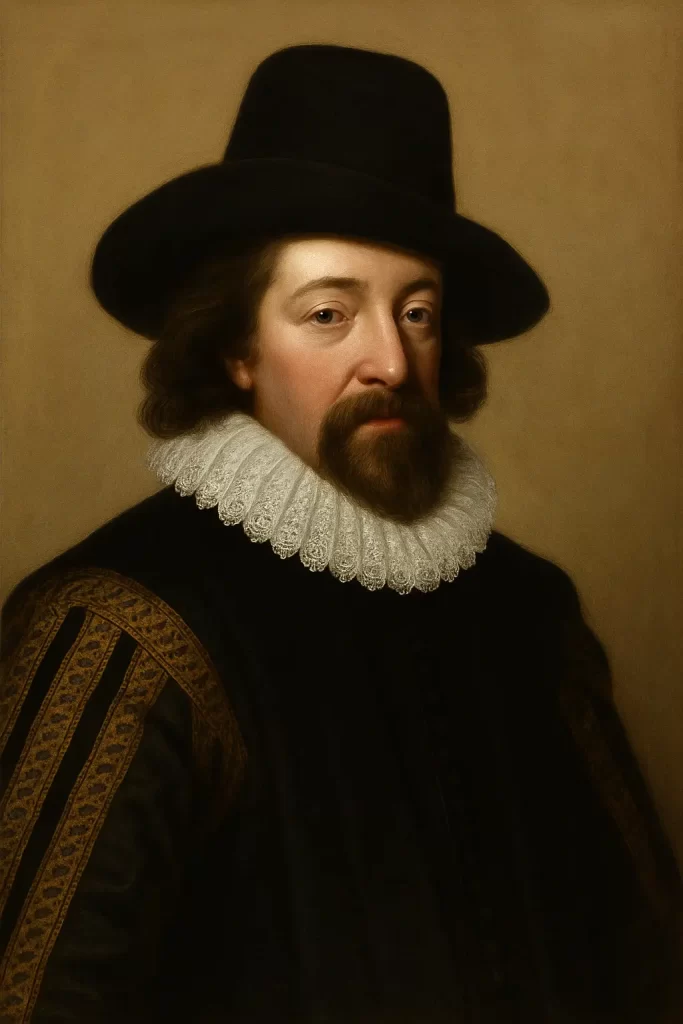
Background:
Born on January 22, 1561, in London, England, at York House, Bacon was the son of Sir Nicholas Bacon, Lord Keeper of the Great Seal under Queen Elizabeth I, and Anne Cooke, a highly educated woman with Puritan leanings.
Educated at Trinity College, Cambridge, from age 12, Bacon showed early intellectual promise. He later studied law at Gray’s Inn, becoming a barrister in 1582.
His privileged background and connections gave him access to court life, but his father’s death in 1579 left him with limited financial resources, pushing him to rely on his wits and ambition.
Career:
Bacon entered Parliament in 1584 and rose through legal and political ranks, serving as Attorney General (1613) and Lord Chancellor (1618) under King James I.
His career was marred by controversy; in 1621, he was convicted of bribery, fined, imprisoned briefly, and barred from public office. Though he admitted to accepting gifts, he maintained they did not influence his judgments.
After his fall, Bacon devoted himself to writing and intellectual pursuits, producing some of his most enduring works.
Philosophy and Scientific Contributions:
Bacon is often called the “father of empiricism” for advocating observation, experimentation, and inductive reasoning over reliance on tradition or dogma. His scientific method laid groundwork for the Scientific Revolution.
His major work, Novum Organum (1620), part of his unfinished Instauratio Magna (Great Instauration), proposed a new approach to knowledge, critiquing Aristotelian logic and emphasizing empirical evidence.
He envisioned science as a collaborative, practical endeavor to improve human life, famously stating, “Knowledge is power.”
Literary Contributions:
Essayist:
Bacon’s Essays or Counsels, Civil and Moral (1597, expanded 1612, 1625) are his most accessible and enduring literary works. The 1625 edition, including Of Truth, contains 58 essays on topics like love, friendship, truth, and government.
Written in a concise, aphoristic style, the essays blend moral philosophy, practical advice, and classical wisdom, aimed at educating ambitious men in courtly and civic life.
Of Truth, the first essay in the 1625 edition, reflects Bacon’s fascination with truth as the foundation of knowledge, ethics, and divine order, showcasing his ability to weave philosophy, religion, and practicality.
Other Works:
The Advancement of Learning (1605) outlined a plan to reorganize and expand human knowledge, advocating for systematic study.
New Atlantis (1627, published posthumously) is a utopian novel describing a scientific society, reflecting Bacon’s vision for science’s societal benefits.
He also wrote legal, historical, and religious texts, such as The History of the Reign of King Henry VII (1622).
Personal Life:
Bacon married Alice Barnham in 1606, but the marriage was not notably affectionate, and he had no children. Throughout his life, he struggled with financial problems and political adversaries, and these hardships likely increased his appreciation for the emotional and practical support offered by true friendship.
Death:
Bacon died on April 9, 1626, reportedly from pneumonia contracted while experimenting with preserving meat by stuffing a chicken with snow. His death at age 65 marked the end of a prolific, if controversial, life.
Legacy:
Scientific Method: Bacon’s empirical approach remains foundational to scientific inquiry, influencing how experiments are designed and knowledge is validated.
Essay Form: His essays established a model for concise, reflective writing, still studied in literature and philosophy.
Relevance to Truth: In an era of misinformation and polarized discourse, Of Truth’s insights about the allure of lies and the value of honesty resonate strongly, urging clarity and integrity.
Cultural Impact: Bacon’s ideas appear in education, philosophy, and popular culture (e.g., references to “knowledge is power”). His utopian New Atlantis inspired scientific societies like the Royal Society.
Francis Bacon is considered the father of the scientific method, father of empiricism, and father of the English essay.
Father of the Scientific Method: Bacon pioneered the use of systematic observation, experimentation, and inductive reasoning to advance knowledge, as outlined in his work Novum Organum (1620). He emphasized testing ideas through evidence rather than relying on ancient authorities, laying the groundwork for modern scientific inquiry.
Father of Empiricism: His focus on empirical evidence—knowledge gained through observation and experience—established him as a key figure in the philosophical school of empiricism, influencing later thinkers like John Locke and David Hume.
Father of the English Essay: Bacon introduced the essay form to English literature with his Essays or Counsels, Civil and Moral (1597, 1612, 1625), including “Of Friendship.” Inspired by Montaigne, he adapted the genre into a concise, aphoristic style, shaping its development in English writing.
Word Meaning
| Tough Word | Meaning in English | Meaning in Hindi |
| Jest | To speak or act in a playful or joking manner, not seriously. | मजाक करना, हंसी-मजाक करना |
| Delight | To take great pleasure or joy in something. | आनंद लेना, खुशी |
| Giddiness | A state of dizziness, lightheadedness, or frivolous, unsteady thinking. | चक्कर, हल्कापन, अस्थिरता |
| Bondage | Slavery or restraint; being tied down or restricted. | गुलामी, बंधन, प्रतिबंध |
| Fix | To establish or set firmly. | स्थापित करना, निश्चित करना |
| Free-will | The ability to choose or act freely without constraint. | स्वतंत्र इच्छा, अपनी मर्जी |
| Sects | Groups or factions, often with distinct beliefs or doctrines. | संप्रदाय, गुट |
| Philosophers | People who study or teach philosophy, seeking wisdom or truth. | दार्शनिक, विचारक |
| Discoursing | Engaging in conversation or discussion, often eloquently. | बातचीत करने वाला, विचार-विमर्श करने वाला |
| Wits | People with sharp intelligence or cleverness. | बुद्धिमान लोग, चतुर लोग |
| Veins | A metaphorical term for qualities, tendencies, or characteristics. | नसें, प्रवृत्ति, स्वभाव |
| Blood | Vitality or strength; here, metaphorical for vigor or intensity. | रक्त, जोश, शक्ति |
| Ancients | People from ancient times, often revered for wisdom (here, Greek philosophers). | प्राचीन लोग, पुरातन |
| Imposeth | Forces or places a burden on; commands or restricts. | थोपना, बाध्य करना |
| School | A group of thinkers with shared ideas, here referring to Greek philosophers. | समूह, विचारधारा |
| Grecians | People from ancient Greece, here philosophers. | यूनानी, ग्रीक लोग |
| Examineth | Archaic for examines; to investigate or study closely. | जाँच करना, अध्ययन करना |
| At a stand | To be stuck or puzzled, unable to move forward in thought. | रुका हुआ, असमंजस में |
| Sake | Purpose or reason; here, for its own benefit. | खातिर, कारण |
| Naked | Plain, unadorned, or exposed. | नग्न, स्पष्ट, बिना ढका |
| Mummeries | Pretentious or silly performances, often deceptive shows. | नाटक, दिखावा, मूर्खतापूर्ण प्रदर्शन |
| Triumphs | Celebrations or victories, often grandiose. | विजय, उत्सव |
| Stately | Grand, majestic, or dignified in appearance. | भव्य, शानदार, प्रभावशाली |
| Daintily | In a refined, delicate, or pleasingly pretty way. | सुंदर ढंग से, नाजुकता से |
| Candle-lights | Artificial light from candles; here, a metaphor for deceptive appearances. | मोमबत्ती का प्रकाश, भ्रामक चमक |
| Pearl | A precious gem formed in oysters, symbolizing purity. | मोती, सत्य का प्रतीक |
| Showeth | Archaic for shows; to display or appear. | दिखाना, प्रकट होना |
| Carbuncle | A red gemstone, associated with brilliance in varied light. | माणिक, लाल रत्न |
| Varied | Diverse or changing, here referring to light conditions. | विविध, बदलता हुआ |
| Vain | Empty, worthless, or lacking substance; often conceited. | व्यर्थ, निरर्थक, आत्ममुग्ध |
| Opinions | Beliefs or judgments, often not based on fact. | राय, मत |
| Flattering | Pleasing through praise or exaggeration. | चापलूसी करने वाला, मनभावन |
| Valuations | Assessments or judgments of value, here incorrect ones. | मूल्यांकन, गलत आकलन |
| Imaginations | Creative or fanciful thoughts, often unrealistic. | कल्पनाएँ, ख्याल |
| Melancholy | Deep, persistent sadness or gloom. | उदासी, विषाद |
| Indisposition | A state of being unwell, physically or mentally; discomfort or reluctance. | अस्वस्थता, अनिच्छा |
| Fathers | Early Christian leaders or Church Fathers. | पिता, प्रारंभिक ईसाई नेता |
| Severity | Strictness, harshness, or stern judgment. | कठोरता, सख्ती |
| Poesy | Poetry or imaginative literature. | कविता, साहित्य |
| Vinum dæmonum | Latin for “wine of demons,” a term for poetry’s intoxicating, potentially sinful effect. | राक्षसों की शराब, कविता का निंदात्मक नाम |
| Filleth | Archaic for fills; to make full or occupy completely. | भरना, पूर्ण करना |
| Passeth | Archaic for passes; to move through or by. | गुजरना, जाना |
| Sinketh | Archaic for sinks; to become embedded or established. | डूबना, स्थापित होना |
| Settleth | Archaic for settles; to take root or become fixed. | बसना, स्थिर होना |
| Spake | Archaic for spoke; to have said or expressed. | बोला, कहा |
| Howsoever | In whatever way or despite circumstances. | जैसे भी हो, फिर भी |
| Depraved | Morally corrupt, perverted, or degraded. | भ्रष्ट, दूषित, नैतिक रूप से गलत |
| Teacheth | Archaic for teaches; to impart knowledge or instruction. | सिखाना, शिक्षा देना |
| Love-making | Courting or wooing; here, a metaphor for pursuing truth. | प्रेम करना, सत्य की खोज |
| Wooing | Seeking affection or favor; here, pursuing truth. | लुभाना, आकर्षित करना |
| Sovereign | Supreme, highest, or most excellent; here, the ultimate benefit. | सर्वोच्च, श्रेष्ठ |
| Creature | A created being or thing, often in a divine context. | प्राणी, सृष्टि |
| Sabbath | The day of rest in Christian tradition, here God’s ongoing work. | विश्रामदिन, ईश्वरीय कार्य |
| Illumination | The act of enlightening, here spiritually. | प्रकाश, आध्यात्मिक ज्ञान |
| Breathed | Gave life or inspiration, often divinely. | साँस दी, प्रेरणा दी |
| Face | Surface or presence; here, the essence of creation or humanity. | चेहरा, सतह, स्वरूप |
| Matter | Physical substance or material; here, the universe’s raw form. | पदार्थ, विश्व का आधार |
| Chaos | Disorder or formlessness, before creation. | अराजकता, अव्यवस्था |
| Sect | A group with distinct beliefs, here a philosophical school. | संप्रदाय, विचारधारा |
| Shore | The edge of a body of water, like a beach. | किनारा, तट |
| Tossed | Thrown or moved violently, as by waves. | उछाला गया, हिलाया गया |
| Castle | A fortified building, symbolizing safety. | किला, सुरक्षित स्थान |
| Adventures | Exciting or risky experiences. | साहसिक कार्य, रोमांच |
| Vantage | A position of advantage or superiority, offering a better view. | लाभकारी स्थिति, ऊँचा स्थान |
| Ground | A place or foundation, here metaphorical for truth’s position. | आधार, स्थान |
| Hill | An elevated landform; here, a metaphor for truth. | पहाड़ी, सत्य का प्रतीक |
| Commanded | Controlled or dominated; here, impossible to control. | नियंत्रित, अधीन करना |
| Serene | Peaceful, calm, and clear, often of the mind. | शांत, निर्मल |
| Wanderings | Aimless or confused movements, here of thought or action. | भटकना, भ्रम |
| Mists | Fog or haze; here, a metaphor for confusion. | कोहरा, भ्रम |
| Tempests | Storms or violent disturbances, here metaphorical. | तूफान, उथल-पुथल |
| Vale | A valley, here symbolizing the world below truth. | घाटी, निचला संसार |
| Prospect | The view or outlook from a high position; here, truth’s perspective. | दृश्य, दृष्टिकोण |
| Pity | Compassion or sympathy for others’ suffering. | दया, सहानुभूति |
| Charity | Love, kindness, or generosity toward others, often in a Christian sense. | दान, प्रेम, दया |
| Rest | To find peace or repose; here, trust in divine plan. | विश्राम, भरोसा |
| Providence | God’s care, guidance, or plan for the world. | ईश्वरीय कृपा, दैवीय मार्गदर्शन |
| Poles | Metaphorical fixed points, like the Earth’s poles, around which something revolves. | ध्रुव, आधार बिंदु |
| Theological | Related to the study of God or religious doctrine. | धार्मिक, धर्मशास्त्रीय |
| Philosophical | Related to philosophy or rational inquiry. | दार्शनिक, तार्किक |
| Civil | Relating to ordinary citizens or societal interactions, like business or politics. | नागरिक, सामाजिक |
| Acknowledged | Recognized or admitted as true. | स्वीकार करना, मानना |
| Round | Complete, honest, or straightforward, without deceit. | स्पष्ट, ईमानदार |
| Dealing | Conduct or transactions, especially in business or social contexts. | व्यवहार, लेन-देन |
| Alloy | A less valuable metal mixed with gold or silver, reducing purity. | मिश्र धातु, खोट |
| Embaseth | Archaic for debases; lowers in value or quality. | नीचा करना, मूल्य कम करना |
| Winding | Twisting, indirect, or sneaky, often deceitful. | घुमावदार, टेढ़ा-मेढ़ा |
| Crooked | Bent, twisted, or morally dishonest. | टेढ़ा, बेईमान |
| Courses | Paths or ways of acting, here deceitful. | रास्ते, कार्यप्रणाली |
| Goings | Movements or behaviors, here of a serpent. | चाल, व्यवहार |
| Serpent | A snake, often symbolizing deceit or evil in Christian contexts. | सर्प, साँप |
| Basely | In a low, mean, or dishonorable way. | नीचता से, शर्मनाक ढंग से |
| Belly | The underside of a snake; here, a symbol of lowliness. | पेट, नीचता |
| Vice | A moral fault or bad habit. | दोष, बुराई |
| Perfidious | Treacherous or disloyal, breaking trust. | विश्वासघाती, धोखेबाज |
| Prettily | In a pleasing or clever way. | सुंदर ढंग से, चतुराई से |
| Disgrace | Loss of honor or respect. | अपमान, बेइज्जती |
| Odious | Hateful, repulsive, or offensive. | घृणित, निंदनीय |
| Charge | An accusation or claim, here of lying. | आरोप, इल्ज़ाम |
| Weighed | Considered or evaluated carefully. | तौलना, विचार करना |
| Shrinks | Withdraws or recoils in fear. | पीछे हटना, डरना |
| Wickedness | Evil or immoral behavior. | दुष्टता, बुराई |
| Breach | A violation or breaking, here of trust or faith. | उल्लंघन, विश्वास तोड़ना |
| Peal | A loud sound, like a bell ringing, here a final warning. | घंटी की आवाज, अंतिम चेतावनी |
| Judgments | Decisions or punishments, here divine. | निर्णय, दैवीय दंड |
| Foretold | Predicted or prophesied. | भविष्यवाणी करना, पहले से बताया |
Very Short Answer Questions
Who wrote the essay Of Truth?
Francis Bacon wrote Of Truth.
In which year was the final edition of Bacon’s Essays published?
The final edition was published in 1625.
What biblical figure is mentioned at the start of Of Truth?
Pontius Pilate is mentioned.
What does Bacon compare truth to in the essay?
Truth is compared to naked daylight and a pearl.
What does Bacon liken lies to in the essay?
Lies are likened to candle-lights and a serpent.
Why do some people avoid truth, according to Bacon?
They find truth restrictive, like bondage.
What term does Bacon use for people who love mental instability?
He calls them people who delight in giddiness.
What ancient group does Bacon reference as avoiding fixed beliefs?
He references the sects of Greek philosophers.
What does Bacon say people have a “corrupt love” for?
People have a corrupt love for lies.
Who called poetry “vinum dæmonum”?
A Church Father called poetry “vinum dæmonum.”
What kind of lies does Bacon say cause harm?
Lies that sink in and settle in the mind cause harm.
What are the three stages of engaging with truth Bacon describes?
Inquiry, knowledge, and belief of truth.
What does Bacon call the “sovereign good” of human nature?
The pursuit and belief of truth is the sovereign good.
What was God’s first creation, according to Bacon?
God’s first creation was the light of the sense.
Who is the poet Bacon quotes about the “vantage ground of truth”?
The poet is likely Lucretius.
What attitude should one have when seeing others’ errors from truth’s vantage point?
One should feel pity, not pride.
What does Bacon say is the “honor of man’s nature” in civil business?
Clear and round dealing (honesty) is the honor.
What does Bacon compare falsehoods to in coins?
Falsehoods are like alloy in gold and silver coins.
Who does Bacon quote about the disgrace of lying?
He quotes Montaigne.
What biblical prophecy does Bacon cite at the end of the essay?
When Christ returns, “He shall not find faith upon the earth.”
Short Answer Questions
What is the significance of Pontius Pilate’s question “What is truth?” in the opening of the essay?
Pontius Pilate’s question, asked jokingly in the Bible (John 18:38), sets the tone for Bacon’s exploration of truth’s elusive nature. It highlights how some dismiss truth casually, reflecting human skepticism or indifference. Bacon uses this to introduce the idea that people often avoid truth due to its challenges. The reference engages readers by connecting a biblical story to a universal philosophical question.
Why does Bacon say some people “delight in giddiness” and avoid fixed beliefs?
Bacon suggests some people enjoy “giddiness,” a state of mental instability, because they see fixed beliefs as restrictive, like “bondage.” They value free will in thinking and acting, resisting truth’s constraints. This reflects a human tendency to prefer intellectual freedom over the discipline of truth. Bacon compares these people to ancient Skeptic philosophers, noting their modern equivalents lack the same vigor.
How does Bacon use the metaphor of daylight and candlelight to contrast truth and lies?
Bacon compares truth to “naked and open daylight,” which reveals reality plainly, showing the world’s flaws. Lies, like “candle-lights,” create a softer, more flattering glow, making things appear grander or prettier. This metaphor illustrates why people are drawn to lies for their pleasing effect. Truth, though valuable like a pearl, is less prized than the dazzling deception of lies, likened to diamonds.
What does Bacon mean by a “corrupt love” of lies in the essay?
Bacon describes a “corrupt love” as an innate, flawed human attraction to lies, not for practical gain (like merchants) or pleasure (like poets), but for their own sake. This puzzling tendency suggests people prefer lies because they distort reality in comforting ways. He notes even a Greek philosopher was baffled by this love of falsehood. It underscores human weakness in favoring illusion over truth.
How does Bacon distinguish between harmless and harmful lies in the essay?
Bacon contrasts lies that “pass through the mind,” like poetic fictions, which are harmless as they don’t deceive, with lies that “sink in” and take root, causing harm. He cites a Church Father’s harsh view of poetry as “vinum dæmonum” (wine of demons) but clarifies poetry’s lies are mere “shadows.” Harmful lies, like false beliefs, distort thinking and morality. This distinction highlights the danger of entrenched falsehoods.
What are the three stages of engaging with truth that Bacon describes?
Bacon outlines three stages: the “inquiry” of truth (seeking or “wooing” it), the “knowledge” of truth (understanding its presence), and the “belief” of truth (fully embracing or “enjoying” it). He likens these to a romantic relationship, emphasizing truth’s pursuit as a process. This engagement is the “sovereign good” of human nature, aligning with divine purpose. It reflects Bacon’s view of truth as a lifelong journey.
How does Bacon connect truth to divine creation in the essay?
Bacon links truth to God’s creation, noting that God’s first act was creating “light of the sense” (physical light), followed by the “light of reason” in humans, and ongoing “illumination of his Spirit” for the chosen. Truth, symbolized by light, is a divine gift that orders chaos and elevates humanity. This connection underscores Bacon’s belief that pursuing truth aligns with God’s plan. It ties his empirical philosophy to Christian theology.
What is the role of the poet’s quote about the “vantage ground of truth”?
Bacon quotes a poet (likely Lucretius) who compares the pleasure of watching ships in a storm or a battle from safety to the greater joy of standing on the “vantage ground of truth.” This hill, unconquerable and clear, offers a perspective to see the world’s errors with clarity. The quote elevates truth as the ultimate source of wisdom and joy. Bacon adds that this view should inspire pity, not pride, for others’ struggles.
Why does Bacon emphasize honesty in “civil business” in the essay’s final section?
Bacon argues that in “civil business” (social or professional dealings), “clear and round dealing” (honesty) is the “honor of man’s nature,” even acknowledged by dishonest people. Lies, like alloy in coins, may make dealings smoother but degrade integrity. He compares deceit to a serpent’s sneaky movements, emphasizing its shamefulness. Honesty upholds human dignity and trust in society, reflecting Bacon’s practical ethics.
How does Bacon use Montaigne’s quote to explain the disgrace of lying?
Bacon cites Montaigne, who says calling someone a liar implies they are “brave towards God” (defying divine truth) but a “coward towards men” (fearing human judgment). This paradox shows lying as both sinful and weak, making it deeply shameful. Bacon uses the quote to highlight lying’s moral and social disgrace. He concludes that widespread falsehood could trigger divine judgment, reinforcing truth’s sacred importance.
Essay Type Questions
Write Long Note on Francis Bacon as Essayist.
Introduction to Francis Bacon’s Essays
Francis Bacon (1561–1626), a leading figure of the English Renaissance, is celebrated as a pioneer of the English essay. His Essays or Counsels, Civil and Moral (1597, 1612, 1625) introduced a concise, reflective genre that blended philosophy, ethics, and practical wisdom. Of Truth, the opening essay of the 1625 collection, explores the nature and value of truth, reflecting Bacon’s roles as a philosopher, scientist, and statesman. Written during a time of intellectual and cultural transformation, Bacon’s essays, particularly Of Truth, address universal themes like truth, morality, and human nature, making them timeless. This note examines Bacon’s essayistic craft, his historical context, and his enduring global impact.
Bacon’s Life and Renaissance Context
Who Was Francis Bacon?
Born in 1561 in London, Francis Bacon was a philosopher, scientist, lawyer, and statesman who served as Attorney General and Lord Chancellor under James I. His 1621 bribery conviction ended his political career, but he continued writing, producing works like Novum Organum (1620) and his Essays. Bacon’s life coincided with the English Renaissance, a period of classical revival, religious debate, and scientific progress. His essays reflect this era’s humanist ideals, Christian ethics, and emerging empirical thought, addressing an educated audience navigating a changing world. Of Truth mirrors these currents, urging honesty amidst political and social deceit.
Historical Context
The Renaissance (late 16th–early 17th century) saw a resurgence of classical learning, with figures like Lucretius influencing Bacon’s allusions in Of Truth. The Scientific Revolution, which Bacon helped spark, emphasized evidence-based knowledge, paralleling the essay’s call for truth’s clarity. Post-Reformation religious tensions shaped Bacon’s Christian references, such as divine judgment in Of Truth. His essays, written for courtiers and scholars, addressed the ethical challenges of a dynamic, often deceptive society.
Bacon’s Contribution to the English Essay
Pioneering the Essay Form
Inspired by Michel de Montaigne’s Essais (1580), Bacon adapted the essay for English readers, creating a concise, didactic style distinct from Montaigne’s personal reflections. His Essays, starting with 10 in 1597 and expanding to 58 by 1625, offered moral and practical “counsels” for navigating life. Of Truth exemplifies this, probing why people resist truth and advocating honesty in “civil business.” Bacon’s innovation established the essay as a genre for intellectual and ethical exploration, influencing writers like Samuel Johnson and Ralph Waldo Emerson.
Significance of Of Truth
As the opening essay of the 1625 collection, Of Truth sets the tone for Bacon’s focus on truth as the foundation of knowledge and virtue. Its philosophical depth, moral guidance, and practical advice reflect Bacon’s broader essayistic goals, making it a cornerstone of his literary legacy.
Key Themes in Bacon’s Essays
Bacon’s essays explore universal themes, with Of Truth as a prime example:
Truth vs. Lies: Of Truth contrasts truth’s “naked daylight” with lies’ “candle-lights,” exploring why people prefer deception’s comfort, a theme central to Bacon’s empirical philosophy.
Human Nature: Bacon examines flaws like the “corrupt love” of lies and “giddiness” in Of Truth, alongside virtues like honesty, offering insights into human behavior.
Moral Integrity: Essays like Of Truth praise virtues (e.g., “clear and round dealing”) and condemn vices (e.g., lying as a serpent’s “winding courses”), guiding ethical conduct.
Social and Political Life: Reflecting his statesman’s experience, Bacon addresses power and trust, as in Of Truth’s focus on honesty in societal dealings.
Divine Order: Of Truth ties truth to God’s creation (e.g., “light of reason”) and warns of divine judgment, aligning with Bacon’s Christian worldview.
These themes resonate globally, addressing timeless issues like truth’s role in modern misinformation debates.
Bacon’s Essayistic Style
Aphoristic and Memorable
Bacon’s style is concise and aphoristic, with maxims like “A mixture of a lie doth ever add pleasure” in Of Truth ensuring memorability. This brevity delivers profound ideas in digestible form, ideal for his educated audience.
Vivid Imagery
Metaphors like truth as a “pearl” and lies as a “serpent” in Of Truth make abstract concepts tangible, engaging readers’ imaginations and clarifying complex ideas.
Rich Allusions
Bacon weaves biblical (Pilate, Luke 18:8), classical (Lucretius), and contemporary (Montaigne) references, as seen in Of Truth, lending intellectual depth and authority.
Rhetorical Craft
Rhetorical questions (“Doth any man doubt…?”), antithesis (truth vs. lies), and parallelism (inquiry, knowledge, belief) in Of Truth enhance persuasion, showcasing Bacon’s rhetorical skill.
Formal Clarity
Written in formal 17th-century English, Bacon’s prose is clear for scholars and courtiers, balancing erudition with accessibility, unlike Montaigne’s conversational tone.
Structure of Bacon’s Essays
Bacon’s essays are compact, often a single paragraph, with a logical flow, as seen in Of Truth:
Introduction: Begins with Pilate’s “What is truth?”, framing human skepticism and love of lies.
Development: Explores resistance to truth, distinguishes poetic from harmful lies, and elevates truth as a divine good.
Climax: Lucretius’ “vantage ground of truth” highlights its clarity, urging humility.
Conclusion: Advocates honesty in “civil business,” condemning lies via Montaigne’s quote and warning of divine judgment.
Recurring imagery (light, elevation) unifies the essay, reflecting Bacon’s ability to structure dense arguments concisely.
Strengths of Bacon as an Essayist
Intellectual Versatility: Bacon blends philosophy, theology, and politics, as in Of Truth’s diverse allusions, appealing to varied readers.
Concise Wisdom: His aphoristic style delivers profound insights briefly, making essays like Of Truth impactful and quotable.
Practical Guidance: Advice on honesty in Of Truth reflects Bacon’s pragmatic approach, useful for personal and professional life.
Timeless Relevance: Themes like truth’s value resonate in modern contexts, such as combating misinformation.
Literary Innovation: Bacon’s essays shaped a new genre, influencing global literary traditions.
Weaknesses and Criticisms
Impersonal Tone: Unlike Montaigne’s personal essays, Bacon’s detached style in Of Truth may feel cold to some readers.
Limited Depth: Brevity, as in Of Truth, can sacrifice nuanced exploration for aphoristic impact.
Moral Ambiguity: Bacon’s 1621 bribery scandal questions his commitment to Of Truth’s ethics, though some see this as systemic.
Elitist Focus: His essays target an educated elite, potentially limiting broader accessibility.
Historical and Global Context
English Renaissance: Bacon’s essays emerged during a period of classical revival, religious tension, and scientific advancement. Of Truth’s allusions to Lucretius and biblical prophecy reflect humanist and Christian influences.
Scientific Revolution: Bacon’s empiricism, advocating evidence-based truth, aligns with Of Truth’s clarity metaphors, influencing global scientific thought.
Political Landscape: His fall from power informs Of Truth’s emphasis on honesty, contrasting with the deceitful court of James I.
Global Impact: Bacon’s essays, translated and studied worldwide, influenced European and American writers, with Of Truth’s universal themes resonating across cultures.
Significance of Bacon’s Essays
Literary Pioneer: Bacon’s essays established a concise, didactic genre, shaping English and global literature.
Philosophical Influence: Of Truth’s focus on truth aligns with Bacon’s scientific legacy, impacting modern inquiry.
Moral Guidance: His call for integrity remains relevant for ethical challenges worldwide.
Cultural Legacy: Bacon’s aphorisms and ideas, like “knowledge is power,” endure in global education and discourse.
Modern Relevance: Of Truth’s insights on lies and honesty address contemporary issues like fake news and trust.
Of Truth: A Case Study
Of Truth showcases Bacon’s essayistic brilliance. Its opening question, “What is truth?”, engages readers, while metaphors like truth as a “pearl” and lies as a “serpent” clarify ideas. Allusions to Pilate, Lucretius, and Montaigne add depth, and its structure—from philosophy to practical ethics—demonstrates Bacon’s synthesis of ideas. The essay’s call for honesty and divine warnings reflect his era’s moral concerns, while its universal appeal makes it relevant today.
Conclusion
Francis Bacon’s legacy as an essayist lies in his innovative, concise, and profound Essays, with Of Truth exemplifying his craft. Rooted in the English Renaissance and Scientific Revolution, his work blends classical, Christian, and empirical thought, offering timeless wisdom on truth, morality, and human nature. Despite an impersonal tone and occasional moral ambiguity, Bacon’s aphoristic style, vivid imagery, and practical guidance have shaped literary and philosophical traditions globally. His essays remain a beacon of clarity and integrity, illuminating ethical paths in a complex world.
Critical Analysis
Francis Bacon’s Of Truth, the opening essay in the 1625 edition of his Essays or Counsels, Civil and Moral, is a concise yet profound meditation on the nature, pursuit, and value of truth. Written in the early 17th century, the essay explores why humans resist truth, prefer lies, and the moral and spiritual importance of honesty. Through biblical, classical, and contemporary references, Bacon engages an educated audience, blending philosophical inquiry with practical ethics. As a key figure in the Renaissance and Scientific Revolution, Bacon uses Of Truth to establish truth as the cornerstone of knowledge and virtue, setting the tone for his broader essay collection.
Themes
The essay is rich with interwoven themes that reflect Bacon’s philosophical and moral concerns:
Truth vs. Lies: Bacon contrasts truth’s clarity (“naked daylight”) with the deceptive allure of lies (“candle-lights”), exploring why humans are drawn to falsehoods for comfort or pleasure. He critiques the “corrupt love” of lies, which offer a distorted, flattering view of reality.
Human Nature: The essay delves into human psychology, noting tendencies like “giddiness” (mental instability) and reliance on “vain opinions” and “flattering hopes.” Bacon sees truth as a discipline that elevates human potential despite these flaws.
Moral Integrity: Honesty in “civil business” (social and professional dealings) is the “honor of man’s nature,” while lying is shameful, likened to a serpent’s base movements. Bacon emphasizes truth’s role in maintaining personal and social dignity.
Divine Order: Truth is linked to God’s creation, from the “light of the sense” to the “illumination of his Spirit.” Bacon warns that widespread falsehood could trigger divine judgment, tying truth to spiritual accountability.
Humility and Compassion: The “vantage ground of truth” offers clarity but should inspire pity for others’ errors, not pride, aligning wisdom with kindness.
Style
Bacon’s style in Of Truth is a hallmark of his essayistic craft, characterized by:
Aphoristic Prose: The essay is packed with short, memorable statements (e.g., “A mixture of a lie doth ever add pleasure”), making it quotable and impactful.
Vivid Imagery: Metaphors like truth as a pearl and lies as diamonds or a serpent create a visual contrast, grounding abstract ideas in concrete terms.
Allusions: Bacon weaves in references to the Bible (Pontius Pilate, Luke 18:8), classical philosophy (Lucretius, Greek philosophers), and Montaigne, enriching the essay with intellectual depth.
Rhetorical Devices: He uses rhetorical questions (“Doth any man doubt…?”), antithesis (truth vs. lies), and parallelism (e.g., inquiry, knowledge, belief of truth) to persuade and engage.
Formal yet Accessible: Written in formal 17th-century English, the essay balances scholarly erudition with clarity, targeting an educated but not overly specialized audience.
Structure
Of Truth is a single, compact paragraph, typical of Bacon’s concise essays, but it follows a logical progression:
Opening (Human Resistance): Begins with Pilate’s jesting question, introducing why people avoid truth (giddiness, love of lies) and using daylight/candlelight metaphors.
Middle (Value of Truth): Distinguishes harmless lies (poetry) from harmful ones, presents truth as the “sovereign good” through three stages (inquiry, knowledge, belief), and ties it to divine creation.
Middle (Joy of Truth): Quotes Lucretius on the “vantage ground of truth,” emphasizing its clarity and urging humility.
Closing (Practical Truth): Shifts to “civil business,” praising honesty, condemning lies via Montaigne’s quote, and warning of divine judgment for falsehood.
Cohesion: The essay flows seamlessly, with recurring light imagery and allusions unifying the philosophical, spiritual, and practical sections.
Strength
The essay’s strengths lie in its intellectual depth, stylistic precision, and universal relevance:
Philosophical Depth: Bacon’s exploration of truth’s psychological, moral, and divine dimensions offers timeless insights, blending rational inquiry with spiritual conviction.
Concise Eloquence: The aphoristic style delivers complex ideas in memorable, digestible phrases, making the essay both profound and accessible.
Interdisciplinary Appeal: By drawing on biblical, classical, and contemporary sources, Bacon appeals to diverse readers, from theologians to merchants.
Moral Clarity: The call for honesty in practical life and the warning against lies’ shame provide actionable ethical guidance.
Timelessness: The essay’s reflections on truth’s value and humanity’s flaws resonate in modern contexts, such as debates over misinformation.
Historical and Literary Context
Written in the early 17th century during the English Renaissance, Of Truth reflects its era’s intellectual and cultural currents:
Renaissance Humanism: Bacon’s allusions to classical philosophers (Lucretius, Greek Skeptics) and Montaigne show his engagement with humanist learning, which revived ancient texts while emphasizing human potential.
Scientific Revolution: As a pioneer of empiricism, Bacon’s emphasis on truth as clear and observable aligns with his scientific advocacy for evidence-based knowledge (Novum Organum, 1620).
Religious Tensions: Post-Reformation England grappled with faith and hypocrisy, reflected in Bacon’s biblical references and warnings of divine judgment, influenced by his mother’s Puritanism.
Literary Form: Bacon popularized the essay form in English, inspired by Montaigne’s personal, reflective style but with a more didactic, aphoristic approach. Of Truth exemplifies this innovation, targeting an elite audience of courtiers and scholars.
Political Context: Bacon’s fall from power in 1621 due to bribery charges may inform the essay’s focus on honesty and shame, reflecting his own experience with integrity’s consequences.
Significance
Of Truth holds enduring significance for its intellectual and moral contributions:
Philosophical Foundation: As the opening essay of the 1625 Essays, it establishes truth as the bedrock of Bacon’s philosophy, linking his scientific and ethical thought.
Literary Innovation: The essay’s concise, aphoristic style helped define the English essay, influencing writers like Samuel Johnson and Ralph Waldo Emerson.
Moral Guidance: Its call for honesty in personal and civic life offers timeless ethical advice, relevant to modern issues like trust in institutions and media.
Cultural Resonance: Bacon’s metaphors and insights (e.g., “knowledge is power” echoes truth’s power here) remain quoted and studied, underscoring his lasting impact.
Universal Appeal: The essay’s exploration of human nature and truth transcends its 17th-century context, addressing universal struggles with deception and clarity.
Conclusion
Of Truth is a masterful blend of philosophy, morality, and literary artistry, showcasing Bacon’s ability to distill complex ideas into a concise, impactful form. Its themes—truth’s value, human flaws, moral integrity, and divine order—resonate across centuries, offering both intellectual depth and practical wisdom. The essay’s aphoristic style, vivid imagery, and rich allusions make it a cornerstone of the English essay tradition. As a reflection of Bacon’s Renaissance and scientific ideals, Of Truth remains a powerful call to pursue clarity, honesty, and humility, cementing its place as a timeless work of literature and philosophy.