Fragmented
(Umashankar Joshi)
I am fragmented – fallen apart –
Like rhythm striving to throb in a poem without metre
Like a pattern trying to emerge upon a man’s life canvas
Like bread crumbs in several homes, not yet placed in a beggar’s bowl.
Who spoke? The cuckoo?
This babbling of the nightingales in groves,
Nature’s cultural programme on the radio –
What have I to do with it?
I feel llike switching it off.
The first days of spring came, then went.
I never even knew.
Nature, what can you ever do?
My own nature is all askew
My wholeness – I took it for granted –
I have seen it crumbling to pieces.
Love-image; Hate-image; Fear-image –
The trinity that did much to pull me into shape.
My blood stirred and sang at the thought of you;
My heart was glad with joy to see you;
Missing you, I prayed for death
You were the sought-after of my yearning
The Love-image.
You were the poison of passion,
The well of fire seething in the eye’s cup,
Exhaling the smoke of a burnt-out heart.
At your touch, the eyelids set, ever-parted
The Hate-image.
Your corpse-embrace lathered up cold sweat;
The sap of life nearly dried up,
And consciousness drowned in a wail.
You were the naked guileless rhythm of my desire,
The Fear-image.
Each one of you stroke to bring me into focus,
Gave me the baptism of Love.
Love, whose fundamentals I have yet to learn
Even so, this life – a dilapidated cart –
Drags on, lumbering rumble tumble –
Look at that fine gentleman
He has yet to learn how to endear himself through love,
He can only love through hate.
Fine. Where’s the time for fighting?
I’ll love you on your own terms.
Here is someone, to me, my second heart,
He smears so many with his own pettiness,
Twists all with his own croockedness.
But if one could behave better
Would he ever act like this?
Here is someone who was of late my love
I owe my unique experience to him.
My mind repeated incessantly:
You cannot make me hate you.
Does one ever hate a person once loved?
You don’t understand the world at all,
They tell me.
Others say: You’re just human.
Yes, I am a learner at the feet of a world
That does not believe in worldliness
That does not care to remember the millionaires,
Nor all the many martyrs to success.
It covers the mighty ones
Beneath the ashes of oblivion.
If the world were truly worldly,
Would it at all remember
the poets, the mad lovers, the saints?
Why bother to ask?
Memory? Well, memory is – life.
Will the solid layers of this earth last for ages
and the warmth of the human heart fritter away in vain?
No – this warmth will surely help the sun to keep a little warm;
It shall last in each heart beyond eternity.
Who knows?
Just at this moment
Heartbeats die out one by one;
If only they were infinite.
Amidst the burning scorch of May,
A bus rushes on the bridge.
My eyes, behind dark glasses, were closed, as if in meditation.
And yet the slender Sabarmati –
An innocent deer chasing the mirage of eternity –
Sends up from below its cold sharp blade
Which, piercing the solid bridge,
Renews me for a second with coolness
Before the bus, reaching the bridge end
Falls a fresh prey to the flames of the summer heat.
If only this frail pulse, my heart,
Could do so much. Perhaps it can;
Maybe it cannot –
Day and night I am torn with pain;
Struggling to reach and hold the centre, I am worn out.
Wasting every breath, fragmented;
I am fragmented.
Fragmented Poem Summary
The poem “Fragmented” (Chinnabhinna Chhu) was composed by Umashankar Joshi between February 3 and 19, 1956, capturing a specific span of intense introspection. It is permanently recorded on pages 11–14 of his seminal poetry collection Abhijna (Recognition).
The poet himself, Umashankar Joshi, translated the poem into English. This self-translation is widely anthologized in studies of Indian English literature and Comparative Literature.
The poem opens with a powerful confession of inner brokenness. The speaker feels that his identity has collapsed. He uses striking comparisons to describe this state: he is like a poem that has lost its rhythm, a painting where the pattern won’t emerge, or scattered breadcrumbs that haven’t been collected to feed anyone. He feels useless and disorganized, lacking a clear purpose or shape in his life.
This internal chaos makes him feel disconnected from the outside world. He hears the song of the cuckoo or nightingale not in the wild, but through a cultural program on the radio. This highlights how modern life has separated him from real nature; he is so numb that he doesn’t even realize when the beautiful days of spring have come and gone. He feels alienated, wanting to “switch off” the noise of the world because he cannot relate to it.
The speaker then examines the emotional storms that have destroyed his peace. He identifies a “trinity” of forces—Love, Hate, and Fear—that he once thought defined him but have actually torn him apart. Love was an obsession that made him pray for death when he was lonely. Hate was a “poison” and a fire that burned him out. Fear was like a cold, suffocating embrace that dried up his life force. Instead of making him whole, these intense emotions have left him exhausted and “askew.”
He also looks at the people around him and sees hypocrisy. He describes a “fine gentleman” who only knows how to connect with others through hatred, and another person—a “second heart”—who ruins relationships with pettiness and crooked behavior. The speaker feels like a confused student in a world where he doesn’t fit in. He realizes that society is obsessed with success and money, yet he finds comfort in the thought that history forgets the millionaires and only remembers the poets, saints, and mad lovers who truly felt emotion. He believes that the warmth of the human heart is powerful enough to help keep the sun warm and will last forever.
The poem moves to a specific moment in reality—a hot day in May. The speaker is on a bus rushing over a bridge, his eyes closed behind dark glasses, trying to meditate or escape the scorching heat. Suddenly, the Sabarmati River below acts as a forceful presence. He describes the river as sending up a “cold sharp blade” of coolness. This pierces the solid, concrete reality of the bridge and the bus, giving him a brief, refreshing moment of connection with something eternal and natural.
However, the relief is fleeting. As soon as the bus reaches the end of the bridge, the heat returns, and the moment is lost. The poem ends with the speaker admitting that his heart is too frail to hold onto that peace. He is left struggling day and night, wasting his breath in an effort to find his “center” and pull himself together. Ultimately, he remains worn out and fragmented, trapped in the cycle of modern existence.
Fragmented Analysis
I am fragmented – fallen apart –
Like rhythm striving to throb in a poem without metre
Like a pattern trying to emerge upon a man’s life canvas
Like bread crumbs in several homes, not yet placed in a beggar’s bowl.
Reference to Context:
These lines form the opening stanza of the poem “Fragmented” (originally written in Gujarati as Chinnabhinna Chhu in 1956). It was written by the highly acclaimed Gujarati poet and writer, Umashankar Joshi, and later translated into English by the poet himself.
This poem is a significant work of Indian modernism. It reflects the post-independence mood of disillusionment, where the optimism of the freedom struggle had faded, leaving individuals feeling alienated, confused, and spiritually broken in a rapidly changing, complex society. This opening stanza sets the central theme of the poem: an intense existential crisis where the poet’s own sense of “self” has totally disintegrated.
Explanation:
In these opening lines, the poet makes a very honest and painful confession about his mental and emotional state. He is telling the reader right away that he does not feel like a whole, complete person.
“I am fragmented – fallen apart -” The poet starts with a direct statement. He says he feels broken into pieces. He hasn’t just cracked; he has completely shattered and “fallen apart.” To help us understand exactly what this terrible feeling of brokenness is like, he uses three comparisons (similes):
1. The comparison to a disordered poem: “Like rhythm striving to throb in a poem without metre” Usually, a poem has a steady beat or structure, called “metre.” This structure helps the rhythm flow smoothly. The poet compares himself to poetry that has lost its structure. There is energy and a “beat” (rhythm) trying to come out, but because there is no order to guide it, it is chaotic and messy. He feels like energy that has no proper form.
2. The comparison to an unclear painting: “Like a pattern trying to emerge upon a man’s life canvas” He compares his life to a painter’s canvas. A finished painting has a clear picture or design. But in his life, a pattern is trying to show itself, but it hasn’t succeeded yet. His life feels confusing and incomplete, like a picture that is blurry or only half-finished. He cannot see the purpose or design of his own existence.
3. The comparison to scattered food: “Like bread crumbs in several homes, not yet placed in a beggar’s bowl.” This is perhaps the saddest comparison. He feels like tiny crumbs of bread that are scattered across many different houses. By themselves, scattered crumbs are useless; they are just waste. They only become useful (a meal) if they are gathered together in one place, like in a beggar’s bowl. The poet feels like those scattered crumbs. His energy and attention are spread thin in too many directions. Because his “self” is not gathered together in one piece, he feels wasted, purposeless, and unable to satisfy any real hunger for meaning in life.
Summary: In this first stanza, the poet is crying out that he lacks unity and direction. He feels chaotic, incomplete, and spiritually wasted.
Poetic devices:
Simile
This is the most prominent device in this stanza. A simile is a figure of speech that compares two different things using the words “like” or “as.” The poet uses three powerful similes back-to-back to explain his abstract feeling of being “fragmented.”
“Like rhythm striving to throb in a poem without metre”: He compares his broken self to a piece of poetry that has energy (rhythm) but lacks structure (metre), resulting in chaos.
“Like a pattern trying to emerge upon a man’s life canvas”: He compares his life to a painting where a clear design is trying to form but hasn’t succeeded yet, suggesting incompleteness.
“Like bread crumbs in several homes, not yet placed in a beggar’s bowl.”: He compares himself to scattered food scraps. They are currently wasted and dispersed, useless until gathered together into one place (the bowl).
Anaphora
Anaphora is the repetition of a word or phrase at the beginning of successive clauses or lines.
Lines 2, 3, and 4 all begin with the word “Like”.
Effect: This repetition builds momentum and emphasizes the various ways in which the poet feels broken. It piles up image after image to stress his point.
Personification
Personification is giving human qualities or actions to inanimate objects or abstract ideas.
“Rhythm striving to throb”: Rhythm is an abstract concept of sound, but here it is given the human action of “striving” (trying hard) and the physical action of “throbbing.”
“A pattern trying to emerge”: A visual pattern cannot physically “try” to do anything. The poet gives it human intent to show the struggle for order in his life.
Metaphor
While the main comparisons are similes (using “like”), there is a metaphor embedded within the third line.
“…upon a man’s life canvas”: Here, a man’s life is implicitly compared to a painter’s “canvas.” It suggests that life is something that is painted or created over time.
Imagery
Imagery uses descriptive language to create vivid mental pictures for the reader.
“Like bread crumbs in several homes, not yet placed in a beggar’s bowl.”: This creates a very clear and sad visual image of tiny bits of sustenance scattered far apart, emphasizing waste, uselessness, and a lack of unity.
Caesura
A caesura is a strong pause or break within a line of poetry, often indicated by punctuation.
“I am fragmented – fallen apart -“: The dashes create deliberate pauses. This slows down the reading and puts heavy emphasis on the state of being broken.
Who spoke? The cuckoo?
This babbling of the nightingales in groves,
Nature’s cultural programme on the radio –
What have I to do with it?
I feel llike switching it off.
The first days of spring came, then went.
I never even knew.
Reference to Context:
These lines form the second stanza of the poem “Fragmented” (originally Chinnabhinna Chhu in Gujarati, 1956), written and translated by Umashankar Joshi.
Following the opening stanza where the poet confesses his complete inner disintegration, this stanza illustrates the consequences of that brokenness. It shows his deep alienation from the natural world and reality. The poet is so consumed by his internal fractured state that he has become numb to the beauty of the outside world, unable to connect even with the arrival of spring.
Explanation:
In this stanza, the poet describes how disconnected he feels from the world around him. Because he is “fallen apart” inside, he cannot appreciate anything outside.
“Who spoke? The cuckoo? / This babbling of the nightingales in groves,” The poet hears the sounds of birds known for their beautiful songs, like the cuckoo and the nightingale. Usually, poets love these sounds. But here, he asks irritably, “Who spoke?” He dismisses their beautiful singing as mere “babbling,” which means meaningless noise to him.
“Nature’s cultural programme on the radio -” This line reveals a sad truth about modern life. The poet is not actually outside in a grove listening to real birds. He is inside, listening to a recording of nature on the radio. His connection to nature is artificial and second-hand. It is just a “programme” to be consumed, not a real experience.
“What have I to do with it? / I feel like switching it off.” Because he feels so broken inside, he cannot connect with this artificial presentation of natural beauty. He asks, “What does this have to do with my suffering?” He finds the sound annoying and irrelevant to his pain, so he wants to simply switch off the radio and shut out the world.
“The first days of spring came, then went. / I never even knew.” These final lines are very sad. Spring is the season of new life, hope, and beauty. But the poet is so numb and wrapped up in his own internal misery that the entire season arrived and passed without him noticing. He is physically alive, but spiritually dead to the world’s beauty.
Summary: This stanza shows that the poet’s internal brokenness has made him numb. He is trapped in an artificial modern world (listening to nature on the radio instead of experiencing it) and is so isolated that he completely misses the beautiful reality of spring passing him by.
Poetic Device:
Irony (Situational Irony)
This is the central device of the stanza, built on the profound contrast between the expectation of a natural experience and the artificial reality.
“Nature’s cultural programme on the radio -“: The speaker hears the sounds of birds like nightingales and cuckoos, which usually represent wild nature. The irony is revealed when we learn he is not outside, but listening to a recording on the radio. It highlights his deep alienation; he is experiencing nature artificially through a machine.
Rhetorical Question
The poet uses questions not to get answers, but to express his irritation and apathy.
“Who spoke? The cuckoo?”: This indicates annoyance rather than a genuine curiosity about the bird.
“What have I to do with it?”: This is a strong statement of indifference. He is asserting that the sounds of the world have absolutely no relevance to his internal suffering.
Metaphor
There is an implied comparison used to describe how modern life treats the natural world.
“Nature’s cultural programme…”: The poet metaphorically treats nature not as a living, wild force, but as a “programme”—something scheduled, curated, artificial, and meant for passive entertainment, just like a radio show.
Imagery (Auditory)
The stanza relies on words that evoke the sense of sound to set the initial scene.
The mention of the “cuckoo” speaking and the “nightingales” in groves evokes specific sounds of spring, which the speaker then immediately rejects as irrelevant noise.
Nature, what can you ever do?
My own nature is all askew
My wholeness – I took it for granted –
I have seen it crumbling to pieces.
Love-image; Hate-image; Fear-image –
The trinity that did much to pull me into shape.
Reference to Context:
These lines constitute the third stanza of the poem “Fragmented” (originally Chinnabhinna Chhu in Gujarati, 1956), written and translated by the eminent modernist poet Umashankar Joshi.
In the previous stanza, the poet described his complete alienation from the external world, noticing that he was numb to the arrival of spring. In this stanza, he turns his gaze inward to explain why. He realizes that external Nature cannot heal him because his own internal “nature” is broken. He begins to identify the psychological forces that once molded his personality but are now connected to his disintegration.
Explanation:
In this stanza, the poet shifts his focus from the outside world to his internal psychological state.
“Nature, what can you ever do? / My own nature is all askew” Following his realization that he missed the spring season, the poet addresses Mother Nature directly with a rhetorical question. He asks, “What power do you have to help me?” He immediately answers himself: Nature cannot help him because the problem lies within himself. His own essential character—his internal “nature”—is twisted, disordered, and “askew” (not straight or level). External beauty cannot fix internal chaos.
“My wholeness – I took it for granted – / I have seen it crumbling to pieces.” The poet reflects on his past self. He used to assume that he was a complete, integrated human being. He took this feeling of “wholeness” for granted, never questioning it. But now, he has become a helpless witness to his own destruction. He has watched that integrated self shatter and crumble into fragments.
“Love-image; Hate-image; Fear-image – / The trinity that did much to pull me into shape.” Here, the poet identifies the fundamental building blocks of his personality. He names three primal, powerful emotions: Love, Hate, and Fear. He calls them a “trinity” (a group of three, often used in a religious sense for powerful deities). He admits that in the past, these intense forces were responsible for molding him and “pulling him into shape,” creating the identity he once had.
Summary: The poet realizes that external nature cannot cure him because his internal self is disordered. He laments the loss of the “wholeness” he once assumed he had. Finally, he identifies the three powerful forces—Love, Hate, and Fear—that originally constructed his personality, setting the stage to explore how these same forces are now tearing him apart in the following stanzas.
Poetic Device:
Apostrophe and Personification
Apostrophe is when a speaker directly addresses someone or something that is not present or cannot respond. This often involves personification, giving human qualities to non-human things.
“Nature, what can you ever do?”: The speaker directly addresses Mother “Nature” as if it were a person capable of action or intervention. This emphasizes his desperation and his realization that the external world cannot help his internal state.
Pun (Play on Words)
A pun involves using a word that suggests two or more meanings.
“Nature” (Lines 1 and 2): The poet uses the word “nature” twice in consecutive lines with different meanings.
In line 1 (“Nature, what can you ever do?”), it refers to the external, physical world (seasons, birds, environment).
In line 2 (“My own nature is all askew”), it refers to his internal character, psyche, or personality. This contrast highlights that external order cannot fix internal chaos.
Metaphor and Allusion
The poet uses strong metaphorical language to describe the forces that shaped him.
“The trinity…”: By calling Love, Hate, and Fear a “trinity,” the poet alludes to religious concepts (like the Holy Trinity). This metaphor elevates these emotions to the status of powerful, fundamental forces that govern his being, much like gods.
“…that did much to pull me into shape.”: This metaphor compares the formation of human personality to a physical act of molding or sculpting. These emotional forces “pulled” him into the person he used to be.
Imagery (Visual)
The poet uses descriptive language to create a clear mental picture of his psychological state.
“I have seen it crumbling to pieces.”: This provides a strong visual image of his former “wholeness” disintegrating like a physical structure made of brittle material.
Rhetorical Question
A question asked to make a point rather than to receive an answer.
“Nature, what can you ever do?”: The poet immediately answers this question himself in the next line (“My own nature is all askew”). The question is asked only to emphasize the powerlessness of external nature to heal his internal brokenness.
My blood stirred and sang at the thought of you;
My heart was glad with joy to see you;
Missing you, I prayed for death
You were the sought-after of my yearning
The Love-image.
Reference to Context:
These lines form the fourth stanza of the poem “Fragmented” (originally Chinnabhinna Chhu in Gujarati, 1956), written and translated by Umashankar Joshi.
In the previous stanza, the poet identified a “trinity” of forces—Love, Hate, and Fear—that once shaped his personality but are now causing it to crumble. This stanza is the first in a series of three where he examines each of these powerful forces individually. Here, he focuses on the “Love-image,” describing how the intense emotion of love, while providing ecstatic joy, also contributed to his inner fragmentation through its overwhelming, almost destructive, yearning.
Explanation:
In this stanza, the poet deconstructs the first part of his emotional “trinity”: the experience of Love. He addresses this emotion as if it were a person (“you”).
“My blood stirred and sang at the thought of you;” The poet describes the physical sensation of being in love. Just thinking about his beloved would make his body come alive with excitement. His “blood stirred” suggests a rush of adrenaline and passion, and it “sang,” indicating a feeling of pure joy and vibrancy.
“My heart was glad with joy to see you;” When he was actually in the presence of his beloved, he experienced deep happiness. His heart was filled with a simple, profound joy.
“Missing you, I prayed for death” This line is crucial. It shows the darker, more dangerous side of this intense love. The joy was extreme, but the pain of separation was equally extreme. When he was not with his beloved, the feeling of absence was so unbearable that he wished for his own death. This shows an emotional imbalance—his entire well-being was dependent on another person.
“You were the sought-after of my yearning / The Love-image.” He concludes that this person or emotion was the ultimate object of his deepest desires. He calls it “The Love-image.” By using the word “image,” he suggests that this might have been an idealized concept of love rather than a healthy reality. This intense yearning, which could swing from ecstasy to suicidal despair, was the first force that pulled him into shape but also sowed the seeds of his undoing.
Summary: This stanza describes the intensity of the poet’s experience with love. It brought him incredible physical and emotional joy, but it also created a dangerous dependency where absence felt like death. This extreme emotional swing is presented as the “Love-image,” one of the forces responsible for his fragmented state.
Poetic Device:
Personification
Giving human qualities or abilities to inanimate objects or abstract concepts.
“My blood stirred and sang…”: Blood cannot physically “sing.” By giving it this human ability, the poet vividly conveys the intense physical thrill, vitality, and sheer joy he felt just by thinking about his beloved. It shows an emotional state that takes over his entire physical being.
Hyperbole
An extreme exaggeration used for emphasis or effect, not meant to be taken literally.
“Missing you, I prayed for death”: This is a powerful exaggeration. The poet likely didn’t literally want to die, but using this extreme statement emphasizes the unbearable pain and obsessive nature of being separated from the object of his love. It highlights the dangerous intensity of this emotion.
Apostrophe
A figure of speech in which the speaker directly addresses an absent person or an abstract idea.
The use of “you” throughout the stanza: The poet is directly talking to someone who is not there—either a past lover or the abstract concept of Love itself (before naming it the “Love-image”). This makes the memory feel immediate and personal.
Imagery (Kinesthetic)
Imagery that relates to the sensation of movement or bodily tension.
“My blood stirred…”: The word “stirred” creates a strong physical sensation of internal movement, representing adrenaline, excitement, and a quickening pulse.
You were the poison of passion,
The well of fire seething in the eye’s cup,
Exhaling the smoke of a burnt-out heart.
At your touch, the eyelids set, ever-parted
The Hate-image.
Reference to Context:
These lines form the fifth stanza of the poem “Fragmented” (originally Chinnabhinna Chhu in Gujarati, 1956), written and translated by the renowned modernist poet Umashankar Joshi.
In the preceding stanzas, the poet realized his inner self was crumbling and identified a “trinity” of forces—Love, Hate, and Fear—responsible for shaping his now-broken personality. After describing the overwhelming nature of the “Love-image,” this stanza focuses on the second force: the “Hate-image.” It describes hatred not as a cold emotion, but as a fiery, self-destructive passion that consumes the person feeling it.
Explanation:
In this stanza, the poet examines the destructive power of hatred, addressing it as if it were a living entity. He describes how the experience of intense hate physically and emotionally damaged him.
“You were the poison of passion,” The poet calls hate a “poison.” Like poison, it is toxic and harmful to the system. He also notes that this hate comes from “passion.” It is not a quiet dislike, but an intense, overwhelming emotion, just as powerful as love, but destructive instead of creative.
“The well of fire seething in the eye’s cup,” This is a very strong visual image. The poet compares his eyes to “cups.” He imagines that inside these cups, hatred is like a deep “well of fire” that is “seething” (boiling angrily). This describes the physical look of someone filled with rage—their eyes seem to burn with an intense, furious light.
“Exhaling the smoke of a burnt-out heart.” This fire in the eyes has a source: the heart. The poet suggests that the intense fire of hatred has completely burned up his heart, leaving it reduced to ash. When he breathes or expresses himself, he is metaphorically “exhaling the smoke” from the ruin of his own emotional center. Hate has destroyed his inner capacity for gentleness.
“At your touch, the eyelids set, ever-parted” When the feeling of hatred touches him, it freezes his physical expression. His eyelids become “set” (fixed in place) and “ever-parted” (always open). This describes an unblinking, fixed stare of aggression and hostility. He cannot relax his eyes or look away; he is locked into a stare of rage.
“The Hate-image.” He concludes by labeling this terrifying, self-consuming force as the “Hate-image,” the second elemental force that helped construct his fractured self.
Summary: This stanza describes hatred as a passionate poison. It is viewed as a fire that burns in the eyes and destroys the heart from the inside out, leaving the poet with a fixed, aggressive stare and an emotionally burnt-out soul.
Poetic Device:
Metaphor
The poet uses a series of powerful, extended metaphors to describe the abstract emotion of hate in physical terms.
“You were the poison of passion”: Hatred is directly compared to poison, suggesting its toxic, harmful, and self-destructive nature.
“The well of fire seething in the eye’s cup”: The eyes are compared to “cups” that hold a “well of fire.” This vivid metaphor describes the intense, burning look of rage in a person’s eyes. The word “seething” (boiling angrily) adds to the sense of volatile energy.
“Exhaling the smoke of a burnt-out heart”: The heart is compared to something that has been completely consumed by fire. The act of exhaling is compared to releasing smoke from ruin, suggesting that hatred destroys the person feeling it from the inside out.
Imagery (Visual and Kinesthetic)
The stanza relies heavily on strong sensory details to make the experience of hatred tangible.
Visual Imagery: The image of “a well of fire” in the eyes and “smoke” coming from a heart is highly visual, painting a picture of rage and internal destruction.
Kinesthetic Imagery: The description of eyelids being “set, ever-parted” creates a physical sense of tension and rigidity. It describes an unblinking, fixed stare that feels uncomfortable and paralyzed.
Apostrophe
The speaker directly addresses an abstract concept as if it were a present person.
The use of “You” and “your touch”: The poet addresses the emotion of Hate directly, treating it as a powerful entity that has touched and affected him physically.
Alliteration
The repetition of initial consonant sounds in neighboring words.
“poison of passion”: The repetition of the ‘p’ sound emphasizes the connection between intense feeling (passion) and its destructive outcome (poison).
Your corpse-embrace lathered up cold sweat;
The sap of life nearly dried up,
And consciousness drowned in a wail.
You were the naked guileless rhythm of my desire,
The Fear-image.
Reference to Context:
These lines form the sixth stanza of the poem “Fragmented” (originally Chinnabhinna Chhu in Gujarati, 1956), written and translated by the prominent modernist poet Umashankar Joshi.
In the preceding stanzas, the poet identified a “trinity” of forces—Love, Hate, and Fear—that shaped his personality but now cause its disintegration. Having examined the intense “Love-image” and the destructive “Hate-image,” this stanza focuses on the third force: the “Fear-image.” It describes fear as a paralyzing, life-draining force that overwhelms his consciousness.
Explanation:
In this stanza, the poet analyzes the experience of fear and how it has contributed to his broken state. He addresses fear directly, describing its physical and mental effects.
“Your corpse-embrace lathered up cold sweat;” The poet compares the feeling of fear to being hugged by a dead body (“corpse-embrace”). This is a terrifying image that suggests fear is cold, lifeless, and suffocating. This horrifying feeling causes his body to react physically, covering him in a “cold sweat” of terror.
“The sap of life nearly dried up,” He compares his life energy to the “sap” in a tree. Just as a tree dies without sap, the poet feels that fear drains away his vitality, enthusiasm, and will to live. It leaves him feeling spiritually dry and lifeless.
“And consciousness drowned in a wail.” The fear is so overwhelming that his ability to think clearly (“consciousness”) is completely submerged. His rational mind is “drowned” by an internal cry of pain and terror (“a wail”). He can no longer think; he can only feel panic.
“You were the naked guileless rhythm of my desire,” This is a complex and surprising line. The poet suggests that fear is not an external enemy but is deeply connected to his own desires. It is “naked” (raw, undisguised) and “guileless” (innocent, without trickery). He implies that his deepest desires have a natural, underlying rhythm of fear—perhaps the fear of not getting what he wants, or the fear of losing it. Fear is the honest, raw heartbeat beneath his wants.
“The Fear-image.” He concludes by identifying this paralyzing, life-draining force as the “Fear-image,” the third and final elemental force that constructed his now-fragmented self.
Summary: This stanza describes fear as a suffocating “corpse-embrace” that causes physical terror and drains the poet’s life energy. It overwhelms his ability to think, and he recognizes it as a raw, honest rhythm that underlies his deepest desires.
Poetic Device:
Metaphor
The poet uses strong, striking metaphors to describe the paralyzing physical and spiritual effects of fear.
“Your corpse-embrace”: Fear is directly compared to being hugged by a dead body. This powerful metaphor conveys the suffocating, paralyzing, and cold nature of terror, suggesting proximity to death.
“The sap of life nearly dried up”: Human vitality and energy are compared to the “sap” of a tree. Fear acts as a draining force that withers the spirit, just as a tree dies without its essential fluids.
Personification
Giving human qualities or actions to abstract concepts.
“And consciousness drowned in a wail.”: “Consciousness” (the rational mind) is personified as something capable of drowning. It is submerged and overwhelmed not by water, but by an emotional cry of distress (“a wail”).
“naked guileless rhythm”: Fear is described using human adjectives—”naked” (raw, exposed) and “guileless” (innocent, without deception)—suggesting it is a primal, honest, and undisguised force within the psyche.
Imagery (Tactile and Auditory)
The stanza uses sensory details to make the abstract feeling of fear physically palpable.
Tactile Imagery (Touch/Sensation): The phrase “lathered up cold sweat” evokes a strong physical sensation of terror shivering through the body.
Auditory Imagery (Sound): The word “wail” brings to mind a loud, uncontrollable cry of pain or terror that displaces rational thought.
Apostrophe
As in the previous two stanzas, the speaker directly addresses an abstract emotion as if it were present.
The use of “Your” and “You”: The poet addresses Fear directly throughout the stanza before naming it the “Fear-image” at the end, treating it as a powerful, intimate adversary.
Each one of you stroke to bring me into focus,
Gave me the baptism of Love.
Love, whose fundamentals I have yet to learn
Even so, this life – a dilapidated cart –
Drags on, lumbering rumble tumble –
Look at that fine gentleman
He has yet to learn how to endear himself through love,
He can only love through hate.
Fine. Where’s the time for fighting?
I’ll love you on your own terms.
Reference to Context:
These lines form the seventh stanza of the poem “Fragmented” (originally Chinnabhinna Chhu in Gujarati, 1956), written and translated by the renowned modernist poet Umashankar Joshi.
In the preceding three stanzas, the poet individually examined the “trinity” of forces—Love, Hate, and Fear—that shaped his personality. In this stanza, he reflects on the collective impact of these forces, admitting that despite their intense influence, he still does not understand true love. He then uses a powerful metaphor to describe his weary life and observes the distorted ways people in society relate to one another, finally resigning himself to accept them as they are.
Explanation:
In this stanza, the poet reflects on how his emotional experiences have shaped him and comments on the weary state of his life and the twisted nature of relationships in the world.
“Each one of you strovie to bring me into focus,” The poet addresses the three forces he just described—Love, Hate, and Fear. He says that each of these powerful emotions tried hard (“strove”) to give him a clear personality or identity (“bring me into focus”). They were the forces that molded him.
“Gave me the baptism of Love.” He calls this intense emotional shaping a “baptism.” A baptism is usually a spiritual initiation. Here, he is saying that being immersed in these overwhelming feelings of love, hate, and fear was his initiation into life. He ironically calls it a “baptism of Love,” suggesting that even the painful emotions were part of learning about human connection.
“Love, whose fundamentals I have yet to learn” Despite going through this intense “baptism” of emotions, the poet makes a sad admission. He still does not understand the basic, essential principles (“fundamentals”) of true, healthy love. He has experienced the extremes, but the real meaning of love remains a mystery to him.
“Even so, this life – a dilapidated cart – / Drags on, lumbering rumble tumble -” This is a very strong visual image. The poet compares his life to an old, broken-down (“dilapidated”) wooden cart. His journey through life is not smooth or easy. Like a heavy, broken cart, his life just “drags on” slowly, making a lot of noise and bumping along (“lumbering rumble tumble”) without grace or speed. He feels weary and worn out.
“Look at that fine gentleman / He has yet to learn how to endear himself through love, / He can only love through hate.” The poet shifts his attention to the outside world. He points out a man he calls a “fine gentleman” (perhaps sarcastically). He observes that this person does not know how to make others like him through kindness or genuine love. The only way this man knows how to connect with people is through negativity and hatred. His version of “love” is twisted into hate.
“Fine. Where’s the time for fighting? / I’ll love you on your own terms.” In the final lines, the poet shows his exhaustion and resignation. He is too tired to fight against this distorted world. He decides to accept this man, and society in general, just as they are. He will relate to them (“love you”) based on their own flawed rules (“on your own terms”), even if those terms are based on hate, because he has no energy left to demand anything better.
Poetic Device:
Metaphor
The poet uses two distinct metaphors in this stanza to explain his emotional history and his current state of life.
“Gave me the baptism of Love.”: The poet compares his intense immersion in the emotions of love, hate, and fear to a “baptism”—a religious rite of initiation. This suggests that these overwhelming feelings were his initiation into the reality of human existence, cleansing him of innocence even if painful.
“…this life – a dilapidated cart – / Drags on…”: The poet compares his current weary, broken existence to a “dilapidated” (broken-down, ruined) wooden cart. This vivid image conveys a sense of heaviness, slowness, and a lack of grace or ease in his journey through life.
Onomatopoeia
The use of words that imitate the sounds associated with the objects or actions they refer to.
“…lumbering rumble tumble -“: The words “rumble” and “tumble” mimic the actual sounds a heavy, broken-down cart makes as it moves clumsily over rough ground. This enhances the auditory imagery of the weariness of his life.
Paradox
A statement that appears contradictory but reveals a deeper truth.
“He can only love through hate.”: This is a seemingly illogical statement—how can one love through its opposite? However, it reveals a psychological truth about certain damaged individuals who only know how to connect with others through negativity, aggression, or control, which is their twisted form of “love.”
Irony (Verbal Irony/Sarcasm)
When a speaker says one thing but means another, often the opposite.
“Look at that fine gentleman”: The poet calls the man “fine” immediately before describing how this man is incapable of genuine love and only connects through hate. The use of “fine” is clearly sarcastic, highlighting the man’s flaws.
Apostrophe
Addressing someone absent or an abstract concept directly.
“Each one of you strove…”: At the start of the stanza, he addresses the three forces (Love, Hate, Fear) from the previous stanzas.
“I’ll love you on your own terms.”: At the end, he addresses the “fine gentleman” (or society in general) directly, expressing his resignation to their flawed ways.
Here is someone, to me, my second heart,
He smears so many with his own pettiness,
Twists all with his own croockedness.
But if one could behave better
Would he ever act like this?
Reference to Context:
These lines form the eighth stanza of the poem “Fragmented” (originally Chinnabhinna Chhu in Gujarati, 1956), written and translated by the renowned modernist poet Umashankar Joshi.
In the previous stanza, the poet compared his weary life to a “dilapidated cart” and noted a “fine gentleman” who only knows how to love through hate, resigning himself to accept such people on their own terms. In this stanza, he focuses on another specific individual, someone very close to him, and expresses disappointment at how this person’s flaws negatively affect others, while also offering a compassionate reason for this behavior.
Explanation:
In this stanza, the poet talks about a person who is very dear to him but whose behavior is deeply flawed and hurtful to others.
“Here is someone, to me, my second heart,” The poet introduces a person whom he loves very deeply. He calls this person his “second heart,” which is a beautiful way of saying they are extremely close, almost like a part of his own self. This emphasizes the deep affection he feels for this individual.
“He smears so many with his own pettiness,” Despite being so close to the poet, this person has a negative impact on the world. He “smears” (covers messily) many people with his “pettiness.” Pettiness means being concerned with small, unimportant, or mean things. The poet is saying that this person’s small-minded nature dirties the lives of those around him.
“Twists all with his own crookedness.” This person does not just spread pettiness; he actively distorts things. He “twists all” (changes everything from its straight or true path) with his “crookedness” (dishonesty or lack of moral straightness). His influence makes situations and relationships complicated and untrue.
“But if one could behave better / Would he ever act like this?” In these final lines, the poet shows great compassion. Instead of just judging this person for being petty and crooked, he asks a thoughtful question. He suggests that this person’s bad behavior might not be a choice. If this person had the capacity to “behave better,” they would. The poet implies that their negative actions are a result of their own limitations or inner struggles, not necessarily pure malice. It is a moment of understanding and forgiveness, even while acknowledging the pain this person causes.
Summary: The poet describes a person extremely close to him, his “second heart,” whose petty and crooked nature negatively affects many people. However, instead of condemning him, the poet compassionately suggests that this person’s bad behavior is a result of an inability to be better, rather than a deliberate choice to be evil.
Poetic Device:
Metaphor
The poet uses strong metaphorical language to describe both deep affection and damaging behavior.
“my second heart”: The poet calls this person his “second heart,” directly comparing them to a vital organ without using “like” or “as.” This implies an extreme level of closeness, love, and importance—suggesting this person is as essential to him as a part of his own body.
“He smears so many…”: The abstract quality of “pettiness” is compared to a physical substance like dirt or grease that is messily spread onto others, staining their lives.
“Twists all with his own crookedness.”: Moral dishonesty or a warped nature (“crookedness”) is compared to the physical physical act of twisting. He doesn’t physically bend things, but he distorts truths, situations, and relationships.
Imagery (Visual and Tactile)
The metaphors above rely on strong sensory details to make abstract behaviors feel tangible.
The word “smears” creates a visual and tactile image of dirtying something cleanly.
The words “twists” and “crookedness” create visual and kinesthetic images of warping things out of their natural, straight shape.
Rhetorical Question
A question asked to make a point rather than to receive an answer.
“But if one could behave better / Would he ever act like this?”: The poet asks this not to get a literal answer, but to express a compassionate insight. The implied answer is “no.” He uses the question to suggest that people often act badly not out of pure malice, but because they currently lack the capacity or understanding to act better.
Here is someone who was of late my love
I owe my unique experience to him.
My mind repeated incessantly:
You cannot make me hate you.
Does one ever hate a person once loved?
Reference to Context:
These lines form the ninth stanza of the poem “Fragmented” (originally Chinnabhinna Chhu in Gujarati, 1956), written and translated by the eminent modernist poet Umashankar Joshi.
In the previous stanzas, the poet reflected on different types of people in his life: a “fine gentleman” who loves through hate, and a close friend (“second heart”) who is petty. In this stanza, he shifts his focus to a former romantic partner. He describes the internal struggle of dealing with a broken relationship, specifically his refusal to let the pain of the breakup turn into hatred for the person he once loved.
Explanation:
In this stanza, the poet talks about a recent past relationship and his emotional reaction to its end.
“Here is someone who was of late my love” The poet introduces another specific person. This is someone with whom he was recently romantically involved (“of late my love”). The relationship has ended, but the feelings are still fresh.
“I owe my unique experience to him.” The poet acknowledges that this person was very important to him. He says he “owes” this person for a “unique experience.” This means the relationship taught him something special or gave him feelings he had never had before. Even though it ended, it was a significant part of his life story.
“My mind repeated incessantly:” Following the breakup, the poet’s mind was stuck on a loop. He kept thinking the same thought over and over again without stopping (“incessantly”).
“You cannot make me hate you.” This is the thought that kept repeating in his mind. Despite whatever pain or reason caused the relationship to end, the poet made a firm decision. He addresses his former lover mentally, telling them that no matter what happened, he refuses to hate them. He resists the temptation to turn his past love into present anger.
“Does one ever hate a person once loved?” The stanza ends with a deep philosophical question. The poet asks if it is even possible to truly hate someone you genuinely loved in the past. He suggests that if love was real, it leaves a mark that cannot be completely erased by hatred. It implies that love is a more permanent emotion than hate.
Summary: The poet reflects on a recently ended romance. He acknowledges the importance of the experience and describes his internal struggle to remain positive. He concludes that he cannot, and will not, hate the person he once loved, questioning if true love can ever really turn into hate.
Poetic Device:
Apostrophe
A figure of speech in which the speaker directly addresses an absent person or an abstract idea.
“You cannot make me hate you.”: Although this is described as a thought repeating in his mind, the speaker is directly addressing his former lover (“You”) who is not physically present. He is holding an internal conversation with an absent person.
Rhetorical Question
A question asked in order to create a dramatic effect or to make a point rather than to get an answer.
“Does one ever hate a person once loved?”: The poet ends the stanza with this question. He is not asking for a literal answer from the reader. Instead, he uses the question to suggest a philosophical truth: that genuine love makes it nearly impossible to truly hate that person later, implying that love is a more permanent emotion than hate.
You don’t understand the world at all,
They tell me.
Others say: You’re just human.
Reference to Context:
These lines form the tenth stanza of the poem “Fragmented” (originally Chinnabhinna Chhu in Gujarati, 1956), written and translated by the renowned modernist poet Umashankar Joshi.
In the previous stanzas, the poet analyzed his own broken state, identified the forces of Love, Hate, and Fear that shaped him, and reflected on his relationships with others, including his refusal to hate a former lover. In this short stanza, he shifts from internal reflection to external feedback. He reports what other people say about him, highlighting the contrasting opinions society holds regarding his complex and emotional nature.
Explanation:
In these three lines, the poet tells us what other people think of him. He presents two very different opinions that he hears from the world.
“You don’t understand the world at all, / They tell me.” The first group of people (“They”) criticizes the poet. They tell him that he is naive or impractical. Because he feels things so intensely, refuses to hate, and focuses on emotions rather than worldly success, these people think he doesn’t “understand the world.” They likely see the world as a place for practical gain, competition, and cynicism, and they view his emotional and philosophical approach as foolish or out of touch with reality.
“Others say: You’re just human.” The second group of people (“Others”) offers a different, more compassionate view. Instead of criticizing his intense emotions and struggles, they validate them. By saying, “You’re just human,” they mean that his feelings of love, pain, confusion, and brokenness are natural parts of the human experience. They don’t see his struggles as a failure to understand the world, but as proof of his humanity. They are more accepting of his flaws and emotional depth.
Summary: This short stanza shows how the poet is viewed by society. Some people criticize him for being impractical and not understanding how the “real world” works, while others accept his struggles and deep emotions as simply being part of what it means to be a human being.
Poetic Device:
Juxtaposition (Contrast)
The act of placing two distinct things side by side in order to highlight their differences.
The entire stanza: The poet contrasts two very different external judgments of his character. He places the critical view (“You don’t understand the world at all”) right next to the compassionate view (“You’re just human”). This juxtaposition highlights the conflicting ways society perceives a sensitive, fragmented individual—as either a failure or simply a normal human being.
Yes, I am a learner at the feet of a world
That does not believe in worldliness
That does not care to remember the millionaires,
Nor all the many martyrs to success.
Reference to Context:
These lines form the eleventh stanza of the poem “Fragmented” (originally Chinnabhinna Chhu in Gujarati, 1956), written and translated by the eminent modernist poet Umashankar Joshi.
In the previous stanza, the poet noted that some people criticize him for not understanding how the “real world” works, while others accept his emotional struggles as simply being human. In this stanza, the poet responds to these views. He accepts his position as a humble student, but he clarifies that he is learning from a deeper reality that rejects materialism and superficial worldly success.
Explanation:
In this stanza, the poet defines his own philosophy and the kind of “world” he respects and learns from.
“Yes, I am a learner at the feet of a world” The poet agrees with those who say he doesn’t know everything. He humbly admits, “Yes, I am a learner” (a student). He uses the phrase sitting “at the feet” of the world, which is a traditional way of showing respect to a teacher. He is willing to be taught.
“That does not believe in worldliness” However, the “teacher” he has chosen is not regular society. The world he is learning from does not believe in “worldliness.” This means it doesn’t value superficial things like money, social status, fashion, or power. It rejects materialism.
“That does not care to remember the millionaires,” To prove his point, he says this deeper world does not care about rich people. History and true reality do not remember people just because they were “millionaires.” Their money buys them no lasting importance.
“Nor all the many martyrs to success.” This is a powerful phrase. A “martyr” is usually someone who dies for a noble cause. But here, the poet talks about people who sacrifice their happiness, their ethics, and their peace of mind just to achieve worldly ambition. They are “martyrs to success.” The poet says the true world forgets these people too, because their sacrifice was for something empty and temporary.
Summary: The poet accepts that he is a student of life. However, he rejects the lessons of modern society that prioritize money and ambition. Instead, he chooses to learn from a deeper reality that ignores millionaires and those who sacrifice themselves for worldly success, valuing something more permanent instead.
Poetic Device:
Metaphor and Personification
The poet uses a combined figure of speech to describe his relationship with reality.
“I am a learner at the feet of a world”: The poet uses a metaphor to compare himself to a humble student sitting at the feet of a great teacher or guru. Simultaneously, he personifies this deeper “world” (reality or history) by treating it as a teacher capable of instructing him.
“That does not believe…”, “That does not care to remember…”: The personification continues as this abstract “world” is given human cognitive abilities—the power to hold beliefs and the capacity to care or remember.
Paradox
A statement that appears self-contradictory but reveals a deeper truth.
“…a world / That does not believe in worldliness”: On the surface, it seems impossible for a “world” to reject “worldliness” (the quality of being of the world). However, this paradox highlights the distinction the poet is making between superficial society (worldliness) and a deeper, truer spiritual reality (the world he learns from).
Ironic Metaphor
Using metaphorical language in a way that conveys a meaning opposite to its literal sense, often bitterly.
“martyrs to success”: A “martyr” is traditionally someone who sacrifices their life for a noble, often holy cause. By applying this term to people chasing worldly “success” (wealth, power), the poet creates a bitter irony. He suggests these people sacrifice their true selves, happiness, and ethics not for something noble, but for the empty, selfish goal of material achievement.
Anaphora (Parallelism)
The repetition of a word or phrase at the beginning of successive clauses.
“That does not believe…” / “That does not care…”: The repetition of the phrase “That does not” emphasizes the active rejection of materialistic values by the deeper reality the poet admires.
It covers the mighty ones
Beneath the ashes of oblivion.
If the world were truly worldly,
Would it at all remember
the poets, the mad lovers, the saints?
Reference to Context:
These lines form the twelfth stanza of the poem “Fragmented” (originally Chinnabhinna Chhu in Gujarati, 1956), written and translated by the prominent modernist poet Umashankar Joshi.
In the previous stanza, the poet declared that he is a student of a deeper reality that does not care about material wealth, millionaires, or those obsessed with worldly success. In this stanza, he continues this argument. He explains how time and history treat the powerful versus those who live with intense emotion and spirituality, arguing that the world ultimately values heart over money.
Explanation:
In this stanza, the poet talks about how history remembers people and what truly matters in the long run.
“It covers the mighty ones / Beneath the ashes of oblivion.” The poet refers back to the “world” or deeper reality he mentioned in the previous stanza. He says this true reality buries powerful and successful people (“the mighty ones”) so completely that they are forgotten. He uses a strong metaphor: “ashes of oblivion.” Oblivion means the state of being completely forgotten. Just as ashes cover up a fire that has gone out, time covers up the memory of rich and powerful people once their worldly power is gone.
“If the world were truly worldly,” The poet then asks a hypothetical question. He supposes for a moment that reality only cared about material things like money, power, and success (being “worldly”).
“Would it at all remember / the poets, the mad lovers, the saints?” If the world only cared about money, why do we still remember people who had none of it? He points to three types of people:
Poets: Creators of beauty and emotion.
Mad lovers: People known for intense, passionate devotion to another person (like Romeo and Juliet or Laila and Majnu).
Saints: People devoted to spiritual life and God, often giving up worldly possessions.
The poet’s point is that these people are remembered centuries later, not for their wealth, but for the intensity of their feelings, their art, and their spirits. The fact that history remembers them proves that the world is not “truly worldly”—it values the human heart more than material success.
Summary: The poet argues that time buries powerful, rich people in forgetfulness (“ashes of oblivion”). He contends that if reality only cared about material success, we would have forgotten the poets, passionate lovers, and saints long ago. Since we do remember them, it proves that emotion and spirituality are more lasting than power or wealth.
Poetic Device:
Metaphor
The poet uses a powerful and slightly macabre metaphor to describe how history treats powerful, materialistic people.
“Beneath the ashes of oblivion.”: “Oblivion” refers to the state of being completely forgotten. The poet compares this abstract state to physical “ashes.” Just as ashes cover the remains of a fire that has burned out, time covers the memory of the “mighty ones.” It suggests finality, death, and being buried and lost forever.
Rhetorical Question
A question asked in order to create a dramatic effect or to make a point rather than to get an answer.
“If the world were truly worldly, / Would it at all remember / the poets, the mad lovers, the saints?”: The poet asks this hypothetical question to prove a point. He doesn’t expect a literal answer. The implied answer is “No, it wouldn’t.” By asking this, he argues that since we do remember these emotional and spiritual figures, the world must value something deeper than mere material success.
Paradox
A statement that appears self-contradictory but reveals a deeper truth.
The entire second half of the stanza rests on a paradox: It seems illogical that a world obsessed with power and money (“worldly”) would remember those who rejected power and money (poets, saints). This apparent contradiction reveals the deeper truth that human emotion and spirituality are more lasting than material wealth.
Why bother to ask?
Memory? Well, memory is – life.
Will the solid layers of this earth last for ages
and the warmth of the human heart fritter away in vain?
No – this warmth will surely help the sun to keep a little warm;
It shall last in each heart beyond eternity.
Reference to Context:
These lines form the thirteenth stanza of the poem “Fragmented” (originally Chinnabhinna Chhu in Gujarati, 1956), written and translated by the eminent modernist poet Umashankar Joshi.
In the previous stanza, the poet argued that history forgets powerful, worldly people like millionaires but remembers “poets, mad lovers, and saints”—people associated with intense emotion and spirit. In this stanza, he deepens this philosophical argument. He questions the permanence of the physical world versus the emotional world, ultimately declaring faith in the immortality of human warmth and feeling.
Explanation:
In this stanza, the poet moves away from questioning society and instead makes a powerful statement about the eternal nature of human emotion.
“Why bother to ask? / Memory? Well, memory is – life.” The poet dismisses his previous rhetorical questions. He realizes the answer is obvious. He defines what “life” really means. To him, life is not just physical existence; true life is what is remembered. “Memory is life” means that the only things that truly matter are the things powerful enough to be remembered.
“Will the solid layers of this earth last for ages / and the warmth of the human heart fritter away in vain?” He sets up a contrast between the physical world and the emotional world. He asks: Is it possible that the dead, hard rocks and “solid layers” of the earth will last for millions of years, while the beautiful, living “warmth” of human love and feeling just wastes away (“fritter away”) uselessly (“in vain”)? He is questioning if lifeless matter is stronger than living spirit.
“No – this warmth will surely help the sun to keep a little warm;” He answers his own question with a strong “No.” He believes human emotion is real energy. He uses a beautiful, poetic metaphor here. He suggests that the collective warmth of human love, passion, and kindness is so powerful that it actually contributes to the cosmic energy of the universe—it helps “keep the sun a little warm.” Our feelings are not wasted; they become part of the universe’s power.
“It shall last in each heart beyond eternity.” He concludes with a declaration of faith. Physical things may crumble, but true emotional warmth is immortal. It will survive forever, existing in the human spirit even “beyond eternity,” meaning it transcends time itself.
Summary: The poet defines life by memory. He argues that the “warmth” of the human heart is more permanent than the physical earth. He believes this emotional energy is never wasted; it contributes to the cosmos (helping the sun) and lasts forever, beyond the limits of time.
Poetic Device:
Rhetorical Question
A question asked in order to create a dramatic effect or to make a point rather than to get an answer.
“Why bother to ask?”: The stanza begins by dismissing the previous stanza’s hypothetical question.
“Will the solid layers of this earth last for ages / and the warmth of the human heart fritter away in vain?”: This long question sets up a contrast. The poet doesn’t expect an answer; he is setting up the argument that it is illogical for dead rocks to outlast living human emotion. The implied answer is a strong “No.”
Juxtaposition (Contrast)
Placing two distinct things side by side to highlight their differences.
“solid layers of this earth” vs. “warmth of the human heart”: The poet contrasts the cold, hard, physical reality of geology with the intangible, warm reality of human emotion. He uses this contrast to argue that the intangible warmth is actually more durable than the solid earth.
Hyperbole (Cosmic Metaphor)
An extreme exaggeration used for emphasis or effect, not meant to be taken literally.
“…this warmth will surely help the sun to keep a little warm;”: This is a massive, beautiful exaggeration. The poet isn’t suggesting human emotions literally change the sun’s temperature. Instead, he uses this cosmic metaphor to emphasize the immense power and reality of emotional energy, suggesting it is part of the universal life force that fuels the cosmos.
Caesura
A strong pause or break within a line of poetry, often indicated by punctuation like dashes.
“Memory? Well, memory is – life.”: The dashes create deliberate pauses that slow down the reading, inviting contemplation and emphasizing the definitive statement that memory and life are the same thing.
“No – this warmth will surely help…”: The dash after the emphatic “No” creates a pause that lets the denial sink in before the poet offers his powerful alternative vision.
Paradox
A statement that appears self-contradictory but reveals a deeper truth.
“beyond eternity.”: Eternity already means infinite time. It is logically impossible to go “beyond” forever. The poet uses this paradox to emphasize that human emotional warmth is absolutely indestructible, transcending all human concepts of time and limits.
Who knows?
Just at this moment
Heartbeats die out one by one;
If only they were infinite.
Amidst the burning scorch of May,
A bus rushes on the bridge.
My eyes, behind dark glasses, were closed, as if in meditation.
Reference to Context:
These lines form the fourteenth stanza of the poem “Fragmented” (originally Chinnabhinna Chhu in Gujarati, 1956), written and translated by the eminent modernist poet Umashankar Joshi.
This stanza marks a sharp and sudden transition in the poem. In the previous stanza, the poet was lost in high philosophical thoughts, declaring that the warmth of the human heart is eternal and lasts longer than the earth itself. Here, he crashes back into immediate, harsh reality. The tone shifts from abstract hope to the concrete awareness of death and the physical discomfort of a hot summer day in the modern world.
Explanation:
In this stanza, the poet is snapped out of his deep thoughts and brought back to the reality of the present moment and his physical surroundings.
“Who knows?” Just after declaring that the human heart lasts forever, doubt suddenly enters the poet’s mind. He asks, “Who really knows for sure?” This short question breaks the philosophical mood of the previous stanza.
“Just at this moment / Heartbeats die out one by one;” Instead of thinking about eternity, he focuses on the exact “moment” he is in right now. He realizes a sad truth: while he is sitting there thinking, real people are dying somewhere. Individual lives are ending, and heartbeats are stopping “one by one.” It is a stark reminder of mortality.
“If only they were infinite.” Facing the reality of death, the poet expresses a desperate wish. He sadly wishes that human life didn’t have to end—that these heartbeats could go on forever and be “infinite.”
“Amidst the burning scorch of May,” The poem establishes the physical setting. It is summer in India—the month of May. The heat is intense, described as a “burning scorch.” This external, oppressive heat mirrors the internal pressure and discomfort the poet is feeling.
“A bus rushes on the bridge.” The poet is a passenger on a bus that is speeding across a bridge. This image of a rushing machine highlights the fast, mechanical pace of modern life, which feels disconnected from nature or deep emotion.
“My eyes, behind dark glasses, were closed, as if in meditation.” To cope with the harsh reality—both the blinding summer sun and the rushing world—the poet has put on dark sunglasses and closed his eyes. He notes that to someone watching, he might look peaceful, as if he were meditating. But it is a fake peace. He is actually just trying to shut out the overwhelming, painful world outside by retreating behind a protective shield.
Summary: The poet shifts abruptly from thoughts of eternal life to the immediate reality of death. He finds himself on a rushing bus during a painfully hot summer day. Overwhelmed by the heat and the speed of modern life, he hides behind dark glasses with his eyes closed, pretending to be peaceful while actually just trying to escape reality.
Poetic Device:
Rhetorical Question
A question asked in order to create a dramatic effect or to make a point rather than to get an answer.
“Who knows?”: This short question at the beginning of the stanza serves a crucial structural purpose. It immediately undermines the high philosophical confidence of the previous stanza (where he declared love eternal). It introduces sudden doubt and brings the poem crashing back from abstract thoughts to grim reality.
Imagery (Tactile/Thermal)
The use of descriptive language to evoke the sense of touch, specifically temperature.
“Amidst the burning scorch of May,”: The poet uses intense, visceral language to describe the heat of the Indian summer. “Burning scorch” makes the oppressive, painful heat physically palpable to the reader, mirroring the poet’s internal discomfort and overwhelming mood.
Simile
A figure of speech involving the comparison of one thing with another thing of a different kind, used to make a description more emphatic or vivid, often using “like” or “as.”
“…closed, as if in meditation.”: The poet compares his posture (eyes closed behind sunglasses) to someone deep in spiritual meditation. The use of “as if” is key here—it highlights the contrast between appearance and reality. He looks peaceful externally, but internally he is just trying to escape and hide from the overwhelming reality of death and the scorching heat.
And yet the slender Sabarmati –
An innocent deer chasing the mirage of eternity –
Sends up from below its cold sharp blade
Which, piercing the solid bridge,
Renews me for a second with coolness
Before the bus, reaching the bridge end
Falls a fresh prey to the flames of the summer heat.
Reference to Context:
These lines form the fifteenth (and second to last) stanza of the poem “Fragmented” (originally Chinnabhinna Chhu in Gujarati, 1956), written and translated by the prominent modernist poet Umashankar Joshi.
This stanza is the climax of the poem’s narrative section. In the previous stanza, the poet described himself sitting on a rushing bus during a scorching May afternoon, his eyes closed behind dark glasses, trying to escape the oppressive heat and the reality of death. This stanza describes a sudden, fleeting moment of grace and connection with nature as the bus crosses the Sabarmati River, offering a brief respite before the suffering returns.
Explanation:
In this dramatic stanza, the poet describes a split second where nature breaks through his artificial, mechanical existence to offer him relief.
“And yet the slender Sabarmati -” Despite the overwhelming heat and the noisy, rushing bus described in the previous stanza, something changes the poet’s state. He notices the Sabarmati River below the bridge. He calls it “slender,” suggesting that in the peak of summer, the river is thin and not in full flow.
“An innocent deer chasing the mirage of eternity -” The poet uses a beautiful comparison (metaphor) here. He compares the flowing river to an “innocent deer.” Like a gentle animal running endlessly across the land, the river flows continuously toward the sea. He calls this eternal flow a chase for a “mirage.” Just as a deer might chase an illusion of water in the heat, the river pursues an endless, perhaps unreachable, goal of eternity. It represents a natural, timeless cycle that contrasts with the hurried bus ride.
“Sends up from below its cold sharp blade” As the bus crosses over the water, a sudden breeze rises from the river. Because the surrounding air is so incredibly hot, this cool breeze feels intense and cutting. The poet calls it a “cold sharp blade.” It is not a gentle breeze; it is a forceful, piercing sensation of coldness.
“Which, piercing the solid bridge,” This “blade” of cool air is so powerful that it metaphorically cuts right through the concrete reality of the “solid bridge” and the metal bus to reach the poet inside. Nature momentarily conquers the man-made world.
“Renews me for a second with coolness” This is the most important moment. For just “a second,” the sudden shock of cold air snaps the poet out of his numb, fragmented state. He feels “renewed”—brought back to life. The coolness provides instant relief not just from the physical heat, but from his mental and spiritual exhaustion. He feels whole for a brief instant.
“Before the bus, reaching the bridge end / Falls a fresh prey to the flames of the summer heat.” The relief is tragically short. As soon as the speeding bus reaches the end of the bridge and leaves the river behind, the moment is over. The poet uses a violent image to describe the return of reality: the bus (and the poet inside it) becomes “fresh prey” that is attacked once again by the “flames” of the summer sun. The suffering resumes immediately.
Summary: As the poet’s bus crosses the Sabarmati River in the blistering heat, the cool breeze from the water acts like a sharp blade, piercing the bus and giving the poet a split second of renewal and relief. However, as soon as they cross the bridge, the oppressive heat attacks him again like a predator, ending the moment of grace.
Poetic Device:
Metaphor
The poet uses several strong metaphors to describe the natural elements and the physical sensations of the moment.
The River as a Deer: The river Sabarmati is directly compared to “An innocent deer chasing the mirage of eternity”. This metaphor captures the visual aspect of the slender, flowing river and imbues it with a sense of gentle, endless natural movement, contrasting it with the mechanical bus.
The Breeze as a Blade: The sudden cool breeze rising from the river is compared to a “cold sharp blade.” This metaphor emphasizes the sudden, intense, and cutting physical sensation of the cold air striking against the overwhelming heat.
Heat as Flames: The intense summer temperature is described as “the flames of the summer heat.” While not literally fire, the heat feels just as destructive and consuming.
Personification
Inanimate objects and abstract concepts are given life and agency in this dramatic stanza.
The River: The river is personified through the deer metaphor; it is actively “chasing” eternity, giving it intent and action.
The Bus and the Heat: In the final lines, the bus is personified as a living victim, falling as “fresh prey.” The summer heat is simultaneously personified as a predator that captures and consumes this prey. This heightens the sense of the heat being an aggressive, attacking force.
Hyperbole
An extreme exaggeration used for emphasis or effect.
“…piercing the solid bridge,”: The cool breeze (the “blade”) is described as physically going through the concrete structure of the “solid bridge” to reach the poet inside the bus. Wind cannot literally pierce concrete; this exaggeration emphasizes the overwhelming power of the natural element to momentarily conquer the man-made environment.
If only this frail pulse, my heart,
Could do so much. Perhaps it can;
Maybe it cannot –
Day and night I am torn with pain;
Struggling to reach and hold the centre, I am worn out.
Wasting every breath, fragmented;
I am fragmented.
Reference to Context:
These lines form the final stanza of the poem “Fragmented” (originally Chinnabhinna Chhu in Gujarati, 1956), written and translated by the eminent modernist poet Umashankar Joshi.
In the previous stanza, the poet described a fleeting moment of renewal he felt while crossing the Sabarmati River on a hot day. The cool breeze briefly cut through the oppressive heat, but the relief vanished as soon as the bus left the bridge. This final stanza is the poet’s concluding reflection on that temporary relief, expressing his uncertainty, his ongoing exhaustion, and confirming his permanent state of spiritual fragmentation.
Explanation:
In these concluding lines, the poet reflects on his brief moment of peace by the river and gives a final, sad summary of his condition.
“If only this frail pulse, my heart, / Could do so much.” The poet wishes that his own heart could provide him with the same kind of renewal and relief that the river did. He refers to his heart as a “frail pulse,” suggesting that his emotional vitality is weak and delicate. He longs for his inner self to have the power to pierce through his suffering the way the cool breeze did.
“Perhaps it can; / Maybe it cannot -” He is uncertain. He wants to believe his heart has this power (“Perhaps it can”), but his experience of constant pain makes him doubt it (“Maybe it cannot”). He is left in a state of not knowing if he can ever truly heal himself from within.
“Day and night I am torn with pain;” The poet returns to the reality of his suffering. The relief from the river was temporary. His normal state is one of constant, ongoing pain that tears at him “day and night.” It is a continuous, agonizing struggle.
“Struggling to reach and hold the centre, I am worn out.” He explains what his main fight is. He is desperately trying to “reach and hold the centre”—to find a sense of balance, unity, and wholeness in his personality. But the effort of trying to pull himself together has completely exhausted him. He is “worn out” from the battle for sanity and wholeness.
“Wasting every breath, fragmented; / I am fragmented.” The poem ends on a deeply pessimistic note, bringing the reader back to the very first line. He feels that because he is not whole, his entire life is futile. Every breath he takes is “wasted” because it is spent in a broken state. He ends by restating his central reality: “I am fragmented.” There is no resolution, only an admission that his brokenness is his permanent condition.
Summary: The poet wonders if his own weak heart can ever provide lasting relief from his pain. He is unsure. He concludes by admitting that he is exhausted from the constant, painful struggle to find balance and wholeness. He ends the poem by reiterating that his life feels wasted because he remains irrevocably “fragmented.”
Poetic Device:
Repetition
The deliberate use of the same word or phrase multiple times for emphasis.
“fragmented; / I am fragmented.”: The poem ends by repeating its title word twice in the final two lines. This heavy repetition emphasizes the inescapability of the poet’s broken condition. It hammers home the central theme of the poem with a sense of finality and hopelessness.
Metaphor
The poet uses strong metaphors to describe his psychological state in physical terms.
“frail pulse”: He metaphorically calls his entire heart (his emotional center) merely a “frail pulse,” emphasizing its weakness and lack of vitality.
“torn with pain”: Emotional anguish is compared to the physical act of being “torn” apart.
“reach and hold the centre”: Psychological balance, sanity, and wholeness are described metaphorically as a physical “centre” that he is desperately, but unsuccessfully, trying to grasp and hold onto.
Hyperbole
An extreme exaggeration used for emphasis.
“Wasting every breath”: The poet claims that because he is fragmented, every single breath he takes is wasted. This exaggeration emphasizes the depth of his despair and his feeling that a broken life is entirely futile.
Key Points
Author
The poem was written by Umashankar Joshi (1911–1988), a towering figure in 20th-century Indian literature. He was a renowned Gujarati poet, scholar, and writer. Joshi is often credited with bridging the gap between the Gandhian era of literature (focused on idealism and social reform) and the Modernist era (focused on individual consciousness, alienation, and existentialism). He received the Jnanpith Award, India’s highest literary honor, in 1967. “Fragmented” (originally titled Chinnabhinna Chhu in Gujarati) is a seminal work of Indian modernism.
Structure
The poem is structured as a free-flowing internal monologue, divided into 16 irregular stanzas of varying lengths. The structure is not rigid; instead, it follows the erratic, shifting thought processes of the speaker.
Part 1 (Stanzas 1-10): Introspection on the speaker’s broken internal state, his alienation from nature, and reflections on the intense past emotions (Love, Hate, Fear) that shaped him.
Part 2 (Stanzas 11-13): A shift toward philosophical and cosmic reflection, arguing for the eternal value of human emotion over material success.
Part 3 (Stanzas 14-16): A sharp crash back into immediate, harsh physical reality (the bus ride), a fleeting moment of sensory relief, and a final conclusion of exhaustion and hopelessness.
Form (Rhyme Scheme)
The poem is written in Free Verse.
There is no regular rhyme scheme or fixed meter.
The rhythm relies on the natural cadence of speech and the flow of the speaker’s troubled thoughts. The line breaks are used to create pauses, emphasize specific images, or indicate a shift in focus.
Speaker
The speaker is a first-person narrator (“I”). This individual is suffering from a deep existential crisis. They are introspective, weary, highly sensitive, and feel spiritually and psychologically broken (“fragmented”). The speaker seems disillusioned with the external world and exhausted by their own internal emotional history. They are a representative of the modern individual alienated from nature, society, and their own true self.
Setting
Psychological Setting: For most of the poem, the setting is internal—within the speaker’s own mind, memories, and philosophical musings.
Physical Setting: In the later stanzas, the setting becomes concrete and specific: a scorching hot summer day in May, aboard a rushing bus crossing a bridge over the Sabarmati River (located in Gujarat, India). This harsh physical setting mirrors the speaker’s internal distress.
Theme
The poem explores several interconnected themes:
Existential Fragmentation: The central theme is the feeling of being psychically broken, lacking a unified “centre” or wholeness.
Alienation: The speaker feels disconnected from the healing power of nature (spring, birds) and from other people.
The Burden of Emotion: The poem explores how intense emotions like Love, Hate, and Fear shape a person but can eventually leave them burnt out and exhausted.
Material vs. Spiritual/Emotional: A contrast is drawn between the fleeting nature of worldly success (millionaires, “mighty ones”) and the lasting power of deep human emotion (poets, lovers, saints).
The Fleeting Nature of Relief: The search for peace is constant, but relief is only temporary before suffering returns.
Plot
The poem does not tell a story with external events, but rather traces a psychological journey:
Introduction of State: The speaker confesses their broken, “fragmented” condition and numbness to the outside world.
Reflection on the Past: The speaker recalls the intense “trinity” of Love, Hate, and Fear that molded them, realizing these forces have left them exhausted (“worn out”).
Philosophical Defence: The speaker attempts to find meaning by arguing that emotional warmth is eternal and superior to the material world.
The Crash into Reality: The philosophical mood is shattered by the immediate physical discomfort of a hot bus ride.
The Moment of Grace: A cool breeze from the river offers a split second of renewal.
Conclusion: The relief vanishes instantly. The poem ends where it began, with the speaker admitting defeat in the struggle for wholeness and reiterating their fragmented state.
Tone
The prevailing tone is desolate, anguished, and introspective. There are shifts in tone throughout: it is cynical when discussing society, passionately nostalgic when recalling past emotions, defiant and philosophical in the middle section, and ultimately resigned and despairing at the end.
Style
The poem exemplifies Modernist style. Key elements include:
Stream of Consciousness: The poem follows the non-linear flow of thoughts.
Vivid Imagery and Metaphor: Abstract feelings are made concrete through striking comparisons (e.g., life as a “dilapidated cart,” fear as a “corpse-embrace,” the river breeze as a “cold sharp blade”).
Juxtaposition: The poem places contrasting ideas side-by-side—abstract philosophy vs. harsh physical reality; eternal warmth vs. the scorching sun.
Message
The poem conveys the painful reality of the modern human condition. It suggests that despite our capacity for deep feeling and high philosophical thought, the lived experience of life is often one of exhaustion, alienation, and fragmentation. The search for inner “wholeness” is a desperate, ongoing struggle that, for the speaker, remains unfulfilled.
Umashankar Joshi
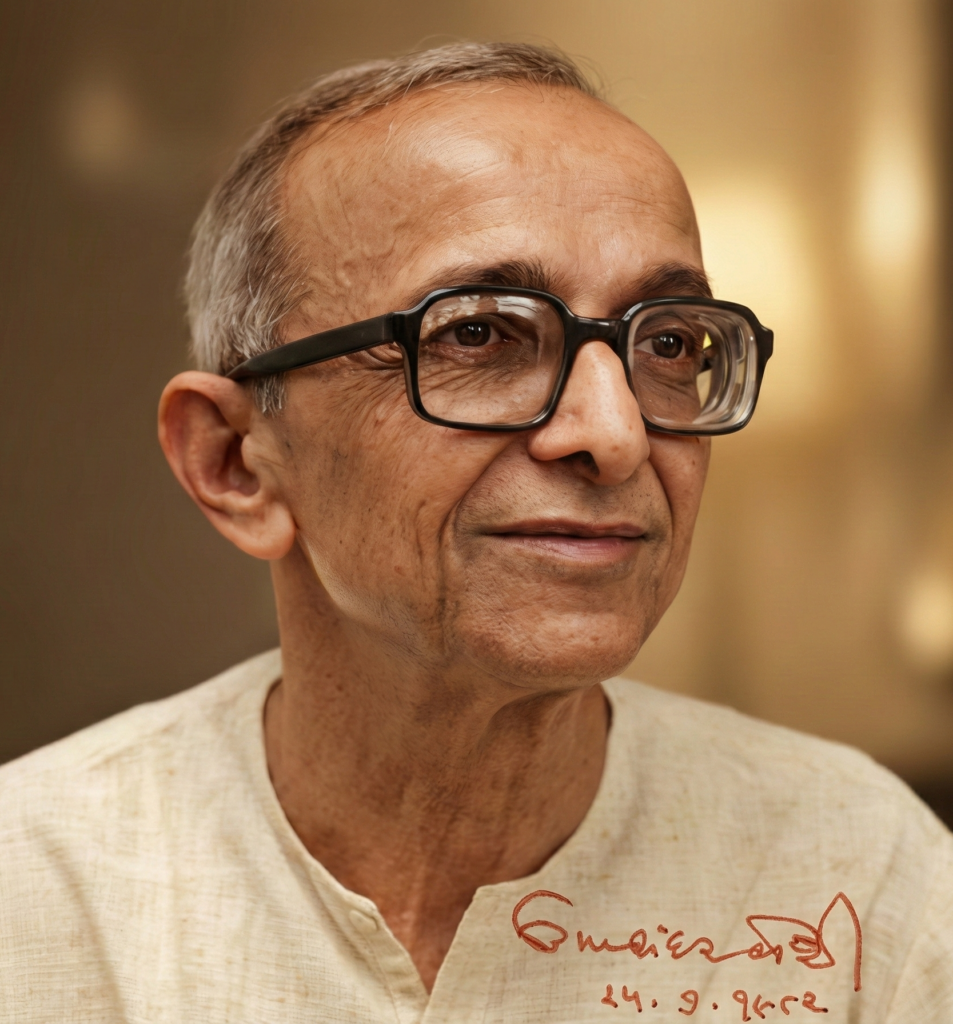
Umashankar Joshi: A Biography (1911–1988)
“I am a Gujarati by speech, an Indian by birth, and a world citizen by conviction.” — Umashankar Joshi
Umashankar Jethalal Joshi was a towering giant of 20th-century Indian literature. Though primarily known as one of the greatest Gujarati poets, he was a polymath: a brilliant scholar, a sharp critic, a dedicated academic administrator, and a passionate freedom fighter. He is credited with bringing Gujarati literature to the national stage and bridging the gap between traditional Gandhian idealism and modern literary sensibilities.
Early Life
Umashankar Joshi was born on July 21, 1911, in the small village of Bamna in the Sabarkantha district of Gujarat. He was born into a Brahmin family deeply rooted in tradition.
His idyllic rural upbringing played a crucial role in shaping his poetic sensibilities. The varied landscapes of North Gujarat—the Aravalli hills, the rivers, and the changing seasons—imprinted a deep love for nature in his young mind, which became a recurring theme in his early poetry.
He completed his primary education in Bamna and Idar, later moving to Ahmedabad for matriculation. He went on to earn a Master of Arts (MA) degree in Gujarati and Sanskrit from Elphinstone College, Mumbai.
The Freedom Struggle and Gandhian Influence
Joshi’s youth coincided with the peak of the Indian Independence movement led by Mahatma Gandhi. Like many sensitive young minds of his generation, he was deeply influenced by Gandhi’s philosophy of truth, non-violence, and social reform.
In 1930, he interrupted his studies to join the Civil Disobedience Movement. He participated in the Satyagraha and was imprisoned for several months, spending time in Sabarmati and Yerwada jails.
His time in prison was transformative. It provided him with solitude for deep reading and introspection. It was during this period that he wrote his first major long poem, “Vishwa Shanti” (Universal Peace), in 1931. This work clearly reflected Gandhian ideals and a yearning for universal brotherhood.
Literary Career
Umashankar Joshi’s literary career spanned over five decades, and he is often seen as the bridge between two major eras in Gujarati literature: the Gandhi Yug (Gandhian Era) and the Adhunik Yug (Modern Era).
The Gandhian Phase: His early works, such as Gangotri (1934) and Vishwa Shanti, were marked by romanticism, a deep love for nature, nationalism, and compassion for the downtrodden.
The Modernist Phase: Post-independence, particularly from the 1950s onwards, his poetry shifted. He became a pioneer of modernism in Gujarati. His later poems (like “Fragmented”) dealt with the complexities of urban life, existential crises, the fragmentation of the self, and the disillusionment of the modern world.
Key Works: While primarily a poet, he mastered many genres:
Poetry: Nishith (The God of Midnight), Gangotri, Vishwa Shanti, Atithya.
Drama: He was a pioneer of the one-act play in Gujarati, notably with the collection Sapna Bhara.
Criticism & Essays: He was a profound scholar and critic, setting high standards for literary analysis in Gujarati.
He also founded and edited the prestigious literary journal “Sanskriti” (Culture) for over 30 years, nurturing a generation of writers.
Academic and Public Life
Joshi was not an ivory-tower intellectual; he was deeply involved in education and public policy.
He served as a Professor of Gujarati in Ahmedabad and Mumbai.
He rose to become the Vice-Chancellor of Gujarat University.
In a prestigious appointment, he served as the Vice-Chancellor of Visva-Bharati University, Santiniketan (the institution founded by Rabindranath Tagore).
He served as the President of the Sahitya Akademi (India’s National Academy of Letters) from 1978 to 1982.
He was nominated as a member of the Rajya Sabha (the upper house of Indian Parliament), where he served for six years.
Awards and Recognition
Umashankar Joshi received the highest literary honors India has to offer.
The Jnanpith Award (1967): He received India’s highest literary award for his poetry collection Nishith (The God of Midnight). He shared this award with the Kannada poet Kuvempu.
Sahitya Akademi Award (1956): For his critical work Kavini Shraddha.
Other honors included the Soviet Land Nehru Award and the Ranjitram Suvarna Chandrak (the highest award in Gujarati literature).
Death and Legacy
Umashankar Joshi passed away on December 19, 1988, in Mumbai.
He is remembered not just for his exquisite verses but for his integrity as an intellectual. He was a “Vishvamanav”—a Universal Man—who believed that true nationalism leads to internationalism. His journey from a village boy soaking in the rhythms of nature to a modernist poet grappling with urban alienation mirrors the journey of 20th-century India itself.
Word Meaning
| Tough Word | Meaning in English | Meaning in Hindi |
| Fragmented | Broken into pieces; disconnected; lacking wholeness. | खंडित, बिखरा हुआ, टुकड़े-टुकड़े |
| Striving | Trying very hard to achieve something; struggling. | प्रयास कर रहा, संघर्षरत |
| Throb | To beat with a strong, regular rhythm; pulsate. | धड़कना, स्पंदन करना |
| Metre | The basic rhythmic structure of a verse in poetry. | छंद |
| Emerge | To come into view; to become apparent or prominent. | उभरना, प्रकट होना |
| Canvas | A strong cloth used for painting on; here metaphorically used as the background of life. | कैनवास, जीवन-पट |
| Crumbs | Small fragments of bread, cake, or biscuit. | टुकड़े, चूरा |
| Cuckoo | A type of bird known for its distinctive call. | कोयल |
| Babbling | The continuous murmuring sound of water or birds; chattering. | चहचहाना (पक्षियों का), बड़बड़ाना |
| Nightingale | A small migratory bird known for its powerful and beautiful song. | बुलबुल |
| Groves | Small groups of trees. | कुंज, पेड़ों का झुरमुट |
| Spring | The season after winter and before summer, in which vegetation begins to appear. | बसंत ऋतु |
| Askew | Not in a straight or level position; wrong; awry. | तिरछा, टेढ़ा-मेढ़ा, अस्त-व्यस्त |
| Wholeness | The state of being complete, undivided, or unbroken. | पूर्णता, अखंडता, संपूर्णता |
| Took it for granted | To fail to appreciate the value of something; assumed it would always be there. | हल्के में लेना, महत्व न समझना |
| Crumbling | Breaking or falling apart into small fragments; disintegrating. | ढहना, चूर-चूर होना |
| Trinity | A group of three people or things (here referring to Love, Hate, and Fear). | त्रिमूर्ति, तीन का समूह |
| Stirred | Moved emotionally; excited; aroused. | उद्वेलित हुआ, हलचल हुई |
| Sought-after | Desired; wanted by many people. | वांछित, जिसकी चाह हो |
| Yearning | An intense feeling of longing for something. | तीव्र लालसा, तड़प, उत्कंठा |
| Passion | Strong and barely controllable emotion (here associated with hate/anger). | तीव्र भावना, आवेग, जुनून |
| Seething | (Of a liquid) boiling; (of a person) filled with intense but unexpressed anger. | खौलना, उबलना (क्रोध से) |
| Exhaling | Breathing out. | सांस बाहर छोड़ना |
| Burnt-out heart | A heart exhausted of emotion; emotionally destroyed or empty. | जला हुआ हृदय, भावनाशून्य दिल |
| Set, ever-parted | Fixed in an open position (referring to staring eyelids). | स्थिर और खुली हुई (आंखें) |
| Corpse-embrace | A hug like that of a dead body (cold and stiff). | शव का आलिंगन (मुर्दे जैसी ठंडी पकड़) |
| Lathered up | Covered with sweat or foam. | पसीने से तर-बतर कर दिया |
| Sap of life | Vitality; life energy; essential bodily fluids. | जीवन रस, प्राण शक्ति |
| Consciousness | The state of being awake and aware of one’s surroundings. | चेतना, होश |
| Wail | A prolonged high-pitched cry of pain, grief, or anger. | विलाप, चीख, हाहाकार |
| Guileless | Innocent and without deception. | छलरहित, निष्कपट, भोला |
| Strove (to strive) | Tried hard; made great efforts. | प्रयास किया |
| Baptism | Initiation into a new experience (metaphorical usage). | दीक्षा, नया अनुभव प्रदान करना |
| Fundamentals | The essential principle or rule of something. | मूल सिद्धांत, आधारभूत बातें |
| Dilapidated | In a state of disrepair or ruin as a result of age or neglect. | जर्जर, टूटा-फूटा, खस्ताहाल |
| Drags on | To continue for longer than necessary or expected; moves slowly. | घिसटता है, लंबा खिंचता है |
| Lumbering | Moving in a slow, heavy, awkward way. | भारी-भरकम चाल से चलना |
| Rumble tumble | Making a deep resonant sound and moving in a disorderly way. | गड़गड़ाहट के साथ लुढ़कना |
| Endear himself | Cause himself to be loved or liked. | खुद को प्रिय बनाना |
| Smears | Marks messily or stains; here, metaphorical staining of character. | पोतना, धब्बा लगाना, मलना |
| Pettiness | undue concern with trivial matters; small-mindedness. | क्षुद्रता, ओछापन, छोटी सोच |
| Twists | Distorts; warps out of shape. | मरोड़ना, विकृत करना |
| Crookedness | Dishonesty; lack of moral straightness. | कुटिलता, टेढ़ापन, बेईमानी |
| Of late | Recently. | हाल ही में |
| Incessantly | Without interruption; constantly. | लगातार, निरंतर, अविराम |
| Worldliness | Concern with material values or ordinary life rather than spiritual existence. | सांसारिकता, भौतिकवाद |
| Martyrs to success | People who sacrifice themselves (health, principles) to achieve success. | सफलता के लिए बलिदान देने वाले |
| Mighty ones | Powerful people. | शक्तिशाली लोग, महान लोग |
| Oblivion | The state of being completely forgotten or unknown. | विस्मृति, गुमनामी, विसार दिया जाना |
| Worldly | Concerned with material values or ordinary life rather than a spiritual existence. | सांसारिक, भौतिकवादी |
| Saints | A person acknowledged as holy or virtuous. | संत, महात्मा |
| Fritter away | To waste time, money, or energy on trifling matters. | व्यर्थ नष्ट होना, बिखर जाना |
| In vain | Without success or a result; uselessly. | व्यर्थ में, बेकार में |
| Eternity | Infinite or unending time. | अनंत काल, शाश्वतता |
| Infinite | Limitless or endless in space, extent, or size. | अनंत, असीम |
| Amidst | In the middle of; surrounded by. | के बीच में, के मध्य |
| Burning scorch | Intense, searing heat that feels like burning. | झुलसा देने वाली गर्मी, तपन |
| Meditation | The practice of thinking deeply in silence. | ध्यान, चिंतन |
| Slender | Thin and graceful. | पतली, नाज़ुक |
| Mirage | An optical illusion (like water in a desert) caused by atmospheric conditions; an unrealistic hope. | मृगतृष्णा, मरीचिका, भ्रम |
| Piercing | Going through into; sharp or penetrating (like cold or pain). | भेदना, चुभने वाला |
| Renews | Gives fresh life or strength to; restores. | नवीनीकरण करना, ताजगी भरना |
| Prey | A victim; an animal that is hunted. | शिकार |
| Frail pulse | Weak heartbeat. | कमजोर नाड़ी/धड़कन |
| Torn with pain | Experiencing intense inner conflict or anguish; pulled apart by pain. | दर्द से विदीर्ण, पीड़ा से फटा हुआ |
| Struggling | Striving to achieve or attain something in the face of difficulty. | संघर्ष करना, जूझना |
| Centre | A point of balance or stability within oneself. | केंद्र, संतुलन बिंदु |
| Worn out | Extremely tired; exhausted. | थका-हारा, जीर्ण, निचुड़ा हुआ |
Themes
Existential Fragmentation: This is the central, defining theme of the entire poem. The speaker opens with a direct confession of his condition: “I am fragmented – fallen apart.” He suffers from a profound sense of psychological and spiritual brokenness, lacking a unified self or a coherent “centre.” He uses powerful similes to describe this state, comparing himself to energy that lacks structure (“rhythm striving to throb in a poem without metre”) and potential that is wasted and dispersed (“bread crumbs in several homes, not yet placed in a beggar’s bowl”). He laments the loss of a “wholeness” he once took for granted, watching it crumble into pieces. The poem concludes with the tragic realization that despite his efforts day and night to integrate his personality and “reach and hold the centre,” he has failed. He remains worn out and irrevocably broken, feeling that his existence is a waste of breath.
Alienation: As a direct consequence of his internal fragmentation, the speaker experiences a deep and pervasive alienation from the external world. He is disconnected from the healing power of nature; because his own internal nature is “all askew,” he cannot respond to external beauty. The arrival of spring and the singing of birds like nightingales, normally sources of joy, are dismissed cynically as mere “babbling” or an annoying artificial “radio programme” he wishes to turn off. This alienation extends to human society as well. He views the world with weariness, describing a society where people are incapable of genuine love and connect only through hatred. Even intimate relationships seem distorted, with close companions described as smearing others with “pettiness” and twisting truths with “crookedness.” He feels completely alone in his experience.
Emotional Exhaustion: A significant portion of the poem is dedicated to exploring the speaker’s emotional history and his current state of fatigue. He reflects on being molded and “pulled into shape” in the past by an intense “trinity” of primal forces: Love, Hate, and Fear. He describes these not as gentle feelings but as overwhelming, visceral experiences—love as obsession, hate as a destructive “poison of passion” or internal fire, and fear as a paralyzing “corpse-embrace.” While these experiences provided a “baptism” into life’s intensity, living through such extremes has completely drained him. The poem suggests a paradox where the forces that once gave him vitality have now left him “burnt-out” and “worn out.” He powerfully compares his current, exhausted existence to a “dilapidated cart” that clumsily drags along, lacking the energy of his past.
Emotion versus Materialism: In the philosophical middle section of the poem, the speaker attempts to find some lasting value in his deeply emotional, albeit broken, nature by contrasting it with the material world. He argues against the superficial values of society (“worldliness”), claiming that history eventually buries powerful millionaires and material “success stories” beneath the “ashes of oblivion.” In contrast, he asserts that humanity remembers and cherishes figures defined by intense spirit and emotion—the poets, mad lovers, and saints. He makes a grand claim that the intangible “warmth of the human heart” is actually more durable and permanent than the solid layers of the physical earth, arguing that emotional energy is eternal.
Fleeting Relief vs. Harsh Reality: Towards the end, the poem dramatically illustrates the struggle between painful reality and temporary moments of grace. The high-minded philosophical thoughts about eternal warmth are abruptly shattered by the intrusion of immediate, harsh physical reality—a scorching hot bus ride in May, accompanied by anxiety about mortality. Within this oppressive atmosphere, the speaker experiences a brief, transcendent moment of relief as the bus crosses the Sabarmati river. A cool breeze, described metaphorically as a “cold sharp blade,” pierces the heat and offers a split-second of “renewal.” However, the significance lies in its brevity; the moment the bus leaves the bridge, the “flames of the summer heat” return instantly. This highlights the tragic reality that for the fragmented soul, peace is fleeting and transient, while suffering is the dominant state.
Very Short Answer Questions
To what does the poet compare his broken life in the first stanza?
Scattered bread crumbs not yet placed in a beggar’s bowl.
How does the speaker describe the singing of nightingales in spring?
As “babbling” or artificial noise like a radio programme.
Why does the speaker feel nature cannot help him?
Because his own internal nature is broken and “all askew.”
Which three forces form the “trinity” that shaped the speaker’s past?
Love, Hate, and Fear.
What metaphor is used to describe the intense feeling of Hate?
The “poison of passion” or a “well of fire” in the eye.
How does the poet describe the physical sensation of Fear?
As a “corpse-embrace” that causes cold sweat.
What metaphor does the speaker use for his current, exhausted life?
A dilapidated cart dragging along.
According to the speaker, what does the “worldly world” forget beneath ashes of oblivion?
The mighty ones and millionaires.
Who does the world actually remember according to the poet?
Poets, mad lovers, and saints.
How does the poet define “life” in the philosophical section?
He says, “Memory is – life.”
What does the poet claim about the warmth of the human heart?
It is eternal and helps keep the sun warm.
What is the month and climatic condition described in the later part of the poem?
It is the scorching heat of May.
Where is the speaker physically located towards the end of the poem?
On a rushing bus crossing a bridge.
Why are the speaker’s eyes closed behind dark glasses?
He is pretending to meditate to escape the harsh reality outside.
Which river is mentioned in the poem?
The slender Sabarmati river.
To what is the river Sabarmati compared?
An innocent deer chasing the mirage of eternity.
What gives the speaker a momentary sense of renewal?
A sharp, cool breeze rising from the river below.
What happens immediately after the bus leaves the bridge?
The speaker falls prey to the “flames of the summer heat” again.
What is the speaker constantly struggling to do which leaves him worn out?
Struggling to “reach and hold the centre” of his being.
What is the final realization of the speaker at the end of the poem?
That he remains irrevocably “fragmented.”
Short Answer Questions
Explain the significance of the opening metaphors the poet uses to describe his “fragmented” state.
The poet uses three powerful similes right at the beginning to define his internal brokenness. He compares himself to a poem that has rhythm but lacks meter, suggesting energy without order or structure. He also likens his life to a pattern trying to emerge on a canvas but failing to complete itself. Finally, and most tragically, he compares himself to bread crumbs scattered across different homes that have not yet been gathered into a beggar’s bowl, emphasizing feelings of waste, uselessness, and a fundamental lack of unity or purpose in his existence.
Describe the “trinity” of forces that molded the speaker’s past and explain how they have left him feeling currently.
The speaker reflects that his past character was pulled into shape by an intense “trinity” of emotional forces: Love, Hate, and Fear. He describes Love as an obsessive, physical yearning; Hate as a destructive “poison” or internal fire; and Fear as a paralyzing, suffocating “corpse-embrace.” While these powerful experiences once defined him, living through such emotional extremes has completely drained him. Consequently, in his present state, he feels exhausted and “worn out,” comparing his current existence to a broken-down, “dilapidated cart” that clumsily drags along.
Contrast the speaker’s view on material success versus the “warmth of the human heart” in the poem’s philosophical section.
In the middle of the poem, the speaker tries to find hope by arguing against material values. He claims that history eventually buries powerful millionaires and worldly “success stories” beneath the “ashes of oblivion.” In contrast, humanity remembers figures associated with intense spirit and emotion, such as poets, mad lovers, and saints. He asserts that the intangible “warmth of the human heart” is actually more durable than the solid layers of the physical earth, claiming it is eternal and even contributes energetically to the cosmos.
Describe the momentary relief the speaker experiences while crossing the Sabarmati bridge and explain why it is significant.
While stuck on a rushing bus during a scorching hot afternoon in May, the speaker is overwhelmed by the oppressive heat and thoughts of mortality. As the bus crosses the bridge over the slender Sabarmati river, a cool breeze rises from the water. The poet describes this breeze metaphorically as a “cold sharp blade” that pierces through the solid bridge and the heat. For just a split second, this intense coolness shocks him into a feeling of renewal and wholeness, highlighting how desperately he craves relief, even though the suffering returns immediately after crossing the bridge.
Discuss the significance of the final stanza, particularly the speaker’s struggle to “reach and hold the centre.”
The final stanza brings the poem full circle, returning to the initial theme of brokenness with a sense of finality. After the fleeting moment of relief by the river passes, the speaker admits defeat. He describes his life as a constant, exhausting struggle day and night to “reach and hold the centre”—meaning his desperate, failed attempt to find mental balance, sanity, and a unified self. The poem ends pessimistically, reiterating that because he cannot achieve this center, he remains irrevocably “fragmented,” feeling that every breath is wasted in this broken state.
Essay Type Questions
Analyze the theme of existential fragmentation in the poem. How does the speaker use imagery and metaphors to convey his deep sense of internal brokenness and alienation from the external world?
The central theme of Umashankar Joshi’s poem is encapsulated in its very title, “Fragmented.” The speaker is suffering from a profound existential crisis, feeling spiritually and psychologically shattered. He lacks a unified self or a “centre,” and this internal chaos colors his entire perception of reality. The poem opens with a series of striking similes that immediately establish this sense of uselessness and disconnection. He compares his existence to rhythm trying to throb in a poem without a meter, suggesting energy that lacks structuring order. Tragically, he also likens himself to scattered bread crumbs not yet gathered into a beggar’s bowl, emphasizing a feeling of being wasted, dispersed, and without purpose.
This internal fragmentation leads to a deep sense of alienation from the natural world. In a healthy state, the arrival of spring and the singing of birds like the cuckoo and nightingale would bring joy. However, for the broken speaker, these sounds are mere noise. He cynically dismisses them as “babbling” or an artificial “radio programme” that he wishes he could switch off. He explicitly states that nature cannot help him because the root of the problem is internal: “My own nature is all askew.” He has watched his former sense of wholeness crumble away, leaving him numb to external beauty.
Furthermore, this fragmentation alienates him from society and other people. He views the world with a weary cynicism. He describes a “fine gentleman” who is incapable of genuine love and can only connect with others through hatred, yet the speaker is too exhausted to fight this twisted reality, resignedly accepting it. Even his closest relationships seem distorted; he describes someone as his “second heart” but notes how that person “smears” and “twists” others with pettiness and crookedness.
Ultimately, the poem portrays a modern individual who is unable to integrate his experiences into a coherent whole. Despite his intellectual capacity to philosophize about eternal love, his lived reality is one of exhaustion. The poem concludes by emphasizing that this state is permanent. He is worn out from the constant, agonizing struggle day and night to “reach and hold the centre” of his being. The final repetition of “I am fragmented” confirms that his journey has not led to healing, but only to a deeper realization of his irreparable brokenness.
The speaker describes being shaped by a “trinity” of Love, Hate, and Fear. Explore how these powerful emotions are depicted in the poem and discuss the paradox that these forces, which once defined him, have now left him “worn out” and exhausted.
A significant portion of the poem is dedicated to the speaker’s reflection on his emotional history. He describes his past self as being molded and “pulled into shape” by an intense “trinity” of primal forces: Love, Hate, and Fear. These were not gentle feelings, but overwhelming, almost violent experiences that defined his existence. The depiction of these emotions highlights their raw power. Love is described as a physical obsession where his blood “sang” and his yearning was so intense that absence made him pray for death.
Hate and Fear are described with equally visceral imagery. Hate is depicted metaphorically as the “poison of passion” and a “well of fire seething in the eye’s cup,” suggesting a destructive, consuming internal rage that leaves behind a “burnt-out heart.” Fear is personified in terrifying terms as a “corpse-embrace” that causes cold sweat and nearly dries up the vital “sap of life,” drowning consciousness in a wail of distress. These three forces were his “baptism”—an intense initiation into the reality of human feeling.
However, the central paradox of the poem is that while these emotions were once the source of his vitality and identity, living through such extremes has completely drained him. Having been burned by the fire of hate, paralyzed by the grip of fear, and obsessed by love, he currently has nothing left. The intensity of the past has led to the numbness of the present.
He illustrates this shift with a powerful metaphor for his current life: a “dilapidated cart” that clumsily drags along, making a “lumbering rumble tumble.” The energy of the past is gone, replaced by weariness. The speaker realizes that while he experienced the raw power of these emotions, he never truly understood the “fundamentals” of healthy love. The journey through this intense emotional “trinity” did not lead to wisdom or balance, but only to spiritual exhaustion, contributing to his final state of being irrecoverably fragmented.
Examine the structural shift in the latter part of the poem, where the speaker moves from philosophical reflections on eternal warmth to the immediate reality of a bus ride. What is the significance of the momentary relief by the river, and why does the poem conclude with a return to despair?
The structure of “Fragmented” is crucial to understanding its message, particularly the dramatic shift that occurs toward the end. In the middle section, the speaker engages in high-minded philosophical speculation. Seeking a defense against his feelings of worthlessness, he argues that material success is forgotten by history, while the “warmth of the human heart” is eternal, outlasting even the solid earth. This is a desperate attempt by the fragmented mind to find some lasting value in emotion and spirit.
However, the poem brutally undercuts this philosophical hope by crashing back into harsh, immediate reality in stanza 14. The high thoughts evaporate as the setting shifts to a mundane, uncomfortable bus ride during the “burning scorch of May.” The speaker is no longer contemplating eternity; he is anxiously aware of heartbeats dying out and is physically hiding behind dark glasses, pretending to meditate to escape the oppressive environment. This contrast highlights the gap between intellectual comfort and physical suffering.
Within this harsh reality, a pivotal moment occurs as the bus crosses the Sabarmati river. The poet describes a breeze rising from the water as a “cold sharp blade” that pierces the solid bridge and the heat. For just a split second, this intense natural coolness shocks the speaker into a feeling of renewal. It is a fleeting moment of grace where nature briefly breaks through his armored existence, offering a glimpse of the wholeness he craves.
Yet, the significance of this moment lies in its tragic brevity. The relief lasts only as long as the bus is on the bridge. As soon as they reach the end, the speaker falls “a fresh prey to the flames of the summer heat.” The immediate return of suffering emphasizes that temporary external relief cannot fix internal brokenness. The poem ends by circling back to the beginning, with the speaker admitting he is “worn out” from the struggle to find his center. The structure confirms that neither philosophical thought nor fleeting sensory relief can save him, leaving him permanently “fragmented.”
Critical Analysis
Introduction
“Fragmented” (originally written in Gujarati as Chinnabhinna Chhu) is a seminal work by Umashankar Joshi (1911–1988), a titan of 20th-century Indian literature. Umashankar Jethalal Joshi was a towering giant of 20th-century Indian literature. Written in the post-independence period, “Fragmented” is a quintessential modernist text. It marks a significant shift inward, moving away from external social commentary to explore the fractured psyche of the contemporary individual. It is a raw, agonizing confession of a soul grappling with the loss of unified identity, spiritual exhaustion, and profound alienation in a rapidly changing world.
Central Idea
The core concept defining the poem is existential fragmentation. The speaker confesses to a profound sense of internal brokenness, feeling psychically shattered and lacking a cohesive organizing principle or “centre.” This inner fracture is not just a temporary sadness but a fundamental condition that colors his entire perception of reality. Because he is broken inside, he is alienated from the healing powers of nature, distanced from human society, and exhausted by his own emotional history. The poem centers on the agonizing, often futile struggle to regain a sense of wholeness.
Summary
The poem opens with the speaker using striking similes to describe his broken state—useless like scattered breadcrumbs or chaotic like a poem without meter. Because his inner self is “askew,” he finds the beauty of spring nature irritating rather than healing.
He then reflects on his past, which was shaped by an intense “trinity” of primal emotions: obsessive Love, destructive Hate, and paralyzing Fear. Having lived through these extremes, he is now emotionally burnt out, comparing his current life to a “dilapidated cart” dragging along. He views society cynically, seeing twisted forms of love around him.
In the middle section, the speaker attempts a philosophical defense against despair. He argues that material success is transient, while the “warmth of the human heart” is eternal, outlasting even the earth itself.
However, this philosophical comfort is shattered by harsh reality in the final section. Stuck on a sweltering bus ride in May, anxious about mortality, he experiences only a fleeting moment of relief from a cool breeze while crossing the Sabarmati river. As soon as the bus leaves the bridge, the oppressive heat returns. The poem ends where it began, with the speaker admitting defeat in his struggle to find wholeness, reiterating that he remains “fragmented.”
Structure and Rhyme Scheme
Structure: The poem is structured as a free-flowing internal monologue or stream-of-consciousness. It is divided into irregular stanzas that mirror the speaker’s erratic, shifting thought processes. The poem moves from introspection (the self) to retrospection (the past emotions), to philosophical abstraction (eternity vs. materialism), and finally crashes into concrete physical reality (the bus ride).
Rhyme Scheme: The poem is written in Free Verse. It has no fixed rhyme scheme or regular meter. The rhythm is dictated by the natural cadence of the speaker’s troubled thoughts and the emotional weight of the content.
Theme
Existential Fragmentation and Loss of Self: The dominant theme is the terrifying feeling of losing one’s sense of identity. The speaker feels dispersed and unable to cohere into a functional whole.
Alienation (Nature and Society): A consequence of inner brokenness is total isolation. The speaker is alienated from nature (birds are noise) and sees human relationships as distorted by pettiness and hatred.
Emotional Exhaustion (Burnout): The poem paradoxically suggests that intense life experiences can leave one lifeless. The “trinity” of passions acted as a “baptism” into life but ultimately drained the speaker of vitality, leaving him feeling like a broken machine.
The Failure of Intellectual Consolation: A critical theme is the limitation of philosophy. The speaker tries to comfort himself with high thoughts about eternal love, but these abstract ideas crumble instantly when faced with physical suffering (the heat of the bus).
Transient Relief vs. Permanent Struggle: The poem highlights that peace in modern life is fleeting. The moment of grace by the river is real but tragically short-lived against the backdrop of constant struggle.
Style
Joshi employs a distinctly Modernist style, characterized by:
Confessional Tone: The poem feels deeply personal, almost like reading a private diary entry exposing inner weakness and despair.
Juxtaposition: The poem derives power from placing contrasting ideas side-by-side—abstract eternity next to scorching physical heat; the memory of intense passion next to present apathy.
Vivid Imagery: The style relies on strong, often jarring sensory details to make psychological states feel concrete.
Poetic Devices
Simile: Used powerfully in the opening stanza to define brokenness (“Like bread crumbs in several homes,” “Like rhythm striving to throb in a poem without metre”).
Metaphor:
“The Trinity” (Love, Hate, Fear shaping his life).
“Dilapidated cart” (his exhausted current life).
“Corpse-embrace” (the paralyzing nature of Fear).
“Cold sharp blade” (the sudden cool breeze).
Imagery: Strong use of sensory details, particularly thermal imagery (“burning scorch of May,” “flames of the summer heat” vs. the coolness of the river breeze) and auditory imagery (“babbling of the nightingales,” “wail” of consciousness).
Personification: Nature is described as putting on a “cultural programme,” and the river Sabarmati is compared to an “innocent deer chasing the mirage.”
Paradox: The idea that one can only love through hate, or that the intense experiences that formed him have also destroyed him.
Critical Commentary
“Fragmented” is a landmark poem because it captures the psyche of the “modern alienated man” in the Indian context. Its power lies in its deeply cyclic nature. The poem begins with a declaration of fragmentation and ends with the exact same admission. This structure validates the speaker’s experience; there is no easy resolution or healing arch.
The most critical juncture in the poem is the shift from stanza 13 to 14. The speaker builds a beautiful philosophical argument about the eternity of human warmth, trying to talk himself out of despair. But the abrupt cut to the hot bus ride shows the failure of intellect to cure real pain. The physical reality of discomfort and mortality trumps abstract philosophy. The fleeting relief over the Sabarmati river emphasizes how starved the speaker is for peace, but its quick disappearance reinforces the inescapability of his condition.
Message
The poem conveys a stark and honest message about the human condition in the modern age. It suggests that despite our intellectual capacities and the intensity of our past experiences, many individuals are left feeling spiritually adrift and exhausted. It warns that the struggle for inner wholeness is arduous and unending, and that high-minded philosophical consolations often fail in the face of the immediate, painful reality of existing in a broken world.
Conclusion
Umashankar Joshi’s “Fragmented” is a masterpiece of introspective poetry. It stands as a raw, unvarnished portrayal of a soul that has lost its bearings. Through its complex structure, vivid imagery, and refusal to offer easy answers, the poem captures the universal feeling of alienation that defines much of modern life. It remains a powerful testament to the exhausting struggle for integrity in a fractured world.