A Song for Beauty
(P. Lal)
If it were less beautiful,
And my eyes did not catch beauty, if in the morning
My eyes did not catch beauty,
I would have peace.
O Beauty fair goddess
deign to be kind on my heart your worshipper.
If it were less beautiful,
I would catch it,
And my eyes would catch beauty, if in the morning
It were less beautiful.
O Beauty fair goddess
take my sweet gifts.
And also, perhaps, if I would not catch beauty as I turned the corner,
Alas, if beauty would not come on the sodden streets
And catch my heart in the morning, I would know peace;
And no more,
fair goddess,
supplicate with sweet gifts my heart your worshipper.
Summary
“A Song for Beauty” is one of P. Lal’s earlier lyrics. The poem is most widely recognized from its inclusion in the seminal anthology “The Golden Treasury of Indo-Anglian Poetry (1828–1965),” edited by V.K. Gokak (published by the Sahitya Akademi). The poem was collected in “The Collected Poems of P. Lal,” published by Writers Workshop in 1977.
The poem “A Song for Beauty” by P. Lal expresses a very unusual feeling about beauty. Usually, people think of beauty as something that brings happiness or relaxation. However, in this poem, the speaker feels the opposite. He finds that being constantly surrounded by beautiful things is exhausting and takes away his mental peace. He suggests that if the world were less beautiful, his life would actually be calmer and more peaceful.
The poet describes Beauty as if it were a “fair goddess,” a powerful spirit that he has to worship. He feels like a servant to this goddess, constantly offering her “sweet gifts,” which likely represents his attention and his emotions. He is not just looking at beautiful things; he is forced to serve them with his heart. He pleads with this goddess to be kind to him, implying that her presence is a heavy burden rather than a simple joy.
A key part of the poem is when the speaker mentions the “sodden streets” (wet, dirty streets). This shows that the poet has a very sensitive eye. He doesn’t just see beauty in flowers or sunsets; he sees it even in bleak or ugly places like a rainy city corner. Because he can spot beauty everywhere—even where others might not—he cannot escape it. It follows him around every corner, demanding his attention.
The central conflict of the poem is between “Beauty” and “Peace.” The poet believes he cannot have both at the same time. If his eyes are catching beauty, his mind is active and stirred up. To have true peace, he feels he would need to stop seeing so much beauty. He imagines that if he could walk down the street without being captivated by what he sees, he would finally be able to rest.
In the end, the poem is a plea for relief. The speaker asks the goddess of Beauty to stop visiting him and to stop demanding his worship. It is a song not about enjoying the view, but about the tiredness that comes from being too sensitive to the world. He wants to stop being a “worshipper” so that he can simply exist in peace.
A Song for Beauty Analysis
If it were less beautiful,
And my eyes did not catch beauty, if in the morning
My eyes did not catch beauty,
I would have peace.
Reference to Context:
These lines are taken from the poem “A Song for Beauty” written by P. Lal (Purushottama Lal). P. Lal was a very important Indian poet who wrote in English and founded the famous Writers Workshop in Calcutta. In this poem, the poet explores a strange and difficult feeling: instead of finding joy in beauty, he finds it exhausting. These specific lines are the opening lines of the poem, where the speaker introduces the main idea that beauty is actually stealing his peace of mind.
Explanation:
In these opening lines, the poet begins with a surprising wish. He says that if the world around him were “less beautiful,” he would be happier. Most people wake up in the morning hoping to see something lovely, like a sunrise or a flower. However, the speaker feels that if his eyes did not “catch” or spot beauty the moment he woke up, he would be able to feel calm. He is suggesting that the world is too full of beautiful things, and this is overwhelming him.
The poet uses the phrase “catch beauty” to show how his eyes work. It implies that seeing beauty is not something he chooses to do; it happens automatically. His eyes are like nets that constantly trap or catch beautiful sights. Even early “in the morning,” when he should be resting or starting his day quietly, his eyes are already busy noticing the beauty around him. He cannot turn this ability off, which makes him feel like he is always working or active.
This creates a conflict between “Beauty” and “Peace.” Usually, we think that beauty brings peace, but for this poet, they are opposites. Because he is so sensitive, beauty demands his attention and energy. It stirs up his emotions and makes his mind active. He realizes that the only way to have true mental silence—or “peace”—would be to stop seeing beauty everywhere.
Therefore, these lines express a deep sense of tiredness. The speaker is essentially saying that he wants a break from being so sensitive. He craves a duller, plainer world because a beautiful world requires too much emotional effort from him. He is willing to trade the joy of beauty for the comfort of simple peace.
Poetic devices:
Paradox
This is the most important device in the poem. A paradox is a statement that seems contradictory but contains a hidden truth.
The Line: “If it were less beautiful… I would have peace.”
Explanation: usually, people associate beauty with peace, relaxation, and happiness. However, the poet presents a contradiction: beauty disturbs his peace. He suggests that a less beautiful world would make him happier. This unusual idea grabs the reader’s attention immediately.
Repetition
The poet repeats specific phrases to emphasize his point and show the cyclical nature of his problem.
The Line: “My eyes did not catch beauty” is repeated twice.
Explanation: This repetition mimics the obsession the poet feels. Just as his eyes constantly return to beauty, the poem constantly returns to this phrase. It emphasizes that he cannot escape this habit.
Synecdoche
Synecdoche is when a part of something is used to represent the whole.
The Line: “And my eyes did not catch beauty”
Explanation: The poet says his “eyes” catch beauty, but he really means that he (his mind and soul) catches it. By focusing only on the “eyes,” he makes it sound like a physical reflex that he cannot control, rather than a conscious choice.
Metaphor
A metaphor compares two things without using “like” or “as.”
The Line: “catch beauty”
Explanation: Eyes cannot literally “catch” something like a ball or a thief. The poet uses the word “catch” to compare his vision to a net or a trap. It suggests that his eyes are hunters that snare beautiful images, or that beauty is something physical that hits him.
Enjambment
This occurs when a sentence runs over from one line of poetry to the next without any punctuation mark at the end of the line.
The Line: “…if in the morning / My eyes did not catch beauty…”
Explanation: The thought flows continuously from the second line to the third line. This creates a sense of movement, mirroring how the poet’s eyes are constantly moving and looking, even first thing in the morning.
O Beauty fair goddess
deign to be kind on my heart your worshipper.
Reference to Context:
These lines are taken from the poem “A Song for Beauty” written by P. Lal (Purushottama Lal), a celebrated Indian poet in English. In this part of the poem, the poet shifts from talking about beauty to talking directly to it. He treats Beauty not just as a visual experience, but as a powerful, living spirit—a goddess—whom he is forced to serve.
Explanation:
In these lines, the poet uses a technique called personification. He addresses Beauty as a “fair goddess,” treating the abstract concept of beauty as if it were a divine being with a personality and power. By calling her a “goddess,” he places himself in a lower position. He acknowledges that Beauty has power over him, just as a deity has power over a human. She is “fair” (beautiful), but she is also distant and superior to him.
The poet uses the phrase “deign to be kind,” which is a very humble way of asking for a favor. To “deign” means to lower oneself to do something for someone less important. The speaker is begging this powerful goddess to look down on him and show some mercy. He is asking her to be gentle with him because her influence is currently too strong and too overwhelming for him to handle.
The poet describes himself, or rather his heart, as “your worshipper.” This explains why he is suffering. He is not just someone who casually likes beautiful things; he is a “worshipper.” A worshipper must constantly pay attention, offer respect, and give energy to their god. This implies that his admiration for beauty is deep and spiritual, but it is also a heavy duty that he cannot escape.
Ultimately, this is a plea for relief. The poet feels like a tired devotee who has spent too much time praying and serving. He is asking the goddess of Beauty to have pity on his exhaustion. He hopes that if she is “kind,” she might release him from this intense spell so that his heart can finally rest, rather than constantly working to admire her.
Poetic devices:
Apostrophe
An apostrophe is when a speaker talks directly to someone who is not there, or to an inanimate object or abstract idea, as if it were a living person.
The Line: “O Beauty…”
Explanation: The poet speaks directly to “Beauty” using the word “O,” which is a traditional way to address a god or a king. He is talking to the concept of beauty as if it is standing right in front of him and can hear him.
Personification
Personification is giving human qualities or a personality to something non-human.
The Line: “fair goddess” and “deign to be kind”
Explanation: The poet turns the abstract idea of “Beauty” into a living character—a “goddess.” He assumes she has a mind and feelings, asking her to be “kind.” Beauty is not just a visual trait here; she is a powerful female figure with the ability to show mercy.
Metaphor
A metaphor compares two things by stating one thing is the other.
The Line: “my heart your worshipper”
Explanation: The poet compares his heart to a “worshipper” or a devotee. He doesn’t say his heart is like a worshipper; he says it is one. This shows that his love for beauty is not just a hobby; it is a spiritual devotion that consumes his entire emotional life.
If it were less beautiful,
I would catch it,
And my eyes would catch beauty, if in the morning
It were less beautiful.
Reference to Context:
These lines are from the poem “A Song for Beauty” by P. Lal (Purushottama Lal). Having already established that beauty is a burden to him, the poet continues to explore how trapped he feels. In this section, he suggests that his sensitivity is so extreme that even if the world were not as stunning as it is, his eyes would still manage to find something beautiful to look at.
Explanation:
In these lines, the poet reveals how deep his “curse” of seeing beauty really is. He considers a hypothetical situation: what if the world was “less beautiful”? He wonders if lowering the amount of beauty in the world would save him. However, he admits that even if things were less lovely, he “would catch it.” This means his ability to spot beauty is not just about the object itself, but about his own eyes.
The repetition of the phrase “catch beauty” emphasizes that this is an automatic habit he cannot break. His eyes are constantly searching, like a hunter or a net. Even if the beauty were hidden, subtle, or diminished, his eyes are so trained and sensitive that they would still “catch” it. He is admitting that the problem lies within him as much as it lies in the world.
The mention of the “morning” again suggests the cycle of his days. The moment he wakes up, this process begins. He hopes that a “less beautiful” morning might give him a break, but he realizes it wouldn’t. His mind is so tuned to aesthetic pleasure that he would find something to admire even in a plain or ordinary morning. He cannot simply switch off his artistic vision.
Ultimately, these lines show the hopelessness of his situation. He is trying to bargain with his own nature, wishing for a duller world so he can rest. But he realizes that no matter how much the beauty is reduced, as long as he has his sight and his sensitive soul, he will continue to be a captive “worshipper” of beauty, unable to find the peace he desires.
Poetic devices:
Repetition
The poet repeats specific words and phrases to emphasize his stuck state of mind.
The Line: “it were less beautiful” and “catch beauty”
Explanation: The phrase “less beautiful” is used at the start and end of this section. This creates a loop, showing that his mind is going in circles. He keeps hoping for a change (less beauty), but he ends up right back where he started. The repetition of “catch” stresses that this is a repeated action he performs every day.
Metaphor
A metaphor compares two things by implying they are similar.
The Line: “I would catch it” and “my eyes would catch beauty”
Explanation: As before, the word “catch” is a metaphor. It suggests his eyes are like nets, traps, or hunters. He doesn’t just “see” things passively; his eyes aggressively grab onto details. This implies that looking is an active, tiring job for him, not a relaxing one.
Irony
Irony is when the result is the opposite of what is expected.
The Line: “I would catch it… if… It were less beautiful”
Explanation: It is ironic that even if the beauty in the world were reduced (“less beautiful”), he would still see it. Usually, if something is less visible, you see it less. Here, the poet admits his sensitivity is so high that he would find beauty even where there is very little of it. It highlights that the “problem” is in his nature, not just in the world.
Synecdoche
Synecdoche is when a part represents the whole.
The Line: “And my eyes would catch beauty”
Explanation: He speaks about his “eyes” doing the work, but he really means his mind and soul. His eyes are just the tool; the exhaustion he feels is deep inside his person.
Enjambment
This is when a sentence flows from one line to the next without pausing.
The Line: “if in the morning / It were less beautiful.”
Explanation: The sentence does not stop at “morning” but spills over into the next line. This creates a quick, flowing rhythm that mimics the way his thoughts are rushing and how quickly his eyes move to find beauty the moment he wakes up.
O Beauty fair goddess
take my sweet gifts.
Reference to Context:
These lines are taken from the poem “A Song for Beauty” written by P. Lal (Purushottama Lal). At this point in the poem, the poet is directly communicating with Beauty, whom he imagines as a “fair goddess.” After expressing how tired he is of being constantly captivated by beautiful things, he moves into a moment of ritual surrender, offering his tributes to this powerful force.
Explanation:
In these lines, the poet continues to treat Beauty as a divine figure, a “fair goddess.” By speaking to her directly, he shows that he has a personal relationship with the concept of beauty. It is not just something he sees with his eyes; it is a presence he feels he must serve. He stands before her like a devotee at a temple, ready to perform a duty.
The phrase “take my sweet gifts” is an offering. In a traditional sense, a worshipper gives flowers or food to a deity. However, for the poet, the “sweet gifts” are likely his own emotions, his attention, and his poetic words. He is offering up the best parts of his mind and heart to Beauty. He is saying that everything he creates and feels belongs to her.
There is a sense of resignation or giving up in this line. He is not fighting against the goddess anymore; instead, he is handing over what she demands. The word “sweet” suggests that what he is giving is valuable and pure. He is not giving her his anger or his tiredness; he is giving her his appreciation and his love, even though it drains him.
Ultimately, this act of giving gifts explains why he has no peace. If he is constantly giving away his “sweet gifts” (his energy and focus) to Beauty, he has nothing left for himself. This line highlights the cost of being an artist or a sensitive person. He must constantly empty himself to worship the beauty he sees around him, leaving him exhausted.
Poetic devices:
Apostrophe
An apostrophe is a literary device where the speaker addresses an absent person, an abstract idea, or a thing.
The Line: “O Beauty…”
Explanation: The poet speaks directly to the abstract concept of “Beauty” using the formal address “O.” He is talking to it as if it were a person standing right there who can hear and accept his gifts.
Personification
Personification involves giving human traits or qualities to non-human things.
The Line: “fair goddess”
Explanation: The poet elevates Beauty from a simple visual quality to a divine female figure—a “goddess.” He attributes a personality and status to it, implying it has the power to accept offerings and rule over him.
Metaphor
A metaphor compares two different things by stating one is the other.
The Line: “sweet gifts”
Explanation: The “gifts” are a metaphor for the poet’s poems, attention, and emotional energy. He is not literally handing her a box of sweets; he is comparing his artistic output and his devotion to the offerings a worshipper would place at a temple.
And also, perhaps, if I would not catch beauty as I turned the corner,
Alas, if beauty would not come on the sodden streets
And catch my heart in the morning, I would know peace;
And no more,
fair goddess,
supplicate with sweet gifts my heart your worshipper.
Reference to Context:
These are the final lines of the poem “A Song for Beauty” by P. Lal (Purushottama Lal). In this concluding section, the poet moves his focus from abstract wishes to the gritty reality of the city. He describes finding beauty even in ugly, wet streets, which proves he cannot escape it. The poem ends with a final, desperate wish to be free from the burden of worshipping the “fair goddess” of Beauty so that he can finally find rest.
Explanation:
In these lines, the poet describes how beauty catches him by surprise. He mentions turning “the corner,” suggesting that beauty is not something he seeks out, but something that lies in wait for him. It ambushes him when he least expects it. This adds to his exhaustion; he cannot even walk around a corner without being mentally prepared to face another beautiful sight that demands his attention. He is constantly on guard, yet constantly captivated.
The poet then introduces a powerful contrast by mentioning the “sodden streets.” “Sodden” means soaked with water, likely from rain. Usually, a wet, muddy street is considered gloomy or ugly. However, the poet’s sensitivity is so acute that he finds beauty even here. This reveals the true depth of his struggle: if he only saw beauty in flowers or palaces, he could avoid them. But because he sees artistic beauty even in the dirt and rain of a city street, there is truly nowhere for him to hide.
The phrase “catch my heart” marks a shift from his eyes to his emotions. Earlier in the poem, he spoke of his eyes catching beauty; now, he says it catches his heart. This means the experience is not just visual—it is deeply emotional. The beauty of the wet streets grabs his feelings and shakes him up. This emotional disturbance is exactly why he cannot “know peace.” His heart is constantly being stimulated and stirred, leaving him no room for calmness or silence.
The poet concludes by expressing what he would do if this beauty stopped catching him. He says that if he could walk these streets without being moved by them, he would finally “know peace.” He imagines a life where he is “no more” a servant to this force. He wants to stop being a “worshipper” who has to “supplicate” (humbly beg or pray) to the goddess. He is tired of the constant spiritual and emotional labor that beauty requires of him.
Finally, the poem ends on a note of longing for freedom. The speaker wants to stop offering “sweet gifts” of praise and admiration. He is asking for a release from his own artistic nature. He essentially says that being a poet and a lover of beauty is a heavy job, and just for a moment, he wishes he could put down this burden and be an ordinary person with a peaceful, empty heart.
Poetic devices:
Alliteration
Alliteration is the repetition of the same consonant sound at the beginning of words that are close together.
The Line: “sodden streets” and “supplicate with sweet gifts”
Explanation: The repetition of the ‘s’ sound creates a musical quality. In “sodden streets,” the ‘s’ sound might mimic the sound of rain or wetness. In “supplicate with sweet,” the soft ‘s’ sound emphasizes the gentleness and submission of the poet.
Personification
The poet gives human actions to the abstract idea of Beauty.
The Line: “beauty would not come… And catch my heart”
Explanation: Beauty is described as an active person who can walk down the street (“come”) and physically grab (“catch”) the speaker. This makes Beauty seem like a hunter or an ambusher that the poet cannot escape, even on a dirty street.
Imagery
Imagery is the use of descriptive language to create a picture in the reader’s mind.
The Line: “sodden streets”
Explanation: The word “sodden” means soaked or heavy with water. This creates a vivid mental picture of a wet, possibly gloomy, and dirty city street. It provides a strong contrast to the “fair goddess,” showing that the poet finds beauty even in ugly places.
Synecdoche
Synecdoche is using a part of something to represent the whole.
The Line: “catch my heart”
Explanation: When he says beauty catches his “heart,” he means it captures his entire emotional being. He isn’t talking about the physical organ, but his feelings and soul.
P. Lal (Purushottama Lal)
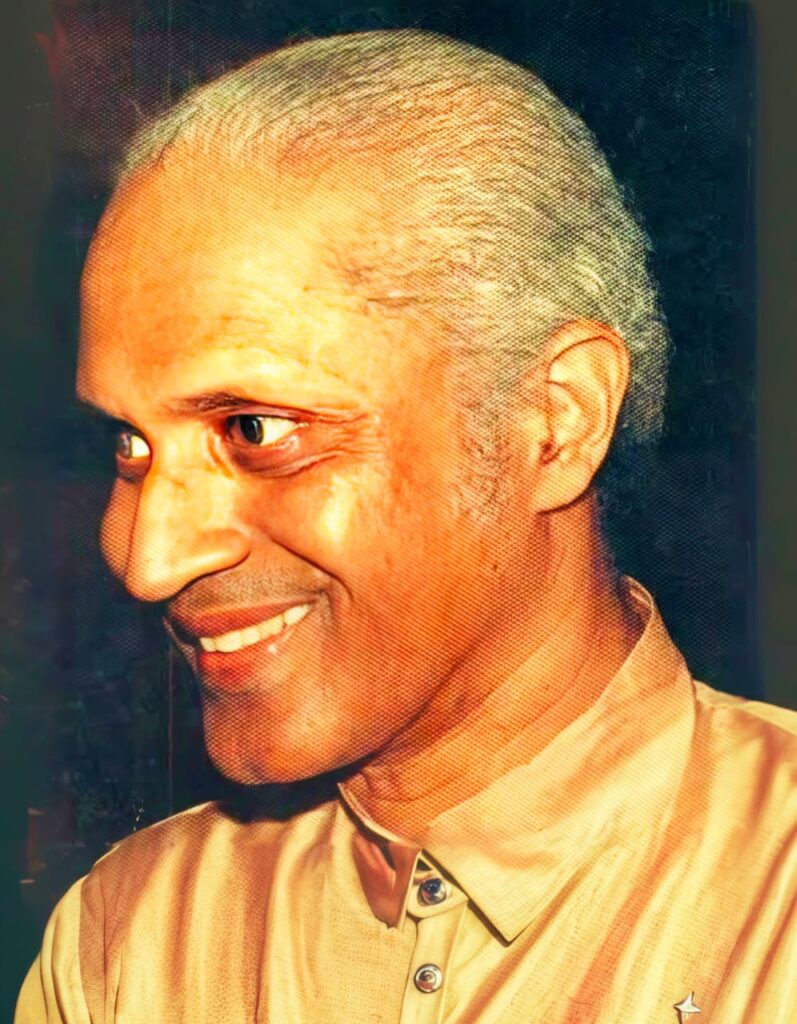
Identity: Poet, Translator, Professor, Publisher, and Essayist.
Key Achievement: Founder of the Writers Workshop (1958) and the driving force behind modern Indian English Poetry.
Early Life and Education
Birth: P. Lal was born on August 28, 1929, in Kapurthala, Punjab, India.
Background: Although born in Punjab, he spent the vast majority of his life in Calcutta (now Kolkata), a city that deeply influenced his work and cultural outlook.
Education:
He completed his schooling and higher education in Calcutta.
He graduated from St. Xavier’s College, Calcutta.
He earned his Master’s degree (MA) in English from the University of Calcutta in 1953.
Academic Career
Professor: Immediately after his studies, he joined the faculty of St. Xavier’s College, Calcutta, as a Professor of English. He taught there for over 40 years.
Teaching Style: He was legendary among students for his engaging teaching style, often teaching classics like T.S. Eliot and the Indian Epics with equal passion.
Visiting Professor: He served as a Visiting Professor at several American universities, including Hofstra University, University of Illinois, and Ohio University, helping to popularize Indian literature in the West.
The Writers Workshop (1958)
This is P. Lal’s most significant contribution to Indian history.
Founding: In 1958, P. Lal founded the Writers Workshop in Calcutta. It was a publishing house run from his own home.
The Mission: At that time, Indian writing in English was not taken seriously by British publishers. P. Lal created a platform for Indians to publish their own creative writing in English.
The “Sari” Books: The books published by Writers Workshop were famous for their unique appearance. They were hand-bound in handloom sari cloth and often featured calligraphy by P. Lal himself.
Discovery of Talent: Through this workshop, P. Lal discovered and published the first works of many writers who later became famous, including Vikram Seth, Ruskin Bond, Kamala Das, Nissim Ezekiel, and Pritish Nandy.
Literary Movement & The Manifesto
P. Lal was not just a publisher; he was a revolutionary.
The Manifesto: He wrote a famous introduction to an anthology in the 1960s that served as a “manifesto” for modern Indian poetry.
Rebellion: He rejected the older style of Indian poetry (like that of Sri Aurobindo), which he felt was too vague, mystical, and “greasy.”
New Style: He argued that poetry should use “vital, concrete language” and deal with real-life experiences, not just spiritual abstractions. “A Song for Beauty” is a perfect example of this concrete style.
P. Lal as a Translator (“Transcreation”)
P. Lal preferred the term “Transcreation” over “Translation.” He believed a translator must capture the spirit and readability of the original work, not just the literal word-for-word meaning.
The Mahabharata: His life’s magnum opus was the shloka-by-shloka transcreation of the Mahabharata. It was a massive project that took him 20 years to complete. He famously read these translations out loud to a live audience every Sunday in Calcutta for decades.
Other Translations: He translated many Sanskrit classics into English, including:
The Ramayana
The Bhagavad Gita
The Dhammapada
The Upanishads
Plays by Kalidasa (like Shakuntala)
P. Lal as a Poet
As a poet, P. Lal was known for his lyrical grace, irony, and modern sensibility.
Themes: His poetry often explored the tension between urban city life and beauty, the conflict between tradition and modernity, and the subtle emotions of love.
Famous Collections:
The Parrot’s Death (1960)
Love’s the First (1962)
The Collected Poems of P. Lal (1977)
Style: His poems (like “A Song for Beauty”) are often short, sharp, and highly visual, moving away from the long, flowery epic style of the past.
Awards and Recognition
Padma Shri: He was awarded the Padma Shri by the Government of India in 1970 for his distinguished service to literature.
Jawaharlal Nehru Fellowship: He received this prestigious fellowship in 1969 to work on his translations.
Honorary Degrees: He received an Honorary Doctorate of Letters (D. Litt) from Western Maryland College in 1993.
Death and Legacy
Death: P. Lal passed away on November 3, 2010, in Calcutta at the age of 81.
Legacy:
The Writers Workshop continues to exist and has published over 3,500 titles, preserving the voices of countless Indian writers who might otherwise have been forgotten.
His translation of the Mahabharata remains one of the most readable and complete English versions available today.
Themes
The Burden of Beauty
The most unique theme of this poem is that beauty is not presented as a joy, but as a heavy burden. Usually, people seek beauty to feel happy. However, the poet finds it exhausting. His sensitivity is so high that he feels compelled to notice and admire everything around him. He wishes the world were “less beautiful” so he could finally rest, showing that for an artist, beauty can be an overwhelming responsibility.
The Conflict Between Beauty and Peace
The poem creates a clear opposition between Beauty and Peace.
Beauty represents activity, emotional stirring, and mental engagement.
Peace represents stillness, silence, and a lack of stimulation. The speaker believes he cannot have both. As long as he is “catching beauty,” his mind is active and turbulent. To find true peace, he feels he must stop seeing the beauty in the world.
The Inescapability of Beauty
A key theme is that beauty is everywhere, and the poet cannot hide from it. If beauty were only found in gardens or museums, he could avoid it. But he finds beauty even on “sodden streets” (wet, dirty roads) and around ordinary corners. Because his artistic vision can transform even ugly scenes into beautiful moments, he is trapped by his own ability to see the world artistically.
The Artist as a Worshipper (Devotion)
The poem explores the relationship between the artist and their inspiration. The poet describes himself as a “worshipper” and Beauty as a “fair goddess.” This suggests that art is not just a hobby, but a spiritual duty. He feels a humble obligation to offer his “sweet gifts” (his poems and emotions) to this power, even if it drains him. It highlights the servitude and submission involved in the creative process.
Subjectivity of Perception
The poem emphasizes that beauty lies in the eyes of the beholder. The speaker repeatedly says, “If my eyes did not catch beauty.” He realizes that the problem isn’t just that the world is beautiful, but that his eyes are trained to catch it. He admits that even if the world were less beautiful, he would still catch it. This highlights that beauty is an internal experience created by the observer’s mind, not just an external fact.
Word Meaning
| Tough Word | Meaning in English | Meaning in Hindi |
| Catch | To notice, see, or capture with the eyes. | देखना / पकड़ना |
| Peace | A state of mental calm and quiet. | शांति / सुकून |
| Fair | Beautiful or lovely. | सुंदर / रूपवान |
| Goddess | A female deity or divine spirit. | देवी |
| Deign | To kindly agree to do something; to show mercy. | कृपा करना / अनुग्रह करना |
| Worshipper | Someone who shows deep religious devotion. | पुजारी / उपासक |
| Sweet Gifts | Offerings of love, attention, or art. | मधुर भेंट / प्रेम भरे उपहार |
| Alas | An expression of sorrow or regret. | हाय / अफ़सोस |
| Sodden | Thoroughly soaked with water; heavy and wet. | पूरी तरह भीगा हुआ |
| Supplicate | To ask or beg for something humbly (like a prayer). | प्रार्थना करना / विनती करना |
Very Short Answer Questions
Who is the poet of “A Song for Beauty”?
The poet is P. Lal (Purushottama Lal).
What is the central wish of the speaker in the opening lines?
He wishes that the world were “less beautiful.”
Why does the poet desire a less beautiful world?
He desires it so that he might finally have “peace.”
How does the poet personify Beauty in the poem?
He addresses Beauty as a “fair goddess.”
What relationship does the poet claim to have with the goddess of Beauty?
He claims to be her “worshipper.”
What does the phrase “catch beauty” suggest about the poet’s vision?
It suggests that noticing beauty is an involuntary, automatic habit for him.
What does the poet offer to the goddess of Beauty?
He offers her his “sweet gifts” (his poems and emotions).
Which specific time of day is mentioned repeatedly in the poem?
The “morning” is mentioned repeatedly.
What creates the conflict in the poem?
The conflict is between the activity of seeing “Beauty” and the desire for “Peace.”
Where does the poet encounter beauty unexpectedly?
He encounters it on the “sodden streets” and around corners.
What does the word “sodden” mean in the context of the poem?
It means thoroughly soaked or wet (likely from rain).
What literary device is used when the poet says “O Beauty”?
The device is Apostrophe (addressing an abstract idea directly).
What does the poet realize would happen even if the world were less beautiful?
He realizes his eyes would still “catch” the beauty that remains.
What does beauty “catch” in the final lines of the poem?
Beauty catches the poet’s “heart.”
What form or rhyme scheme does the poem follow?
The poem is written in free verse with no fixed rhyme scheme.
What is the meaning of the word “supplicate”?
It means to humble oneself and beg or pray earnestly.
What emotion does the poet feel towards his artistic sensitivity?
He feels exhaustion and weariness.
What does the poet imply about the nature of beauty?
He implies that beauty is a demanding force that requires constant spiritual energy.
If the poet did not see beauty, what state would he achieve?
He would achieve a state of “peace.”
What figure of speech is “sodden streets”?
It is an example of Alliteration (repetition of the ‘s’ sound) and Imagery.
Short Answer Questions
Explain the central paradox regarding “Beauty” and “Peace” in the poem.
The central paradox of the poem is that the speaker views Beauty not as a source of tranquility, but as a disturbance to his peace of mind. While most people find relaxation in beautiful sights, the poet finds that beauty demands his constant attention and emotional energy. He argues that “peace” for him equates to a lack of stimulation. Therefore, as long as his eyes are busy “catching” beauty, his mind remains active and restless. He concludes that the only way to achieve true mental peace would be to live in a world that is “less beautiful” so his senses could finally rest.
What is the significance of the imagery of the “sodden streets”?
The image of the “sodden streets” is crucial because it demonstrates the inescapable nature of the poet’s artistic sensitivity. “Sodden” implies a bleak, rain-soaked, and typically ugly urban setting. However, the speaker admits that beauty “catches his heart” even there. This proves that his struggle is not limited to obviously lovely places like gardens; his artistic eye transforms even the mundane and gritty reality of the city into something beautiful. This inescapable ability to find beauty in ugliness is exactly why he cannot find the “peace” he so desperately desires—there is literally nowhere he can hide from his own vision.
Analyze the poet’s use of the personification “fair goddess.”
By addressing Beauty as a “fair goddess,” P. Lal elevates the concept from a mere visual experience to a powerful, divine entity. This personification establishes a hierarchy where Beauty is the ruler and the poet is the humble “worshipper.” It implies that his engagement with beauty is not a casual choice but a spiritual servitude that requires him to offer “sweet gifts” (his emotions and art). The use of words like “deign” and “supplicate” further emphasizes his submissive role, suggesting that he is at the mercy of this goddess and must beg her for relief from the exhaustion of constantly serving her.
What does the speaker mean when he says, “I would catch it… if… It were less beautiful”?
In these lines, the speaker admits a profound truth about his own nature: the problem lies in his perception, not just in the world. He realizes that even if the external world were objectively “less beautiful,” his eyes would still manage to “catch” or identify beauty in it. The word “catch” suggests an instinctive, involuntary reflex, like a hunter snaring prey. This confession adds a tone of hopelessness to the poem. He acknowledges that his sensitivity is internal and permanent; he cannot simply turn off his artistic vision, meaning his wish for a duller world is ultimately futile because his mind will always create beauty.
Discuss the mood and tone of the final stanza of the poem.
The mood of the final stanza is a blend of weary resignation and desperate longing. The poet describes turning a corner and being ambushed by beauty, which “catches his heart” by surprise. The tone becomes melancholic with the use of the word “Alas,” signaling his realization that escape is impossible. He ends with a final plea to the “fair goddess” to stop demanding his worship. It is a moment of surrender; he is tired of the emotional labor of being a poet (“supplicate with sweet gifts”) and yearns for the simple, empty silence of “peace” where he no longer has to feel or express such intense devotion.
Essay Type Questions
Discuss the central paradox in the poem regarding the relationship between “Beauty” and “Peace.” How does the poet resolve or fail to resolve this conflict?
The central paradox of P. Lal’s “A Song for Beauty” lies in the unconventional opposition between two concepts that are usually seen as complementary: Beauty and Peace. In traditional Romantic poetry, nature and beauty are sources of solace, healing, and tranquility. However, P. Lal turns this convention on its head by presenting beauty as a source of mental agitation and exhaustion. For the speaker, “Peace” is defined as a state of emptiness or lack of stimulation, whereas “Beauty” is an active, intrusive force that demands his constant attention. The recurring line, “If it were less beautiful… I would have peace,” establishes this fundamental conflict immediately: to possess one, he must lose the other.
The poet describes the experience of seeing beauty as “catching” it, a verb that implies action, effort, and perhaps even a trap. His eyes are not passive receivers of the world; they are constantly working to identify and process aesthetic pleasure. This creates a state of perpetual mental alertness. The “morning,” which should be a time of fresh beginnings and calm, becomes a time of immediate labor for his senses. The “peace” he craves is essentially a break from this labor—a desire for a dull, ordinary world where his mind is not required to be in a state of high poetic alert.
As the poem progresses, the speaker attempts to resolve this conflict by bargaining with Beauty, whom he personifies as a “fair goddess.” He offers her “sweet gifts”—likely his poems and his emotional devotion—in hopes that she might “deign to be kind” and release him. This frames the conflict as a spiritual struggle between a devotee and a demanding deity. He feels trapped in a cycle of worship where he must constantly expend his emotional energy to acknowledge the beauty around him, leaving him drained and devoid of personal inner silence.
However, the conflict remains unresolved, or rather, it is resolved in a tragic realization of inevitability. The speaker admits that even if the world were objectively “less beautiful,” his eyes would still “catch” it. He realizes that the source of the conflict is not the world itself, but his own innate sensitivity. Because he is an artist, he cannot simply turn off his perception. Even on “sodden streets”—places of ugliness and gloom—beauty ambushes him and “catches his heart.”
Ultimately, the poem ends not with the attainment of peace, but with a resigned acceptance of his burden. The conflict between Beauty and Peace is a permanent condition of his existence. He acknowledges that as long as he has his sight and his soul, he will remain a “worshipper,” forever denied the simple peace of the insensitive, compelled to find the sublime even in the grit of the city.
Analyze the role of the urban setting and the imagery of the “sodden streets” in the poem. How does this setting contribute to the poem’s theme?
The setting of “A Song for Beauty” plays a critical role in distinguishing P. Lal as a modern poet who breaks away from the purely pastoral or mystical traditions of earlier Indian poetry. While the poem uses classical language like “fair goddess,” it grounds these abstract ideas in a gritty, realistic urban environment. The specific mention of turning a “corner” and walking on “sodden streets” places the speaker in a city, likely Calcutta, during a rainy, gloomy morning. This setting serves as a powerful counterpoint to the “fair goddess,” creating a tension between the divine and the mundane.
The imagery of the “sodden streets” is particularly significant because it tests the limits of the speaker’s sensitivity. “Sodden” implies something heavy, waterlogged, and generally unappealing—dirt, mud, and gray skies. If the speaker were only captivated by obvious beauty, such as flowers or palaces, he could simply avoid those places to find peace. However, the fact that beauty “comes” to him even here, in the wet and ugly streets, demonstrates the inescapable nature of his condition.
This urban imagery reinforces the theme that beauty is a subjective experience created by the observer. The street itself is not inherently beautiful; it is the poet’s “heart” that catches beauty within it. The rain-soaked city becomes a canvas for his artistic vision. This makes his exhaustion more understandable to the reader: he is not just admiring pretty things; he is mentally transforming the ugly reality of a city morning into art, a process that requires immense imaginative effort.
Furthermore, the “corner” represents the element of surprise and ambush. The poet cannot prepare himself or steel his heart against beauty because it lies in wait around every turn. The city is a labyrinth where beauty can strike at any moment. This unpredictability adds to his lack of peace; he must be constantly on guard, yet he knows his defenses will fail.
In conclusion, the urban setting elevates the poem from a simple lyric about nature to a complex psychological study of a modern artist. The “sodden streets” prove that the poet’s “curse” of sensitivity is absolute. By finding the “fair goddess” in the gutter and the rain, P. Lal shows that for the true artist, the entire world—no matter how bleak—is potential material, making true rest impossible.
“O Beauty fair goddess / deign to be kind on my heart your worshipper.” Explore the use of religious metaphor and personification in the poem.
In “A Song for Beauty,” P. Lal uses the literary device of personification to transform the abstract concept of aesthetic beauty into a living, breathing deity. By addressing Beauty as a “fair goddess,” he shifts the poem from a philosophical reflection to a dramatic, one-sided conversation or prayer. This personification serves to highlight the power dynamic between the observer and the observed. Beauty is not a passive object to be looked at; she is a dominant force with a will of her own, capable of being “kind” or cruel, while the speaker is merely her subject.
The religious metaphor extends throughout the poem, framing the artistic process as a form of ritual worship. The speaker calls himself a “worshipper” and describes his emotional responses as “sweet gifts” that he must “supplicate” (offer humbly) to the goddess. This language of devotion suggests that art is not a choice or a hobby, but a sacred duty. Just as a devotee cannot ignore their god, the poet cannot ignore beauty. The use of archaic, high-formal words like “deign,” “alas,” and “supplicate” enhances this chant-like, prayerful tone, giving the poem the weight of a hymn or a psalm.
However, this is a prayer born of exhaustion rather than joy. In traditional worship, the devotee seeks connection with the divine. Here, the devotee is begging for a separation. He asks the goddess to “deign to be kind,” but his definition of kindness is to be left alone. He wants the goddess to stop accepting his gifts so that he can stop giving them. This subverts the usual religious trope—he is a reluctant prophet who finds the burden of his calling too heavy to bear.
The metaphor also implies that the “gifts” he offers—his poems, his attention, his heart—are sacrifices. Worship requires giving something up. For the poet, the sacrifice is his “peace.” He trades his mental tranquility for the privilege of serving Beauty. The “sweet gifts” are extracted from him, leaving him hollowed out. This transactional view of art highlights the emotional cost of creativity.
Ultimately, the religious imagery elevates the poem’s theme. It suggests that the ability to see beauty is a divine gift, but like many divine gifts in mythology, it comes with a terrible price. By casting himself as a helpless worshipper before a powerful goddess, P. Lal effectively communicates the overwhelming, consuming, and inescapable nature of the artistic temperament.
Critical Analysis
Introduction
“A Song for Beauty” is a celebrated lyric by P. Lal (Purushottama Lal), a foundational figure in modern Indian English poetry and the founder of the Writers Workshop (1958). Written during a period when Indian poetry was shifting from the mystical vagueness of the pre-independence era to a more concrete, modern style, this poem stands out for its unique psychological approach. It addresses the concept of beauty not as a source of delight, but as a relentless taskmaster. The poem is an honest confession of “aesthetic fatigue,” where the poet grapples with the exhaustion that comes from being too sensitive to the world.
Central Idea
The central idea of the poem is the paradoxical burden of sensitivity. The poet suggests that for a true artist, observing beauty is not a passive choice but an involuntary compulsion that drains mental energy. The core conflict lies between “Beauty” (which represents active engagement and emotional turmoil) and “Peace” (which represents stillness and a lack of stimulation). The speaker posits that to achieve true peace, he would need to stop seeing beauty, but he tragicomically realizes this is impossible because his nature forces him to find beauty even in ugly places.
Summary
The poem opens with a surprising wish: the speaker desires a world that is “less beautiful.” While most people find joy in beauty, the poet finds it to be an exhausting burden. He argues that his constant sensitivity to the world around him prevents him from finding true mental “peace.” He feels that if his eyes were not constantly compelled to “catch” or notice beauty, his mind would finally be able to rest.
The poet personifies Beauty as a “fair goddess” and describes himself as her weary “worshipper.” He prays to her, asking for kindness and relief from his duties. He offers her his “sweet gifts”—likely his poems and emotional energy—but he does so with a sense of fatigue. He feels trapped in a cycle of servitude where he must constantly pay attention to this demanding deity, leaving him drained.
Ultimately, the speaker realizes that escape is impossible. He admits that even if he walks on “sodden streets” (wet, gloomy roads), beauty still ambushes him and “catches his heart.” He acknowledges that the problem lies in his own artistic vision, which finds beauty even in ugliness. The poem ends with a resigned acceptance that he will always be a worshipper of beauty, forever denied the simple peace of an empty mind.
Structure & Rhyme Scheme
Form: The poem is written in Free Verse, reflecting P. Lal’s modernist rejection of rigid Victorian structures.
Rhyme Scheme: There is no consistent end-rhyme (e.g., AABB). Instead, the poem relies on rhythm and repetition to create music.
Structure: The poem is constructed in a circular manner. It begins with a hypothesis (“If it were less beautiful…”) and ends by circling back to the same inescapable reality. The use of irregular line lengths—some short and breathless, others long and winding—mimics the flow of the speaker’s distracted mind.
Theme
The Burden of Beauty: Unlike the common view that beauty brings happiness, the poet presents it as an exhausting responsibility. His heightened sensitivity forces him to constantly notice the world, denying him rest.
The Conflict Between Beauty and Peace: The poem positions Beauty and Peace as opposites. Beauty requires mental turbulence and activity, while Peace requires stillness. The poet feels he must sacrifice beauty to achieve true peace.
The Inescapability of Beauty: The poet cannot hide from beauty because his artistic vision finds it everywhere—even in ugly, “sodden streets.” This makes his exhaustion unavoidable.
The Artist as a Worshipper: Art is depicted as a spiritual servitude. The poet sees himself as a humble servant to the “Goddess” of Beauty, obligated to offer his emotions (“sweet gifts”) as a duty.
Subjectivity of Perception: The poem suggests that beauty is created by the observer. Since the poet’s eyes are trained to “catch” beauty, he would find it even in a “less beautiful” world, proving the struggle is internal.
Style
P. Lal’s style in this poem is a unique blend of Classical Devotion and Modern Realism.
Archaic Diction: He uses words like “O,” “fair,” “deign,” “alas,” and “supplicate.” This gives the poem a solemn, prayer-like tone, reminiscent of ancient Sanskrit hymns or Bhakti poetry.
Modern Imagery: He contrasts this high language with the gritty image of “sodden streets” and the psychological concept of his eyes “catching” images like a camera or a net. This tension between the old style and new reality is characteristic of Lal’s work.
Poetic Devices
1. Paradox
A statement that seems contradictory but contains a deeper truth.
Example: “If it were less beautiful… I would have peace.”
Effect: This is the central device of the poem. It contradicts the common belief that beauty brings happiness. Instead, it presents beauty as a disturbance that destroys the poet’s peace of mind.
2. Personification
Giving human qualities or a personality to an abstract concept.
Example: “O Beauty fair goddess” and “deign to be kind.”
Effect: The poet treats “Beauty” not as a visual experience but as a living deity (a goddess) who has the power to be kind or cruel and to accept worship.
3. Apostrophe
Directly addressing an absent person, abstract idea, or thing.
Example: “O Beauty…” and “fair goddess.”
Effect: The speaker talks directly to Beauty as if she were standing right in front of him, creating a dramatic, prayer-like tone.
4. Metaphor
A comparison between two unlike things without using “like” or “as.”
Example 1: “Catch beauty” (Vision is compared to a net, trap, or hunter).
Example 2: “Sweet gifts” (Poems and emotions are compared to religious offerings).
Effect: “Catching” suggests that seeing is an active, aggressive, and tiring action. “Sweet gifts” elevates the poet’s work to a sacred sacrifice.
5. Imagery
Using descriptive language to create a vivid mental picture.
Example: “Sodden streets.”
Effect: This creates a stark, gloomy picture of a wet, rain-soaked city. It provides a gritty contrast to the abstract “fair goddess,” showing that the poet finds beauty even in ugly places.
6. Repetition (Anaphora)
Repeating words or phrases to create rhythm and emphasis.
Example: The phrase “If it were less beautiful” and the word “catch” are repeated throughout.
Effect: This mimics the obsessive nature of the poet’s mind. Just as his eyes constantly return to beauty, the poem constantly circles back to these words.
7. Synecdoche
Using a part of something to represent the whole.
Example: “My eyes did not catch beauty” and “catch my heart.”
Effect: When he mentions his “eyes,” he refers to his entire mind and soul. It emphasizes that his physical senses are the gateway to his emotional suffering.
8. Alliteration
The repetition of consonant sounds at the beginning of words.
Example: “Sodden streets” and “supplicate with sweet.”
Effect: The ‘s’ sound in “sodden streets” emphasizes the wetness (like the sound of rain). The soft ‘s’ in “sweet” emphasizes the gentleness of his offering.
9. Irony
When the result is the opposite of what is expected.
Example: “If it were less beautiful / I would catch it.”
Effect: It is ironic that the poet claims he would still “catch” beauty even if the world were ugly. This highlights that the “curse” of beauty lies within his own perception, not the outside world.
Critical Commentary
“A Song for Beauty” is a profound study of the “Artist’s Curse.” While the Romantic poets (like Keats or Wordsworth) sought beauty as a refuge from the world, P. Lal seeks a refuge from beauty. This reversal is striking. It suggests that the modern Indian poet is over-stimulated. The poem can also be read as a commentary on the inescapability of the Indian landscape—even in the squalor of a rain-soaked city (“sodden streets”), there is a vitality and visual power that demands attention. The poet feels enslaved by his own talent; he is a “worshipper” not by choice, but by destiny. The tone of weary resignation (“Alas”) adds a deep layer of melancholy to what might otherwise seem like a poem of praise.
Message
The poem conveys that sensitivity is a double-edged sword. The same ability that allows an artist to create “sweet gifts” (art) also denies them the simple mental quietude that others enjoy. It suggests that true devotion—whether to art or a god—requires the total sacrifice of one’s self and peace of mind.
Conclusion
“A Song for Beauty” remains one of P. Lal’s most enduring lyrics because it honestly captures the fatigue of the creative mind. It moves beyond the simple appreciation of nature to explore the psychology of seeing. By blending the language of a temple prayer with the setting of a dirty street, Lal successfully bridges the gap between India’s spiritual past and its gritty modern present, proving himself a pivotal voice in Indian English literature.