
The Tables Turned
(William Wordsworth)
Up! up! my Friend, and quit your books;
Or surely you’ll grow double:
Up! up! my Friend, and clear your looks;
Why all this toil and trouble?
The sun above the mountain’s head,
A freshening lustre mellow
Through all the long green fields has spread,
His first sweet evening yellow.
Books! ’tis a dull and endless strife:
Come, hear the woodland linnet,
How sweet his music! on my life,
There’s more of wisdom in it.
And hark! how blithe the throstle sings!
He, too, is no mean preacher:
Come forth into the light of things,
Let Nature be your teacher.
She has a world of ready wealth,
Our minds and hearts to bless—
Spontaneous wisdom breathed by health,
Truth breathed by cheerfulness.
One impulse from a vernal wood
May teach you more of man,
Of moral evil and of good,
Than all the sages can.
Sweet is the lore which Nature brings;
Our meddling intellect
Mis-shapes the beauteous forms of things:—
We murder to dissect.
Enough of Science and of Art;
Close up those barren leaves;
Come forth, and bring with you a heart
That watches and receives.
The Tables Turned Summary
“The Tables Turned” by William Wordsworth was first published in 1798 in the groundbreaking collection Lyrical Ballads, with a Few Other Poems, which Wordsworth brought out jointly with Samuel Taylor Coleridge. The volume was printed in Bristol by Joseph Cottle, and it is widely regarded as the beginning of the Romantic Movement in English poetry. The poem embodies Wordsworth’s central Romantic belief that true wisdom and moral insight come not from scholarly study but from a heartfelt communion with nature.
William Wordsworth’s poem “The Tables Turned” is a beautiful invitation to enjoy the peace and wisdom of Nature.
The poet speaks directly to his friend and asks him to stop reading books for a while and come out into the open air. He feels that too much studying makes a person sad, serious, and tired, while being close to Nature makes one happy, fresh, and wise.
Wordsworth begins by calling to his friend, “Up! up! my Friend, and quit your books!” He wants him to leave his books and come outside to see the bright, beautiful evening. The sun is shining softly over the green fields, spreading golden light and filling everything with calm beauty. The poet says that this living scene of Nature gives more joy and peace than reading in a closed room.
Then he talks about the birds — the linnet and the throstle — whose songs are full of sweetness and meaning. He believes that these birds are like teachers. Their simple, cheerful music teaches lessons of happiness, freedom, and truth, far better than the dull lessons of books. He says, “Let Nature be your teacher.”
Wordsworth explains that Nature gives us real wealth — joy, health, truth, and moral wisdom. Her teachings come naturally, not through hard effort. A person who observes Nature with an open heart learns to be good, cheerful, and content. Even one moment in a spring forest (“one impulse from a vernal wood”) can teach us more about life, goodness, and evil than all the great thinkers and scholars combined.
The poet warns that man’s intellect and science often destroy beauty by analyzing it too much. When we try to “dissect” or study things in a cold, scientific way, we kill their spirit. That is why Wordsworth says, “We murder to dissect.” He feels that overthinking takes away the charm and wonder of the natural world.
In the last stanza, Wordsworth gives his final advice. He says, “Enough of Science and of Art; close up those barren leaves.”
By “barren leaves,” he means the pages of books that give no real life or joy. He asks his friend to come outside and bring a heart that watches and receives — a heart that feels deeply and learns quietly from Nature.
Wordsworth’s main message is that Nature is the best teacher.
Books may give knowledge, but Nature gives wisdom, peace, and truth.
Through her beauty, simplicity, and calmness, she teaches us to live happily, think kindly, and stay close to what is real and pure.
The Tables Turned Analysis
Up! up! my Friend, and quit your books;
Or surely you’ll grow double:
Up! up! my Friend, and clear your looks;
Why all this toil and trouble?
Reference to Context:
These lines are taken from William Wordsworth’s poem “The Tables Turned,” first published in 1798 in Lyrical Ballads.
In this poem, Wordsworth urges his friend — and symbolically all readers — to turn away from excessive book learning and instead learn directly from Nature, which he believes to be the truest and most joyful teacher.
This stanza opens the poem and immediately sets its tone — lively, persuasive, and affectionate — as the poet calls upon his friend to leave his books and enjoy the beauty and wisdom of the natural world.
Explanation:
In these opening lines, Wordsworth begins with an energetic appeal to his friend, urging him to rise from his books and come out into the open air. The repeated cry — “Up! up! my Friend” — creates a tone of urgency and excitement, showing the poet’s desire to free his friend from the confinement of study.
When Wordsworth says “quit your books; or surely you’ll grow double,” he humorously warns that too much reading and studying will make his friend physically bent or stooped, as if “growing double.” This image suggests that excessive study burdens both the mind and the body, making one dull, joyless, and disconnected from real life.
The next line — “Up! up! my Friend, and clear your looks” — means that his friend’s face has lost its brightness and cheer due to overwork. The poet encourages him to refresh his mind and appearance by stepping outside into the freshness of nature.
Finally, the question “Why all this toil and trouble?” expresses Wordsworth’s gentle criticism of bookish labor. He wonders why his friend exhausts himself with intellectual study when true happiness and understanding can be found effortlessly in nature.
In short, these lines convey Wordsworth’s Romantic message — that too much dependence on books and intellectual effort drains the joy and natural vitality of the human spirit. Instead, he invites his friend to seek harmony and inspiration from the living world, where learning is spontaneous, healthy, and full of delight.
Poetic devices:
Repetition
Wordsworth begins the poem with the repeated exclamation “Up! up! my Friend” — a deliberate use of repetition to create urgency, rhythm, and emphasis.
The repetition gives the lines a lively, almost musical energy, reflecting the poet’s eagerness to awaken his friend from the dullness of study.
This rhythmic insistence captures both the tone of affection and the force of persuasion, as if the poet is gently but firmly shaking his friend out of intellectual slumber.
It also mirrors the spontaneity and directness of speech, which is a hallmark of Wordsworth’s Romantic simplicity.
Apostrophe
The poet directly addresses his friend using the second person — “my Friend” — which makes this stanza a fine example of apostrophe (a direct address to a person or object).
This creates a sense of intimacy and immediacy between the speaker and the listener.
Through this personal address, Wordsworth not only speaks to his companion but symbolically addresses all readers who are too absorbed in books, inviting them to reconnect with Nature.
It transforms the poem from a mere statement into a heartfelt appeal.
Alliteration
“toil and trouble” (repetition of t sound emphasizes strain and fatigue)
The alliteration in “toil and trouble” also creates a harsh, heavy rhythm, reflecting the poet’s criticism of the monotonous, joyless labor of study.
Such sound patterns make the verse pleasing to the ear while reinforcing the meaning emotionally.
The sun above the mountain’s head,
A freshening lustre mellow
Through all the long green fields has spread,
His first sweet evening yellow.
Reference to Context:
These lines are taken from William Wordsworth’s poem “The Tables Turned,” published in 1798 in Lyrical Ballads.
In this poem, the poet urges his friend to leave behind books and find joy and wisdom in nature. After advising him to “quit his books,” Wordsworth now paints a vivid picture of the natural world, showing how the beauty of evening invites the mind to peace and reflection. This stanza sets the atmosphere of calm and freshness that Nature offers, contrasting it with the dullness of indoor study.
Explanation:
In these lines, Wordsworth describes a beautiful evening scene in nature. The sun is just above the mountain’s peak, shining gently as it begins to set. Its rays spread a soft, refreshing glow (“freshening lustre mellow”) over the wide green fields.
The expression “freshening lustre mellow” suggests light that is both reviving and soothing — bright yet calm — symbolizing the spiritual refreshment that nature brings. Unlike the harsh light of noon, the evening sunlight is golden and tender, filling the landscape with peace and quiet beauty.
Wordsworth calls this glow the sun’s “first sweet evening yellow.” The phrase captures the moment of transition from day to evening — when nature is neither tired nor dark, but full of calm delight. It is during such moments, Wordsworth believes, that one feels closest to truth and happiness.
Through this scene, the poet gently contrasts the living light of nature with the dry lifelessness of bookish study. While books may fill the mind with facts, nature fills the heart with warmth, serenity, and inspiration.
Thus, the stanza not only creates a beautiful visual image but also reflects Wordsworth’s central Romantic idea — that Nature’s beauty and tranquility can renew both the body and the soul, teaching lessons that no book can give.
Poetic Device:
Visual Imagery
The most striking feature of this stanza is Wordsworth’s use of visual imagery — vivid descriptions that appeal to the reader’s eye and imagination.
Phrases like “The sun above the mountain’s head” and “Through all the long green fields has spread” create a radiant picture of the evening landscape.
We can clearly visualize the golden sunlight spreading over vast green meadows.
This imagery not only paints a scene but also sets a mood of calmness and renewal, contrasting the dullness of the study room mentioned earlier.
Wordsworth uses natural imagery to engage the senses and draw the reader into the living beauty of the outdoors.
Personification
Wordsworth personifies the sun by giving it human qualities — as though it has an active, conscious role in spreading light.
In “His first sweet evening yellow,” the sun is depicted as a gentle, benevolent being, offering its soft light to the world.
By using the pronoun “his,” Wordsworth transforms the sun from a mere celestial body into a living companion in Nature’s great family.
This personification reflects Wordsworth’s Romantic belief in the unity between man and nature — that every natural element is alive and capable of emotional connection.
Symbolism
The sun here symbolizes enlightenment, vitality, and natural joy.
Its mellow evening light represents spiritual calmness and the golden simplicity that Wordsworth advocates in place of intellectual toil.
The “long green fields” symbolize life, fertility, and harmony — suggesting that wisdom lies not in books but in observing nature’s quiet abundance.
Through this symbolism, Wordsworth conveys that true illumination comes not from study but from communion with the natural world.
Enjambment
Wordsworth uses enjambment — the continuation of a sentence beyond the line break — to make the stanza flow smoothly and naturally, just like the sunlight itself.
For example:
“A freshening lustre mellow /
Through all the long green fields has spread”
The idea continues from one line to the next, mirroring the spreading motion of sunlight and creating a seamless flow of thought.
Books! ’tis a dull and endless strife:
Come, hear the woodland linnet,
How sweet his music! on my life,
There’s more of wisdom in it.
Reference to Context:
These lines are from William Wordsworth’s poem “The Tables Turned,” first published in 1798 in Lyrical Ballads.
In this poem, Wordsworth contrasts bookish knowledge with the natural wisdom of Nature. He tells his friend to abandon dull academic study and instead listen to the living lessons found in the natural world.
In this stanza, the poet begins to explain why his friend should leave his books — because books bring endless struggle and fatigue, while Nature, through something as simple as a bird’s song, can teach far more valuable truths.
Explanation:
The poet begins the stanza with an exclamation — “Books!” — expressing his impatience and even slight frustration with the lifeless learning of books. He calls reading a “dull and endless strife”, meaning a boring and never-ending struggle. Wordsworth believed that traditional education focused too much on memorization and reasoning, which made life mechanical and joyless.
He then warmly invites his friend to listen instead to the “woodland linnet” — a small bird known for its sweet and melodious song. The sound of this bird, he says, holds more wisdom and truth than any book ever could. The phrase “on my life” is a sincere oath — Wordsworth swears that the bird’s natural music contains real knowledge, because it springs from harmony, simplicity, and life itself.
Through this contrast, Wordsworth emphasizes one of his deepest Romantic beliefs — that Nature communicates wisdom directly to the heart, while books often appeal only to the intellect.
Where books may teach facts, Nature teaches feeling, balance, and joy — qualities that nurture both mind and spirit.
Thus, this stanza expresses Wordsworth’s central message: the pure music of nature holds truer, deeper lessons than the artificial learning of books.
Poetic Device:
Symbolism
The “woodland linnet” symbolizes Nature’s pure and living wisdom.
Unlike books, which contain second-hand knowledge, the linnet’s music represents direct, divine communication from Nature herself.
The bird becomes a messenger of simplicity, joy, and spiritual truth.
Its song embodies Wordsworth’s Romantic faith that nature speaks directly to the human heart without the need for intellectual effort.
Apostrophe
As in the earlier stanzas, Wordsworth continues to address his friend directly using the second person — “Come, hear the woodland linnet”.
This form of apostrophe maintains intimacy and immediacy, turning the stanza into a heartfelt conversation rather than an abstract statement.
The poet does not preach from a distance; he invites, pleads, and persuades, making the tone personal and emotionally engaging.
Through this direct address, Wordsworth symbolically calls upon all readers to open their ears — and hearts — to the voices of nature.
And hark! how blithe the throstle sings!
He, too, is no mean preacher:
Come forth into the light of things,
Let Nature be your teacher.
Reference to Context:
These lines are taken from William Wordsworth’s poem “The Tables Turned,” first published in 1798 in Lyrical Ballads.
In this poem, Wordsworth urges his friend to give up bookish learning and discover the living wisdom of Nature.
In the previous stanza, he spoke of the woodland linnet whose song carries more wisdom than books. In this stanza, he continues the same idea, drawing attention to another bird — the throstle (a song thrush) — and expanding his invitation to let Nature herself become the true teacher.
Explanation:
The poet calls upon his friend to listen — “hark!” — to the joyful singing of the throstle, a kind of thrush known for its cheerful song. The word “blithe” means happy and free-spirited, showing that the bird’s music is full of spontaneous joy, unlike the lifeless study of books.
Wordsworth then calls the bird “no mean preacher.” The phrase means that the thrush, through its simple song, is not an insignificant teacher. On the contrary, it preaches in its own way — spreading the gospel of happiness, simplicity, and harmony with life.
The next line — “Come forth into the light of things” — is both literal and symbolic. Literally, he invites his friend to step outside into sunlight and fresh air; symbolically, it means to come out of ignorance and artificial learning into the truth and clarity of Nature.
The “light of things” represents true understanding, which comes not from study but from experience and direct contact with the living world.
Finally, he says, “Let Nature be your teacher.” This line sums up Wordsworth’s central Romantic philosophy — Nature is the best guide to wisdom, truth, and moral goodness.
Unlike books, which teach through dry reasoning, Nature teaches through beauty, intuition, and emotional connection.
Thus, this stanza beautifully combines spiritual advice and natural imagery, inviting mankind to open their hearts and minds to the lessons of joy and simplicity that Nature offers freely.
Poetic Device:
Personification
Wordsworth personifies the throstle by calling it “no mean preacher.”
This phrase attributes a human and spiritual role to the bird — as if it were a wise teacher or preacher giving a sermon on life and joy.
By doing so, Wordsworth elevates nature from a physical presence to a moral guide.
Every creature in nature — even a small bird — becomes capable of teaching human beings lessons of happiness, simplicity, and contentment.
This personification reflects Wordsworth’s Romantic faith in Nature as a living, conscious being filled with divine spirit.
Symbolism
The throstle is not merely a bird; it is a symbol of Nature’s voice and moral truth.
Its “blithe” (joyful, carefree) song represents the spontaneous happiness that comes from living in tune with the natural world.
When Wordsworth calls it “no mean preacher,” the bird becomes a symbol of divine wisdom expressed through nature’s music.
This symbolism powerfully reinforces the poem’s central theme: that Nature herself is the greatest teacher, offering lessons of truth, humility, and joy to anyone who listens.
Metaphor
The expression “the light of things” is a metaphor for truth and understanding.
Just as physical light enables us to see objects clearly, “the light of things” symbolizes spiritual and intellectual clarity that Nature provides.
When Wordsworth says, “Come forth into the light of things,” he is inviting his friend to step into the truth of life that only Nature reveals — in contrast to the artificial “darkness” of academic study.
Thus, the metaphor of light connects Nature with illumination, purity, and revelation.
She has a world of ready wealth,
Our minds and hearts to bless—
Spontaneous wisdom breathed by health,
Truth breathed by cheerfulness.
Reference to Context:
These lines are taken from William Wordsworth’s celebrated poem “The Tables Turned,” published in 1798 in Lyrical Ballads.
In the earlier stanzas, Wordsworth urges his friend to leave behind the dull and tiring pursuit of bookish knowledge and listen instead to the lessons of Nature. He speaks of the singing birds — the linnet and the throstle — as symbols of Nature’s living wisdom.
In this stanza, Wordsworth explains why Nature is such a great teacher — because she possesses a vast store of riches that nourish both the heart and the mind.
Explanation:
In these lines, Wordsworth personifies Nature as a generous and benevolent teacher who offers a “world of ready wealth.”
The phrase means that Nature has an abundance of treasures — not of gold or material riches, but of spiritual and emotional blessings such as peace, beauty, joy, and wisdom.
These gifts are “ready” — meaning they are freely available to all who seek them with an open heart. One does not need books or formal education to enjoy them.
Nature’s “wealth,” the poet says, blesses both our minds and hearts. It refreshes our intellect and purifies our emotions, bringing harmony between thought and feeling.
The next line — “Spontaneous wisdom breathed by health” — expresses one of Wordsworth’s most characteristic ideas. True wisdom, he says, comes naturally and effortlessly (“spontaneously”) from living a healthy, simple, and natural life. Such wisdom is not forced through study; it is breathed — it flows easily and naturally, just like fresh air in a healthy body.
Similarly, “Truth breathed by cheerfulness” means that a joyful spirit leads to moral and spiritual truth. For Wordsworth, happiness, health, and goodness are deeply connected. A cheerful heart is pure and sincere, and therefore closer to truth than the weary, troubled mind of the scholar buried in books.
Through this stanza, Wordsworth expresses his faith in Nature’s moral power — her ability to inspire balance, serenity, and wholesome wisdom. He contrasts this natural, effortless learning with the strained and joyless learning of books.
In short, this stanza celebrates Nature as a divine source of joy, truth, and wisdom — a teacher who blesses humanity with peace and moral strength without demanding toil or study.
Poetic Device:
Personification
The most prominent poetic device in this stanza is personification.
Wordsworth presents Nature as a living, nurturing being — a generous teacher who possesses “a world of ready wealth” and blesses “our minds and hearts.”
By using the pronoun “She,” the poet treats Nature as a benevolent woman or mother figure, full of kindness and wisdom.
This personification reflects the Romantic belief that Nature is not lifeless matter, but a living, spiritual presence — a divine force that communicates directly with the human soul.
It also makes the abstract concept of nature more human, warm, and emotionally accessible.
Metaphor
The phrase “a world of ready wealth” is a metaphor for the spiritual and emotional treasures that Nature offers freely to humankind.
This “wealth” does not refer to money or material possessions, but to joy, peace, health, wisdom, and moral insight — gifts that can bless both “our minds and hearts.”
Through this metaphor, Wordsworth contrasts the living riches of experience with the barren, intellectual poverty of bookish learning.
Nature’s wisdom is “ready,” meaning it is immediate and accessible, available to anyone who looks around with openness and simplicity.
Parallelism and Repetition
Wordsworth uses parallel structure in the last two lines —
“Spontaneous wisdom breathed by health,
Truth breathed by cheerfulness.”
One impulse from a vernal wood
May teach you more of man,
Of moral evil and of good,
Than all the sages can.
Reference to Context:
These lines are taken from William Wordsworth’s poem “The Tables Turned,” published in 1798 in Lyrical Ballads.
In this poem, Wordsworth encourages his friend to leave the confinement of books and learn from Nature, which he believes to be a truer and purer source of knowledge.
In the previous stanza, he described Nature as possessing “a world of ready wealth” that blesses the human mind and heart.
Now, in this stanza, he goes even further — claiming that one single impulse or feeling inspired by Nature can teach more about human goodness and evil than all the philosophers and scholars combined.
Explanation:
In these powerful lines, Wordsworth makes one of the boldest statements of the Romantic faith in Nature.
He says that “one impulse from a vernal wood” — that is, a single spontaneous feeling or inspiration that comes from observing a spring forest (“vernal” means of spring) — can teach a person more about the nature of humanity than all the wisdom of learned philosophers (“sages”) found in books.
The word “impulse” here means a sudden emotional stirring, a natural movement of the heart that arises when one is deeply touched by the beauty and vitality of Nature. Such moments of communion with Nature awaken in man moral awareness, compassion, humility, and goodness — the real foundations of human virtue.
Wordsworth believed that Nature educates through feeling, not reasoning. When a person experiences the purity and harmony of Nature, he naturally begins to understand what is right and wrong, good and evil, in human life.
Philosophers and moral teachers may speak endlessly about virtue, but their knowledge is second-hand and abstract. Nature’s lessons, on the other hand, are direct, living, and heartfelt.
Thus, in this stanza, Wordsworth contrasts intellectual wisdom (which belongs to the mind) with emotional and moral wisdom (which belongs to the heart). He insists that the latter — which Nature gives freely — is truer, deeper, and more human.
Wordsworth here expresses a central Romantic belief:
A single natural feeling can teach more moral truth than all the books of philosophy.
Nature is not just beautiful — she is morally instructive, awakening in man a sense of goodness and unity with life.
Poetic Device:
Metaphor
The key metaphor in this stanza is found in the phrase “One impulse from a vernal wood.”
Here, “impulse” is not used in the ordinary sense of a sudden action, but as a symbolic metaphor for a deep, spontaneous feeling or inspiration that arises from contact with Nature.
The “vernal wood” (springtime forest) becomes a metaphor for youthful freshness, vitality, and renewal — qualities that awaken moral and spiritual insight.
Through this metaphor, Wordsworth suggests that even a single emotional experience drawn from Nature can enlighten the human heart far more than years of book learning.
Symbolism
Every phrase in this stanza is rich in symbolism.
The “vernal wood” symbolizes Nature in her purest, most life-giving form — full of growth, warmth, and innocence.
The “impulse” symbolizes the instinctive moral and emotional response within man that Nature awakens.
Together, they represent the idea that Nature communicates directly with the human soul through feeling, not through words or logic.
This symbolism reveals Wordsworth’s Romantic ideal — that the truth about “man” and “moral good or evil” is not learned through study but felt through communion with the natural world.
Contrast
The stanza is structured around a sharp contrast — or antithesis — between two sources of wisdom:
On one side: Nature’s impulse — immediate, emotional, living.
On the other side: The sages — the great philosophers and moral thinkers whose knowledge is abstract and intellectual.
Wordsworth claims that one natural “impulse” can teach more about human morality (“of man, of moral evil and of good”) than “all the sages can.”
This bold comparison overturns traditional ideas of education and knowledge, making Nature the true moral philosopher.
The device of contrast here serves both poetic intensity and philosophical argument.
Alliteration
Subtle alliteration enhances the musical quality of the stanza:
“moral man” — repetition of m sound creates softness and unity.
Enjambment
Wordsworth employs enjambment — the continuation of meaning beyond the line break — to maintain the smooth, flowing rhythm of natural thought:
“One impulse from a vernal wood
May teach you more of man…”
This flow mirrors the spontaneity of the impulse itself, suggesting that wisdom from Nature comes naturally and without interruption.
The movement of the verse feels organic, as if thought and feeling arise together, unforced and fluid.
Imagery
Though brief, the stanza evokes vivid imagery.
We can imagine a green spring forest, full of birds, blossoms, and sunlight, and the poet standing still, overwhelmed by a sudden emotional “impulse.”
The scene is symbolic yet visual — the calm freshness of the “vernal wood” reflects the purity of the moral lesson it gives.
This image turns moral learning into a living, sensory experience, not an intellectual abstraction.
Sweet is the lore which Nature brings;
Our meddling intellect
Mis-shapes the beauteous forms of things:—
We murder to dissect.
Reference to Context:
These lines are taken from William Wordsworth’s poem “The Tables Turned,” first published in 1798 in Lyrical Ballads.
Throughout the poem, Wordsworth urges his friend to abandon books and discover the natural wisdom of the world around him.
In the previous stanza, he declared that even a single impulse from nature teaches more than all the philosophers.
Here, he develops this idea further — showing how human intellect and science, instead of deepening our understanding of beauty, often destroy its living spirit by excessive analysis.
Explanation:
The poet begins by saying that the “lore” — meaning knowledge or teaching — that Nature offers is “sweet” and delightful. It is not dry or difficult but pleasant, gentle, and full of joy. Nature teaches through feeling, observation, and simple experience — not through heavy reasoning or books.
In contrast, Wordsworth criticizes what he calls “our meddling intellect.”
By this, he refers to human reasoning — the restless, analytical mind that constantly seeks to break things apart in order to understand them. He believes that such intellectual interference spoils the natural beauty of things. Instead of admiring or feeling the living unity of nature, the human mind tries to dissect and classify it — and in doing so, it destroys its vitality and charm.
The line “Mis-shapes the beauteous forms of things” means that the human intellect distorts the natural harmony and perfection of the world by looking at it too scientifically or logically.
The most striking line — “We murder to dissect” — powerfully sums up this idea. It is a metaphor suggesting that when scientists kill a living creature to study its parts, they destroy the very life they wish to understand. Similarly, when the intellect tries to dissect beauty or emotion, it kills their essence.
This line represents Wordsworth’s Romantic revolt against materialistic science and rational philosophy of the 18th century. He does not oppose knowledge itself, but the cold, lifeless approach that separates the heart from the object of study.
For Wordsworth, true understanding comes from feeling and sympathy, not dissection and analysis.
Wordsworth beautifully contrasts two kinds of knowledge:
The “sweet lore” of Nature — living, intuitive, emotional, and harmonious.
The “meddling intellect” — cold, dissecting, and destructive.
He warns that by trying to know too much through intellect, we lose the ability to feel, and in the process, we kill the very life of beauty.
Poetic Device:
Metaphor
The phrase “Sweet is the lore which Nature brings” is a gentle metaphor comparing Nature’s teaching (“lore”) to sweetness.
Here, “sweet” does not merely describe taste; it symbolizes pleasure, purity, and harmony — qualities that characterize Nature’s lessons.
Through this metaphor, Wordsworth suggests that Nature’s wisdom nourishes the soul just as sweetness delights the senses.
It is learning that feels effortless and joyful, unlike the laborious “Science and Art” criticized later.
“We murder to dissect”
This is perhaps the most famous metaphor in the poem — simple yet profoundly meaningful.
It equates the act of scientific dissection with murder, suggesting that intellectual inquiry kills the life and spirit of its subject.
Wordsworth does not oppose knowledge itself, but warns that when intellect seeks to “dissect” rather than “feel,” it destroys the unity and living soul of beauty.
The metaphor thus captures his entire philosophy: to truly know something, one must experience it as a living whole, not analyze it to death.
Personification
Wordsworth personifies Nature as a wise and generous teacher who “brings” lore — implying that she consciously offers instruction.
By attributing human agency to Nature, the poet transforms her into a living being with moral and emotional intelligence.
In contrast, the human “intellect” is personified as “meddling” — intrusive, restless, and destructive.
This opposition between a nurturing Nature and an interfering intellect reinforces Wordsworth’s Romantic belief that feeling and intuition lead to truth, while over-analysis destroys it.
Contrast
The entire stanza is built upon the contrast between Natural wisdom and Human intellect.
“Sweet is the lore which Nature brings” contrasts with “Our meddling intellect.”
Nature’s teaching preserves beauty, while the intellect “mis-shapes the beauteous forms of things.”
Natural learning is creative and life-giving, whereas intellectual analysis is destructive and lifeless.
This sharp contrast forms the moral backbone of the stanza — illustrating the poet’s Romantic protest against the mechanical spirit of scientific inquiry.
Imagery
Wordsworth employs vivid imagery to dramatize the destructive power of the human intellect.
The phrase “Mis-shapes the beauteous forms of things” creates a visual image of natural beauty being twisted and distorted by over-analysis.
The haunting image “We murder to dissect” combines both visual and emotional power — suggesting that when we kill a living creature to study its parts, we destroy its essence.
This image embodies the Romantic fear that scientific curiosity can destroy the wonder it seeks to understand.
Enjambment
Wordsworth uses enjambment to maintain a smooth, natural flow of thought, mirroring the unbroken continuity of Nature’s wisdom.
For example:
“Our meddling intellect
Mis-shapes the beauteous forms of things:—”
Enough of Science and of Art;
Close up those barren leaves;
Come forth, and bring with you a heart
That watches and receives.
Reference to Context:
These lines are taken from the concluding stanza of William Wordsworth’s poem “The Tables Turned,” first published in 1798 in Lyrical Ballads.
Throughout the poem, Wordsworth has urged his friend to abandon the dull and mechanical study of books and to turn instead to the living wisdom of Nature.
In the previous stanza, he condemned the cold reasoning of science that “murders to dissect.”
Here, in these final lines, he sums up his entire message — a call to close the books of artificial learning and to open the heart to the simple, spiritual lessons of the natural world.
Explanation:
The stanza opens with a firm and decisive tone — “Enough of Science and of Art.”
Wordsworth here rejects the over-intellectual pursuits of the age — the “Science” that dissects nature and the “Art” that often becomes artificial, detached from real life.
He is not condemning knowledge or art entirely, but warning against their dry, mechanical, and lifeless forms that ignore feeling and imagination.
The phrase “Close up those barren leaves” is deeply symbolic. “Barren leaves” refers both to the pages of books (since they are made of leaves of paper) and to the unfruitful knowledge they often contain.
Such study, according to Wordsworth, bears no real fruit for the soul — it is “barren” because it does not nurture emotional or moral growth.
He therefore urges his friend to close the books and step into the living world.
Then comes the poet’s heartfelt invitation — “Come forth, and bring with you a heart / That watches and receives.”
Wordsworth’s emphasis now shifts from the intellect to the heart — the seat of feeling, intuition, and moral sensitivity.
He believes that true understanding comes not from argument or analysis but from attentive observation and emotional openness.
The heart must “watch” — meaning it should observe nature carefully and reverently — and “receive” — meaning it should accept her lessons humbly, without pride or prejudice.
In these concluding lines, Wordsworth expresses the core Romantic philosophy:
that Nature is a divine teacher, and that man learns best through feeling, faith, and direct experience, not through intellectual reasoning alone.
The poem ends not with argument but with gentle persuasion and spiritual appeal, inviting the reader to find wisdom, purity, and joy in the simplicity of the natural world.
Wordsworth’s final message in this stanza can be summed up beautifully:
Leave the lifeless knowledge of books and science,
and come to Nature with a heart that feels, observes, and believes.
Through this, he completes his poetic vision — that the heart, not the intellect, is the true instrument of learning.
Poetic Device:
Symbolism
The line “Close up those barren leaves” carries rich symbolic meaning.
“Leaves” symbolize both the pages of books and the withered leaves of autumn, which are lifeless and fruitless.
By calling them “barren,” Wordsworth suggests that book learning is sterile — it produces no growth or spiritual nourishment.
In contrast, the living leaves of Nature — the green foliage outside — are full of vitality and wisdom.
Thus, this symbol completes the contrast that runs through the entire poem: dead paper knowledge vs. living natural truth.
Contrast
As in earlier stanzas, Wordsworth employs antithesis to emphasize the divide between artificial learning and natural feeling.
“Science and Art” represent human intellect, effort, and pride — the products of reason.
“A heart that watches and receives” represents the receptive, humble, and intuitive nature of the true learner.
Through this contrast, Wordsworth asserts that intellectual arrogance must give way to spiritual sensitivity — that one must listen and feel, rather than merely analyze.
Metaphor
The line “Come forth, and bring with you a heart / That watches and receives” employs a metaphor for learning through emotional awareness.
The “heart” symbolizes the seat of intuition, love, and spiritual perception — a natural instrument of understanding.
To “watch and receive” suggests a state of attentive openness — learning not by reasoning, but by quietly observing and absorbing.
This metaphor beautifully conveys Wordsworth’s vision of education as a spiritual communion with Nature, rather than a mental conquest.
Personification
Both Science and Art are personified here as lifeless pursuits that have outlived their usefulness — something to be dismissed with “Enough.”
This personification helps Wordsworth dramatize his rejection of artificial learning as though speaking to old, worn-out companions.
It also gives emotional force to the opening line, as if he were closing a long and tiring chapter of humanity’s obsession with intellect.
Imagery
The stanza paints a delicate contrast of images:
“Barren leaves” evoke the dull, dusty world of books — colorless and confined.
The implied image of “coming forth” into Nature suggests light, air, and vitality.
The reader can almost feel the movement from a closed, dark room to the open, sunlit world — a symbolic rebirth of perception.
This visual and emotional imagery encapsulates the entire journey from mental confinement to spiritual freedom.
Enjambment
The smooth flow from line to line —
“Come forth, and bring with you a heart /
That watches and receives” —
is an example of enjambment.
The sense moves naturally across lines without pause, mirroring the seamless connection between man and Nature that the poet advocates.
This fluid structure gives the stanza an easy grace and calm finality.
Key Points
Author
William Wordsworth (1770–1850) was one of the most famous English Romantic poets and a major founder of the Romantic Movement.
He was born in the Lake District of England, a region full of mountains, lakes, and natural beauty.
Wordsworth’s poetry is known for its love of Nature, simple language, and deep emotion.
He believed that Nature is a moral teacher and that the natural world reflects the divine spirit.
His philosophy is that truth and wisdom come through feeling and experience, not just through intellectual study.
“The Tables Turned” was published in 1798 in Lyrical Ballads, the collection that revolutionized English poetry by rejecting artificial style and returning to simplicity and truth.
The poem is a companion piece to “Expostulation and Reply.” In that poem, his friend Matthew defends book learning, while “The Tables Turned” gives Wordsworth’s joyful answer — that Nature is a far better teacher than books.
Structure
The poem is made up of 8 quatrains (each stanza has 4 lines).
It has a regular, rhythmic, and song-like pattern, resembling a ballad — a form often used for storytelling and moral lessons.
The balanced structure mirrors the poem’s calm rhythm and natural simplicity.
Each stanza develops one stage of the argument — beginning with invitation, then description, comparison, reflection, and finally moral advice.
This step-by-step progression makes the poem logical in thought but lyrical in expression, blending feeling and reason perfectly.
Form and Rhyme Scheme
The poem follows the ballad form — a traditional poetic form often used to express moral truth or emotional experience.
The rhyme scheme of each stanza is ABAB, giving the poem musical smoothness and harmony.
The meter alternates between iambic tetrameter (eight syllables) and iambic trimeter (six syllables).
This regular rhythm and rhyme make the poem easy to read aloud — much like a song or moral verse — fitting the poet’s idea that true poetry should sound natural and musical.
The musical pattern also reflects the harmony between man and Nature, which is the poem’s central idea.
Speaker
The speaker of the poem is Wordsworth himself, who speaks directly to his friend Matthew (the same friend from “Expostulation and Reply”).
He speaks in a friendly, conversational tone, urging his friend to “quit your books” and enjoy the natural world outside.
His voice is warm, sincere, and persuasive — not commanding, but affectionate.
The speaker is not only a poet but a philosopher and moral guide, encouraging spiritual awakening through Nature.
The personal, direct address (“Up! up! my Friend…”) creates a bond between poet and reader, making the poem sound like a gentle sermon of joy.
Setting
The poem is set in the open countryside during evening time.
The scene is described vividly: the sun above the mountain’s head, the golden glow spreading over the long green fields, and the sweet songs of birds like the linnet and throstle.
This peaceful, glowing evening represents Nature’s calm and spiritual beauty, contrasting with the dullness of the indoor world of books.
The setting symbolizes freedom, peace, and the living wisdom of Nature, which can refresh both mind and soul.
By setting the poem outdoors, Wordsworth places his philosophy directly in the living world he celebrates.
Theme
The poem contains several interrelated themes that reflect Wordsworth’s Romantic beliefs:
a. Nature as the Best Teacher
The main theme is that Nature teaches better than books.
The poet believes that the lessons of Nature come through direct experience, not through study.
Nature gives us moral strength, cheerfulness, and truth — qualities that are spontaneous and pure.
b. Criticism of Bookish Knowledge
Wordsworth criticizes the dry, endless labor of book-learning.
He calls it “a dull and endless strife” — tiring, repetitive, and joyless.
Knowledge that comes from books often fills the mind but empties the heart.
c. The Unity Between Man and Nature
The poem expresses the Romantic idea that man and Nature are spiritually connected.
When a person observes Nature with love, he becomes morally better and emotionally peaceful.
Nature’s calmness and balance teach man harmony in life.
d. Rejection of Scientific Analysis
Wordsworth warns that science and intellect destroy beauty by dissecting it — “We murder to dissect.”
He believes that the world must be felt and experienced, not dissected and explained.
e. Joy, Health, and Simplicity
The poet celebrates a simple, natural life filled with cheerfulness.
True happiness, he says, comes from being close to Nature, not from ambition or study.
7. Plot (Stanza-wise Movement)
Stanza 1: The poet asks his friend to leave his books and go outside; study makes him dull and tired.
Stanza 2: He describes the beauty of evening sunlight and the green fields.
Stanza 3: He says that books are full of endless struggle, but the linnet’s song gives more wisdom.
Stanza 4: The throstle sings joyfully — he too is a preacher. Nature can teach far better than any man.
Stanza 5: Nature’s wealth blesses our hearts and minds with health, wisdom, and cheerfulness.
Stanza 6: One impulse from Nature teaches more about moral good and evil than all the philosophers.
Stanza 7: The poet warns that our intellect destroys beauty by dissecting it — we lose the spirit in our search for facts.
Stanza 8: He concludes by saying that we should stop studying books (“barren leaves”) and bring a heart that is open to Nature’s living lessons.
Tone
The tone of the poem is friendly, joyful, and persuasive.
It begins with lively enthusiasm (“Up! up! my Friend!”), turns into gentle admiration (“The sun above the mountain’s head”), and ends in peaceful advice (“Come forth, and bring with you a heart…”).
The tone reflects both love and faith — love for Nature and faith in her moral power.
There is also a tone of gentle protest against the overuse of intellect and science.
Style
Wordsworth uses simple and natural language, close to common speech — fulfilling his aim of writing poetry “in the language of ordinary men.”
The style is lyrical and musical, full of rhythm and melody, suitable for reading aloud.
Literary devices:
Personification: “Let Nature be your teacher.”
Metaphor: “We murder to dissect.”
Imagery: “The sun above the mountain’s head.”
Contrast: Between books and Nature, intellect and feeling.
His style combines simplicity of form with depth of meaning — the hallmark of Wordsworth’s poetry.
Message and Moral
The poem’s message is clear and universal: Nature is the true and eternal teacher.
Books and science can make people knowledgeable, but only Nature can make them wise and good.
Wordsworth asks us to stop overthinking, to feel life with our hearts, and to learn from the beauty and harmony of the natural world.
He reminds us that the intellect, when misused, destroys beauty — but the heart, when open, understands truth.
In short, he calls for a balance between knowledge and wisdom, learning and feeling, mind and heart.
Conclusion
In “The Tables Turned,” Wordsworth presents his Romantic vision of life — that truth, joy, and moral strength lie not in study but in the living experience of Nature.
The poem is both a philosophical statement and a lyrical song, combining deep thought with gentle melody.
It teaches that one must bring to Nature not a questioning mind, but a heart that “watches and receives.”
Through its simplicity and sincerity, the poem remains one of Wordsworth’s finest expressions of faith in Nature and the moral power of feeling.
William Wordsworth
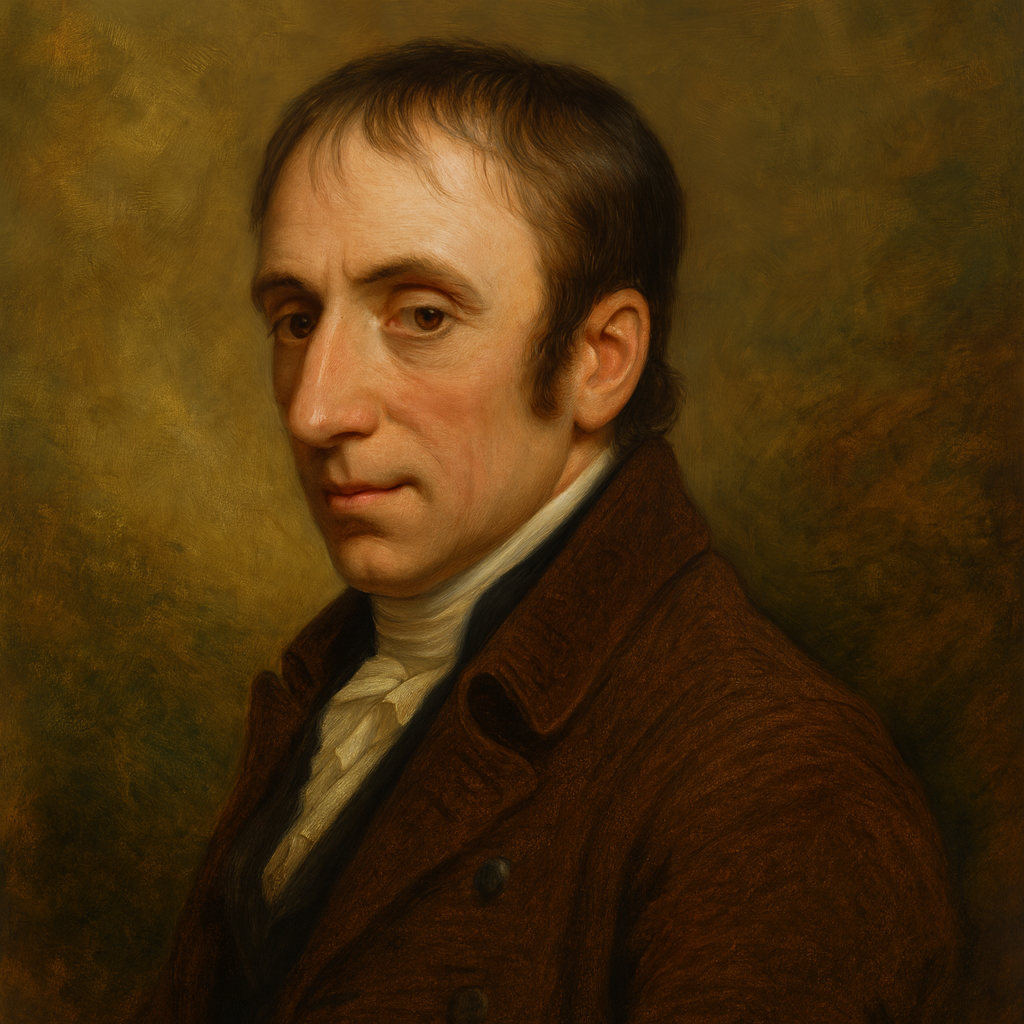
Early Life and Family Background
William Wordsworth was born on April 7, 1770, in Cockermouth, a small market town in the Lake District of England — an area famous for its beautiful mountains, rivers, and lakes.
He was the second of five children born to John Wordsworth, a lawyer and agent for a wealthy landowner, and Ann Cookson Wordsworth, a gentle and religious woman.
His childhood was filled with the beauty of natural surroundings, which left a deep and lasting impression on his mind.
The hills, streams, and countryside of the Lake District became not only the backdrop of his poetry but also the source of his lifelong spiritual connection with Nature.
When he was only eight years old, his mother died, and his father passed away five years later. The children were separated and sent to live with different relatives.
These early losses made Wordsworth thoughtful, sensitive, and introspective, and he often found comfort and companionship in Nature.
Education
Wordsworth attended Hawkshead Grammar School in the Lake District, where he received a solid classical education.
The natural beauty around Hawkshead inspired his imagination and taught him to observe and love Nature deeply.
Unlike other poets of his time, he didn’t learn from books alone — his greatest teacher was the world around him.
In 1787, he went to St. John’s College, Cambridge. He completed his degree in 1791, though his university years did not excite him much.
He was more interested in long walks and observing people and Nature than in academic study.
Journey to France and the French Revolution
After leaving Cambridge, Wordsworth travelled to France in 1791, where he witnessed the French Revolution.
At first, he was inspired by the Revolution’s ideals — liberty, equality, and fraternity — and believed that a new age of justice and freedom had begun.
However, when the Revolution turned violent, and bloodshed replaced brotherhood, Wordsworth became disillusioned and spiritually disturbed.
He returned to England in 1793, lonely and depressed, but his experiences in France had deeply influenced his political and emotional outlook.
Early Poetry and Development
During his early years, Wordsworth wrote poems expressing his love for Nature, humanity, and simple rural life.
Some of his early works include “An Evening Walk” and “Descriptive Sketches” (1793).
In these, one can already see his growing belief that Nature shapes human character and teaches moral lessons.
However, Wordsworth’s real poetic awakening came when he met Samuel Taylor Coleridge in 1797.
Their friendship became one of the most important collaborations in English literary history.
Lyrical Ballads (1798): The Birth of Romanticism
In 1798, Wordsworth and Coleridge published a small collection titled Lyrical Ballads, with a Few Other Poems.
This book is considered the beginning of the Romantic Movement in English poetry.
It changed the direction of English literature forever.
Wordsworth’s poems in this volume — such as “Lines Written in Early Spring,” “Expostulation and Reply,” “The Tables Turned,” and “Tintern Abbey” — reflected his faith in Nature, emotion, and simplicity.
Coleridge contributed his famous poem “The Rime of the Ancient Mariner.”
In the Preface to Lyrical Ballads (added in later editions), Wordsworth explained his poetic beliefs. He wrote that:
“Poetry is the spontaneous overflow of powerful feelings,
recollected in tranquility.”
This means that true poetry comes not from imitation or learning but from genuine emotion and reflection.
Philosophy and Beliefs
Wordsworth’s philosophy is deeply Romantic and spiritual.
He believed that:
Nature is alive and divine. It is a moral and spiritual teacher.
Man and Nature are deeply connected. The natural world shapes our minds and hearts.
Simplicity is beauty. True poetry should use simple language and describe common life.
Emotion is superior to intellect. Feelings and intuition reveal truth more deeply than logic or science.
Childhood is sacred. Children are closer to Nature and God, and therefore purer in heart.
His poems often express these ideas — turning everyday sights and sounds into symbols of truth and joy.
Life at Grasmere and Family
In 1799, Wordsworth and his beloved sister Dorothy Wordsworth settled in a small cottage in Grasmere, a peaceful village in the Lake District.
Dorothy was not only his companion but also his emotional and spiritual support. Her journals, full of natural descriptions, inspired many of his poems.
In 1802, Wordsworth married Mary Hutchinson, his childhood friend. They had five children, though sadly two of them died young.
This loss brought deep sorrow to Wordsworth, but also gave a new depth and seriousness to his poetry.
Major Works
Wordsworth wrote many famous poems during his lifetime. Some of his most important works include:
Lyrical Ballads (1798, 1800) – with Coleridge; includes “Tintern Abbey”, “The Tables Turned”, and “The Lucy Poems.”
The Prelude – an autobiographical epic poem describing the growth of his mind and his love of Nature (published posthumously in 1850).
Ode: Intimations of Immortality (1807) – a deeply spiritual reflection on childhood, memory, and the loss of innocence.
The Excursion (1814) – a long philosophical poem.
Lines Written in Early Spring, “Daffodils” (also known as “I Wandered Lonely as a Cloud”), and “The Solitary Reaper” — some of his best-known shorter poems that celebrate Nature’s beauty and emotional power.
Poet Laureate and Later Years
In 1843, Wordsworth was appointed Poet Laureate of England, the highest poetic honor.
By this time, he had become a national figure — respected for his moral integrity, his love for nature, and his influence on English poetry.
He spent his later years quietly in the Lake District, surrounded by his family and the landscapes that had inspired his poetry.
Though his style became more reflective and religious in his old age, his early passion for Nature and humanity never left him.
Death and Legacy
William Wordsworth died on April 23, 1850, at the age of 80, in his home at Rydal Mount near Grasmere.
He was buried in the churchyard of St. Oswald’s Church, Grasmere — close to the rivers and hills he had loved since childhood.
After his death, his masterpiece The Prelude was published — a long, autobiographical poem tracing the development of his poetic mind.
It confirmed Wordsworth as one of the greatest poets in English literature.
Legacy
Wordsworth’s influence on poetry is immense.
He changed the way people thought about poetry and nature. Before him, poets wrote about kings, heroes, and high subjects. Wordsworth wrote about common people, rural life, and natural beauty, in simple and musical language.
He taught readers to find beauty in the ordinary — a flower, a bird, a mountain, or even a simple human feeling.
He is remembered as:
- The poet of Nature, who saw divinity in the natural world.
- The poet of simplicity, who used plain language and heartfelt emotion.
- The poet of humanity, who found moral truth in everyday life.
His belief that “Nature never did betray the heart that loved her” continues to inspire people even today.
Word Meaning
| Tough Word | Meaning in English | Meaning in Hindi |
| Grow double | Become bent or stooped (from too much studying); physically and mentally dull | झुक जाना या थक जाना (ज़्यादा पढ़ने से) |
| Clear your looks | Brighten your face; look cheerful and fresh | अपने चेहरे को प्रसन्न और ताज़ा बनाओ |
| Toil and trouble | Hard work and mental strain | मेहनत और परेशानी |
| Lustre | Shine; gentle light or brightness | चमक; आभा |
| Mellow | Soft, pleasant, and gentle | मधुर; कोमल; सुखद |
| Endless strife | Constant hard work or conflict without joy | अंतहीन मेहनत या संघर्ष |
| Woodland linnet | A small forest bird known for its sweet song | जंगल में रहने वाला एक छोटा मीठा गाने वाला पक्षी (लिनेट पक्षी) |
| On my life | Truly; I swear; an expression of truth | सचमुच; मेरी कसम |
| Hark! | Listen carefully | सुनो! ध्यान से सुनो |
| Blithe | Cheerful; happy and carefree | प्रसन्न; हर्षित; निश्चिंत |
| Throstle | A song thrush (a bird with a joyful song) | एक मीठा गाने वाला पक्षी (थ्रॉस्ल / सॉन्ग थ्रश) |
| No mean preacher | Not an ordinary teacher; a worthy or great teacher | कोई साधारण शिक्षक नहीं; श्रेष्ठ उपदेशक |
| Bless | To make happy or holy; to bring goodness | आशीर्वाद देना; खुश करना |
| Spontaneous | Natural; not forced; happening by itself | स्वाभाविक; स्वतःस्फूर्त |
| Impulse | A sudden feeling or urge | प्रेरणा; आकस्मिक भावना |
| Vernal | Related to spring; fresh and youthful | वसंत ऋतु से संबंधित; ताज़ा और नवयुवक |
| Sages | Wise men; philosophers | ऋषि; ज्ञानी व्यक्ति; दार्शनिक |
| Lore | Knowledge or learning (especially traditional) | परंपरागत ज्ञान; विद्या |
| Meddling intellect | Interfering or over-analytical mind | हस्तक्षेप करने वाली या अत्यधिक विश्लेषण करने वाली बुद्धि |
| Mis-shapes | Distorts; changes the natural beauty or form | बिगाड़ देती है; रूप विकृत कर देती है |
| Dissect | To cut apart for study or analysis | विच्छेदन करना; काटकर अध्ययन करना |
| Science and Art | Fields of human knowledge and creativity | विज्ञान और कला |
| Barren | Empty; unfruitful | बंजर; निष्फल |
| Leaves (of a book) | Pages | पन्ने |
Very Short Answer Questions
Who wrote the poem “The Tables Turned”?
William Wordsworth.
In which year was “The Tables Turned” published?
It was published in 1798.
In which collection did the poem first appear?
In Lyrical Ballads by Wordsworth and Coleridge.
Which poem is its companion piece?
“Expostulation and Reply.”
To whom is the poem addressed?
It is addressed to the poet’s friend, often identified as Matthew.
What advice does the poet give at the beginning?
He advises his friend to stop reading books and go out into Nature.
What does the poet mean by “grow double”?
He means his friend will become bent and dull from too much study.
Which time of day is described in the poem?
The peaceful time of evening.
Which bird’s song is mentioned first?
The woodland linnet.
What does the linnet’s song symbolize?
It symbolizes the joy and wisdom that come naturally from Nature.
Who is described as “no mean preacher”?
The throstle, or song thrush.
What does Wordsworth ask his friend to let Nature be?
He asks him to let Nature be his teacher.
What kind of wisdom does Nature give?
Spontaneous wisdom full of health and cheerfulness.
What does “one impulse from a vernal wood” mean?
A single natural feeling or inspiration from a spring forest.
What can one impulse from Nature teach?
It can teach more about good and evil than all the philosophers.
What does the poet mean by “Our meddling intellect”?
He refers to the human mind that destroys beauty by over-analysis.
What does the line “We murder to dissect” suggest?
It means we destroy the living spirit of things when we analyze them too much.
What are “barren leaves”?
They symbolize the lifeless pages of books.
What does the poet ask his friend to bring into Nature?
A heart that watches and receives.
What is the central message of the poem?
True wisdom and happiness come from Nature, not from books or science.
Short Answer Questions
What is the main theme of William Wordsworth’s poem “The Tables Turned”?
The main theme of “The Tables Turned” is that Nature is the best teacher. Wordsworth believes that true wisdom and happiness come not from books but from observing and feeling Nature. He urges his friend to stop studying and experience the living beauty around him. Nature, he says, teaches man about goodness, truth, and joy in a more natural and effortless way. The poem expresses the Romantic faith in emotion, simplicity, and spiritual learning through Nature.
How does the poet contrast book learning and Nature’s wisdom?
Wordsworth presents a clear contrast between bookish learning and natural wisdom. He calls book reading a “dull and endless strife,” suggesting that it brings only fatigue and confusion. On the other hand, Nature’s teachings are spontaneous and refreshing. A single experience of the natural world, he says, gives more moral understanding than all the books written by philosophers. Nature’s knowledge is full of health, joy, and purity, while book knowledge is lifeless and mechanical.
What is the significance of the birds mentioned in the poem?
The poet mentions two birds — the linnet and the throstle — as examples of Nature’s teachers. The linnet’s sweet song symbolizes natural wisdom, while the throstle, called “no mean preacher,” represents joyful instruction from Nature. Through their songs, Wordsworth shows that even the simplest forms of life convey deep lessons of peace and contentment. The birds become symbols of Nature’s living voice, which speaks directly to the human heart without the use of books or theories.
What does the poet mean by “One impulse from a vernal wood”?
By “one impulse from a vernal wood,” Wordsworth means a single inspiration or feeling arising from a springtime forest. This “impulse” is a moment of natural awakening — a deep emotional connection with Nature. The poet claims that such a moment can teach more about moral good and evil than all the knowledge of great philosophers. The phrase beautifully expresses the Romantic belief that emotion and intuition reveal truth more effectively than reason or study.
Explain the meaning of the line “We murder to dissect.”
The line “We murder to dissect” is one of the most powerful lines in the poem. Wordsworth means that when people try to analyze or study life scientifically, they destroy its living spirit and beauty. In trying to understand Nature through intellect alone, man kills its natural charm and wonder. The line is a protest against the cold rationalism of science, which focuses on facts but forgets feelings. Wordsworth urges people to feel Nature instead of dissecting it.
How does Wordsworth personify Nature in the poem?
Wordsworth personifies Nature as a wise, kind, and generous teacher. He calls her a source of “ready wealth,” meaning she gives freely to those who observe her with love. Nature breathes “spontaneous wisdom” and “truth” that bring health and cheerfulness to the human mind. By giving Nature human qualities, the poet turns her into a living being who speaks, teaches, and blesses. This personification reflects Wordsworth’s deep spiritual faith in Nature’s moral power.
What is the tone and mood of the poem “The Tables Turned”?
The tone of the poem is cheerful, persuasive, and affectionate. In the beginning, the poet speaks playfully, urging his friend to leave his books. As the poem progresses, the tone becomes calm and reflective, filled with admiration for Nature’s beauty. The mood shifts from liveliness to spiritual peace, showing the movement from the dullness of study to the freshness of natural joy. Overall, the tone reflects Wordsworth’s faith in Nature’s power to heal and inspire.
What message does Wordsworth convey through the poem?
Wordsworth’s message is that Nature is a divine and moral teacher. He tells his friend — and all mankind — to stop overthinking and start feeling the natural world. True wisdom, he says, comes not from books or science, but from living in harmony with Nature. Nature gives health, happiness, and inner peace to those who observe her sincerely. The poem teaches that we should open our hearts, not our books, if we want to find truth and joy.
How does Wordsworth criticize science and intellect in the poem?
Wordsworth strongly criticizes science and intellect for destroying the beauty of Nature. He says that human intellect “mis-shapes the beauteous forms of things” and that we “murder to dissect.” By over-analyzing and separating life into parts, science loses the living essence of things. Wordsworth is not against knowledge but against cold reasoning that ignores feeling. He believes that emotion and simplicity are truer paths to understanding life than scientific analysis.
What is the significance of the poem’s title, “The Tables Turned”?
The title “The Tables Turned” means a reversal of situation or viewpoint. It suggests that the poet is turning the tables on his friend, who believes in learning through books. Instead, Wordsworth argues that true education comes from Nature, not from printed pages. The title also symbolizes a broader shift in thinking — from intellect to feeling, from books to Nature, and from analysis to experience. Thus, it perfectly captures the Romantic spirit of the poem.
Essay Type Questions
Discuss “The Tables Turned” as a poem of Nature and Romanticism.
“The Tables Turned” is one of the finest examples of Romantic poetry, expressing Wordsworth’s deep love and faith in Nature as a moral and spiritual teacher. The poem was published in 1798 in Lyrical Ballads, which marked the beginning of the Romantic Movement in English literature. Wordsworth uses the poem to turn the focus of learning away from books and science toward the living world of Nature. He begins by joyfully calling to his friend: “Up! up! my Friend, and quit your books,” urging him to leave behind the dullness of study and open himself to the freshness of Nature.
In the poem, Wordsworth celebrates Nature not merely as a beautiful setting but as a living presence that guides, heals, and teaches humanity. He personifies Nature as a divine teacher who possesses “a world of ready wealth,” meaning that she gives knowledge freely to those who love her. Her “spontaneous wisdom” and “truth breathed by cheerfulness” make human beings wiser and happier than the knowledge gained from books. The natural world — the birds, the fields, the sunlight — all act as teachers that bring harmony to the heart.
Romanticism, as reflected in this poem, emphasizes emotion, imagination, simplicity, and love of Nature over reason and intellect. Wordsworth rejects the dry and mechanical learning of the Enlightenment and instead finds joy in the simple, spontaneous wisdom of the natural world. The poem captures the essence of Romantic thought — that truth is felt through the heart, not discovered through the head. Thus, “The Tables Turned” remains one of Wordsworth’s most spirited appeals for a return to Nature and the emotional richness of life.
How does Wordsworth contrast bookish learning with the wisdom of Nature?
In “The Tables Turned,” Wordsworth contrasts two kinds of learning — the artificial knowledge of books and the natural wisdom of the living world. From the very beginning, he tells his friend to “quit your books” and stop wasting time in “toil and trouble.” He calls book learning “a dull and endless strife,” suggesting that it exhausts the mind without giving peace. The poet’s tone is affectionate yet persuasive, encouraging his friend to come outdoors and experience the true light of life.
To Wordsworth, Nature’s teaching is spontaneous and effortless. She teaches through the beauty of her sights and sounds — the linnet’s song, the throstle’s music, the soft glow of evening light. These natural experiences bring joy and truth to the heart without the need for intellectual labor. Wordsworth says that “one impulse from a vernal wood” — a single moment of contact with springtime nature — can teach more about human morality (“of moral evil and of good”) than all the writings of philosophers.
In contrast, bookish learning is lifeless and mechanical. It fills the mind but leaves the heart empty. The pages of books are “barren leaves,” symbols of sterile knowledge that does not nourish the soul. Nature, on the other hand, offers “truth breathed by cheerfulness.” Through this contrast, Wordsworth makes a powerful Romantic statement: true wisdom lies in emotional experience and harmony with Nature, not in intellectual pride or academic study.
Explain Wordsworth’s view of science and intellect as presented in the poem.
In “The Tables Turned,” Wordsworth strongly criticizes science and human intellect for their cold, analytical attitude toward life and Nature. He says that our “meddling intellect mis-shapes the beauteous forms of things.” In other words, by over-analyzing and dissecting, human beings destroy the natural beauty and mystery of the world. This idea is captured perfectly in the famous line, “We murder to dissect.” When we try to understand life by cutting it apart, we lose the living essence that makes it beautiful.
Wordsworth’s criticism is not of knowledge itself, but of the mechanical and emotionless spirit of scientific inquiry. He believes that science, in its attempt to explain everything logically, destroys wonder, reverence, and imagination. He warns against an intellect that interferes rather than observes, that tries to control rather than feel. Science and art, according to him, are valuable only when they are guided by the heart, not by cold logic.
Through these lines, Wordsworth expresses the Romantic protest against rationalism and materialism. The intellect alone, he believes, cannot bring happiness or moral truth. Only the heart — open, emotional, and receptive — can understand the spiritual unity between man and Nature. Thus, the poet pleads for balance: let reason exist, but let it never silence the feelings and intuition that connect us with life itself.
What moral and philosophical ideas does Wordsworth convey in “The Tables Turned”?
The poem conveys several important moral and philosophical ideas that are central to Wordsworth’s Romantic thought. The chief among them is that Nature is the best moral teacher. Wordsworth believes that Nature blesses both “our minds and hearts” by giving “spontaneous wisdom breathed by health.” This means that living in harmony with the natural world makes us morally strong, emotionally healthy, and spiritually peaceful. Nature’s lessons are not forced — they flow naturally from her beauty and balance.
Another moral idea in the poem is the rejection of intellectual arrogance. The poet criticizes those who think that all knowledge comes from books or human reasoning. He calls their studies “barren leaves” — lifeless and fruitless. Instead, he encourages humility before Nature, whose teachings are pure and divine. For Wordsworth, even a single impulse from a “vernal wood” can teach a man more about good and evil than all the philosophers (“sages”) ever could.
Philosophically, Wordsworth sees the universe as a living and spiritual unity where man and Nature are intimately connected. When we learn from Nature, we also learn about ourselves. Morally, he suggests that happiness lies not in ambition or intellect but in simplicity, cheerfulness, and love for the natural world. The poem’s philosophy is therefore both spiritual and humanistic, calling for harmony between knowledge, feeling, and Nature.
Comment on the poetic style and language of “The Tables Turned.”
Wordsworth’s poetic style in “The Tables Turned” is marked by simplicity, clarity, and musical beauty. The poem is written in ballad form — eight quatrains (four-line stanzas) with a regular rhyme scheme of ABAB. The rhythm is steady and song-like, reflecting the poet’s cheerful and persuasive tone. The conversational style (“Up! up! my Friend…”) makes the poem sound natural and personal, in keeping with Wordsworth’s belief that poetry should use “the language really used by men.”
The imagery of the poem is vivid and sensory. The reader can clearly see the evening sunlight spreading over green fields, hear the songs of the linnet and throstle, and feel the peace of the countryside. Through such natural imagery, Wordsworth transforms ordinary scenes into spiritual experiences. He also uses personification, presenting Nature as a living teacher, and metaphor, such as “We murder to dissect,” to express deep philosophical ideas in simple language.
The tone of the poem shifts beautifully — from enthusiasm and energy in the opening lines to calm reflection and moral seriousness in the conclusion. Wordsworth’s diction is pure, unaffected, and musical, creating a perfect harmony between thought and feeling. His style captures the very essence of Romantic poetry — emotional depth expressed through natural simplicity. In short, the poem’s language, rhythm, and imagery all serve Wordsworth’s central aim: to make readers feel the living presence of Nature and learn from her eternal wisdom.
Themes
Nature as the Best Teacher
The central theme of the poem is that Nature is the greatest teacher of all. Wordsworth believes that the lessons we learn from Nature are more valuable, pure, and lasting than those gained from books. He urges his friend to “quit your books” and let “Nature be your teacher.” Nature teaches through experience — through sights, sounds, and feelings — not through words or theories. For Wordsworth, Nature’s teachings come naturally, “breathed by health” and “truth breathed by cheerfulness.” She helps us grow wiser, happier, and more peaceful. This theme reflects Wordsworth’s deep faith in Nature’s moral and spiritual power.
Criticism of Bookish Learning
Another strong theme in the poem is Wordsworth’s rejection of mechanical and bookish learning. He calls reading books a “dull and endless strife,” which tires the mind but does not enrich the heart. The poet believes that too much study makes people serious, gloomy, and disconnected from real life. He warns his friend that too much intellectual effort will make him “grow double,” meaning bent and lifeless. Books are described as “barren leaves” — lifeless pages that cannot give joy or inspiration. Through this, Wordsworth emphasizes that true wisdom comes from living experience, not from memorizing facts or theories.
The Harmony Between Man and Nature
Wordsworth’s poetry often celebrates the close relationship between human life and the natural world, and this theme shines throughout “The Tables Turned.” He sees Nature as a living, divine presence that speaks directly to the human soul. The sunlight, green fields, and birds’ songs all reflect a world that is full of moral and spiritual meaning. When man observes Nature with love and simplicity, he becomes calm, pure, and wise. Wordsworth’s belief is that human happiness depends on living in harmony with Nature — by feeling her beauty and understanding her silent lessons. Nature and man, in his view, are not separate; they are bound together in a sacred unity.
Protest Against Science and Intellectual Pride
Wordsworth criticizes the cold and analytical spirit of science that dissects life instead of feeling it. He says, “Our meddling intellect mis-shapes the beauteous forms of things — We murder to dissect.” This means that when we analyze or study something too deeply, we destroy its living beauty and wonder. The poet opposes the pride of intellect, which tries to control or explain everything. He warns that science, though useful, becomes harmful when it forgets the emotional and spiritual dimensions of life. This theme expresses the Romantic protest against materialism and rationalism, insisting that feeling and imagination are higher forms of knowledge than dry reasoning.
The Joy of Simplicity and Cheerfulness
The final theme is the value of a simple, joyful, and healthy life close to Nature. Wordsworth praises “truth breathed by cheerfulness” — meaning that happiness and purity reveal truth more clearly than sorrow or overthinking. He believes that a heart filled with joy and freshness is more capable of wisdom than one burdened by study. The evening sunlight, the singing birds, and the peaceful countryside symbolize this state of simple contentment. The poet’s advice to “bring with you a heart that watches and receives” means that a humble and open heart can receive Nature’s blessings more easily than an educated mind. This theme captures Wordsworth’s belief that real wisdom is born from feeling, not from study — and that joy itself is a form of truth.
Critical Analysis
Introduction
“The Tables Turned” was written by William Wordsworth, one of the greatest poets of the English Romantic Movement, and published in 1798 in the celebrated collection Lyrical Ballads, which he co-authored with Samuel Taylor Coleridge.
The poem serves as a joyful companion piece to “Expostulation and Reply”. Together, the two poems present a dialogue between book learning and natural wisdom. In “The Tables Turned,” Wordsworth “turns the tables” on his friend by showing that Nature is a far better teacher than books or science. The poem embodies Wordsworth’s central belief that real knowledge comes not through study, but through heartfelt communion with Nature.
Central Idea
The central idea of the poem is Wordsworth’s faith in Nature as the supreme source of wisdom, joy, and moral truth. He contrasts the lifeless and tiring pursuit of bookish knowledge with the spontaneous and cheerful teachings of Nature.
The poet urges his friend to leave his books and step outside to observe the beauty of the natural world — the sunlight, the green fields, and the singing birds — which all express divine wisdom. According to Wordsworth, Nature teaches through emotion, simplicity, and direct experience rather than through intellectual effort.
Summary
The poem begins with a lively invitation — “Up! up! my Friend, and quit your books!” Wordsworth asks his friend to abandon his studies and come out to enjoy the fresh air and the glowing evening sunlight. He warns that too much reading will make him “grow double,” meaning bent, dull, and tired.
He then describes the beautiful evening scene where the sun spreads its golden light across the fields, and the birds — the linnet and the throstle — sing joyfully. These birds, he says, are no less than “preachers,” teaching valuable lessons of happiness and truth. The poet then personifies Nature, calling her a teacher who blesses both “our minds and hearts.”
Wordsworth’s poem begins with a lively invitation: “Up! up! my Friend, and quit your books!” He urges his friend to abandon his studies and immerse himself in the fresh air and glowing evening sunlight. He warns that excessive reading will cause him to “grow double,” meaning he will become bent, dull, and tired.
The poet describes the beautiful evening scene where the sun spreads its golden light across the fields, and the birds — the linnet and the throstle — sing joyfully. These birds, he claims, are no less than “preachers,” imparting valuable lessons of happiness and truth. Nature is personified as a teacher who blesses both “our minds and hearts.”
Wordsworth asserts that a single impulse from a springtime forest can teach more about moral good and evil than all the teachings of philosophers. He cautions that human intellect, by dissecting and analyzing too much, destroys the beauty of life — “We murder to dissect.”
Ultimately, he encourages his friend to close his books, referred to as “barren leaves,” and approach Nature with “a heart that watches and receives,” signifying a heart open to feeling and understanding Nature’s wisdom.
Structure and Rhyme Scheme
The poem consists of eight stanzas (quatrains), each having four lines. It is written in ballad form, a favorite form of Wordsworth’s for its simplicity and musical quality.
The rhyme scheme of each stanza is ABAB, which gives the poem a steady rhythm and pleasant flow. The meter alternates between iambic tetrameter (eight syllables) and iambic trimeter (six syllables), creating a song-like movement.
The simplicity of structure matches the poem’s message — that truth lies in the simple, natural rhythm of life, not in artificial complexity.
Theme
The poem presents several important themes central to Wordsworth’s Romantic philosophy:
Nature as Teacher: Wordsworth shows that Nature is the best teacher. It gives wisdom, peace, and truth more effectively than books.
Criticism of Bookish Learning: The poet calls book learning dull and lifeless, saying that it tires the mind without touching the heart.
Man and Nature’s Harmony: He believes that man and Nature are deeply connected, and by observing Nature, man learns goodness and joy.
Protest Against Science: Wordsworth criticizes science and intellect for destroying beauty by over-analysis — “We murder to dissect.”
Simplicity and Cheerfulness: He praises simple, natural living and a cheerful heart as the true sources of wisdom and happiness.
Through these themes, Wordsworth celebrates the Romantic belief that emotion, imagination, and feeling are superior to logic and intellect.
Style
Wordsworth’s style in “The Tables Turned” is marked by simplicity, naturalness, and musical beauty.
He follows his own poetic theory, as stated in the Preface to Lyrical Ballads — that poetry should be written in “the language really used by men.”
The tone is friendly, persuasive, and enthusiastic, full of warmth and sincerity. His imagery is vivid and sensory — “The sun above the mountain’s head,” “Through all the long green fields has spread,” and “How blithe the throstle sings.”
The poem’s conversational rhythm and emotional honesty make it accessible yet deeply thoughtful.
It moves from cheerful urgency to quiet reflection, reflecting the poet’s inner calm and spiritual joy.
Poetic Devices
Wordsworth uses several poetic devices to enrich the poem’s meaning and musicality:
Personification: Nature is personified as a teacher and moral guide — “Let Nature be your teacher.”
Metaphor: “We murder to dissect” compares scientific analysis to killing life.
Imagery: The poem is full of visual and auditory imagery — sunlight, birds, fields, evening light.
Symbolism:
Books / barren leaves → lifeless, mechanical knowledge.
Birds / sunlight / wood → symbols of natural wisdom and joy.
Repetition: “Up! up! my Friend” adds urgency and rhythm to the opening.
Contrast: Between indoor study and outdoor freedom, intellect and emotion, knowledge and wisdom.
These devices give the poem beauty, clarity, and emotional force, making its simple words vibrate with spiritual meaning.
Critical Commentary
“The Tables Turned” reflects the Romantic revolt against the mechanical rationalism of the 18th century. Wordsworth criticizes the growing dependence on books, science, and intellect, arguing that they lead to emotional and spiritual emptiness. Instead, he turns to Nature as a living source of knowledge and moral truth.
The poem’s strength lies in its sincerity and lyrical simplicity. It is not philosophical in a dry sense but emotional and spiritual in tone. The poet’s appeal is not to the mind but to the heart — to feel the beauty of the evening, to listen to the song of the birds, and to receive Nature’s teaching directly.
Wordsworth’s philosophy is both anti-intellectual and profoundly humanistic: he does not reject learning but insists that wisdom comes through feeling, not reasoning. His criticism of science (“We murder to dissect”) remains a timeless warning against losing the soul in the search for facts.
Message
The poem’s message is clear and eternal — Nature is the true source of wisdom, joy, and peace.
Wordsworth urges mankind to give up pride in intellect and to rediscover the simplicity of life. Books may fill the mind, but only Nature can fill the heart. He teaches that knowledge without feeling is barren, but experience guided by emotion and joy leads to truth.
By calling for “a heart that watches and receives,” he reminds us that humility and openness are essential to learning from the natural world.
Conclusion
In conclusion, “The Tables Turned” is not just a poem — it is a moral and spiritual appeal from one of the greatest lovers of Nature. It embodies all the ideals of Romantic poetry — simplicity, emotion, imagination, and reverence for Nature.
Wordsworth’s language is simple yet musical, his message is moral yet universal, and his tone is both affectionate and profound.
Through this poem, he reminds us that life’s deepest truths cannot be read in books but must be felt in the heart. The poem ends with a timeless lesson — close your books, open your heart, and let Nature teach you the meaning of life.
Free Full PDF Download Now
More Poems by William Wordsworth: Easy Literary Lessons
Three Years She Grew in Sun and Shower
The World Is Too Much With Us by William Wordsworth
Lucy Gray by William Wordsworth
A Poet’s Epitaph by William Wordsworth
My Heart Leaps Up by William Wordsworth
Immortality Ode by William Wordsworth
Rural Architecture by William Wordsworth
To the Skylark by William Wordsworth