Pride and Prejudice
Pride and Prejudice by Jane Austen was first published on January 28, 1813, by Thomas Egerton of Whitehall, London. The novel appeared in three volumes, a common format for fiction of the time, and was sold for 18 shillings, making it accessible primarily to the gentry and educated middle class.
The work was published anonymously, bearing the inscription “By the Author of Sense and Sensibility”, a reference to Austen’s earlier novel published in 1811. The first print run was between 1,000 to 1,500 copies, and the novel received immediate public and critical acclaim. Due to its popularity, a second edition was released in November 1813, and a third posthumous edition appeared in 1817.
Pride and Prejudice is a famous English novel by Jane Austen. It tells the story of Elizabeth Bennet, a smart and lively young woman, and her family as they face love, misunderstandings, and social pressures in early 19th-century England.
The Bennet Family and Their Problem
The Bennet family has five daughters: Jane, Elizabeth (Lizzy), Mary, Kitty, and Lydia. Their house is Longbourn. Their mother, Mrs. Bennet, wants all her daughters to marry well because the family’s house will be inherited by a distant cousin, Mr. Collins, after Mr. Bennet dies. So the daughters need good marriages for security and social status.
Arrival of Mr. Bingley and Mr. Darcy
Mr. Bingley, a rich and friendly gentleman, moves into a nearby estate called Netherfield. He brings his proud and reserved friend Mr. Darcy with him. Mrs. Bennet hopes one of her daughters will marry Bingley.
Jane Bennet, the eldest and very kind sister, quickly attracts Mr. Bingley’s attention. Elizabeth meets Mr. Darcy but finds him proud and rude at their first meeting, so she dislikes him.
Growing Feelings and Misunderstandings
Jane visits Netherfield and falls ill, staying there for several days. Elizabeth goes to visit her, where Darcy’s behavior surprises her—he begins to admire Elizabeth’s intelligence and spirit but hides his feelings because of her lower social status.
Meanwhile, Mr. Wickham, a charming officer, tells Elizabeth false stories about Darcy, making her dislike Darcy even more.
Proposals and Rejections
Mr. Collins, the Bennets’ cousin and heir to Longbourn, proposes to Elizabeth, but she refuses him. He then quickly marries her friend Charlotte Lucas.
Mr. Darcy surprises Elizabeth by proposing to her, but she rejects him angrily because of his pride and his role in separating Jane and Bingley, as well as the stories about Wickham.
Truth Revealed and Feelings Change
Darcy writes Elizabeth a letter explaining his actions and revealing Wickham’s true character as a liar and gambler. Elizabeth begins to see Darcy in a new light.
Elizabeth visits Darcy’s estate, Pemberley, with her aunt and uncle. She meets Darcy’s kind sister, Georgiana, and notices how Darcy’s true nature is gentle and generous.
Lydia’s Scandal and Darcy’s Help
Lydia, the youngest Bennet sister, runs away with Wickham, risking the family’s reputation. Darcy secretly helps by finding them and arranging their marriage, saving the Bennet family from disgrace.
Happy Endings
Bingley returns and proposes to Jane, who accepts. Darcy asks Elizabeth again, and this time she happily accepts.
Both couples marry and live happily. The novel ends with family harmony, growth, and the overcoming of pride and prejudice.
The story begins with a famous line: “It is a truth universally acknowledged, that a single man with a lot of money must be looking for a wife.” This shows how people, especially mothers like Mrs. Bennet, believe that rich men must want to marry.
Mrs. Bennet is excited to tell her husband that a rich young man named Mr. Bingley has rented a nearby house called Netherfield Park. She hopes he will marry one of their five daughters. Mr. Bennet makes fun of her excitement but listens to her talk. Mrs. Bennet insists that Mr. Bennet should visit Mr. Bingley so they can become friends and possibly arrange a marriage.
Mr. Bennet teases her by saying maybe Mr. Bingley will fall in love with her instead, since she’s still pretty. Mrs. Bennet says she only cares about her daughters’ futures.
They also argue over which daughter is best. Mr. Bennet likes Elizabeth (Lizzy) for her cleverness, but Mrs. Bennet thinks Jane is prettier and Lydia is more cheerful.
Mr. Bennet jokes often and doesn’t take things seriously. Mrs. Bennet, on the other hand, is emotional, nervous, and always thinking about getting her daughters married. She doesn’t understand her husband’s sarcasm even after being married to him for over 20 years.
Even though Mr. Bennet kept saying he wouldn’t go, he actually visited Mr. Bingley before anyone else in the neighbourhood. He didn’t tell his family until later. His wife and daughters were very surprised when they found out.
Mr. Bennet tells Elizabeth jokingly, “I hope Mr. Bingley will like your hat,” revealing that he has already met him. Mrs. Bennet is shocked and very happy, although she pretends it’s no big deal and says she had expected it all along.
There is some teasing in the family about who will introduce Mr. Bingley at the upcoming ball. Mrs. Bennet criticizes a neighbour, Mrs. Long, saying she will not help because she has nieces of her own to look after.
Mr. Bennet keeps making sarcastic comments, pretending he will introduce Mr. Bingley himself since no one else is able to. He even teases their daughter Mary, who always tries to sound very serious and intellectual but says nothing this time.
Finally, Mrs. Bennet is full of joy and praise for Mr. Bennet. She says he’s a wonderful husband and father. She is especially excited about the ball and hopes Mr. Bingley will dance with one of her daughters—maybe even Lydia, the youngest, who proudly says she’s the tallest.
The family spends the rest of the evening guessing when Mr. Bingley will return Mr. Bennet’s visit and when they can invite him to dinner.
Mrs. Bennet and her daughters try hard to get details about Mr. Bingley from Mr. Bennet, but he won’t tell them anything useful. They finally learn from their neighbour, Lady Lucas, that Mr. Bingley is young, handsome, friendly, and plans to attend the upcoming village ball with a large group.
Mrs. Bennet becomes hopeful that one of her daughters might marry him. A few days later, Mr. Bingley visits Mr. Bennet at home, but he only meets the father. The girls are disappointed, but they get a glimpse of him from the window—he’s wearing a blue coat and riding a black horse.
The Bennets invite him to dinner, but Mr. Bingley replies that he has to go to London and can’t accept. Mrs. Bennet is upset, fearing he won’t stay in the neighbourhood long. However, Lady Lucas suggests that he might just be going to London to bring a large group for the ball. Soon, it is rumoured that he’ll bring 12 ladies and 7 gentlemen, but in the end, he brings only 4 others: his two sisters, one sister’s husband (Mr. Hurst), and his friend, Mr. Darcy.
At the ball, Mr. Bingley is friendly and dances with everyone. He especially likes Jane Bennet and dances with her twice—the only girl he asks to dance again. His easy manners make him popular.
On the other hand, Mr. Darcy, though very rich and good-looking, acts proud and cold. He refuses to dance with anyone except the ladies in his own group. People begin to dislike him.
While Elizabeth is sitting alone (due to lack of dance partners), she overhears a conversation between Mr. Bingley and Mr. Darcy. Bingley tries to get Darcy to dance, even suggesting Elizabeth as a partner. Darcy looks at Elizabeth, then says loudly that she is “tolerable, but not handsome enough to tempt me.” Elizabeth hears this and feels insulted—but she laughs it off and jokes about it later with her friends.
After the ball, the Bennet family is excited, especially Mrs. Bennet, because Jane was clearly admired by Mr. Bingley. Even Mr. Bennet, though not very impressed, listens to his wife’s long and detailed story. Mrs. Bennet also rants about how rude and arrogant Mr. Darcy was, saying she hates him for insulting Elizabeth.
After the ball, Jane and Elizabeth talk privately. Jane, who is usually shy in expressing feelings, tells Elizabeth that she really likes Mr. Bingley. She finds him kind, cheerful, polite, and easy to talk to. Elizabeth agrees and adds that being handsome also completes his perfect image.
Jane feels flattered that Bingley danced with her twice. Elizabeth teases her, saying she expected it because Jane is clearly prettier than anyone else at the ball. Elizabeth jokes that Jane is always too quick to see the good in everyone and never notices people’s faults.
Jane says she doesn’t like to criticize others, and Elizabeth replies that it’s admirable but also surprising how blind Jane is to people’s flaws. Then they talk about Mr. Bingley’s sisters. Jane finds them nice, especially Miss Bingley, who is going to stay with her brother at Netherfield and may become their neighbour.
But Elizabeth is not convinced. She thinks the sisters are proud and showy. They act pleasant only when they want to, and they look down on others. Although they are wealthy, well-educated, and stylish, Elizabeth notices that their money came from trade, not noble birth—something they seem to forget while thinking too highly of themselves.
We also learn more about Mr. Bingley. He inherited a lot of money from his father, who wanted to buy an estate but died before doing so. Mr. Bingley also plans to buy land one day but is currently renting Netherfield House, where he may live for many years.
Bingley’s sisters want him to buy a grand estate, but they are happy to live at his house and act like they belong there, especially Mrs. Hurst, who married a man with style but not much money.
Then we see how different Bingley and Darcy are. They are very good friends, but their personalities are opposites.
Bingley is friendly, open, and well-liked.
Darcy is smart but proud, reserved, and often offends people.
At the ball:
Bingley found everyone warm and kind, and said he had never met so many pretty and friendly girls. He especially admired Jane Bennet, even calling her angelic.
Darcy, on the other hand, thought the people were plain and unfashionable, and found no enjoyment at all. He admitted Jane was pretty, but thought she smiled too much.
Even so, Darcy’s sister and Mrs. Hurst also said Jane was sweet and agreeable. Their approval gave Mr. Bingley the confidence to continue thinking about her in a romantic way.
The Bennets have close friends called the Lucas family, who live nearby in a place called Lucas Lodge.
Sir William Lucas used to be a businessman in Meryton, but after being knighted, he stopped working and moved to the countryside. He enjoys being polite and important now. His wife, Lady Lucas, is kind but not very clever—just the sort of neighbor Mrs. Bennet likes.
Their oldest daughter, Charlotte Lucas, is 27 years old and a close friend of Elizabeth Bennet.
The day after the ball, the Lucas sisters visit the Bennet family to talk about it.
Mrs. Bennet says Charlotte started the evening well by being Mr. Bingley’s first dance partner. But Charlotte jokes that he liked Jane more because he danced with her twice.
They talk about what Mr. Bingley said at the ball. He told someone that Jane Bennet was the prettiest woman in the room. Mrs. Bennet is thrilled but says maybe it doesn’t mean anything yet.
Then they gossip about Mr. Darcy, who offended Elizabeth at the ball by saying she was “only just tolerable.” Charlotte tells Elizabeth not to be upset—Darcy is rude and not worth liking.
Jane, who is always gentle, defends Mr. Darcy and says he talks more when he’s with close friends. But the others believe he is too proud. They say he ignored Mrs. Long at the ball because she came in a cheap carriage.
Miss Lucas says that Darcy has a reason to be proud—he is rich and well-born.
Elizabeth replies, “I could forgive his pride if he hadn’t hurt mine.”
Mary, Elizabeth’s younger sister, gives a thoughtful speech. She says:
Pride and vanity are not the same.
Pride is how we see ourselves.
Vanity is how much we care about what others think of us.
A young boy from the Lucas family says that if he were as rich as Mr. Darcy, he’d be proud too, keep hunting dogs, and drink wine every day.
Mrs. Bennet scolds him jokingly, and their visit ends with laughter and playful arguments.
The Bennet family visits the Bingleys, and the Bingley sisters return the visit. They like Jane but look down on her family, especially the younger sisters and Mrs. Bennet. Elizabeth notices this and thinks they are being fake, though they are kind to Jane because Mr. Bingley clearly likes her.
Jane is falling for Mr. Bingley, but she hides her feelings well. Elizabeth tells her friend Charlotte Lucas about this, and Charlotte says Jane might be hiding her feelings too much. Charlotte believes that women should show more affection if they want to secure a man’s attention. She thinks love can grow later, and that marriage is mostly luck.
Elizabeth disagrees and says Jane barely knows Bingley yet. She values real feelings over just trying to “catch a husband.”
Meanwhile, something surprising is happening — Mr. Darcy, who once said Elizabeth wasn’t pretty enough to dance with, is starting to like her. He notices her lively expression and her playful personality. Elizabeth has no idea. She still thinks Darcy is proud and unpleasant.
At a gathering, Darcy listens closely when Elizabeth talks to others. She notices and jokes about it to her friend Charlotte. Later, Sir William Lucas tries to get Elizabeth and Darcy to dance, but Elizabeth refuses. Darcy asks politely, but she still says no.
Darcy is not offended — in fact, he admires her confidence. Miss Bingley notices Darcy paying attention to Elizabeth and becomes jealous. She teases him, thinking he will laugh with her at the Bennets, but he surprises her by saying he was admiring Elizabeth’s eyes. Miss Bingley mocks the idea of him marrying into the Bennet family, but Darcy is not bothered.
Mr. Bennet’s land and money will go to a male relative when he dies, not to his daughters. This worries Mrs. Bennet, because their daughters will have little money to live on. Mrs. Bennet’s sister, Mrs. Phillips, lives in nearby Meryton, and the youngest Bennet girls—Catherine and Lydia—often walk there to visit her and get news. They are silly and obsessed with the army officers who have just arrived in town for the winter.
Catherine and Lydia are especially excited about the soldiers. They talk of nothing else. Mr. Bennet makes fun of them and calls them “the silliest girls in the country.” Lydia doesn’t care and keeps talking about her favorite officer, Captain Carter.
One day, a letter arrives for Jane from Miss Bingley, inviting her to dinner. Mrs. Bennet, hoping Jane will get stuck there overnight and grow closer to Mr. Bingley, insists she ride on horseback, even though it might rain. It does rain, and Jane gets soaked and becomes sick.
Jane writes a letter the next morning saying she is unwell with a sore throat and headache. She must stay at Netherfield and see a doctor. Elizabeth is worried and decides to walk the three miles in muddy weather to be with her. Her mother tries to stop her, saying she’ll get dirty, but Elizabeth insists.
Elizabeth sets off with her younger sisters, who only come along hoping to spot officers in Meryton. Once there, they go visit a soldier’s wife, and Elizabeth continues walking alone. She arrives at Netherfield very muddy and tired, which shocks the Bingley sisters and Mrs. Hurst, who quietly judge her. Mr. Bingley is kind and happy to see her. Mr. Darcy notices her glowing appearance from walking and is a bit impressed, though unsure if it was proper.
Elizabeth goes straight to Jane’s room. Jane is sick and weak but very happy to see her sister. Elizabeth stays by her side all day. The doctor comes and says Jane has a bad cold and should stay in bed. Elizabeth plans to go home, but Jane doesn’t want her to leave, and Miss Bingley then kindly invites her to stay at Netherfield. Elizabeth agrees, and a servant is sent to Longbourn to bring her some clothes.
Elizabeth joins the Bingleys for dinner at Netherfield while Jane is still sick upstairs. Mr. Bingley is kind and clearly worried about Jane, but his sisters only pretend to care. As soon as Elizabeth leaves the room, they make fun of her behind her back. They criticize her appearance, manners, and even her muddy dress from walking to Netherfield. Mr. Darcy quietly defends Elizabeth, saying her eyes looked brighter from the walk, while Mr. Bingley insists she looked well and praises her devotion to her sister.
Later in the drawing room, Elizabeth chooses to read a book instead of playing cards, which surprises the others. Miss Bingley mocks her, but Elizabeth calmly says she enjoys many things besides reading.
The group then discusses what makes a woman truly “accomplished.” Darcy says an accomplished woman must have talent in music, languages, art, and good manners—but must also improve her mind through serious reading. Elizabeth jokes that she doesn’t believe such a woman exists, which annoys the Bingley sisters.
Miss Bingley later gossips again, claiming Elizabeth only tries to impress men by criticizing other women. Darcy agrees that some women use manipulative tricks, but doesn’t seem to be attacking Elizabeth.
Elizabeth then returns to say Jane is worse. Mr. Bingley is concerned and offers to send for the local doctor. His sisters act dramatic but mostly suggest bringing in a fancy doctor from London. Elizabeth refuses the idea. In the end, they agree to wait until the morning and call the local doctor if Jane doesn’t improve.
Elizabeth spends the night taking care of her sick sister, Jane, at Netherfield. In the morning, she is happy to report that Jane is feeling a bit better. Still worried, Elizabeth sends a message home asking their mother to come see Jane for herself.
Mrs. Bennet arrives with her two youngest daughters, Lydia and Kitty. She sees that Jane is not dangerously ill—and is secretly happy, because Jane staying longer at Netherfield means more time near Mr. Bingley.
Mrs. Bennet refuses to take Jane home, and even the doctor agrees she should stay. The Bennet women join the Bingleys for breakfast. Mrs. Bennet thanks them for their kindness, then starts praising Jane endlessly while also boasting about Netherfield’s beauty and asking if Bingley plans to stay long. Elizabeth feels embarrassed by her mother’s talkative and pushy behavior.
Mr. Bingley stays kind and polite, but Miss Bingley and Mr. Darcy are clearly uncomfortable. Elizabeth and Mr. Bingley have a light conversation about personalities, which Mrs. Bennet interrupts, scolding Elizabeth for talking too much. Darcy mentions how country life offers little variety in people, which offends Mrs. Bennet, and she awkwardly insists the countryside has plenty of social activity.
Elizabeth tries to change the topic and asks if Charlotte Lucas has visited recently. Mrs. Bennet then goes on about how agreeable Sir William is, and how her daughters are brought up better than the Lucas girls. She insults Charlotte’s looks but praises Jane’s beauty—too much.
Elizabeth tries to stop her mother from embarrassing the family, but Mrs. Bennet keeps talking. She even brings up an old story about a man who wrote a poem for Jane years ago but didn’t propose. Elizabeth jokingly says poetry may kill weak love rather than strengthen it, and Mr. Darcy quietly agrees.
As the visit ends, Lydia boldly reminds Mr. Bingley of his promise to host a ball. He says he’s ready to keep his promise—but they should wait until Jane is fully recovered. Lydia happily agrees and says the officers in town should host a ball too.
Finally, the Bennet women leave. Elizabeth goes back to Jane, while the Bingleys and Darcy discuss the strange and embarrassing visit. Darcy, however, does not criticize Elizabeth, even though Miss Bingley tries to make fun of her again.
The next day at Netherfield is much like the one before. Jane is still sick, but slowly getting better. Elizabeth continues to stay with her. In the evening, Elizabeth joins everyone in the drawing room.
Mr. Darcy is writing a letter. Miss Bingley sits beside him, constantly talking to him and praising everything he does—from his handwriting to how long the letter is. Darcy answers politely but isn’t very interested in her compliments. Elizabeth listens quietly, amused by Miss Bingley’s obvious attempts to get Darcy’s attention—and his total lack of interest.
Mr. Bingley and Mr. Hurst play cards while Elizabeth sews. A light and funny conversation follows about writing letters. Miss Bingley praises Darcy’s letters, while Bingley jokes that he writes carelessly. Darcy says Bingley is secretly proud of his messy writing, which leads to a discussion about how people often brag about their own flaws.
Darcy then criticizes how easily Bingley says he would leave a place without thinking it through. Elizabeth teases both men, especially Darcy, saying he doesn’t seem to believe in giving in to friendship or affection without strong reasons. She cleverly defends Bingley’s sweet nature while challenging Darcy’s strict logic. Bingley laughs and says he prefers peace over arguing.
After the discussion, Darcy asks for some music. Miss Bingley quickly goes to the piano and invites Elizabeth to play first, but Elizabeth politely refuses. Miss Bingley and her sister sing together, while Elizabeth notices that Mr. Darcy keeps looking at her. She wonders if he admires her—or if he’s just looking because he disapproves of her. She doesn’t really care.
Then Darcy surprisingly asks Elizabeth if she feels like dancing. She jokingly says he only asked so he could mock her taste. When he politely responds that he doesn’t dare to criticize her, she is surprised by his gentle answer.
Darcy finds himself more and more attracted to Elizabeth, even though he thinks her lower social status is a problem. Miss Bingley sees this and becomes jealous. She begins hinting rudely about what it would be like if Darcy married Elizabeth—mocking Elizabeth’s family and behavior.
Darcy doesn’t rise to the insults but defends Elizabeth’s eyes, saying they are too beautiful to be captured in a painting.
Just then, Elizabeth appears during a walk outside. Miss Bingley and Mrs. Hurst rudely leave Elizabeth out of the group, walking arm-in-arm with Mr. Darcy. Elizabeth doesn’t mind and jokes that they look perfect as a group of three, saying they shouldn’t ruin the scene by letting her join. She happily walks away alone, looking forward to going home soon.
That evening at Netherfield, Jane is feeling better and joins everyone in the drawing room after dinner. Elizabeth takes care of her, and Miss Bingley and Mrs. Hurst act friendlier than usual—at least while the men are away. They chat with wit and energy, but the moment the men return, their attention shifts completely to Mr. Darcy.
Mr. Bingley is very kind and attentive to Jane, making sure she’s comfortable by the fire. He mostly ignores everyone else. Elizabeth watches their closeness happily.
Miss Bingley tries to get Mr. Darcy’s attention. She pretends to read the same book he’s reading and keeps making comments to distract him, but he’s clearly more interested in his book than in her.
To impress Darcy, Miss Bingley suddenly says how much she enjoys reading and declares that she would need a large library in her future home. But no one believes she’s sincere, and no one replies.
When Mr. Bingley mentions throwing a ball at Netherfield, Miss Bingley tries to change his mind, saying some people wouldn’t enjoy it (hinting at Mr. Darcy). But Bingley insists he’s already planning it.
Trying again to get Darcy’s attention, Miss Bingley invites Elizabeth to walk around the room with her. Elizabeth is surprised but agrees. Miss Bingley’s real goal works: Darcy looks up from his book.
Darcy is asked to join them, but he declines, saying he imagines they are walking either to share secrets or to show off how good they look. In either case, he says, he shouldn’t interfere.
Elizabeth laughs and says he must be teasing them. Miss Bingley asks how to punish him, and Elizabeth jokes they should tease him in return—but she doesn’t think it would work.
Darcy and Elizabeth then have a clever, teasing conversation about faults and pride. Darcy admits he is not quick to forgive people who offend him. Elizabeth calls this a serious fault—but also compliments him for at least choosing a strong one.
They both poke fun at each other, but underneath the joking is a growing mutual interest.
Miss Bingley, feeling left out, tries to change the subject by asking for music. Her sister plays the piano, and Darcy, starting to realize he may be too focused on Elizabeth, is actually relieved for the distraction.
The next morning, Elizabeth writes to her mother asking for their carriage, so she and Jane can return home. But Mrs. Bennet, who had planned for them to stay at Netherfield until Tuesday (a full week), refuses. She even writes that if Mr. Bingley and his sister ask them to stay longer, she wouldn’t mind at all.
Elizabeth is annoyed. She is eager to return home and doesn’t want to overstay their welcome. She convinces Jane to borrow Mr. Bingley’s carriage instead. They plan to leave that very morning and ask permission to do so.
The Bingleys politely express regret and try to persuade them to stay just one more day. Jane agrees, and they decide to leave on Sunday instead. Miss Bingley quickly regrets suggesting the delay—she is jealous of Elizabeth and doesn’t want her around, even though she likes Jane.
Mr. Bingley is genuinely sad to see Jane go. He tries to convince her to stay longer, saying she isn’t fully recovered. But Jane is firm and says she feels well enough to leave.
Mr. Darcy is actually glad they are leaving. He finds himself becoming more and more attracted to Elizabeth, which bothers him. He decides to hide his feelings and avoids speaking to her. Even when they are alone for half an hour, he focuses on his book and doesn’t look at her.
On Sunday, after church, Jane and Elizabeth finally leave Netherfield. Miss Bingley suddenly becomes much nicer—hugging Jane and even shaking hands with Elizabeth. But her kindness is clearly forced.
When the sisters reach home, their mother is not happy. She scolds them for returning early and says Jane will probably get sick again. Their father, though not very expressive, is truly happy to see them back.
At home, things have changed. Conversations are dull without Jane and Elizabeth. Mary is still deep into her music and moral studies, sharing boring quotes and lessons. Lydia and Kitty, however, are full of gossip. The regiment has had a lot of activity: officers dining with their uncle, a soldier being punished, and rumors that Colonel Forster may soon get married.
The next morning at breakfast, Mr. Bennet surprises the family by saying they will have a guest for dinner. Mrs. Bennet gets excited, thinking it must be Mr. Bingley. But Mr. Bennet says it’s someone they’ve never met before — his cousin, Mr. Collins.
This shocks everyone. Mr. Collins is the man who will inherit their house after Mr. Bennet dies, because of a legal rule called an entail (which means the property goes to male relatives only). Mrs. Bennet gets upset again, as she often does when the topic of inheritance comes up.
Mr. Bennet reads Mr. Collins’s long and formal letter aloud. In it, Mr. Collins says he wants to make peace with the Bennet family after years of bad relations between their fathers. He also says he has just become a clergyman and now works for the wealthy and noble Lady Catherine de Bourgh, who gave him a good job as a parish priest. He wants to visit the Bennets on November 18th, and plans to stay for a week.
Mr. Collins also says he is sorry that he will someday inherit their home and wants to make it up to them somehow — though he doesn’t say how yet. Elizabeth finds his style pompous (too formal and proud) and wonders if he is really sensible. Mr. Bennet jokingly says he hopes Mr. Collins is not sensible — because that would make him more entertaining.
Mary praises the letter for its formal language. Lydia and Kitty are not interested at all — Mr. Collins doesn’t wear a red soldier’s coat, so he doesn’t matter to them. Surprisingly, Mrs. Bennet is no longer angry with Mr. Collins and starts to feel fine about his visit.
Mr. Collins arrives right on time. He is tall, serious-looking, and very formal in his behavior. He quickly begins complimenting everyone — especially Mrs. Bennet and her daughters — saying they are all prettier than he had expected and would surely marry well.
His flattery annoys some people but pleases Mrs. Bennet. When she complains about the entail, he responds politely and says he is sorry for their situation.
At dinner, Mr. Collins keeps admiring the house and the furniture — although the Bennets realize he is likely imagining it as his future home. He also asks which daughter cooked the meal, trying to be kind. Mrs. Bennet is slightly insulted and tells him firmly that they have a cook, and her daughters don’t do kitchen work. Mr. Collins apologizes again and again, even after she says it’s fine.
At dinner, Mr. Bennet hardly talks. But after dinner, he tries to make Mr. Collins speak by mentioning Lady Catherine de Bourgh. Mr. Collins proudly praises her. He says she is very kind, friendly, and generous, especially to him. He tells the Bennets that she has invited him to dinner, let him visit her, and even advised him to get married. He admires her daughter, Miss De Bourgh, and says she is very beautiful and noble, though she is often sick.
Mrs. Bennet seems impressed by Lady Catherine and her daughter. Mr. Collins continues praising them and even says he enjoys giving little compliments to Lady Catherine, which she likes. Mr. Bennet quietly finds Mr. Collins very silly but listens with amusement.
Later in the evening, Mr. Collins offers to read a book aloud to the ladies. He refuses to read a novel, saying he never reads them, and instead picks a book of sermons (religious lectures). But after reading only a few pages in a dull tone, Lydia interrupts him with gossip about Meryton. Mr. Collins is upset and stops reading. He says young girls don’t care about serious books.
Finally, Mr. Collins decides to play backgammon with Mr. Bennet. Mrs. Bennet and her daughters apologize for Lydia’s behavior, but Mr. Collins pretends not to be angry and plays the game.
Mr. Collins is not a smart man. He grew up with a father who didn’t care about education, and although he went to university, he didn’t learn much or make any good friends. He acts very humble, but he is also proud because Lady Catherine de Bourgh gave him a good job and a home as a clergyman. He thinks very highly of himself because of this.
Now that he has money and a house, Mr. Collins wants to get married. He plans to marry one of the Bennet daughters to make up for the fact that he will one day inherit their father’s house. At first, he chooses Jane. But when Mrs. Bennet hints that Jane is likely to get engaged soon, Mr. Collins quickly changes his mind and decides to marry Elizabeth instead.
Mrs. Bennet is now happy with Mr. Collins, hoping he will marry one of her daughters soon. That morning, the younger girls plan to walk to the nearby town of Meryton, and Mr. Bennet asks Mr. Collins to go with them—mainly because he wants some peace and quiet in his study.
On the walk, Mr. Collins talks a lot about himself. When they reach Meryton, the girls look around for the soldiers. Soon they spot a handsome new young man walking with Mr. Denny. Mr. Denny introduces him as Mr. Wickham, a new officer who just joined their regiment. Wickham is very good-looking, polite, and easy to talk to. All the girls, especially Lydia and Kitty, are impressed.
As they are chatting, Mr. Bingley and Mr. Darcy ride by and stop to greet them. But something strange happens—when Mr. Darcy sees Mr. Wickham, they both suddenly change their expressions: Darcy goes pale, and Wickham turns red. They clearly know each other, and something is wrong between them. Elizabeth notices this and is very curious.
After Darcy and Bingley leave, Mr. Wickham and Mr. Denny walk the girls to Mrs. Philips’s house (their aunt). Mrs. Philips is excited to see her nieces and happily welcomes Mr. Collins. She is very impressed with his polite manners. But she and the girls are more curious about Wickham. She promises to invite him to dinner the next day, and hopes the Longbourn family will come too, so they can all enjoy some games and food.
On the walk home, Elizabeth tells Jane about the strange reaction between Darcy and Wickham. Jane can’t explain it either.
Mr. Collins, on the other hand, tells Mrs. Bennet how wonderful he thinks Mrs. Philips is—only second to Lady Catherine and her daughter!
Mr. Collins and the Bennet sisters visit their aunt, Mrs. Philips, in Meryton. They’re happy to hear that Mr. Wickham is already there. Mr. Collins spends the first part of the evening talking proudly about Lady Catherine de Bourgh and her grand home, Rosings. Mrs. Philips is very impressed by everything he says.
When the men arrive, Elizabeth is especially pleased to see Mr. Wickham. She finds him charming and much more handsome and pleasant than anyone else in the room. Mr. Wickham sits next to her and starts a friendly conversation.
Later, during a card game, Mr. Wickham talks to Elizabeth about Mr. Darcy. He tells her a sad story: he grew up close to the Darcy family and was even promised a good job (a church position) by Mr. Darcy’s father. But when the elder Mr. Darcy died, the current Mr. Darcy did not give Wickham the job. Wickham says Mr. Darcy treated him unfairly, maybe out of jealousy, and claims that Darcy is very proud and cold.
Elizabeth believes Wickham’s story and feels even more dislike toward Mr. Darcy. Wickham adds that Darcy’s pride sometimes leads him to do good things for others, but it also makes him unkind and unfair, especially to Wickham.
They also talk about Lady Catherine de Bourgh (Mr. Collins’s patron). Wickham says she is proud and bossy. He also mentions that Lady Catherine is Mr. Darcy’s aunt, and that her daughter might marry Mr. Darcy to keep their family estates together.
By the end of the evening, Elizabeth is deeply impressed by Mr. Wickham. She finds him handsome, kind, and well-mannered. On the way home, she keeps thinking about him, but doesn’t get the chance to talk about him because Lydia and Mr. Collins won’t stop talking.
The next day, Elizabeth tells Jane everything Mr. Wickham said about Mr. Darcy. Jane is shocked and upset. She finds it hard to believe Mr. Darcy could be so cruel, especially since he is Mr. Bingley’s close friend. But at the same time, she doesn’t want to think Wickham is lying. So, Jane tries to see both men as good and blames their problems on a misunderstanding or other people’s interference.
Elizabeth, however, believes Wickham’s story and says that if Darcy disagrees, he should say so. Jane is confused and feels sad that such matters are hard to understand.
Just then, Mr. Bingley and his sisters arrive to personally invite the Bennet family to a ball at Netherfield, which will happen the following Tuesday. They act politely only to Jane, ignore most of the family, and leave quickly, clearly trying to avoid Mrs. Bennet.
Everyone in the Bennet family is excited about the ball. Mrs. Bennet thinks it’s arranged for Jane. Jane looks forward to spending time with Mr. Bingley, while Elizabeth hopes to dance with Mr. Wickham. Lydia and Kitty are excited about dancing with any officer. Even Mary, who is usually serious, doesn’t mind attending.
Elizabeth is so cheerful she even talks to Mr. Collins, asking if he’ll attend the ball. He says he will, and surprisingly, he plans to dance. He then asks Elizabeth for the first two dances — which she had hoped to reserve for Mr. Wickham! She realizes Mr. Collins is showing her special attention and suspects he may want to marry her. Her mother supports the idea, but Elizabeth is not interested and says nothing for now.
Meanwhile, it rains so much that the girls can’t go out. They miss seeing the officers in Meryton, especially Mr. Wickham. Everyone is bored, but the excitement of the upcoming Netherfield ball keeps them hopeful.
The long-awaited ball at Netherfield finally takes place. Everyone is excited. Elizabeth hopes to dance with Mr. Wickham, but he does not come to the ball. She finds out that he avoided it because Mr. Darcy would be there.
To her surprise, Mr. Darcy asks Elizabeth to dance. She reluctantly agrees. During the dance, they have a tense and awkward conversation. Elizabeth tries to make him talk about Wickham, but Darcy speaks carefully and avoids saying much.
After the dance, Elizabeth talks to Charlotte and others. She also meets Miss Bingley, who tries to insult her and her family. Elizabeth handles it calmly.
Meanwhile, Mr. Collins, who is also at the ball, acts foolishly. He introduces himself to Mr. Darcy in a very awkward way and talks too much. Later, during dinner, Mrs. Bennet talks loudly about Jane’s future marriage to Mr. Bingley, which embarrasses Elizabeth.
Elizabeth starts to feel ashamed of her family’s behaviour, especially her mother and younger sisters, who are being noisy and silly. She notices that Mr. Darcy is watching them, and she feels uncomfortable.
The next morning, Mr. Collins finally proposes marriage to Elizabeth in a very formal and awkward way. He believes he’s doing her and her family a favor because he will inherit the Longbourn estate one day. He explains his reasons for marriage — including that Lady Catherine de Bourgh, his wealthy patroness, told him to marry soon.
Mr. Collins says he picked Elizabeth because it would be best to marry one of Mr. Bennet’s daughters, since he will inherit their home. He also says he doesn’t care that Elizabeth is not rich and even praises her for being “modest.”
However, Elizabeth refuses his proposal firmly and clearly. But Mr. Collins doesn’t believe her. He thinks she’s only pretending to say no, like many women do before eventually saying yes.
Elizabeth continues to reject him, more seriously each time. She tells him they would not be happy together and that she is not trying to tease or encourage him. Still, Mr. Collins refuses to believe she means it.
Finally, Elizabeth leaves the room, planning to ask her father for help to stop Mr. Collins for good, since he clearly won’t take no for an answer.
After Elizabeth rejects Mr. Collins, her mother, Mrs. Bennet, is shocked and upset. She had been waiting outside to hear the news and is angry when Elizabeth walks away quickly. Mrs. Bennet congratulates Mr. Collins, wrongly thinking he was successful. Mr. Collins believes Elizabeth said no just to appear modest, and he’s sure she’ll say yes soon.
Mrs. Bennet tries to convince Elizabeth to accept the proposal. She calls her headstrong and foolish and insists she will make her change her mind. But Mr. Collins starts to wonder if maybe Elizabeth really isn’t suitable for him after all.
Mrs. Bennet rushes to her husband, Mr. Bennet, and begs him to force Elizabeth to accept. Mr. Bennet calls Elizabeth to the library and confirms she refused Mr. Collins. He then gives her support by saying:
“Your mother will never see you again if you do not marry Mr. Collins, and I will never see you again if you do.”
Elizabeth is relieved. Mrs. Bennet is furious and feels betrayed.
Mrs. Bennet keeps nagging Elizabeth, crying about her “nerves” and complaining that no one supports her. She tries to get Jane and Charlotte Lucas on her side, but they both refuse to interfere.
Charlotte visits the Bennets and hears the gossip right away from Lydia and Kitty. Mrs. Bennet tries again to pressure Elizabeth and complains loudly in front of everyone. Elizabeth quietly leaves the room.
Finally, Mr. Collins also gives up. He tells Mrs. Bennet that he is now “resigned” and accepts Elizabeth’s rejection, though in a very pompous and self-important way. He says perhaps it’s better this way — as he’s not sure how happy he would’ve been with Elizabeth anyway.
Elizabeth is glad the awkwardness with Mr. Collins’s rejected proposal is almost over. He’s now cold and stiff toward her and spends more time talking to Charlotte Lucas, who politely listens to him. Mrs. Bennet is still upset and keeps making comments that annoy Elizabeth.
The next day, the Bennet sisters walk to Meryton hoping to see Mr. Wickham. He joins them and walks with them to their aunt’s house. He tells Elizabeth that he avoided the Netherfield ball on purpose because he didn’t want to be in the same room as Mr. Darcy for so long — it would have been too uncomfortable.
Elizabeth admires Wickham’s decision and enjoys his company. He even walks back with them to Longbourn, giving Elizabeth a chance to introduce him to her parents. She feels flattered by his attention.
Later that day, Jane receives a letter from Caroline Bingley. The Bingleys have suddenly left Netherfield and gone to London, with no plans to return. Caroline writes that she hopes Jane will find many other admirers to replace them, and she talks a lot about Mr. Bingley admiring Georgiana Darcy (Mr. Darcy’s sister). She even hints they hope Georgiana will marry Bingley someday.
Jane is very upset, thinking this means Mr. Bingley doesn’t love her. But Elizabeth sees through the letter — she believes Caroline is trying to keep her brother away from Jane so he’ll marry Miss Darcy instead.
Elizabeth encourages Jane, telling her that Bingley still loves her and that Caroline is being manipulative. Jane, being kind and trusting, says maybe Caroline just doesn’t realize what she’s doing — maybe she’s just wrong, not mean.
They decide not to tell Mrs. Bennet everything, only that the Bingleys went to London. Even this small news makes her sad, but she comforts herself with the hope that Mr. Bingley will soon return. She plans a fancy dinner just in case!
The Bennets are invited to dinner at the Lucas family’s house. During the visit, Mr. Collins spends most of his time talking to Charlotte Lucas, which Elizabeth appreciates, thinking her friend is just being polite.
But Charlotte has a secret plan — she wants to marry Mr. Collins. She knows he wants to get married quickly, and since Elizabeth rejected him, Charlotte sees an opportunity. Early the next morning, Mr. Collins sneaks out of Longbourn and proposes to Charlotte. She accepts him, not out of love, but because she wants a secure and respectable home.
Charlotte’s parents are thrilled. Mr. Collins has a good job, a future inheritance, and Charlotte has little money or beauty — so they think it’s a great match. Even Charlotte feels satisfied. She doesn’t care much for romance and believes marriage is simply the best way to live comfortably.
Back at Longbourn, Mr. Collins returns and struggles to keep the secret, even though Charlotte asked him to wait until she told Elizabeth herself.
The next day, Charlotte tells Elizabeth about the engagement. Elizabeth is shocked — she can’t believe her close friend would marry someone as foolish and annoying as Mr. Collins. Charlotte calmly explains that she just wants a comfortable life, and Mr. Collins can give her that.
Elizabeth tries to act polite, but inside she feels sad and disappointed. She thinks Charlotte is lowering herself by marrying for convenience rather than love, and she worries her friend will never be truly happy.
Charlotte’s father, Sir William Lucas, visits the Bennets to announce Charlotte’s engagement to Mr. Collins. The Bennets are shocked—especially Mrs. Bennet, who refuses to believe it at first and becomes very upset. Lydia blurts out that Mr. Collins wanted to marry Elizabeth, which makes the situation even more awkward.
Elizabeth confirms the news to support Sir William, and she and Jane politely congratulate him. But once Sir William leaves, Mrs. Bennet rants angrily, blaming Elizabeth for “ruining everything” and saying Charlotte and Mr. Collins will never be happy.
Mr. Bennet, however, finds it amusing. He says he’s glad to know that Charlotte isn’t as sensible as he thought—even calling her more foolish than his wife and daughter.
Elizabeth feels disappointed and hurt by Charlotte’s decision. She realizes that their friendship may never be the same, as she can’t respect Charlotte’s choice. Meanwhile, Elizabeth becomes even more protective of Jane, especially since Mr. Bingley still hasn’t returned, and they’re starting to hear rumors he may not come back at all.
Mr. Collins writes a long and overly thankful letter, sharing his joy about the engagement. He returns to Longbourn soon after, but now Mrs. Bennet resents his presence. She’s angry that Charlotte will someday inherit Longbourn, and she worries about being thrown out of the house.
Mr. Bennet tries to calm her with jokes, but nothing really helps. Mrs. Bennet can’t forgive Charlotte or get over her frustration about the entail—the law that gives the estate to Mr. Collins instead of her daughters.
Miss Bingley writes a letter to Jane. It confirms that the Bingley family is staying in London for the winter, and Mr. Bingley won’t be returning to Netherfield. This crushes Jane’s hopes.
Miss Bingley also talks a lot about Miss Darcy, Mr. Darcy’s sister, and how close she and her brother are getting to her. It becomes clear that Miss Bingley wants Mr. Bingley to marry Miss Darcy, not Jane.
Elizabeth is furious. She believes that Bingley truly liked Jane but was influenced by his proud, scheming sisters and Mr. Darcy. She feels angry that he would let others control his choices and hurt Jane.
Jane tries to act calm and kind. After a few days, she tells Elizabeth she is ready to forget Mr. Bingley and move on. Elizabeth doesn’t believe her at first, but Jane insists she won’t dwell on it.
They also talk again about Charlotte’s marriage to Mr. Collins. Elizabeth still feels disappointed and thinks Charlotte made a bad choice. Jane defends Charlotte, saying it was a practical decision.
They disagree again about Bingley. Jane wants to believe the best of him and his sisters, while Elizabeth thinks they behaved selfishly and cruelly.
Mrs. Bennet keeps complaining about Bingley’s absence and talks about him constantly, hoping he’ll come back. Mr. Bennet makes sarcastic jokes, even telling Lizzy that perhaps Wickham will jilt her, just for the experience of being “crossed in love.”
Mr. Wickham becomes a regular visitor and cheers everyone up. He freely shares the story of how badly Mr. Darcy treated him, and the Bennet family (except Jane) is more convinced than ever that Darcy is a terrible person.
Mr. Collins leaves to prepare for his upcoming marriage to Charlotte Lucas. Shortly afterward, the Bennets receive a visit from Mrs. Bennet’s brother, Mr. Gardiner, and his wife for the Christmas holidays. Mr. and Mrs. Gardiner are kind, sensible, and refined—very different from the rest of the Bennet family—and are especially close to Jane and Elizabeth.
Mrs. Bennet complains to her sister about how two of her daughters almost got married (Jane with Bingley, and Elizabeth with Mr. Collins), blaming everyone else for it. Mrs. Gardiner listens patiently but is more realistic and later talks privately with Elizabeth about Jane’s disappointment. She suggests Jane come to London with them to help her recover emotionally.
Elizabeth agrees with the idea, and Jane is happy to go. Elizabeth, however, secretly hopes that Bingley might still love Jane and that his friends’ influence could be overcome.
Meanwhile, Elizabeth and Mr. Wickham continue to spend time together, and Mrs. Gardiner notices their mutual interest. She plans to warn Elizabeth not to encourage a serious relationship with Wickham because he doesn’t seem like a wise choice.
Mrs. Gardiner and Wickham also enjoy talking because they both know people from Derbyshire, where Wickham grew up. They bond over their shared knowledge of the area and Wickham shares his story about how badly Mr. Darcy treated him—further confirming the negative image everyone now has of Darcy.
Mrs. Gardiner warns Elizabeth not to fall in love with Mr. Wickham, since he has no money and such a match would be unwise. Elizabeth appreciates the advice and promises not to rush into anything. She admits she finds Wickham very charming but insists she will be careful and not encourage anything serious.
Meanwhile, Mr. Collins returns to the area and gets married to Charlotte Lucas. Elizabeth is still uncomfortable with the match, but she agrees to visit Charlotte at her new home in Hunsford later in the spring. Though Elizabeth is kind and supportive, their friendship has changed because of Charlotte’s choice.
At the same time, Jane writes to Elizabeth from London, where she is staying with the Gardiners. She tries to visit Caroline Bingley, but Caroline doesn’t seem happy to see her. Weeks pass, and Jane realizes that Caroline has no real interest in continuing their friendship—and more importantly, that Mr. Bingley knows Jane is in town but hasn’t tried to see her at all.
Jane is hurt but tries to stay positive. She thinks Caroline is trying to separate her from Bingley and push him toward Mr. Darcy’s sister, Miss Darcy.
Elizabeth is sad for Jane but glad that she finally sees the truth about the Bingleys. She also sees that Wickham’s attention has moved on to a rich young woman, Miss King, who recently inherited money. Elizabeth isn’t very upset—she realizes she was never truly in love with him. She writes all of this to Mrs. Gardiner, saying she’s actually relieved and not heartbroken at all.
The winter months pass quietly at Longbourn with little happening except walks to nearby Meryton. In March, Elizabeth prepares to visit her friend Charlotte, who is now married and living in Hunsford. Elizabeth is a bit reluctant at first but grows to look forward to the trip because it means seeing Charlotte and getting away from her difficult family for a while. She will also visit her sister Jane on the way.
Elizabeth travels with Sir William Lucas and his daughter Maria. When they arrive, Jane warmly welcomes Elizabeth, and they enjoy a pleasant day together with shopping and a theatre visit.
Elizabeth talks privately with her aunt, Mrs. Gardiner, who updates her on Jane’s situation in London. Jane is still struggling a little but has given up hope of friendship with Caroline Bingley, who has been unfriendly.
They also discuss Mr. Wickham’s recent engagement to Miss King, a young woman who recently inherited money. Elizabeth defends Miss King and explains that Mr. Wickham’s attention to her only began after she became wealthy. She debates with her aunt about whether this is mercenary or simply practical.
Elizabeth is invited to join the Gardiners on a summer trip to the Lake District, which excites her greatly. She happily looks forward to exploring nature and enjoying new experiences far from her worries about men and disappointment.
Elizabeth’s journey to Hunsford is full of new sights and excitement. She feels happy because she has seen her sister Jane looking healthy, and she is looking forward to a northern trip later.
When they arrive at the Parsonage, Elizabeth is warmly welcomed by Charlotte and Mr. Collins. Mr. Collins is as formal and awkward as ever, showing off the house and garden in great detail. Elizabeth finds it funny how proud he is of his little home, but she admires Charlotte’s cheerful attitude despite her husband’s odd behavior.
They learn Lady Catherine de Bourgh, Mr. Collins’s wealthy and proud patroness, is still nearby and very kind to Charlotte. Mr. Collins boasts about their frequent dinners at Rosings Park and how Lady Catherine treats them with great respect.
Later, there is excitement when two ladies arrive at the gate—Mrs. Jenkinson and the sickly-looking Miss de Bourgh, Lady Catherine’s daughter. Elizabeth thinks Miss de Bourgh looks like a perfect match for Mr. Collins. Everyone is invited to dine at Rosings the next day, and Mr. Collins is delighted.
Mr. Collins is very proud and excited about the invitation to dine at Lady Catherine de Bourgh’s grand estate, Rosings. He loves showing off the importance of his patroness and bragging about her kindness to himself and Charlotte.
Everyone talks about the upcoming visit, and Mr. Collins gives detailed advice about what to expect and how to dress—telling Elizabeth and the others not to worry about fancy clothes, as Lady Catherine values rank more than elegance.
When they arrive at Rosings, Maria Lucas is nervous, and even Sir William feels a bit overwhelmed by the grandeur. Elizabeth stays calm and notices Lady Catherine’s proud, commanding manner. Lady Catherine seems very self-important and talks a lot without giving others much chance to speak. Elizabeth compares her to Mr. Wickham in attitude.
Lady Catherine’s daughter, Miss de Bourgh, is pale, small, and sickly-looking, unlike her mother. She barely speaks and is mostly attended by Mrs. Jenkinson.
Dinner is very fancy, with many servants and fine dishes. Mr. Collins is delighted to sit near Lady Catherine and praises everything enthusiastically. The men mostly eat and admire the food, while the women endure Lady Catherine’s long, bossy speeches. Lady Catherine asks many personal questions, especially to Elizabeth, about her family, education, and social status—questions that feel intrusive but Elizabeth answers politely.
Lady Catherine also criticizes Elizabeth’s family for not having a governess and comments on the education of her sisters. She insists on the importance of proper schooling and talks about how she has helped place young women in good positions.
After dinner, they play cards. Lady Catherine dominates the conversation with stories and corrections, while Mr. Collins agrees with everything she says, clearly happy to please her.
When the visit ends, Mr. Collins and Sir William thank Lady Catherine warmly and bow repeatedly. After they leave, Mr. Collins eagerly asks Elizabeth’s opinion about the visit, but Elizabeth is polite and less impressed than he hopes.
Sir William Lucas stays only a week at Hunsford but is happy to see his daughter Charlotte comfortably settled with her husband, Mr. Collins. During Sir William’s visit, Mr. Collins spends much time showing him around. After Sir William leaves, life returns to normal at the Parsonage.
Mr. Collins often spends his time working in the garden, reading, or looking out the window. Charlotte wisely chooses to sit in a room that keeps Mr. Collins away from company, so Elizabeth doesn’t have to see him too much.
Mr. Collins frequently visits Lady Catherine at Rosings, and Charlotte goes there often too, even though Elizabeth finds it strange how much time they spend with Lady Catherine. Lady Catherine herself is very involved in the village’s affairs, acting like a strict local magistrate who solves disputes and scolds the villagers.
Dining at Rosings happens about twice a week. Though the parties are fancy, Elizabeth enjoys her time mostly because of quiet chats with Charlotte and walks outside, especially in a peaceful grove where she can be free from Lady Catherine’s watchful eyes.
As Easter approaches, news arrives that Mr. Darcy will soon visit Rosings. Elizabeth is curious to see him again and to observe how Miss Bingley’s attempts to win him over are failing, since Lady Catherine clearly favors him for her daughter.
Mr. Collins eagerly watches for Mr. Darcy’s arrival and quickly spreads the news. Soon, Darcy arrives at the Parsonage along with Colonel Fitzwilliam, Lady Catherine’s other nephew. Colonel Fitzwilliam is friendly and easy to talk to, while Darcy remains reserved but polite.
Elizabeth briefly talks to Darcy, mentioning her sister Jane, and notices Darcy looks a bit uneasy when asked if he has seen Jane recently — he hasn’t. After some polite conversation, the gentlemen leave.
Colonel Fitzwilliam is well-liked at the Parsonage, and everyone thinks he will make their visits to Rosings more enjoyable. However, they are only invited to Rosings on Easter Sunday evening because the house has many visitors.
At Rosings, Lady Catherine is polite but clearly more interested in her nephews, especially Mr. Darcy, than in Elizabeth and her friends. Colonel Fitzwilliam is friendly and chats easily with Elizabeth about books, music, and life, which she finds very entertaining.
Lady Catherine interrupts to join the conversation about music, boasting about her and her daughter Anne’s musical talents and encouraging Elizabeth to practice more. Darcy looks a bit embarrassed by Lady Catherine’s behavior.
Later, Colonel Fitzwilliam reminds Elizabeth that she promised to play the piano. While she plays, Darcy quietly comes over to watch her, which makes Elizabeth smile and tease him about trying to intimidate her.
They share a witty and playful exchange about Darcy’s shy behavior in social situations, where Elizabeth jokes about how Darcy only danced four dances at a ball, surprising Colonel Fitzwilliam. Darcy admits he finds it hard to make small talk with strangers.
Elizabeth admits she doesn’t practice the piano enough but jokes that it’s because she won’t put in the effort. Darcy agrees and compliments her playing, saying they both don’t perform well for strangers.
Lady Catherine listens and critiques Elizabeth’s playing, giving her advice on how to improve, while praising her daughter Anne’s superior talent. Elizabeth patiently tolerates Lady Catherine’s comments until the evening ends and the guests prepare to leave.
One morning, Elizabeth is surprised when Mr. Darcy visits her alone. They talk quietly, mostly about Mr. Bingley’s sudden departure from Netherfield and whether he will return. Darcy thinks Bingley might give up Netherfield if he finds another place.
Their conversation moves to the Parsonage and Mr. Collins’s marriage to Charlotte. Elizabeth says fifty miles from her family isn’t really “close,” but Darcy considers it a short distance.
Darcy seems curious about Elizabeth’s feelings and her attachment to her home, and their talk becomes a bit more serious. Just then, Charlotte and Maria return, ending the private conversation.
After Darcy leaves, Charlotte guesses he might be in love with Elizabeth, but Elizabeth doubts this because Darcy was mostly silent and seemed uncomfortable.
Darcy and Colonel Fitzwilliam start visiting the Parsonage often. Colonel Fitzwilliam clearly enjoys Elizabeth’s company, while Darcy’s visits seem more out of duty than pleasure—he often sits quietly without speaking much.
Mrs. Collins hopes Darcy might be in love with Elizabeth and even thinks Elizabeth could marry Colonel Fitzwilliam, who is kind and admiring. But Darcy has important church connections, which could be a strong advantage.
Elizabeth often meets Mr. Darcy by chance while walking in the park. These meetings feel a bit awkward, and he sometimes walks with her, asking strange questions about her life and happiness at Hunsford. She wonders if he means anything by it, maybe thinking about Colonel Fitzwilliam or other connections.
One day, instead of Darcy, she meets Colonel Fitzwilliam, and they walk back to the Parsonage together. They talk about Darcy, his power and wealth, and the limitations younger sons like Fitzwilliam face, especially in marriage.
Fitzwilliam reveals something important: Darcy once told him that he saved a friend from an imprudent marriage — likely referring to Mr. Bingley and Jane Bennet. Darcy objected to the match because of “strong objections” against Jane’s family, which Fitzwilliam suggests Darcy preferred not to be publicly known.
Elizabeth is upset to realize Darcy was behind Jane’s unhappiness, and that his pride and social prejudice caused the separation. She feels Jane, kind and sensible, deserved better.
The conversation leaves Elizabeth feeling emotional and gives her a headache. Because of this and her unwillingness to face Darcy, she decides not to go to Rosings that evening with her cousins. Mrs. Collins understands and does not pressure her, though Mr. Collins worries Lady Catherine may be displeased.
Elizabeth is feeling upset and reads all the letters Jane wrote from Kent. Jane’s letters are sad and less cheerful than before, which makes Elizabeth feel worse about how Darcy caused Jane’s unhappiness. She finds comfort in knowing Darcy will soon leave Kent and that she will soon see Jane again.
Suddenly, Darcy visits Elizabeth alone and asks about her health. After a few moments, he surprises her by confessing that he loves her deeply and wants to marry her. His declaration includes prideful reasons, like feeling that Elizabeth’s family is socially inferior, which hurts her.
Though surprised, Elizabeth rejects him firmly and angrily. She reminds him how he hurt her sister Jane by breaking up her relationship with Mr. Bingley and also criticizes his harsh treatment of Mr. Wickham. Darcy tries to defend himself but admits his pride and acknowledges her feelings. He then leaves, wishing her well.
Elizabeth is shocked and overwhelmed by Darcy’s proposal and his proud attitude. She cries, feeling confused about his love and his faults. When Lady Catherine’s carriage arrives, she quickly goes to her room to avoid any questions.
The next morning, Elizabeth is still thinking about Darcy’s surprising proposal and feels too upset to work. She decides to go for a walk but avoids her usual path in the park because she doesn’t want to meet Darcy again.
While walking near the park, Darcy unexpectedly appears and gives her a letter, asking her to read it carefully. He then walks away.
Elizabeth opens the letter and reads Darcy’s detailed explanation. He wants to clear up misunderstandings about two main things:
- Why he separated Mr. Bingley and Jane: Darcy explains he believed Jane wasn’t truly in love with Bingley and worried about her family’s behavior, which he thought could harm Bingley’s happiness. He and Bingley’s sisters convinced Bingley to leave London and not return, which he admits caused Jane pain but thought was for the best.
- What really happened with Mr. Wickham: Darcy tells the true story about Wickham’s bad character. Though Wickham was favored by Darcy’s father and expected help, Wickham was dishonest, refused a church position meant for him, and asked for money instead. Wickham then led a reckless life and later tried to elope with Darcy’s young sister Georgiana to get her fortune. Darcy stopped the plan and removed Wickham from their lives.
Darcy says he hopes Elizabeth will believe his version of events and that Colonel Fitzwilliam can confirm the truth. He signs the letter with respect and goodwill.
Elizabeth is shocked and confused after reading Darcy’s letter. At first, she refuses to believe what he says, especially about Mr. Wickham, because she had always trusted Wickham and thought well of him.
But as she reads the letter carefully again, she realizes Darcy’s story matches many facts she knows, and she starts to doubt Wickham’s honesty. She remembers how Wickham behaved and realizes some of his words and actions were improper or untrue.
Elizabeth also thinks about Darcy’s character and begins to see that he is not the cruel person she thought him to be. She admits to herself that she was blinded by pride and prejudice, and has been unfair to both Darcy and Wickham.
Reflecting on Darcy’s reasons for separating Jane and Bingley, she sees some truth in his explanation, even though it upsets her. She feels ashamed about her family’s behavior, which Darcy criticized.
After thinking for a long time, Elizabeth returns home feeling tired but determined to act normal. She learns that Colonel Fitzwilliam has been waiting to see her, but she can only think about Darcy’s letter and all it has made her realize.
The next morning, Mr. Darcy and Colonel Fitzwilliam leave Rosings. Mr. Collins visits Lady Catherine to comfort her and tells Elizabeth that Lady Catherine wants to invite them all to dine because she feels lonely without the gentlemen.
Elizabeth thinks about how funny it would have been if she had become Lady Catherine’s niece, and wonders how Lady Catherine would have reacted.
Lady Catherine talks a lot about missing Darcy and Fitzwilliam and gives Elizabeth advice about staying longer at Rosings. But Elizabeth explains she must return home soon because her father wants her back.
Lady Catherine insists that Elizabeth and her sister must have a servant to accompany them on their journey because it’s improper for young women to travel alone. Elizabeth assures her that her uncle will send a servant.
While at Rosings, Elizabeth’s thoughts are often on Darcy’s letter. She feels mixed emotions — sometimes angry at Darcy’s proud tone, sometimes feeling sorry for him and respecting his character. However, she does not regret refusing his proposal or want to see him again.
Elizabeth is also upset about her family’s behavior, especially her mother and younger sisters, who are careless and foolish. She worries for her sister Jane and feels sad knowing Jane lost a good chance at happiness because of their family’s mistakes.
As her time at Rosings comes to an end, Lady Catherine continues to give detailed instructions about their journey and packing. When they finally leave, Lady Catherine graciously wishes them a good trip and invites them to visit again.
Elizabeth and Mr. Collins meet for breakfast before everyone else, and Mr. Collins takes the chance to thank Elizabeth warmly for visiting them. He talks proudly about their connections to Lady Catherine and Rosings, hoping Elizabeth found her stay pleasant despite their modest home.
Elizabeth politely thanks him and enjoys recalling the good time she spent with Charlotte and the Collins family. Mr. Collins speaks a lot about his close relationship with Lady Catherine and how fortunate they are.
Charlotte appears but seems resigned to her simple, quiet life as a clergyman’s wife. Elizabeth feels a little sorry for her but knows Charlotte chose this life knowingly.
Soon, the carriage arrives to take Elizabeth and her sister Maria back home. Mr. Collins reminds them to send their thanks to the ladies at Rosings before they leave.
On the journey, Elizabeth and Maria talk little, quietly reflecting on all that has happened during their visit. They reach Mr. Gardiner’s house safely, where they will stay for a few days before going to Longbourn.
Elizabeth notices Jane looks well but doesn’t get many chances to see how she feels. Elizabeth wants to tell Jane about Mr. Darcy’s proposal and the letter but hesitates because she’s unsure how much to say and doesn’t want to upset Jane further about Mr. Bingley.
In May, Elizabeth, Jane, and Maria travel back home to Hertfordshire. When they arrive at the inn, they find their younger sisters Kitty and Lydia already there, excitedly waiting and showing off their shopping and fun activities.
Lydia shares some gossip: Wickham will not marry Mary King because she has gone away, so he is “safe” from that match. Lydia talks a lot about her plans for the summer, including the hope that their father will take them to Brighton to be near the soldiers who will be camped there — which Elizabeth thinks will be chaotic for the family.
During the journey home, Lydia and Kitty keep chatting about their fun times, teasing the others and telling silly stories, especially about Wickham.
Back at Longbourn, the family warmly welcomes the sisters home. Lydia loudly shares stories of their adventures, while Mrs. Bennet is busy with fashion talk and gossip. Elizabeth tries to avoid seeing Wickham again and is relieved to hear that the militia regiment will soon be leaving Meryton.
Elizabeth notices that her parents are often discussing the Brighton trip Lydia wants, with her father mostly refusing but not very clearly. Her mother, though discouraged, is still hoping it will happen.
Elizabeth can no longer keep the news from Jane and decides to tell her about Mr. Darcy’s proposal and her refusal, but she leaves out parts that involve Jane. Jane is surprised but understands Elizabeth’s feelings and doesn’t blame her for refusing Darcy, though she thinks Darcy was too confident about winning Elizabeth’s love.
Elizabeth then tells Jane about Darcy’s letter, especially the bad things Darcy revealed about Wickham. Jane is shocked and saddened to learn how bad Wickham really is, but she feels sorry for Darcy too, knowing how hurt he must have been, especially since Elizabeth had a poor opinion of him.
They discuss how misleading appearances can be—Wickham seems charming but is not trustworthy, while Darcy seems proud but is honorable. Elizabeth admits she was wrong to dislike Darcy without reason and how it gave her a false sense of cleverness.
Jane advises Elizabeth not to spread Wickham’s bad character around because it could ruin him completely. Elizabeth agrees it’s best to keep it private for now, hoping time will reveal the truth naturally.
Elizabeth also notices Jane is still sad about losing Bingley, her first real love. Jane tries to control her feelings but finds it hard.
Their mother talks a lot about Jane’s heartbreak and suspects Jane will die of a broken heart because of Bingley. Elizabeth does not find comfort in this.
Mrs. Bennet also talks about the Collins family and their comfortable life, guessing they will get Longbourn someday. Elizabeth knows this is just talk, but her mother remains focused on such things.
The regiment is about to leave Meryton, and the young ladies nearby are very sad about it—especially Lydia and Kitty, who can’t understand how their older sisters aren’t as upset.
Mrs. Bennet also shares their sadness, remembering her own youthful feelings when a regiment left years ago. Lydia is very excited when Mrs. Forster, the colonel’s wife, invites her to go to Brighton with her. Lydia’s happiness and excitement are huge, while Kitty is jealous and upset she wasn’t invited.
Elizabeth and Jane try to calm Kitty down. Elizabeth warns her father that Lydia going to Brighton is risky because Lydia is careless and might cause trouble, but Mr. Bennet thinks it’s better to let Lydia go than try to stop her.
Elizabeth has also seen Mr. Wickham a few times since returning home, and she is no longer attracted to him. She notices his behavior towards her is flirtatious but shallow, which annoys her.
On the last day before the regiment leaves, Wickham visits Longbourn for dinner. Elizabeth mentions Colonel Fitzwilliam and Mr. Darcy’s visit to Rosings, which makes Wickham uncomfortable. They talk about Darcy, and Elizabeth explains that Darcy’s true character is better understood over time.
Wickham tries to bring up his grievances against Darcy, but Elizabeth isn’t interested. They part politely but probably won’t meet again.
Lydia leaves for Brighton with Mrs. Forster, excited and noisy in her farewell, while Kitty cries out of jealousy, and the rest of the family says quieter goodbyes.
Elizabeth reflects on her family life, realizing it’s far from happy. Her father, attracted by youth and looks, married a woman with little understanding, which ended their real affection long ago. Mr. Bennet finds comfort in books and the countryside, and often amuses himself at his wife’s expense. Elizabeth feels sorry for how this affects their family, especially the daughters’ reputation.
After Lydia leaves for Brighton, things at home slowly improve. Kitty stops crying and becomes more reasonable, and the family’s mood lightens. Summer arrives with new visitors and activities.
Elizabeth and her aunt and uncle plan a trip to the north of England. At first, they wanted to visit the Lakes, but a letter from Mrs. Gardiner delays and shortens the trip to Derbyshire instead. Elizabeth is disappointed but tries to be happy.
When planning the route, Elizabeth learns that Pemberley—the estate of Mr. Darcy—is near their path. Her aunt suggests visiting, but Elizabeth is worried about meeting Darcy and feels unsure. After asking discreetly, she learns the family is not currently at Pemberley and agrees to the visit, curious but cautious.
Elizabeth visits Pemberley, Mr. Darcy’s grand estate, with her aunt and uncle, the Gardiners. She’s nervous at first, thinking it might be awkward to see Darcy again. But they are told he is not at home, so they begin to tour the house.
Inside the elegant mansion, Elizabeth is impressed by the beauty and taste of everything. She especially notices a portrait of Mr. Darcy, which makes her think kindly of him. The housekeeper, Mrs. Reynolds, speaks very highly of Darcy. She says he is generous, kind, and good to his servants and sister. This surprises Elizabeth because it doesn’t match Wickham’s description of him.
Just then, Darcy arrives unexpectedly. Elizabeth is embarrassed, but Darcy behaves politely and with warmth. He even joins them for a walk and acts much more friendly than before. Elizabeth is shocked by how different he is from what she thought.
Afterward, Darcy comes back again, this time with his sister Georgiana Darcy, and introduces her to Elizabeth. Georgiana is shy but very sweet. Darcy also seems to want Elizabeth and Georgiana to become friends. This thoughtful behavior makes Elizabeth start to see him in a completely new light.
The day after visiting Pemberley, Elizabeth stays near the inn, hoping Mr. Darcy will visit with his sister. To her surprise, Darcy and Georgiana arrive that very morning. Elizabeth is nervous and tries to stay calm, but her aunt and uncle, the Gardiners, are intrigued and start to suspect Mr. Darcy might be in love with her.
Elizabeth is surprised to see Georgiana so shy and quiet, not proud as she’d been told. Georgiana is sweet, gentle, and clearly very fond of her brother. Elizabeth finds her likable and is relieved that their meeting goes well.
Soon after, Mr. Bingley also arrives. He is friendly and cheerful, just as he always was. Elizabeth watches him closely, wondering if he still has feelings for Jane. Bingley seems happy to see her, and some of his comments make Elizabeth believe he may still care for her sister.
Throughout the visit, Mr. Darcy is polite, warm, and respectful — not at all proud or cold. Elizabeth notices how kindly he treats the Gardiners, which impresses her deeply, especially since he once looked down on her family. His changed behavior touches her.
Before leaving, Darcy and Georgiana invite Elizabeth and the Gardiners to dine at Pemberley. Elizabeth is flustered, but her aunt accepts the invitation. Bingley seems pleased and says he still has much to talk to Elizabeth about, which makes her hopeful he’s thinking of Jane.
Later, Elizabeth reflects on the visit. She sees clearly that Darcy is still in love with her, and his efforts to be kind to her friends and to reintroduce her to Georgiana show how much he has changed. She feels a mix of respect, gratitude, and growing affection — no longer any hatred.
At night, she lies awake thinking: Does she still have the power to bring back his proposal, if she wanted to? And would that make them both happy?
Elizabeth and the Gardiners visit Georgiana Darcy at Pemberley. Elizabeth knows that Miss Bingley doesn’t like her and guesses it’s because she’s jealous of Mr. Darcy’s interest in her.
When they arrive, Georgiana is shy and nervous, but polite. Elizabeth and Mrs. Gardiner understand she’s just timid, not proud. However, Miss Bingley and Mrs. Hurst are cold and unfriendly, only greeting them with a curtsey. The only pleasant conversation comes from Mrs. Annesley, Georgiana’s companion.
Elizabeth feels awkward but expects Mr. Darcy to show up — and he does. His appearance causes everyone to start watching how he acts around Elizabeth. Miss Bingley especially is watching with jealousy. Darcy is kind and helps Georgiana and Elizabeth talk more, clearly wanting them to become friends.
Miss Bingley tries to embarrass Elizabeth by hinting at her family’s past with the militia and indirectly bringing up Wickham, hoping to make her look bad in front of Darcy. But Elizabeth answers calmly. Darcy is upset by the mention of Wickham, and Georgiana is embarrassed too, because of her past with him.
Even though Miss Bingley was trying to make Darcy lose interest in Elizabeth, the opposite happens — he seems to admire her even more.
When the visit ends, Miss Bingley complains nastily about Elizabeth’s appearance, calling her tanned, plain, and unfashionable. She mocks her looks and tries to make Darcy agree. But he finally loses patience and says clearly:
“It is many months since I have considered her as one of the handsomest women of my acquaintance.”
Miss Bingley is left embarrassed and defeated.
As they leave, Elizabeth and Mrs. Gardiner talk about everything — except Darcy, even though he’s the one they were both thinking about the most.
Elizabeth receives two urgent letters from Jane while staying in Lambton. The first seems normal at first but suddenly turns serious — Lydia has run away with Mr. Wickham. Jane is clearly distressed, but she tries to stay hopeful, thinking they may have gone to Scotland to get married.
In the second letter, things get worse. Jane now fears Wickham never planned to marry Lydia at all. Colonel Forster traced them partway but then lost their trail. There’s no solid sign they’re heading to Gretna Green (a place in Scotland known for elopements), and people suspect Wickham’s intentions are not honorable. Everyone at Longbourn is deeply upset, especially Mr. Bennet, who has rushed to London to try to find Lydia.
Elizabeth is devastated. She blames herself for not warning her family about Wickham’s true character when she first learned of it from Mr. Darcy. As she’s about to rush out and find her uncle, Mr. Darcy walks into the room and sees her in great distress. She explains everything — Lydia’s elopement, her fears, and her regret for not acting sooner.
Darcy listens in shocked silence and seems deeply concerned, even though this scandal could hurt Elizabeth’s family’s reputation — and his growing feelings for her. Elizabeth realizes that she truly cares for Darcy, maybe even loves him, and is heartbroken thinking that now he’ll never want to be connected to her disgraced family.
Darcy offers his sympathy and leaves gently, promising to keep her secret. Elizabeth feels hopeless and ashamed.
Elizabeth, Mr. and Mrs. Gardiner decide to immediately return to Longbourn. There’s no time to explain to others, so Elizabeth writes excuses to cancel their visits. Her mind is overwhelmed with worry, not just about Lydia, but also the future of her entire family. She also reflects on how Lydia’s wild behavior was encouraged by their parents’ neglect and poor judgment.
Elizabeth and the Gardiners are shocked and horrified after receiving the letter from Jane. The letter says that Lydia has run away with Mr. Wickham, and they are not yet married. This is a disgraceful situation, and everyone is worried about what will happen.
As they travel back to Longbourn, Elizabeth feels guilty and blames herself. She realizes she should have warned her family about Wickham’s true nature after learning about it from Mr. Darcy. She didn’t tell anyone because she wanted to keep Darcy’s trust — but now Lydia’s actions may ruin the family’s reputation.
Elizabeth fears that Wickham never planned to marry Lydia and was only using her. If they don’t get married, it will bring shame to the entire Bennet family, especially to the other sisters.
When they reach Longbourn, Elizabeth finds her family in chaos and worry. Mr. Bennet has gone to London to look for Lydia and Wickham, but there’s no news yet.
The Bennet family waits anxiously for a letter from Mr. Bennet, but nothing comes. They’re worried because it means he hasn’t found Lydia and Wickham yet. Mr. Gardiner (Mrs. Bennet’s brother) goes to London to help and promises to send regular updates.
Mrs. Gardiner stays behind with the girls, helping take care of Mrs. Bennet, who is still in a state of nervous distress. Their other aunt, Mrs. Phillips, also visits, but instead of cheering them up, she brings gossip about Wickham’s bad behavior, which only makes things worse.
All of Meryton turns against Wickham. People now say he was deep in debt, had seduced multiple girls, and was never trustworthy. Elizabeth believes some of it, and Jane becomes more hopeless that Lydia will ever return with her reputation intact.
Soon, a letter arrives from Mr. Gardiner. He writes that he found Mr. Bennet in London. Mr. Bennet had searched in different places like Epsom and Clapham but found no useful clues. Now they are checking hotels in London to try to trace the couple. Mr. Gardiner also wrote to Colonel Forster, hoping Wickham’s army friends might know something.
Elizabeth is asked if she knows anything about Wickham’s relatives, but she doesn’t. She only knows his parents are dead. She wishes she could help more.
📜 Then comes a dramatic letter — from Mr. Collins!
He writes a ridiculous, offensive message, saying the family’s disgrace is beyond repair, that Lydia’s death would’ve been better than this scandal, and that Lady Catherine believes none of the Bennet girls will get married now. He even congratulates himself for not marrying one of them! 😒
Later, Mr. Gardiner sends another update: Wickham has no close friends or family, and his debts are huge — more than £1,000. Things are getting worse. Mr. Bennet finally agrees to return home, leaving Mr. Gardiner to continue the search.
Mrs. Bennet is upset he’s coming back without Lydia, worrying that no one will force Wickham to marry her.
As Mr. Bennet returns, Mrs. Gardiner leaves for London. Elizabeth is still quietly sad about Mr. Darcy — she misses him, though no one knows. She realizes she’d handle Lydia’s scandal better if she wasn’t also hurting over Darcy.
When Mr. Bennet gets home, he seems calm but tired. He admits to Elizabeth that it’s his fault for not being more careful as a father. He’s ready to change.
He jokingly says he won’t let Kitty near any officers or balls, and tells her she must prove she can behave sensibly — which makes her cry. Still, his jokes can’t hide the fact that the family is in deep trouble.
Elizabeth and Jane receive unexpected news — a letter has come from Mr. Gardiner. They run to find their father and learn that Lydia and Wickham have been found in London, but they are not married yet.
Mr. Gardiner says Wickham will marry Lydia if certain financial conditions are met — Mr. Bennet must promise Lydia a share of his inheritance and give her £100 per year. Mr. Bennet is surprised the demand is so small and suspects that Mr. Gardiner paid Wickham secretly to convince him to marry Lydia.
Elizabeth and Jane are both relieved and confused. They’re glad Lydia will marry and avoid scandal, but they know Wickham is not a good man, and his agreeing to marry Lydia seems suspicious.
Mrs. Bennet, however, is overjoyed when she hears the news. She completely ignores Lydia’s bad behavior and starts planning the wedding clothes and celebrations, calling Wickham her “dear son-in-law” and dreaming of her daughter being called “Mrs. Wickham.”
Meanwhile, Elizabeth is quietly upset. She’s thankful Lydia won’t be ruined, but she feels ashamed of her mother’s excitement and still sees Wickham as selfish and dishonorable. The only reason for joy, she thinks, is that the situation has not ended worse.
Mr. Bennet reflects on his past mistakes. He regrets not saving money earlier in life, which has now made his family dependent on Mr. Gardiner to handle Lydia’s marriage situation. He feels guilty and ashamed that it is his brother-in-law, not himself, who must pay to arrange the marriage.
Mr. Bennet agrees to the financial terms to support Lydia and Wickham — £100 per year — and is surprised it will cost him so little. Still, he’s angry with Lydia and refuses to buy her any wedding clothes or let her and Wickham visit Longbourn after the wedding.
Meanwhile, Mrs. Bennet is thrilled. She forgets the shame of Lydia’s elopement and focuses entirely on her joy that a daughter is getting married. She imagines grand houses for Lydia and talks excitedly about the wedding, ignoring reality.
Elizabeth, however, feels deeply ashamed. She now regrets having told Mr. Darcy about Lydia’s situation, even though she trusts him not to spread the news. She is heartbroken to think that this scandal will destroy any chance of a future with Darcy. She realizes she truly admires and respects him, but believes it is now too late for any connection between them.
📜 Mr. Gardiner writes again:
He confirms that Wickham is leaving the militia.
Wickham will join the regular army, far away in the north of England.
Mr. Gardiner has also paid off Wickham’s debts and settled everything.
Mr. Bennet and his daughters see this as a wise decision, but Mrs. Bennet is disappointed — she had hoped Lydia would live nearby and be admired in the neighborhood.
At first, Mr. Bennet refuses to allow Lydia to visit Longbourn, but Jane and Elizabeth persuade him to let her come once she’s married. He finally agrees, and a visit is arranged.
Elizabeth is uneasy. Though she wants to support her sister, the thought of seeing Wickham again disgusts her.
Lydia and Wickham arrive at Longbourn as a married couple. While Mrs. Bennet is overjoyed, Mr. Bennet is cold and silent. The older sisters, Jane and Elizabeth, feel embarrassed and uncomfortable by Lydia’s cheerful, careless behavior. Lydia acts as if she’s done nothing wrong, bragging about her marriage and showing off her wedding ring, without any shame or regret.
Elizabeth is especially upset by Lydia’s boldness. Lydia loudly claims her place as the married sister, pushing Jane aside, and talks constantly about being “Mrs. Wickham.” She boasts about the wedding and even shows off to the housemaids.
Wickham remains charming on the surface, but Elizabeth knows that he doesn’t truly love Lydia and only married her because he had no other choice. Lydia, on the other hand, is very fond of him, blind to his flaws.
Later, when Lydia is chatting with Jane and Elizabeth, she accidentally reveals a major secret: Mr. Darcy was at her wedding! She wasn’t supposed to say anything, and quickly tries to cover it up.
Elizabeth is shocked and confused. Why would Mr. Darcy, who has no close connection to the Bennets, be at the wedding? She is burning with curiosity and immediately writes to her Aunt Gardiner, asking for an explanation.
Elizabeth feels that something big must have happened behind the scenes — and Mr. Darcy may have played a much greater role than anyone knows.
Elizabeth finally receives a long-awaited letter from her Aunt Gardiner. She goes to a quiet place to read it alone, and what she discovers astonishes her.
The letter explains that Mr. Darcy was the one who found Lydia and Wickham in London and made all the arrangements for their marriage. He didn’t do it for recognition or thanks — in fact, he kept his name completely out of it. He claimed it was his duty, since Wickham’s true nature hadn’t been widely known, and Darcy partly blamed himself for not warning people earlier. So, to fix the situation, he did all the work himself.
Darcy visited Lydia and tried to convince her to leave Wickham, but she refused. She was determined to stay with him. Since Wickham had no plans to marry Lydia and had huge debts, Darcy negotiated with him. He paid off Wickham’s debts, bought him a military commission, and gave Lydia a financial settlement — all from his own pocket.
Elizabeth is deeply moved. She realizes that Darcy had done everything to protect her family’s reputation, and likely did it out of love for her, even though she had once rejected him. She feels ashamed of how she had judged him in the past and is overwhelmed by gratitude and admiration.
After reading the letter, Elizabeth is interrupted by a walk with Wickham, who tries to act friendly and charming. But Elizabeth now sees through his lies. When he brings up Darcy, she cleverly responds in ways that show she knows the truth, though she doesn’t directly confront him.
Their conversation ends politely, but Elizabeth knows Wickham is not to be trusted, and she feels even more certain that Mr. Darcy is an honourable man.
Lydia and Mr. Wickham finally leave Longbourn to go to Newcastle. Mrs. Bennet is upset about parting with Lydia but blames the distance, not the marriage. Mr. Wickham is charming as always on his way out, while Lydia is rude and dismissive.
Soon, a very exciting piece of news spreads:
Mr. Bingley is returning to Netherfield!
Mrs. Bennet gets extremely hopeful that he’ll marry Jane at last, even though she pretends not to care.
Jane tries to stay calm and says the news doesn’t bother her, but Elizabeth can tell that her sister is clearly affected and nervous.
Mr. Bennet refuses to visit Bingley, saying he was tricked into it once already, but Mrs. Bennet insists she’ll invite him to dinner anyway.
A few days later, Mr. Bingley visits the Bennets — and he brings Mr. Darcy with him.
This surprises and overwhelms Elizabeth. Jane is also clearly affected but hides it well.
Mrs. Bennet is polite to Bingley but cold and rude to Darcy — completely unaware that he’s the one who saved Lydia’s reputation. Elizabeth is deeply embarrassed by her mother’s behavior and struggles with her own feelings for Darcy. She still doesn’t know if he has any affection for her now.
Darcy says very little, and Elizabeth is disappointed — but she hopes it’s only because of the awkwardness of being around her mother.
Still, as the visit continues, Elizabeth notices Bingley looking at Jane more and more with admiration, and this gives her hope that he still cares for her sister.
As they leave, Mrs. Bennet invites them for dinner in a few days. Bingley accepts, though he looks a little awkward when Mrs. Bennet reminds him of the last time he promised to dine and didn’t follow through.
After Mr. Bingley and Mr. Darcy leave the Bennet home, Elizabeth walks outside to clear her head. She is confused and frustrated by Mr. Darcy’s cold and quiet behavior. If he still cares about her, why won’t he speak? If he doesn’t care, why come at all?
Meanwhile, Jane is much calmer. She tells Elizabeth that now she’s had a proper talk with Bingley, she feels confident and at peace. Elizabeth, however, thinks Jane is in danger of falling for him again — and that Bingley still cares.
A few days later, the men return for a dinner party at Longbourn. Elizabeth watches carefully and is thrilled when Bingley sits next to Jane and gives her lots of attention. He’s more reserved than before but clearly still admires her.
Elizabeth is also eager for a moment with Mr. Darcy, but things don’t go as she hopes. During dinner, he sits far away, near Mrs. Bennet — who is cold and rude to him. Elizabeth feels embarrassed by her mother’s behavior and wishes she could tell Darcy how thankful the family is for his help with Lydia.
Later in the evening, Darcy briefly approaches Elizabeth during tea, and they exchange a few polite words. She tries to start a conversation, but it doesn’t go anywhere. Then, Darcy is swept away by Mrs. Bennet, who needs a fourth player for the card game, ruining Elizabeth’s last chance to speak with him.
She’s disappointed and wonders if she was foolish to expect anything more from him — after all, he was once rejected by her, and maybe no man would want to risk that again.
Mrs. Bennet, on the other hand, is very pleased. She believes Bingley will propose to Jane soon and starts fantasizing about the wedding. She even quotes Mrs. Long saying, “We shall have her at Netherfield at last!”
Jane tries to downplay her feelings, telling Elizabeth she’s just happy to enjoy Bingley’s company as a friend. Elizabeth smiles but doesn’t believe her entirely.
Finally, the moment everyone (especially Mrs. Bennet) has been waiting for arrives — Mr. Bingley proposes to Jane!
A few days after the last visit, Mr. Bingley returns alone and stays for over an hour. He promises to return the next day — which he does, arriving so early that none of the Bennet women are dressed. Mrs. Bennet panics and rushes to get Jane ready, making it clear that this visit is important.
That evening, Mrs. Bennet tries to give Jane and Bingley time alone, using silly excuses to get the rest of the family out of the room. Jane is embarrassed, and Elizabeth refuses to cooperate with the schemes. Eventually, Mrs. Bennet succeeds in getting everyone out.
At first, nothing happens. Bingley is friendly but does not propose. Still, Elizabeth notices that Jane seems happier and more hopeful. The next day, Bingley goes shooting with Mr. Bennet, and they get along well. He stays for dinner again.
That evening, when Elizabeth leaves the room for a bit, she returns to find Jane and Bingley standing together near the fireplace, looking flustered. Soon after, Bingley leaves the room in a hurry — and Jane joyfully tells Elizabeth that he has proposed and she has accepted!
Jane is ecstatic and says she is the happiest woman alive. She runs to tell her mother, while Bingley goes to get Mr. Bennet’s permission. Elizabeth stays behind, smiling at how quickly everything has worked out.
When Mr. Bennet hears the news, he tells Jane he’s very happy for her and knows she’ll do well in marriage — though he jokes that they’re both too kind and easygoing to ever manage money properly!
Mrs. Bennet is over the moon and can’t stop talking about how perfect Bingley is. She forgets all about Lydia and Wickham and declares that she always knew Jane and Bingley were meant to be together.
After this, Bingley visits every day, sometimes before breakfast and often staying until late. Jane is completely in love, and Elizabeth is happy for her. During Bingley’s visits, when Jane is out of the room, he chats with Elizabeth — usually about how wonderful Jane is.
Jane also learns that Bingley didn’t know she was in London last spring — and she realizes it must have been his sister who kept them apart. But she’s hopeful that once they see how happy she and Bingley are, they’ll accept her.
Elizabeth gently mocks Jane’s forgiving nature but is glad Bingley didn’t mention Mr. Darcy’s role in separating them earlier. Jane ends the chapter saying she’s the luckiest person in the world and wishes Elizabeth could find someone just as perfect. Elizabeth jokes that maybe another Mr. Collins will come along for her.
Meanwhile, the secret doesn’t stay a secret — Mrs. Bennet tells the neighbors, and soon the whole town declares the Bennets “the luckiest family in the world” — a huge change from when Lydia’s scandal nearly ruined them.
One morning, as the Bennet family (plus Mr. Bingley) are gathered, a fancy carriage suddenly arrives at Longbourn. It’s not from any known neighbor — and it’s way too early for social calls. Bingley, sensing awkwardness, takes Jane for a walk, leaving the rest of the women behind.
To everyone’s great shock, the mysterious visitor turns out to be Lady Catherine de Bourgh — Mr. Darcy’s proud and snobbish aunt. She barges in rudely, barely acknowledging anyone, and makes it very clear that she’s not there for a friendly visit.
After a bit of stiff small talk, Lady Catherine asks Elizabeth to walk with her outside — but it’s clear she has an agenda.
Once they are alone, Lady Catherine confronts Elizabeth directly, accusing her of planning to marry Mr. Darcy. Elizabeth is surprised and refuses to confirm or deny anything. Lady Catherine is furious and demands that Elizabeth promise never to accept a proposal from Mr. Darcy.
Elizabeth firmly refuses, saying she won’t be bullied or intimidated. She defends her right to choose her own future, pointing out that Darcy is free to make his own choices too. She also tells Lady Catherine that just because Darcy’s family had a plan for him to marry his cousin (Lady Catherine’s daughter) doesn’t mean he has to.
Lady Catherine is outraged. She says Elizabeth is too low-born and her family is too embarrassing (especially mentioning Lydia’s scandal) to ever be connected to someone like Darcy. Elizabeth boldly stands her ground, saying that if Darcy doesn’t mind her family, then no one else’s opinion matters.
Lady Catherine leaves in a fury, declaring she is “seriously displeased” and won’t be sending any compliments to the Bennets.
When Elizabeth returns to the house, her mother assumes the visit was just polite nonsense and has no idea how intense the conversation really was. Elizabeth keeps the real reason to herself.
After Lady Catherine’s dramatic visit, Elizabeth can’t stop thinking about it. She realizes Lady Catherine had traveled all that way just to stop a marriage that hadn’t even been proposed yet. Elizabeth figures that rumors must have started at Lucas Lodge, traveled to Mr. Collins, and then made their way to Lady Catherine.
She’s worried that Lady Catherine will go straight to Mr. Darcy and pressure him not to propose. Elizabeth doesn’t know how much influence his aunt has on him — and that makes her nervous. Maybe, she thinks, he will decide against marrying her after all. If he does, she tells herself, she will give up hope for good.
The rest of the family is surprised to hear who the mysterious visitor was, but they don’t make a big fuss — they assume it was a visit of simple curiosity.
The next day, Mr. Bennet pulls Elizabeth aside with a letter in hand. At first, she thinks it might be from Darcy or Lady Catherine — but it turns out to be from Mr. Collins.
Mr. Collins congratulates the Bennets on Jane’s supposed engagement to Mr. Bingley (another rumor from Lucas Lodge), and then he drops a big surprise: he’s heard Elizabeth is going to marry Mr. Darcy! He warns Mr. Bennet not to let Elizabeth accept such a proposal too quickly, because Lady Catherine strongly disapproves.
Mr. Bennet finds this hilarious and sarcastically jokes about it, saying it’s absurd to think Darcy — who seems so proud — could ever love someone like Elizabeth. But Elizabeth doesn’t find it funny at all. She forces a laugh, but inside, she’s heartbroken. Her father’s comments make her doubt everything. Maybe Darcy really doesn’t love her after all?
She realizes she may have been fooling herself about Darcy’s feelings — and now she has to wait and see what he’ll do next.
After Lady Catherine’s visit, Elizabeth waits nervously, unsure if Darcy will return. But—good news!—Mr. Bingley shows up at Longbourn and brings Mr. Darcy with him. Everyone’s surprised, and Elizabeth especially feels a mix of hope and dread.
To give Bingley and Jane some privacy, the group decides to go for a walk. Bingley and Jane soon fall behind, leaving Elizabeth, Darcy, and Kitty walking together. Kitty eventually leaves too, and Elizabeth is finally alone with Darcy.
Elizabeth decides to thank Darcy for all he did to help Lydia and Wickham, even though it was done secretly. She speaks very honestly and says she’s deeply grateful for his kindness.
Darcy tells her that he didn’t do it for her family—but for her. He says he still loves her, and if her feelings haven’t changed since she rejected him in April, she should tell him now and he will never bring it up again.
But… Elizabeth’s feelings have changed — a lot. She tells him (shyly but clearly) that she now accepts his love and returns it. 🎉
Darcy is overjoyed and speaks very tenderly to her. They reflect on all the misunderstandings between them: the original proposal, the insulting letter, her harsh words. But now, they’re both humble and honest, admitting their faults and how much they’ve grown.
Elizabeth learns that Lady Catherine’s angry visit had the opposite effect — it actually encouraged Darcy to hope again. He knew that if Elizabeth had truly hated him, she would have told his aunt clearly.
They walk for a long time, talking about everything — including Jane and Bingley’s engagement. Darcy even admits that he helped reunite them, and that Bingley had no idea Jane was in London last winter because Darcy kept it secret (Bingley was briefly mad, but forgave him).
By the end of the chapter, Elizabeth and Darcy are now truly connected — open, honest, and in love.
After Elizabeth and Darcy get engaged in the previous chapter, no one in the Bennet family knows yet. When she returns from her walk with Darcy, Elizabeth tries to play it cool, but Jane is suspicious and asks where she’s been. Elizabeth gives a vague answer and hides her excitement.
That night, Elizabeth confides in Jane and finally tells her the truth: she and Darcy are engaged. At first, Jane doesn’t believe it—she’s shocked and thinks Elizabeth is joking. But when she sees that Elizabeth is serious, she is overjoyed and full of questions:
“Are you sure you love him?”
Elizabeth assures her that she does—deeply. She even admits (half-jokingly) that she loves Darcy more than Jane loves Bingley! Jane finally believes her and is thrilled for her sister.
That evening, Darcy privately asks Mr. Bennet for his permission to marry Elizabeth. When Mr. Bennet calls Elizabeth into the library, he’s stunned:
“Lizzy, are you out of your senses? Have not you always hated him?”
Elizabeth explains everything — how her feelings changed, and how Darcy has proved his worth. She passionately defends Darcy’s character and tells her father how much she truly loves him.
Mr. Bennet is moved. He agrees to the match, saying:
“I could not have parted with you, my Lizzy, to anyone less worthy.”
Elizabeth also tells him that Darcy was the one who arranged Lydia and Wickham’s marriage. Mr. Bennet is surprised and grateful — and also relieved that he won’t have to pay the costs himself!
Elizabeth then tells her mother, and her reaction is… dramatic. At first, **Mrs. Bennet is so shocked she
Here’s an easy summary of Chapter 59 of Pride and Prejudice:
Elizabeth and Darcy are now secretly engaged, but no one else in the Bennet family knows yet. That evening, Darcy and Bingley visit Longbourn again, and Elizabeth goes for another walk with Darcy—just like the day before.
Everyone is curious about why she and Darcy are always disappearing together, but nobody suspects the truth. Elizabeth feels both happy and nervous—happy because she’s in love, but worried about how her family will react, especially her father, who she thinks won’t approve.
Later that night, Elizabeth tells Jane the big secret: she’s engaged to Mr. Darcy. Jane is shocked and doesn’t believe her at first, reminding Elizabeth how much she used to dislike him.
But Elizabeth convinces her. She tells Jane that her feelings changed slowly, especially after visiting Pemberley. She also confesses that she loves Darcy even more than Jane loves Bingley. Jane is finally convinced and is very happy for her sister.
Elizabeth also tells her the truth about how Darcy helped Lydia—arranging her marriage to Wickham and paying for everything. Jane is stunned and impressed.
The next day, Darcy goes to ask Mr. Bennet for permission to marry Elizabeth. When Elizabeth is called in to talk to her father, he is very confused and even a little upset.
He says, “Have you lost your senses? Haven’t you always hated this man?”
Elizabeth assures him that she loves Darcy deeply, and she explains how she came to see his real character over time. She promises she’ll be happy and respected in the marriage. After hearing all this—and especially after learning what Darcy did for Lydia—Mr. Bennet is moved and gives his full blessing.
When Elizabeth tells Mrs. Bennet, her reaction is extreme: she sits silent, stunned… then explodes with joy. She’s thrilled to have a daughter marrying such a rich and important man, and she suddenly acts like she’s always loved Mr. Darcy.
She even wants to find out what food he likes best so she can make it. Elizabeth is amused but also a little embarrassed by her mother’s over-the-top excitement.
Everyone starts adjusting to the news. Mr. Bennet is quietly impressed with Darcy and starts to like him more each day. He jokes that Wickham is still his favorite son-in-law, but maybe Darcy will grow on him.
Elizabeth feels relieved and hopeful. She has the love of Darcy, the approval of her family, and the promise of a happy future.
Now that they are engaged, Elizabeth and Mr. Darcy finally relax and enjoy each other’s company. They have playful and honest conversations.
Elizabeth asks Darcy why he fell in love with her, especially since she used to be so rude to him. Darcy says he doesn’t know exactly when it happened—it just happened over time. He says he admired her for her lively mind. Elizabeth jokes that she was just impertinent, not lively!
They laugh and tease each other, and Darcy admits he came back to Netherfield to see if he had a chance with her. Elizabeth also asks why he waited so long to propose again. He says he wasn’t sure she loved him until Lady Catherine’s angry visit gave him hope.
Elizabeth finally writes to her Aunt Gardiner to share the exciting news. Her letter is cheerful and full of joy. She jokes that her aunt can now imagine whatever she likes about her and Darcy. She says:
“I am the happiest creature in the world… I laugh, Jane only smiles.”
Meanwhile, Darcy writes a more serious letter to Lady Catherine, informing her of the engagement. Mr. Bennet also writes a funny letter to Mr. Collins, telling him to congratulate them and to “console Lady Catherine.”
Miss Bingley pretends to be happy, but Jane knows she’s being fake.
Miss Darcy (Georgiana) is sincerely overjoyed and writes a long, heartfelt letter, excited to gain a sister.
The Collinses suddenly arrive at Lucas Lodge, avoiding Lady Catherine’s anger. Charlotte is genuinely happy for Elizabeth.
While Elizabeth is happy, the behaviour of some relatives (like Mr. Collins and Mrs. Philips) embarrasses her in front of Darcy. Still, Darcy handles it calmly, and Elizabeth does her best to shield him from the worst of it.
Though the courtship is occasionally awkward, Elizabeth looks forward to their new life at Pemberley, where they can enjoy peace and elegance, far away from the chaos of Longbourn.
Mrs. Bennet was overjoyed that two of her daughters—Elizabeth and Jane—had married wealthy and respectable men. She visited them often and proudly bragged about her sons-in-law, Mr. Darcy and Mr. Bingley. However, marriage did not improve her silly and nervous behavior.
Mr. Bennet missed Elizabeth a lot. He often visited Pemberley, especially when no one expected him. Jane and Bingley lived at Netherfield for one year but then moved to a new estate near Pemberley so Jane could be closer to Elizabeth.
Kitty stayed mostly with Jane and Elizabeth. Away from Lydia’s bad influence, she became more calm, better behaved, and more intelligent. Her father refused to let her visit Lydia, despite invitations full of promises of balls and young men.
Mary remained at home. She had to spend more time socializing because her mother couldn’t be left alone. Although she wasn’t very happy about it, she accepted the change quietly, especially now that she wasn’t constantly compared to her prettier sisters.
Wickham and Lydia did not improve after their marriage. They kept asking Elizabeth and Jane for financial help. They moved around often, always spending too much. Darcy helped Wickham in his career only for Elizabeth’s sake, though he never allowed him at Pemberley. Lydia visited sometimes, especially when Wickham was away enjoying himself.
Miss Bingley was very upset about Darcy marrying Elizabeth but pretended to be friendly so she could continue visiting Pemberley. She even became extra nice to Georgiana and Elizabeth.
Georgiana now lived at Pemberley and grew very close to Elizabeth. At first, she was surprised by how playfully Elizabeth talked to Darcy, but she slowly came to understand and admire Elizabeth’s lively nature.
Lady Catherine was furious when she learned about Darcy and Elizabeth’s marriage and sent a very rude letter. Darcy stopped talking to her, but Elizabeth later convinced him to forgive her. Eventually, Lady Catherine visited them at Pemberley out of curiosity, even though she once said the place had been ruined by Elizabeth’s relatives from the city.
Elizabeth and Darcy remained close to Mr. and Mrs. Gardiner, always grateful to them for unknowingly playing a part in bringing them together.
The novel ends on a happy note, with love, growth, and lasting friendships — showing that pride and prejudice can be overcome by understanding, kindness, and true character.
Jane Austen’s novel Pride and Prejudice (1813) explores themes of love, class, character, and social expectation — all reflected clearly in the title itself. Here’s a detailed explanation of the significance of the title:
1. Defines the Main Theme of the Novel
The title highlights two major flaws—pride and prejudice—that create misunderstandings and delay the romantic union between the two central characters, Elizabeth Bennet and Fitzwilliam Darcy. The story shows how these traits cloud judgment and prevent true understanding.
2. Pride — Represented by Mr. Darcy
Mr. Darcy is proud of his status, family, and wealth. His initial proposal to Elizabeth is arrogant; he makes her feel as though he’s doing her a favor by proposing to someone “beneath” him. His pride blinds him to Elizabeth’s virtues and makes him look down upon her family.
However, Darcy also grows: by the end, he overcomes his pride and acts humbly, especially when he helps Lydia Bennet marry Wickham.
3. Prejudice — Represented by Elizabeth Bennet
Elizabeth is quick to judge Darcy because of his proud behavior. Influenced by Wickham’s lies, she prejudges Darcy as arrogant and cruel. Her prejudice leads her to refuse Darcy’s first proposal without knowing the full truth.
But like Darcy, she learns and grows. She later realizes she misjudged him and begins to see his true, kind nature.
4. Both Traits Are Present in Both Characters
Though Darcy is mainly associated with pride and Elizabeth with prejudice, both characters show both flaws:
Darcy is prejudiced against Elizabeth’s lower social class.
Elizabeth is too proud of her own judgment and refuses to admit she was wrong about Darcy.
This dual nature of both flaws deepens the title’s relevance and makes the characters more realistic.
5. Social Commentary
The title also reflects how society itself is shaped by pride and prejudice:
Class pride keeps people in separate social groups.
Prejudices based on gender, status, and wealth control people’s choices and marriages.
Austen critiques these values by showing how they limit happiness and personal growth.
6. Moral Lesson
The title emphasizes the moral of the novel: True understanding and happiness come when pride and prejudice are overcome. Elizabeth and Darcy both undergo personal development, and only then can they unite in mutual love and respect.
7. Originally Titled First Impressions
The novel was first titled First Impressions, which also suits the story, since Elizabeth and Darcy misjudge each other at first. But Pride and Prejudice is a deeper and more symbolic title, focusing on the internal flaws that cause those misjudgments.
Conclusion
The title Pride and Prejudice perfectly captures the central conflicts, character development, and themes of the novel. It reflects not just the personal journey of Elizabeth and Darcy, but also Jane Austen’s sharp criticism of the pride and prejudices that shaped English society in the early 19th century.
Full Role: Elizabeth is the central protagonist and the second of five daughters in the Bennet family. She serves as the novel’s moral and intellectual core, driving the plot through her observations, decisions, and growth. As a young woman in Regency England, she navigates societal expectations while asserting her independence.
Social Position: She belongs to the landed gentry, but her family’s modest fortune and the entailment of Longbourn estate leave her financially vulnerable, reliant on marriage for security.
Personality Traits: Intelligent, witty, lively, and outspoken, Elizabeth possesses a sharp mind and keen sense of irony. She is principled, valuing honesty and integrity, but her quick judgments often border on cynicism. Her humor is playful yet cutting, reflecting her confidence and refusal to conform blindly to social norms.
Strengths:
Exceptional perceptiveness: She sees through superficial charm, as evidenced by her eventual distrust of Wickham.
Moral courage: She rejects advantageous proposals (from Collins and initially Darcy) because they lack mutual respect and affection.
Resilience: Despite societal pressures and family embarrassments, she maintains her dignity and optimism.
Flaws:
Prejudice: She forms hasty opinions based on first impressions, leading to her misjudgment of Darcy as arrogant and cruel.
Pride in her intellect: Her confidence in her own judgments blinds her to her biases, delaying her self-awareness.
Impulsiveness: Her sharp tongue sometimes exacerbates conflicts, as seen in her verbal sparring with Darcy.
Development Arc: Elizabeth begins as a confident but prejudiced young woman, quick to criticize others while overlooking her flaws. Through revelations (e.g., Darcy’s letter exposing Wickham’s deceit and his role in Lydia’s rescue), she undergoes profound self-reflection, learning humility and the dangers of snap judgments. By the novel’s end, she evolves into a more balanced individual, capable of true empathy and love, symbolized by her acceptance of Darcy’s second proposal.
Relationships:
With Jane: Deep sisterly bond; Elizabeth admires Jane’s gentleness but provides the realism Jane lacks.
With Darcy: Starts with mutual antagonism but grows into profound respect and love, based on intellectual equality and shared growth.
With parents: Affectionate but critical of Mr. Bennet’s detachment and Mrs. Bennet’s silliness; she often acts as the family’s moral compass.
With Wickham: Initial attraction due to his charm, but it turns to disillusionment upon learning his true character.
Symbolic Role: Elizabeth embodies the novel’s critique of Regency gender norms, representing female agency, rational love, and the triumph of personal merit over societal constraints. Her journey underscores the theme of overcoming prejudice through self-awareness.
Full Role: Darcy is the novel’s male lead, a wealthy landowner whose initial pride clashes with Elizabeth’s prejudice, forming the central conflict. He evolves from antagonist to hero, highlighting themes of growth and redemption.
Social Position: Aristocratic gentry; owner of the vast Pemberley estate with an income of £10,000 annually, placing him among the elite.
Personality Traits: Reserved, introspective, and honorable, Darcy is perceived as haughty due to his social discomfort. Beneath his aloof exterior lies deep loyalty, generosity, and a strong moral code.
Strengths:
Integrity: He acts on principle, such as exposing Wickham’s deceit and aiding Lydia without seeking credit.
Responsibility: As guardian to Georgiana and master of Pemberley, he demonstrates care for family and estate.
Capacity for change: He humbly addresses his flaws after Elizabeth’s rejection, proving emotional maturity.
Flaws:
Pride: His sense of superiority leads to condescending behavior, alienating others (e.g., refusing to dance at the Meryton ball).
Social awkwardness: He struggles with interpersonal warmth, exacerbating misconceptions about his character.
Interference: His well-intentioned but arrogant meddling (e.g., separating Bingley and Jane) causes harm.
Development Arc: Darcy starts as a symbol of rigid class pride, dismissing Elizabeth due to her status. Elizabeth’s rebuke and his self-examination prompt profound change; he becomes more humble, aiding the Bennets anonymously and proposing again with sincerity. His arc culminates in vulnerability, accepting Elizabeth as an equal.
Relationships:
With Elizabeth: Initial disdain evolves into deep love, forged through mutual respect and intellectual parity.
With Bingley: Loyal friend, though his influence initially harms Bingley’s romance; he later corrects this.
With Georgiana: Protective brother, shielding her from Wickham’s schemes.
With Lady Catherine: Dutiful but defiant nephew, rejecting her class-based demands.
Symbolic Role: Darcy represents the potential for redemption in the aristocracy, symbolizing how pride can be tempered by love and self-reflection, bridging class divides.
Full Role: The eldest Bennet sister, Jane embodies idealized femininity and serves as a foil to Elizabeth’s wit, highlighting themes of kindness and optimism.
Social Position: Same as Elizabeth—gentry without personal fortune, making marriage essential for stability.
Personality Traits: Gentle, optimistic, modest, and unfailingly kind; she sees the best in everyone, avoiding harsh judgments.
Strengths:
Compassion: Her empathy prevents bitterness, even after Bingley’s abandonment.
Grace under pressure: She maintains composure amid family chaos and personal disappointment.
Moral purity: Her genuine goodness attracts Bingley and earns universal respect.
Flaws:
Naivety: Her reluctance to suspect malice blinds her to deceit (e.g., Caroline Bingley’s manipulations).
Passivity: She conceals emotions too well, nearly losing Bingley due to perceived indifference.
Development Arc: Jane remains largely static, her constancy a virtue rather than a flaw. Her brief heartbreak fosters quiet resilience, but her core kindness endures, leading to a happy reunion with Bingley.
Relationships:
With Elizabeth: Confidante and emotional anchor; their bond provides mutual support.
With Bingley: Pure, reciprocal love based on shared gentleness and sincerity.
With family: Patient with her mother’s antics and sisters’ follies, often mediating.
Symbolic Role: Jane symbolizes untainted virtue and the rewards of patience, contrasting with more flawed characters to underscore moral themes.
Full Role: Darcy’s amiable friend and Jane’s suitor, Bingley represents affable but impressionable upper-class youth.
Social Position: Wealthy (£5,000 annually from trade inheritance), renting Netherfield to establish himself.
Personality Traits: Cheerful, sociable, modest, and eager to please; lacks depth but exudes genuine warmth.
Strengths:
Affability: Easily forms connections, endearing him to the Meryton community.
Forgiveness: Quickly reconciles with Darcy after learning of his interference.
Sincerity: His love for Jane is uncomplicated and heartfelt.
Flaws:
Indecisiveness: Easily swayed by Darcy and sisters, leading to Jane’s temporary abandonment.
Naivety: Fails to discern manipulation, prolonging misunderstandings.
Development Arc: Bingley starts as a passive follower but gains independence, returning to Jane despite opposition, symbolizing growth in confidence.
Relationships:
With Darcy: Loyal friendship, though initially dominated by Darcy’s influence.
With Jane: Ideal match of kindness; his devotion overcomes external pressures.
With sisters: Dependent on their opinions, highlighting his malleability.
Symbolic Role: Bingley embodies the charm of unpretentious wealth, critiquing how social influence can hinder personal happiness.
Full Role: Patriarch of the Bennets, providing comic relief through sarcasm while exposing familial flaws.
Social Position: Gentry landowner, but financially imprudent due to lack of savings.
Personality Traits: Intelligent, ironic, detached, and cynical; prefers solitude over family duties.
Strengths:
Wit: Offers humorous insights into absurdity (e.g., mocking Mrs. Bennet’s schemes).
Affection for Elizabeth: Recognizes and nurtures her intellect.
Flaws:
Irresponsibility: Neglects estate management and daughters’ upbringing, enabling Lydia’s scandal.
Cynicism: His detachment harms family dynamics, prioritizing amusement over guidance.
Development Arc: Remains largely unchanged but experiences regret post-Lydia’s elopement, acknowledging his parental failures without full reform.
Relationships:
With Mrs. Bennet: Loveless marriage; tolerates her folly with mockery.
With Elizabeth: Closest bond, sharing wit and understanding.
With daughters: Indifferent to most, contributing to their unchecked behaviors.
Symbolic Role: Critiques patriarchal neglect, showing how intellectual detachment leads to social and moral consequences.
Full Role: Matriarch obsessed with marriage, embodying societal pressures on women.
Social Position: Gentry wife, focused on daughters’ futures due to economic insecurity.
Personality Traits: Frivolous, anxious, gossipy, and materialistic; lacks self-awareness.
Strengths:
Tenacity: Relentlessly pursues advantageous matches for daughters.
Flaws:
Vulgarity: Embarrasses family with loud, improper behavior.
Shallowness: Prioritizes wealth over character in marriages.
Hysteria: Overreacts dramatically, straining family harmony.
Development Arc: Static; her flaws persist, providing consistent comic relief without growth.
Relationships:
With Mr. Bennet: Strained; his sarcasm frustrates her.
With daughters: Pushy matchmaker, favoring Jane and Lydia.
Symbolic Role: Satirizes marriage-obsessed mothers, highlighting women’s economic vulnerability in Regency society.
Full Role: Youngest sister whose impulsivity drives the novel’s crisis.
Social Position: Gentry daughter, financially dependent.
Personality Traits: Flirtatious, immature, reckless, and self-centered.
Strengths:
Carefree spirit (though misguided).
Flaws:
Lack of restraint: Elopes with Wickham, risking family ruin.
Ignorance: Oblivious to consequences and propriety.
Development Arc: None; remains unrepentant and shallow post-elopement.
Relationships:
With Wickham: Infatuated, ignoring his flaws.
With family: Spoiled by mother, tolerated by father.
Symbolic Role: Warns against poor parenting and unchecked youth, emphasizing reputation’s fragility for women.
Full Role: Charming antagonist whose deceit contrasts with Darcy’s honor.
Social Position: Militia officer; faux gentleman with gambling debts.
Personality Traits: Charismatic, manipulative, opportunistic, and amoral.
Strengths:
Persuasive charm: Wins initial trust (e.g., Elizabeth’s).
Flaws:
Dishonesty: Lies about Darcy, attempts to elope with Georgiana for money.
Irresponsibility: Accumulates debts, exploits others.
Development Arc: Exposed as villain; no redemption, forced into marriage with Lydia.
Relationships:
With Darcy: Bitter rivalry; resents lost inheritance.
With Lydia: Opportunistic; marries for financial gain.
Symbolic Role: Represents false appearances, critiquing superficial charm in society.
Full Role: Elizabeth’s pragmatic friend, marrying Collins for security.
Social Position: Gentry daughter with limited prospects.
Personality Traits: Practical, level-headed, unromantic, and realistic.
Strengths:
Pragmatism: Chooses stability over passion.
Intelligence: Navigates societal constraints wisely.
Flaws:
Cynicism: Views marriage as economic transaction, sacrificing ideals.
Development Arc: Static; content with choice, highlighting women’s harsh realities.
Relationships:
With Elizabeth: Close friendship strained by differing values.
With Collins: Tolerates marriage for independence.
Symbolic Role: Illustrates women’s limited agency, critiquing marriage as survival tool.
Full Role: Obsequious clergyman and Longbourn heir, providing comic relief.
Social Position: Clergyman under Lady Catherine’s patronage.
Personality Traits: Pompous, servile, socially oblivious, and self-important.
Strengths:
Diligence in duties (though sycophantic).
Flaws:
Ridiculous flattery: Grovels to superiors like Lady Catherine.
Lack of self-awareness: Proposes absurdly, ignoring rejection.
Development Arc: Unchanged; his folly persists for satire.
Relationships:
With Lady Catherine: Devoted lackey.
With Charlotte: Practical marriage; she manages him.
Symbolic Role: Satirizes clerical patronage and social climbing.
Full Role: Darcy’s domineering aunt, embodying aristocratic entitlement.
Social Position: Wealthy noblewoman with vast estate.
Personality Traits: Arrogant, controlling, class-obsessed, and condescending.
Strengths:
Authority: Commands respect through status.
Flaws:
Tyranny: Interferes in others’ lives (e.g., opposing Darcy’s proposal).
Snobbery: Dismisses lower classes outright.
Development Arc: Minimal; her pride remains, but she’s defied.
Relationships:
With Darcy: Attempts control; thwarted by his independence.
With Collins: Patronizes him obsequiously.
Symbolic Role: Critiques rigid class hierarchy and resistance to change.
Full Role: Darcy’s shy younger sister, adding vulnerability to his character.
Social Position: Aristocratic heiress.
Personality Traits: Timid, gentle, talented, and innocent.
Strengths:
Kindness: Warm and affectionate.
Resilience: Recovers from Wickham’s attempted seduction.
Flaws:
Inexperience: Easily manipulated as a youth.
Development Arc: Grows more confident under Elizabeth’s influence.
Relationships:
With Darcy: Adores her protective brother.
With Elizabeth: Forms sisterly bond post-marriage.
Symbolic Role: Contrasts Lydia’s recklessness; highlights Wickham’s villainy.
Full Role: Middle Bennet sister, often overlooked.
Personality Traits: Pedantic, moralistic, socially awkward.
Strengths: Studious and principled.
Flaws: Pretentious; prioritizes showy knowledge over genuine insight.
Development Arc: Minor; remains bookish but matures slightly post-scandals.
Symbolic Role: Satirizes superficial intellectualism.
Full Role: Fourth Bennet sister, influenced by Lydia.
Personality Traits: Frivolous, impressionable, immature.
Strengths: Redeemable; improves under positive influences.
Flaws: Easily swayed into folly.
Development Arc: Grows more sensible away from Lydia.
Symbolic Role: Illustrates impact of poor guidance on youth.
Full Role: Bingley’s snobbish sister, antagonist to Elizabeth.
Personality Traits: Ambitious, manipulative, class-conscious.
Strengths: Social savvy.
Flaws: Jealousy and deceit (e.g., undermining Jane).
Development Arc: Unchanged; her schemes fail.
Symbolic Role: Embodies elitist prejudice.
Full Role: Bingley’s sister and brother-in-law, minor socialites.
Personality Traits: Indolent, superficial, snobbish.
Symbolic Role: Reinforce class satire through apathy.
Full Role: Darcy’s amiable cousin.
Personality Traits: Charming, practical, kind.
Strengths: Honesty about societal constraints.
Flaws: Financial dependence limits choices.
Symbolic Role: Highlights class barriers in marriage.
Full Role: Lady Catherine’s frail daughter.
Personality Traits: Weak, passive, unassertive.
Symbolic Role: Represents stifled aristocracy.
Full Role: Elizabeth’s wise aunt.
Personality Traits: Sensible, kind, observant.
Strengths: Offers practical advice.
Symbolic Role: Positive maternal figure contrasting Mrs. Bennet.
Full Role: Elizabeth’s uncle, tradesman
Personality Traits: Intelligent, responsible, honorable.
Symbolic Role: Challenges class stereotypes through respectability.
For exhaustive detail on minor characters (e.g., Sir William Lucas, Mrs. Phillips), analyses are briefer as they serve satirical or plot-supporting roles. If needed, specify for expansion.
Jane Austen
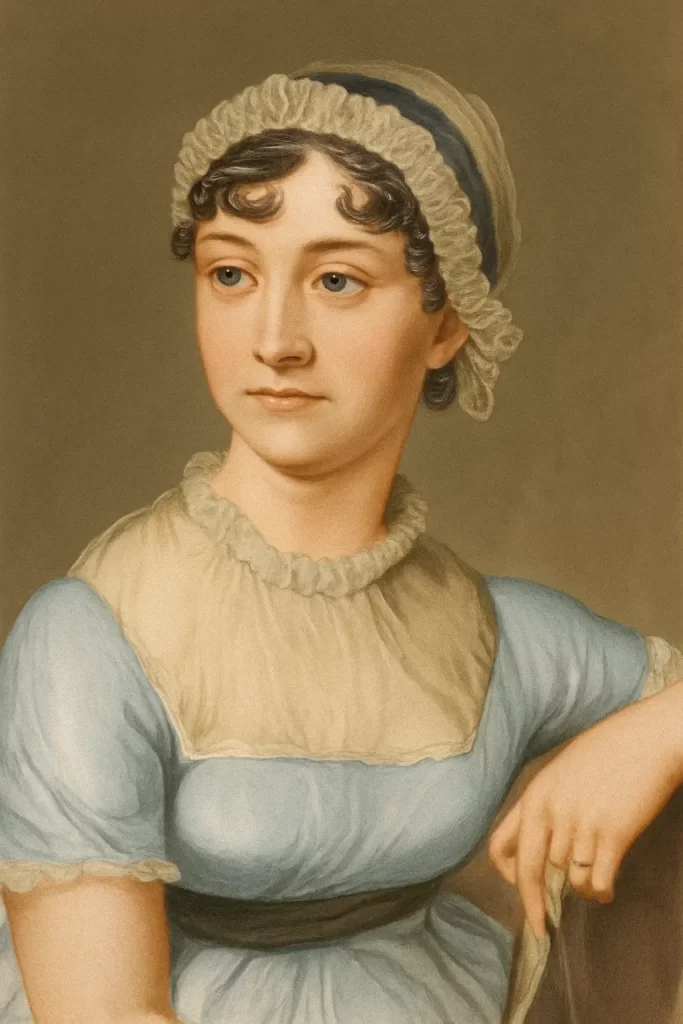
Birth and Family Background
Full Name: Jane Austen
Date of Birth: 16 December 1775
Place of Birth: Steventon, Hampshire, England
Father: Reverend George Austen – an Anglican clergyman and educated scholar
Mother: Cassandra Leigh Austen – from a respected family connected to Oxford University
Siblings: Jane was the seventh of eight children (six brothers and one sister, Cassandra)
Jane was born into a close-knit, educated, and loving family. Her father encouraged reading and allowed her access to a well-stocked family library, which deeply shaped her intellect and love for literature.
Childhood and Education
Jane did not attend formal school for long. She was sent to boarding school with her sister Cassandra for a brief period but was mostly educated at home.
Her main sources of learning were:
Her father’s personal library
Family readings of literature, history, and poetry
Writing stories and plays for family amusement
By age 11 or 12, she was already writing short stories and satirical pieces. These early writings are now called “juvenilia”.
Early Writing Career (Juvenilia and First Drafts)
Between the ages of 12 and 18, Jane Austen wrote many witty, lively short works that mocked popular genres of her time. Some titles include:
Love and Freindship (intentionally misspelled)
The History of England (a parody)
Catharine, or the Bower
Around 1795–1799, Jane began writing the first versions of her major novels:
Elinor and Marianne (later Sense and Sensibility)
First Impressions (later Pride and Prejudice)
Susan (later Northanger Abbey)
These early drafts show her natural storytelling talent and her deep understanding of human character and social life.
Personal Life and Relationships
Jane Austen never married.
She had one serious romantic attachment with a man named Tom Lefroy in her early 20s. He was sent away by his family, possibly to prevent the match due to Jane’s lack of wealth.
In 1802, she received a marriage proposal from Harris Bigg-Wither, which she initially accepted but then declined the next morning.
Jane chose independence and writing over marriage—a bold decision for a woman of her time.
She remained very close to her sister Cassandra and wrote many letters to her, which give us insight into her daily life, thoughts, and emotions.
Moves and Family Changes
In 1801, after her father’s retirement, the Austen family moved to Bath.
Jane disliked Bath and wrote very little fiction during these years.
After her father’s death in 1805, the family became financially strained.
In 1809, Jane moved with her mother and sister to Chawton Cottage, provided by her wealthy brother Edward.
This quiet country home became her most productive writing place.
Published Works and Anonymity
Jane Austen’s first published novel was Sense and Sensibility in 1811, credited only to “A Lady.”
Her subsequent novels were:
Pride and Prejudice (1813)
Mansfield Park (1814)
Emma (1815)
All these novels were published anonymously during her lifetime. Though she gained a small circle of admirers, her identity as the author remained largely unknown to the public.
She revised and polished her early drafts carefully, producing novels that blend romance, realism, social satire, and moral reflection.
Writing Style and Themes
Jane Austen’s works are known for:
Irony and satire (especially about class and manners)
Strong, intelligent women as main characters
Moral growth and self-discovery
Marriage and social status as central themes
Realistic depictions of rural English life
She never used overly emotional or dramatic plots. Instead, she wrote about ordinary people, small villages, and everyday situations—but explored deep truths about human behavior.
Illness and Death
In 1816, Jane began experiencing poor health.
She continued writing despite growing weakness and fatigue.
Jane died on 18 July 1817, at the age of 41, in Winchester.
She was buried in Winchester Cathedral, where her grave still lies.
Her brother Henry facilitated the posthumous publication of Northanger Abbey and Persuasion, revealing her authorship to the public.
Posthumous Fame and Recognition
During her life, Austen was not widely famous. After her death:
Her brother Henry Austen revealed her identity as the author.
Interest in her works grew steadily in the 19th century.
In the 20th and 21st centuries, she became one of the most celebrated authors in the world.
Her novels are studied in schools and universities worldwide.
They have inspired countless film and television adaptations, modern retellings, and literary studies.
Legacy
Jane Austen is now considered a pioneer of the modern novel.
Her sharp wit, vivid characters, and balanced prose set the standard for English literature.
Authors like Virginia Woolf, E.M. Forster, and even contemporary writers admire her work deeply.
Her characters—Elizabeth Bennet, Mr. Darcy, Emma Woodhouse, and others—are timeless, continuing to speak to new generations.
Conclusion
Jane Austen lived a quiet life, but her literary voice was powerful.
She wrote about women, love, class, and family with truth and elegance.
Though her world was limited to the drawing rooms and gardens of English country life, her novels explore universal themes that still matter today.
Themes
Love and Marriage
What It Means: This theme looks at different kinds of love and reasons for marriage. In Regency England, marriage was often about money or status, but Austen shows that love based on respect and understanding is best.
How It Appears:
Jane and Bingley: Jane’s growing feelings for Bingley are pure and based on kindness. Bingley dances with her twice at the Meryton ball, showing his interest. Their love is simple but faces challenges from class differences.
Elizabeth and Darcy: Their relationship starts with misunderstandings—Darcy’s rude comment about Elizabeth and her prejudice against him. Later, their love grows through honesty and growth, showing true love needs work.
Other Marriages: The text hints at practical marriages, like Charlotte’s later choice to marry Mr. Collins for security. Lydia’s obsession with soldiers foreshadows her reckless elopement, showing a bad kind of marriage.
Why It Matters: Austen critiques the pressure on women to marry for money, not love. She shows that happy marriages, like Jane and Bingley’s, come from mutual respect, while shallow ones cause trouble.
Social Class
What It Means: This theme explores how class (rich, middle, or poor) shapes people’s lives, relationships, and choices. Regency society had strict class rules, and Austen makes fun of them while showing their impact.
How It Appears:
Class Differences: Bingley’s wealth (from trade) and Darcy’s higher status (from land) make them more “important” than the Bennets, who are gentry but not rich. Miss Bingley looks down on Elizabeth’s family, mocking their “low connections” like the uncle in Cheapside.
Snobbery: Darcy’s pride makes him act rude at the ball, refusing to dance with anyone but Bingley’s sisters. Mrs. Bennet brags about Jane’s beauty to climb the social ladder.
Critique of Class: Elizabeth challenges class rules by being bold, like walking to Netherfield alone. Austen shows class can be unfair, as Darcy’s wealth doesn’t make him perfect.
Why It Matters: Austen pokes fun at people obsessed with status, like Miss Bingley, and shows that personal qualities matter more. Elizabeth and Darcy’s love overcomes class barriers, suggesting society’s rules can be challenged.
Pride and Prejudice
What It Means: The title refers to the flaws of pride (thinking too highly of yourself) and prejudice (judging others too quickly). These flaws cause problems but can be overcome through self-reflection.
How It Appears:
Darcy’s Pride: Darcy’s comment that Elizabeth is “tolerable, but not handsome enough to tempt me” shows his arrogance. He thinks he’s better than the Meryton people because of his wealth.
Elizabeth’s Prejudice: Elizabeth judges Darcy as rude and cruel based on his comment and Wickham’s lies (not yet in the text but hinted at). Her quick wit makes her assume she’s right.
Growth: Darcy starts noticing Elizabeth’s intelligence and charm, hinting at his change. Elizabeth’s confidence in judging him will shift later when she learns the truth.
Why It Matters: This theme is the heart of the story. Both Elizabeth and Darcy learn to admit their mistakes, showing that growing as a person leads to better relationships and understanding.
Gender and Reputation
What It Means: Women in Regency England had to follow strict rules about behavior, or they could lose their reputation (social respect). This theme shows how women’s lives were limited and judged.
How It Appears:
Women’s Limits: Mrs. Bennet’s obsession with marrying her daughters comes from the entailment of their estate, which leaves them nothing if they don’t marry. Women had to be “proper” to attract husbands.
Elizabeth’s Rebellion: Elizabeth breaks rules by walking three miles alone to Netherfield, shocking Miss Bingley and Mrs. Hurst. Her muddy petticoat shows she values Jane over appearances.
Reputation Risks: Lydia and Kitty’s obsession with soldiers hints at danger, as a woman’s reputation could be ruined by scandal, like Lydia’s later elopement.
Why It Matters: Austen shows how unfair it was that women’s worth depended on reputation and marriage. Elizabeth’s boldness challenges these limits, while characters like Lydia show the risks of ignoring them.
Family and Morality
What It Means: This theme looks at how families shape people’s behavior and how moral choices (right or wrong) affect them. Good families teach values, but bad ones cause problems.
How It Appears:
Bennet Family Dysfunction: Mr. Bennet’s sarcasm and laziness and Mrs. Bennet’s silliness make their daughters’ lives harder. Their poor parenting lets Lydia act wild.
Moral Contrasts: Jane and Elizabeth are kind and thoughtful, while Lydia and Kitty chase fun without thinking. Mary tries to be moral but comes off as fake.
Darcy’s Responsibility: Darcy’s care for his sister shows his moral duty, contrasting with Mr. Bennet’s neglect.
Why It Matters: Austen shows that good morals—like Elizabeth’s loyalty or Darcy’s honor—lead to happiness, while bad choices, like Lydia’s, cause trouble. The Bennet family’s flaws highlight the need for balance.
Appearance vs. Reality
What It Means: People often seem one way but are different underneath. This theme shows how judging by looks or first impressions can lead to mistakes.
How It Appears:
Darcy’s Misjudged Character: Darcy seems rude and proud at the ball, but his interest in Elizabeth hints at a kinder side. His wealth hides his good qualities at first.
Bingley’s Sisters: Miss Bingley and Mrs. Hurst act nice to Jane but mock Elizabeth behind her back. Their politeness hides their snobbery.
Wickham’s Charm: Though not fully introduced in the text, the militia’s appeal sets up Wickham’s later role as a charming but deceitful man.
Why It Matters: This theme ties to pride and prejudice, as characters learn to look beyond surfaces. Elizabeth’s growth comes from seeing Darcy’s true self, showing the value of deeper understanding.
Style
Jane Austen’s Pride and Prejudice (1813) is celebrated for its distinctive literary style, which combines wit, irony, and precision to create a vivid and engaging narrative. Her style enhances the novel’s themes, reveals character, and critiques Regency-era society.
Witty and Ironic Tone
What It Is: Austen writes with a sharp, humorous tone that often makes fun of people’s flaws or society’s rules. Irony means saying one thing but meaning something else, usually to point out something silly or wrong.
How It Appears:
The famous opening line, “It is a truth universally acknowledged, that a single man in possession of a good fortune, must be in want of a wife,” is ironic. It sounds serious but mocks how families like the Bennets obsess over marrying rich men.
Mrs. Bennet’s dramatic complaints about her “nerves” are funny because Austen shows she’s not really sick—she’s just anxious and silly.
When Elizabeth teases Darcy about his pride, Austen’s playful tone highlights their growing connection while poking fun at his seriousness.
Why It Matters: The witty tone makes the story fun to read and lets Austen critique society without being too serious. Irony shows how people’s actions (like Mrs. Bennet’s marriage schemes) don’t always match their intentions, tying to themes of appearance versus reality.
Free Indirect Discourse
What It Is: This is a special way Austen writes, blending a character’s thoughts with the narrator’s voice. It lets readers see what a character is thinking while keeping some distance, often with a hint of humor.
How It Appears:
When Elizabeth overhears Darcy say she’s “tolerable, but not handsome enough to tempt me,” the narrator describes her reaction: “Elizabeth remained with no very cordial feelings toward him.” The narrator shows Elizabeth’s hurt feelings but also her lively spirit, as she laughs it off with friends.
Elizabeth’s thoughts about Bingley’s sisters are described: “Elizabeth listened in silence, but was not convinced.” This mixes her skepticism with the narrator’s voice, showing her sharp judgment.
Why It Matters: Free indirect discourse lets readers feel close to Elizabeth’s mind, making her relatable. It also adds irony, as Austen subtly mocks characters’ flaws (like Elizabeth’s quick judgments) while showing their perspective. This supports the theme of pride and prejudice.
Sharp Dialogue
What It Is: Austen’s characters talk in ways that reveal who they are. Her dialogue is clever, quick, and often funny, showing people’s personalities and social tensions.
How It Appears:
Mr. Bennet’s sarcasm shines when he teases Mrs. Bennet about her excitement over Bingley: “You are over-scrupulous, surely. I dare say Mr. Bingley will be very glad to see you.” His dry humor shows his detachment.
Elizabeth’s witty exchanges with Darcy, like when she says, “I dearly love a laugh,” show her confidence and challenge his seriousness, hinting at their growing attraction.
Miss Bingley’s snobby comments, like mocking Elizabeth’s “conceited independence” for walking to Netherfield, reveal her prejudice and jealousy.
Why It Matters: Dialogue drives the story and shows character differences, like Elizabeth’s boldness versus Miss Bingley’s snobbery. It also highlights class and gender tensions, as characters use words to compete or flirt. Austen’s clever lines make the story lively and fun.
Concise and Precise Prose
What It Is: Austen writes clearly and doesn’t waste words. Her sentences are short and to the point, but they pack a lot of meaning, often with humor or insight.
How It Appears:
Describing Mr. and Mrs. Bennet, Austen writes: “Mr. Bennet was so odd a mixture of quick parts, sarcastic humour, reserve, and caprice… Her mind was less difficult to develop.” This short description sums up their personalities perfectly.
When Darcy admits his flaw, “My good opinion once lost, is lost forever,” the simple words show his stubbornness but also hint at his honesty.
Why It Matters: Austen’s clear style makes the story easy to read while hiding deeper meanings. It lets her critique society—like the pressure to marry—without being preachy. Her precision keeps the focus on characters and their growth.
Satire and Social Commentary
What It Is: Satire means making fun of people or society to show what’s wrong with them. Austen uses her style to mock silly behaviors, like obsession with money or status, while praising good qualities like honesty.
How It Appears:
Mrs. Bennet’s obsession with marrying her daughters is mocked when she says Bingley’s arrival is “a fine thing for our girls!” Austen shows her shallow focus on wealth.
The description of Bingley’s sisters as “fine ladies” who “think well of themselves, and meanly of others” pokes fun at their snobbery.
Mary’s pompous comment about pride being “a very common failing” is satirical, as her serious tone makes her sound silly.
Why It Matters: Satire lets Austen critique Regency society’s flaws, like class pride or women’s limited choices, while keeping the story entertaining. It ties to themes of class and gender, showing how silly rules hurt people.
Use of Letters
What It Is: Letters are a key part of the story’s style, used to reveal information, emotions, or plot twists. They were common in Regency novels and reflect how people communicated then.
How It Appears:
Miss Bingley’s letter inviting Jane to Netherfield seems polite but sets up Mrs. Bennet’s scheme to keep Jane there.
Jane’s letter to Elizabeth about her illness shows her vulnerability and brings Elizabeth to Netherfield, advancing the plot.
Why It Matters: Letters add realism to the story, as they were a big part of Regency life. They reveal characters’ true feelings or secrets, like Darcy’s later letter that changes Elizabeth’s view. This supports the theme of appearance versus reality.
How Style Works in the Story
Austen’s style—witty, ironic, and clear—makes Pride and Prejudice both funny and meaningful. Her irony and satire poke fun at society’s rules, like the pressure to marry rich men, while her dialogue and free indirect discourse bring characters like Elizabeth and Darcy to life. The concise prose keeps the story moving, and letters add depth to the plot. Together, these elements highlight themes like love, class, and personal growth, making the novel a sharp critique of Regency England and a timeless romance.
Jane Austen’s Pride and Prejudice, published in 1813, is set in early 19th-century England during the Regency era (1811–1820). This period shapes the novel’s themes, characters, and events, reflecting the social, economic, and cultural realities of the time. Below is a detailed explanation of the historical context in simple English, covering the key aspects that influence the story.
Regency Era Society
The Regency era began when King George III became too ill to rule, and his son, the Prince Regent (later George IV), took over from 1811 to 1820. This was a time of strict social rules, especially for the gentry, the middle-upper class that includes families like the Bennets. Society was divided into clear classes—aristocrats (like Lady Catherine), the gentry (like the Bennets), and lower classes (like servants or tradespeople). Your social class decided who you could marry, where you could go, and how people treated you.
In the novel, class is a big deal. The Bennets are gentry but not rich, so Mrs. Bennet is desperate to marry her daughters to wealthy men like Bingley or Darcy. Darcy’s pride comes from his high status, and he looks down on the Bennets at first because of their lower rank and behavior. Austen uses these differences to make fun of how silly class rules can be, like when Lady Catherine tries to stop Darcy from marrying Elizabeth.
Marriage and Women’s Roles
Women in the Regency era had very few options. They couldn’t own property if they were married, and most couldn’t work to support themselves. For women like the Bennet sisters, marriage was the main way to be secure and respected. If they didn’t marry well, they could end up poor or dependent on family. This is why Mrs. Bennet is so pushy about finding rich husbands for her daughters.
The novel shows different views on marriage. Elizabeth wants love and respect, which is why she says no to Mr. Collins. Charlotte Lucas marries him for a house and money, showing how many women had to be practical. Lydia’s reckless elopement with Wickham is a scandal because a woman’s reputation was everything—losing it could ruin her and her family. Austen critiques these pressures, showing how women were judged by who they married rather than who they were.
Economic Realities and Entailment
Money was a huge concern in Regency England. Many families, like the Bennets, lived off land or small fortunes. The Bennet estate is “entailed,” meaning it can only be passed to a male heir. Since Mr. Bennet has no sons, his cousin Mr. Collins will inherit the house when Mr. Bennet dies, leaving the women with little. This rule was common and forced families to focus on marrying daughters to wealthy men.
In the book, Mrs. Bennet’s stress about money drives her to chase rich suitors like Bingley. The characters’ wealth—like Bingley’s £100,000 or Darcy’s £10,000 a year—shows how money shaped status. Austen uses this to show how unfair it was that women’s futures depended on men’s wealth.
The Napoleonic Wars
The Napoleonic Wars (1803–1815) between Britain and France are in the background of the novel. They don’t appear directly, but they affect the story. Militia soldiers, like Wickham, are stationed in towns like Meryton because of the war. These soldiers were exciting to young women like Lydia and Kitty, who loved their uniforms and charm. The war also created social changes, like new wealth for some families (like Bingley’s, from trade) and economic struggles for others.
Wickham’s role as a militia officer makes him seem dashing but also dangerous, as his charm hides his bad character. The war setting adds a layer of tension, showing how young men like him could disrupt small towns.
Gender Expectations
Men and women had strict roles. Men were expected to be providers, like Mr. Bennet, who owns land, or Darcy, who manages a big estate. Women were supposed to be polite, accomplished (like playing music or drawing), and focused on family. Elizabeth breaks these rules by being outspoken and independent, like when she teases Darcy or walks miles alone. Darcy’s idea of an “accomplished woman” (knowing music, languages, and reading) reflects what society expected of high-class women.
Austen makes fun of these expectations. For example, Mary’s obsession with being “accomplished” by playing piano badly shows how silly these standards could be. Elizabeth’s wit and refusal to follow rules challenge what women were supposed to do.
Social Customs and Manners
Regency England had strict rules about how people should act. Dances, like the ones at Meryton or Netherfield, were important social events where people met potential spouses. Visiting new neighbors, like Mr. Bennet visiting Bingley, was a formal way to make connections. Manners showed your class—Darcy’s rudeness at the ball makes people think he’s stuck-up, while Bingley’s friendliness makes him popular.
Austen uses these customs to show character. Mrs. Bennet’s loud behavior embarrasses her family because it’s not “proper.” Elizabeth’s playful teasing stands out against the polite, careful way most women act.
Literature and Austen’s World
Austen wrote during the Romantic era, when books often focused on big emotions and nature. But she chose to write about everyday life, focusing on people’s relationships and flaws. Her novels were different because they mixed humor with sharp comments about society. She was a single woman of modest means, living with her family, which gave her a unique view of the gentry’s struggles. Her own life, where she turned down a marriage proposal for practical reasons, is like Charlotte’s choice in the novel.
Pride and Prejudice was published when novels were becoming popular, but women writers often hid their names. Austen published it as “By the Author of Sense and Sensibility,” not revealing her name until after her death. This shows how women had to be careful in the literary world.
Impact on the Novel
The historical context shapes every part of Pride and Prejudice. The class system creates tension between Darcy and Elizabeth. Marriage pressures drive Mrs. Bennet’s actions and the sisters’ choices. The war brings Wickham into the story, causing trouble. Gender rules make Elizabeth’s bold personality stand out. Austen uses these realities to make fun of society’s problems while telling a love story that feels real.
Netherfield Park
What It Is: Netherfield is the grand estate rented by Mr. Bingley, where early events happen, like the ball and Jane’s illness.
What It Symbolizes: Netherfield represents wealth, social status, and opportunity. It’s a place where the Bennet sisters can meet rich men like Bingley and Darcy, which excites Mrs. Bennet when Bingley arrives. It shows the dream of moving up in society through marriage, a big theme in the novel.
Connection to Themes: Netherfield highlights class differences. The Bennets are less wealthy, so visiting Netherfield is a chance to connect with higher society. It also sets up the romance between Jane and Bingley, as their love grows there. However, it shows the gap between the Bennets and richer characters, like when Miss Bingley looks down on Elizabeth for her muddy walk.
Pemberley Estate
What It Is: Pemberley is Mr. Darcy’s huge, beautiful estate in Derbyshire, mentioned briefly when Miss Bingley praises its library. It becomes more important later when Elizabeth visits it.
What It Symbolizes: Pemberley symbolizes Darcy’s true character, wealth, and responsibility. It’s not just a fancy house—it shows his good side, like how he cares for his land and people. When Elizabeth sees Pemberley later, she realizes Darcy is more than his proud attitude.
Connection to Themes: Pemberley represents the ideal of class done right. Unlike Lady Catherine’s cold mansion, Pemberley is warm and well-run, showing Darcy’s worth beyond his money. It helps Elizabeth overcome her prejudice, as she sees his real self through his home. It also ties to love, as her feelings for him grow there.
Dances and Balls
What They Are: Balls, like the one at Meryton and the planned Netherfield ball, are social events where people dance, talk, and meet potential partners.
What They Symbolize: Balls symbolize courtship and social judgment. They’re places where characters show who they are through how they act. For example, Bingley dances with Jane twice, showing his interest, while Darcy refuses to dance with Elizabeth, showing his pride.
Connection to Themes: Balls reflect the marriage market, where women like the Bennet sisters need to impress men to secure their future. They also show pride and prejudice—Darcy’s refusal to dance makes people think he’s rude, and Elizabeth’s quick judgment of him starts there. Balls are where class and manners are judged, like when Mrs. Bennet brags loudly.
Letters
What They Are: Letters are used a lot, like Miss Bingley’s note inviting Jane to Netherfield and Jane’s letter to Elizabeth about her illness. Darcy’s letter explaining his past comes later in the novel.
What They Symbolize: Letters represent truth and communication. They reveal things characters don’t say out loud. For example, Jane’s letter shows her vulnerability, and Darcy’s later letter clears up Elizabeth’s wrong ideas about him.
Connection to Themes: Letters help characters overcome pride and prejudice by sharing honest feelings or facts. They show how misunderstandings can be fixed with clear communication. In the Regency era, letters were a private way to connect, especially for women who had to follow strict social rules.
Elizabeth’s Muddy Walk
What It Is: Elizabeth walks three miles through mud to visit Jane at Netherfield, arriving with dirty stockings and a glowing face.
What It Symbolizes: The muddy walk symbolizes Elizabeth’s independence and love for her sister. It shows she doesn’t care about looking “proper” if it means helping someone she loves. The mud itself represents her willingness to break society’s rules for women.
Connection to Themes: This scene challenges gender expectations—Miss Bingley and Mrs. Hurst are shocked by Elizabeth’s “wild” look, showing their prejudice. But Darcy admires her energy, hinting at his growing feelings. It ties to love (her care for Jane) and class (her lower status makes her actions seem bold).
The Militia
What It Is: The militia is a group of soldiers stationed in Meryton, including Wickham. Lydia and Kitty are obsessed with them.
What It Symbolizes: The militia symbolizes excitement, danger, and social change. Soldiers were attractive to young women because they brought adventure to quiet towns, but they could also cause trouble, like Wickham does later with Lydia.
Connection to Themes: The militia reflects the Regency era’s unrest due to the Napoleonic Wars. It shows how young women like Lydia were drawn to fleeting thrills, ignoring reputation (a big deal for women then). It also contrasts with stable figures like Darcy, highlighting the theme of appearance versus reality.
Books and Libraries
What They Are: Books appear in scenes, like when Elizabeth chooses a book over cards at Netherfield and when Darcy talks about Pemberley’s library.
What They Symbolize: Books symbolize knowledge, intelligence, and self-improvement. They show characters who value thinking, like Elizabeth and Darcy, over shallow activities like cards (Mr. Hurst’s preference).
Connection to Themes: Books tie to personal growth, as Elizabeth and Darcy both learn from their mistakes. They also show class—libraries were a sign of wealth and education, like Pemberley’s. Elizabeth’s choice of books over cards shows her independence and contrasts with Mary’s fake bookishness.
The Bennet Estate (Longbourn)
What It Is: Longbourn is the Bennet family’s home, mentioned throughout the early chapters.
What It Symbolizes: Longbourn represents family, insecurity, and limitation. It’s a modest home compared to Netherfield or Pemberley, and the entailment means the family will lose it when Mr. Bennet dies.
Connection to Themes: Longbourn shows the economic pressure on women to marry well, driving Mrs. Bennet’s obsession. It’s a place of love (the sisters’ bond) but also chaos (Mrs. Bennet’s silliness), contrasting with Pemberley’s order. It highlights class struggles and the fear of losing status.
How Symbolism Works in the Story
Austen uses these symbols to make her story richer. They’re not just things or places—they carry ideas about love, class, and growing as a person. For example, Netherfield and Pemberley show the difference between temporary wealth (Bingley rents Netherfield) and lasting responsibility (Darcy owns Pemberley). The muddy walk and balls show Elizabeth’s bold personality, which challenges society’s rules and draws Darcy to her. Letters and books push the story forward by helping characters understand each other, tying to the theme of overcoming pride and prejudice.
Introduction
Pride and Prejudice, published in 1813, is Jane Austen’s most famous and widely loved novel. It is a romantic social satire set in early 19th-century rural England and focuses on the lives of the Bennet family—especially Elizabeth Bennet, the intelligent and spirited second daughter. The novel explores love, marriage, class, and morality through sharp wit and deep observation.
Central Idea
The central idea of Pride and Prejudice revolves around how first impressions can be flawed, and how pride and prejudice can cloud judgment and relationships. The story shows how true understanding, love, and growth come only after characters reflect, learn, and change.
At its core, it is about choosing love over money, but also shows how both emotion and practicality must be balanced in marriage.
Plot Summary
Mr. and Mrs. Bennet have five daughters, and the family’s estate is entailed to a male heir. Hence, marrying the daughters well is a priority. When Mr. Bingley, a wealthy bachelor, moves nearby, he soon falls for Jane Bennet, the eldest. His friend, the proud and reserved Mr. Darcy, clashes with Jane’s sister Elizabeth.
Darcy is attracted to Elizabeth but is initially dismissive of her lower status. He proposes but is rejected due to his pride and interference in Jane and Bingley’s relationship, and for having wronged Mr. Wickham, a charming officer. Later, Darcy’s actions prove he is kind, loyal, and selfless.
After Lydia (the youngest Bennet sister) elopes with Wickham, Darcy quietly saves the family from scandal. Elizabeth realizes her own prejudices and misjudgments. Eventually, love wins: Darcy and Elizabeth, and Bingley and Jane marry.
Themes
Love and Marriage: Austen contrasts marriages based on love and respect (Elizabeth and Darcy, Jane and Bingley) with those driven by convenience (Charlotte and Mr. Collins) or impulse (Lydia and Wickham), critiquing the economic pressures on women.
Social Class: The novel satirizes the rigid class hierarchy, showing how personal merit can challenge divisions, as seen in Elizabeth’s defiance of Lady Catherine’s objections.
Pride and Prejudice: The protagonists’ flaws—Elizabeth’s quick judgments and Darcy’s initial arrogance—drive conflict but resolve through self-awareness, embodying the novel’s core message.
Gender and Reputation: Women’s limited options and the importance of reputation are highlighted, with Lydia’s recklessness contrasting Elizabeth’s integrity.
Family and Morality: The dysfunctional Bennet family underscores the need for moral guidance, while Darcy’s honor contrasts with Wickham’s deceit.
Appearance vs. Reality: Misjudgments based on first impressions, like Elizabeth’s view of Darcy, emphasize the need to look beyond surfaces.
Characters
Elizabeth Bennet: Witty and independent, Elizabeth’s journey from prejudice to self-awareness drives the narrative, challenging gender norms.
Mr. Fitzwilliam Darcy: Wealthy and initially proud, Darcy’s transformation into a humble, devoted suitor reveals his true character.
Jane Bennet: Kind and reserved, Jane represents idealized femininity, her romance with Bingley highlighting pure love.
Mr. Bingley: Amiable and impressionable, Bingley is Darcy’s foil, embodying uncomplicated affection.
Mr. and Mrs. Bennet: The sarcastic father and marriage-obsessed mother satirize poor parenting and societal pressures.
Lydia Bennet: Impulsive and reckless, Lydia’s elopement underscores the dangers of unchecked behavior.
George Wickham: Charming but deceitful, Wickham serves as a foil to Darcy, highlighting appearance versus reality.
Charlotte Lucas: Pragmatic and resigned, Charlotte’s marriage reflects women’s limited choices.
Structure and Style
Structure:
The novel is divided into three volumes (as was typical in that era).
The plot follows a classic romantic arc:
Introduction and misunderstanding
Conflict and character development
Resolution and happy union
Style:
Free indirect speech: Austen allows the narrator to dip into characters’ thoughts.
Witty dialogue and irony are her signature.
She uses precise language and understatement to critique society.
The narration is omniscient, offering a mix of objectivity and personal tone.
Historical Context
Set in early 19th-century England, during the Regency Era:
Women couldn’t inherit estates—hence the urgency in the Bennets’ marriages.
Social class and family connections mattered more than love in marriage.
The Napoleonic Wars explain the presence of soldiers and militia.
Women had limited rights, and their education focused on “accomplishments,” not intellect.
Elizabeth’s independence and Darcy’s reformation are progressive ideas for the time..
Critical Commentary
Pride and Prejudice has been praised for its blend of romance and social satire. Early reviews, like those in the British Critic (1813), lauded its realistic characters and elegant style. Twentieth-century critics, such as Virginia Woolf, admired Austen’s focus on everyday life, while feminist scholars like Claudia L. Johnson highlight her critique of gender inequality. Marxist critics, like Raymond Williams, note her engagement with class dynamics. Some modern scholars argue the novel’s domestic focus overlooks broader political issues, but its universal themes of love and growth ensure its global appeal.
Conclusion
Pride and Prejudice remains a timeless masterpiece because it is both deeply personal and socially insightful. Jane Austen combines wit, romance, and realism to craft a story that celebrates love, growth, and equality in relationships. The novel teaches that true love requires humility, self-reflection, and understanding—lessons that never grow old.