
Self Reliance by Ralph Waldo Emerson
Author: Ralph Waldo Emerson
First publication year: 1841
Published in: Essays: First Series (a collection of his philosophical writings)
Place of publication: United States (Boston)
Publisher: James Munroe and Company
“Self-Reliance” is an essay in which Emerson urges people to have confidence in themselves and to live by their own thoughts, feelings, and beliefs. He says that every person has a unique inner voice or guiding spirit, and real greatness comes from listening to it rather than copying others or obeying society’s rules blindly.
He explains that envy is ignorance — wanting to be like someone else means ignoring your own gifts — and imitation is suicide — copying others kills your individuality. We should accept ourselves completely, with both strengths and weaknesses, and work on our own “plot of ground” instead of wishing for someone else’s life.
Emerson is critical of society, describing it as a “joint-stock company” where people give up their independence in exchange for safety and approval. Society values conformity above all else and dislikes people who think for themselves. Real goodness, he says, is being honest and true to yourself, even if it makes you unpopular. He also warns against false charity — giving just to look generous instead of from real connection.
He tells readers not to be trapped by the need for consistency. You should speak your present truth, even if it contradicts what you said yesterday. Some of the greatest figures in history — Socrates, Jesus, Galileo — were misunderstood in their own times, yet they stood by their beliefs.
The essay applies self-reliance to different areas of life:
Religion — have a direct relationship with God, instead of relying on institutions and traditions.
Travel — don’t travel just to escape yourself; your mind goes with you everywhere.
Education & Art — create from your own experience instead of copying others.
Progress — true progress comes from individual growth, not from society changing its outward form.
Finally, Emerson concludes that peace and strength come only when you live by your own principles. Possessions, approval, and social status cannot give you this peace — it must come from within.
Definition of Self-Reliance
In Emerson’s philosophy, self-reliance means:
- depending on your own thoughts, feelings, and moral judgment instead of blindly following the crowd, traditions, or authorities.
- It is trusting your inner voice, living according to your own nature, and drawing strength from within rather than from possessions, approval, or outside support.
Self-reliance is not selfishness or arrogance — it is the courage to be true to yourself, even if it means standing alone.
1. Introduction — The Core Idea
Emerson begins the essay with a Latin motto: “Ne te quaesiveris extra”, which means “Do not search outside yourself”. He immediately sets the tone by telling us that truth and guidance must come from within, not from external authorities, traditions, or opinions.
He then shares a personal experience — he once read some verses written by a painter. These verses were completely original and not copied from any other poet. Emerson says that such originality always contains a silent yet powerful message: trust the thoughts that come from your own mind.
His central message is very clear: if you feel something is deeply true in your own heart, it is probably a truth that applies to everyone. Having the courage to trust that feeling is the mark of true genius.
He points to great minds from history — Moses, Plato, Milton — all of whom ignored second-hand wisdom, old books, and traditions. Instead, they spoke directly from their own minds and trusted their own insights.
Emerson observes that most of us have moments of sudden insight, but we often reject them because they are “our own,” thinking they are unimportant. Yet, when we later hear the same idea from someone else, we admire it and regret not trusting ourselves earlier.
The lesson: Always hold firmly to your first impressions and original thoughts, even if the entire world disagrees.
2. The Moment of Self-Realization
Emerson says that at some point in life, everyone discovers a deep truth about themselves — a moment when you realize your real power and purpose. This self-discovery brings important lessons:
Envy is ignorance – Wishing to be someone else means you are ignoring the unique talents and opportunities you already have. You can never truly know the struggles behind another person’s life, so copying their path is foolish.
Imitation is suicide – When you try to live like someone else, you kill your own individuality. Your originality is your life-force, and losing it is like destroying yourself.
Accept yourself completely – You must embrace both your strengths and your weaknesses. This is your personal “portion” in life, and no one else can live it for you.
Work on your own “plot of ground” – True good and satisfaction can only come from tending to your own life’s work, just as a gardener must care for his own garden rather than wishing for another’s.
Emerson reminds us that your inner power is unique in the history of nature. No one else can discover it for you, and you will only know its true potential by acting on it.
He insists that the experiences and impressions you receive are meant specifically for you — they are not accidents or mistakes.
Finally, he warns that God’s work will not be shown through cowards. Trusting yourself requires courage, and true joy comes only when you put your entire heart and soul into your work without holding back.
3. Trust Thyself
Emerson gives one of his most famous lines here:
“Trust thyself: every heart vibrates to that iron string.”
He means that deep inside every person is a natural agreement with self-trust — it feels solid and right, like a strong, steady vibration in the heart.
He advises that we must accept the exact place, time, and circumstances in which life (or Providence) has placed us. We are meant to live fully in our own moment of history, not wishing for another time or place.
Emerson notes that great people of the past have always trusted the spirit of their own age. They obeyed the divine energy within them, even if it went against the opinion of the crowd.
To explain this, Emerson draws lessons from nature:
Children – They are whole-hearted, fearless, and never worry about pleasing others. Their honesty and directness command respect.
Youth – They are bold, unapologetic, and fiercely independent. They act on their beliefs without hesitation.
Animals – They act with a single, focused mind, without the inner conflict and hesitation that often trouble human beings.
The message is clear: self-trust is a natural state — we only lose it when we allow society’s doubts and judgments to invade our minds.
4. Society and Nonconformity
Emerson compares society to a joint-stock company, where people give up their personal freedom in exchange for safety, comfort, and social approval. In this arrangement, the main rule society demands is conformity — to think, speak, and act as everyone else does. The opposite of this is self-reliance, which society sees as a threat.
He gives a direct and powerful command:
“Whoso would be a man must be a nonconformist.”
In other words, to truly live as a strong and independent person, you must resist the pressure to blend in and instead follow your own convictions.
For Emerson, nothing is sacred except the integrity of your own mind — your inner honesty and moral truth. Traditions, customs, and moral codes are worth keeping only if they match your own nature. If they go against your true self, you should reject them without guilt.
He strongly criticizes two false forms of goodness:
False philanthropy – Giving or helping only to appear generous, without genuine care for the person.
Hypocritical goodness – Pretending to be kind in public but being unkind or selfish in private.
For Emerson, real goodness is honest and sometimes may seem sharp or even unpleasant. By contrast, sentimental “niceness” — the kind that avoids truth just to keep people comfortable — is empty and worthless.
5. Do What Concerns You
Emerson says that your only real duty in life is to do what is truly yours to do — work that comes from your own nature, not from what other people expect or demand. Living by other people’s opinions will only weaken you and distract you from your real purpose.
He defines greatness as the ability to keep the independence of solitude even in the middle of public life. This means staying true to yourself, even when surrounded by crowds or pressured by society.
When you follow dead customs — old traditions and rules that no longer have life or meaning — you waste your energy. Worse, you hide your real self behind a mask of convention.
Emerson observes that most people are like ministers tied to a religious creed — they can only see and speak from one “approved” side of truth, rather than exploring freely.
He warns that conformity makes a person false in everything, not just in a few areas. If you give up your integrity in one part of life, it will eventually spread into all parts of your character.
6. Facing the World’s Displeasure
Emerson warns that nonconformity will always invite criticism. When you refuse to follow the crowd, people will question, oppose, or even ridicule you. This is a natural reaction because your independence challenges their comfort with sameness.
He explains that most people’s disapproval is shallow — it changes quickly, depending on moods, trends, or what others are saying at the moment. Such opinions have no real depth or lasting value.
However, he notes that the anger of the masses is often harder to face than the criticism of educated individuals. This is because the masses act blindly, driven by emotion and force, rather than by reason or understanding.
Emerson’s advice is to see such hostility as trivial. If you know you are acting according to your own integrity, the noise of public disapproval should not disturb your peace.
7. The Trap of Consistency
Emerson observes that many people feel they must cling to their past words or actions just to appear consistent in the eyes of others. They fear being called inconsistent, so they keep repeating the same opinions, even if their understanding has grown or changed.
He warns against this habit and says: don’t drag around the “corpse of your memory.” This means you should not be weighed down by your past. Instead, live honestly in the present moment, responding to life as it is now.
Emerson’s famous line captures this idea perfectly:
“A foolish consistency is the hobgoblin of little minds.”
He means that mindless consistency — sticking to something only to avoid seeming changeable — is a small and limiting way to live.
He encourages you to speak your present truth, even if it contradicts what you said yesterday. Growth and change are signs of a strong, living mind.
Finally, Emerson reminds us that to be great is to be misunderstood. Many of history’s greatest figures — Socrates, Jesus, Luther, Copernicus, Galileo, Newton — were misunderstood in their time because they dared to challenge accepted beliefs.
8. Character Over Reputation
Emerson explains that you cannot go against your true nature for long. Whatever you really are inside will show in your actions, no matter what image you try to present. Your character shapes your life more deeply than your reputation.
He points out that honest and natural actions may look different from day to day, but over time they will create a harmonious pattern. If you act from integrity, all your choices will eventually fit together like pieces of a puzzle.
Emerson says that greatness appeals to the future — an action that is right now may not be fully understood today, but time will reveal its worth.
Heroes, he adds, carry the dignity of all their past victories into each new moment. Every courageous or truthful act builds a foundation of strength that supports future challenges.
9. The Great Person as the Center of Things
Emerson advises us not to kneel before the worth of others as if they are above us. Instead, we should realize that the treasures of the world — knowledge, beauty, opportunities — exist for all who have the courage and capacity to receive them.
He notes that history is not shaped by crowds, but by a few strong, decisive individuals. He gives examples like Caesar, Luther, Fox, Wesley, and Clarkson — leaders whose vision and courage changed the course of events.
According to Emerson, great people become their own cause, nation, and age. They stand so firmly in their own truth that they represent an entire era or movement by themselves.
Finally, he observes that institutions are nothing more than the extended shadow of individuals. Governments, religions, and social systems are created and shaped by the ideas and character of single human beings.
10. The Foundation — Intuition
Emerson says that true self-reliance is built on intuition — the direct and original wisdom that comes from within you before any formal teaching, books, or external advice. This inner knowing is pure and trustworthy because it comes directly from the same divine source that creates all things in the universe.
He emphasizes that we are connected to this universal source, so we don’t need intermediaries — no books, traditions, or religious authorities — to reach truth. Our own inner voice is enough when we truly listen to it.
Living in harmony with this divine presence in the present moment dissolves all concerns about the past or the future. The only time that truly exists is now, and that is where God’s truth is revealed.
Emerson adds that history is only useful as a parable — a symbolic story that can help guide your own personal growth. But to worship the past as if it were superior to the present is harmful, because it takes your focus away from living your own truth today.
11. Living Above Time
Emerson observes that nature always lives in the present. A rose, for example, is perfect at every stage of its life — whether it is a bud, in full bloom, or fading — because it fully exists in the moment without regret or anticipation.
Humans, however, often lose their joy by living too much in the past (with regret) or the future (with anxiety or expectation). By doing so, they miss the beauty and power of the present.
He explains that the highest good — the most meaningful truths and blessings — arrive as something completely new, unlike anything we have experienced before. These moments of insight or inspiration have no precedent; they are fresh gifts of the present moment.
Finally, Emerson says that both fear and hope are beneath the soul’s highest state. In the truest spiritual awareness, the soul is beyond fearing loss or hoping for gain — it is fully content and alive in the now.
12. Self-Reliance as True Power
Emerson teaches that the true value of life lies in “becoming” — in growth, progress, and continuous self-improvement — rather than in what you have already achieved in the past. Resting on old successes stops personal growth.
He explains that true virtue — genuine moral strength — does not need to demand attention or force respect. It naturally commands respect through its quiet strength and authenticity.
In nature, only the self-sufficient — those able to find what they need within themselves — truly thrive. This is a law of survival seen in plants, animals, and all living things.
The self-reliant soul mirrors this same law. A person who depends on their own inner strength and wisdom will flourish, just as nature rewards independence and resilience.
13. Isolation as Elevation
Emerson warns that you should never take on the weaknesses of those around you just to fit in or keep the peace. Adopting other people’s faults or limitations will pull you down instead of lifting them up.
He urges you to live by eternal law — the unchanging truths of integrity, honesty, and self-respect — rather than bending your actions to please the temporary feelings of others.
This kind of independence may hurt people at first, especially if they are used to your agreement or compliance. But Emerson believes that truth will ultimately heal relationships, because genuine respect grows from honesty, not flattery.
His final warning is clear: never sell your liberty for others’ comfort. Giving up your freedom and integrity just to keep others happy is a price too high to pay.
14. Applications to Society
Emerson applies the idea of self-reliance to different areas of life, showing how it can reshape religion, travel, education, art, and our understanding of progress.
Religion
For Emerson, true prayer is not about asking for private favors or personal gain. Instead, it is a joyful recognition of universal good — a celebration of the divine order that benefits everyone.
He calls regret a weakness, because dwelling on past mistakes drains energy. Likewise, sympathy should restore strength in others, not encourage self-pity or dependence.
He also warns that religious creeds often replace direct, personal experience of God with second-hand rules and doctrines.
Travel
Traveling in search of a “better” or “different” self is pointless, because you carry the same mind and habits wherever you go. You will meet yourself in every new place.
True wisdom is to be at home anywhere, because you have found stability within your own mind and heart — you carry your center inside you.
Education & Art
Emerson criticizes a culture that copies foreign models instead of creating art and ideas from local life and experience.
He believes that each person’s genius is unique and cannot be taught in the traditional sense.
His advice is clear: “Insist on yourself; never imitate.”
False Progress
Society often changes form but not substance. For every gain, there is usually a loss. For example, modern civilization may bring comfort but takes away some of the primal strength and resilience found in simpler societies.
Emerson insists that true progress happens on an individual level, not collectively. Real growth is personal, coming from self-reliance, not from society’s shifting trends.
15. Property and Numbers
Emerson argues that depending on property or the support of large groups is a sign of weakness, not strength. If your confidence or security comes only from what you own or from having a crowd on your side, it can easily be taken away.
He says true strength comes from the ability to stand alone, relying only on your own principles and inner will, without the safety net of possessions or popularity.
Material fortune, Emerson warns, is unreliable — wealth can be lost, and public opinion can change overnight. The only secure foundation is the law of cause and effect driven by your will: the idea that your deliberate actions create lasting results, independent of luck or numbers.
16. Conclusion
Emerson closes by summarizing the heart of self-reliance. It means rejecting conformity, refusing to be trapped by false consistency, and not worshipping possessions or living through the borrowed experiences of others.
Instead, self-reliance is about trusting your intuition and living according to truth in the present moment. It is the courage to act from your deepest convictions, no matter what others think or what traditions dictate.
His final lesson is one of complete independence of spirit:
“Nothing can bring you peace but yourself. Nothing can bring you peace but the triumph of principles.”
This means that true peace comes only when you live by your own deeply held values — not by wealth, approval, or outward success.
Author
Ralph Waldo Emerson (1803–1882) was an American essayist, poet, lecturer, and philosopher, known as a central figure of the Transcendentalist movement. His works emphasize self-trust, individual freedom, the spiritual connection between humans and nature, and nonconformity. Self-Reliance was first published in 1841 in Essays: First Series.
Introduction
Self-Reliance is one of Emerson’s most celebrated essays. It urges readers to trust their own instincts and live authentically without being influenced by societal expectations. The essay opens with the famous maxim: “Trust thyself: every heart vibrates to that iron string.” Emerson presents self-reliance as a moral and spiritual duty that leads to true freedom, peace, and greatness.
Structure
The essay does not follow a strict logical order but is organized as a series of reflections and aphorisms. It flows through interconnected ideas:
The importance of self-trust
Criticism of conformity
Value of nonconformity in history
The danger of “foolish consistency”
Applications to religion, education, travel, and society
Final call to inner independence
Setting
The setting is intellectual and philosophical, not tied to a specific place or event. It reflects the cultural environment of 19th-century America, a period marked by social reform movements, growing democracy, and a spirit of independence. Emerson writes from the perspective of a thinker addressing both the individual and society at large.
Themes
Self-Trust – Believing in one’s inner voice as the highest authority.
Nonconformity – Refusing to blindly follow traditions or majority opinion.
Individuality – Each person’s uniqueness is a divine gift.
Present Living – Avoiding regret of the past or fear of the future.
Moral Courage – Willingness to be misunderstood for truth’s sake.
Style
Emerson’s style is aphoristic, poetic, and persuasive. Key features include:
Memorable aphorisms (“A foolish consistency is the hobgoblin of little minds”).
Nature metaphors (the rose, the voyage of a ship).
Allusions to historical and religious figures.
Repetition and parallelism for emphasis.
Conversational tone that addresses the reader directly.
Message
The main message of Self-Reliance is that peace, strength, and greatness come only from following one’s own principles. Society pressures individuals to conform, but true happiness lies in self-trust. Emerson insists that relying on one’s own mind is not selfishness but a moral obligation, because each individual is a unique expression of the universal spirit.
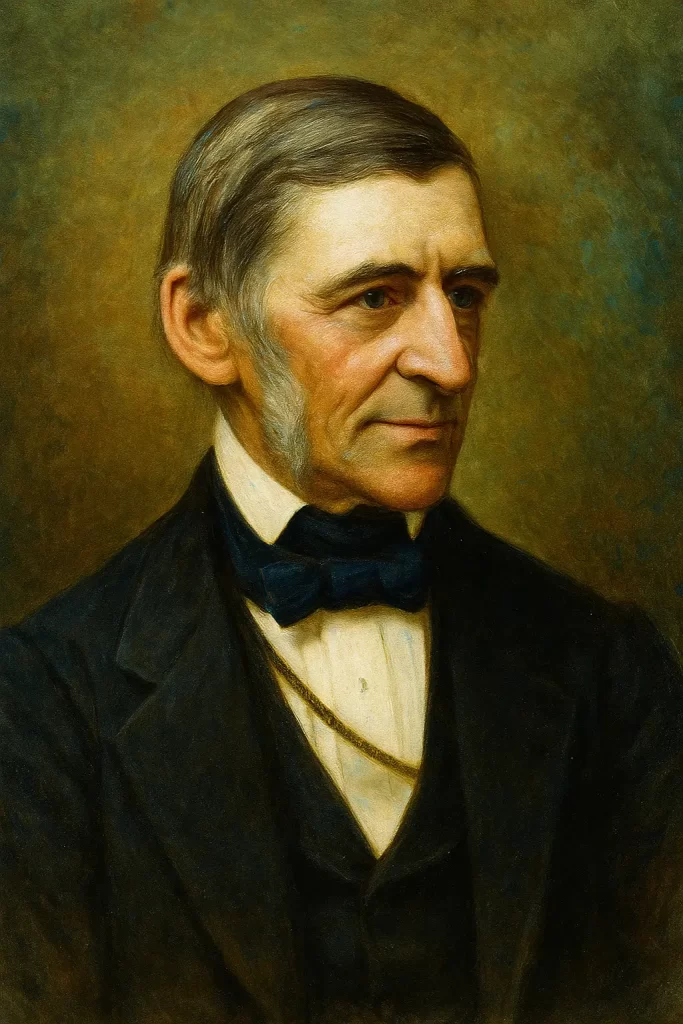
Early Life:
Ralph Waldo Emerson was born on May 25, 1803 in Boston, Massachusetts, USA, into a family of ministers. His father, William Emerson, was a Unitarian minister who died when Ralph was only eight years old. The family faced financial difficulties, but Emerson’s mother and aunt encouraged his education.
Education:
He attended the Boston Latin School and later Harvard College, graduating in 1821. He then studied at Harvard Divinity School to become a minister, like his father.
Religious Career and Break from Tradition:
In 1829, Emerson became a Unitarian minister at the Second Church of Boston. However, after the death of his young wife, Ellen Tucker, in 1831, and his growing doubts about traditional Christianity, he resigned from the ministry in 1832. He felt that spiritual truth should come from personal experience, not from religious rituals or fixed creeds.
European Influence:
In 1833, Emerson traveled to Europe, where he met leading thinkers such as Thomas Carlyle, William Wordsworth, and Samuel Taylor Coleridge. These meetings inspired his interest in individualism, nature, and philosophy.
Transcendentalism:
Back in America, Emerson became the central figure of Transcendentalism, a philosophical and literary movement that emphasized self-reliance, nature, and the inner spiritual connection of all beings. He settled in Concord, Massachusetts, which became the center of the movement.
Major Works:
Nature (1836) — outlined his Transcendentalist philosophy.
Essays: First Series (1841) — included “Self-Reliance,” one of his most famous essays.
Essays: Second Series (1844) — contained works like “The Poet” and “Experience.”
Representative Men (1850) — portraits of great historical figures.
The Conduct of Life (1860) — essays on practical philosophy.
Lectures and Influence:
Emerson was a highly sought-after lecturer in the United States and abroad. His talks on self-reliance, nonconformity, and the spiritual importance of nature inspired many, including writers like Henry David Thoreau and reformers in education and abolitionism.
Later Years and Death:
In his later years, Emerson’s memory began to fail, but he continued to write and lecture with help. He died on April 27, 1882, in Concord, Massachusetts, and was buried in Sleepy Hollow Cemetery.
Legacy:
Emerson is remembered as “The Sage of Concord” and one of America’s greatest essayists and philosophers. His writings continue to influence literature, philosophy, and movements for personal freedom and self-expression.
| Tough Word | Meaning in English | Meaning in Hindi |
| Admonition | Gentle or friendly reproof or warning | चेतावनी |
| Instil | Gradually put an idea or feeling into someone’s mind | मन में बिठाना |
| Latent | Existing but not yet developed or manifest | गुप्त |
| Firmament | The heavens or sky | आकाश |
| Naught | Nothing | कुछ नहीं |
| Lustre | A gentle sheen or soft glow | चमक |
| Alienated | Made to feel isolated or estranged | अलग-थलग |
| Spontaneous | Done on a sudden impulse | सहज |
| Inflexibility | Unwillingness to change or compromise | कठोरता |
| Conviction | A firmly held belief or opinion | विश्वास |
| Imitation | Using someone as a model | अनुकरण |
| Suicide | The act of killing oneself intentionally | आत्महत्या |
| Kernel | The central or most important part | सार |
| Toil | Hard and continuous work | कड़ी मेहनत |
| Preestablished | Established in advance | पूर्व-स्थापित |
| Proportionate | Corresponding in size or amount | आनुपातिक |
| Manifest | Clear or obvious to the eye or mind | प्रकट |
| Deliverance | The act of being rescued or set free | मुक्ति |
| Muse | A source of inspiration | विचार करना |
| Providence | The protective care of God or nature | भाग्य |
| Contemporaries | People living at the same time | समकालीन |
| Confided | Told someone about a secret | विश्वास किया |
| Transcendent | Beyond normal experience | उत्कृष्ट |
| Oracles | A medium for divine advice | दैववाणी |
| Rebel | A person who rises in opposition | विद्रोही |
| Distrust | Feeling that something cannot be relied on | अविश्वास |
| Sentiment | A view or opinion expressed | भावना |
| Unconquered | Not conquered | अजेय |
| Disconcerted | Unsettled or confused | व्याकुल |
| Conforms | Complies with rules or standards | अनुरूप |
| Nonchalance | Casual lack of concern | लापरवाही |
| Éclat | Brilliant display or success | शानदार प्रदर्शन |
| Lethe | Mythical river of forgetfulness | विस्मृति |
| Formidable | Inspiring fear or respect through strength | दुर्जेय |
| Conspiracy | A secret plan to do something harmful | षड्यंत्र |
| Aversion | A strong dislike | घृणा |
| Suffrage | Approval or support | समर्थन |
| Importune | To ask persistently | बार-बार माँगना |
| Ephemeral | Lasting for a short time | क्षणिक |
| Capitulate | To surrender or give in | आत्मसमर्पण करना |
| Philanthropy | Desire to promote the welfare of others | परोपकार |
| Penances | Acts of self-punishment to show repentance | प्रायश्चित |
| Arduous | Requiring a lot of effort | कठिन |
| Meanness | Lack of generosity or pettiness | नीचता |
| Ostentation | Showy display meant to impress | दिखावा |
| Affectation | Behavior that is artificial | बनावटीपन |
| Mortifying | Causing embarrassment or shame | अपमानजनक |
| Aversion (dup.) | Strong dislike or opposition | विरोध |
| Magnanimity | Generosity and nobility of spirit | उदारता |
| Hobgoblin | A mischievous or frightening spirit | भूत |
| Contrite | Feeling remorse or guilt | पश्चातापी |
| Cumulative | Increasing by successive additions | संचयी |
| Venerable | Commanding respect due to age or dignity | सम्माननीय |
| Ephemeris | A table showing celestial positions | क्षणिक पत्र |
| Pedigree | Lineage or ancestry | वंशावली |
| Obsequious | Excessively servile or attentive | चापलूस |
| Mendicant | Begging or dependent on charity | भिखारी |
| Sycophantic | Acting to gain favor through flattery | चाटुकारिता |
| Hieroglyphic | A symbol representing a concept | चित्रलिपि |
| Aboriginal | Original or earliest known | आदिवासी |
| Parallax | Apparent shift in position due to perspective | दृष्टिकोण परिवर्तन |
| Tuitions | Teachings or instructions | शिक्षाएँ |
| Impiety | Lack of reverence for sacred things | अधर्म |
| Atheism | Disbelief in the existence of God | नास्तिकता |
| Discern | To perceive or recognize clearly | पहचानना |
| Whimsical | Playfully unpredictable | सनकी |
| Fatal | Leading to inevitable outcomes | घातक |
| Profane | Showing disrespect for sacred things | अपवित्र |
| Apologue | A moral fable | नीतिकथा |
| Parable | A story used to illustrate a moral lesson | दृष्टांत |
| Timid | Showing a lack of courage | डरपोक |
| Apologetic | Expressing regret or apology | क्षमाप्रार्थी |
| Hoarded | Stored up or accumulated | संग्रहित |
| Docility | Willingness to be taught or led | विनम्रता |
| Antinomianism | Rejection of moral or religious laws | नियम-विरोध |
| Shriven | Absolved of sins through confession | पापमुक्त |
| Insolvent | Unable to pay debts or satisfy demands | दिवालिया |
Themes
1. Trust Yourself
Emerson’s core message is self-trust — the belief that your own thoughts and feelings are as valid as anyone else’s.
You should not wait for others to confirm what you already feel is true.
He says, “Trust thyself: every heart vibrates to that iron string.”
Inner conviction is a form of divine guidance; ignoring it means ignoring the voice of truth within.
2. Individuality and Nonconformity
Emerson warns against living only to satisfy society’s rules or to gain approval.
Society values conformity because it keeps order, but this suppresses personal growth.
To be truly human and fully alive, you must dare to stand apart from the crowd.
Famous figures in history — like Socrates, Jesus, and Galileo — were misunderstood precisely because they refused to conform.
3. The Value of Originality
Emerson condemns imitation as “suicide,” because it kills your originality and unique potential.
Your own life, experiences, and skills are gifts meant only for you to use; no one else can live them.
Great art and great ideas come from trusting first impressions and expressing them without fear.
Even if the world rejects your originality now, it may recognize its value later.
4. Self-Reliance in All Areas of Life
Emerson applies the idea of self-reliance to multiple parts of life:
Religion: Have a direct relationship with God, without depending on institutions or formal creeds.
Travel: Don’t travel to “find yourself” — the same self goes with you everywhere.
Education & Art: Create and learn from your own local experience, not by copying foreign models.
Progress: Real improvement comes from individual growth, not just from changes in society’s systems.
5. Living in the Present
Emerson urges us to act from the truth we feel now, not from what we believed in the past.
Consistency for its own sake is a trap; it keeps you from growing.
Living in the present means not worrying about whether today’s choices match yesterday’s words.
Nature gives the best example — like a rose, it is perfect in every moment without comparing itself to the past or future.
Style
The style of Ralph Waldo Emerson’s essay Self-Reliance (1841) is characterized by a blend of philosophical, inspirational, and conversational elements, written in clear, vivid, and persuasive prose.
Direct and Personal Tone
Emerson writes as if he’s speaking directly to the reader, using a conversational yet urgent tone to inspire action. He addresses “you” frequently, making the essay feel like a personal call to embrace your own thoughts and reject conformity. This directness creates a sense of intimacy and encouragement, urging readers to trust themselves.
Clear and Accessible Language
While the ideas are deep, Emerson uses straightforward language to make them understandable. He avoids overly complex terms, favoring simple words and sentences that pack a punch. His clarity ensures that readers, even without a philosophical background, can grasp his message about individuality and self-trust.
Imagery and Metaphors
Emerson’s prose is rich with vivid images and metaphors drawn from nature and everyday life. For example, he compares trusting your instincts to following a “gleam of light” in your mind or a rose being perfect in every moment. These images make abstract ideas feel concrete and relatable, like comparing a person’s life path to a ship’s zigzagging journey that looks straight from afar.
Inspirational and Exhortative Style
The essay is motivational, urging readers to act boldly and live authentically. Emerson uses commanding phrases like “Trust thyself” and “Insist on yourself; never imitate” to stir readers into action. His passionate, almost sermon-like style reflects his background as a preacher, aiming to uplift and challenge readers to break free from societal pressures.
Philosophical and Reflective
As a transcendentalist, Emerson weaves philosophical ideas into the essay, emphasizing intuition, the divine within, and the unity of all things. He reflects deeply on human nature, society, and the self, but keeps it grounded with practical advice. His reflective tone invites readers to think about their own lives and beliefs.
Anecdotal and Personal Elements
Emerson includes personal stories, like his youthful response to a church adviser questioning his instincts, to make his points relatable. These anecdotes humanize the essay, showing how his ideas come from real experiences and encouraging readers to apply them to their own lives.
Rhetorical Flourishes and Repetition
He uses rhetorical techniques like repetition and parallel structure to emphasize key points. For example, he repeats the idea of trusting yourself in different ways to drive it home. His sentences often build to a rhythmic climax, making the prose feel dynamic and persuasive, almost like a speech.
Poetic and Literary Allusions
The essay incorporates poetic quotes, like those from Beaumont and Fletcher, and references to historical figures (Socrates, Jesus, Newton) to add depth and authority. These allusions connect his ideas to a broader human experience, showing that self-reliance is timeless.
Critical and Provocative Edge
Emerson doesn’t shy away from criticizing society, calling it a “conspiracy” against individuality or mocking its obsession with consistency. His bold, sometimes sharp tone challenges readers to question norms and rethink their values, adding a provocative edge to his style.
Optimistic and Visionary Outlook
Despite his critiques, Emerson’s style is hopeful, painting a vision of a world where individuals live authentically and powerfully. He inspires readers to see themselves as capable of greatness, connected to a universal truth, and able to shape their own destiny.
Literary Devices
1. Aphorism
Definition: A short, memorable statement expressing a universal truth.
Example: “Envy is ignorance; imitation is suicide.”
Effect: Makes the idea easy to remember and repeat.
2. Metaphor
Definition: Comparing two unlike things without using “like” or “as.”
Example: “Society is a joint-stock company.”
Here, society is compared to a business where people trade independence for safety.
Effect: Creates a vivid image to explain an abstract idea.
3. Simile
Definition: Comparing two unlike things using “like” or “as.”
Example: “A foolish consistency is like the hobgoblin of little minds.”
Effect: Makes the abstract concept of “consistency” easier to visualize by comparing it to a mischievous spirit.
4. Repetition
Definition: Repeating words or phrases for emphasis.
Example: “Trust thyself” appears multiple times.
Effect: Reinforces the central idea and gives the essay a rhythmic, persuasive tone.
5. Allusion
Definition: Reference to famous people, events, or works.
Example: Emerson refers to Moses, Plato, and Milton to show that great figures trusted themselves.
Effect: Strengthens his argument by connecting it to respected authorities in history.
6. Imagery
Definition: Descriptive language that appeals to the senses.
Example: “It is as easy for the strong man to be strong, as it is for the weak to be weak.”
Effect: Helps the reader picture and feel the contrast between strength and weakness.
7. Personification
Definition: Giving human qualities to non-human things.
Example: “Society never advances.” (Society is treated as if it were a person who could move forward or backward.)
Effect: Makes the abstract idea more relatable and vivid.
8. Parallelism
Definition: Using similar grammatical structures in a series.
Example: “Trust thyself: every heart vibrates to that iron string.”
Effect: Creates rhythm and balance, making the sentence more powerful.
9. Antithesis
Definition: Placing opposite ideas side by side for contrast.
Example: “To be great is to be misunderstood.”
Effect: Surprises the reader and forces them to think deeply about the meaning.
10. Symbolism
Definition: Using an object or image to represent a larger idea.
Example: The rose symbolizes natural perfection and self-completeness.
Effect: Makes philosophical ideas concrete and memorable.
Very Short Answer Questions
Who is the author of Self-Reliance?
Ralph Waldo Emerson.
In which year was Self-Reliance first published?
1841.
In which book did Self-Reliance appear?
Essays: First Series.
What is the Latin motto at the beginning of the essay?
“Ne te quaesiveris extra” (“Do not seek outside yourself”).
What is the central message of the essay?
Trust yourself and follow your own inner voice.
What does Emerson call “ignorance”?
Envy.
What does Emerson call “suicide”?
Imitation.
What is sacred according to Emerson?
The integrity of your own mind.
Which virtue does society demand most from individuals?
Conformity.
What must a man be to be truly a man?
A nonconformist.
What is “a foolish consistency” compared to?
A hobgoblin of little minds.
Who does Emerson list as examples of misunderstood great people?
Socrates, Jesus, Luther, Copernicus, Galileo, Newton.
According to Emerson, where does real goodness come from?
Being true to yourself.
What is the only thing that can bring you peace?
Yourself.
What is the only thing that can bring you peace apart from yourself?
The triumph of principles.
What does Emerson compare society to?
A joint-stock company.
What is the best source of wisdom according to Emerson?
Intuition.
How should one treat the past?
As dead and gone; live in the present.
What is Emerson’s view on travel for self-discovery?
It is useless; your same self goes with you.
What does the rose symbolize in the essay?
Natural self-completeness in the present moment.
How does Emerson define prayer?
The contemplation of life from the highest point of view, not asking for personal favors.
What kind of charity does Emerson reject?
False charity without real connection.
What should guide a person’s life?
Their own nature and principles.
What is the foundation of self-reliance?
Trust in one’s own thoughts and intuition.
What does Emerson say about being misunderstood?
To be great is to be misunderstood.
Which movement was Emerson a leader of?
Transcendentalism.
What is Emerson’s opinion on imitation in art and education?
Insist on yourself; never imitate.
What is true progress according to Emerson?
Growth of the individual.
What does Emerson think of property dependence?
It is weakness; true strength is independence.
Where was Emerson born?
Boston, Massachusetts, USA.
Short Answer Questions
What is the central idea of Emerson’s Self-Reliance?
The central idea is to trust yourself and live by your own thoughts and beliefs instead of conforming to society. Emerson writes, “Trust thyself: every heart vibrates to that iron string.” He believes self-trust is the source of true genius and that each person has a unique purpose. Following others weakens individuality, while trusting one’s inner voice leads to peace and strength.
Why does Emerson call envy “ignorance” and imitation “suicide”?
Emerson says, “Envy is ignorance; imitation is suicide” because wanting to be like others ignores your own gifts, and copying them kills your originality. Every person has their own strengths and purpose, which cannot be fulfilled by living someone else’s life. True fulfillment comes from developing your own talents, not imitating others.
How does Emerson describe society and its effect on individuality?
Emerson compares society to “a joint-stock company” where people trade freedom for security. Society demands conformity and dislikes nonconformists. This pressure makes people hide their true selves to please others. For Emerson, real progress comes when individuals resist this and remain independent in thought and action.
What does Emerson mean when he says “A foolish consistency is the hobgoblin of little minds”?
Emerson criticizes blind consistency — sticking to old ideas just to appear reliable. He writes, “With consistency a great soul has simply nothing to do.” For him, growth means accepting change and speaking your present truth, even if it contradicts what you said before. Great minds like Socrates and Galileo were misunderstood but followed their evolving convictions.
How does Emerson view the importance of nonconformity?
Emerson declares, “Whoso would be a man must be a nonconformist.” He believes greatness requires the courage to stand apart from the crowd and think independently. Nonconformity may attract criticism, but it preserves personal integrity. For Emerson, nothing is sacred except the integrity of one’s own mind.
Why does Emerson admire children in Self-Reliance?
Emerson praises children for their honesty, confidence, and independence. He says they “abide by their spontaneous impression” and are unspoiled by the desire to please others. Unlike adults, children are not afraid to speak their minds, and Emerson urges readers to preserve this fearless authenticity in adulthood.
How does Emerson connect self-reliance with religion?
Emerson believes religion should come from personal experience, not from institutions. He writes that “prayer is the contemplation of the facts of life from the highest point of view” rather than asking for private favors. True faith comes from a direct relationship with God, without relying on creeds or rituals.
What is Emerson’s view on travel as a means of self-discovery?
Emerson argues that travel is useless if it’s only to “find oneself.” He says, “Traveling is a fool’s paradise” because the same self goes everywhere you go. True wisdom is to feel at home anywhere by carrying your sense of self within you, not by changing location.
How does Emerson use nature to illustrate self-reliance?
Emerson uses the rose as a symbol of natural perfection and living in the present. He writes, “The rose does not remind itself of former buds… it is perfect in every moment.” Like the rose, people should live fully in the present without dwelling on the past or future.
What is the role of intuition in self-reliance?
Emerson sees intuition as the purest source of truth. He says, “We lie in the lap of immense intelligence” and can access it directly without books or tradition. Trusting intuition allows people to live authentically and connect to the divine source of creation.
Why does Emerson value originality in education and art?
Emerson urges, “Insist on yourself; never imitate.” He criticizes copying foreign models and believes each culture should create from its own needs. In art and education, originality keeps the spirit alive, while imitation kills creativity and self-expression.
How does Emerson connect self-reliance with progress?
Emerson says true progress comes from individual growth, not just society changing its outer form. He writes, “Society never advances. It recedes as fast on one side as it gains on the other.” For him, improvements in the world must begin with improvements in the individual.
What does Emerson say about being misunderstood?
Emerson encourages people not to fear misunderstanding. He says, “To be great is to be misunderstood.” History’s greatest minds — Socrates, Jesus, Galileo — were all misunderstood in their time, but they stood firm in their beliefs.
How does Emerson view dependence on property?
Emerson warns that relying on possessions for strength is weakness. He writes, “Nothing can bring you peace but yourself.” True security comes from character and principles, not from wealth or social status, which can be lost at any moment.
What is Emerson’s final message in Self-Reliance?
Emerson ends with the idea that peace comes only from living by your own principles. He writes, “Nothing can bring you peace but yourself. Nothing can bring you peace but the triumph of principles.” Self-reliance means trusting yourself, rejecting conformity, and living truthfully in the present.
Emerson says, “Trust thyself: every heart vibrates to that iron string.” What does he mean?
Emerson urges people to have complete confidence in their own inner thoughts and instincts. He compares self-trust to a strong “iron string” that keeps life steady. For him, personal conviction is a divine gift, not to be doubted or traded for approval. By trusting yourself, you live in harmony with your true nature. Such trust leads to peace, strength, and originality. Without it, you remain dependent on others’ judgments.
Emerson writes, “Envy is ignorance; imitation is suicide.” Explain.
Envy is ignorance because it overlooks your own unique gifts and potential. Imitation is suicide because it destroys the self by replacing it with a copy of someone else. Emerson believes everyone has their own role and talents given by God. Trying to live another person’s life means losing your own. Self-reliance means developing your own strengths. This, he says, is the only path to fulfillment.
Emerson declares, “Whoso would be a man must be a nonconformist.” Why?
For Emerson, true maturity and manhood mean thinking for oneself. Nonconformity is refusing to follow society’s rules blindly just to fit in. He believes society often demands conformity to keep order, but this kills individuality. Nonconformists may face criticism, but they keep their integrity intact. Integrity is more important than public approval. This courage to stand alone defines a great soul.
Emerson says, “Nothing is at last sacred but the integrity of your own mind.” Discuss.
Emerson believes that staying true to your own beliefs is the highest virtue. Traditions, customs, and moral codes have value only if they match your nature. If they go against your inner truth, you should reject them. A person who betrays their own mind loses their moral foundation. Integrity is the only lasting sacred thing. Without it, even good actions are hollow.
Emerson claims, “Society is a joint-stock company.” What does he mean?
Emerson compares society to a business where members give up freedom for safety. In this arrangement, people agree to follow common rules in exchange for protection and order. But society demands conformity in return, which limits individuality. This “trade” keeps people from living authentically. Emerson warns that society values stability over truth. Self-reliance requires resisting this pressure.
Emerson warns, “A foolish consistency is the hobgoblin of little minds.” Explain.
Emerson criticizes the habit of clinging to old ideas just to appear reliable. He says great thinkers speak their present truth, even if it contradicts what they said yesterday. This willingness to change shows growth and openness. Fear of seeming inconsistent traps people in outdated thinking. Great souls like Galileo and Socrates were unafraid to evolve. Emerson sees flexibility as a sign of intelligence.
Emerson says, “To be great is to be misunderstood.” Explain with examples.
Emerson means that innovators are often criticized because their ideas are ahead of their time. Figures like Socrates, Jesus, Galileo, and Newton were all misunderstood in their lifetimes. Society often resists change and rejects the unfamiliar. But greatness demands the courage to stand firm despite misunderstanding. Being criticized may even be proof of originality. History often proves such thinkers right in the end.
Emerson writes, “Prayer is the contemplation of the facts of life from the highest point of view.” What does he mean?
Emerson believes prayer should not be used for selfish requests. True prayer is a deep reflection on life’s truths from a spiritual perspective. It means aligning the mind with the universal good. Asking for personal favors, he says, weakens the soul. Real prayer elevates thought and connects us to divine wisdom. It is a way of seeing, not just asking.
Emerson says, “Traveling is a fool’s paradise.” Why?
Emerson means that travel does not change who you are inside. If you are unhappy at home, you will carry that same discontent wherever you go. Many people expect travel to “find themselves,” but the self remains the same. True wisdom means being at home anywhere. Real change comes from within, not from location. Peace is internal, not geographical.
Emerson writes, “The rose does not remind itself of former buds… it is perfect in every moment.” What lesson does he draw?
The rose symbolizes living fully in the present moment. It does not compare itself to its past or worry about its future. Emerson says humans should live the same way — self-contained and complete in the now. Dwelling on the past or fearing the future wastes life. Like the rose, people should trust the perfection of each moment. This is a key to self-reliance.
Emerson says, “Insist on yourself; never imitate.” How does this relate to art and education?
Emerson believes originality is the soul of creativity and learning. In art, imitating foreign styles kills true expression. In education, blindly copying others’ methods limits growth. He says each culture and individual should create from their own needs. True genius is unique and personal. Self-reliance means producing something new from your own experience.
Emerson claims, “Society never advances. It recedes as fast on one side as it gains on the other.” Explain.
Emerson believes society’s changes are only surface-level. Every improvement comes with a loss — for example, technology may improve comfort but weaken human skills. External progress is meaningless without personal growth. True advancement happens when individuals improve morally and spiritually. Society’s gains mean little without self-reliant individuals. Progress, for Emerson, is an inner process.
Emerson says, “Nothing can bring you peace but yourself.” How does this sum up his philosophy?
Emerson’s philosophy centers on self-reliance as the source of peace. Material wealth, public approval, or social position cannot give lasting satisfaction. Peace comes from living according to your own principles. He calls this the “triumph of principles” over external rewards. Self-trust and moral independence are the true sources of happiness. Without them, peace is impossible.
Emerson writes, “We lie in the lap of immense intelligence.” What is he referring to?
Emerson is speaking about our connection to divine wisdom. This “immense intelligence” is the creative force behind all life. It is accessible directly through intuition, without the need for books or tradition. By trusting our inner voice, we align with this source. For Emerson, this is the foundation of self-reliance. It makes us part of the universal order.
Emerson says, “God will not have his work made manifest by cowards.” Explain.
Emerson believes courage is necessary to live truthfully. God’s work — the expression of truth and goodness — requires bold action. Fear and conformity hide this divine potential. Only those who trust themselves and act with bravery can reveal it. Self-reliance demands moral courage in the face of opposition. For Emerson, this is both a personal and spiritual duty.
Essay Type Questions
“Trust thyself: every heart vibrates to that iron string.” Discuss the significance of self-trust in Emerson’s philosophy of Self-Reliance.
In Self-Reliance, Ralph Waldo Emerson makes self-trust the cornerstone of his philosophy of individualism. His famous statement, “Trust thyself: every heart vibrates to that iron string,” captures the belief that every human being possesses an inner voice — a divine instinct — that must be followed without fear or doubt. Emerson’s idea is rooted in the Transcendentalist conviction that truth is not merely found in books, institutions, or traditions, but in the direct experience of the individual. To trust oneself is to accept that one’s innermost thoughts and feelings are valid and worthy, even if they go against societal norms. This trust is the foundation of originality, courage, and moral strength.
Emerson uses historical examples such as Moses, Plato, and Milton to illustrate his point. These figures did not conform to prevailing ideas; instead, they listened to their own minds and spoke with authority because they were grounded in self-trust. He insists that the flashes of insight we sometimes dismiss as “just our thoughts” are often universal truths, and ignoring them in favor of what others say is a form of self-betrayal. By following our instincts, we connect directly with the divine intelligence that flows through all of nature, becoming active participants in creation rather than passive imitators.
Self-trust also enables resistance to the pressures of conformity. Society, Emerson says, is like a “joint-stock company” that values security over individuality, demanding that people give up their independence for acceptance. Without self-trust, people fall into the trap of living according to others’ expectations and lose touch with their own purpose. Emerson warns that envy and imitation are the enemies of individuality: “Envy is ignorance; imitation is suicide.” A self-reliant person recognizes their unique role in life and works to fulfill it, rather than trying to live someone else’s story.
In Emerson’s view, self-trust is not a matter of arrogance but of spiritual necessity. He draws inspiration from nature — for instance, the rose, which is perfect in every moment and does not compare itself to past or future blooms. Similarly, we should trust the perfection of each moment in our lives, knowing that it is part of a larger design. Ultimately, Emerson believes that self-trust is the only way to achieve peace, for “Nothing can bring you peace but yourself. Nothing can bring you peace but the triumph of principles.” To live in trust of one’s own mind is to live in harmony with truth, with God, and with the highest potential of the human spirit.
“Envy is ignorance; imitation is suicide.” How does Emerson define individuality in Self-Reliance?
In Self-Reliance, Ralph Waldo Emerson uses the striking statement “Envy is ignorance; imitation is suicide” to define his vision of individuality. By “envy is ignorance,” Emerson means that desiring another person’s life or qualities shows a lack of awareness of one’s own potential. Every individual has been given a unique combination of abilities, circumstances, and opportunities by God or nature. To envy others is to ignore this personal gift. By “imitation is suicide,” he warns that copying someone else’s life and ideas destroys one’s own identity. It is, in effect, killing the self in order to live as a shadow of another.
For Emerson, individuality is about accepting the “portion” of life given to you — your talents, your limitations, and your situation — and working to develop them fully. This is not resignation but an active embrace of one’s uniqueness. He stresses that the inner power in each person is new in nature, and it will remain unknown to the world until the individual makes the effort to bring it forth. Emerson draws a parallel with nature: no two leaves or roses are the same, and each is perfect in its own way. Likewise, every human soul has its own role in the great order of things.
Individuality also requires the courage to resist social pressures. Society often imposes standards of success, beauty, and morality that do not fit everyone. Emerson urges people to ignore these imposed models if they conflict with their own nature. This requires trust in one’s intuition, the ability to hear one’s own voice amid the noise of the crowd. Great individuals like Socrates, Galileo, and Newton became who they were because they followed their own understanding rather than the expectations of their time. Emerson believes that each person has the same potential for greatness if they dare to be themselves.
Ultimately, Emerson’s call for individuality is a call for self-reliance. By avoiding envy and imitation, people preserve their originality and authenticity. Individuality is not about isolation from others, but about contributing to the world in a way that only you can. This means creating your own values, living by your own principles, and trusting your inner vision. As Emerson sees it, to be yourself in a world constantly trying to make you something else is the highest achievement, and the first step toward both personal fulfillment and a richer human society.
Examine Emerson’s criticism of society in Self-Reliance with reference to the quote, “Society is a joint-stock company.”
Emerson famously declares in Self-Reliance that “Society is a joint-stock company,” a metaphor that captures his deep criticism of social conformity. In a joint-stock company, individuals invest for mutual benefit, but they give up a portion of their independence to do so. Similarly, Emerson believes society operates by asking individuals to surrender their personal freedom and originality in exchange for security and acceptance. This arrangement, while offering stability, suppresses the individual’s unique expression and potential.
According to Emerson, society’s chief virtue is conformity. It demands that people think, act, and speak in ways that align with accepted norms, even when those norms contradict their own convictions. This stifles creativity and moral courage. Emerson argues that nothing is sacred except “the integrity of your own mind,” yet society often pressures people to abandon their inner truth to avoid conflict or rejection. He warns that conformity leads to hypocrisy, as individuals begin to wear a mask that hides their true selves.
Emerson also links conformity to what he calls “a foolish consistency,” which he describes as “the hobgoblin of little minds.” People cling to their past statements and habits simply to appear reliable, fearing the judgment of others if they change their opinions. Society reinforces this by valuing predictability over growth. Emerson, however, sees change as a natural sign of development and intelligence. For him, the greatest minds — from Jesus to Galileo — have all been misunderstood and even opposed because they refused to conform.
In rejecting society’s joint-stock arrangement, Emerson is not advocating chaos or selfishness but urging individuals to reclaim their independence. He wants people to live by inner principles rather than external approval, even if that means standing alone. True social progress, he argues, comes not from collective agreements that suppress individuality but from the contributions of self-reliant individuals whose originality inspires change. For Emerson, society’s real strength will emerge only when it respects the sovereignty of each person’s mind.
How does Emerson link self-reliance with religion, education, and travel in the essay?
In Self-Reliance, Emerson applies the principle of self-trust to many aspects of life, including religion, education, and travel. In religion, he rejects dependence on formal creeds and rituals, arguing that true faith comes from direct experience of God. For him, prayer should be “the contemplation of the facts of life from the highest point of view,” not a request for personal favors. This means connecting with the divine through inner reflection, rather than relying on religious institutions to mediate the relationship. Emerson believes that self-reliant religion frees the individual from superstition and formalism, grounding faith in personal conviction.
In education, Emerson criticizes the habit of imitating foreign models instead of creating learning systems suited to one’s own culture and needs. He observes that schools and universities often produce conformity rather than originality, training students to repeat established knowledge rather than think independently. True education, in his view, draws out the natural abilities of the student and encourages self-discovery. His statement “Insist on yourself; never imitate” applies strongly here — real learning should empower individuals to become creators, not copyists.
On the subject of travel, Emerson is skeptical of the belief that changing one’s location will bring self-discovery or transformation. He calls this idea “a fool’s paradise” because a person who is dissatisfied at home will carry the same dissatisfaction wherever they go. The external scenery may change, but the internal self remains the same unless one cultivates inner growth. For Emerson, the truly wise person is “at home” everywhere because they carry their own center within them.
By linking religion, education, and travel to the theme of self-reliance, Emerson shows that independence of thought is not limited to private life — it applies to spiritual practice, learning, and personal development. In all these areas, self-reliance means refusing to live on borrowed ideas or experiences. It is about creating one’s own understanding of God, seeking knowledge through personal engagement, and finding contentment in the present self. For Emerson, this is the path to authenticity and true freedom.
“Nothing can bring you peace but yourself. Nothing can bring you peace but the triumph of principles.” Evaluate this statement in light of Self-Reliance.
Emerson closes Self-Reliance with one of his most famous lines: “Nothing can bring you peace but yourself. Nothing can bring you peace but the triumph of principles.” Here, peace means more than the absence of conflict; it is the deep inner harmony that comes from living according to one’s own convictions. Emerson rejects the idea that material wealth, social approval, or reputation can provide lasting peace. These are unstable and dependent on forces outside our control. Only by trusting ourselves and living by principles we truly believe in can we achieve a stable and enduring peace.
For Emerson, the “triumph of principles” refers to the victory of living consistently with one’s highest values, even when it is difficult. Principles grounded in truth, integrity, and self-reliance cannot be shaken by external circumstances. A person who lives this way does not need constant reassurance from others, nor do they fear criticism. Their sense of worth comes from within. This inner independence makes them strong in the face of life’s challenges.
Throughout the essay, Emerson warns against conformity, “foolish consistency,” and dependence on property or public opinion. These are obstacles to peace because they make us rely on unstable external supports. In contrast, self-reliant living creates a foundation that cannot be taken away. By rejecting envy, imitation, and false charity, and by trusting in one’s own mind, an individual aligns themselves with the universal truth and gains self-respect.
Ultimately, Emerson’s statement is a call to personal responsibility. Peace is not something given to us by society, possessions, or other people. It is created through the deliberate choice to live authentically, guided by inner truth. In this way, the triumph of principles is both the means and the proof of self-reliance. The one who lives by their own conscience, in harmony with truth, finds a peace that no external force can disturb.
Write Long note on Ralph Waldo Emerson as an Essayist.
Introduction
Ralph Waldo Emerson (1803–1882) is one of America’s most influential essayists, shaping the intellectual and cultural landscape of the 19th century. A central figure in the Transcendentalist movement, his essays blend philosophy, personal reflection, and social critique in a style that is both inspirational and accessible. His works encourage readers to think independently, trust their instincts, and live authentically.
Emerson’s Approach to Essay Writing
Emerson’s essays are conversational explorations of big ideas such as individuality, nature, and human potential. Often adapted from his public lectures, they retain an engaging, dynamic tone. He wrote not to deliver final answers but to provoke thought, weaving personal anecdotes, historical references, and natural imagery to make philosophical ideas relatable. Works like Self-Reliance (1841), The Over-Soul (1841), and The Poet (1844) reflect his belief in the inner power of the human spirit.
Distinctive Style
Clear, Direct Language – Avoids jargon, making complex ideas widely accessible.
Vivid Imagery – Uses nature-based metaphors (e.g., the rose in Self-Reliance).
Inspirational Tone – Speaks directly to the reader with urgency (“Trust thyself”).
Aphoristic Quality – Memorable lines like “A foolish consistency is the hobgoblin of little minds.”
Personal Anecdotes and Allusions – References to Socrates, Jesus, Shakespeare.
Poetic Prose – Rhythmic, lyrical sentences influenced by his background as a poet and minister.
Key Themes
Individualism – Trusting one’s own thoughts and rejecting conformity.
Nature as Teacher – Nature as a reflection of divine truth (Nature, 1836).
Nonconformity – Defying outdated traditions (Self-Reliance).
Intuition and the Divine – Inner voice as a link to the universal spirit (The Over-Soul).
Self-Sufficiency – Relying on oneself, not external status or wealth.
Critique of Materialism – True worth lies in being, not having.
Major Essays and Impact
His two main collections, Essays: First Series (1841) and Essays: Second Series (1844), include:
Self-Reliance – A call for personal authenticity.
Nature – The foundation of Transcendentalism.
The Poet – Defines the poet as a visionary.
The Over-Soul – Explores the spiritual unity of all beings.
These works influenced writers like Thoreau, Whitman, and Dickinson, and helped shape American individualism.
Role and Legacy
Emerson transformed the essay into a tool for social and spiritual awakening. Unlike European essayists like Montaigne, he used the form to challenge norms and inspire reform. He spoke out on slavery, women’s rights, and education. His mix of moral conviction and literary grace ensures his essays remain relevant, studied, and quoted even today.
Conclusion
As an essayist, Emerson combined clarity, poetic imagery, and moral depth to inspire readers toward self-reliance and authenticity. His works are timeless, urging each generation to think independently and live in harmony with nature and their own principles.
Introduction
Ralph Waldo Emerson’s Self-Reliance, first published in 1841, is one of the most influential essays of the American Transcendentalist movement. It calls for complete trust in one’s inner voice, rejection of conformity, and courage to live by personal principles. The essay blends philosophy, moral instruction, and poetic imagery, urging readers to rely on their own intuition as a divine guide.
Central Idea
The central idea of Self-Reliance is that true freedom and peace come only through self-trust. Emerson argues that each person has a unique purpose and must follow their own instincts rather than imitating others or yielding to social pressure. He believes that by living authentically and in harmony with one’s principles, one aligns with the universal truth and achieves lasting fulfilment.
Summary
Emerson begins with the motto, “Trust thyself: every heart vibrates to that iron string,” stressing the importance of self-confidence. He warns against envy and imitation, calling them destructive to individuality. Society, he says, is like a “joint-stock company” that demands conformity in exchange for security. He urges readers to reject “foolish consistency” and embrace change, even at the cost of being misunderstood. Emerson applies self-reliance to religion, education, and travel, criticizing dependence on external institutions and emphasizing personal experience. He concludes by asserting that “Nothing can bring you peace but yourself. Nothing can bring you peace but the triumph of principles.”
Themes
Self-Trust – Confidence in one’s inner voice as the truest guide.
Individuality – Each person’s uniqueness is a divine gift.
Nonconformity – Rejecting social pressure in favor of inner integrity.
Moral Courage – Standing by principles even when opposed.
Present Living – Valuing the present moment over past or future.
Structure and Style
The essay is structured as a series of interconnected reflections rather than a strict logical argument. Emerson’s style is aphoristic, full of memorable statements like “A foolish consistency is the hobgoblin of little minds.” His language is elevated and poetic, enriched by metaphors from nature, history, and daily life. The tone alternates between inspirational, instructive, and challenging.
Literary Devices
Aphorism – “Envy is ignorance; imitation is suicide.”
Metaphor – “Society is a joint-stock company.”
Allusion – References to Moses, Plato, Milton, and Galileo.
Personification – Presenting nature as a living, teaching presence.
Repetition – To emphasize key moral principles.
Critical Commentary
Self-Reliance is both inspiring and demanding. Its moral idealism encourages readers to live authentically, but its uncompromising rejection of conformity may seem impractical in certain social contexts. While Emerson’s abstract style requires careful reading, his insights are timeless. The essay’s power lies in its combination of spiritual depth and practical challenge, making it a lasting guide for personal independence.
Conclusion
Emerson’s Self-Reliance remains a cornerstone of American literature and philosophy. Its call for self-trust, nonconformity, and moral courage continues to inspire those seeking authenticity. Blending poetic beauty with moral force, the essay stands as a timeless reminder that the path to peace and greatness begins within the individual.