The Race of My Life
Summary
The Race of My Life by Milkha Singh, co-authored with his daughter Sonia Sanwalka, was published in 2013 by Rupa Publications in India. The book is available in English and has been translated into multiple languages, including Hindi. The book has been praised for its inspiring narrative and honesty, selling over 100,000 copies by 2014. It inspired the 2013 Bollywood film Bhaag Milkha Bhaag, directed by Rakeysh Omprakash Mehra and starring Farhan Akhtar.
Milkha Singh’s autobiography, The Race of My Life, co-authored with his daughter Sonia Sanwalka, tells the inspiring story of his journey from a traumatic childhood in undivided India to becoming one of India’s greatest athletes, known as the “Flying Sikh.” Written in simple language, the book captures his struggles, triumphs, and dedication to running, aiming to motivate young readers to pursue sports with passion and perseverance.
Born in the 1930s in Gobindpura, a small village now in Pakistan, Milkha grew up in a large, happy family. His simple life changed during the 1947 Partition, when he witnessed the brutal massacre of his parents and siblings. Fleeing for his life at his father’s urging—“Bhaag Milkha, bhaag”—he escaped to India, enduring poverty and hardship as a refugee in Delhi. He briefly fell into bad company, stealing and gambling, and spent ten days in jail, only freed when his sister Isher sold her earrings.
Joining the Indian Army in 1952 changed his life. A six-mile race in 1953, where he finished sixth, sparked his love for running, earning him extra milk and exemption from chores. Under coach Gurdev Singh, Milkha trained relentlessly, turning running into his “God, religion, and beloved.” Despite rivalries and a violent attack by competitors, he rose through the ranks, winning the 400-meter race at the 1954 EME Centre meet and represent India at the 1956 Melbourne Olympics, where he learned from American champion Charles Jenkins.
From 1956 to 1958, Milkha’s dedication made him a “running machine.” He set records at the 1957 Bangalore National Games and, in 1958, won gold in the 400-meter and 200-meter races at the Tokyo Asian Games, defeating Pakistan’s Abdul Khaliq and earning fame across Asia. That year, he won India’s first Commonwealth Games gold in Cardiff, a historic moment celebrated by Queen Elizabeth and Prime Minister Nehru, who promoted him to Junior Commissioned Officer.
In 1960, Milkha competed in the Rome Olympics, leading the 400-meter final but slowing down, finishing fourth at 45.6 seconds, just 0.1 seconds from bronze, a regret that haunted him. He redeemed himself in Lahore, defeating Khaliq in the 200-meter race, earning the title “Flying Sikh” from General Ayub Khan. Between 1958 and 1960, he won 77 of 80 international races. In 1962, he won two golds at the Jakarta Asian Games, retiring after the 1964 Tokyo Olympics.
In 1959, Punjab Chief Minister Pratap Singh Kairon recruited Milkha to lead a sports department, prompting his army discharge in 1961. As deputy director, he struggled with administrative work but was granted flexibility to train, later enjoying sports development projects. He met Nimmi, a volleyball captain, in 1956, and their romance blossomed despite family opposition to their inter-caste marriage. With Kairon’s help, they wed in 1963, raising four children—Aleeza, Mona, Sonia, and Jeev—who excelled in sports, with Jeev becoming a professional golfer, earning the Arjuna Award and Padma Shri.
Post-retirement, Milkha promoted sports in Punjab, establishing sports wings and camps to nurture talent, producing stars like hockey captain Ajit Pal Singh. However, his initiatives faded after 1991 due to lack of support. He criticized India’s sports system, plagued by politics, corruption, and drug use, advocating for Chinese-style training, accountable coaches, and support for retired athletes. Milkha refused a 2001 Arjuna Award, feeling it undervalued his 1958 Padma Shri and global achievements. He donated his medals to sports institutions and his 1960 Olympic shoes for charity.
Plot
Prologue
When I reflect upon my life, I can clearly see how my passion for running has dominated my life. The images that flash through my mind are those of me
running…running…running…
- sprinting from one shady patch to another to escape the blistering heat of the sun on my journey to school
- fleeing the massacre on that fearsome night when most of my family was slaughtered
- racing trains for fun
- outrunning the police when I was caught stealing in Shahdara
- leaving everyone behind in my first race as an army jawan so that I could get an extra glass of milk
- surging past my competitors in Tokyo when I was declared Asia’s Best Athlete
- Running in Pakistan and being hailed as ‘The Flying Sikh’
Each of these moments brings back bittersweet memories as they represent the different stages of my life, a life that has been kept afloat by my intense determination to triumph in my chosen vocation.
Chapter 1: Life in Undivided India
Milkha Singh was born in a small village called Gobindpura in what is now Pakistan, under a simple thatched roof. He doesn’t know his exact birth date, but for official records, it’s listed as November 20, 1932. His family was large and happy, with his father, Sampuran Singh, a small farmer, and his mother, Chawali Kaur, a caring woman who worked hard to feed her eight children. Milkha was one of the youngest, along with his brother Gobind. His older siblings—brothers Amir, Daulat, and Makhan, and sisters Makhani, Hoondi, and Isher—were already married, as was common in those days. Milkha loved when his favorite sister, Isher, visited, bringing him sweets.
They lived in a basic mud house with two rooms: one for the cattle and one for the family. During the day, Milkha’s brothers helped their father in the fields, while Milkha and Gobind played with village friends. At night, the family gathered to eat hot rotis with ghee made by their mother. Though illiterate, Milkha’s father valued education and wanted his sons to study to improve their lives.
But when Milkha’s older brother Makhan ran away to join the army without finishing school, it broke their mother’s heart. She cried constantly, fearing he’d be sent to fight in World War II and never return. Their father eventually found Makhan in Madras after a long search and brought back news that he was safe, which eased their mother’s worries.
Milkha went to a village school where classes were held under a tree. He wasn’t interested in studies, finding the strict teacher and lessons in Urdu and arithmetic boring. He’d wait eagerly for the bell to ring so he could play. Later, his father sent him to a better school in Kot Addu, seven miles away, which meant a tough two-hour walk each way. The freezing winters and scorching summers made the journey hard, but Milkha kept going to avoid his father’s anger.
He struggled with the new school, especially learning English, and once got in trouble for skipping class to go fishing. To make sure he studied, his father made him read English lessons aloud every evening, not realizing Milkha just repeated the same memorized passage.
By age fifteen, Milkha felt the weight of his father’s hopes for him to succeed through education. But the looming Partition of India, with its violence and chaos, was about to change his life forever, leaving deep scars he’d never forget.
Chapter 2: Bhaag Milkha, Bhaag
Before India’s Independence, Milkha Singh’s village, Gobindpura, was a close-knit community where Hindus, Sikhs, and Muslims lived in harmony, sharing meals and stories. But in August 1947, the British decision to partition India and Pakistan along religious lines shattered this peace. Rumors of violence between communities spread, and fear replaced friendship. Muslim neighbors were threatened by radicals for being friendly with Hindus and Sikhs, and the warmth between villages vanished.
As tensions grew, Gobindpura’s Sikh residents met at the gurudwara to plan their defense. Muslim rioters demanded they convert to Islam, cut their hair, and eat beef—demands the Sikhs refused, vowing to fight or die. With no guns, only sticks, knives, and axes, the men and boys prepared to protect the women hiding in the gurudwara. On August 14, 1947, Pakistan was created, and the next day, India gained independence. The new borders placed Gobindpura in Pakistan, and violence erupted.
Milkha’s brother Makhan, an army soldier stationed in Multan, heard about the danger and rushed to save his family with a few jawans. But in Kot Addu, they were surrounded by a mob, disarmed by police who promised safety, and then jailed. The police betrayed them, sharing Gobindpura’s location with Muslim fanatics. When Milkha’s father and brother Daulat went to free Makhan, he urged them to flee, but his father refused to abandon their home.
The next evening, a mob armed with guns attacked Gobindpura. The village’s defenses crumbled, and the attackers killed indiscriminately. Milkha saw his father killed and heard his mother’s cries as the gurudwara burned. His brothers Daulat and Amir killed their own families to protect them from capture before being slaughtered themselves. Only Milkha’s sister Hoondi escaped, bravely saving her baby from the flames. As his father’s last words, “Bhaag Milkha, bhaag,” echoed in his mind, Milkha fled to Kot Addu, terrified and hiding in a train’s ladies’ compartment, where kind women protected him.
In Kot Addu, Makhan was freed after his commanding officer intervened. He returned to Gobindpura to find it destroyed, with over 1,500 villagers dead, including Milkha’s family. The bodies, unrecognizable, were cremated in a pile. Milkha reached Multan and reunited with Makhan, both devastated. They learned it was no longer safe for Hindus and Sikhs in Pakistan. Military orders soon evacuated families like Milkha and Makhan’s wife, Jeet, to India via a long, silent truck ride to the Ferozepur border. Numb from loss, Milkha faced an uncertain future, his childhood and home gone forever.
Chapter 3: Ten Days in Jail
After fleeing to Ferozepur, Milkha Singh and his sister-in-law Jeet joined a flood of refugees searching for family and shelter. They found an abandoned house, but food was scarce. Milkha polished shoes at army barracks for leftover dal and rotis, though some nights they went hungry. Floods soon hit Ferozepur, washing away their few possessions, and Milkha decided they should move to Delhi for better job prospects. At the chaotic railway station, Jeet got a seat in the ladies’ compartment, while Milkha rode on the train’s roof, witnessing the heartbreaking migration of displaced people.
In Delhi, they were stranded at Old Delhi station with no money or contacts. Milkha found a cleaning job at Ajmeri Gate for ten rupees, but life remained tough. Charitable trusts distributed food, which desperate refugees fought over. At a help desk, Milkha learned his sister Isher and her family were alive in Shahdara. Their reunion was emotional, but Milkha soon saw Isher was treated like a servant by her in-laws, especially her harsh mother-in-law. Jeet, respected as an army man’s wife, quickly forgot their shared struggles, leaving Milkha feeling isolated.
Isher worked tirelessly, cooking, cleaning, and caring for her large family, but faced beatings for small mistakes. Milkha, mocked as a burden by Jeet’s family, was given only one meal a day. Isher secretly shared rotis with him, warning, “Bhaag ja, bhaag,” to avoid trouble. Milkha fell into bad company, gambling and stealing from trains at Shahdara station. Caught once but escaping, he was later arrested in 1948 for traveling without a train ticket. Unable to pay a fifteen-rupee fine, he spent ten days in jail, humiliated among thieves. Isher sold her earrings to free him.
Back at Shahdara, nothing improved. Isher’s abuse continued, and Milkha’s brief joy from rejoining school faded as he returned to bad habits. When Makhan, now posted at Delhi’s Red Fort, visited, Milkha confronted him about Isher’s mistreatment. In a fit of anger, Milkha threatened Isher’s in-laws with Makhan’s gun, reducing her beatings temporarily. Makhan enrolled Milkha in school, but he struggled to focus and soon rejoined delinquents. After Makhan’s transfer to Jhansi, Milkha worked at a rubber factory for fifteen rupees a month, but poor diet and conditions left him ill for two months.
Determined to join the army like Makhan, Milkha faced rejections at recruitment centers due to physical fitness issues. In 1952, with Makhan’s help from Kashmir, Milkha was finally accepted into the army at a recruitment camp. Overjoyed, he traveled to Srinagar, Pathankot, and finally Secunderabad’s Electrical Mechanical Engineering (EME) Centre, marking the start of a new chapter.
Chapter 4: My Army Life
Milkha Singh found army life at the Electrical Mechanical Engineering (EME) Centre in Secunderabad tough and highly disciplined. New recruits followed a strict schedule, waking at 5 a.m. for physical training, drills, and military duties like shooting practice. They also did “fatigue duty,” such as digging trenches or peeling potatoes. Disobedience led to punishments like push-ups or running with a heavy knapsack. Evenings offered relaxation with carom or radio, and nights ended with a roll call. With a monthly salary of thirty-nine rupees, Milkha sent ten rupees home, leaving little for personal expenses like movies.
The rigorous training was so intense that Milkha sometimes wanted to flee, but memories of past hardships kept him going. In January 1953, a six-mile race changed his life. The top ten of 500 recruits would skip fatigue duty and get extra milk. Excited but nervous, Milkha, driven by Punjabi pride, finished sixth, earning applause and pride. This moment sparked his athletic career.
Under Havaldar Gurdev Singh, a stern but motivating coach, Milkha trained daily, running six miles and enjoying the rare treat of milk. Gurdev’s tough love, with shouts and stick-waving, pushed Milkha to excel. Six weeks later, Milkha came second in a cross-country race, gaining attention. At the Brigade Meet in Hyderabad-Secunderabad, he ran the 400-meter race, a new challenge. Unfamiliar with the distance, he clocked 63 seconds barefoot in practice and aimed to represent India after seeing admired athletes with “INDIA” on their vests.
At the Meet, despite competing against national champions like Sohan Singh, Milkha finished fourth, earning a spot at a coaching camp and the Southern Command Meet in Bombay for a relay race. Back in Secunderabad, he balanced military duties and secret nighttime 400-meter practice, running multiple rounds at top speed. One night, Brigadier S.P. Vohra caught him practicing and, impressed, exempted him from fatigue duty, providing a special diet and facilities. Though initially punished by his ustad for supposedly complaining, Milkha’s meeting with the brigadier opened doors. The army’s support for athletes gave him new opportunities to pursue his dream of becoming a world-class runner.
Chapter 5: This Was Not Sports
Milkha Singh’s rise as an athlete began at the EME Centre’s sports meet in Secunderabad in December 1954, where he won the 400-meter race in 52 seconds. A month later, at the Brigade Meet in January 1955, he came second with 50 seconds, behind Sohan Singh’s 49 seconds. However, Sohan, a national champion, grew hostile, refusing to train with Milkha and shunning him, revealing the rivalries beneath sportsmanship. This saddened Milkha but fueled his determination to train harder.
At the Southern Command Sports Meet in Poona, Sohan skipped the 400-meter race, and Milkha won with 49.4 seconds, boosting his confidence. He then joined the Southern Command team for the combined services meet in Ambala, competing against top athletes like Joginder Singh, India’s 400-meter champion. Milkha finished second, qualifying for the 1956 National Games in Patiala, a major event where Olympic selections for Australia would occur.
The National Games at Patiala’s Yadavindra Stadium were grand, with the Maharaja of Patiala opening the event and urging athletes to excel for Olympic selection. Milkha, feeling like a village boy at a fair, faced a setback when a stone pierced his heel during practice, causing a septic injury. Doctors advised against running, but Milkha, driven by ambition, competed barefoot in the 400-meter final and came fourth. Despite missing the top three, the Maharaja, impressed by his effortless style, recommended him for the Olympic training camp.
At the three-week camp in Bangalore’s Sri Kanteerva Stadium, Milkha trained with India’s best sprinters under coaches like Rufus and Baldev Singh. He learned race techniques, such as accelerating in the last 100 meters, and built stamina through hill and sand running. Switching from barefoot to spiked boots, newly made in India, improved his performance. In a trial race, he tied with Joginder Singh at 48.2 seconds, earning widespread attention.
Back in Patiala for the final Olympic team selection, Milkha faced more hostility, including snide remarks from peers. The night before the selection race, he was attacked by a group who beat his legs with sticks, trying to sabotage him. Though he couldn’t identify them, he suspected rivals. Despite a doctor’s warning about his injuries, Milkha ran the next day, driven by memories of past hardships. He won the race decisively, overcoming the odds and earning a spot on India’s 1956 Olympic team for Australia. The victory was bittersweet, as he was saddened by the viciousness of his attackers, but his selection was his proudest moment yet.
Chapter 6: From the Bhangra to the Foxtrot
Milkha Singh and the Indian Olympic team, including five men and one woman, Mary Lila Rao, were thrilled to prepare for the 1956 Melbourne Olympics. A tailor fitted them with sports kits, including blazers with “INDIA” on them, fulfilling Milkha’s dream. Unable to sleep before departure, he packed his small suitcase and boarded a train to Bombay, singing and chatting with teammates. In Bombay, they stayed at the grand Astoria hotel, where Milkha, a village boy, marveled at the restaurant and ballroom. Their manager taught them to tie ties and use cutlery, which they found tricky but fun.
At Santa Cruz airport, Milkha was confused about leaving his bedding behind and nervous about his first flight. On the plane, he and teammate Mohinder Singh prayed during takeoff, and Milkha mistook engine exhaust for fire, only to be reassured by an airhostess. After a stop in Singapore, where he admired the airport’s cleanliness, they toured Sydney during a layover, shocked by the casual dress and open affection of couples, so different from India’s conservative norms.
In Melbourne, the Olympic Village amazed Milkha with its modern facilities, including a pool, training center, cinema, and abundant food, though he missed simple Indian meals. Evening dances at the Village’s hall, where athletes danced closely, were a cultural shock, but Milkha and his teammates joined in, dancing bhangra to any music. During the opening ceremony at the Melbourne Cricket Ground, Milkha proudly marched in his India blazer, feeling both out of place and exhilarated amid cheering crowds.
In the 400-meter race, with 150 competitors split into heats, Milkha’s nerves and inexperience led to a last-place finish in his group, eliminating him. Disappointed but determined, he realized the intensity of international competition. At the Village, he met Charles Jenkins, the American gold medalist in the 400 meters. With Mohinder’s help, Milkha asked for advice, and Jenkins shared his training schedule, emphasizing rigorous practice, inspiring Milkha to aim higher.
Milkha and Mohinder attracted attention as turbaned Sikhs, signing autographs without fully understanding the concept. An Australian family, the Smiths, invited them for dinner, unaware they’d already eaten at the Village. Unable to communicate this, they ate again. The Smiths’ daughters taught them to foxtrot, overcoming their shyness about dancing with women, a taboo in India. They spent five days with the family, who grew fond of them and saw them off at the airport, though distance and cultural differences made staying in touch difficult.
Returning to India without medals, Milkha’s resolve to become a world champion became his life’s mission, fueled by his Olympic experience and newfound determination.
Chapter 7 – My God, My Religion, My Beloved
After a disappointing performance at the 1956 Melbourne Olympics, Milkha Singh returned to India humbled, realizing his skills paled against world-class athletes. Inspired by Charles Jenkins’ advice on rigorous practice, he vowed to transform himself into a “running machine” to compete globally. Between 1956 and 1957, running became his life’s obsession, akin to a religion. He treated the track like a sacred temple, dedicating himself fully to it and sacrificing all distractions to stay fit and focused.
Milkha’s life was ruled by a strict routine. He woke at dawn, ran two to three miles cross-country with his coach, did stretching exercises, and followed a similar evening schedule, training five hours daily, every day, regardless of weather. His intense practice included sand and hill running, weightlifting, and sports like hockey to build stamina and strength. He pushed himself so hard that he often collapsed, vomited blood, or fainted from exhaustion, ignoring doctors’ warnings to slow down. During Delhi’s scorching summers, he trained under 45°C heat, sweating buckets and pleading with God to survive, only to resume driven by visions of victory.
Milkha’s coach, Ranbir Singh, and others like Gurdev Singh and Dr. Howard, were vital mentors, guiding and disciplining him with trust and tough love. He followed a high-protein diet of milk, vegetables, fruit, eggs, fish, and lean meat, avoiding fatty foods and maintaining variety for digestion. He prioritized early sleep and avoided smoking, drinking, or excessive caffeine, knowing their harm to athletic performance.
Despite growing fame and attention from fans, especially women, Milkha avoided romantic relationships to stay focused, believing they would distract from his goal. The army supported him with extra food, milk, and exemptions from regular duties, allowing him to train relentlessly. His victories brought pride to his regiment, enhancing the armed forces’ reputation as he set new records, driven by an unyielding desire to be the world’s best athlete.
Chapter 8 – Going for Gold
In 1957, Milkha Singh dominated Indian sports, winning the 400-meter and 200-meter races at the Bangalore National Games with record times of 47.5 and 21.3 seconds, respectively, earning nationwide fame. In 1958, under American coach Dr. Howard, he mastered advanced starting techniques and became a “running machine.” At the Cuttack National Games, he set new all-India records, clocking 46.2 seconds for 400 meters and 21.2 seconds for 200 meters, surpassing the previous Asian 400-meter record. Skeptical, he requested a track re-measurement, which confirmed his timings, creating a buzz across Asia.
With the 1958 Tokyo Asian Games approaching, Milkha intensified his training. Arriving in Tokyo, he was stunned by the vibrant airport and media frenzy, with reporters and cameras swarming him. Escorted by motorbikes to the Diatchi hotel, he was mobbed by fans seeking autographs, which his manager, Ashwini Kumar, handled to keep him focused. At the hotel, Milkha, sharing a room with shot-put champion Parduman Singh, was warmly greeted by staff and diners, though his limited English made communication challenging.
A Japanese hotel worker brought tea each morning, charming Milkha and Parduman with her politeness. At the stadium, Milkha trained amid a charged atmosphere, drawing attention from cameras and other Asian teams. A press conference saw journalists bombard him with questions about his career and hobbies, which he answered simply. He met Pakistani sprinter Abdul Khaliq, who rudely dismissed him as just another competitor, sparking Milkha’s resolve to prove him wrong.
The Asian Games opened with a grand ceremony, Emperor Hirohito declaring the event open as teams marched past, led by a Japanese girl carrying India’s flag. A torch-lighting by veteran athlete Mikio Oda symbolized sportsmanship. In the 400-meter race, Milkha won easily, setting a new Asian Games record at 46.5 seconds. Standing atop the victory podium, he shook the emperor’s hand and watched India’s flag rise, overwhelmed with pride for his country and its martyrs.
The 200-meter race against Khaliq was crucial to determine Asia’s best athlete, as both had won their respective events (Khaliq the 100 meters, Milkha the 400 meters). Despite high tension, they ran neck-and-neck until Milkha pulled a muscle near the finish, tripped, and tumbled across the line just as Khaliq finished. After a tense half-hour wait, a photo finish confirmed Milkha’s victory, earning him a second gold medal and the title of Asia’s best athlete. Khaliq was devastated, and Milkha restrained himself from retorting to his earlier insult.
Back at the hotel, Milkha received countless congratulatory messages, and headlines celebrated his record-breaking feats. Reflecting on his journey from a Partition refugee to a celebrated athlete, he was overcome with emotion, sobbing as memories of loss and struggle flooded back. Parduman’s humor lifted his spirits, and visits from fellow athletes, including Pakistanis, fostered camaraderie. At the emperor’s banquet, Hirohito praised Milkha’s potential to become a world champion, to which he humbly credited Japan’s support.
The Games closed with a touching ceremony, featuring a children’s torch dance and apologetic messages for any shortcomings. Fans mobbed Milkha with gifts and autographs, and he and Parduman exchanged tokens with the hotel’s young workers, thanking them in Japanese. As they left, the workers saw them off at the airport, marking an emotional farewell to a triumphant chapter in Milkha’s career.
Chapter 9 – Meeting Pandit Nehru
After the 1958 Tokyo Asian Games, Milkha Singh and the Indian team stopped in Hong Kong for four nights, where Milkha resisted the city’s vibrant nightlife, staying true to his disciplined lifestyle. Landing in Calcutta, they were warmly welcomed before heading to Delhi, where a band played, and well-wishers garlanded them with sweets for their medals. Invitations flooded in from President Dr. Rajendra Prasad, Prime Minister Pandit Jawaharlal Nehru, the defence minister, and the chief of army staff.
At a grand reception on the lawns of Teen Murti Bhavan, Pandit Nehru warmly embraced Milkha, seating him nearby and praising his contribution to India’s pride. When Milkha shared his tragic past, including losing his family during Partition, Nehru, moved, assured him, “You are not an orphan. I, and many Indians my age, are your father and mother,” promising support. He instructed General Thimayya to ensure Milkha’s care. At Defence Minister V.K. Krishna Menon’s reception, it was announced that gold medalists, including Milkha, would be promoted immediately, elevating him from sepoy to junior commissioned officer (JCO). This unprecedented move established a new army tradition, automatically promoting soldiers who won international gold medals, inspiring future athletes.
At General Thimayya’s reception, Milkha’s promotion was formalized as the general pinned stars on his epaulets, entrusting him with the army’s and nation’s honor and promising special facilities. Proudly wearing his uniform, Milkha, once the saluter, now received salutes from jawans, marveling at life’s ironies.
Returning to his Secunderabad unit, Milkha reflected on his journey from an unknown jawan to a celebrated athlete, crediting coaches like Gurdev Singh and his relentless training. At the airport, thousands, including jawans, officers, and locals, greeted him with cheers, a military band, and a guard of honor. Brigadier G.S. Bal welcomed him, and garlands piled high as cameras flashed. In an open jeep, Milkha rode through Hyderabad and Secunderabad, saluted by jawans and cheered by crowds, overwhelmed with gratitude for the love and recognition, determined to stay grounded and aim higher.
Chapter 10 – ‘Come on, Singh’
After returning from Tokyo, Milkha Singh resumed his intense training at the EME Centre in Secunderabad for the 1958 British Empire and Commonwealth Games in Cardiff, Wales. Excited yet anxious about competing against top global athletes, he was buoyed by supporters at Delhi airport who expected another gold medal. However, self-doubt gnawed at him, fearing he couldn’t match the competition.
Traveling via London, the Indian team arrived in Cardiff, marveling at an underwater tunnel under the River Severn. Housed at a military base, Milkha practiced at Cardiff Arms Park, feeling small among taller, stronger athletes from 35 Commonwealth nations. Ignored by the press, who focused on international stars, he grappled with an inferiority complex. Queen Elizabeth opened the Games, with the Queen’s Baton, introduced that year, presented to Prince Philip.
Coached by American Dr. Howard, Milkha received strategic advice to counter athletes like South Africa’s Malcolm Spence, known for stamina over speed. Howard urged him to run the first 300 meters at full speed to disrupt Spence’s pace, then push hardest in the final 100 meters. Despite sleepless nights and nightmares, Howard’s encouragement restored his confidence, emphasizing the race’s make-or-break stakes for India’s glory.
On race day, Milkha, battling nerves and feverish anxiety, meditated, praying to Guru Nanak, Guru Gobind Singh, and Lord Shiva for strength. At the 400-meter starting line, hearing “Come on, Singh” from the crowd, he faced elite runners like Spence, George Kerr, and Kevan Gosper. Following Howard’s plan, he surged ahead for 300 meters, holding off Spence’s attempt to overtake. With 50 yards left, Milkha pushed to the finish, winning by a yard but collapsing unconscious from exhaustion, requiring oxygen at the medical post.
Revived, Milkha was carried back to the stadium on teammates’ shoulders, draped in India’s flag, to thunderous cheers. His victory, the first Indian gold at the Commonwealth Games, put India on the global sports map. In a BBC interview, he expressed joy, crediting the crowd’s support and dedicating his win to India. High Commissioner Vijaylakshmi Pandit congratulated him, relaying Prime Minister Nehru’s offer of a reward. Milkha requested a national holiday on his return, which Nehru granted. The Duke of Edinburgh praised his running style.
At a Buckingham Palace banquet hosted by Queen Elizabeth, Milkha, in his blue blazer and turban, sipped his first beer and danced, encouraging teammates to join the festivities, though they were amused by Western couples’ intimacy. Returning to Delhi, Milkha was celebrated with a national holiday, his fame now legendary, his struggles rewarded with glory for both himself and India.
Chapter 11 – The Flying Sikh
Following his 1958 Commonwealth Games triumph, Milkha Singh became an international sports celebrity, competing in 80 international races between 1958 and 1960, winning 77 and breaking 400-meter records worldwide. In 1960, he prepared for the Rome Olympics, his second after Melbourne in 1956, feeling more mature and at his peak. First, he competed in the National Games in Delhi, where his sister Isher and her family watched him race for the first time.
Isher, who once sold her earrings to free him from jail, was emotional, proud of his success but worried about his health after seeing him faint post-race. Milkha gifted her gold earrings, a touching gesture, and reassured her that running gave him strength, though she urged him to stop after his collapse. He set new records in the 100 meters (10.4 seconds), 200 meters (20.8 seconds), 400 meters (46.1 seconds), and relays.
Invited to the Indo-Pak Sports Meet in Lahore, Milkha was reluctant, haunted by Partition memories of losing his family in Pakistan. Prime Minister Nehru convinced him to go as India’s ambassador. In Lahore, the media hyped a duel between Milkha and Abdul Khaliq, whom he had beaten in Tokyo. At Gaddafi Stadium, with 30,000 spectators, General Ayub Khan opened the event. Khaliq won the 100 meters, Milkha the 400 meters, setting the stage for the decisive 200-meter race. Despite feeling ill and tormented by past traumas, Milkha was determined to win, knowing a loss in Pakistan would be devastating.
At the starting line, Pakistani moulvis blessed Khaliq, prompting Milkha to demand equal blessings, which he received half-heartedly. Amid chants of “Pakistan zindabad, Abdul Khaliq zindabad,” Milkha surged ahead after 100 meters, finishing 10 yards in front with a 20.7-second world-record-equaling time. His team celebrated wildly, while Khaliq wept, humiliated.
Milkha consoled him, saying victory and defeat were part of sports. During his victory lap, loudspeakers declared, “Milkha Singh does not run, he flies!” General Ayub Khan coined the title “Flying Sikh” when congratulating him, a name that became globally synonymous with Milkha. Women in the stands lifted their burqas to see him, a moment widely reported. The victory marked a historic triumph for India, cementing Milkha’s legacy as the Flying Sikh.
Chapter 12 – Going West
After his triumphant return from Pakistan, where he confronted his traumatic past, Milkha Singh accepted his dual identity shaped by his childhood in Pakistan and adulthood in India. In May 1960, he led India’s athletic team to Europe, starting in Germany, en route to the Rome Olympics in August. In Frankfurt, he was surprised by his fame, with locals believing only he could rival their top athlete, Carl Kaufmann. Jet-lagged and unacclimatized, Milkha lost his first 400-meter race to Kaufmann, a humiliating first defeat. Days later in Cologne, he tied with Kaufmann, winning via a photo finish, restoring his confidence. He then defeated another German sprinter, Manfred Kinder, in multiple races, solidifying his form.
In Germany, an amusing incident occurred with teammate Lal Chand, a marathon champion unfamiliar with elevators. Trapped in a hotel lift for 30 minutes, he emerged disheveled, missing shoes and luggage, which hotel staff had tidied away, causing a comedic uproar. Milkha loved Germany, visiting cities like Frankfurt, Cologne, Munich, and Berlin, where the Berlin Wall saddened him, reminding him of Partition’s divisions. Germans admired him, even printing his photo on calendars.
From Germany, the team traveled to London and then to a British army base in Aldershot for military training. Their Indian cook, Harnam Singh, prepared desi meals with provisions they brought, as they couldn’t stomach bland English food. An Englishman complained that teammate Zora Singh’s long mustache scared his young son. Amused, the team convinced Zora to trim it temporarily. In London, Milkha competed in a major meet with athletes from 50 countries, winning races cheered by the Punjabi community and a supportive English gardener.
Invited to Moscow for the Znamensky Memorial race, Milkha experienced the warmth of the India-Russia Friendship Treaty era, with crowds chanting “Rusi-Hindi bhai, bhai” and singing Hindi film songs. His interpreter, Nina, asked about India’s workers, contrasting Western curiosity about exotic stereotypes. At Lenin Stadium, fans sought his autograph and story. Milkha won the race via a photo finish, delighting Moscow’s Indian community, who carried him on their shoulders. Soviet press interviewed him about Indo-Soviet relations, satisfied with his neutral responses. Leaving Moscow, Nina and friends saw him off, and Milkha cherished the friendships, maintaining contact through letters, reflecting on the fleeting yet meaningful connections with fans worldwide.
Chapter 13 – So Near, and Yet So Far
A month before the 1960 Rome Olympics, Milkha Singh competed in London preliminaries, where he saw French athlete Abdul Saye set a stunning 45.9-second 400-meter record, just ahead of Milkha’s 46 seconds. Invited to France for another preliminary against top sprinters from England, Jamaica, the West Indies, and Kenya, Milkha, urged by his manager Commander Pereira, ran with fierce determination, winning with a new record of 45.8 seconds, beating the previous Olympic mark. His victory made international headlines, and watching himself on TV boosted his confidence.
In Rome, the festive city buzzed with Olympic excitement. Housed in a private room at the Olympic Village, Milkha faced sweltering 40°C heat during the opening ceremony at the renovated Stadio Olimpica, where Italy’s President Giovanni Gronchi was saluted by athletes from 150 nations amid vibrant military band performances. Milkha breezed through early 400-meter heats, reaching the semi-finals, where only the top six of twelve advanced to the final. However, a two-day gap before the final left him anxious, unable to sleep, pacing, and brooding over the race. Manager Umrao Singh distracted him with a walk through Rome’s historic streets, sharing stories of Sikh Gurus to calm him.
On race day, Milkha’s lane assignment next to a weaker German athlete disrupted his focus, as he couldn’t see stronger rivals like Carl Kaufmann, Ottis Davis, and Malcolm Spence. Praying to Mother Earth for strength, he started fast, leading at 250 meters. Fearing collapse, he slowed down—a decision he regretted forever—allowing Davis, Kaufmann, and Spence to overtake him. Finishing fourth at 45.6 seconds, he broke the Olympic record of 45.9, but Davis (44.9 seconds) and Kaufmann (44.9 seconds) took gold and silver, with Spence (45.5 seconds) third, decided by a photo finish. Devastated, Milkha felt his career’s peak had passed.
Humiliated, he competed in London, Denmark, Sweden, and Norway to delay returning to India. On the flight back to Bombay, he drank heavily to cope, arriving without fanfare, met only by a few reporters. Announcing his retirement, Milkha faced an outpouring of letters from fans and officials urging him to continue for India’s honor. Persuaded, he resumed training after a brief hiatus. The Rome loss, alongside his family’s massacre during Partition, remained a haunting regret, a missed Olympic gold due to one critical error, despite his years of dominance.
Chapter 14 – From Sports to Administration
In 1959, Milkha Singh met Punjab Chief Minister Sardar Pratap Singh Kairon, who questioned why Indian athletes lagged internationally and proposed a sports department in Punjab to train young talent under Milkha’s leadership. Kairon offered a civilian job with a salary of 800-1,200 rupees, far exceeding Milkha’s 70-rupee army pay, equivalent to a general’s rank. Despite the tempting offer, Milkha hesitated, as his army unit had recommended him for a lieutenant promotion, and friends warned civilian jobs were unstable. Kairon persisted, sending emissaries to convince him during his training in Delhi.
After the 1960 Rome Olympics, Kairon took Milkha to a function at Parliament House, where he pitched the sports department idea to Prime Minister Nehru, requesting Milkha’s army discharge. Nehru, initially reluctant due to Milkha’s army success, agreed after Kairon’s insistence, humorously noting Milkha was still serving India. General Thimayya, disappointed, warned Milkha against leaving the army’s security, but the decision was made. A telegram ordered Milkha’s discharge from his Secunderabad unit, where Colonel Barve and jawans bid a tearful farewell, gifting him a silver glass, thali, salver, and gold kara. Milkha expressed gratitude for the unit’s role in his rise from a raw recruit to a celebrity.
Taking a four-month break, Milkha worried about transitioning to an administrative role as deputy director of sports in Chandigarh, starting November 1961. The job, created for him, involved a grueling daily commute from Delhi, leaving little time for training. Frustrated by paperwork and reprimands for tardiness, he confronted Kairon, who ensured relaxed hours and accommodation in Chandigarh, allowing Milkha to resume his rigorous practice. Over time, he embraced his role, developing sports projects he cared about.
Milkha continued competing, winning two gold medals at the 1962 Jakarta Asian Games (400 meters and 4×400-meter relay) and participating in the 1964 Tokyo Olympics, after which he retired. He offered a two-lakh-rupee award for any athlete breaking his 45.6-second Olympic record, a promise his son Jeev would uphold, though no one has yet claimed it.
Chapter 15 – Nimmi
In 1956, Milkha Singh met Nirmal, known as Nimmi, in Colombo, Ceylon (now Sri Lanka), during an athletic competition where she captained the Indian women’s volleyball team. Encountering her group in a bazaar, Milkha bonded instantly with the Indian girls over shared culture. Nimmi invited him to her team’s match, where her stellar performance—marked by high jumps and powerful hits—impressed him.
Eager to see her again, Milkha arranged a dinner party through his friend Daljit Singh Sitara to honor the victorious volleyball team. Nimmi and her teammates attended Milkha’s race, where he won, driven to impress her. At the party, their mutual interest grew, and Milkha wrote his phone number on her palm, sparking an emotional connection. Before parting, they agreed to meet at Yadavindra Stadium in Patiala.
Back in Patiala, Nimmi visited with her college group to watch Milkha practice, arranged discreetly to avoid gossip. They met occasionally at the stadium, their attraction growing but limited by Milkha’s packed schedule, causing him to lose touch with her. As his fame rose, Milkha faced increasing female attention worldwide, including from Australia’s sprint queen Betty, whom he taught to tie a turban. Despite temptations, he upheld his vow of abstinence, believing relationships would disrupt his athletic discipline. His sister Isher urged him to marry, but Milkha prioritized his career, unable to find a woman who matched his devotion to running.
In 1958, after the Tokyo Asian Games, Milkha was invited to speak at Patiala’s College of Physical Education, where he saw Nimmi again among the students. She stayed aloof, possibly shy, and he lacked the courage to approach her. Later, at a Delhi exhibition, Milkha met a striking woman whose affluent family invited him to dinner after he won a race.
Initially welcoming, they saw him as a potential son-in-law to boost their business, trying to control his life and dismissing his aspirations. Feeling stifled, Milkha distanced himself, despite their threats to ruin his career or harm him. Unfazed, he moved to Chandigarh, hoping to leave the issue behind. While longing for a soulmate, Milkha remained focused on his goal to be the world’s best athlete, unwilling to let relationships derail his dreams.
Chapter 16 – The Bird and a Melancholic Tree
In 1960, Milkha Singh unexpectedly reunited with Nimmi, whom he first met in Colombo in 1956, at a volleyball match in Delhi where she worked as a deputy physical education instructor at Lady Irwin College. Announced as the “Flying Sikh,” Milkha was embarrassed by the attention but recognized Nimmi, now a poised professional in a sari, unlike the playful student he remembered. After the match, she invited him for tea at her hostel, rekindling his feelings. Nimmi playfully called him a “carefree bird” who briefly landed on her “melancholic tree” before flying off, leaving her alone. Their renewed connection deepened, and they began meeting frequently.
Now based in Chandigarh after leaving the army, Milkha felt lonely without his old comrades and drove weekly to Delhi to see Nimmi. During one drive, distracted by conversation, he accidentally hit a group of laborers, injuring a woman. An angry mob damaged his car, and fearing publicity, Milkha ensured Nimmi’s safe return to her college before taking the injured woman to a hospital, covering her treatment and compensating her husband. Their relationship continued as Nimmi joined the Punjab Sports Department, where Milkha was deputy director, allowing them to meet during breaks and evening walks by the lake.
Their frequent meetings in small-town Chandigarh sparked gossip, reaching Chief Minister Sardar Pratap Singh Kairon. The affluent Delhi family from Milkha’s past, believing he was committed to their daughter, sent furious letters to Kairon, accusing Milkha of betrayal. Summoned by Kairon, Milkha clarified that his Delhi interactions were casual and declared his love for Nimmi, intending to marry her. Kairon, sympathetic, approved but warned him to stop meeting her otherwise. However, their inter-caste marriage faced opposition. Milkha’s Sikh family rejected a Hindu bride, while Nimmi’s father, Choudhury Mehar Chand Saini, an influential Arya Samaji, feared for his reputation and pushed for her to marry an engineer. Nimmi, defiant, vowed to remain single if not allowed to marry Milkha.
Kairon intervened, convincing Nimmi’s father by highlighting their determination and the risk of an elopement tarnishing his reputation. With his support, both families relented, and preparations for Milkha and Nimmi’s wedding began, overcoming social barriers of the 1960s.
Chapter 17 – The Jewels in My Crown
On May 4, 1963, Milkha Singh’s wedding procession left Chandigarh for Pathankot to marry Nimmi. His sister Isher and family, initially opposed to the inter-caste marriage, embraced the celebration, performing the seharbandi ceremony. Nearly 200 guests, including sports figures like Kartar Singh and Sardar Umrao Singh, joined the baraat. In Pathankot, thousands cheered, showering rose petals and chanting Milkha’s name. At Nimmi’s home, her brother Dev Dutt exchanged garlands with Milkha’s brother Makhan Singh.
After the jaimala, where Milkha and Nimmi garlanded each other, the group returned to their guesthouse. The next day, the Anand Karaj ceremony saw Nimmi in a red and gold sari, and the couple circled the Guru Granth Sahib four times, becoming husband and wife. A tearful vidai followed, and Milkha drove Nimmi to Chandigarh in his Fiat. A grand reception, attended by dignitaries like Chief Minister Kairon, celebrated their union as two athletes, with hopes their children would excel in sports.
Milkha and Nimmi settled into a routine, both working at the Punjab Sports Department, sharing a love for sports and supporting each other’s endeavors. Nimmi’s administrative skills helped Milkha navigate bureaucratic challenges. Their family grew with daughters Aleeza (January 1964), Mona (August 1965), and Sonia (December 1967), named for her beauty, and son Chiranjeev (December 1970), whom Milkha saw as his reflection. Nimmi balanced her career and motherhood flawlessly, ensuring a well-run home and nurturing the children. Concerned about stability, they briefly sent their daughters to St. Mary’s Convent in Kasauli, but Nimmi’s distress led to their return to Chandigarh’s Sacred Heart Convent.
The family bonded over school events, travel, and a love for dogs, starting with Milkha’s pet Dolly in 1958, followed by various breeds. Summer camps in the mountains exposed the children to Milkha’s athletic world, and they joined him on hunting trips, a common pastime then, governed by strict regulations. Milkha hunted partridge, duck, wild boar, and deer, cooking them over campfires. A terrifying encounter occurred when he mistook a leopard for a deer, shooting it after spotting its eyes in a cave. Another time, he quietly retreated upon seeing a tigress with cubs, respecting their space. These experiences, alongside his family life, enriched Milkha’s post-athletic years, with Nimmi and their children as his most cherished treasures.
Chapter 18 – I Have a Dream
As Milkha Singh’s children grew, he and Nimmi prioritized their education, hoping they’d pursue stable careers like medicine or engineering, mindful of his own struggles as an athlete. While daughters Aleeza, Mona, and Sonia excelled academically and in sports—Sonia in tennis, Aleeza and Mona in swimming—son Jeev showed a strong inclination toward sports, particularly sprinting and cricket. At a school event, Jeev’s swift running impressed spectators, and cricket coach D.P.S. Azad believed he could join India’s team with training. Milkha, recalling Chief Minister Kairon’s words about their athletic genes, saw their truth but worried about the lack of security in sports.
In 1969, Milkha was introduced to golf by a friend in Edmonton, initially dismissing it as an “old man’s game.” Punjab Governor Dharma Vira convinced him to try, and Milkha became hooked after his first lesson. Jeev, fascinated, followed him on the golf course, his interest growing into an obsession. Despite Milkha’s concerns about the discipline required, he enrolled Jeev in Bishop Cotton School in Simla (1983–1985) to focus on studies. Jeev’s passion persisted, and in 1985, at 13, he won the American Express Golf Tournament in Delhi. After returning to Chandigarh’s Shivalik Public School, he attended a golf coaching camp in England, marking the start of his rise.
In 1987, at 15, Jeev won the Doug Sanders golf scholarship, progressing through selections in Delhi, Melbourne, and Aberdeen, earning a spot at Abilene Christian University in Texas. Balancing studies and golf, he completed Class 10 at Shivalik and two years at DAV College in Chandigarh before graduating in Texas with a business administration degree in 1993. Jeev turned professional, winning NCAA Division II championships and becoming the first Indian to qualify for the European Tour, surpassing Milkha’s expectations with numerous Asian and European tour victories. He earned the Arjuna Award (1999) and Padma Shri (2007).
Milkha, proud of guiding Jeev into golf, offered both fatherly and professional advice during tournaments, reliving his own glory through his son. He and Nimmi run the Milkha Charitable Trust in Chandigarh, supporting impoverished athletes and families. Their daughters Mona (a doctor) and Aleeza live in the U.S., while Sonia and Jeev, with his young son Harjai, remain close. With five grandchildren—Shaina (21), Ishaan (13), twins Amaan and Amaanat (6), and Harjai (3)—Milkha and Nimmi cherish their family, committed to supporting them through life’s journey.
Chapter 19 – Once an Athlete, Always an Athlete
After retiring from competitive running in 1964, Milkha Singh remained a prominent figure in international sports, attending events worldwide. At the 1972 Munich Olympics, he witnessed the tragic killing of eleven Israeli athletes, a stark reminder of politics overshadowing sports, similar to the 1936 Berlin Olympics under Nazi influence. In 1980, he was the only Indian chosen by the United Nations to carry a peace torch globally, running along the Great Wall of China and handing it to leaders like Nigeria’s and Kenya’s presidents and India’s Giani Zail Singh.
In 1982, he lit the torch at Delhi’s Asian Games, sitting beside Rajiv Gandhi and his family. Spectators, mistaking his long hair and beard for a saintly figure, cheered him as a “guru.” Milkha cherished his bond with the Nehru-Gandhi family, recalling Indira Gandhi’s playful stories of her school running days and her humorous attempt to race at a 1982 Veterans’ Meet.
As deputy director and later director of sports in Punjab, Milkha launched initiatives to nurture young talent, establishing 30–40 sports wings in schools and colleges. These wings identified promising athletes in sports like hockey and athletics, providing free tuition, hostels, food, training, and equipment. Selected students were sent to specialized centers, such as Hoshiarpur for football, producing stars like hockey captains Ajit Pal Singh and Surjit Singh. Summer camps in hill stations like Srinagar and Shimla, supported by figures like Farooq Abdullah and General Gurbaksh Singh, trained 500 youths with strict schedules, where Milkha inspired them with his story of perseverance. He also mandated compulsory games periods in Punjab schools to foster discipline and competitiveness.
After retiring in 1991, Milkha was disheartened as his initiatives faded—camps ceased, games periods were skipped, and sports wings declined due to lack of vision. His dream of a national athletic academy in Chandigarh was rejected over funding concerns. Observing China’s disciplined sports academies in 2008, he criticized India’s haphazard selection and training, often influenced by politics.
He advocated for a goal-driven approach targeting Olympic success, emulating China’s rigorous training and infrastructure. Milkha emphasized the critical role of dedicated coaches, citing his own mentors like Gurdev Singh and Pullela Gopichand’s success with Saina Nehwal. He proposed hiring coaches on four-year contracts, judged by results, to replace complacent permanent staff, urging India to adopt global standards to produce world-class athletes.
Chapter 20 – The Politics of Sports
Milkha Singh reflects on the detrimental impact of politics and corruption on Indian sports, citing the 2010 New Delhi Commonwealth Games, marred by corruption charges and leading to the Indian Olympic Association’s suspension by the International Olympic Committee in 2012, risking Indian athletes’ Olympic participation. He urges government, federations, and associations to unite for a common goal, questioning fund allocation and future plans. Milkha advocates identifying and nurturing talent in regions like Haryana (wrestling) and Punjab (hockey) with strategic, honest planning to elevate India’s global sports standing.
He criticizes the dominance of politicians in sports bodies, noting their resistance to his presence on the Athletic Federation board due to his frank views as a veteran athlete. Milkha proposed five-year tenures for sports body heads to Margaret Alva and Ajay Maken, but such changes require parliamentary action. He highlights outdated infrastructure, recalling the lack of running shoes in the 1950s until Roshan Sports began production, contrasted with modern synthetic tracks enabling remarkable feats, yet Indian athletes lag internationally.
The widespread use of performance-enhancing drugs, even in school competitions, alarms Milkha. Scandals, like the 2010 Commonwealth Games relay team’s positive tests and allegations against Vijender Singh, underscore the issue. He calls for strict measures—banning athletes, sacking complicit coaches and doctors, and clamping down on drug sources. Milkha’s refusal of the 2001 Arjuna Award, offered 40 years after his 1958 Padma Shri, stemmed from its diluted prestige, given to less deserving candidates. He suggested a lifetime achievement award instead, noting that awards like the Helms World Trophy (1959) and Indira Priyadarshini Gandhi Award (1997) boost morale but offer little financial security.
Milkha laments the lack of support for retired athletes, many of whom, like Dhyan Chand, die in poverty. He proposes jobs, pensions, or roles in sports bodies to secure their futures. Cricket’s dominance overshadows other sports, with its constant coverage and glamour sidelining athletes like Saina Nehwal and Sushil Kumar post-2012 Olympics. Media should promote diverse sports, as Milkha’s 1970s Punjabi autobiography inspired fans, though few endured his grueling training. He donated his medals to the NIS Patiala and Delhi’s National Stadium, and his 1960 Rome Olympics shoes were auctioned for 24 lakhs by Rakeysh Omprakash Mehra for charity. Milkha’s final wish is to see an Indian win the Olympic medal he narrowly missed in Rome.
Epilogue
I am neither a writer nor an author, but a sportsman with passion, who has poured his heart out in this book. Although I am not a man of words, I hope this book can inspire the youth to take up sports and strive to excel.
I am proud of the fact I am a self-made man. My philosophy is very simple: The lines on our palms do not decide our future, kambakht, we, too, have a say in it.’ Hard work can change destiny as I know only too well—my entire life has been dedicated to it. My early years were a struggle, but as I gradually started to achieve results, my name and fame grew.
I won competitions and medals, except for the elusive Olympic gold, which I will always regret, and yet I have always been content because I kept trying. My final words would be: life as a sportsperson is hard, and there will certainly be times when you might be tempted to quit, or take shortcuts—but remember there are no shortcuts to success. At such times you should try and derive inspiration from this Urdu couplet:
Mita de apni hasti ko agar koi martaba chahe,
ki dana khak may mil kar gul-e-gulzar hota hai
Destroy your entire existence if you want to reach the zenith,
’Cos a seed has to become one with the dust to sprout and blossom into a flower.
Significance of the title
The title The Race of My Life by Milkha Singh holds deep significance, encapsulating both the literal and metaphorical essence of his journey as an athlete and as a person.
Literal Meaning – Running as a Passion: The title directly refers to Milkha’s career as a runner, particularly his iconic races, such as the 1958 Commonwealth Games where he won India’s first athletics gold, the 1958 Tokyo Asian Games where he was crowned Asia’s Best Athlete, and the heartbreaking 1960 Rome Olympics where he finished fourth, missing a medal by 0.1 seconds. These races, especially the Rome event, were pivotal moments that defined his athletic legacy, representing the literal “race” that shaped his life.
Metaphorical Meaning – Life’s Struggles: Beyond athletics, the title symbolizes Milkha’s life as a race against adversity. Born into poverty in a small village, he survived the horrors of the 1947 Partition, losing most of his family in a massacre and fleeing with his father’s words, “Bhaag Milkha, bhaag” (Run, Milkha, run). His early years in India were marked by poverty, crime, and a brief stint in jail, yet he overcame these challenges through determination, joining the army, and discovering running. His life was a race to rise above trauma, societal barriers, and personal setbacks to achieve greatness.
Resilience and Determination: The title reflects Milkha’s philosophy of relentless hard work and perseverance, as expressed in the epilogue: “The lines on our palms do not decide our future… hard work can change destiny.” It captures his belief that life, like a race, requires discipline and sacrifice to reach the “finish line” of success, echoing the Urdu couplet he references about a seed merging with dust to bloom.
Inspiration for Others: The title also conveys Milkha’s hope to inspire youth. By calling it The Race of My Life, he emphasizes that his story—both on the track and in life—is a universal call to pursue one’s dreams with unwavering commitment, making it relatable to anyone facing their own “race.”
In essence, The Race of My Life is significant because it intertwines Milkha’s athletic achievements with his personal triumphs over hardship, embodying his journey of resilience, ambition, and legacy as the “Flying Sikh,” while encouraging others to run their own race with courage.
Characters
Milkha Singh
Role: The protagonist and narrator, a legendary Indian athlete known as the “Flying Sikh.”
Personality: Resilient, determined, and disciplined, Milkha transforms from a traumatized refugee into a world-class runner through sheer hard work. His passion for running becomes his “God, religion, and beloved,” reflecting his obsessive dedication. Despite fame, he remains humble, grounded by his past struggles, but is haunted by his 1960 Rome Olympics loss and the Partition massacre.
Impact: Milkha’s journey drives the narrative, inspiring readers with his rise from poverty to global fame. His self-made success, overcoming adversity, and commitment to sports make him a symbol of perseverance, though his regret over Rome shows his human vulnerability.
Nimmi (Nirmal Kaur)
Role: Milkha’s wife, a talented volleyball captain, and later his professional colleague in the Punjab Sports Department.
Personality: Strong, empathetic, and confident, Nimmi evolves from a lively student to a poised professional. She’s a devoted wife and mother, balancing career and family efficiently, yet emotional, as seen in her distress over sending their daughters to boarding school. Her defiance against family opposition to their inter-caste marriage highlights her courage.
Impact: Nimmi is Milkha’s emotional anchor, supporting his athletic and administrative career. Their shared love for sports strengthens their bond, and her role as a loving partner and mother complements Milkha’s life, making her his “most treasured trophy.”
Isher
Role: Milkha’s favorite sister, who survives the Partition and supports him in Delhi.
Personality: Loving, sacrificial, and resilient, Isher endures harsh treatment from her in-laws but remains devoted to Milkha. Her emotional response to his races, mistaking his collapse for death, shows her deep care, while her tears over their lost family reveal her sensitivity.
Impact: Isher’s sacrifice of her gold earrings to free Milkha from jail is pivotal, giving him a second chance. Her presence provides emotional support during his early struggles, and her pride in his success reinforces his family ties, though her suffering underscores the challenges of their post-Partition life.
Makhan Singh
Role: Milkha’s older brother, an army soldier who survives the Partition.
Personality: Dutiful but overshadowed by his wife’s family, Makhan is caring yet limited in his ability to protect Milkha and Isher. His emotional reunion with Milkha after the Gobindpura massacre shows his deep family loyalty, though his confinement during the attack highlights his vulnerability.
Impact: Makhan’s army connections secure Milkha’s recruitment, a turning point in his life. His attempts to ease Isher’s mistreatment and his emotional support after the Partition tragedy provide Milkha with a familial anchor, though his limited influence reflects the era’s constraints.
Sardar Pratap Singh Kairon
Role: Punjab Chief Minister who recruits Milkha to lead the state’s sports department.
Personality: Influential, visionary, and authoritative, Kairon is a powerful politician who recognizes Milkha’s potential to uplift Punjab’s sports. His persistence in convincing Milkha and his intervention in Milkha’s marriage show his supportive yet commanding nature.
Impact: Kairon’s offer of a high-paying civilian job and his facilitation of Milkha’s army discharge open a new career chapter. His support for Milkha’s marriage to Nimmi resolves family opposition, and his vision for sports development aligns with Milkha’s goals, making him a key enabler.
Gurdev Singh
Role: Milkha’s first army coach, a former runner who trains new recruits.
Personality: Strict, no-nonsense, and motivating, Gurdev uses tough love, shouting and wielding a stick to push Milkha, hiding a gentler side. His dedication to training reflects his belief in discipline as the path to success.
Impact: Gurdev’s coaching sparks Milkha’s athletic career, instilling discipline and confidence. His rigorous training and encouragement during early races lay the foundation for Milkha’s transformation into a world-class athlete, earning lifelong gratitude.
Dr. Howard
Role: American coach who trains Milkha for the 1958 Asian and Commonwealth Games.
Personality: Astute, strategic, and inspiring, Dr. Howard understands global training techniques and boosts Milkha’s confidence with tailored advice, countering his inferiority complex.
Impact: Howard’s mentorship is crucial for Milkha’s victories in Tokyo and Cardiff, teaching advanced techniques and strategies, like outpacing Malcolm Spence. His guidance helps Milkha believe in his potential, significantly shaping his international success.
Ranbir Singh
Role: Milkha’s coach during his peak years, guiding his intense training regimen.
Personality: Observant, supportive, and disciplined, Ranbir closely monitors Milkha’s progress, ensuring adherence to a grueling schedule. His trust-based relationship with Milkha reflects his role as a mentor and critic.
Impact: Ranbir’s coaching refines Milkha’s skills, contributing to his record-breaking performances. His presence during key races, like the Lahore meet, provides emotional and technical support, reinforcing Milkha’s dedication to excellence.
Abdul Khaliq
Role: Pakistani sprinter and Milkha’s rival, competing in the 1958 Tokyo and 1960 Lahore meets.
Personality: Competitive and initially arrogant, Khaliq’s dismissive remarks in Tokyo reveal his confidence, but his devastation after losing in Lahore shows his emotional investment in racing.
Impact: Khaliq’s rivalry pushes Milkha to excel, particularly in the 200-meter races that define him as Asia’s Best Athlete. His defeat in Lahore, where Milkha earns the “Flying Sikh” title, marks a historic moment, though Milkha’s empathy toward him reflects sportsmanship.
Pandit Jawaharlal Nehru
Role: India’s Prime Minister, who supports Milkha’s career and approves his army discharge.
Personality: Warm, empathetic, and sports-loving, Nehru treats Milkha like a son, offering emotional support after learning of his Partition losses and granting a national holiday for his Commonwealth win.
Impact: Nehru’s encouragement and interventions, like facilitating Milkha’s move to Punjab’s sports department, elevate his career and status. His personal connection inspires Milkha to run for India’s glory, reinforcing national pride.
Jeev Milkha Singh
Role: Milkha’s son, a professional golfer who inherits his athletic talent.
Personality: Passionate, determined, and talented, Jeev defies Milkha’s wish for a conventional career, pursuing golf with discipline. His success reflects his father’s work ethic and genetic athleticism.
Impact: Jeev’s achievements, including the Arjuna Award and Padma Shri, fulfill Milkha’s pride as a father, allowing him to relive his glory. His golf career validates Milkha’s belief in inherited talent, strengthening their bond through shared sports passion.
Milkha Singh
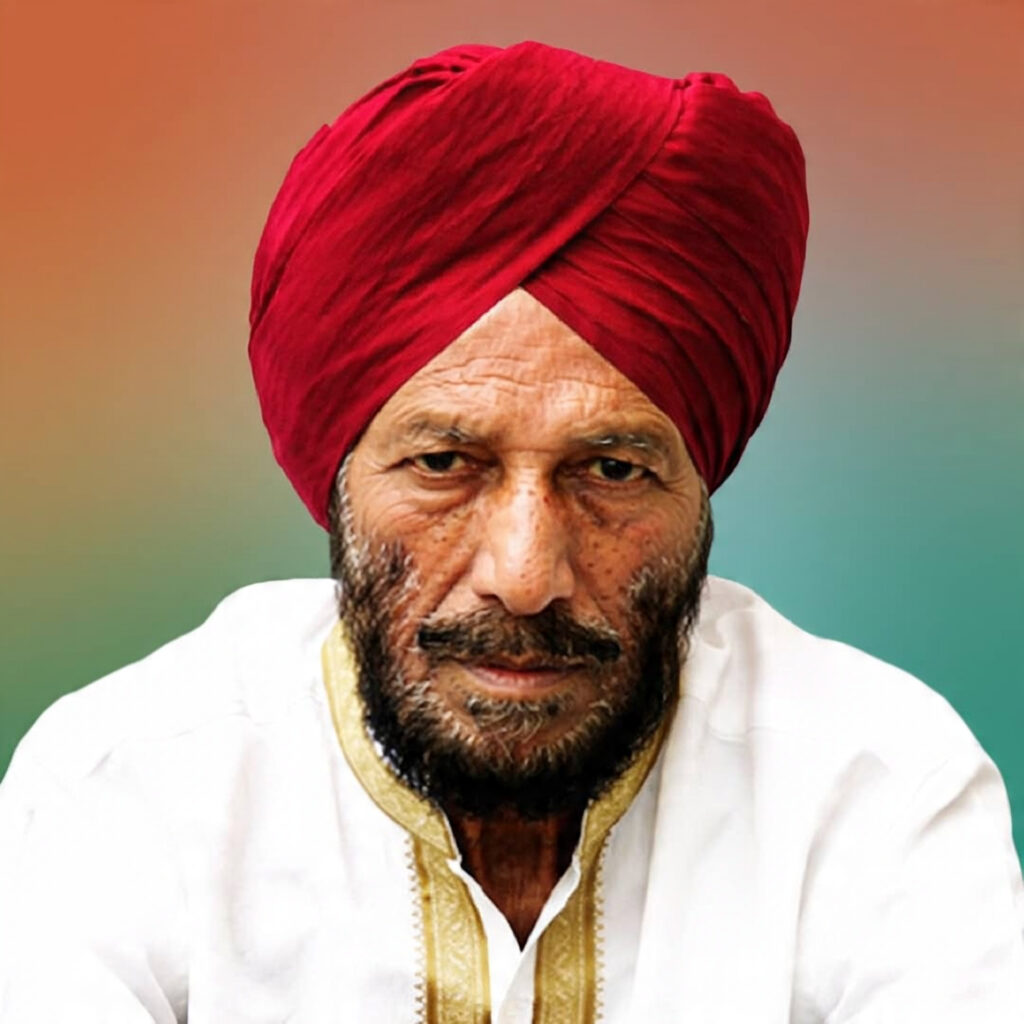
Milkha Singh (circa 1929–2021), known as the “Flying Sikh,” was one of India’s greatest athletes, celebrated for his remarkable achievements in track and field, particularly in the 400-meter race. Born in a modest Sikh family in Gobindpura, a village in present-day Pakistan, his early life was marked by tragedy during the 1947 Partition, when he lost most of his family in a massacre. Fleeing to India as a refugee, he faced poverty, briefly turned to petty crime, and spent ten days in jail before joining the Indian Army in 1952, where his athletic talent emerged.
Key Achievements
1958 Asian Games (Tokyo): Won gold medals in the 200-meter and 400-meter races, setting an Asian record in the 400 meters (46.5 seconds) and earning the title “Asia’s Best Athlete” after defeating Pakistan’s Abdul Khaliq in a dramatic 200-meter race.
1958 Commonwealth Games (Cardiff): Secured India’s first-ever athletics gold medal in the 400-meter race (then 440 yards), a historic milestone that brought him international fame and the nickname “Flying Sikh,” coined by Pakistan’s General Ayub Khan after a 1960 race in Lahore.
1960 Rome Olympics: Finished fourth in the 400-meter final, clocking 45.6 seconds, missing the bronze by 0.1 seconds—a loss that haunted him lifelong but set a new Indian record, breaking the previous Olympic mark.
1962 Jakarta Asian Games: Won two golds (400 meters and 4×400-meter relay), cementing his dominance in Asia.
International Success: Between 1958 and 1960, he won 77 of 80 international races, breaking multiple 400-meter records globally.
Personal Life
Milkha married Nirmal Kaur (Nimmi), a volleyball captain, in 1963, overcoming inter-caste marriage opposition with the help of Punjab Chief Minister Pratap Singh Kairon. They had four children: daughters Aleeza, Mona, and Sonia, and son Jeev Milkha Singh, a professional golfer who earned the Arjuna Award and Padma Shri. Milkha and Nimmi ran the Milkha Charitable Trust in Chandigarh, supporting impoverished athletes.
Career Beyond Athletics
In 1961, Milkha left the army to become deputy director of sports in Punjab, later promoted to director. He established sports wings and camps, nurturing talents like hockey captain Ajit Pal Singh. Disillusioned by the decline of his initiatives post-1991 retirement, he criticized India’s sports system for political interference, inadequate coaching, and drug scandals. He rejected a 2001 Arjuna Award, feeling it undermined his 1958 Padma Shri and global achievements like the 1959 Helms World Trophy.
Legacy
Milkha’s autobiography, The Race of My Life (2013), co-authored with Sonia, inspired the Bollywood film Bhaag Milkha Bhaag. His philosophy of hard work over fate, reflected in the Urdu couplet about a seed blooming through sacrifice, continues to inspire. His regret over the Rome loss and his dream of an Indian Olympic athletics medal remain central to his legacy. Milkha passed away in June 2021 due to COVID-19 complications, leaving behind a story of resilience, from a Partition survivor to a global sports icon.
Themes
Resilience and Overcoming Adversity: Milkha’s journey from surviving the 1947 Partition massacre, losing his family, and enduring poverty as a refugee to becoming a world-class athlete highlights his resilience. Despite setbacks like his 1960 Rome Olympics loss and early struggles with crime, his determination to rise above challenges through hard work is a central theme, inspiring readers to persevere through hardship.
Dedication and Discipline: Running becomes Milkha’s “God, religion, and beloved,” reflecting his obsessive commitment to training. His grueling routine—five hours daily, regardless of weather, pushing himself to collapse—shows the discipline required for success. This theme underscores the importance of relentless effort and sacrifice to achieve greatness in any field.
Patriotism and National Pride: Milkha’s victories, especially at the 1958 Commonwealth Games and 1960 Lahore meet, are driven by a desire to bring glory to India. His emotional connection to the national flag and interactions with leaders like Nehru emphasize his role as a national hero, inspiring readers to contribute to their country’s honor.
The Power of Mentorship: Coaches like Gurdev Singh, Dr. Howard, and Ranbir Singh play crucial roles in Milkha’s success, providing discipline, technical guidance, and confidence. Their tough love and strategic advice shape him into a “running machine.” This theme highlights the importance of mentors in nurturing talent and achieving goals.
Legacy and Inspiration: Milkha’s story, from a refugee to the “Flying Sikh,” aims to motivate youth to pursue sports and overcome obstacles. His post-retirement efforts to develop Punjab’s sports infrastructure and his call for systemic changes reflect his desire to leave a lasting impact. The Urdu couplet about a seed blooming through sacrifice encapsulates his philosophy of inspiring others to strive for excellence.
Style
The style of The Race of My Life by Milkha Singh, co-authored with his daughter Sonia Sanwalka, is characterized by its simplicity, emotional depth, and motivational tone. Written in an accessible and engaging manner, the autobiography reflects Milkha’s voice as a sportsman rather than a polished writer, aligning with his self-description in the epilogue as “not a man of words.”
Simple and Direct Language: The narrative uses plain, conversational language to make Milkha’s story relatable to a wide audience, especially young readers. Complex terms or jargon are avoided, and the prose focuses on vivid, personal anecdotes, such as running from shade to shade as a child or collapsing after races. This simplicity mirrors Milkha’s humble beginnings and ensures the book feels authentic and heartfelt.
Emotional and Reflective Tone: The style is deeply emotional, blending pride, regret, and nostalgia. Milkha openly shares his pain from losing his family during Partition, his heartbreak over the 1960 Rome Olympics loss, and his joy at victories like the 1958 Commonwealth Games. Reflective passages, like his thoughts on fame or destiny, add depth, making readers connect with his human struggles and triumphs.
Narrative Structure and Pacing: The book follows a chronological structure, tracing Milkha’s life from childhood to retirement, with each chapter focusing on a significant phase or event, such as his army life or key races. The pacing is dynamic, with fast-paced descriptions of races contrasting slower, introspective moments about his personal life, keeping readers engaged while balancing action and emotion.
Inspirational and Motivational Voice: Milkha’s voice is motivational, aiming to inspire youth to pursue sports and overcome obstacles. His philosophy—“hard work can change destiny”—and the recurring Urdu couplet about a seed blooming through sacrifice infuse the narrative with a rallying cry for perseverance. The style encourages readers to adopt his discipline and determination.
Cultural and Historical Context: The style incorporates cultural elements, like Sikh traditions and Indian values, and vivid historical details, particularly the Partition’s horrors and post-independence India’s challenges. Descriptions of international settings, like Tokyo or Rome, are vivid yet simple, reflecting Milkha’s awe as a “village boy” in a global arena, adding a cultural lens to his journey.
Overall, the style of The Race of My Life is straightforward, emotionally resonant, and motivational, blending vivid storytelling with a call to action. It captures Milkha’s authenticity as a self-made athlete, making his story accessible and inspiring, while grounding it in the cultural and historical backdrop of his life.
Critical Overview
Introduction
The Race of My Life (2013), an autobiography by Indian athlete Milkha Singh, co-authored with his daughter Sonia Sanwalka, chronicles his journey from a traumatic childhood in pre-Partition India to becoming the “Flying Sikh,” a legendary figure in Indian sports. Written in simple, heartfelt prose, the book aims to inspire youth to pursue sports with dedication, reflecting Milkha’s philosophy of hard work over fate. The title encapsulates both his literal races, like the 1960 Rome Olympics, and his metaphorical race against adversity.
Plot Summary
The book traces Milkha Singh’s life from his birth in Gobindpura, now in Pakistan, in the 1930s, to his retirement in 1964. Growing up in a large, contented family, his life is shattered during the 1947 Partition, when he witnesses the massacre of his parents and siblings, escaping with his father’s cry, “Bhaag Milkha, bhaag.”
As a refugee in Delhi, he faces poverty, briefly turns to crime, and spends ten days in jail, freed by his sister Isher’s sacrifice. Joining the Indian Army in 1952, Milkha discovers running, finishing sixth in a 1953 race that sparks his passion.
Under coaches like Gurdev Singh and Dr. Howard, he trains relentlessly, becoming a “running machine.” He wins gold at the 1958 Tokyo Asian Games and Commonwealth Games, earning the “Flying Sikh” title in 1960 Lahore by defeating Abdul Khaliq.
His 1960 Rome Olympics fourth-place finish, missing bronze by 0.1 seconds, remains a lifelong regret. In 1961, Milkha joins Punjab’s sports department, marries volleyball captain Nimmi in 1963, and raises four children, including golfer Jeev.
Post-retirement, he nurtures young athletes but laments India’s declining sports standards due to politics and corruption. The book ends with his hope for an Indian Olympic athletics medal.
Themes
Resilience and Overcoming Adversity: Milkha’s rise from a Partition survivor to a global athlete showcases his ability to overcome trauma, poverty, and setbacks like the Rome loss, emphasizing perseverance.
Dedication and Discipline: His obsessive training—five hours daily, often to the point of collapse—highlights the discipline needed for success, with running as his “God, religion, and beloved.”
Patriotism and National Pride: Milkha’s victories, especially at Cardiff and Lahore, are driven by a desire to honor India, reinforced by his interactions with leaders like Nehru.
The Power of Mentorship: Coaches like Gurdev Singh and Dr. Howard shape Milkha’s career, underscoring the importance of guidance in achieving excellence.
Legacy and Inspiration: Milkha’s story and initiatives, like Punjab’s sports wings, aim to inspire youth, with his Urdu couplet about sacrificing ego for greatness encapsulating his motivational message.
Characters
Milkha Singh: The resilient, disciplined protagonist, whose journey from refugee to “Flying Sikh” embodies determination. His humility and regret over Rome add depth to his heroic persona.
Nimmi (Nirmal Kaur): Milkha’s supportive wife, a talented volleyball captain whose strength and administrative skills complement his career, making her his “most treasured trophy.”
Isher: Milkha’s caring sister, whose sacrifice during his early struggles and emotional pride in his success highlight familial bonds despite her own hardships.
Makhan Singh: Milkha’s loyal brother, whose army connections secure his recruitment, providing a crucial turning point, though limited by his own circumstances.
Sardar Pratap Singh Kairon: The visionary Punjab Chief Minister who recruits Milkha for sports development and supports his marriage, shaping his post-athletic career.
Gurdev Singh, Dr. Howard, Ranbir Singh: Coaches who instill discipline and strategy, pivotal in transforming Milkha into a world-class athlete.
Abdul Khaliq: Milkha’s rival, whose competition drives his best performances, particularly in Tokyo and Lahore, reflecting sportsmanship and rivalry.
Pandit Jawaharlal Nehru: A supportive, empathetic leader who boosts Milkha’s morale and facilitates his career transitions, embodying national pride.
Jeev Milkha Singh: Milkha’s son, whose golf success fulfills his father’s legacy, highlighting inherited athletic talent and determination.
Structure and Style
The book follows a chronological structure, divided into 20 chapters and a prologue and epilogue, each focusing on a phase of Milkha’s life, from childhood to retirement. This linear narrative ensures clarity, balancing fast-paced race descriptions with reflective personal moments.
The style is simple and conversational, reflecting Milkha’s self-description as “not a man of words,” making it accessible to a broad audience. The emotional tone—mixing pride, regret, and nostalgia—connects readers with his struggles and triumphs.
Vivid anecdotes, like fleeing Partition or dancing the foxtrot in Australia, add color, while the motivational voice, reinforced by the Urdu couplet, inspires action. Cultural and historical details, such as Sikh traditions and Partition’s impact, ground the story, with international settings like Tokyo and Rome vividly described from a “village boy’s” perspective.
Historical Context
Set against the backdrop of post-independence India, the book captures the 1947 Partition’s devastating impact, with Milkha’s family tragedy reflecting the era’s communal violence and mass migration. The 1950s and 1960s, a time of nation-building under leaders like Nehru, frame Milkha’s rise as a symbol of India’s aspirations on the global stage. His international races coincide with India’s growing diplomatic ties, like the India-Russia Friendship Treaty, and the emergence of sports as a national pride source, evident in the 1951 and 1982 Asian Games. The book also critiques the post-1960s decline in Indian sports due to political interference and corruption, exemplified by the 2010 Commonwealth Games scandal, highlighting systemic challenges in a developing nation.
Critical Commentary
The Race of My Life is widely praised for its inspirational power and authenticity. Its simple, heartfelt prose makes Milkha’s story accessible, resonating with readers seeking motivation. The vivid depiction of his athletic and personal struggles, particularly the Partition trauma and Rome loss, humanizes a national hero, though some critics note the narrative lacks deeper introspection into his emotional psyche. The book’s motivational tone, reinforced by Milkha’s philosophy and the Urdu couplet, effectively inspires, but its critique of India’s sports system feels repetitive at times.
The collaboration with Sonia Sanwalka ensures a polished yet authentic voice, though some argue it slightly softens Milkha’s raw perspective. Its cultural significance lies in documenting a pivotal era in Indian sports, amplified by the success of Bhaag Milkha Bhaag (2013), though the film’s dramatization overshadows the book’s nuanced simplicity. The book’s strength is its universal appeal, blending personal triumph with national pride, but it could explore systemic sports issues with more depth.
Conclusion
The Race of My Life is a compelling testament to Milkha Singh’s resilience, discipline, and patriotism, tracing his transformation from a Partition survivor to the “Flying Sikh.” Its accessible style, chronological structure, and vivid anecdotes make it an engaging read, while its themes of perseverance and mentorship inspire across generations. Set against India’s post-independence struggles and aspirations, the book highlights both personal and national triumphs, though its critique of sports administration could be sharper. Milkha’s story, rooted in hard work and sacrifice, remains a powerful call to pursue dreams relentlessly, leaving a lasting legacy as a beacon of hope for Indian youth and athletes worldwide.