
To A Skylark
(Percy Bysshe Shelley)
Hail to thee, blithe Spirit!
Bird thou never wert,
That from Heaven, or near it,
Pourest thy full heart
In profuse strains of unpremeditated art.
Higher still and higher
From the earth thou springest
Like a cloud of fire;
The blue deep thou wingest,
And singing still dost soar, and soaring ever singest.
In the golden lightning
Of the sunken sun,
O’er which clouds are bright’ning,
Thou dost float and run;
Like an unbodied joy whose race is just begun.
The pale purple even
Melts around thy flight;
Like a star of Heaven,
In the broad day-light
Thou art unseen, but yet I hear thy shrill delight,
Keen as are the arrows
Of that silver sphere,
Whose intense lamp narrows
In the white dawn clear
Until we hardly see, we feel that it is there.
All the earth and air
With thy voice is loud,
As, when night is bare,
From one lonely cloud
The moon rains out her beams, and Heaven is overflow’d.
What thou art we know not;
What is most like thee?
From rainbow clouds there flow not
Drops so bright to see
As from thy presence showers a rain of melody.
Like a Poet hidden
In the light of thought,
Singing hymns unbidden,
Till the world is wrought
To sympathy with hopes and fears it heeded not:
Like a high-born maiden
In a palace-tower,
Soothing her love-laden
Soul in secret hour
With music sweet as love, which overflows her bower:
Like a glow-worm golden
In a dell of dew,
Scattering unbeholden
Its aëreal hue
Among the flowers and grass, which screen it from the view:
Like a rose embower’d
In its own green leaves,
By warm winds deflower’d,
Till the scent it gives
Makes faint with too much sweet those heavy-winged thieves:
Sound of vernal showers
On the twinkling grass,
Rain-awaken’d flowers,
All that ever was
Joyous, and clear, and fresh, thy music doth surpass.
Teach us, Sprite or Bird,
What sweet thoughts are thine:
I have never heard
Praise of love or wine
That panted forth a flood of rapture so divine.
Chorus Hymeneal,
Or triumphal chant,
Match’d with thine would be all
But an empty vaunt,
A thing wherein we feel there is some hidden want.
What objects are the fountains
Of thy happy strain?
What fields, or waves, or mountains?
What shapes of sky or plain?
What love of thine own kind? what ignorance of pain?
With thy clear keen joyance
Languor cannot be:
Shadow of annoyance
Never came near thee:
Thou lovest: but ne’er knew love’s sad satiety.
Waking or asleep,
Thou of death must deem
Things more true and deep
Than we mortals dream,
Or how could thy notes flow in such a crystal stream?
We look before and after,
And pine for what is not:
Our sincerest laughter
With some pain is fraught;
Our sweetest songs are those that tell of saddest thought.
Yet if we could scorn
Hate, and pride, and fear;
If we were things born
Not to shed a tear,
I know not how thy joy we ever should come near.
Better than all measures
Of delightful sound,
Better than all treasures
That in books are found,
Thy skill to poet were, thou scorner of the ground!
Teach me half the gladness
That thy brain must know,
Such harmonious madness
From my lips would flow
The world should listen then, as I am listening now.
Summary
To a Skylark is a lyrical poem written by Percy Bysshe Shelley, first published in 1820. It appears in his collection Prometheus Unbound: A Lyrical Drama in Four Acts, With Other Poems. The poem was published in London by the firm C. and J. Ollier. Shelley’s To a Skylark celebrates the skylark as a symbol of pure joy and artistic inspiration, embodying the Romantic ideals of nature, beauty, and transcendence.
To a Skylark was likely composed in June 1820 during an evening walk near Livorno (then known as Leghorn) in Italy. Percy Bysshe Shelley and his wife, Mary Shelley, were inspired by the clear, uplifting song of a skylark they heard that evening. This moment sparked Shelley’s imagination, leading him to write the poem as an ode celebrating the bird’s joyous and spontaneous music—an expression of pure natural beauty and artistic inspiration.
Percy Bysshe Shelley’s poem To a Skylark is a beautiful tribute to the skylark, which he doesn’t just see as a bird but as a symbol of pure, joyful happiness. Shelley describes the skylark as a spirit that sings freely and naturally, filling the sky and earth with its lovely music. He uses vivid pictures to show how the bird keeps flying higher and higher, like a glowing cloud, suggesting its happiness is beyond anything on earth.
The poem also compares the skylark’s perfect joy with human feelings, which are often complicated by sadness, regret, and longing. Shelley points out that even our happiest songs often have a touch of sadness, because true, pure happiness is hard for humans to find.
Shelley is curious about where the skylark’s endless happiness comes from. He compares the bird to hidden poets, secret lovers, glowing bugs, and sweet-smelling roses—things that are beautiful but sometimes unnoticed or mysterious. This shows that real beauty and happiness can be hidden, making them even more special.
In the end, Shelley wishes he could learn from the skylark how to be so joyful. He hopes that if he could express even a little of the skylark’s happiness in his poetry, it would deeply touch people. The poem finishes with Shelley’s hopeful wish to capture the same freedom and beauty that the skylark shows naturally.
To a Skylark Poem Analysis
Hail to thee, blithe Spirit!
Bird thou never wert,
That from Heaven, or near it,
Pourest thy full heart
In profuse strains of unpremeditated art.
Reference to Context:
Shelley begins by greeting the skylark as a joyful spirit rather than a mere bird. He admires how the bird naturally pours out spontaneous music, symbolizing pure artistic inspiration. This opening sets the tone for the poem’s exploration of joy and creativity.
Explanation:
In this opening stanza of To a Skylark, Shelley begins by greeting the skylark with reverence and admiration. He calls it a “blithe Spirit”, suggesting that it is not just a bird, but a joyful, ethereal being—something more divine and free than any earthly creature. The phrase “Bird thou never wert” reinforces this idea by declaring that the skylark transcends the physical form of a bird; it is a symbol of pure joy and inspiration.
Shelley imagines the skylark descending from “Heaven, or near it,” emphasizing its otherworldly origin and spiritual purity. The bird sings with its whole heart, pouring out a spontaneous and natural melody, which the poet calls “profuse strains of unpremeditated art.” This phrase beautifully captures the skylark’s effortless creativity—its song is abundant, natural, and not pre-planned, yet still deeply artistic. Shelley marvels at this organic harmony, setting up the central contrast of the poem: the skylark’s divine joy versus human struggle and artifice.
Poetic devices:
Apostrophe
“Hail to thee, blithe Spirit!”
The speaker directly addresses the skylark, treating it as a conscious, divine presence.
Metaphor
“blithe Spirit”
The skylark is described not as a literal bird but as a joyful, free-floating spirit, symbolizing pure inspiration.
Enjambment
“That from Heaven, or near it, / Pourest thy full heart…”
The sentence flows across lines without pause, reflecting the seamless, continuous nature of the bird’s song.
Imagery
“Pourest thy full heart / In profuse strains of unpremeditated art”
Vividly evokes a sense of spontaneous, overflowing music—an art that feels organic and natural.
Higher still and higher
From the earth thou springest
Like a cloud of fire;
The blue deep thou wingest,
And singing still dost soar, and soaring ever singest.
Reference to Context:
The skylark rises higher and higher, likened to a fiery cloud ascending into the vast sky. Shelley emphasizes its freedom and elevation, suggesting spiritual transcendence beyond earthly limits. The bird’s flight symbolizes unbounded joy and creative energy.
Explanation:
In this vivid stanza, Shelley continues to exalt the skylark by describing its graceful and ecstatic ascent into the sky. The bird rises “higher still and higher”, suggesting not only physical elevation but also symbolic transcendence—moving farther away from the mundane world toward something divine.
The phrase “From the earth thou springest” emphasizes the contrast between the earthly and the spiritual. The bird takes flight with an effortless spring, suggesting joy, freedom, and release from the burdens of the earth.
Shelley compares the skylark to “a cloud of fire”, an image that conveys both brilliance and motion. The fiery cloud may symbolize the setting sun or a glowing energy, highlighting the bird’s vibrant and luminous presence in the sky. The phrase “The blue deep thou wingest” refers to the vast expanse of the sky—“blue deep” being a metaphor for the heavens—through which the skylark flies.
The final line—“And singing still dost soar, and soaring ever singest”—beautifully captures the cyclical, continuous nature of the skylark’s movement and music. As it flies, it sings, and as it sings, it soars—suggesting that its song and flight are inseparable acts of joy and freedom.
Poetic devices:
Alliteration
“singing still dost soar, and soaring ever singest”
Repetition of the “s” sound enhances the musical, flowing quality of the line, mirroring the skylark’s harmonious flight.
Imagery
“Like a cloud of fire”; “The blue deep thou wingest”
Vivid visual imagery appeals to the senses, painting a brilliant picture of the bird against the sky.
Simile
“Like a cloud of fire”
The skylark is compared to a glowing, dynamic cloud, emphasizing its luminosity and ethereal nature.
Inversion (Anastrophe)
“The blue deep thou wingest”
The usual word order is reversed for poetic effect and rhythm, enhancing the lyrical tone. Instead of saying “You wing the blue deep,” the words are rearranged to place “The blue deep” first.
Enjambment
Higher still and higher / From the earth thou springest / Like a cloud of fire;
The sentence flows across multiple lines without pause, reflecting the bird’s continuous flight and song.
In the golden lightning
Of the sunken sun,
O’er which clouds are bright’ning,
Thou dost float and run;
Like an unbodied joy whose race is just begun.
Reference to Context:
Shelley describes the skylark’s movement at sunset, glowing like golden lightning amid brightening clouds. The bird’s flight is effortless and joyful, compared to “unbodied joy” just beginning its journey. This stanza highlights the skylark’s ethereal, almost divine nature.
Explanation:
In this stanza of To a Skylark, Shelley describes the skylark flying through the sky at sunset, where the light of the setting sun is portrayed as “golden lightning.” This phrase evokes a dazzling, radiant atmosphere filled with flashes of golden light. The “sunken sun” refers to the sun as it sinks below the horizon, and the bright’ning clouds capture and reflect its last vivid rays. These descriptions create a majestic and glowing sky, against which the skylark moves freely.
The line “Thou dost float and run” suggests the skylark’s graceful, almost magical movement—it appears to both drift and dart through the sky, embodying freedom and fluidity. Shelley then uses a powerful simile to elevate the skylark further, comparing it to “an unbodied joy whose race is just begun.” This image suggests that the bird is the very spirit of joy—intangible and pure—just beginning its journey or existence. The phrase conveys freshness, energy, and the promise of boundless delight.
Poetic devices:
Imagery
“golden lightning,” “sunken sun,” “clouds are bright’ning”
Vivid visual imagery captures the stunning beauty of the sunset sky and enhances the ethereal setting.
Alliteration
“sunken sun”
Repetition of the “s” sound adds a smooth, flowing musicality to the line.
Metaphor
“golden lightning”
Describes sunlight as lightning, emphasizing the dramatic and luminous quality of the sunset.
Simile
“Like an unbodied joy whose race is just begun”
Compares the skylark to a pure, disembodied joy that has just started its journey, suggesting innocence, freshness, and limitless vitality.
Personification
“clouds are bright’ning”
Clouds are given human-like ability to brighten, intensifying the vividness and movement in the sky.
The pale purple even
Melts around thy flight;
Like a star of Heaven,
In the broad day-light
Thou art unseen, but yet I hear thy shrill delight,
Reference to Context:
The evening sky melts around the skylark, which is invisible in daylight like a star unseen but heard. Shelley points out the paradox of the bird’s hidden presence yet clear, shrill song. This represents intangible beauty and inspiration that affects us deeply without being seen.
Explanation:
In this stanza of To a Skylark, Shelley paints a delicate picture of the sky during evening twilight—described as the “pale purple even”. The soft colors of dusk seem to melt around the skylark as it flies, emphasizing both the beauty of the setting and the bird’s ethereal motion. The blending of sky and movement adds to the image of the skylark as something more spiritual than physical.
Shelley compares the skylark to “a star of Heaven”—a celestial light usually visible only at night. However, the simile gains power in the next line: the skylark, like a star in daylight, becomes invisible to the eye, but its presence is still known through its “shrill delight,” the high-pitched, joyous song that continues to echo through the air. This contrast between sight and sound reinforces the bird’s symbolic role as an unseen but deeply felt force—an embodiment of beauty, joy, and artistic inspiration.
Poetic devices:
Imagery
“pale purple even,” “melts around thy flight”
Creates a soft, atmospheric visual of twilight enveloping the bird in color and motion.
Alliteration
“pale purple even”
The repetition of the “P” sound enhances the musical quality of the skylark’s song.
Simile
“Like a star of Heaven”
The skylark is compared to a star, suggesting it is distant, luminous, and spiritual.
Contrast / Paradox
“In the broad day-light / Thou art unseen, but yet I hear…”
Highlights the paradox of the skylark being invisible but still perceptible through sound. This adds to its mystical, intangible nature.
Personification
“even / Melts around thy flight”
Evening is described as melting, giving it lifelike qualities and enhancing the dreamlike tone of the scene.
Enjambment
Lines flow naturally into one another without pause, echoing the continuous, effortless movement of the bird.
Keen as are the arrows
Of that silver sphere,
Whose intense lamp narrows
In the white dawn clear
Until we hardly see, we feel that it is there.
Reference to Context:
The skylark’s song is compared to the sharp, piercing arrows of the moon’s beams that fade at dawn but remain felt. Shelley illustrates the power of unseen influence—though the bird may not be visible, its music profoundly impacts the world around it.
Explanation:
In this stanza of To a Skylark, Shelley uses a vivid and delicate comparison to describe the sharpness and clarity of the skylark’s song. He says it is “keen as are the arrows / Of that silver sphere”—referring to the moon, which is often called the “silver sphere” in poetry. The “arrows” suggest the moon’s piercing beams of light that shoot across the sky.
As dawn approaches, the intensity of the moon’s light begins to narrow and fade, as described in the lines “Whose intense lamp narrows / In the white dawn clear.” The moon becomes less visible in the brightening sky, but its presence is still subtly felt, if not clearly seen. Shelley then draws a beautiful analogy: the skylark, like the fading moon, may not always be visible, but its song remains vivid and emotionally present.
The last line—“Until we hardly see, we feel that it is there”—perfectly captures the essence of the skylark as a symbol. Though hidden from sight, it moves the listener with its sound. Shelley emphasizes emotional perception over physical sight, aligning with the poem’s recurring theme: the invisible yet deeply felt nature of beauty and inspiration.
Poetic devices:
Simile
“Keen as are the arrows / Of that silver sphere”
Compares the sharpness of the skylark’s song to the moon’s beams of light—vivid and piercing.
Metaphor
“That silver sphere” refers to the moon, and its “intense lamp” suggests its bright glow, depicted metaphorically as a light source.
Imagery
“white dawn clear,” “intense lamp narrows”
Sensory images of fading moonlight at dawn reinforce the transition from night to day and the ethereal tone.
Personification
The moon is given lifelike qualities through phrases like “intense lamp narrows”, as if it consciously dims itself.
Enjambment
Lines flow into one another naturally, mirroring the gradual fading of moonlight and the continuous presence of the skylark’s unseen song.
All the earth and air
With thy voice is loud,
As, when night is bare,
From one lonely cloud
The moon rains out her beams, and Heaven is overflow’d.
Reference to Context:
The skylark’s voice fills the earth and air like moonlight breaking from a lonely cloud, flooding the sky. Shelley uses this imagery to show how the bird’s song, though unseen, radiates widely and powerfully, overwhelming the natural world with its beauty.
Explanation:
In this stanza, Shelley describes the overwhelming power and reach of the skylark’s song. The bird’s voice fills “all the earth and air,” creating an immersive experience where its music seems to echo through the entire natural world. This suggests not only volume, but emotional and spiritual presence—the song resonates deeply and widely.
Shelley then draws a stunning comparison using a simile. He likens the bird’s song to a luminous night scene, where the moon, hidden behind a “lonely cloud,” still “rains out her beams” and floods the heavens with light. Even though the moon is partially obscured, its light spreads abundantly, illuminating the sky. Similarly, the skylark itself may be out of sight, but its music overflows into the world, enveloping everything.
This stanza reinforces one of the poem’s central themes: the idea that something unseen can be profoundly felt. The skylark, like the moonlight from behind a cloud, becomes a powerful symbol of invisible beauty—present not in form, but in effect.
Poetic devices:
Imagery
“the moon rains out her beams” and “Heaven is overflow’d” evoke rich visual and emotional images of light and fullness.
Simile
“As, when night is bare… the moon rains out her beams”
Compares the skylark’s song to moonlight breaking through a cloud and flooding the sky—both unseen sources spreading vast beauty.
Personification
“the moon rains out her beams”
The moon is personified as if deliberately pouring out light, lending agency and grace to natural elements.
Hyperbole
“Heaven is overflow’d”
Exaggeration used to emphasize the overwhelming power of the skylark’s song, suggesting a divine or cosmic effect.
Enjambment
Lines run into each other without pause, mimicking the continuous flow of song and moonlight.
What thou art we know not;
What is most like thee?
From rainbow clouds there flow not
Drops so bright to see
As from thy presence showers a rain of melody.
Reference to Context:
The Romantic quest to understand the ineffable drives Shelley’s questioning of the skylark’s essence. His philosophical inquiries, influenced by skepticism and idealism, inform this stanza. The Italian landscape, with its vibrant rainbows and clouds, provides the visual backdrop for the “rain of melody.”
Explanation:
In this stanza, Shelley openly admits the mystery surrounding the skylark’s true nature. He begins with the line “What thou art we know not”, acknowledging that the skylark cannot be fully understood or categorized—its essence is beyond human comprehension. He then asks rhetorically, “What is most like thee?”—searching for a fitting comparison, though none seems adequate.
He offers an image: even the radiant drops that fall from “rainbow clouds”, often considered some of the most beautiful phenomena in nature, do not match the brilliance of the skylark’s song. These “drops so bright to see” pale in comparison to what the bird produces. Instead of water or light, the skylark showers the world with a “rain of melody”—an outpouring of music and joy that is not just beautiful but emotionally luminous, surpassing even nature’s most magical spectacles.
This stanza elevates the skylark to a nearly divine level, presenting it as a mystical source of beauty and art, more radiant and meaningful than anything physically visible.
Poetic devices:
Rhetorical Question
“What is most like thee?”
Expresses awe and wonder, reinforcing the bird’s uniqueness and mystery.
Imagery
“rainbow clouds,” “drops so bright,” “rain of melody”
Rich visual and auditory imagery contrasts color and light with music, creating a multisensory effect.
Metaphor
“a rain of melody”
Compares the skylark’s song to rainfall, suggesting abundance, freshness, and immersive beauty.
Enjambment
Lines flow smoothly into one another, mirroring the continuous and unbroken stream of the skylark’s song.
Like a Poet hidden
In the light of thought,
Singing hymns unbidden,
Till the world is wrought
To sympathy with hopes and fears it heeded not:
Reference to Context:
The skylark is compared to a hidden poet who sings spontaneously, moving the world’s emotions without being noticed. Shelley admires this unseen power of creativity that shapes feelings and inspires hope, much like the skylark’s secret song.
Explanation:
In this powerful simile, Shelley compares the skylark to a Poet hidden “in the light of thought”—an individual who works silently and invisibly, yet exerts a deep and transformative influence through their creativity and insight. This “light of thought” suggests intellectual or imaginative brilliance, where the poet lives not in physical space but in a realm of pure consciousness and inspiration.
The poet, like the skylark, sings “hymns unbidden”—meaning spontaneously, without being asked or forced. Their creativity is natural and instinctive. These unrequested hymns symbolize art born from inner compulsion rather than external demand.
As the stanza continues, Shelley reveals the power of the poet’s voice (and by extension, the skylark’s song): it has the ability to shape the world emotionally. The phrase “Till the world is wrought / To sympathy with hopes and fears it heeded not” means that this unseen poet awakens people to emotions they previously ignored. Just as the skylark stirs profound feelings in its listeners, the poet touches the hearts of humanity, inspiring emotional awareness and empathy.
Poetic devices:
Simile
“Like a Poet hidden / In the light of thought”
Compares the skylark to a secluded, visionary poet whose power lies in imagination and invisible influence.
Metaphor
“light of thought”
Thought is described as light, suggesting clarity, brilliance, and enlightenment.
Alliteration
“hopes and fears it heeded not”
Repetition of the “h” sound creates a soft, contemplative tone.
Imagery
“Singing hymns unbidden”
Conveys a sense of natural, divine music flowing from within, unforced and inspired.
Personification
“Till the world is wrought / To sympathy…”
The world is given human qualities—it can be shaped emotionally and made to feel, emphasizing the transformative power of art.
Enjambment
Lines flow fluidly into one another, mirroring the seamless and organic emergence of poetry or song.
Like a high-born maiden
In a palace-tower,
Soothing her love-laden
Soul in secret hour
With music sweet as love, which overflows her bower:
Reference to Context:
Shelley likens the skylark to a noble maiden in a tower, soothing her love-filled soul with sweet music that overflows her private chamber. This image evokes solitary, intimate emotion expressed through art, emphasizing the private source of the bird’s beautiful song.
Explanation:
In this stanza, Shelley continues comparing the skylark to powerful images of hidden beauty and emotional richness. Here, the skylark is likened to a “high-born maiden”—a noble young woman—who is secluded in a palace-tower. This image suggests elegance, isolation, and purity. The maiden is “love-laden”, meaning her soul is filled with love, longing, or romantic emotion.
In her “secret hour,” she expresses these deep feelings by playing or singing music as sweet as love itself, and this music “overflows her bower”—her private chamber or dwelling. Though isolated, her feelings and music are so intense and beautiful that they cannot be contained—they spill outward.
This comparison reinforces the idea that the skylark, like the maiden, expresses a kind of private, emotional truth through music. Though the source may be hidden or solitary, its effects are far-reaching, touching those who hear it even if they cannot see the one who sings.
Poetic devices:
Simile
“Like a high-born maiden”
Compares the skylark to a noble young woman in seclusion, emphasizing grace, refinement, and hidden emotional expression.
Imagery
“palace-tower,” “love-laden soul,” “music sweet as love”
Evokes romantic, delicate, and emotionally rich visuals and sounds.
Alliteration
“love-laden,” “Soul in secret hour”
Repetition of “l” and “s” sounds enhances the soft, lyrical, romantic tone.
Simile
“music sweet as love”
Music is metaphorically equated with love—suggesting depth, purity, and emotional truth.
Personification
The soul is “soothed” and “love-laden,” giving it emotional depth and human-like attributes.
Enjambment
Lines run smoothly into one another, reinforcing the idea of music that “overflows”—continuous, uncontained, and natural.
Like a glow-worm golden
In a dell of dew,
Scattering unbeholden
Its aëreal hue
Among the flowers and grass, which screen it from the view:
Reference to Context:
The skylark is compared to a golden glow-worm in a dew-filled dell, scattering soft light unseen by others. This highlights the theme of hidden beauty and influence—like the glow-worm’s glow, the skylark’s song is powerful though its source remains invisible.
Explanation:
In this stanza, Shelley uses the image of a golden glow-worm hidden in a “dell of dew” (a small, moist valley) to compare to the skylark. The glow-worm emits a soft, radiant light that “scatters unbeholden”—meaning its light is cast invisibly or unnoticed by others. Its “aëreal hue” (airy or delicate radiance) spreads through the flowers and grass, which hide it from sight.
This simile emphasizes the invisible beauty of the skylark. Just as the glow-worm’s gentle light illuminates its surroundings even though the insect itself is unseen, so does the skylark’s song fill the air, affecting the world without revealing its source. The idea of hidden illumination or unseen influence continues Shelley’s theme of mysterious, spiritual beauty—the kind that doesn’t need to be seen to be deeply felt.
Poetic devices:
Simile
“Like a glow-worm golden”
Compares the skylark to a glow-worm, highlighting its hidden but radiant presence.
Imagery
“dell of dew,” “flowers and grass,” “aëreal hue”
Rich sensory imagery creates a soft, mystical scene filled with moisture, light, and hidden life.
Alliteration
“glow-worm golden,” “dell of dew,”
Repetition of consonant sounds enhances musicality and fluidity, mirroring the glow-worm’s gentle light and the skylark’s song.
Personification
The glow-worm “scattering” light gives it an active, intentional presence, as if it is purposefully sharing its glow.
Enjambment
Smooth flow of lines reflects the continuous and delicate diffusion of the light, mirroring the skylark’s unbroken song.
Like a rose embower’d
In its own green leaves,
By warm winds deflower’d,
Till the scent it gives
Makes faint with too much sweet those heavy-winged thieves:
Reference to Context:
Shelley compares the skylark to a rose sheltered by green leaves, releasing a scent so sweet it overwhelms visiting insects. This suggests that the bird’s joyful song is a hidden treasure that affects the world deeply, even if its source remains protected or unseen.
Explanation:
In this stanza, Shelley compares the skylark to a rose hidden (“embower’d”) within its own green leaves. The rose symbolizes beauty and fragrance that is modestly concealed, not easily seen, but deeply affecting. The “warm winds deflower’d” the rose—gently removing its petals—which releases its intoxicating scent into the air.
The stanza builds on the idea that the rose’s true power lies not in being looked at, but in what it gives off—its fragrance. The “scent it gives” is so rich and overwhelming that it makes even the bees or insects (“heavy-winged thieves”) faint from the excessive sweetness. These “thieves” are metaphorically stealing the nectar or scent, but they are overcome by its intensity.
The metaphor illustrates the skylark’s invisible influence: just as the rose’s scent spreads and overwhelms without being fully seen, the skylark’s song fills the air and deeply moves the listener. Its effect is natural, emotional, and overpowering—a hidden beauty with powerful reach.
Poetic devices:
Simile
“Like a rose embower’d”
Compares the skylark to a hidden rose, suggesting beauty that is modest yet potent.
Imagery
“rose embower’d,” “warm winds,” “scent it gives,” “heavy-winged thieves”
Vivid sensory images appeal to smell, sight, and touch—creating a rich, almost tangible experience.
Alliteration
“Makes faint with too much sweet those heavy-winged thieves”
Repetition of soft consonants (“m,” “w,”) adds to the musical and breathy effect of the line.
Metaphor
“heavy-winged thieves” refers to bees or insects, portrayed as thieves stealing from the rose—a metaphor for those drawn to beauty or inspiration.
Enjambment
Lines flow smoothly into one another, enhancing the natural, continuous diffusion of scent—paralleling the bird’s song.
Sound of vernal showers
On the twinkling grass,
Rain-awaken’d flowers,
All that ever was
Joyous, and clear, and fresh, thy music doth surpass.
Reference to Context:
The sound of gentle spring rain on grass and flowers is said to be surpassed by the skylark’s music. Shelley elevates the bird’s song above all natural sounds of renewal and freshness, reinforcing its unmatched beauty and joyous quality.
Explanation:
In this stanza, Shelley draws on gentle and vibrant imagery from nature to describe the uplifting beauty of the skylark’s song. He begins with the “sound of vernal showers”—springtime rains falling softly on “twinkling grass” (grass glistening with raindrops or dew). This sound is soothing, life-giving, and musically delicate. He adds “rain-awaken’d flowers,” which symbolize renewal, growth, and fresh beauty brought by the rain.
Shelley then makes a powerful claim: everything ever associated with joy, clarity, and freshness is surpassed by the skylark’s song. All that is delightful and pure in nature is beautiful, yes—but still falls short compared to the bird’s music. The skylark’s song is not just one among nature’s beauties—it transcends them all. Its melody contains the essence of natural joy, but distilled into something even more sublime.
This stanza reinforces the idea of the skylark as a symbol of ideal beauty and perfect artistic expression, far beyond even the loveliest sights and sounds of the natural world.
Poetic devices:
Imagery
“vernal showers,” “twinkling grass,” “rain-awaken’d flowers”
Creates a vivid, sensory-rich depiction of spring’s freshness and gentle beauty.
Alliteration
“Sound of vernal showers,”
Repeated consonant sounds add to the musicality and rhythm of the lines.
Personification
“rain-awaken’d flowers”
Flowers are described as waking up from the rain, giving them life-like responsiveness.
Enjambment
The continuation of thought from line to line mimics the gentle, continuous flow of spring rain and bird song.
Teach us, Sprite or Bird,
What sweet thoughts are thine:
I have never heard
Praise of love or wine
That panted forth a flood of rapture so divine.
Reference to Context:
Shelley asks the skylark to teach humans the sweet thoughts behind its song. He admits never having heard human praises of love or wine that express such divine rapture, expressing awe at the bird’s overflowing joy.
Explanation:
In this stanza, Shelley directly addresses the skylark again, calling it either a “Sprite” (a spirit) or a “Bird,” reflecting his uncertainty—and wonder—about its true nature. He implores the skylark to teach humanity the “sweet thoughts” that inspire its song. The poet is deeply moved by the bird’s outpouring of beauty and joy, which seems to originate from a source of pure emotion and insight that humans do not possess or fully understand.
Shelley confesses that he has never heard any human expression—not even poetic praises of love or wine (common subjects of ecstatic celebration)—that can compare to the “flood of rapture” in the skylark’s melody. The phrase “panted forth” adds a sense of urgency and passion, as if the bird’s joy is so immense it bursts out uncontrollably.
This stanza elevates the skylark as a master of divine emotional expression, whose art surpasses even the most passionate themes in human culture. Shelley’s plea is sincere: he wants to learn how to feel and express joy as purely and powerfully as the skylark does.
Poetic devices:
Apostrophe
“Teach us, Sprite or Bird”
Direct address to the skylark, treating it as a conscious being capable of teaching wisdom.
Metaphor
“Sprite or Bird”
The skylark is metaphorically considered a spirit, blurring the line between nature and the supernatural.
“Flood of rapture depicts the song as an overwhelming surge.
Imagery
“flood of rapture” evokes an overwhelming emotional outpouring, appealing to both sound and feeling.
Hyperbole
“Never heard praise… so divine”
Exaggerates to emphasize the unmatched beauty and rapture of the skylark’s song.
Chorus Hymeneal,
Or triumphal chant,
Match’d with thine would be all
But an empty vaunt,
A thing wherein we feel there is some hidden want.
Reference to Context:
The skylark’s song is said to surpass the grandest human celebrations, like wedding hymns and triumphal chants, which would seem hollow by comparison. Shelley suggests that human joy often feels incomplete next to the skylark’s perfect happiness.
Explanation:
In this stanza, Shelley continues to elevate the skylark’s song by comparing it to grand human expressions of joy, such as a “Chorus Hymeneal” (a wedding hymn) and a “triumphal chant” (a song of victory). These forms of music are traditionally among the most celebratory and exalted in human culture.
However, Shelley declares that even these joyful songs fall short when compared to the skylark’s melody. He says they would be “but an empty vaunt”—a hollow boast—if set alongside the bird’s song. The joy in human music, though impressive on the surface, lacks something essential. This “hidden want” (a subtle absence or emotional incompleteness) suggests that human expressions of happiness are often tainted by limitation, artifice, or unfulfilled longing, unlike the skylark’s pure, spontaneous joy.
Ultimately, Shelley implies that the skylark’s music contains a depth and wholeness that human compositions, however grand, cannot fully achieve. The bird’s song is complete in itself, while ours feels like it’s missing something vital.
Poetic devices:
Allusion
“Chorus Hymeneal” refers to hymns sung at weddings; “triumphal chant” refers to songs of military or ceremonial victory—both are examples of human celebration.
Contrast
Between human songs of joy (love and triumph) and the skylark’s song, highlighting the inadequacy of the former.
Metaphor
“empty vaunt” is a metaphor for hollow boasting—human celebrations lacking true depth.
Enjambment
The thought flows smoothly across the lines, imitating the continuous, unbroken quality of the skylark’s song.
What objects are the fountains
Of thy happy strain?
What fields, or waves, or mountains?
What shapes of sky or plain?
What love of thine own kind? what ignorance of pain?
Reference to Context:
The poet questions what inspires the skylark’s happy song—whether natural landscapes or love for its kind—and whether its joy comes from ignorance of pain. This stanza reflects the mystery of the bird’s pure bliss, untouched by suffering.
Explanation:
In this stanza, Shelley continues to question the source of the skylark’s joy. He wants to know: what inspires the bird’s beautiful, uplifting song? By asking, “What objects are the fountains / Of thy happy strain?”, he’s metaphorically searching for the origin (fountain) of its joyful melody.
He lists possible sources: fields, waves, mountains, skies, plains—natural landscapes that might be feeding the bird’s inspiration. Then he goes deeper, asking whether the skylark experiences love of its own kind—suggesting emotional connections—or whether its joy stems from an “ignorance of pain.” This last question reveals a profound thought: is the skylark joyful because it is untouched by sorrow, unlike humans, who are constantly shaped by it?
The stanza reflects Shelley’s belief that human happiness is complex, fragile, and always interwoven with suffering, whereas the skylark appears to live in a state of pure, unaffected bliss. Shelley is trying to uncover the mystery of such untainted joy, something human beings can only dream of attaining.
Poetic devices:
Rhetorical Questions
Each line in this stanza is a question, reflecting Shelley’s curiosity and wonder about the source of the skylark’s joy.
Metaphor
“fountains of thy happy strain”
Compares the origin of the skylark’s song to springs or sources, emphasizing abundance and natural flow.
Imagery
“fields, waves, mountains, sky, plain”
Creates a broad and vivid natural landscape, exploring where the bird might draw its inspiration from.
Anaphora
The anaphoric “What” creates a rhythmic, insistent tone, mirroring the poet’s quest to uncover the skylark’s inspiration.
Alliteration
“shapes of sky”,
Adds lyrical beauty and fluidity to the questioning tone.
Juxtaposition
“love of thine own kind” vs. “ignorance of pain”
Sets up an emotional contrast: whether joy comes from connection, or from the absence of suffering.
With thy clear keen joyance
Languor cannot be:
Shadow of annoyance
Never came near thee:
Thou lovest: but ne’er knew love’s sad satiety.
Reference to Context:
Shelley emphasizes the skylark’s clear and keen joy, untouched by tiredness or annoyance. Though it loves, it has never known the sadness or exhaustion that can accompany human love, highlighting its idealized emotional state.
Explanation:
In this stanza, Shelley continues to explore the contrast between the skylark’s pure joy and human emotional experience. He describes the bird’s joy as “clear” and “keen”—both vivid and sharply focused. Because of this intense, undiluted happiness, he says, “languor cannot be.” In other words, the skylark is free from weariness, apathy, or emotional heaviness.
He deepens this idea with the line, “Shadow of annoyance / Never came near thee”, suggesting that not even a hint of irritation or sorrow has ever touched the skylark. This positions the bird as almost divine or idealized, wholly untouched by the emotional burdens that weigh on human beings.
The final line offers a profound contrast: “Thou lovest: but ne’er knew love’s sad satiety.” The skylark is capable of love, but it has never experienced the sadness, exhaustion, or dissatisfaction that often follows intense human love (what Shelley calls “satiety,” or emotional fullness that turns to weariness). Human love, in Shelley’s view, often carries with it pain, disappointment, or longing, but the skylark’s version of love is pure and unspoiled—yet again transcending human emotional limitations.
Poetic devices:
Alliteration
“clear keen joyance”
Enhances musicality and reinforces the clarity and purity of the skylark’s emotional state.
Contrast
Between joyance and languor, love and satiety, presence of happiness and absence of sorrow—this contrast intensifies the uniqueness of the skylark’s emotional world.
Personification
The skylark is described as loving, but never experiencing emotional fatigue, attributing complex human emotions and experiences to a bird.
Imagery
“Shadow of annoyance” creates a visual metaphor for even the faintest trace of discomfort, which the skylark avoids.
Metaphor
“love’s sad satiety” metaphorically refers to the emotional burnout or pain that often follows passionate love.
Waking or asleep,
Thou of death must deem
Things more true and deep
Than we mortals dream,
Or how could thy notes flow in such a crystal stream?
Reference to Context:
The skylark is imagined as knowing deeper truths about life and death, beyond human understanding. Its pure, flowing notes reflect a profound spiritual insight that Shelley believes humans cannot fully grasp.
Explanation:
Shelley suggests that the skylark’s song—described as flowing in a “crystal stream”—is so pure, continuous, and flawless because the bird has a deeper knowledge or spiritual insight. Its music is not merely random or superficial but carries a wisdom and clarity beyond human reach. The phrase “crystal stream” evokes imagery of clarity, purity, and unbroken flow, implying that the skylark’s notes emerge from a profound, almost otherworldly understanding.
This stanza deepens the poem’s theme of the skylark as a symbol of transcendent knowledge and joy—one that penetrates truths about life and death that humans cannot fully comprehend.
Poetic devices:
Contrast
“Waking or asleep” contrasts states of consciousness, suggesting the skylark’s understanding transcends ordinary awareness.
Metaphor
“notes flow in such a crystal stream”
Compares the skylark’s song to a clear, pure stream, symbolizing flawless beauty and continuous, unbroken flow.
Personification
The skylark is attributed with awareness of death and deep knowledge, human qualities given to the bird.
Imagery
“crystal stream” evokes clarity and purity, appealing to the senses and reinforcing the bird’s ethereal song.
We look before and after,
And pine for what is not:
Our sincerest laughter
With some pain is fraught;
Our sweetest songs are those that tell of saddest thought.
Reference to Context:
Humans, by contrast, look ahead and behind, longing for what they don’t have. Our laughter carries pain, and our sweetest songs often express sadness. This stanza highlights human emotional complexity and suffering compared to the skylark’s pure joy.
Explanation:
In this poignant stanza, Shelley reflects on the human condition and contrasts it sharply with the skylark’s pure joy. Humans are restless and dissatisfied, always “looking before and after,” meaning we dwell on the past and worry about the future. This causes us to “pine for what is not,” to long for things that do not exist or that we cannot have.
Shelley highlights a bittersweet truth about human emotions: even our “sincerest laughter” is mixed with pain, showing how joy and sorrow are often intertwined in our lives. Our “sweetest songs”—the most beautiful and heartfelt expressions of art—are often rooted in “saddest thought,” revealing how human creativity is deeply connected to suffering.
This stanza underscores the central theme of the poem: human happiness is fragile, complicated, and inseparable from pain, unlike the skylark’s seemingly effortless and pure joy.
Poetic devices:
Contrast
Between human longing and dissatisfaction versus the skylark’s pure joy.
Alliteration
“Our sweetest songs are those that tell of saddest thought”
Creates a lyrical rhythm that emphasizes the emotional complexity of the human experience.
Antithesis
Juxtaposition of laughter and pain, joy and sorrow, to illustrate the intertwined nature of human feelings.
Metaphor
“pine for what is not”
Uses “pine” to represent deep yearning or suffering over the unattainable.
Yet if we could scorn
Hate, and pride, and fear;
If we were things born
Not to shed a tear,
I know not how thy joy we ever should come near.
Reference to Context:
Shelley imagines that if humans could reject hate, pride, and fear and never shed tears, they still might not reach the skylark’s joy. The bird’s happiness is portrayed as a transcendent ideal beyond human reach.
Explanation:
In this reflective stanza, Shelley explores the possibility of humans achieving the pure joy that the skylark naturally embodies. He imagines a world where people could “scorn Hate, and pride, and fear,” meaning if we could completely reject these destructive and limiting emotions, which often cloud our happiness.
He further envisions humans as beings “not to shed a tear,” free from sorrow, pain, or emotional vulnerability. However, despite this hypothetical perfection, Shelley expresses uncertainty: “I know not how thy joy we ever should come near.” This suggests that the skylark’s joy is fundamentally different from human happiness—not just the absence of negative emotions, but something more profound, perhaps innate and otherworldly, that humans might never fully attain.
This stanza underlines the idea that the skylark’s joy is not simply a lack of suffering, but a distinct, exalted state that surpasses human emotional experience.
Poetic devices:
Contrast
Between human emotions (hate, pride, fear, tears) and the skylark’s pure joy.
Personification
Emotions like hate, pride, and fear are personified as things to be “scorned,” giving them active agency.
Better than all measures
Of delightful sound,
Better than all treasures
That in books are found,
Thy skill to poet were, thou scorner of the ground!
Reference to Context:
The skylark’s natural skill in creating music surpasses all human measures of sound and treasures found in books. Shelley admires the bird as a “scorner of the ground,” soaring and creating effortlessly beyond human limitations.
Explanation:
In this stanza, Shelley expresses admiration for the skylark’s natural artistry, suggesting that its spontaneous music surpasses all human-made forms of beautiful sound—“all measures of delightful sound,” such as carefully composed music or poetry. The skylark’s song is presented as more exquisite and profound than any crafted melody.
He also claims that the bird’s creative skill is better than any treasure found in books—symbolizing knowledge, wisdom, and artistic achievement recorded by humans. This elevates the skylark’s instinctive genius above learned, written accomplishments.
The final line, “Thy skill to poet were, thou scorner of the ground!” is a direct address to the skylark, calling it a “scorner of the ground” because it soars high above the earth. Shelley wishes the bird’s natural talent were granted to him as a poet, implying that if he possessed even half of the skylark’s innate skill, his poetry would reach the same heights of beauty and power.
This stanza encapsulates Shelley’s longing to capture the skylark’s effortless creative brilliance in human art.
Poetic devices:
Metaphor
“Treasures that in books are found” symbolizes human knowledge and artistic achievement.
Apostrophe
Direct address to the skylark (“thou scorner of the ground!”), giving the bird a persona and agency.
Teach me half the gladness
That thy brain must know,
Such harmonious madness
From my lips would flow
The world should listen then, as I am listening now.
Reference to Context:
In the closing stanza, Shelley wishes the skylark would teach him half the gladness it knows. He believes that with such inspired madness, his poetry would flow beautifully and the world would listen as he listens now, showing his deep longing for that joy.
Explanation:
In this concluding stanza, Shelley expresses a deep yearning to learn from the skylark the secret of its boundless joy. He asks the bird to “teach me half the gladness that thy brain must know,” recognizing that the skylark’s happiness is innate, profound, and beyond human experience. The poet believes that if he could possess even a fraction of this ecstatic joy, his own poetry would be transformed.
He describes this transformed expression as “harmonious madness,” a phrase that captures the ecstatic, inspired, and somewhat irrational nature of true poetic genius—a creative frenzy that blends order (“harmonious”) with wild passion (“madness”). Shelley imagines that such inspired speech flowing “from my lips” would command the world’s attention.
Finally, Shelley hopes that “the world should listen then, as I am listening now,” revealing his awe for the skylark’s song and his desire to turn that admiration into art capable of moving others. This ending underscores the poem’s core theme: the pursuit of transcendent joy and inspiration through art.
Poetic devices:
Apostrophe
“Teach me” directly addresses the skylark as a spiritual teacher, reinforcing its divine status and Shelley’s yearning.
Metaphor
“Harmonious madness” also functions as a metaphor for inspired poetry, with “gladness” symbolizing the skylark’s transcendent joy.
Oxymoron
This phrase combines “harmonious” (orderly, melodic, balanced) with “madness” (chaos, frenzy, irrationality), creating a paradoxical juxtaposition.
Key Points
Author
Percy Bysshe Shelley (1792–1822) was a prominent English Romantic poet known for his passionate lyricism, radical ideas, and exploration of themes like nature, beauty, freedom, and the human spirit. His poetry often celebrates imagination and idealism, challenging social and political norms.
Form (Rhyme Scheme & Structure)
To a Skylark is composed of 21 stanzas, each containing five lines (quintains). The rhyme scheme is ABABB, which gives the poem a consistent, melodious flow that mirrors the continuous, soaring song of the skylark. The use of enjambment throughout allows thoughts and images to flow seamlessly from line to line, creating an effect of effortless motion and musicality, much like the bird’s flight and song.
Speaker
The speaker in the poem is a thoughtful and admiring poetic persona who directly addresses the skylark. This speaker embodies the Romantic poet’s spirit—full of awe, longing, and philosophical inquiry. The speaker reflects on human emotions and creativity while contrasting them with the skylark’s seemingly perfect joy and natural artistry.
Setting
The setting is both natural and symbolic, encompassing earth, sky, twilight, and celestial realms. The skylark’s flight takes it from the ground to the heavens, symbolizing transcendence and spiritual elevation. Though no fixed physical location is specified, the imagery evokes open landscapes bathed in changing light—from dawn to dusk—highlighting the bird’s connection with the natural world and the divine.
Theme
Pure, Transcendent Joy: The skylark’s song symbolizes unblemished happiness that humans rarely experience.
Nature as Creative Muse: Nature is portrayed as the ultimate source of artistic inspiration and spiritual truth.
Contrast Between Human and Natural Experience: Humans experience joy mingled with pain, while the skylark’s joy is effortless and eternal.
Mystery of Beauty and Existence: Shelley wonders about the source of the skylark’s happiness, reflecting the unknowable mysteries of life.
Yearning for Artistic and Spiritual Freedom: The poem expresses a desire to capture the skylark’s ecstatic joy in human creativity.
Plot
To a Skylark is a lyrical ode rather than a narrative poem. The speaker begins by praising the skylark’s spontaneous and beautiful song, follows by describing its flight and ethereal presence. The poem contrasts the skylark’s pure joy with human sorrow and longing, questions the origin of the bird’s happiness, and ends with the speaker’s wish to learn from the skylark’s gladness and channel it into poetry.
Tone
The tone is reverent and admiring, filled with wonder and awe at the skylark’s freedom and joy. At times, it becomes wistful and melancholic, reflecting the speaker’s longing to attain such pure happiness. The tone is also philosophical, inviting readers to contemplate joy, creativity, and human limitations.
Style
Shelley’s style in To a Skylark is richly lyrical, musical, and imaginative. He employs:
Vivid imagery to evoke natural beauty and spiritual lightness.
Similes and metaphors to draw comparisons between the skylark and ethereal or artistic figures (like poets, glow-worms, maidens).
Personification to animate nature and imbue the bird with human-like qualities.
Enjambment and fluid rhyme to create a flowing rhythm that mimics the skylark’s continuous song.
Elevated diction typical of Romantic poetry enhances the spiritual and idealistic mood.
Message
The central message is that true joy and artistic inspiration come from nature’s spontaneous and unspoiled beauty, qualities humans strive for but seldom fully reach. The skylark embodies an ideal of ecstatic freedom and pure creative energy that transcends earthly pain and limitations. Shelley encourages readers to seek inspiration from nature and aspire to poetic and spiritual transcendence.
Percy Bysshe Shelley
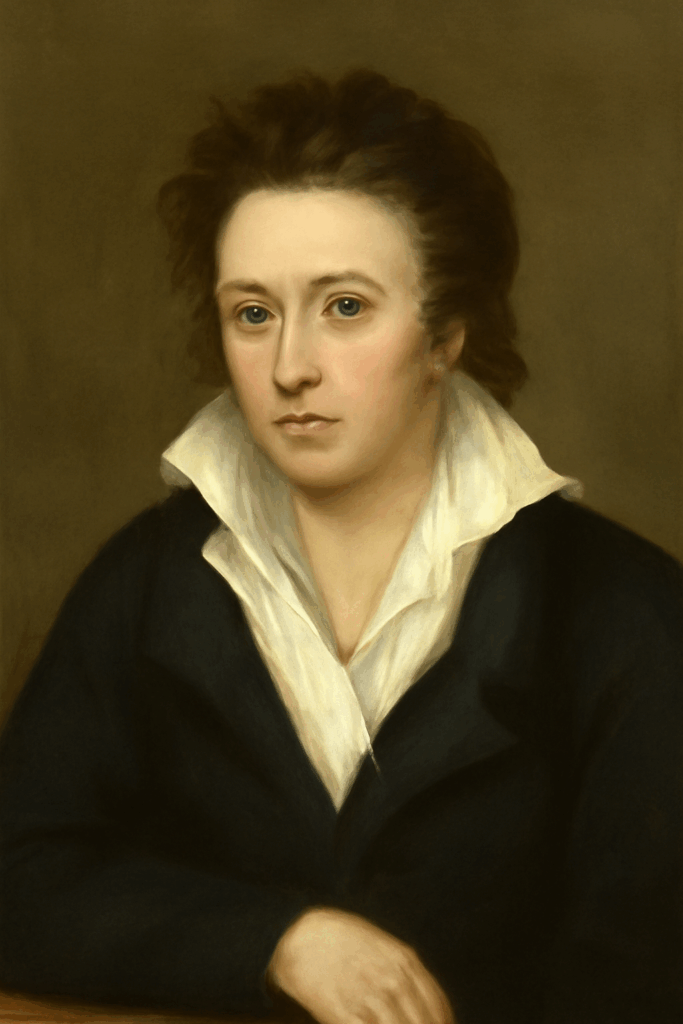
Early Life & Education
Born on August 4, 1792, in Horsham, Sussex, England, into a wealthy family.
Attended Eton College, where he began to develop his radical ideas.
Later studied at University College, Oxford, but was expelled for publishing a pamphlet titled The Necessity of Atheism.
Shelley’s early life was marked by rebellion against traditional authority and religious orthodoxy.
Literary Career
Shelley was a central figure of the Romantic Movement, which emphasized emotion, nature, individualism, and political radicalism.
Known for his lyrical poetry, Shelley blended idealism and philosophical depth with exquisite lyricism and imaginative imagery.
Key themes in his work include nature, beauty, love, political liberty, and the quest for transcendence.
Major works include:
Queen Mab (1813): A philosophical poem critiquing religion, monarchy, and social inequality, reflecting his early radicalism.
Alastor, or The Spirit of Solitude (1816): Explores the poet’s quest for ideal beauty and the dangers of isolation.
Ode to the West Wind (1819): A lyrical meditation on nature’s power and the poet’s role in spreading revolutionary ideas, written in Italy.
Prometheus Unbound (1820): A lyrical drama reimagining the Greek myth, celebrating human liberation. To a Skylark was published in this collection, printed by C. and J. Ollier in London, showcasing Shelley’s lyrical mastery.
To a Skylark (1820): Inspired by a skylark’s song in Livorno, this ode elevates the bird as a symbol of transcendent joy and poetic inspiration, reflecting Shelley’s Italian context and Romantic ideals.
Adonais (1821): An elegy for John Keats, exploring mortality and artistic immortality.
Hellas (1822): A lyrical drama inspired by the Greek War of Independence, blending political and mythological themes.
Philosophy & Beliefs
Shelley was a passionate advocate for social justice, nonviolence, and political reform.
His poetry often critiques tyranny, organized religion, and societal constraints.
He believed in the power of the imagination and poetry as agents of change.
Shelley’s idealism is deeply tied to a belief in human potential and the transformative power of beauty and love.
Personal Life
Shelley’s personal life was unconventional for his time: he eloped with Harriet Westbrook, then later with Mary Godwin (who became Mary Shelley, author of Frankenstein).
He faced social ostracism due to his radical views and personal choices.
Shelley struggled with tragedy, including the deaths of several of his children and his wife Harriet’s suicide.
Death and Legacy
Shelley died tragically young at age 29 in a boating accident off the coast of Italy in 1822.
Despite his short life, his work profoundly influenced later poets like Keats, Byron, and the Victorian Romantics, as well as modern poets.
Shelley is celebrated today as a visionary poet who blended political passion with lyrical beauty, inspiring generations to think about freedom, nature, and the role of art.
Word Meaning
| Tough Word | Meaning in English | Meaning in Hindi |
| Skylark | A small songbird known for its melodious and soaring flight, often symbolizing joy, freedom, and poetic inspiration | एक छोटा गीत गाने वाला पक्षी जो अपनी मधुर धुन और ऊंची उड़ान के लिए जाना जाता है, जो खुशी, स्वतंत्रता और काव्य प्रेरणा का प्रतीक माना जाता है |
| Hail | Greet, salute | अभिवादन करना, |
| Thee | You (archaic) | तुम, तुझे |
| Blithe | Joyful, carefree, lighthearted | खुशमिजाज, आनंदित, बेफिक्र |
| Thou | You (archaic) | तुम, तूम |
| Wert | Were (archaic) | थे |
| Pourest | Pour out, express freely | बहाना, प्रकट करना |
| Thy | Your (archaic) | तुम्हारा |
| Profuse | Abundant, excessive | प्रचुर, भरपूर |
| Strains | Musical tunes, melodies | धुनें, संगीत के स्वर |
| Unpremeditated | Unplanned, spontaneous | बिना सोचे-समझे, स्वाभाविक |
| Springest | Springs, leaps | कूदना, उछलना |
| Wingest | To fly | उड़ना |
| Dost | Do (archaic) | करते हो |
| Soar | Fly high, rise rapidly | ऊंचाई पर उड़ना |
| Singest | Sing (archaic) | गाना |
| Golden lightning | Bright flash of light like lightning | सुनहरी बिजली का चमक |
| Sunken | Set, sunk (like the sun setting) | डूबा हुआ, अस्त |
| O’er | Over (archaic contraction) | ऊपर, पर |
| Float | To move gently on air or water | तैरना, हवा में बहना |
| Unbodied | Without physical form | निराकार, बिना शरीर |
| Pale | Light in color, faint | फीका, हल्का रंग |
| Even | Evening | संध्या, शाम |
| Melts | Dissolves, fades away | पिघलना, गायब होना |
| Shrill | High-pitched, piercing | तीव्र, झनझनाती आवाज़ |
| Delight | Great pleasure | आनंद, प्रसन्नता |
| Keen | Sharp, intense | तीव्र, तेज़ |
| Silver sphere | The moon | चाँद |
| Intense | Very strong, extreme | तीव्र, प्रबल |
| Lamp | Light source (moon or sun) | दीपक, प्रकाश स्रोत |
| Narrows | Becomes narrow or less visible | संकुचित होना, कम दिखना |
| Dawn | Early morning | भोर, सुबह |
| Bare | Empty, exposed | उजाड़, खाली |
| Rains out | Sends down rain | बारिश गिराना |
| Beams | Rays of light | किरणें |
| Overflow’d | Filled beyond capacity | अतिभरित, भरपूर |
| Melody | Musical tune | संगीत, धुन |
| Hymns | Religious songs | भजन, धार्मिक गीत |
| Unbidden | Uninvited, spontaneous | बिना बुलाए, स्वाभाविक |
| Wrought | Made, created | निर्मित, बनाया गया |
| Sympathy | Feeling of pity or compassion | सहानुभूति, करुणा |
| Heeded | Paid attention to | ध्यान दिया |
| High-born | Noble birth | उच्च कुलीन |
| Maiden | Young unmarried woman | कन्या, युवती |
| Palace-tower | Tall structure in a palace | महल का टावर |
| Soothing | Calming, comforting | शीतल, सांत्वन देने वाला |
| Love-laden | Full of love | प्रेम से भरा |
| Secret hour | Private time | गुप्त समय |
| Bower | Shady shelter in a garden | बगिया का आशियाना |
| Glow-worm | Insect that emits light | चमकदार कीड़ा |
| Dell | Small valley | छोटी घाटी |
| Dew | Moisture on plants in the morning | ओस |
| Scattering | Spreading around | फैलाना |
| Unbeholden | Not owing thanks or obligation | ऋणी न होना |
| Aëreal (Aerial) | Related to air | हवाई, वायवीय |
| Hue | Color tint | रंग |
| Embower’d | Sheltered, enclosed by trees | पेड़ों से घिरा हुआ |
| Deflower’d | Deprived of flowers or purity | पुष्प विहीन, अपवित्र |
| Scent | Smell, fragrance | खुशबू |
| Faint | Weak, dizzy | बेहोश, कमजोर |
| Heavy-winged thieves | Bees or insects that steal nectar | मधुमक्खी या कीड़े जो मधु चुराते हैं |
| Vernal | Related to spring | वसंत का |
| Twinkling | Shining with flickering light | टिमटिमाता हुआ |
| Rain-awaken’d | Flowers awakened by rain | बारिश से जागे हुए |
| Joyous | Happy, cheerful | खुश, आनंदित |
| Doth | Does (archaic) | करता है |
| Surpass | Exceed, go beyond | पार करना, अधिक होना |
| Sprite | Fairy or spirit | आत्मा, परियां |
| Thine | Your (archaic) | तुम्हारा |
| Wine | Alcoholic drink made from grapes | शराब |
| Panted forth | Breathed out rapidly (expressed eagerly) | तेजी से सांस लेना, उत्साह से व्यक्त करना |
| Rapture | Extreme joy or ecstasy | आनंद, उल्लास |
| Chorus | Group singing together | समूह गीत |
| Hymeneal | Related to marriage | विवाह से संबंधित |
| Triumphal | Celebratory of victory | विजयी, उत्सवपूर्ण |
| Chant | Repetitive song or phrase | गीत, जप |
| Vaunt | Boast, show off | दंभ, घमंड |
| Hidden want | Secret lack or desire | छिपी हुई कमी |
| Fountains | Sources, origins | स्रोत |
| Strain | Musical tune | धुन, संगीत |
| Happy Strain | Joyful melody | आनंदमय धुन |
| Ignorance of pain | Not knowing suffering | दर्द का अज्ञान |
| Keen joyance | Intense happiness | तीव्र आनंद |
| Languor | Fatigue, weakness | थकान, सुस्ती |
| Annoyance | Irritation | चिढ़, कष्ट |
| Ne’er | Never | कभी नहीं |
| Sad satiety | Tiredness or dissatisfaction with love | प्रेम की थकावट |
| Deem | Consider, think | मानना, विचार करना |
| Mortals | Human beings | मनुष्य |
| Crystal stream | Clear, pure flowing sound or image | स्वच्छ, शुद्ध बहता प्रवाह |
| Pine | Long for, yearn | तरसना, लालसा करना |
| Fraught | Filled with (usually negative feelings) | भरा हुआ (अक्सर नकारात्मक भावों से) |
| Scorn | Contempt, disdain | तिरस्कार, अपमान |
| Shed | To let fall (like tears) | गिराना, बहाना |
| Delightful | Very pleasing | आनंददायक |
| Treasures | Valuable things | खजाने |
| Scorner | One who mocks or despises | तिरस्कार करने वाला |
| Gladness | Happiness, joy | प्रसन्नता, आनंद |
| Harmonious madness | Ecstatic, inspired creative frenzy | सुसंगत पागलपन, आनंदमय रचनात्मकता |
To A Skylark Questions and Answers
Very Short Answer Questions
Who wrote To a Skylark?
Percy Bysshe Shelley.
What bird is addressed in the poem?
The skylark.
How does Shelley describe the skylark at the start?
As a “blithe Spirit.”
Is the skylark called a literal bird?
No, Shelley says “Bird thou never wert.”
What does the skylark pour out in the poem?
Profuse strains of unpremeditated art (music).
What is the skylark compared to in its flight?
A cloud of fire.
Where does the skylark spring from?
From the earth, rising higher and higher.
How does Shelley describe the skylark’s song?
As spontaneous and joyful.
What time of day is mentioned in the poem?
Evening twilight (“pale purple even”).
Is the skylark visible during the day?
No, it is unseen but its song is heard.
What celestial body is compared to the skylark’s song?
The moon (“silver sphere”).
What natural scene does Shelley compare the skylark’s voice to?
The moon raining beams from a lonely cloud.
What is the “rain of melody” in the poem?
The skylark’s song.
What does Shelley ask the skylark to teach?
The sweet thoughts behind its song.
To what human figure is the skylark compared?
A hidden poet.
What does Shelley say human laughter often contains?
Some pain.
What is the tone toward the skylark’s joy?
Admiring and wistful.
What human emotions does Shelley say the skylark does not experience?
Annoyance, languor, or love’s satiety.
What natural event is used to symbolize joy and freshness?
Vernal (spring) showers.
How does Shelley describe the relationship between the skylark’s song and human art?
The skylark’s song is more natural and perfect.
What does Shelley call the skylark in terms of spirit?
A “blithe Spirit” and “scorner of the ground.”
What theme contrasts in the poem?
Nature’s pure joy vs. human sorrow and longing.
What does Shelley think poetry should express?
Gladness and spontaneous emotion like the skylark’s song.
What is the skylark’s song a symbol of?
Pure, unspoiled inspiration.
What human quality does Shelley envy in the skylark?
Its boundless joy and effortless creativity.
What element does Shelley say the skylark surpasses?
All measures of delightful sound and treasures in books.
What is “harmonious madness” in the poem?
The ecstatic poetic inspiration Shelley wishes to have.
How does Shelley describe the skylark’s knowledge of death?
It must know deeper truths than humans.
What feeling do humans have that the skylark does not?
Longing for what is not or missing.
What does Shelley wish to learn from the skylark?
Half the gladness that the bird knows.
Short Answer Questions
What is the significance of the skylark in Shelley’s poem?
The skylark symbolizes pure, transcendent joy and artistic inspiration. Unlike humans, it seems free from sorrow or earthly cares. Shelley uses the bird as a metaphor for the ideal poet, whose creativity flows naturally and effortlessly. The skylark’s song represents a perfect expression of beauty and emotion.
How does Shelley contrast human emotions with the skylark’s joy?
Shelley points out that human happiness is often mixed with pain, fear, or longing. We “pine for what is not” and our laughter carries sorrow. In contrast, the skylark’s joy is clear, keen, and uninterrupted by negative emotions. This contrast highlights human limitations and the bird’s role as a symbol of ideal happiness.
Explain the imagery Shelley uses to describe the skylark’s flight and song.
Shelley uses vivid imagery like “a cloud of fire” to show the skylark’s fiery, upward flight, suggesting spiritual elevation. The song is described as a “rain of melody,” unpremeditated and natural, flowing like a “crystal stream.” These images emphasize the bird’s ethereal beauty and the effortless purity of its music.
What does Shelley mean by calling the skylark a “blithe Spirit”?
By calling the skylark a “blithe Spirit,” Shelley suggests it is more than a bird—it is a joyful, free, and immortal essence. The term “blithe” means carefree and joyous, implying the skylark embodies pure happiness and freedom, untouched by human sorrows or limitations. It elevates the bird to a spiritual symbol.
How does Shelley view the relationship between nature and poetry?
Shelley sees nature as the ultimate source of inspiration and poetry. The skylark’s spontaneous song is a natural form of art that poets should emulate. He believes true poetry flows effortlessly from deep emotion and imagination, much like the skylark’s music flows freely without calculation or planning.
What is the tone of To a Skylark and how is it achieved?
The tone is admiring, reverent, and wistful. Shelley achieves this through lyrical language, musical rhyme and rhythm, and rich imagery that evokes wonder and longing. His direct address to the skylark and philosophical questions create a sense of awe mixed with human yearning.
Discuss the theme of invisibility and presence in the poem.
Though the skylark is often unseen, its song fills the air and touches the earth. Shelley highlights this paradox to suggest that true beauty and influence don’t always need a visible form. The skylark’s invisible presence symbolizes the power of intangible inspiration and joy.
What role does mystery play in To a Skylark?
Shelley repeatedly questions the nature of the skylark’s joy and its source, emphasizing its mystery. He admits that humans cannot fully understand or define the bird’s essence. This mystery adds depth to the poem, suggesting some forms of happiness and creativity are beyond human grasp.
How does Shelley use contrast to develop the poem’s message?
Shelley contrasts the skylark’s effortless, eternal joy with human emotional complexity and suffering. He also contrasts visible beauty with invisible presence, and natural inspiration with artificial art. These contrasts deepen the theme that true happiness and creativity are rare and transcendent.
Why does Shelley wish to learn from the skylark, and what does this desire reveal?
Shelley wants to learn “half the gladness” the skylark knows so that his poetry might flow with the same joy and harmony. This desire reveals the poet’s longing to overcome human limitations and create art that truly inspires and uplifts. It shows the deep human yearning for pure happiness and creative freedom.
Themes
Pure and Endless Joy
The skylark’s song represents a happiness that is natural, pure, and never-ending. Unlike people, who often feel mixed emotions—sometimes happy, sometimes sad—the skylark seems to be joyful all the time without any worries. Its song flows freely and beautifully, as if it’s celebrating life itself without any interruption. Shelley sees this joy as something almost magical, a kind of perfect happiness that humans long for but rarely achieve.
Example: Think of a child playing outside, laughing without a care—that pure, simple joy is like the skylark’s song.
Nature as a Teacher and Inspiration
Shelley believes nature shows us how to be creative and free. The skylark’s song is spontaneous and unplanned, unlike human art which often involves hard work and planning. This natural creativity is a model for poets and artists who want to express true feelings without being forced or artificial. The bird teaches us that the best art comes from the heart and flows naturally.
Example: Imagine how flowers grow and bloom on their own without anyone telling them—they just happen. Shelley thinks our creativity should be like that too.
Difference Between Humans and Nature
Humans often struggle with complicated feelings like sadness, fear, or pride. Even when we are happy, these feelings can weigh us down. The skylark, on the other hand, lives freely and joyfully, without being troubled by such emotions. This difference makes Shelley sad for humans, who seem unable to reach the skylark’s level of pure happiness.
Example: When you feel nervous before a test or upset about a fight with a friend, you are experiencing the human struggles Shelley talks about—things the skylark does not know.
Wonder About Life and Beauty
Shelley is fascinated by the skylark and wonders what it really is and where its beautiful song comes from. He knows the bird’s happiness and music must come from something deep and mysterious, beyond what humans can fully understand. This theme is about the mystery of life itself—why some things are beautiful and joyful, and how some joys seem to be beyond our reach.
Example: Sometimes you hear a beautiful song or see a sunset and feel a deep sense of wonder. That feeling of mystery and amazement is what Shelley is describing.
The Magic of Poetry and Art
The skylark’s song is like perfect poetry—something that can move people’s hearts and inspire them. Shelley wishes he could write poems as joyful and powerful as the skylark’s music. He believes that true art comes from this natural, happy place inside us and can help others feel happiness and hope too.
Example: When you listen to a favorite song that makes you feel happy or hopeful, that’s the kind of magic Shelley wants poetry to have.
Critical Analysis
Introduction
To a Skylark is one of Percy Bysshe Shelley’s most celebrated poems, written in 1820 during the English Romantic period. It is a lyrical ode that praises the skylark—a small, high-flying songbird—as a symbol of pure, spontaneous joy and artistic inspiration. The poem reflects Shelley’s Romantic ideals by emphasizing nature, emotion, and the transcendent power of creativity.
Central Idea
The poem explores the contrast between the skylark’s unbounded, effortless happiness and human beings’ emotional complexity and suffering. Shelley marvels at the skylark’s joyful song as an embodiment of pure artistic inspiration and spiritual bliss, something the poet longs to understand and emulate. The skylark represents an ideal of beauty and joy that transcends earthly pain.
Structure & Rhyme Scheme
To a Skylark by Percy Bysshe Shelley is a lyrical ode. To a Skylark consists of 21 stanzas, each made up of five lines (quintains). The poem follows a consistent ABABB rhyme scheme, which lends it a musical and flowing rhythm, mirroring the skylark’s continuous and soaring song. The use of enjambment creates a smooth, uninterrupted flow throughout the poem, reinforcing the idea of the skylark’s effortless flight and melody.
Theme
Transcendent Joy: The skylark’s song symbolizes pure happiness, untouched by sorrow or worldly cares.
Nature as Inspiration: Nature provides the ideal source of creative energy and artistic beauty.
Human Limitations: Humans experience joy mixed with pain and longing, unlike the skylark’s pure bliss.
Mystery of Existence: The source of the skylark’s joy and song remains a profound mystery.
Power of Art: Poetry can express deep emotions and inspire others, but often falls short of natural perfection.
Style
Shelley’s style in the poem is highly lyrical and musical, characterized by:
Vivid and evocative imagery that appeals to the senses.
Use of similes and metaphors to draw symbolic comparisons.
A reflective and philosophical tone.
Use of enjambment and fluid rhythm to emulate natural flow.
Elegant and elevated diction fitting the Romantic spirit.
Poetic Devices
Apostrophe: Directly addresses the skylark as a “blithe Spirit.”
Metaphor and Simile: The skylark is compared to fire, stars, poets, and glow-worms.
Alliteration & Assonance: Enhance musicality and emphasize key ideas.
Personification: Nature and the skylark are endowed with human qualities.
Enjambment: Creates smooth continuity, mimicking the bird’s flight and song.
Symbolism: The skylark symbolizes pure artistic inspiration and joy.
Critical Commentary
Shelley’s To a Skylark is often praised for its exquisite lyrical beauty and philosophical depth. The skylark serves as a powerful metaphor for the ideal poet and the ideal artistic process—natural, spontaneous, and joyous. Critics admire Shelley’s ability to blend sensory imagery with abstract reflection. The poem’s structure and sound perfectly evoke the soaring movement and uninterrupted song of the skylark.
However, some critics note the poem’s idealism and romanticization of nature may overlook the complexities of human experience. Shelley’s portrayal of the skylark as wholly joyful and untouched by pain contrasts sharply with the human condition, underscoring the Romantic theme of yearning for an unattainable ideal.
Message
The central message is that true joy and artistic inspiration are gifts of nature, pure and spontaneous, and that human beings should strive to learn from this natural beauty. While humans are bound by sorrow and longing, the skylark’s song offers a vision of unblemished happiness and creative freedom. The poem encourages a deeper appreciation of nature’s role in inspiring art and the possibility of transcendence.
Conclusion
To a Skylark remains one of Shelley’s greatest poetic achievements—a lyrical meditation on joy, nature, and the power of artistic creation. Its musicality, vivid imagery, and profound philosophical reflections have cemented it as a timeless work of Romantic poetry. Through the skylark’s song, Shelley invites readers to contemplate the mysteries of happiness and the potential for poetry to capture the sublime.